*The Wild East of Wall Street*
"On Wall Street today, there's no one left who isn't hostile to Trump."
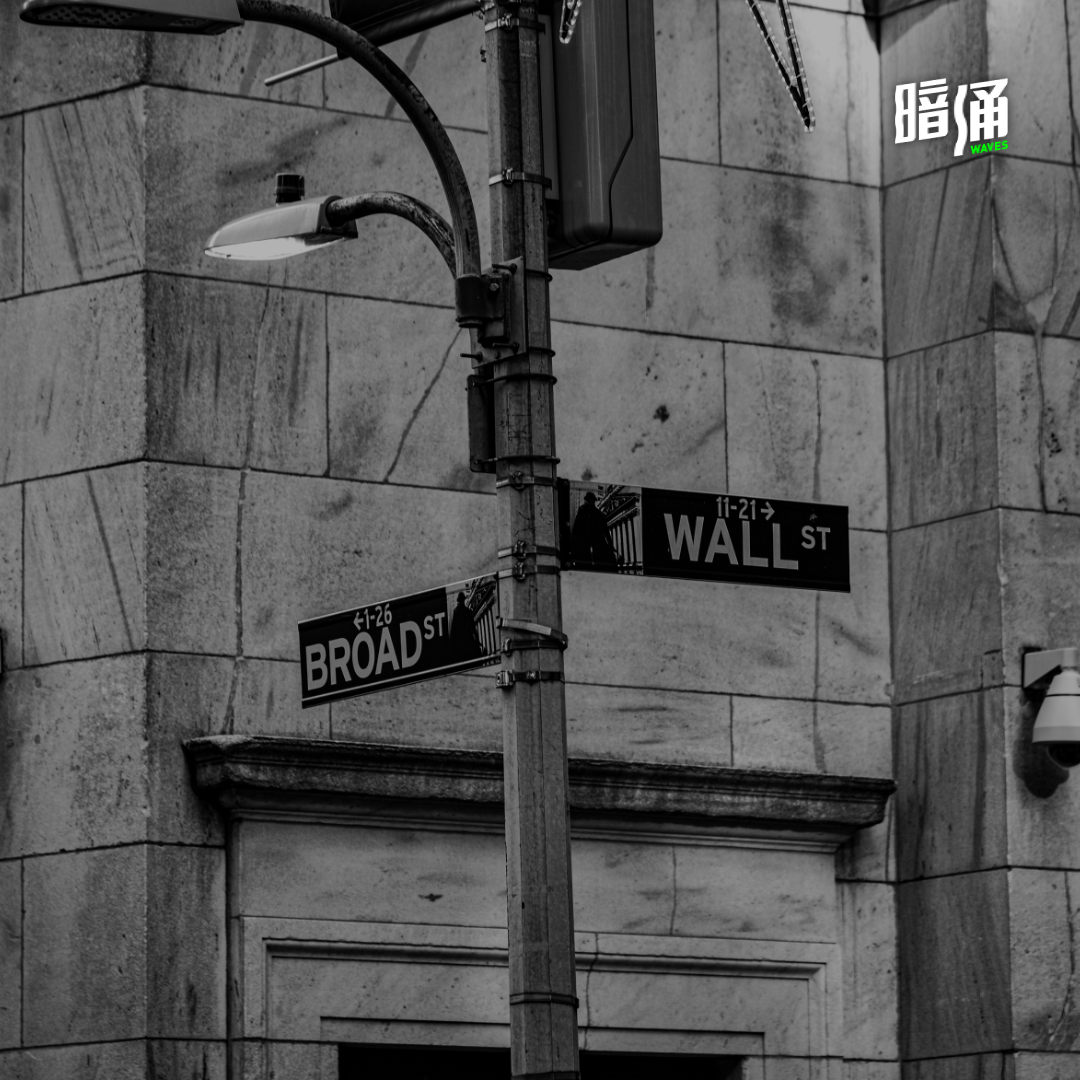
"On Wall Street today, there's no one who doesn't despise Trump."
Contributing Writer | Yiming Liu
Editor | Jing Liu

Last night, the "triple kill" of U.S. stocks, bonds, and currencies played out once again. The last time was just half a month ago, triggered by the global tariff war launched by Trump — and all of Wall Street collectively misread him. At that time, Scott Bessent, formerly a Wall Street trader and now U.S. Treasury Secretary, found an opportunity to try to persuade Trump: while aboard Marine One flying to the White House, he discussed with Trump the idea of pausing tariffs.
Bessent needed to serve as a bridge between Wall Street and Washington, attempting to reconcile Trump's capricious, ever-shifting policies with his old Wall Street friends who advocated for debt reduction, tax cuts, and deregulation. This was undoubtedly a thorny task.
The game of capital markets is, at its core, the game of great powers. To some extent, Wall Street's influence has transcended capital itself. The traditional Wall Street-Washington nexus, forming the "Washington-Wall Street complex," has long been the dominant force shaping American politics and economics. But today, a crack has appeared.
A year ago, Bessent — whom Wall Street considered "one of their own" — told clients: "The tariff gun will always be loaded and on the table, but it will rarely be fired." Yet now many on Wall Street feel betrayed by him. Trump has been firing everywhere, barely constrained by these relationships that once held sway.
The crack shows signs of widening further. Trump is still threatening to fire Fed Chair Jerome Powell, shaking the century-old foundation of Federal Reserve independence. And Trump is also confronting America's Ivy League universities — whose combined endowments hold roughly $500 billion in private equity assets. If they were to dump those holdings, it would be enough to send shockwaves through the markets.
Wall Street's attitude is worth watching. Last week, Dark Tides Waves interviewed 30 people on the front lines of the tariff war; we followed up with a hedge fund professional on Wall Street: Rob Li. He has witnessed the market's dramatic ups and downs in New York these past days, and knows intimately both the rationality and the rage Wall Street has felt through this tariff storm.
Rob Li previously worked at Morgan Stanley's private equity fund and is now Managing Partner at Amont Partners — a global equity investment management firm based in New York. Their investment strategy involves longer holding periods; compared to typical hedge funds that hold positions for roughly three-month cycles, their core portfolio holdings stretch two to three years or more.
Rob also travels frequently around the world. He employs a global asset allocation strategy, focusing primarily on technology, consumer, and industrial sectors. Currently his allocation is roughly 40% in the U.S., 10% in Asia, with the remainder split between Europe and South America.
"On Wall Street today, there's no one who doesn't despise Trump."
According to Rob's observations, he believes Wall Street's mainstream understanding had been misled. People initially assumed Trump 2.0 would resemble the 1.0 era, where "there would always be a way to keep things from getting too crazy." But now, the script has fundamentally changed.
As Peter Drucker wrote in Management in Turbulent Times — the greatest danger in turbulent times is not turbulence itself, but acting with the logic of the past.
Now, with Bridgewater founder Ray Dalio, Pershing Square founder Bill Ackman, JPMorgan CEO Jamie Dimon, BlackRock chairman Larry Fink, Oaktree chairman Howard Marks, and a host of other core Wall Street figures all shifting their stances and standing up to oppose Trump's radical tariff policies, investors have formed an important countervailing force — even if their primary objective remains profit.
Part 01
Wall Street's Elite Also Misread Trump's Script
Dark Tides: When did Wall Street begin to realize that the entire financial landscape was about to change?
Rob: A pivotal moment was April 2. That afternoon, Trump first announced 10% tariffs on all countries, and the market actually rose two percent. Because many people thought this was within expectations.
But minutes later, Trump pulled out that massive table, saying there would be additional tiered tariffs for different countries. Only then did the market immediately crash — everyone realized Trump was actually going through with it.
Right now, 80% of U.S. equity market volume is executed by machines. Algorithms have preset strategies: for instance, if Trump announces tariffs under 15%, buy; if over 15%, sell — though actual strategies are certainly far more complex. Automated trading happens at machine speed, so once the market crashes, it happens very fast.
Dark Tides: But why did all those brilliant minds on Wall Street have no foresight whatsoever about "Trump's massive table"? I remember when Trump had just won, the term "Trump trade" was everywhere — yet just two months later it became "Trump put."**
Rob: The mainstream thinking on Wall Street — including my own — hadn't anticipated the scale of reciprocal tariffs. The prevailing view was that Trump's second term would continue the "loud thunder, little rain" pattern of his first.
Everyone remembers when Trump defeated Clinton in 2016, Wall Street was terrified because Trump had said so many crazy things on the campaign trail, and the entire business community and Wall Street feared him. But later, as we all know — 99% of those crazy ideas never materialized, and instead those four years created a very business-friendly environment.
Dark Tides: So this was also market inertia, but no one expected the script to actually change.**
Rob: At least up until April 2 when he pulled out that massive table, the "loud thunder, little rain" script was still playing out.
In February, Trump also spooked the market once. He said he would tax Canada and Mexico, and U.S. stocks plunged. But just one day later, Trump posted that he had spoken with Canada by phone and would let them off. A few hours after that, he said he had also spoken with Mexico and would let them off too. Everyone who bought the dip saw prices bounce back, thinking Trump 2.0 was more of the same.
But then he brought out that massive table, the market really started crashing, and everyone realized the script had actually changed — completely beyond expectations.
Part 02
Winners and Losers in the Turmoil
Dark Tides: The S&P 500 later fell as much as 25%, the Nasdaq 21%. What were hedge funds on Wall Street doing? Who made money?
Rob: Although everyone is called a hedge fund, what they actually do can be completely different. On Wall Street there are macro hedge funds that trade various currencies. There are equity-focused hedge funds like ours. And there are bond-focused hedge funds that don't touch stocks at all. I'll just speak to the equity side.
For equity hedge funds, there actually aren't great options right now, because Trump might say one thing today and the opposite tomorrow. Many funds, after experiencing the turbulence of March and early April, have basically moved to relatively low leverage, zero net exposure positions.
This "zero net exposure," also called "market neutral," means your long positions minus your short positions basically equal zero. This is an extremely conservative posture — regardless of which direction Trump's policies go, whether the market surges or crashes, just keep a flat net exposure and tread water for the month. Unless you have conviction about direction, minimizing net exposure is probably the better choice.
Of course, for macro hedge funds, a popular trade right now is shorting the dollar. Because everything Trump is doing is majorly bearish for the dollar, so shorting the dollar is clearly profitable.
Dark Tides: Who lost money?**
Rob: The most obvious losers were quant funds — I've heard quite a few quant funds took losses.
Although quant funds deploy all kinds of high-tech equipment to monitor Trump's own Truth Social and his X account, Trump's about-face speed is simply too fast. This back-and-forth whipsawing makes it very difficult for quant strategies to keep pace.
Quant funds generally need to use very high leverage. The problem with leverage is that even if your judgment proves correct after ten days, you might get liquidated on day three during Trump's repeated reversals — you never survive long enough to be proven right.
A typical example: quant funds trading Nvidia. When AI captured news that Jensen Huang had dinner with Trump, the AI judged that the dinner meant nothing and Trump would still ban H20, so they should short Nvidia. But before the H20 ban news came out, if the market thought the issue was settled at dinner and everyone bought in first, causing a rally, then if you were highly leveraged you would be liquidated right then and there — even though the H20 restriction order was ultimately issued.
Another large group that lost money were pure long-only mutual funds, or certain funds with high risk exposure where their longs far exceeded their shorts.
Dark Tides: Those Wall Street people who voted for Trump back then — are they kicking themselves now?**
Rob: If we're talking about real feelings, I think on Wall Street today, there's no one who doesn't despise Trump — whether they voted for him last year, donated to him, or not. Recently I've had meals with people from various funds on Wall Street, and I've barely met anyone who still strongly supports Trump.
Dark Tides: Later Trump announced the 90-day tariff pause. How much did Wall Street have to do with that? There were reports that former hedge fund manager and Treasury Secretary Bessent is under a lot of pressure now, needing to balance Trump's radical policies against financial interests.
Rob: Bessent used to teach at our school, and he himself previously worked at Soros's fund, so his Wall Street connections run deep.
I have reliable sources saying that at least during the initial round of tariff policy drafting — the tariffs rolled out on April 2 — Bessent was not part of the core team. Those tariffs were basically decided by Trump, Stephen Miller, and Peter Navarro among the three of them. Bessent most likely wasn't even in those discussions.
In the end, Trump told Bessent the outcome, then had him use his Wall Street relationships to communicate with and soothe the Street's emotions — but the decision-making power wasn't his. Of course this was before April 2; after the market went into violent turmoil, whether Bessent's voice has grown louder? I think that's very possible.
Dark Tides: What about you? How intense was the shock for you through this process?**
Rob: The current tariff war situation is absolutely beyond my expectations. Everyone had psychological preparation for a trade war, but no one really expected Trump to turn hostile toward Europe, Japan, Canada, and everyone else.
But if you look at the magnitude of decline, it still doesn't compare to truly major crises in history. If you lived through the 2008 financial crisis, you wouldn't feel any anxiety now. It's like a new soldier anxious upon first entering battle — but if you've cycled through, if you're a ten-year veteran, where's the anxiety?
Part 03
Who Gets Bought, Who Gets Dumped?
Dark Tides: You've been doing a lot of company research lately. How did it go? Faced with this macro turmoil, which companies will fund managers dump first?**
Rob: The negative impacts hit two categories first:
The first is directly tariff-affected, like daily household items — clothing, shoes, bags, toys. These are basically produced in Asia, so consumer brands in these categories take the first blow. Of course if tariff policies reverse course going forward, they'll also bounce back strongly.
The second is indirectly affected: travel-related, like hotels, theme parks, airlines, etc., because demand will drop off quickly. Just one month into Trump's tariff conflict, tourist arrivals from abroad have already fallen 50%. While Americans traveling domestically or vacationing abroad haven't shown effects yet, if the trade war continues for a year, the U.S. economy will clearly be impacted. Then all economically sensitive industries — real estate, discretionary consumer, travel, movie theaters, theme parks, casinos, etc. — will feel it.
Dark Tides: Google's recent plunge also seems somewhat indiscriminate. Because the market started worrying that if the EU retaliates against the U.S., since Trump's crude tariff calculation formula didn't account for service revenue or virtual economy income, but the EU spends a lot on this annually, so the EU is very likely to go after these tech companies.**
Rob: Right, this collateral damage to tech companies has two aspects. On one hand, if the EU retaliates, it's not just Google but also Meta, Amazon, Microsoft — the EU can target these companies at any time; that's a major weapon for them. On the other hand, Google and Meta's own businesses derive the vast majority of their revenue from advertising, and we know ad revenue is extremely sensitive when a country's economy declines.
Something that just happened: Omnicom, the world's second-largest advertising group and a major ad agency for Google and Meta's platforms, just said on their earnings call that while they haven't yet seen advertisers cutting spend, they believe if Trump keeps this up, clients will inevitably cut back. So they lowered their guidance for next quarter, which also contributed to Google and Meta's decline.
Dark Tides: We've talked a lot about companies negatively affected by tariffs. Are there any companies or industries that actually benefit?**
Rob: The core of benefiting companies is that tariff conflicts cause price increases, but the company can pass costs down the chain.
For example, we hold a company long-term called AutoZone. It's one of two giants selling aftermarket auto parts in the U.S., and is still consolidating the American market. Why is the tariff conflict beneficial for it? Because tariffs have raised car prices. Previously you could buy a car for $30,000, but now tariffs might add $10,000. So many consumers simply won't buy for now — they'll wait until the tariff conflict ends and prices return to $30,000.
But if consumers aren't buying new cars now, they have to drive old ones. The longer old cars run, the more maintenance issues arise. For a company specializing in aftermarket auto parts, this becomes a tailwind — engines, spark plugs, brake pads, motor oil, etc., all needed in greater quantity.
Dark Tides: What about capital flows? Are some funds choosing to leave the U.S. and allocate more elsewhere?**
Rob: Yes, take Europe for example. Over the past decade people basically had no allocation there, with more going to China and Japan than Europe. But recently many European stocks have shown independent momentum — European defense stocks, for instance, have rallied strongly this year.
There are also some quality European companies that got "wrongfully killed" in this round of tariff conflict. For example, in automotive semiconductors, there's a German company called Infineon. It's deeply embedded in China's new energy vehicle supply chain — exclusive supplier to Xiaomi, and important supplier to BYD.
This company's production is globally distributed, with 15% local capacity in the U.S., while only 12% of its sales are in the U.S. So its U.S. capacity can fully cover U.S. sales, meaning minimal tariff impact — just supply locally. Companies like this are quite attractive.
Another example is a company we hold called Mercado Libre, the largest e-commerce company in Latin America. It's purely a local business with no direct connection to the U.S. market or the trade war, so while the U.S. market crashed in April, it actually rose.
Part 04
This Isn't a Financial Crisis, It's a Man-Made Crisis
Dark Tides: China and the U.S. have both raised tariffs to 125%, and with the U.S. adding that 20% fentanyl tariff it comes to 145% — at these levels the numbers are basically meaningless. Based on your conversations with entrepreneurs, how are they seeing this?
Rob: Right now the general consensus is that these tariff figures basically equal a trade embargo. I've been traveling constantly lately precisely to understand how entrepreneurs are viewing this.
For example, I recently conducted intensive research on upstream suppliers for footwear and apparel companies (the supply chains for companies like Nike, Adidas, Lululemon). For a pair of shoes, assuming tariffs of just 10-15%, and a shoe retailing at $140 with costs of $35-40, that adds $3-5 in total cost for the company. In this scenario, the producer absorbs one-quarter, the brand absorbs one-quarter, and the remainder is absorbed by channels and passed to consumers. So ultimately when consumers buy this shoe, the cost increase is less than two dollars. While this ultimately impacts brand and supply chain gross margins, the absolute gross profit per shoe they can earn can fully absorb the impact.
But now with 125% tariffs, costs become $70-90. At this point companies stop worrying about who absorbs the cost — because the shoe simply won't be sold. If you passed this cost to consumers, sales volume would drop over 50% directly.
Many Southeast Asian entrepreneurs are watching and waiting through this 90-day tariff pause, taking it one step at a time. A common prediction is that after 90 days, ultimately except for China, other countries may end up with new tariffs of 10-20%. Gross margins will certainly be affected, but everyone can continue getting by.
Dark Tides: There's also a critical issue here: international trade has long been dominated by "intermediate goods" (components or semi-finished products imported from one country to another for processing/assembly, then exported to a third country). How do you define where something is actually produced?
Rob: This is actually full of loopholes. For example, in semiconductors, the U.S. says if U.S. content exceeds 20% it can be exempt from tariffs — but how do you define this so-called U.S. content? The Trump administration hasn't given clear guidance, and U.S. Customs doesn't know how to enforce it either. These are all important points for future negotiations.
Another example in footwear and apparel: there's already a method where previously it might have been pure transshipment — shoes made in China, shipped to Vietnam, relabeled as "made in Vietnam" and sent to the U.S. That simple path no longer works, but you can still do some complex processes in China, take the remaining simpler processes to Vietnam, relabel as "made in Vietnam," and ship to the U.S.
If Trump wants to plug this loophole, he could, but at very high enforcement costs — you'd need extremely detailed rules, and regulatory oversight would be very difficult to monitor. If we're optimistic, next we'll see how all sides negotiate.
Dark Tides: Tariffs will also negatively impact U.S. consumption. There's a pessimistic view that tariffs could shift from an event-driven shock to gradually causing a structural bear market in the U.S. Especially with Q1 earnings season approaching, companies will need to give Q2 guidance — if it's all bad, it could trigger another round of declines. What do you think?
Rob: I think the key question is whether tariff policies will reverse. If Trump continues being headstrong as he has been recently, it will inevitably be a major blow to the U.S. economy.
Many institutions have done calculations: roughly every 1% increase in the effective U.S. tariff rate causes inflation to rise 0.1% and creates a 0.05%-0.1% negative impact on the U.S. economy. The U.S. currently collects average tariffs of less than 3%, so if future average tariffs become 10%, that's a 7% increase. The inflation impact of 7% would be 0.7%, and the GDP impact would be roughly negative 0.35%-0.7%.
But if Trump insists on 25% tariffs worldwide, the GDP impact would be 1%-1.5%, and inflation might approach 2% — that's a significant impact. The U.S. economy would be in danger of collapse, and the stock market naturally wouldn't do well.
Dark Tides: How does this compare to previous financial crises in history?
Rob: The so-called recession risk right now is purely man-made, unrelated to the economic cycle. This isn't like the 2008 financial crisis — that was a structural risk.
But today's U.S. economy, from a structural perspective, doesn't have major problems. People say U.S. debt is very high, the government owes a lot of money, but many countries owe more than the U.S. government — Japan's government debt exceeds America's, and the vast majority of European countries are higher than the U.S. Yet now many people are treating Japan as a safe haven.
Part 05
In an Age of Uncertainty, How to Find a Certain Way to Survive?
Dark Tides: Howard Marks of Oaktree recently published an investment memo saying markets have entered the "realm of the unknowable," where no one can predict the future. If we learn from history, what experiences can we draw on?
Rob: I think the most important thing is to beware the risk of leverage. As Buffett once said, countless people outperformed him every decade, but looking back over sixty or seventy years, all those who beat him in any given decade have disappeared. Why? Because Buffett doesn't use leverage — there's never any risk of blowing up, no matter what black swan occurs (financial crisis, recession, pandemic, trade war, war, currency devaluation, etc.).
Many funds that generate high returns through leverage can do well for 3-5 years, even ten years, but once a major shock hits — and these events are invariably impossible to predict in advance — everyone using leverage blows up.
Take the earlier example of LTCM (Long-Term Capital Management). Several founders were Nobel laureates; for 4-5 years they achieved annualized returns of over 40%, incredibly impressive. But they ultimately fell in the 1998 Russian financial crisis, also due to high leverage. Russia wasn't anticipated by LTCM, nor by Soros — no one in the world anticipated it.
Another example: Bill Hwang, who blew up in 2021. After leaving Tiger Management, he founded Archegos Capital Management. At his peak, he grew from a $200 million family office to $35 billion — that's hundreds of times over. Undeniably impressive, but you can also go from $35 billion to zero overnight, because he used massive leverage. And Buffett during those years basically just tracked the index.
But in the end, Buffett survived, and Bill Hwang blew up.
Dark Tides: So steadiness is always the immutable law of finance.
Rob: If you want to sleep well, don't pursue unsustainable high returns through high leverage. It implies high risk, but seek instead a steady trickle that never carries blow-up risk.
Dark Tides: As this tariff game keeps escalating, with Beijing and New York separated by 12 hours, can people on Wall Street sleep well?
Rob: In terms of market turmoil, this is still far from the 2008 financial crisis, also far from the 2015 RMB devaluation's global capital market turmoil, and even far from the four U.S. stock circuit breakers during COVID. If you've lived through those three shocks, you'd be very calm now.
Take 2008 — that year was far more panic-inducing than now. In spring 2008, from Bear Stearns blowing up to later being bought by JPMorgan, the market was already swinging wildly, and then suffered a full year of major declines. Back then people really thought the global economy was finished. And Morgan Stanley and Goldman Sachs really almost collapsed then — that was true panic. We're far from that level now.
Today it's just that people feel, barely two months in and so much has already happened — the psychological experience feels intense.
Dark Tides: Right, if you calculate it now, the S&P is only down about 15% from its highs — this decline probably hasn't priced in some longer-term risks?
Rob: If the U.S. really enters recession, the decline will be far greater. And this is falling from relatively high valuations. Right now the market is not pricing in recession risk for the U.S. this year. If it actually happens, we're far from having reached the bottom.
The flow of money, the rise and fall of people