A Conversation with Li Xiang: Throwing Questions at Someone Who's Always Asking

Reflections of a Lifelong Business Journalist


Who represents the ceiling for Chinese business writers? Li Xiang might be one of the answers.
After graduating in 2004, Li Xiang became a business reporter. Five years later, at age 27, he published Interviews with Business Leaders, a collection of his conversations with the first generation of iconic entrepreneurs — Jack Ma, Wang Shi, Shi Yuzhu, Kai-Fu Lee, Yu Minhong, and others.
After years on the media front lines, he served as lead writer and editorial assistant to the editor-in-chief at Economic Observer, chief writer at CBNweekly, deputy editor-in-chief at Bloomberg Businessweek Chinese edition, editor-in-chief and publisher at Caijing Tianxia, and editor-in-chief at Esquire Chinese edition. In 2016, he partnered with Dedao to develop the knowledge service product Li Xiang's Business Insider. Jack Ma was its first subscriber and recorded a 60-second recommendation. The following year, Li Xiang became editor-in-chief of the Dedao app.
He's held senior media positions and worked inside companies, but what Li Xiang enjoys most is being a frontline reporter: talking with all kinds of people. Now he's gotten his wish. On one hand, he continues publishing the In Detail series, collecting interviews with the most closely watched entrepreneurs, including Zuo Hui, Zhao Peng, and Yang Haoyong. On the other, he hosts a business podcast — recent episodes with Lei Jun, Ye Guofu, and others have drawn considerable attention.
In his view, investing and journalism share similarities — both require talking with frontline entrepreneurs, being the person who asks questions. Another parallel: both play a kind of "bystander" role, "front-row spectators" of business history. As one of China's longest-tenured and most prominent business reporters, the height and breadth of the business world Li Xiang has observed is precisely what MONOLITH is curious about.
Some of Li Xiang's insights are quite fascinating. For instance, he says the most exceptional entrepreneurs he's met share two common traits: First, they're willing to trust others, even at the risk of being deceived — Ren Zhengfei and Liu Chuanzhi both had early experiences of being cheated. Second, each has one very pronounced characteristic that can be understood as their greatest strength, with an A and B side. Many successful CEOs complain that people have "negative" stereotypes about them; flip that stereotype over, and it's their enormous strength.
Another observation: most entrepreneurs of the previous generation lacked systematic commercial training. They succeeded more through instinctive business intuition and a spirit of adventure. But today's younger entrepreneurs, whether post-80s or post-90s, are more thoughtful and logical overall. "You can clearly feel these young people have watched a lot of CEO interviews, and they've basically all read books like Built to Last and Good to Great. They understand management better. This may be an important function of business content — it's part of knowledge accumulation, a continuation of the business world's systems and methodologies."
Today, organizations in the business world are increasingly complex, and technological change accelerates ever faster. In Li Xiang's view, public understanding of business is actually severely lagging, riddled with misconceptions. And in today's atmosphere, major entrepreneurs are "in a state of trying not to be noticed." Even so, he still believes that creating conditions for communication and letting information flow freely benefits both speakers and society more than it costs — this is the most essential meaning of business content.
We also discussed business reporters themselves. In China, people still working as reporters in their forties or fifties are vanishingly rare — behind this lies the transformation of the entire media industry. Twenty years into his career, he's experienced media's boom and decline, and seen many who wanted to persevere but had no opportunity. Some have urged him to just make money — why keep interviewing, keep writing? "Being a spectator is pretty good." He sees nothing wrong with being a bystander. Standing at the closest vantage point, watching the massive waves of commerce crash, he can still observe, still record. He's still here.

What's interesting is that this conversation differed from previous ones. Though we prepared many questions in advance, we hadn't anticipated that facing a business reporter with 20 years of experience, Brother Xiang's skill at asking questions would be so formidable — after answering, he would often fire a question back at us. This made our dialogue transcend the typical interviewer-interviewee dynamic, feeling more like a conversation between friends.

The full transcript follows, organized by Lisi Capital with edits and abridgments:
One
Investors and Reporters Are Similar — Both Are People Who Ask Questions
MONOLITH: We've known each other for over ten years. You're among the finest writers in China's business content space — from Esquire to Caijing Tianxia, from Business Insider to Dedao, to writing the In Detail series. From reporter, editor, and editor-in-chief, to entrepreneur, to management at a major company — what have been your biggest changes and realizations over these years?
Li Xiang:
Media was once an industry that developed very rapidly. It couldn't leverage massive wealth like venture capital, but over the past decade-plus, it gave many young people opportunities to rise.
Back then, media could quickly mature a young person — from reporter to editor, editor-in-chief, even higher management positions. The process was fast. But I sometimes wonder whether such rapid promotion is really a good thing.
For me, the answer is simple: becoming an editor too early meant managing an entire editorial department, while China's economy was in a period of particularly rapid change. There were so many interesting things happening that you could only watch from the office — that kind of fun and experience was lost. So being a reporter suits me better. I still hope to interact directly with people, to meet many interesting and fun individuals, and find that conversations with them bring great rewards and enjoyment.
MONOLITH: Sounds like being on the front lines is still your favorite and most enjoyable state.
Li Xiang: Yes, and I think it's the same for Xi Cao, right?
Xi Cao: Yes, interacting and learning with entrepreneurs, especially those who are exceptionally talented and outstanding — that's absolutely the greatest source of joy in my work.
Li Xiang: Hu Shuli (founder of Caixin Media) had a formulation that left a deep impression on me, and it reflects a certain "predicament" of media professionals. She said that when she first entered the industry, she just wanted to be a good reporter. Later she realized that wouldn't work — editors had greater influence, so she became an editor. After some time, she discovered that the real final say lay with the editor-in-chief, so she became editor-in-chief. Then she realized she needed to become a publisher, a CEO, so she left Caijing and founded her own company. If she had been in a healthier environment — with good editors, editors-in-chief, and publishers — she might have been able to remain in the role she loved.
My question for you is: is this situation similar in investing? For instance, some investors only enjoy discovering excellent projects. If they had a great partner to manage the entire fund, could they focus more on what they love doing?
Xi Cao: Very interesting question. My own observation is that in venture capital, being an investor is one role, while being a GP — founding and managing a fund firm — is another. Some GPs prefer to be investors only; starting a fund firm is something they had to do. Other GPs genuinely enjoy being managers, organizing a team of investors to build an investment institution.
I think both are quite fun. Being an investor has its own kind of interest — it's one game. Running a company, doing management, also has its fun aspects — it's another game. Ultimately, the results of these two things are unified: both aim to create better returns and invest in good projects.
Li Xiang: But going further — in this process, do you enjoy actively discovering projects yourself more, or does serving other investors bring you more satisfaction?
Xi Cao: Our organization is relatively simple. Essentially, as long as Monolith's fund invests and achieves good returns, that's what matters — whether I discovered it or a colleague on the team did, both approaches work. For a team, winning the match is what matters most; whether you scored the goal yourself isn't mandatory. Ronaldo can also make an excellent assist, and when Filippo Inzaghi scores, that final shot may not necessarily be the most brilliant part. We named our fund Monolith because we hope this organization can exist for a very long time — players always retire, but the team can go on.
Li Xiang: Being a reporter and being an investor — the similarity is that both involve asking entrepreneurs questions. How do you think these two ways of questioning differ?
Xi Cao: I think the purposes differ. Investing has a clear commercial objective; after getting answers, you need to make some business judgments. From a reporter's perspective, the main purposes are inquiry, fact-reconstruction, and recording and expression.
For example, with a failed company case, the investment angle might focus more on its significance as a "wrong answer" — ultimately to avoid similar mistakes. From a reporting angle, the demands on the story itself might be higher.
Li Xiang: In your view, is public expression by entrepreneurs necessary?
Xi Cao: For companies still in early stages, I think entrepreneurs need to be cautious about expression. When a company hasn't yet grown large, frequent non-commercially-necessary expression through media may not be a good choice. The sense of recognition and dopamine from stepping into the spotlight too early may cash in achievements that should have been delayed gratification. Another potential risk: the narrative you develop for public expression can become smoother and smoother the more you say it, potentially becoming self-contained and ceasing to iterate. So I think expression has its dual nature.
Li Xiang: Actually, expression by startups is often for recruiting and attracting investor attention. Regarding the risk of self-confirmation you mentioned, I think expression also provides another opportunity to be tested. Tesla is quite remarkable — all of society becomes its feedback mechanism. Every move Tesla reveals, society immediately gives feedback: will it work or not? Even the stock price reacts immediately. That company is quite interesting. Of course, there's a balance to strike here as well.
Li Xiang: When you read many related reports, especially about companies or founders you care about, do you think there's room for improvement in how reporters ask them questions?
Xi Cao: I've read some reports where you can sense the interviewer is just completing a task, bringing a few templated questions, or trying to fit the subject into a predetermined narrative or logic. Or they haven't prepared sufficiently in advance, don't understand the industry deeply enough, and the result isn't very good.
One line that's always stuck with me comes from Chen Meng, the director of Life Space on Oriental Horizon — the reason Life Space could tell ordinary people's stories so well was their commitment to "looking eye to eye," neither looking up nor looking down. Some reporting looks up to "big shots" and looks down on startups. That attitude isn't great either.
I've always been curious to ask you, Xiang Ge: how do you ask a good question?
Li Xiang: The core logic is to push one step forward from what's already known. So step one is gathering and understanding existing information as thoroughly as possible — that's crucial. Step two is pushing forward. There are two directions for that push: one is a different angle, which often comes from an outsider's perspective or another industry; the other is deeper thinking, perhaps about pain points hidden beneath known information, or problems that have troubled people for a long time but no one has pointed out.
One is angle, one is depth. So sometimes I think the markers of a good question are: first, the other person says, "I've actually never thought about it from this angle" or "I've never considered this question before"; second, they say, "I've thought seriously about this."
There's another approach too — comparing known information against verified models to see what's missing, what hasn't been considered, or what's been deliberately glossed over.
Monolith: Both investing and writing require learning to observe. In your view, what's the biggest difference between a good observer and a mediocre one?
Li Xiang: A good observer keeps their ego small while working. Only with a small ego are you willing to look and to listen — even when what you see and hear doesn't match your own experience. The key is not letting your ego jump out and steal the show. I don't know how Cao Xi sees this, but from what I understand and have heard, something similar probably happens in venture capital too. For example, I heard about a former retail entrepreneur who went into investing but missed almost every major retail deal. My own guess is that unconsciously, their past experience and ego jumped out, and they got into the habit of questioning and challenging rather than thinking about whether there might be new possibilities.
Xi Cao: Completely agree. Investors are observers too — keep the ego small, don't let it jump out. It's like the difference between betting on a soccer match and running a team/playing the game. If someone placing bets keeps advising Ronaldo whether to shoot with his left or right foot, that's going to be a big problem.
Monolith: People are probably also curious — as an interviewer, how do you maintain long-term relationships with entrepreneurs and companies?
Li Xiang: I think the key is always having good work and a good reputation, rather than thinking about how to maintain good relationships. For example, I've always admired Xin Rong Ji — Xiang Tan also featured its founder, Zhang Yong. At any Xin Rong Ji restaurant, you'll never see photos on the walls of which celebrities have eaten there or posed with the chef. Zhang Yong almost never talks about who has dined at his restaurants either. But we all know many famous people have eaten at Xin Rong Ji, and it's a restaurant many people love to take guests to. The reason isn't that Zhang Yong and Xin Rong Ji deliberately cultivate relationships with guests. The fundamental reason is that Xin Rong Ji consistently delivers good dishes and good service. So the most important thing is making yourself an author who can steadily and reliably produce good content, someone with good credibility.
MONOLITH: After 20 years as a business journalist, compared to other types of journalism like social issues, fashion, or feature writing — what do you think is the most essential value of business content?
Li Xiang: I think there's a shared underlying logic. On one hand, organizations and technology are getting more complex, change is accelerating faster and faster, and people's understanding of them actually falls far short. If business content can play this explanatory role, that's inherently valuable. Like The Wall Street Journal's tagline: "Money talks, we translate."
Another feeling I have: the entrepreneurs and business leaders we used to encounter, especially older ones — when you talked with them, you could clearly sense they hadn't gone through systematic commercial training. They relied more on instinctive business acumen and adventurous spirit. Now when you talk to post-80s and post-90s founders, you find their expression is very structured and clear. They've obviously watched many CEO interviews, read many management books like Built to Last and Good to Great. So their entrepreneurship is built on the accumulated knowledge of predecessors. This is probably an important function of business content — it's part of knowledge accumulation, it's the continuation of business as a system and methodology. It definitely has its value.
Two
"Top-tier founders are all very willing to believe in others"
MONOLITH: You've met so many top-tier, impressive founders, had deep conversations with them — some even multiple times. That's rare even in investment circles. Have you tried to distill any common traits they share?
Li Xiang: That's the question people love to ask me most. I think it breaks down into two aspects. First, the most top-tier ones — at least the most top-tier ones I've encountered — share a trait: they're very willing to believe in others. For example, Ren Zhengfei and Liu Chuanzhi were both scammed early in their careers, and in pretty unbelievable ways. They were struggling to start their businesses, finally scraped together some money — maybe borrowed from relatives and friends — then met someone who said, "I can get you such-and-such." They handed over the money, and the person disappeared. Alibaba's Jack Ma is the same actually — he's someone very willing to believe in others. I think many things people don't need to do for you, especially once he's become famous, there's still some risk involved, but he's still willing to believe in people.
Xi Cao: If you believe in others, you might succeed. But if you don't believe, you can't succeed. It's indeed a necessary condition for success, though not sufficient.
Li Xiang: Yes, believing in others itself carries some risk. The second thing I only realized upon later reflection: people who achieve major results basically all share one common trait — they must have some extremely prominent characteristic, like an exceptionally long "long board." Some very successful CEOs sometimes complain about public stereotypes of them, but if you flip these stereotypes over, they're actually their huge long boards — two sides of the same coin.
Xi Cao: A person's strengths get distilled in public discourse, though this distillation may not happen according to the entrepreneur's own wishes.
Li Xiang: Right, because only then can they be remembered.
Xi Cao: From another angle, are there characteristics of entrepreneurs that you initially thought might be weaknesses or problems, but later turned out to work — "this works too"?
Li Xiang: Pinduoduo is a very typical example — everyone thought it was impossible at the time, but the final result was "this works too." There are also some companies where equity is extremely concentrated, which many people interpret as "stinginess," but being stingy is sometimes fine — for example, retail industry founders must be stingy, calculating every penny, with cost-saving engraved in their bones.
Monolith: In investing, you sometimes need to persuade top-tier founders; in interviews, it's the same. How do you choose your interview subjects? And how do you persuade them?
Li Xiang: On efficiency, definitely choose subjects more people would want to read about. On the emotional level, choose ones that move me personally. And ideally the two combine. I once joked that they can be divided into three categories: first, those everyone agrees should be done — usually already accomplished and very low-profile, rarely coming out; second, rising stars — you feel given a few years, they'll develop very well; third, those with unique distinctiveness. I'd definitely do the first category when there's opportunity, but I've spent more time on the latter two. For example, Xiang Tan featured Pop Mart founder Ning Wang. What Pop Mart does is distinctive enough.
Persuading someone to be interviewed — rationally speaking, of course you need to explain clearly what you're trying to do, what value this has, and what value it has for them. But I've now discovered that persuasion itself is quite interesting. I've even become a bit superstitious about it. You'll meet some people you try very hard to persuade, using all kinds of methods, full of sincerity, but nothing works. Then there are others where you just click immediately, feeling very compatible.
So now I'm not very willing to go to great lengths to persuade someone anymore. I think it's better to focus on doing what I should do well, making this thing more attractive and more valuable, accumulating credibility, so that people gradually want to believe in you and want to engage with you.
MONOLITH: Having met so many entrepreneurs, what are questions you now think you should have asked but didn't at the time?
Li Xiang: I often have this feeling: the truly important questions, no one is talking about anymore. People are always unwilling to discuss what really matters. Another possible inference: maybe it's because even when we do discuss truly important questions seriously, no one cares.
For example, when we talk about Duan Yongping's investment philosophy, I genuinely feel what he says are truly important insights or understandings — like persisting in doing what's difficult but right, keeping to one's roots, having a normal mind — but indeed not that many people care about them. OPPO's Tony Chen and Vivo's Shen Wei — there was a period when they'd still come out and meet people, but later they stopped coming out entirely, not even showing up at product launches. I remember they once explained, "I don't seem to have anything to say, I can only talk about having a normal mind," but people don't seem interested in that kind of topic.
Xi Cao: From a communications perspective, everyone expects more dramatic expression.
Li Xiang: Spectacle is best. The things I mentioned earlier seem boring at first glance. I often have this feeling myself — the same sentence, when you heard it back then you might have thought it was offhand, but looking back five or ten years later, it feels completely different. I'd think, wow, such an amazing line, how did I not get it at the time?
MONOLITH: For example, if Yiming Zhang told you about "delayed gratification" in 2012, you'd definitely think he was stringing you along. But looking back now, you realize it was actually true.
Li Xiang: There are plenty of examples like that. Back then, when a lot of people said things, you'd think they were trying to sell you something or PR you. Only later did you realize they were actually speaking from the heart. Especially in business — commerce itself is a great feedback system. It helps you constantly recalibrate. Whether intentionally or not, it pushes you toward that goal.
Xi Cao: I remember in 2016, in Silicon Valley, I had a chance to exchange ideas with Duan Yongping during a course. I asked him something like, what was his "brilliant move," his special killer technique? His answer left a deep impression on me. He said, young man, there might be a problem with your question itself. We just do the right thing, with a normal heart. I was quite shaken at the time, but didn't fully grasp it. As time went on, those words have only grown heavier. Not pursuing some divine masterstroke — having no brilliant moves across the board, just advancing one pawn each day, that's more important.
Three
"A Prepared Mind"
Li Xiang: I listened to that episode of The First Mover with Zhilin Yang, and I've always been curious — when a batch of companies were building large models, and among them were quite a few well-known entrepreneurs, why did it feel like Moonshot AI, Kimi, and the founder himself suddenly shot to the front? People had pretty high awareness of them, and the impression was quite positive?
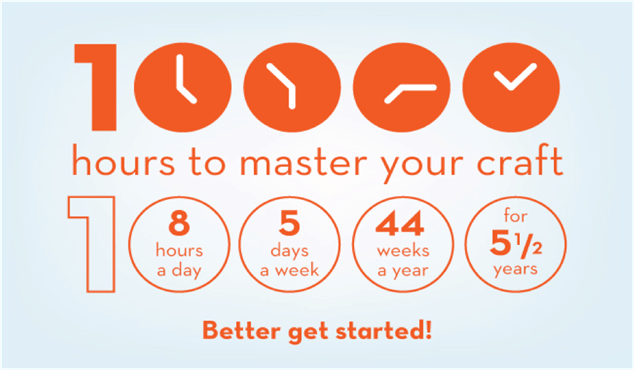
Xi Cao: First, the recognition definitely comes from the 10,000-hour rule. Zhilin Yang was among the earliest Chinese researchers connected to Transformer. The key shift in this wave was large language models based on the Transformer architecture. The founder and team often emphasize grasping the main contradiction, long-termism, and first principles. These concepts are easy to say but hard to truly live by. Another rare thing is that beyond engineer thinking, they have quite a lot of insight and empathy for users.
Li Xiang: For you personally, what's different about this round of AI investing compared to your previous mobile internet investments?
Xi Cao: Investing is still investing. What's changed is the shift from so-called mobile internet to AI. Though both are infrastructure changes, mobile internet was perhaps one of the rarest phenomena in human history — attaching a device to every person, turning it into an organ. AI builds a new infrastructure or operating system on top of that foundation. The way it ultimately creates value will definitely be different from before.
What's interesting is that OpenAI was founded in December 2015, but they didn't release ChatGPT until November 2022 — nearly seven years of underwater exploration, a lot of trial and error. That actually left venture capital firms with a very long time window. That in itself is quite different.
Li Xiang: I'm sure many people have asked you — over all these years of investing, are there any failure projects that left a deep impression?
Xi Cao: There have been. We've even summarized several typical error types. For example, the most classic one: "When fortune comes, heaven and earth conspire to help you; when luck departs, even heroes are not free." Wrong timing, and everything you do is wrong.
Another is "mistaking cognition for ability." I remember meeting a founder who had come out of a major platform. At the time, we only had two hours to decide because market competition was fierce and many people were chasing to invest. In those two hours, he delivered a dense output of high-information cognition that made us think this person was impressive.
But later we discovered that those two hours of concentrated output were actually summaries and distillations from his platform — cognition that peers at his level there would all have, just never shared externally. But at the time, because we didn't have enough time, we mistook cognition for ability. If we'd had more time to understand, we might have made a more precise judgment, and that project might not have been invested in.
Last year I heard a Silicon Valley investor say something on a podcast that I thought was quite good — it's now one of our organization's principles. He said: "If there isn't enough time for a decision, don't invest. That opportunity wasn't yours to begin with." You can only blame yourself for not having invested more time earlier, rather than trying to optimize decision quality in a short time — that's not scientific.
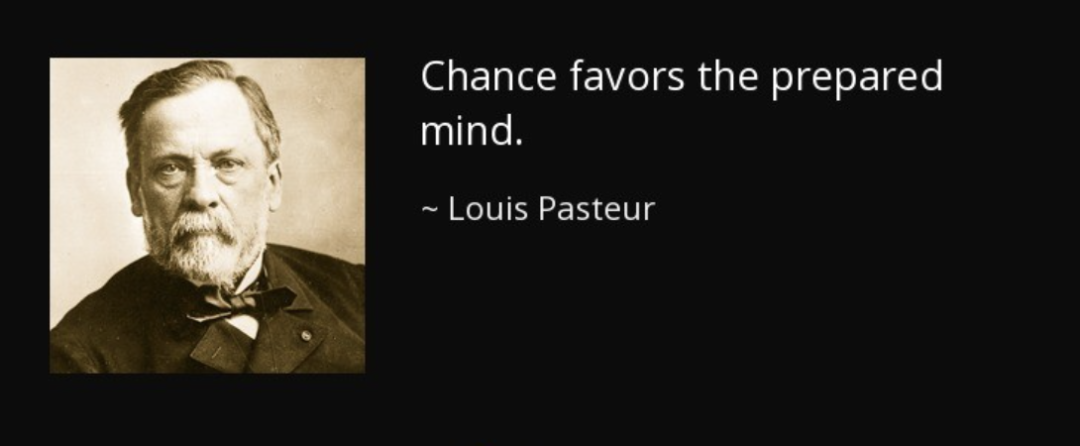
Li Xiang: I remember a foreign investment firm whose slogan was "a prepared mind."
Xi Cao: Yes, a prepared mind. Many investments, at the moment they're made, seem like very quick decisions, but actually a tremendous amount of work has been done beforehand. There's already a fuzzy image in your mind. Only when you encounter a good company do you have what's called "the click moment" — that's the one.
Li Xiang: I understand that early-stage investing is mostly non-consensus. But by Series B or C, shouldn't the market have consensus on a project? Because people have already voted with their money — this company will probably generate decent returns.
Xi Cao: That probably depends on what your standard for "successful company" is. Those that achieve extreme success may still be non-consensus at Series B or C. Those that are "relatively" successful may already be clearer at this stage.
I think this is hard to precisely quantify. For example, Kuaishou at $2 billion valuation, ByteDance at $1 billion, Xiaohongshu at over $3 billion — by that point it wasn't even Series B or C anymore, but the market was still non-consensus about their long-term value. Many people still missed them.
Li Xiang: Maybe what we call consensus now is only because we're looking back. There wasn't that framing at the time.
Xi Cao: Yes, I agree. If we take a company's peak market cap as the "answer," I believe the further you are from this "answer," the lower the consensus; the closer you are, the higher the consensus. And this "far" or "near" doesn't completely depend on whether it's Series B or C — it depends on how big the company can ultimately become. Take NVIDIA — at seven or eight hundred billion market cap, some people definitely thought it was expensive. Now it's at over three trillion.
Li Xiang: What I'm curious about is that investing requires sensitivity to change, but many people lose interest in rapidly changing things as they age, causing them to miss the next really big opportunity. Do you think venture capital is a career you can do until you're very old?
Xi Cao: In public markets, we can easily think of investors like Buffett and Munger who remained active into their eighties and nineties. But in VC, investors over 70 are indeed quite rare. The innovator's dilemma applies to organizations and individuals alike. In my impression, maybe some US enterprise software companies were led by investments from seasoned experts who had been at it for years — that might relate to industry characteristics. But in industries highly dependent on innovation, founders and investors tend to be younger. People's acuity to new things may gradually decline with age and dependence on previous paths to success.
MONOLITH: After all, in the VC industry, spending enough time on the front lines and being the first to meet those important founders may be the most important thing.
Li Xiang: The first time I saw this view, it was also a small shock to me. There's a public market investor who follows the Buffett and Munger route. He mentioned in his book that for value investing in public markets, you sometimes really don't need to meet the CEO — meeting them might even subtract points.
He said that through publicly available reports, financial data, even chatting with customers or factory security guards, you can form judgments about a company, and such judgments tend to be more rational. On the contrary, after meeting the CEO, because these public company CEOs often possess a certain personal charm, their words may to some degree affect your rational view of the company, leading you to make irrational decisions. I find this view quite interesting.
Xi Cao: In primary markets, especially early-stage investing, qualitative factors matter more, so direct contact with founders is more necessary. At early stages, there's very little that can be quantified, and everything changes. By the time a company reaches public markets, there's already abundant quantitative data — you can analyze and deduce the outcome, and major trends are basically visible in the numbers.
Li Xiang: So actually, judgment of people is still crucial. For venture capital, is it better if the person has more charm?
Xi Cao: I'd say the earlier the stage, the more important the founder, because "it's easier to change mountains and rivers than to change one's nature." Often the business can change, but people are hard to change. So you can see many impressive companies today whose early pitch decks had nothing to do with what they're doing now — but the founder remained, and that's what matters. It doesn't necessarily have to be called charm, but the founder being strong enough is indeed crucial.
"Being an Audience Member Is Pretty Nice"
MONOLITH: Let's start the Kimi rapid-fire round. After twenty years as a business journalist, what's one thing you believe that people around you don't believe?
Li Xiang: I still believe that communication, exchange, and the free flow of information are absolutely more beneficial than harmful. But in today's atmosphere, perhaps many people no longer believe this — especially in the business world, where many are in a state of hoping not to be noticed by others.
MONOLITH: In the past 12 months, what changed a long-held belief of yours?
Li Xiang: I started to feel that being an audience member is pretty nice.
MONOLITH: How so?
Li Xiang: I met someone older than us who said everyone in the world has different roles — some are directors, some are screenwriters, some are actors, some are prop masters, and some are audience members. He asked me: "What role do you think I enjoy playing most?" His answer was "audience member."
That answer was quite surprising. Many people might think this response implies a lack of engagement or ambition? But he continued, I don't know if everyone realizes that being an audience member actually requires capital. Especially today, most of the time you have to buy a ticket, and most of the time it's hard to safely remain outside as an audience member — you always get drawn into various things.
I strongly resonated with this. I've probably met at least two or three retired CEOs of major platforms, and I would ask them, what are you going to do next? You're in the prime of life, with so much knowledge and resources — shouldn't you go do something? They replied, "Sitting on a small stool watching from the side is pretty nice." They too had found the pleasure of being an audience member.
Xi Cao: This resonates with me too. I particularly love reading history. I've always felt very fortunate to do venture capital — one reason I love this work is that I can closely see heroes of our time writing business history. As a "front-row audience member," you can see the rise and fall of many people in parallel threads, different stories each with their own brilliance — it's genuinely fascinating.
MONOLITH: First instinct — which founder interview left the deepest impression?
Li Xiang: If purely from the perspective of the person, definitely Jack Ma. He truly is a very charismatic person, probably born with it. He makes you feel bathed in spring breeze, receiving enormous spiritual inspiration. It seems many people have this feeling, right?
MONOLITH: You once interviewed Zhao Peng and asked him: if a relative's kid were graduating, what would he advise them to do? His answer was — find something you genuinely enjoy, and make sure you love the daily grind of it, not just the outcome. If we flipped that question back to you now, what would you say to young people?
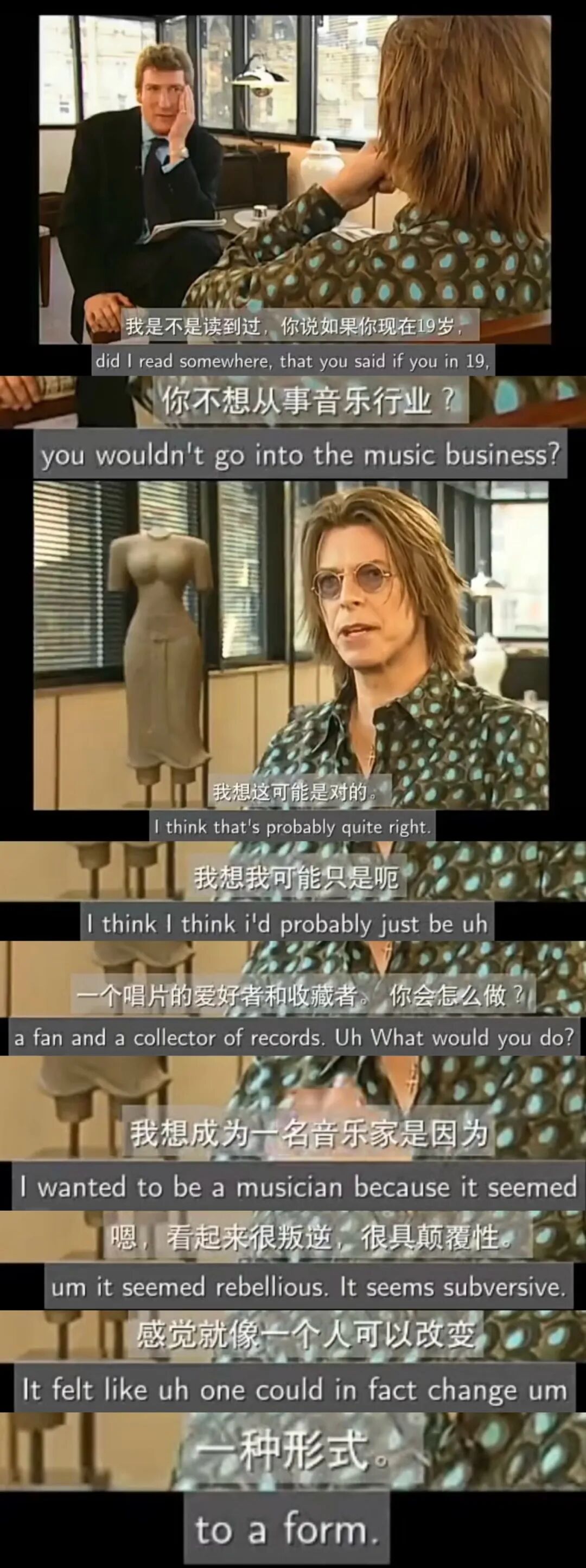
Li Xiang: Pretty much the same. We're aligned on values — you've got to do what you love. Lots of people have answered this kind of question before. There's a famous rock star, David Bowie, who was asked by a reporter: "Would you advise your relative's kid to pursue music?" His answer was classic too. First, you have to be sure you actually love it. How much do you love it? Are you willing to sweep streets during the day and rehearse at night? If yes, then you can walk that path. Though, most likely you'll end up just sweeping streets — which shows only a tiny fraction of people ever get to shine.
MONOLITH: What's your boldest vision for what's coming next?
Li Xiang: Nothing you imagine now would even sound bold anymore. Every conceivable thing is already happening, on every level and in every dimension. There are constantly things that make you sigh: if a screenwriter actually dared to write this into a movie, audiences would find it too fake, impossible that something like this could happen.
MONOLITH: If you were to write an article summing up your life so far, what title would you give it?
Li Xiang: The Most Important Thing I Know.
Xi Cao: What a Wonderful World.
After reading this article, how do you feel? Which of Li Xiang's works is your favorite? Feel welcome to share your observations and thoughts in the comments. We'll select five users whose comments are the most heartfelt and receive the most likes to receive a special commemorative gift prepared by MONOLITH. The event deadline is 24:00 on December 5th.