A Conversation with Liming Gao: The Zheng Huangs and Yiming Zhangs of the AI Era Are Already Starting Up

It takes ten years to figure it out, and one minute to pull the trigger.


The world is undergoing unprecedented change, and the AI wave is sweeping through the lives of ordinary people. When it comes to large language models, when it comes to the future, everyone has endless curiosity and questions — what kind of world are we actually heading toward?
How will AI, accelerating under the dominion of Moore's Law, shape the future world? We stand at the singularity, perhaps even at humanity's Noah's Ark moment. The future will be an era of massive variance between individuals; an era of exploding public goods; an era of billions of interconnected digital selves. This is Liming Gao's answer.
Gao's personal journey is extraordinarily rich. After graduating from Fudan University's mathematics department in 1989, he was assigned to work as a technician at the Shanghai Metro Corporation. In 1991, he obtained his senior programmer certification, becoming one of China's earliest internet users. In 1997, at age 30, he founded Stockstar — China's first website offering free real-time stock quotes. Within two years, it became the country's top financial and securities website.

He has always positioned himself atop the waves of each era, observing, thinking, and capturing opportunities amid massive transformations. After stepping back from entrepreneurship, he completed an EMBA at CEIBS, served as a researcher at the Shanghai Institute of Finance and Law, and took on investment director roles at multiple startups.
Recently, Monolith invited Liming Gao — founder of Stockstar and renowned investor — for a conversation. With GPT-4o's release, global attention had converged on the question of how AI will transform humanity, and our dialogue began from there.
As a veteran investor, Gao holds many distinctive views on AI, technology, investment, Moore's Law, and the future world. His perspectives are candid, forceful, clear, and sharp — perhaps diverging from what most people think. But his conviction that Moore's Law will change the world is unshakable, continually challenging entrenched assumptions.
There may never be a standard answer about the future world. Yet conversations with Gao compel constant reflection: in the AI era, where should we position ourselves to remain aligned with the greatest changes and steepest growth curves of our time? That may matter more than any answer itself.
This article references certain publicly listed companies and does not constitute specific investment advice.
The stock market carries risks; invest with caution.

The full text follows,
Compiled by Monolith, with edits and abridgments:
I
"OpenAI
most likely won't be the final winner."
MONOLITH:
Everyone is focused on AI, with all eyes on this field. Do you think there's a bubble right now?
Gao:
We're absolutely in a bubble. The first act may not be far from its curtain call. But that's fine — great revolutions always come with bubbles. Bubbles are what draw excess resources in, and excess resources breed richer, more intense possibilities.
MONOLITH:
After watching the GPT-4o launch event recently, what exceeded or fell short of your expectations?
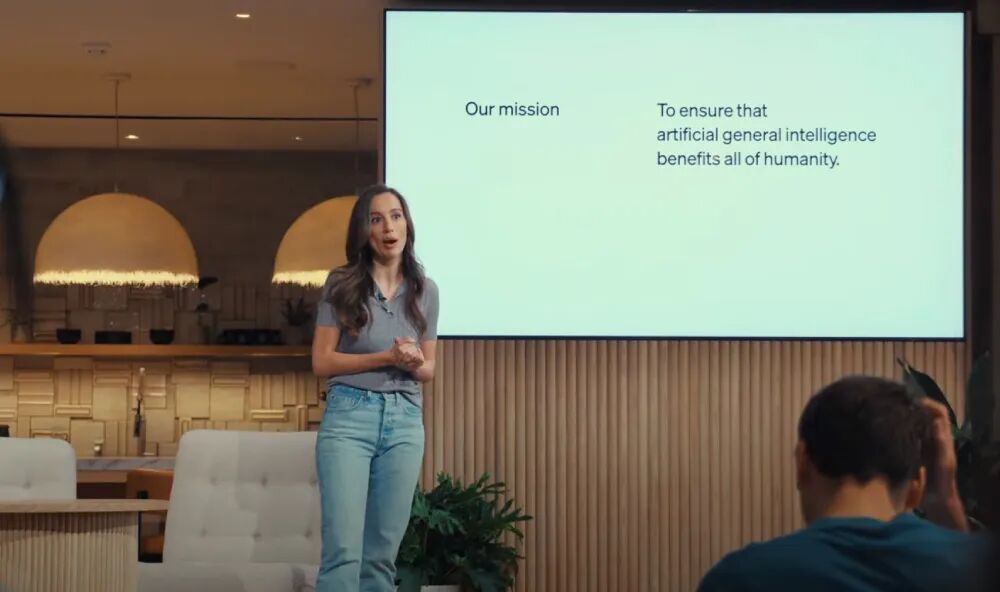
OpenAI Chief Technology Officer Mira Murati
hosting the OpenAI Spring Update
Gao:
OpenAI is starting to use "free" as a weapon to weaken competitors — it's no longer competing on technology alone. Free benefits end users, of course, but there's a spillover effect: the developer ecosystem may rise upward. In the short term, expecting GPT to deliver an order-of-magnitude improvement every time is simply unrealistic. Even Moore's Law only doubles things every 18 months. But that's okay — any great revolution unfolds in acts. After the first act closes, the second act's climax arrives. There's no need, and no possibility, of reaching the heavens in one step. Large models may go for a long time without another order-of-magnitude leap, and that's perfectly normal.
MONOLITH:
Getting more people to participate in this evolutionary process is what matters most.
Gao:
Even doing this, OpenAI can't guarantee it will capture the greatest value and creativity.
MONOLITH:
You mean it won't necessarily be the final, biggest winner?
Gao:
Most likely not.
MONOLITH:
Why?
Gao:
To use an imperfect analogy: the engine. The engine is the most important component of every gasoline car — the most complex, the most technologically advanced. But in the end, the profit an engine generates is just a limited markup over its raw materials (mainly steel), completely disproportionate to the value of the entire vehicle.
Think back to when we first saw the browser — we thought it was earth-shattering. We lavished on it all the praise and admiration we hear about large models today. But did it become the most profitable thing? No. Economically, it became completely cheap.
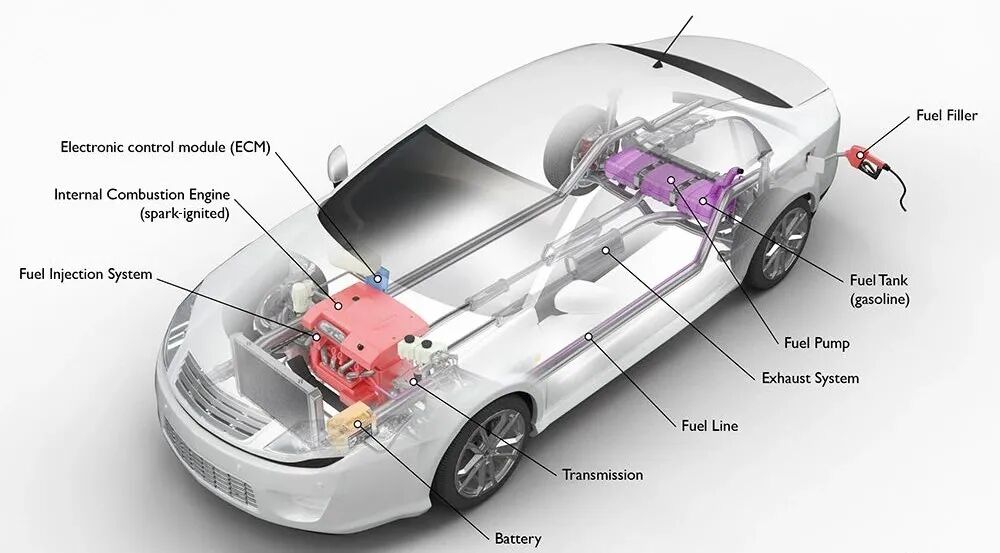
key components of a gasoline car
MONOLITH:
But people now say Model as a Service — that's perhaps different from your engine analogy. What's your view on that?
Gao:
That definitely won't happen. Large models will likely be relatively minor players in the future. They lack economies of scale and can't form monopolies. Everyone says they're chasing GPT-4o, but if everyone can produce essentially the same thing, where's your added value?
MONOLITH:
Actually, OpenAI may have been late to go free. They should have locked that door before a number-two player like Anthropic emerged.
Gao:
They should have been free from day one — raise the barrier high, break the chain, buy themselves more time to develop. When GPT launched, they should have told everyone this thing was free. People might say the costs of free are unbearable, but that's not true — Moore's Law is on the side of free. In the long run, marginal cost trends toward zero. GPT was the fastest application to reach 100 million users in the world — why not do it that way?
MONOLITH:
ChatGPT hit a growth ceiling after reaching 100 million MAU. At that point, they should have been maximizing speed to become a 1 billion, 10 billion-user company.
Gao:
As long as there's no number two, the absolute number isn't critical — 10 billion, 100 billion, it doesn't matter. As long as competitors are far behind, you've won.
Today everyone can see clearly: catching up to you is easy. So what do you do? The story has become about maintaining your valuation — it's already lost its original flavor. From this perspective, the first act's curtain isn't far from falling.
MONOLITH:
When the first act falls, what kinds of companies will die quickly?
Gao:
I don't think that's the important question. What matters more is that the next era's Xing Wang, Zheng Huang, and Yiming Zhang — at least two of the three — are already in the arena right now. We should be paying more attention to post-90s entrepreneurs.
MONOLITH:
Why specifically post-90s?
Gao:
The post-90s generation are the biggest beneficiaries of large models, or rather, those with the richest understanding and best grasp of the changes and value at stake. They're programmers without historical baggage — that matters enormously. Not locked in, not disgruntled. The previous generation, to use an imperfect analogy, wielded broadswords and spears; the post-90s generation is already holding machine guns. You think these young people can't change the world? They possess new weapons.
II
"The Singularity and Noah's Ark of Human History"
MONOLITH:
You've lived through multiple complete transformations — in AI terms, your context window is extraordinarily long. Despite short-term bubbles, you still believe AI will bring massive change to the world long-term. Why?
Gao:
I believe in Moore's Law. It produces the most violent changes and creates the greatest value. A modern human can easily follow Moore's Law for 50 cycles in one lifetime. For thousands of years — the agricultural revolution, the industrial revolution — nothing like this ever happened. It's the most powerful force for change in the world.
Moore's Law:
An empirical observation proposed in 1965 by Gordon Moore, co-founder of Intel. It states that the number of transistors on an integrated circuit doubles every 18-24 months, with performance doubling accordingly. This also means chip costs fall — in other words, the computing performance purchasable per dollar more than doubles every 18-24 months.
Over the past decade, I believe there has been only one truly important question: the second half of Moore's Law. The second half is fundamentally different from the first — we're moving from a world of scarcity to one of abundance, even to one of surplus.
I believe Moore's Law will bring us into an era of self-replication. Previously we had mass production — one thing copying itself through physical laws. Now, for likely the first time in human history, we can copy ourselves through means other than biological reproduction, creating our own "digital selves."
So this era has two faces: it's the best of times, and also a rather bumpy time.
MONOLITH:
How do you define the concept of "digital self"?
Gao:
When we previously discussed agents, the context was industrial assembly lines — you have an assistant that handles things you're unfamiliar with or don't want to spend time on. Two benefits: cheap cost, and you can have many, many agents.
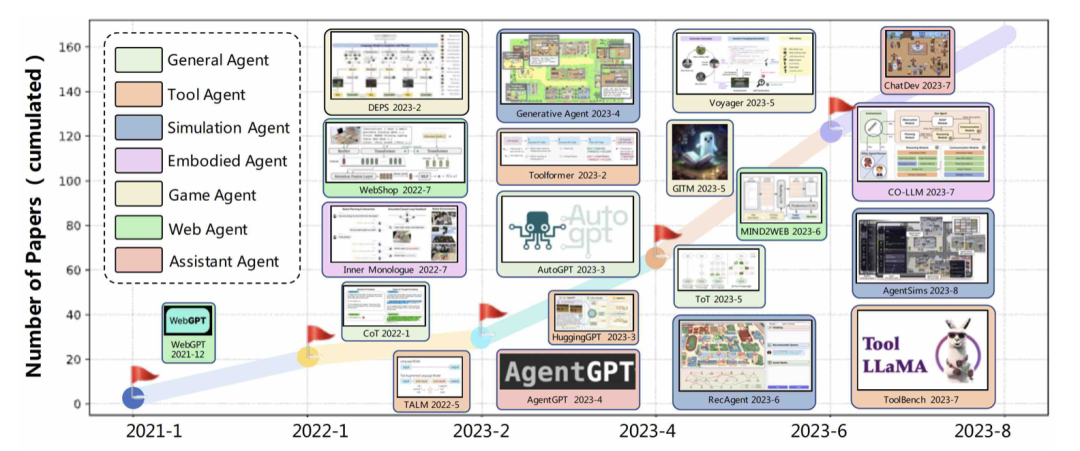
Existing Agent product technical route classification
cited from A survey on large language model based autonomous agents
But now when we talk about "digital selves," it's about replicating yourself — from a pure human capital perspective. For example, you're a digital self of Terence Tao, he's a digital self of Yitang Zhang; these two selves can engage in intellectual collision without rest or sleep, even collide with another group of Fields Medalists. This kind of "digital self" enables the lowest-cost replication of the strongest, most essential human capital — an enormous liberation of human capital.
MONOLITH:
That digital selves will soon reach human-level intelligence — many people doubt this. Why are you so convinced?
Gao:
Still Moore's Law. Moore's Law slaps everyone in the face every time, consistently exceeding expectations. The most brilliant minds in this field — even Gordon Moore himself when he said it wouldn't continue — it kept going for decades more. So why would it stop now? I don't think it will.
As time progresses, the scale of each Moore's Law leap becomes different. The next leap will be equivalent to thousands of years on an evolutionary scale; the leap after that, tens of thousands of years; ten leaps from now, hundreds of thousands of years. That's evolution — accelerated evolution.
We've always thought from the perspective of the physical world; going forward, we must think in evolutionary paradigms, with time scales of millennia, tens of millennia, even millions or tens of millions of years.
MONOLITH:
Looking back at human evolutionary history, the several million years from ancient apes to Homo sapiens gets summarized in one page of a history book. So you believe AI development will have comparable impact, rendering the past few thousand years of human advancement insignificant.
Gao:
Yes — this is the arrival of the singularity.
MONOLITH:
In this evolutionary history, what does the emergence of Transformer signify?
Gao:
From an evolutionary perspective, Transformer is equivalent to the emergence of mitochondria. Without Transformer, we'd still be living in the endless long night of bacterial forms. With Transformer, the birth of eukaryotes arrives. Without mitochondria, endothermic animals couldn't emerge; without endothermic animals, how do you get mammals? However you evaluate it, Transformer is of paramount importance.
MONOLITH:
What other scenarios do you think large models will unlock, with profound impact on us?
Gao:
Honestly, this question needs to be answered by letting this era's smartest programmers get tossed, fried, and stewed in the oil — watch their creativity. What's already happened: top programmers' individual productivity has improved by an order of magnitude. K-god (Andrej Karpathy) can whip out a GPT-2.5 with just a few thousand lines of code. How do you compete with that? Talk to them more — it's more useful than empty theorizing.
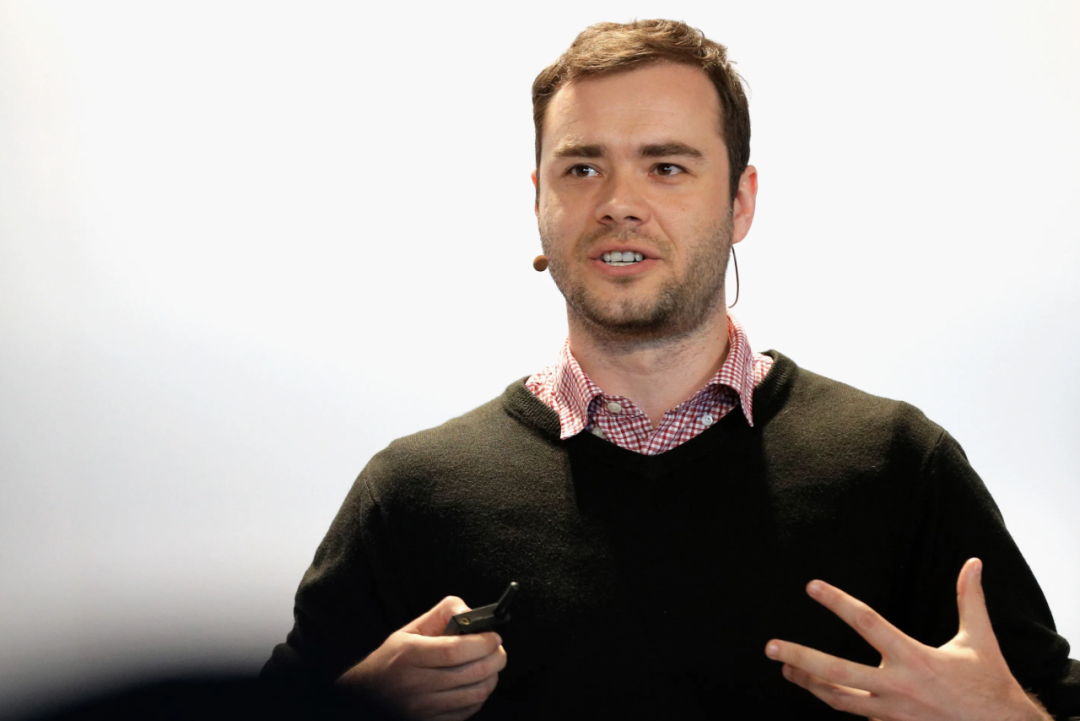
Andrej Karpathy (former OpenAI computer scientist)
MONOLITH:
Our imagination is that for humanity as a whole, the Gini coefficient will grow larger.
Gao:
For ordinary people, this is essentially a Noah's Ark problem. The future is an era where individuals provide public goods. One person can replicate six-figure, seven-figure digital selves. Assume 1 million top elites each create six- or seven-figure digital selves — then society's public goods expand from today's thousands or tens of thousands to millions or tens of millions. We'll enter an era of exploding public goods.
MONOLITH:
How do you define "public goods"?
Gao:
Building bridges, lender of last resort, the Federal Reserve — these are public goods. In the future there may be all kinds of novel public goods. The progress of human civilization is ultimately the progress of public goods, the progress of infrastructure. I believe large numbers of individuals will provide public goods in the future.
MONOLITH:
As ordinary people, how do we get a ticket onto Noah's Ark?
Gao:
How do you become a public good? How do you create value for others? This is crucial. In the second half of Moore's Law, what matters is evolutionary speed — how you become a more meaningful public good. If you're tremendously valuable to most people, you've achieved evolution-level success.
MONOLITH:
If the era of digital selves arrives, which two top humans' exchange would you most want to see?
Gao:
Italo Calvino and Elon Musk. It might be like chickens talking to ducks, but that's precisely the astonishing possibility the digital self era provides.
"The best of times,
and also a rather bumpy time."
MONOLITH:
From an investment perspective, in an era governed by Moore's Law, what advice do you have?
Gao:
You might consider going the opposite direction and investing in traditional energy — especially with deflationary shadows lingering, perhaps move toward two extremes. On one end, maximize the integration of your human capital with AI. On the other, from an antifragile perspective, old-world resource and energy stocks deserve attention. The copper-gold ratio for industrial metals remains near historic lows, and traditional energy itself is becoming a bottleneck.
MONOLITH:
A similar logic: in US markets, everyone pursued tech stock investing over the past two decades, and tech as a mega-trend certainly delivered astonishing returns. But looking at the past ten years, the best-performing stock was actually Monster Beverage — a consumer goods company. Another change: many Chinese companies historically didn't prioritize governance and shareholder returns, but now both Hong Kong and A-share markets have changed dramatically, with buybacks and dividends increasing.
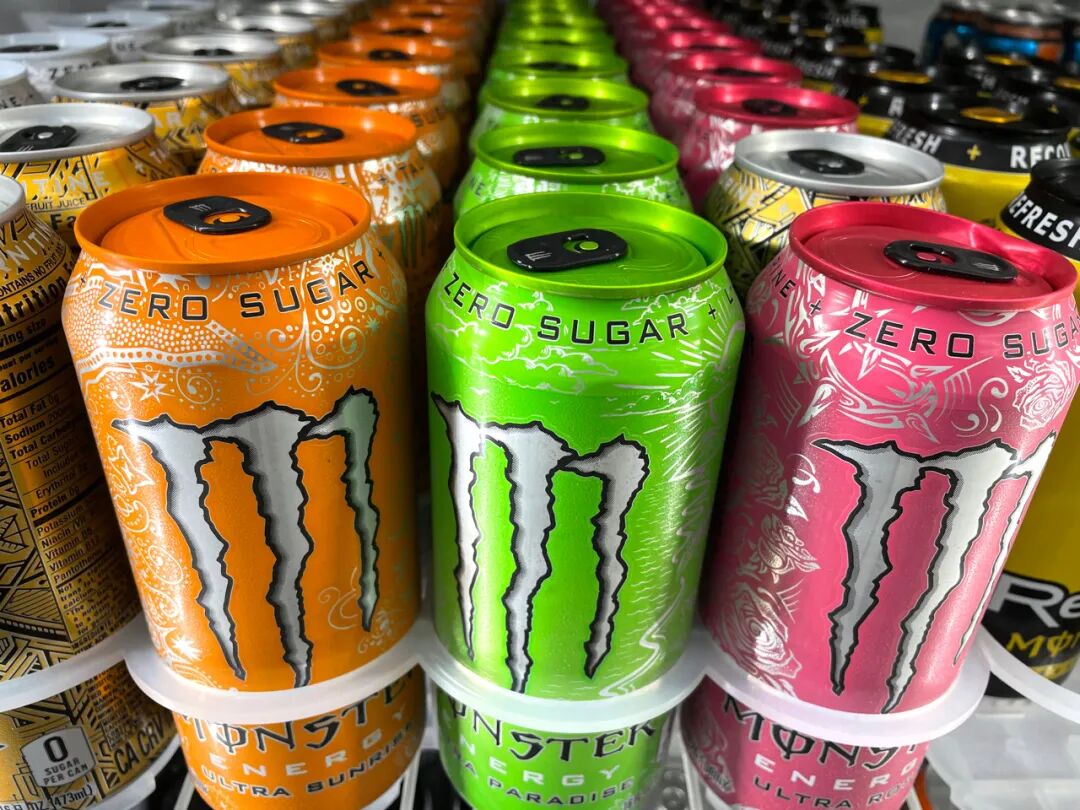
Monster Energy
Gao:
We're entering a stage of optimized competitive structure, with clear leaders whose market share and cash flow generation keep improving. The era of competing through fixed asset investment is over; ROE stability is rising. You should note that in recent years, many old-energy-type companies have risen just as strongly as Monster Beverage.
Like Buffett buying so much oil and Japanese trading houses — it all makes sense. Many of those trading houses he bought hold substantial global shipbuilding assets; shipping carries unexpected call options in times of great change.
MONOLITH:
This is also a massive cycle. Recently reading The Clash of Civilizations and the Remaking of World Order, it mentions the macro environment shifting from a unipolar to a multipolar world, with ongoing conflicts — Russia-Ukraine, the Red Sea, etc. So all industries related to resources and strategic material reserves are being affected. Tanker stocks, for example, have been in explosive cycles over the past two to three years.
Gao:
Including container shipping recently moving toward new highs. Last year's dry bulk, this year's second-half VLCCs — the same story may repeat, like the 2007-2008 container boom. Many shipbuilding stocks are essentially export-oriented: Chinese costs, dollar revenues, with steel costs in long-term decline. Long-term, shipbuilding stocks could potentially rise 10x.

2017-built 298,800 dwt Aquitaine Euronav VLCC
So this remains a question of paradigm shift in thinking. Returning to Buffett's "sweet spot" — tankers have a very classic paradigm; ships are an even more classic paradigm. Rising ROE, beginning buybacks — these are standard paradigms. Why do we study Moore's Law? Because it's a stronger paradigm. Whichever paradigms you know well, apply them in your sweet spot and you've got a cheat code. Don't try to solve hard problems in investing. Stay objective, achieve cognitive coherence.
From the sweet spot perspective, if you clearly see the opportunities change brings, you should bet. Whether that change itself is AI isn't actually the critical question. During the internet wave, when Yahoo was the hot thing, Starbucks also became a $100 billion company.
MONOLITH:
But many smart people have a strong-player mentality — they like hard problems.
Gao:
People who constantly tackle hard problems easily hypnotize themselves. To achieve cognitive coherence, they end up persuading themselves, covering their own ears — but reality doesn't bend to human will.
MONOLITH:
You repeatedly emphasize that thinking paradigms matter. How did your thinking style form, and how do you train and change it?
Gao:
Just spend time with the most excellent people, and your paradigm will naturally shift. If the people around you have high variance, with many who aren't first-rate, be very wary. People are unconsciously encoded by their environment, unconsciously poisoned — that's why we must subtract, must declutter, all to fight viruses. The ancients said "examine oneself three times daily" — that's also a virus-killing process.
From an investment standpoint, why can Buffett watch a stock for ten years before acting? Because he needs to disinfect at a large scale before committing. Take the shipping cycle logic we just discussed — merely understanding this is completely insufficient. If you don't understand the macro, you're buying blind. Even focusing solely on shipping isn't enough; you need mechanical perspectives too. Contemplation takes ten years; execution takes one minute.
"If forced to choose,
I'd want to be Buffett."
MONOLITH:
As a veteran investor, your experience is extraordinarily rich — from Fudan mathematics to metro company technician, to founding Stockstar, to now serving as investment director at multiple startups. We first want to ask: after university, how did you choose your life path? What were the important inflection points and mentors?
Gao:
I graduated from Fudan University's mathematics department in 1989. This brings me to two mentors in my life — two class teachers who changed my fate.
When I applied to middle school, my elementary school class teacher filled out my application for me. She understood me better than I understood myself. I was extraordinarily fortunate to attend No. 2 High School of East China Normal University — then one of 13 national key schools.
She enabled me to be among the most excellent people. Recently, "quant king" Jim Simons passed away. His second life principle: always be with first-rate people.
My second life mentor was also my class teacher — my university class teacher, who fundamentally changed my entire life.
When I first entered Fudan, he told us: You came to study mathematics, you want to be mathematicians — sorry, you're basically all too late. You're 18 and haven't even studied calculus yet. Your great predecessor Évariste Galois had already founded group theory at 17; by 22, when you graduate, he had already died gloriously in a duel. Euler, Gauss — they all established their most important mathematical theories in their early 20s. Compare where you stand.
This was enormously important to me. Why? Because he taught me to look at things objectively, not to indulge my ego. This sentence remains fresh every time I read it — especially in investing, objectivity should be 99%, subjectivity 1%.
After delivering this great negation, he also gifted us eight characters: "from thin to thick, from thick to thin" (originally from the great predecessor Hua Luogeng) — slow is fine, small is fine; with persistent effort, form comparative advantage, then advance to absolute advantage — the value of absolute advantage is time's true friend, good friend.
MONOLITH:
As a long-term professional investor, you're semi-retired yet continuously absorbing new knowledge and tracking frontier trends. We're curious — how do you acquire and filter information?
Gao:
I angel-invest in some of the most outstanding young people and engage deeply with them. Also, I have a habit that helps me enormously — "early to bed, early to rise." Around 8 p.m. I go to sleep; around 4 a.m. I'm up. By 10 a.m. all work is done, then it's off to the gym, meeting people, learning.
MONOLITH:
Waking at 4 a.m. sounds like a fantasy to many young people today.
Gao:
Try this: skip dinner, and you can sleep early. Hungry, you'll want to sleep and hibernate; early sleep naturally leads to early rising — the whole habit chain transforms.
MONOLITH:
Moonshot AI, which we invested in, has a product called Kimi. We had it generate one hundred questions to ask you, picked a few, and need quick answers.
First: what's the one word that best represents your personal investment style?
Gao:
"Seizing opportunities created by external change."
MONOLITH:
What's a trend you discovered that was once underestimated but ultimately validated?
Gao:
Moore's Law — actually the biggest one is Moore's Law. Even today, people still underestimate it.
MONOLITH:
What's the most successful investment you've made? What was the process?
Gao:
To humblebrag: I've made several dozen-baggers, and over 100x on one company. But never pursue perfection in investing. When unclear, wait — no need to struggle against yourself.
MONOLITH:
Share a recent book that deeply influenced you.
Gao:
Richard Koo's The Escape from Balance Sheet Recession — strongly recommended, excellently explains the current great transformation. Also strongly recommend Peter Drucker's Innovation and Entrepreneurship — the book that influenced my life most.
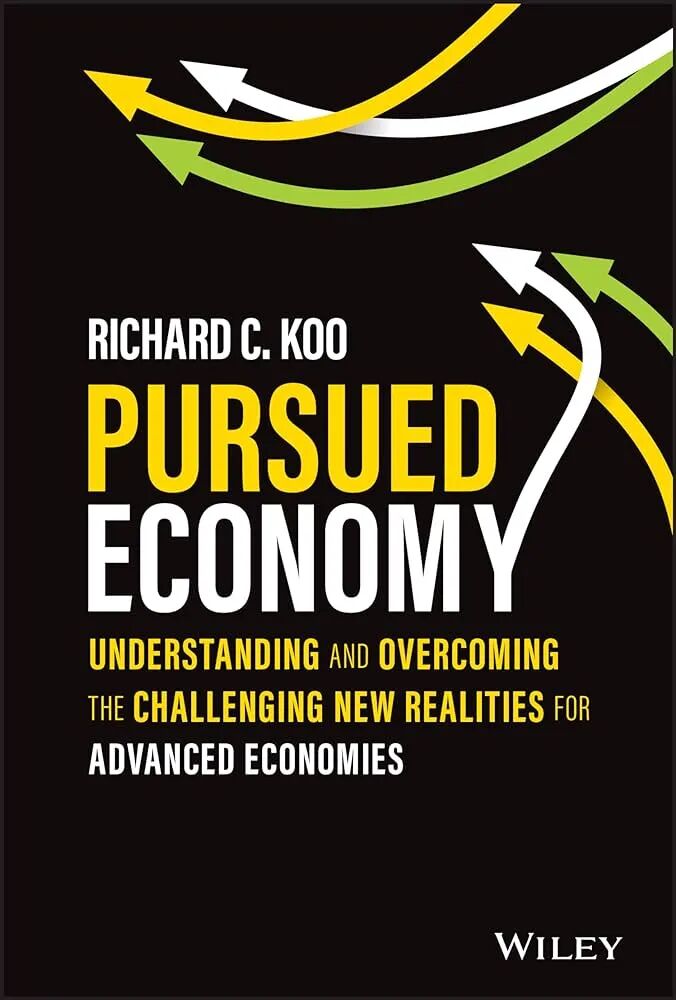
The Escape from Balance Sheet Recession
MONOLITH:
Setting aside all other factors, if you had to choose one life idol, who would it be?
Gao:
Peter Drucker.
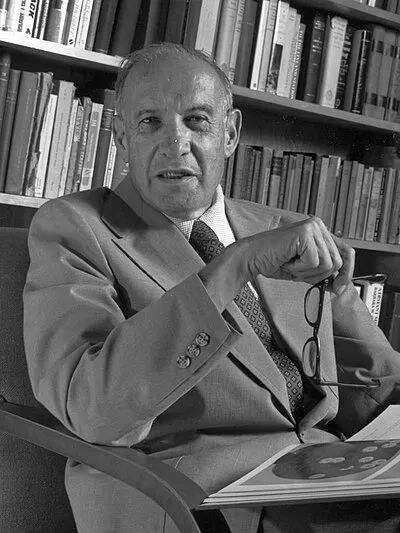
Peter Ferdinand Drucker
MONOLITH:
If you had to choose one life among Buffett, Musk, and Jobs, which would you pick? Why?
Gao:
Honestly, I wouldn't choose any of the three.
Why? Buffett — enormously successful, but how meaningful is his life really? The breadth of his life experience is insufficient.
Musk — deep insecurity has always lived inside him, perhaps only somewhat corrected in recent years. Of course, if you're not somewhat neurotic, not slightly obsessive, you probably can't make enormous contributions to the world either.
Jobs — today everyone thinks he's remarkable, but that's because Apple is remarkable, not because he is. He's a bit like Agassi: only in the last decade of his life did he truly mature. Before that, he was profoundly immature. The most important thing he said in those final ten years was "stay hungry, stay foolish" — extraordinarily brilliant.
If forced to choose, become Buffett. Not because of his investment success, but because Buffett ultimately lived himself into a public good.

Notes:
Books mentioned in this article
Why Read the Classics — Italo Calvino
Sapiens: A Brief History of Humankind — Yuval Noah Harari
Innovation and Entrepreneurship — Peter Drucker
Thinking, Fast and Slow — Daniel Kahneman
The Escape from Balance Sheet Recession — Richard Koo
Open: An Autobiography — Andre Agassi
Monolith Community
After reading this article, what are your reflections on how AI will change the world, and on how to approach investing? Do you believe Moore's Law and scaling laws will continue?
Share your observations and thoughts in the comments. We'll select five users with the most heartfelt comments and most likes to receive special commemorative gifts from Monolith. Activity deadline: 24:00, June 20.