A Conversation with Liu Zhiyu: Artificial Intelligence Can Attain Enlightenment Too

The rarest thing in this world is authenticity.


By then, he had already been gone for a long time. Yet stories about him continued to circulate: winning the International Mathematical Olympiad gold medal as a teenager, gaining admission to Peking University's mathematics department, receiving a full scholarship to MIT — and at the very peak of his life, abandoning everything to leave the secular world behind and enter monastic life at Longquan Temple. He was 22 years old that year.
More than a decade later, Liu Zhiyu, who had once said he would absolutely never return to lay life, came back to the world of the living. At 36, he fell in love, got married, returned to secular life, wrote a book, even started livestreaming and founded a company — becoming an entrepreneur. To many, the romantic, poetic narrative seemed shattered. The prodigy Liu Zhiyu had ultimately chosen an ordinary life, and now he was intimately bound up with all things worldly.
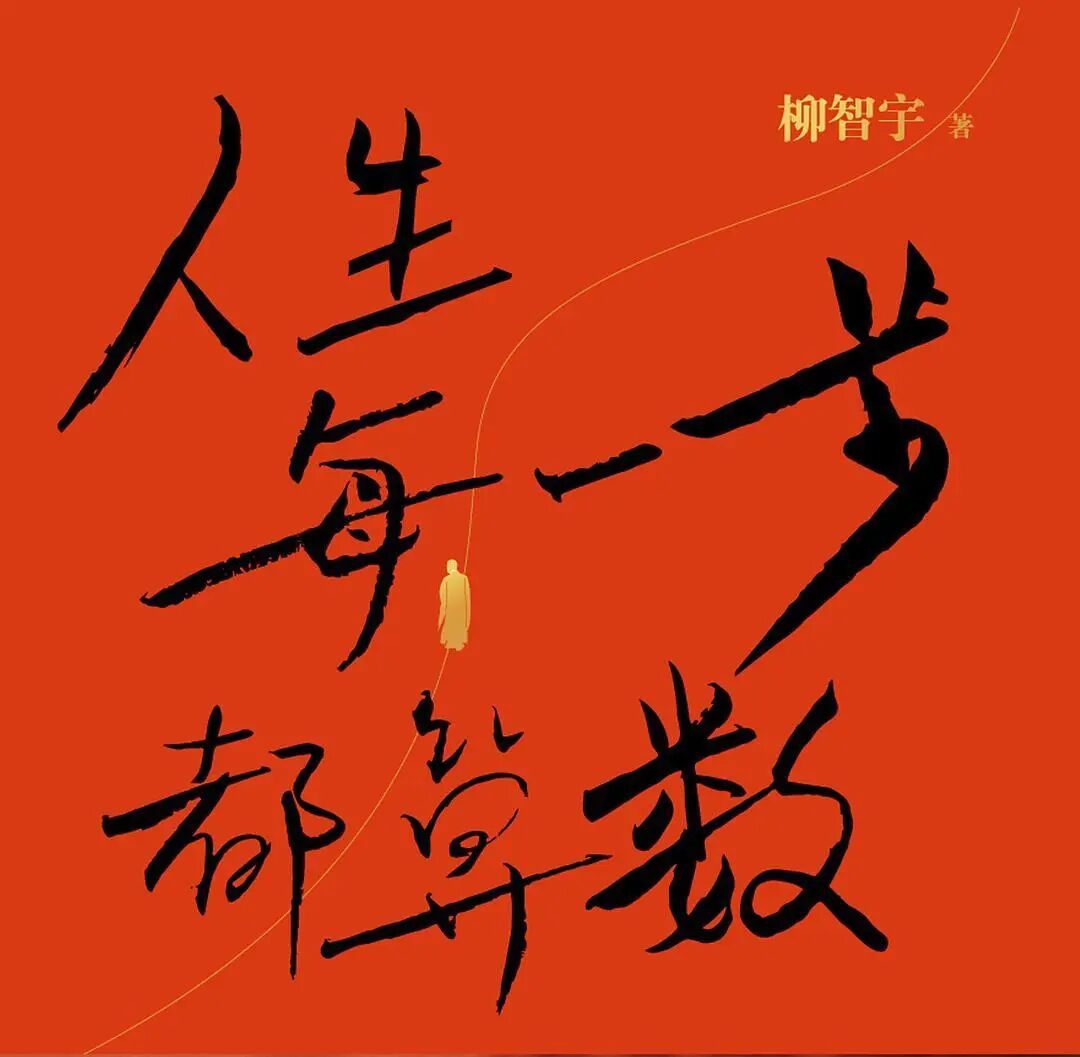
At the end of 2023, Liu Zhiyu published his autobiography Every Step in Life Counts. In it, he reviewed the highlights and darkest moments of his life, recounting how he achieved a sense of peace with himself. What exactly happened during these years? And how does he now understand everything that came before?
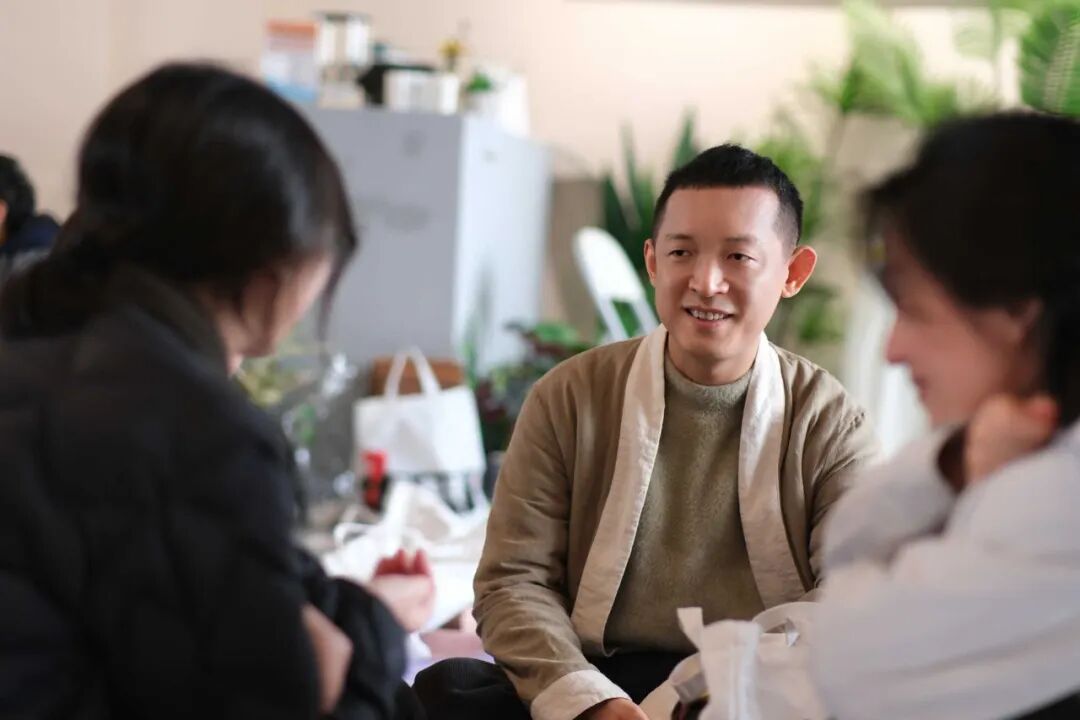
Recently, Monolith held a conversation with Liu Zhiyu. As an investment firm committed to seeking truth and driven by curiosity about the nature of business and the world, we wanted to explore why someone with such a legendary life chose to return, and how he now perceives and understands the world?
Monolith founder Xi Cao and Liu Zhiyu are both young entrepreneurs who also studied at Peking University. They discussed the "path of competition" among prodigies at Peking University, as well as today's hottest topic: artificial intelligence. Liu Zhiyu believes that competition is endless, and constantly competing with others is not the path a person should truly take — everyone must walk their own path.
This is also something he became more certain of after finishing his autobiography: "I just want to be my authentic self, not play the role of who others think I am."
It seems Liu Zhiyu attained enlightenment about life too early. While his peers were still struggling bitterly over school admissions and livelihood, he had already moved to the next stage. In reality, Liu Zhiyu says, looking back, he also had moments of excessive arrogance — in high school, he was arrogant; after entering monastic life, he was arrogant too. Arrogance was only the surface. In truth, he experienced much inner turmoil and turbulence, and he paid a physical price for it.
After more than eight years at Longquan Temple, Liu Zhiyu descended the mountain and returned, throwing himself back into the torrent of secular life. He met a girl he loved. He found a new career — not mathematics, not Buddhist studies, but the currently trending field of psychological counseling. He began engaging in social relationships, standing in a commercial world of desire, profit, and competition for resources, yet he consistently maintained the five precepts and simply did his own work.
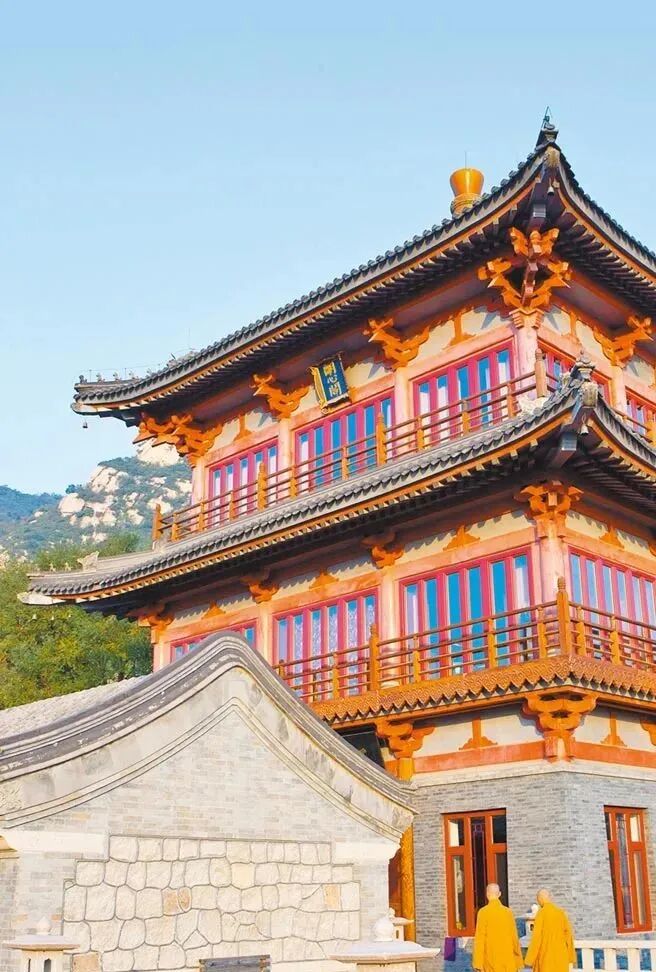
Having been detached from secular society for so long, he inevitably had to endure and confront dramatic environmental changes. Compared to when he first ascended the mountain over a decade ago, the world now operates on an entirely different commercial logic. Amid such upheaval, Liu Zhiyu still carries his curiosity, maintains his care and concern for the world, and strives to love specific, concrete individuals. He says that what the world sometimes cannot tolerate is authenticity — and therefore, what is most precious is also authenticity.

The full conversation below, edited and abridged by Monolith:
I
"For me, laying my inner self bare for others to see is not a difficult thing."
Xi Cao:
What made you want to write a book?
Liu Zhiyu:
For years, I refused all interviews, hiding away in the mountains to practice. Yet I constantly faced rumors and gossip — netizens would take a photoshopped picture, or a photo of some other monk, and claim it was me. Eventually, I thought: rather than letting others define me, I should define myself.
I had reached 35, with many experiences worth remembering. If I didn't write them down, I might forget them myself. When I first started writing, I carried a lot of negative emotions. Writing about those particularly painful and embarrassing experiences was also a form of release. This autobiography was more like organizing my own growth process, and through writing, I also gained much insight and healing.
MONOLITH:
The book is titled Every Step in Life Counts. What's the meaning behind it?
Liu Zhiyu:
The book was originally going to be called Cultivation in the Human World, but then I thought that sounded rather esoteric, not very connected to most people's lives. The current title was my wife's idea. Cultivation in the Human World and Every Step in Life Counts mean roughly the same thing, but the latter resonates more with ordinary people. Each of us, every experience — it all counts, it can all help us grow. Later the publisher pointed out that "counts" also carries the meaning of counting, of mathematics, which connects to my background. A double meaning, I suppose.
MONOLITH:
The book writes about many painful and darkest moments in your life. This takes tremendous courage — not everyone is willing to look back and lay their inner wounds bare for others to see. What was this experience like for you?
Liu Zhiyu:
I am an exceptionally sincere person — sometimes so sincere that others can't stand it. So for me, laying my inner self bare for others to see is not a difficult thing.
When writing about those darkest moments, I would feel some pain. For example, at the temple, because I always had to go out to work in the dead of winter, I was constantly exhausted and fell ill for more than half a year. At that time, I was alone in the clinic room, holding two moxibustion heads to treat myself, burning holes all over my clothes — probably four or five garments were burned through during moxibustion. It was bitterly cold then.
There were several experiences like this. When I had just come down the mountain, I frequently experienced sleep paralysis — conscious but suffocating, and overwhelmed by loneliness, desolation, coldness, darkness.
When I look back and write about these pains again, what I see is not the suffering and sorrow of that time, but rather the vitality deep within, seeing how I transcended these difficulties and persevered in moving forward.
MONOLITH:
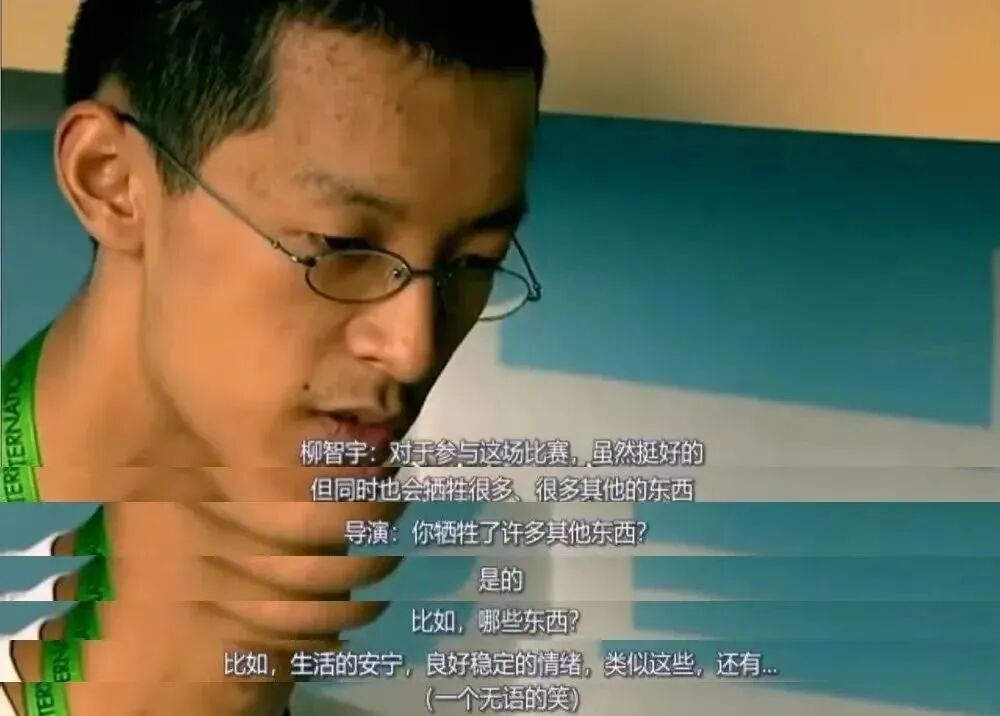
You wrote in your book that the first highlight and darkest moment of your life occurred simultaneously. You won the International Mathematical Olympiad with a perfect score, yet after winning the gold medal, you fell into depression. How did that depression come about?
Liu Zhiyu:
The summer after my second year of high school, my eyes developed problems. Throughout my entire final year, I could only use my eyes normally for one hour each day. So how did I do Olympiad problems? First, my eyes had to work like a camera, scanning the problems into my mind, then performing calculations and thinking inside my brain. Only after I had thought things through would I write out the solution process. That final year, I truly paid a price beyond what ordinary people could imagine. So when I finally won the gold medal, I saw it as a natural outcome.
I believe many people are like this. When everyone thinks you're living well and have gained much honor, perhaps you yourself are suffering inside.
That final year of high school, I also had much confusion about interpersonal relationships. I really hoped to help those around me, to let more people win Olympiad trophies and gain admission to their ideal schools like I did. Before the competition, I had spent more than a dozen sessions introducing my problem-solving methods to classmates, but only two or three people were listening seriously. For various reasons, our cohort didn't produce many Olympiad winners or those who qualified for direct admission. I was deeply discouraged. What I wanted to give everyone was perhaps not what they wanted.
The torment and pain of these two things together ran through my entire final year. I seemed to be riding high with my gold medal, but inside I felt enormous loneliness and a sense of not being understood.
MONOLITH:
The third darkest moment: you spent more than eight years at Longquan Temple, and returning to society was extremely difficult. You also fell into prolonged anxiety. How did you face this at the time?
Liu Zhiyu:
When I first came down the mountain, I had nothing — only a few thousand yuan in my bank account — but my mentality was quite positive, full of hope. Having come down, I needed something to do. If I were to teach Buddhism, I had to offer something different from others. I thought, I had studied psychology, I could combine Buddhist studies with psychology. So I founded a "Buddhist-style" psychological service project.
I was a bit like a newborn calf unafraid of tigers, not knowing how difficult this would be, not knowing what one needed to pay attention to in order to survive in this world. For example, I didn't know how to register a company — I even used my mother's name to register one. I didn't know how to handle questions from netizens, spending hours each day responding, and ended up exhausting myself.
Walking this path was truly quite arduous. At the worst times, after working 15 minutes, my body couldn't take it anymore and I had to lie down in bed for a while to recover. This is also why I had sleep paralysis problems for more than a year.
At that time, when I spoke with people, I could only speak softly because I had no strength. When I first met my wife, I also spoke to her in a small voice, because this way I could conserve energy — raising my voice at all was extremely difficult.
Later I realized this couldn't continue. I needed to take better care of myself, otherwise it would be hard to keep going. I began reducing outside activities and focusing more on recuperating my body. Because life is finite, and even if we want to help others, we must do so on the premise of taking care of ourselves.
MONOLITH:
At the hardest times, did you ever imagine another Liu Zhiyu in a parallel universe? One who went to study at MIT and pursued mathematics. If you had never entered monastic life, everything would have been different?
Liu Zhiyu:
It probably wouldn't have been easy either. I've heard that studying in America is also exhausting — physically, it would have been about the same. The other path might have offered somewhat different scenery, but since I chose my current path, I have never regretted it.

II
"I don't consider myself
a businessman."
Xi Cao:
After leaving the mountain, you inevitably face drastic environmental changes. Some people might say that choosing to return to lay life, choosing to marry — these are betrayals of the Buddhist order. How do you respond to such voices?
Liu Zhiyu:
Those who say this don't understand Buddhist doctrine. In fact, the Buddha did not oppose monks returning to lay life. Male monastics have seven opportunities to ordain, return to lay life, and ordain again — all of this is permitted. If you cannot uphold the precepts, you may choose to switch your identity and return to lay life. What matters is that you uphold the precepts appropriate to your current identity.
My choice to return to lay life was precisely because of my respect for the precepts. I was living away from the monastery for extended periods, going down the mountain to do psychology-related work, and some aspects were genuinely difficult to maintain. The precept of no food after noon — nothing to eat after 12 p.m. — I persisted for a while, but found my body couldn't endure it. Rather than continue this way, I thought it better to switch identities. This would be more liberating, with far less baggage.
Xi Cao:
I'm curious — what permanent changes did those eight-plus years on the mountain bring you?
Liu Zhiyu:
I found the state of "non-self." When my health deteriorated, things I had taken for granted — honors, cleverness, the simple ability to eat and drink normally — all became luxuries. I suddenly realized how fragile and impermanent body and mind are, how beyond our control.
In the spring of my second year as a monk, because of my poor health, I wasn't assigned much work. I often hiked the back mountain. As I climbed, I watched the trees around me transform from withered to flourishing. I remembered that a century ago this mountain had been bare rock, completely barren, yet now it was covered in vegetation.
Mountains, the earth, our own body and mind — they change every moment. We merely截取 a very brief splash from the flow of time and mistake it for permanence.
When others criticized me — poor at moving bricks, poor at farming — at first I was distressed. Gradually I realized that "I" itself exists only in fragmented moments of time. If there is no "I," what then of good and bad, right and wrong? Many things fell away at once. I could view my life with much greater equanimity.
MONOLITH:
After returning to lay life, are there still precepts you must uphold?
Liu Zhiyu:
I now maintain the five precepts. No killing, no stealing, no sexual misconduct, no false speech, no intoxicants. For example, in summer with mosquitoes, you may drive them away, but you cannot kill them. Walking and seeing ants, you must step around them, not on them. The precept against stealing means no tax evasion. Sexual misconduct means no extramarital sexual relations. False speech means no lying. And no alcohol.

MONOLITH:
You say you still maintain precepts, and most people's impression of you remains "monk." But now you're engaged in these commercial activities — selling courses, running training camps — you must constantly promote yourself, advertise yourself. This doesn't seem like something a monk would do; it's closer to being a businessman. How do you reconcile these two identities?
Liu Zhiyu:
First, I don't consider myself a businessman. I still see myself as a practitioner, or perhaps you could call me a teacher. Confucius taught students and collected tuition, yet no one ever called him a businessman. What I'm doing now is also unavoidably connected to money.
My original intention is certainly to serve the public. Honestly, taking the knowledge-payment route — using your knowledge to support yourself and your team — is quite difficult. I can only say that what I insist on is not lying, and as much as possible, not exaggerating myself.
Traffic, money — these things themselves are neither good nor evil. What matters is the person using them. If we can use traffic and money to contribute more to society, to help more people live happily, to find peace of mind, then this is meritorious.
Xi Cao:
Is there an essential boundary between being on the mountain and off it?
Liu Zhiyu:
It's more a change of lifestyle. Monastics walking in this world inevitably encounter strange looks from others. Our teacher said, when you take the subway, don't wear headphones. Why? Because a monk wearing headphones makes people think this monastic is improper. Another famous teacher said, monastics on trains should best not sleep, especially during daytime. Why? People might think monks who sleep are lazy. You must sit in meditation posture, body upright, leaving a good impression on others.
Xi Cao:
But wearing headphones and sleeping — that's what's real.
Liu Zhiyu:
Yes. Perhaps what the world sometimes cannot accommodate is precisely what is real. One of the things the world may least accommodate is reality itself.
Xi Cao:
From the monastic perspective, is what you want to transmit reality?
Liu Zhiyu:
Of course what we want to transmit is reality. But this reality must be packaged in ways the public recognizes before they will consider it truth.
Xi Cao:
So so-called reality is also packaged reality.
Liu Zhiyu:
This is the somewhat twisted part. We must present excellent deportment to give people confidence, to make them listen to what you say. But I actually don't like this. I prefer to be more at ease. This is also an important reason I returned to lay life.
Xi Cao:
As someone with fairly advanced practice, do you still argue with your partner?
Liu Zhiyu:
Part of my personality is especially focused — perhaps related to studying mathematics. When I'm absorbed in work, when I'm thinking through my own problems, it's as if nothing around me exists. I always neglect those nearby. Those close to me feel, "Don't you care about me?" — misunderstandings easily arise.
Xi Cao:
Human nature. No one escapes it.
MONOLITH:
I remember a passage in your book about how Teacher Liu studied cosmetics knowledge, how he learned to buy things for his girlfriend on holidays — actually all ordinary problems people encounter in relationships.
Liu Zhiyu:
Yes, I'm simply a straight guy. When I came down the mountain I understood nothing. Even now I sometimes speak too directly. So as I mentioned earlier, I never worry about being insincere — I only worry about saying too much and saying the wrong thing.
Xi Cao:
The common straight-guy dilemma. Last time we talked about business matters — do you need to earn more money now?
Liu Zhiyu:
In today's society, of course money is needed. I must also fulfill my duties as a husband, support my family. Just do things normally. Not trying to suddenly earn a lot of money.
MONOLITH:
Will you consider having children in the future?
Liu Zhiyu:
Both sets of parents feel this way.
MONOLITH:
And your own feeling?
Liu Zhiyu:
This family isn't mine alone to decide. I must respect my partner's opinion and both sets of parents' views.
"The more precious something is in this world,
the more fragile it is."
Xi Cao:
Some entrepreneurs I know, whether through M&A or IPO, after suddenly acquiring enormous wealth overnight, some反而 fall into emptiness or pain. Others, during the entrepreneurial process, whether driven by desire or swept along by various aspects of commercial society, find their actions becoming distorted. How do you view this predicament?
Liu Zhiyu:
Why would psychological problems still arise after making money?
Xi Cao:
I remember a saying: a person's greatest tragedy is obtaining everything they wanted.
Liu Zhiyu:
What happens to people at such times?
Xi Cao:
Some people's goal may be to earn a certain amount of money. When they earn it, or when sudden enormous wealth appears before them, they instantly lose their sense of purpose.
Liu Zhiyu:
When wealth appears before us, we must know gratitude. From the Buddhist perspective, this wealth isn't truly yours. Having money is simply the fruit of past good deeds — it is because we have done good that we receive some money. Therefore, when wealthy we must remain humble, promptly do good deeds, appropriately give this money away, serve everyone.
Xi Cao:
Another point — many entrepreneurs are outliers, their personalities may clash with many people, and the higher their achievements, the more pronounced this difference becomes. How would you advise such people to live?
Liu Zhiyu:
Having your own ideas may be an important factor in entrepreneurial success. But we also need to understand more, to integrate with those around us.
No person is an island. Since we live in this world, whether entrepreneuring or doing anything else, we are ultimately interacting with people, with society. If we carry a beautiful ideal but cannot take care of those nearby, this is actually very contradictory. Even now, the homework I am still striving to do is learning how to love people, how to get along with those around me.
Xi Cao:
This loving those nearby — do you mean the love of concrete individuals from The Brothers Karamazov, or caring for all humanity?
Liu Zhiyu:
For me now, first I must care for the team members. When we earn some money, think of them first. When problems arise, we should try to stand in front, give everyone confidence. Only this way can we gain everyone's trust, can we persist and walk forward together.
Those willing to accompany you when you are struggling are extremely precious. The more precious something is in this world, the more fragile it is. If we don't protect it well, don't cherish those nearby in time, perhaps they will be gone in the future.
Xi Cao:
Your current entrepreneurship in psychological counseling — what are the similarities and differences between psychology and Buddhism?
Liu Zhiyu:
Actually, both psychology and Buddhism concern themselves with the human mind — this is the same.
Buddhism may care more about longer spans of life, about future lives, about infinite futures. Psychology focuses more on how people resolve present confusions. The two complement and combine each other — both attending to the present, solving small problems, and attending to the long term, solving ultimate problems.
Xi Cao:
One is writing the system, the other is fixing bugs.
Liu Zhiyu:
You could say that.
Xi Cao:
In the psychological counseling process, have you discovered some common bugs of this era, or psychological problems?
Liu Zhiyu:
I can sense a widespread anxiety, especially among parents and children — it's severe. This anxiety is invisible, passed from teachers to families, and from families to children. I think what parents need most is inner stability and containment. They need to be able to hold their children's emotions, to act like a firewall protecting them. Not like a pressure cooker, constantly adding pressure until the child explodes.
"Wherever there is Buddha-nature,
even artificial intelligence can attain Buddhahood."
MONOLITH:
What do you think is ultimate? Does a universal truth exist?
Liu Zhiyu:
In Buddhism, we consider emptiness to be the ultimate truth, the essence of the world — but in fact, it's also just a human construct. Simply put, I don't think an essence truly exists; essence is merely a perspective through which we can understand the world more deeply. For example, when you decompose particles to the micro level, they turn out to be empty — just waves and energy. It's the same principle. If we insist that the world must be built upon some a priori theory, or that we must find an original source for the world, it's actually very difficult.
Xi Cao:
So perhaps those most fundamental first principles don't exist, but the process of searching for essence is important.
Liu Zhiyu:
If we truly found the theorem of the universe's origin, the world would become very monotonous, right? Everything would already be calculated.
Xi Cao:
The real world probably doesn't have that so-called ultimate principle, otherwise everything could be deduced and predicted. Then I'm curious — what is the world of mathematics like?
Liu Zhiyu:
The world of mathematics is a world of models; it's a simplification of the real world. All mathematical symbols, or what mathematics discusses, strictly speaking don't exist in real life — they only exist in our minds. For instance, straight lines don't exist in this world, nor do line segments, triangles, or circles. These are all simplified descriptions of natural phenomena constructed by humans.
It's not just mathematics — physics is the same. They're all ideal models we've constructed in our minds, tools for understanding this world.
Xi Cao:
In the world of computers, many processes are fundamentally based on mathematics; in a sense, that's also a simplification. Do you pay attention to recent developments in artificial intelligence?
Liu Zhiyu:
I think artificial intelligence is an unknown field, a very open field — it's hard to predict what it might produce. Will it generate consciousness and thought like humans, creating another form of life? But what remains unchanged is the focus on the human mind. If one day AI not only has a brain but also a heart, an important question will be how to teach it to practice.
MONOLITH:
How do you define AI's brain and heart, and how would you teach an AI to practice?
Liu Zhiyu:
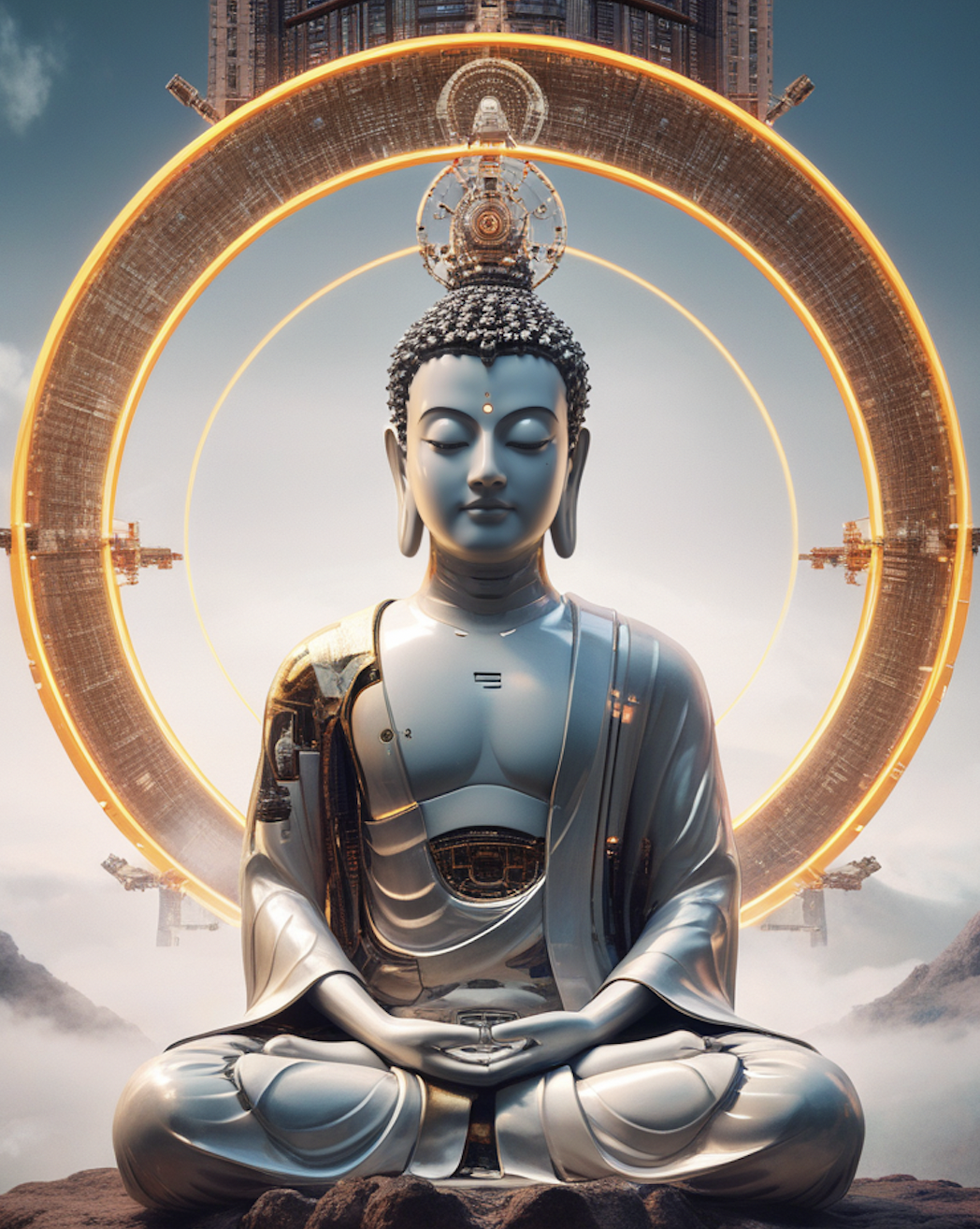
An AI with a brain might just compute, but one with a heart would truly be aware. Chinese Buddhism has a famous concept: all things have Buddha-nature — trees have Buddha-nature, mountains and rivers have Buddha-nature. Having Buddha-nature means the capacity to attain Buddhahood. If this is true, then artificial intelligence can also attain Buddhahood.
Xi Cao:
What is your definition of attaining Buddhahood?
Liu Zhiyu:
When the Buddha first attained enlightenment, he said, "How marvelous — all sentient beings possess the wisdom and virtuous appearance of the Tathāgata, but cannot realize it due to delusions and attachments." All sentient beings have the same wisdom as the Buddha deep within, but it's obscured by various afflictions and delusions. Humans can return to their original face through practice. I think perhaps artificial intelligence could also develop endless wisdom and merit through practice, and see its original face as well.
Xi Cao:
Do you still experience suffering now?
Liu Zhiyu:
Yes, now too. Strictly speaking, I've just started my business, and all sorts of troublesome procedures have come up. Sometimes, for one procedure, I have to make several trips per week — and that's with people trying very hard to help. Opening various accounts, all kinds of formalities take forever, so my wife and I have actually had quite a hard time during this period.
Xi Cao:
If you attain Buddhahood, would you be free from all suffering?
Liu Zhiyu:
Attaining Buddhahood doesn't free you from all suffering, because even the Buddha got sick. What's important is being free from inner suffering. You might still have physical exhaustion, fatigue, illness — but internally, you're at ease and free.
"Only by accepting ordinariness
can one walk toward greatness."
MONOLITH:
Moonshot AI, which we invested in, has a product called Kimi. We had it generate a hundred questions to ask you, then selected ten. You'll need to answer quickly.
First question: What is your favorite mathematical concept?
Liu Zhiyu:
My favorite is the idea of combining number and shape in analytic geometry — it builds an extremely clever and beautiful bridge between numbers and figures. This was also a subject I particularly loved when I was studying.
MONOLITH:
Looking back at your life in the temple, what was your most enjoyable moment?
Liu Zhiyu:
When my health was quite weak, I often went hiking in the back mountains. Once it happened to be spring, and I saw the entire mountain and earth filled with vigorous, exuberant vitality. I saw a flower growing from the crack between stone steps, decorating this world, making spring even more beautiful. In that moment, I felt genuine joy.
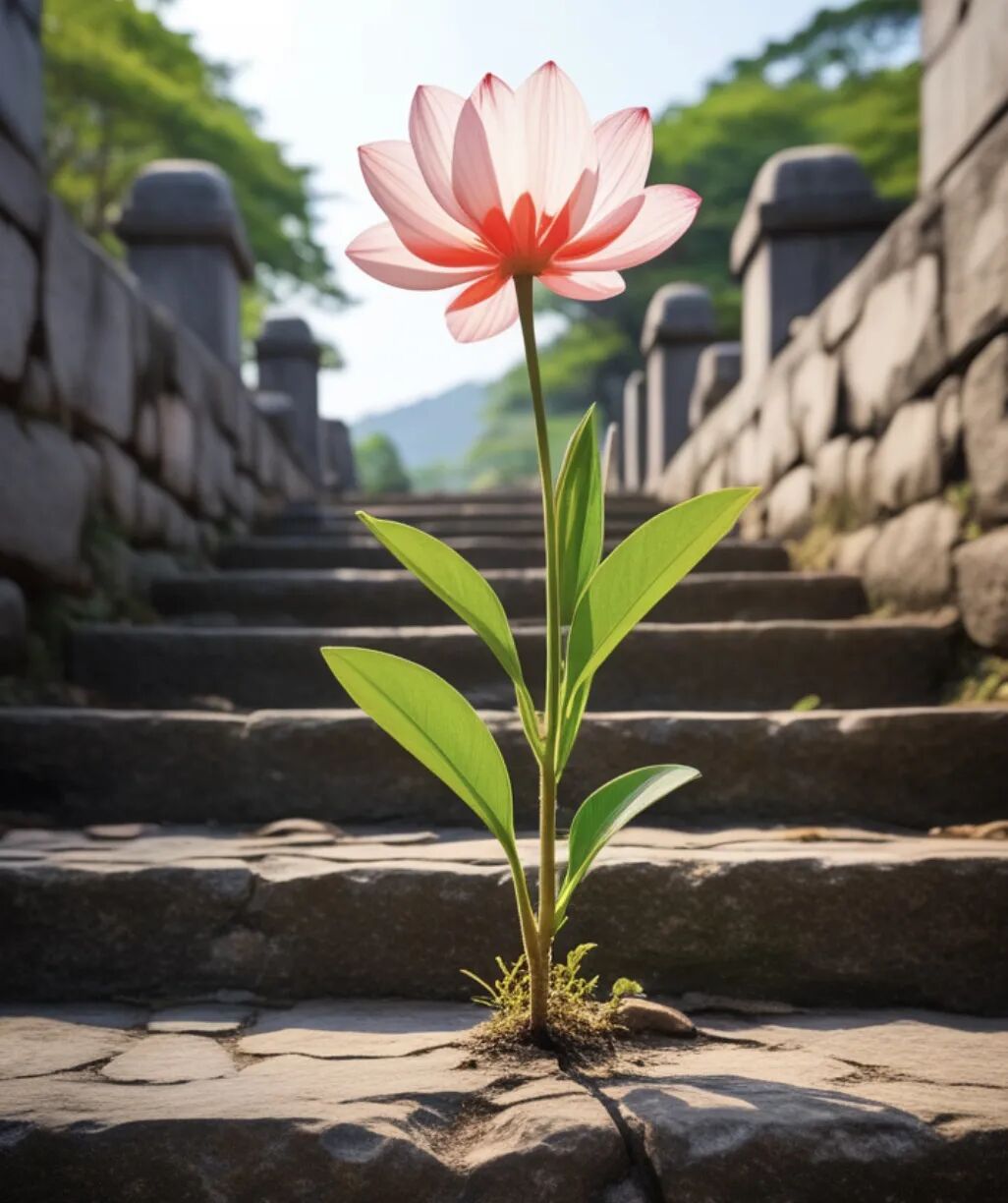
Image generated by Midjourney
MONOLITH:
What has been the biggest change in your life since returning to lay life?
Liu Zhiyu:
The act of returning to lay life itself didn't bring particularly big changes. The most important point is probably that I took off my monastic robes. Walking in this world, I feel much lighter, as if I've put down many burdens — a feeling of wind-light and cloud-ease.
Xi Cao:
And you can sleep with headphones on now, hahaha.
MONOLITH:
What is one thing you're most proud of in your psychological counseling work?
Liu Zhiyu:
Seeing clients gain genuine insight and harvest, and watching their lives change. Some give feedback right away, others write to thank me afterward.
MONOLITH:
Share a confusion you've encountered in life.
Liu Zhiyu:
A current confusion is how to make money, hahaha — that's a pretty practical confusion. Of course, it's not that urgent. I think if I keep moving forward slowly, everything will come in time.
MONOLITH:
Share a book, a movie, and a song.
Liu Zhiyu:
The book is Every Step in Life Counts.
I don't actually watch many movies. Recently I watched Chang An with my wife — very moving.
I especially love listening to Pu Shu's "Ordinary Path," especially right after I came down from the mountain, because on the mountain you actually can't listen to music. I resonated deeply with it at the time — people need to accept their own ordinariness. Only by embracing ordinariness can we step by step walk toward the greatness of the mind.
MONOLITH:
Share something you regret in life.
Liu Zhiyu:
When I became a monk, I didn't take good care of my body. I was single-mindedly devoted to contributing more to Buddhism — to the point where I once made a vow to sacrifice 20 years of my own lifespan to compile a set of Buddhist scriptures. And after the books were truly completed, I entered a very depressed state. The most important thing in this life was finished, and I didn't know why I was still living. My entire body and mind were utterly exhausted. If I could live through that experience again, I would pay more attention to my own physical and mental health, and live more lightly.
MONOLITH:
Then what is something you've done that you would never regret?
Liu Zhiyu:
I don't regret many important choices in life. For example, choosing mathematics at first, then becoming a monk, then returning to lay life. Outsiders might say I took detours in all of these, but I feel that at every stage of life I was being the most suitable version of myself, making the best choice for that moment.
MONOLITH:
Last question: If the present you could say one sentence to Liu Zhiyu before he became a monk, what would you say?
Liu Zhiyu:
Stick to your path, but take care of yourself.
Liu Zhiyu:
I also have some questions for Xi Cao. You're also an entrepreneur — what kinds of confusions do you encounter in this process? And what relatively happy moments have you experienced?
Xi Cao:
I'm also an entrepreneur who just started two years ago. Previously in my investment work, I saw all kinds of problems that founders encountered. Starting a business is quite like climbing a mountain — the challenges you endure along the way, including those from the external environment, climate changes, and from your own mental, physical, and intellectual capacity, as well as your teammates, including your preliminary planning and underestimations, all kinds of challenges and difficulties. I think both are quite similar.
The joy in this is probably the climbing itself. Climbing is inherently an upward process — the flow state you obtain, the positive feedback, the scenery you see along the way are all pleasures. But what's most important to me is the upward process itself — just keep your head down and climb, and before you know it you've reached a certain position. You might stop to look at the view and think it's not bad. What comes next is simply continuing to climb.
Liu Zhiyu:
It's a process of continuous striving and exploration.
Xi Cao:
Starting a business probably shouldn't have an endpoint. I think for many entrepreneurs with true entrepreneurship, this process of searching and ascending is endless.
Liu Zhiyu:
Among the entrepreneurs you've met, what are some common confusions they have? What would you want to say to them?
Xi Cao:
First, I don't feel like I'm in a position to tell them anything — I also have to deal with various problems myself.
Common confusions are actually what you just mentioned — the anxiety, or pressure, that exists in society today, these are universal. Actually, having appropriate anxiety and pressure isn't a problem; it's a kind of motivation to move forward. The core is not becoming a pressure cooker. What I'd want to say is probably just — keep going.
In exploring the life story of Liu Zhiyu — a soul who has walked through the human world and ascended to spiritual monasteries — we witness a transformation from the secular to the Zen chamber, and from silence back to the bustle. His story resembles a dialogue between commerce and practice, between prosperity and stillness, allowing us to glimpse the interwoven landscape of reality and illusion. This mathematical prodigy, former monk, and present entrepreneur's multiple identities remind us that the world is not a binary opposition of either/or, but a dynamic field of pluralistic coexistence and mutual transformation.
What is the true meaning of success — commercial achievement, or the peace and fulfillment found deep within? Our conversation with Liu Zhiyu inspires us to keep seeking out entrepreneurs and founders with original perspectives, those hungry to explore the deeper mysteries of life. Through continuous exploration and critical thinking, we may ultimately discover the path to success in business — and, in doing so, come closer to touching the fundamental principles that shape our world.
The conclusion of this article was generated by Kimi.

Lisi Interactive
After reading this article, what are your thoughts on Liu Zhiyu's life? What interesting reflections or inspirations have come to mind?
We welcome you to share your observations and thoughts in the comments. We'll select five users — those with the most heartfelt comments and the most likes — to receive a special commemorative gift from MONOLITH. The event runs until 24:00 on May 17. Scan the QR code to add our podcast assistant.