Entrepreneurship is a climb where the journey itself is the reward.

The journey is the reward.


Starting a business is inherently an adventure, so its motives are constantly questioned. A hundred years ago, at the 8,256-meter assault camp on Mount Everest, when asked by a journalist why he had returned for a third attempt — "Why Climb Mt. Everest?" — mountaineer George Mallory impatiently dismissed him with four words: "Because it is there." He then vanished forever on the route to the summit. It was humanity's most promising attempt to reach the roof of the world in that era. In the nearly hundred years since, more than 6,000 people have challenged and successfully summited the peak, while over 300 have perished along the way. This interview article documents some of Monolith's entrepreneurial journey and future goals. In Steve Jobs's words, we try to use the only talent we have to express our deepest feelings, to express our gratitude for all the contributions of those who came before us, and to add something to the river of history — that is what drives us, and the journey is the reward.
I hope you too can find some inspiration in it.

Years from now, people will still remember the moment Kuaishou listed on the Hong Kong Stock Exchange: it was Chinese internet's first capital feast of 2021, and possibly its last.
On February 5 that year, Kuaishou's stock price surged over 190% on its IPO day, closing with a market cap exceeding 1.2 trillion Hong Kong dollars. Six days later, it briefly broke through 1.73 trillion Hong Kong dollars, becoming China's fifth-largest internet company after Tencent, Alibaba, Meituan, and Pinduoduo.
That morning, Xi Cao posted a photo on his Moments, his hands resting on the shoulders of Hua Su and Cheng Yixiao:
"The next decade will be even more exciting!"
In retrospect, Cao's words will stand as a precise historical footnote.
For the primary market, over the past year, Chinese companies completed as many as 656 IPOs on the A-share, Hong Kong, and overseas markets — and this amply validated the value of private equity investment: 414 of these listed companies had VC/PE institutional backing, a penetration rate of 63%.
For Cao, this was also a decade of transformative change. Originally just a product manager with a science and engineering background, he joined HSG in 2013 and met Hua Su within a year, at a time when he was still an obscure investment manager. In the years that followed, Cao led or played key roles in investments in Douyu, MetaX, METiS Pharmaceuticals, Taichi Graphics, Houmo Intelligence, Unitree, and other star projects, becoming the youngest partner at China's most influential venture capital firm.
But on the very day he was cemented as a banner figure among his generation of investors, the 36-year-old Cao resigned to start his own business.
This was neither impulsive nor theatrical. As he put it, with an intuition that proved correct: "The market has peaked" — it was time to begin a new journey. Sure enough, starting in Q2 2021, the dramatic transformation of capital markets gradually unfolded. "The repetition of life at a big platform" was also a factor. Cao's friend, Yu Wang — chair of Tsinghua University's Department of Electronic Engineering and co-founder of DeePhi Tech — understood this best: "We've always been entrepreneurial, but internal entrepreneurship is actually harder than external entrepreneurship. You can't break certain things. This is what resonates most between us."
As one of the most influential and perhaps most talked-about investors among China's new generation over the past decade-plus, Cao carries many traits of his era. He rose to prominence young; the companies he backed were concentrated in mobile internet, giving him frequent out-of-the-circle visibility. He shunned suits and ties — at one point he even bought a Meituan delivery jacket to wear through upscale office buildings. Yang Tianzhen described him as "a temperamental, living, breathing human being." While some investors she knew preferred fine dining and relished explaining its sophistication, Cao would rather take her for barbecue and skewers.
If we treat Cao as a symbol, he represents what a substantial portion of this generation of venture capitalists aspire to be. One investor told Waves that because Cao once lived in a certain complex near Guomao, he later decided to move there too — simply "to be closer to them." In 2019, in 36Kr's "36 Investors Under 36" peer review, Cao received 53 votes from industry peers, placing him first (out of 60 participants). Such consensus-level recognition has not been seen since.

In 2021, Cao left HSG and co-founded Monolith with Tim Wang, formerly a secondary market partner at Boyu Capital. A year later, Monolith decided to return to familiar territory: the VC segment, focused on early-stage technology investment.
The contextual backdrop was now incomparable. For instance, among the 143 Chinese companies that went public in the first half of 2023, the top three institutions by deal count were Shenzhen Capital Group, Yida Capital, and China Fortune-Tech Capital. Internet fell out of the top five by financing volume, while manufacturing IPOs claimed both scale and quantity crowns.
Perhaps this is also the biggest question people have about Cao: As someone who achieved enormous success in the mobile era, how does he maintain his sharpness in the next wave?
This is not a question Cao alone must answer.
The Secret Sauce
Deconstructing Cao's success offers many angles: his instincts (he seems to always step perfectly in time with the era), timing (entering the industry on the eve of the TMT explosion), a certain degree of contingency (his years as a Tencent product manager, for instance, gave him earlier awareness of Kuaishou's value), and the luck that accompanies every success.
But one trait stands out prominently in Cao: his people skills. In some industries this might not count for much, but in the primary market — where social networks overlap and interests are tangled — those who earn this reputation are rare.
Yang Tianzhen met Cao as classmates in the first cohort of the Hundun Entrepreneurship Camp. "Sincere and direct" was why she chose to befriend him, and in her view, this is also why Cao is "better at earning others' trust." Yang recalls that once, when Cao went to watch the World Cup, he bought a bottle of Moutai at the airport. Drinking as he went, he composed her a text message thanking her for being a good friend, for being there during difficult times in life.
This habit seems closer to instinct for Cao. He mentioned reading Xiang Biao's Self as Method, in which Biao describes his childhood as lived across three worlds: one of底层街区 (bottom-tier neighborhoods), one of没落贵族 (declining aristocracy), and one of学校里的知识分子 (school intellectuals). This allowed him to perceive the differences between different lives.
Cao suddenly realized his own childhood had unfolded across a similar triad. Growing up in a small Hebei city, part of his family lived in rural villages back home, while others were in first-tier cities like Beijing and Tianjin. Later he entered an elite university, entered the world of internet companies, and eventually became an investor.
These are three archetypal slices of Chinese society: village, small city, and metropolis. These three slices once rotated through Cao's life on a monthly basis, and he only belatedly realized that it was this very rotation that equipped him with the skills to interact with people from different worlds. "All this accumulation applies to doing VC. Other industries may not require connecting with so many people."
But of these three slices, the one Cao knows and feels most comfortable with is still the small-city boy he was. Fortunately, this is another asset for his VC career, because the star entrepreneurs who dominated the TMT era mostly emerged from such non-first-tier cities. And this formidable network of friends is not only the powerful circle built during the TMT era, but also an indispensable foundation for launching a new VC.
Nearly all the founders of new-economy companies valued above $10 billion became LPs in Monolith at its founding. Cao was not the investor behind many of these entrepreneurs, yet became longtime friends with them — perhaps because they shared similar upbringings: having experienced enough social slices during their formative years, while being, in a sense, "elite school underachievers" representing sufficient disregard for rules, and, as Wang Yu put it, possessing strong "ability to survive under pressure, such as facing peer pressure."
Yang Tianzhen often forgets Cao graduated from an elite school — until one birthday, when her friend Shui Ge (Wang Yuheng) mentioned wanting to visit the Galápagos Islands, and Cao effortlessly launched into the geography and scientific history of the archipelago. "You really don't see so-called elite school airs on him — and I mean that as a compliment."
Yang Tianzhen told Waves: "When Cao interacts with people, he's quite good at grasping their underlying traits. For instance, he'll introduce friends he thinks I'd find worth knowing, and I've never been disappointed, because he knows I care about interestingness, so he'll connect me with interesting people rather than just those with status or influence."
The ability to grasp human fundamentals comes from experience, but also from sharpness. In Wang Yu's view, chatting with Cao "is comfortable" because he can always communicate from the other person's perspective. As chair of Tsinghua's largest department, Wang saw Cao's tremendous support for education: "China's academia and industry are relatively siloed now, so those who can connect both sides in an organic, market-oriented way — Cao is one of them."
And as a scientist-entrepreneur, Wang saw Cao's sincerity in communicating with scientist-founders: "Investors shouldn't just agree with you to win allocation. They should analyze pros and cons from a business perspective. Scientists are smart, and therefore sometimes get trapped in their own logic — they need someone to help puncture it."
For any context, insight and empathy are universal skills, even capable of transcending cycles. But for Cao at this moment, the real challenge may be: when someone has accumulated enough success in one era, how do they break free from inertia?
Ocean's Eleven
In fact, as early as 2018, Cao had toyed with the idea of starting his own firm. But the resignation stalled on a simple question from his former boss: "After you leave, what will you do, and how?" Cao realized he wasn't fully prepared. So he stayed, and helped launch HSG. Those four years taught him at least two things: how to systematically do early-stage investing; and how to be "the number one."
"At HSG for eight years — the first four looking at mobile internet, the last four investing in tech and manufacturing." Cao mentioned this several times in the interview. During those four years, his investment themes had already quietly shifted: Taichi Graphics, METiS Pharmaceuticals, MetaX, Houmo Intelligence, LandSpace, and others were all projects he captured at HSG. At the time, AI was not yet the dominant force it is today, but he had seen virtually all AI+ projects on the market.
Cao told Waves: The investment approach then was from first principles, thinking about where changes in production tools would create commercial opportunities. Hence the recognition that greater computing power and more advanced algorithms could drive transformation in AI+ fields requiring massive data computation.
Investing is not opening blind boxes.
Cao didn't only learn of Kuaishou's massive market cap on the day of its bell-ringing, nor did he only sense "the market seems to have peaked" on that day — he had begun thinking about the necessity of "change" much earlier.
This forward-leaning action was validated three years later. In early 2022, Cao began assembling Monolith's VC team. He met candidates with similar backgrounds: graduated from top business schools, employed at top funds. Their reasons for meeting Cao were largely identical — "they all felt their own funds had various problems" — and Monolith's appeal lay in: founded by a star investor; investment direction unknown. For dollar investors conscious of the need for change, it seemed an ideal "testing ground."
Meeting enough people, Cao realized that if he didn't want to become others' testing ground, he had to make bold reforms at the organizational source — and this source began with personnel composition.
2021 was a record year for dollar VC fundraising, but crisis was already lurking. While some dollar investors desperately sought the next internet opportunity, the RMB side was booming: semiconductors and new energy became the new "sexy stories," with pre-A rounds in energy storage frequently exceeding 100 million yuan. No one could yet foresee that by October the following year, this figure would balloon to 18.3 billion yuan in GAC Aion's Series A.
Cao believed that this constant sector rotation was precisely why he didn't want "standard dollar VC elites." In his view, Chinese VC at the industry's hottest moment had a "banker-like" quality — more star investors were generalists from business backgrounds. Observing them, you'd find they could switch investment sectors roughly annually. But in an era of transition toward industry, what was needed more were specialists who could go deep.
Thus, Cao set his hiring principle as: "Try not to recruit from investment institutions, but instead find people with substantial industry backgrounds, or who have founded companies themselves, or who have done enough research." They might not have much investment experience, or might simply be sufficiently interested in investing itself, but "VC isn't really a financial industry — pure VC is more like a tech industry, so what matters more is cognition and judgment."
"Because if you break down 'technology' — it's science and technology. What truly drives commercial development is technology, and the principles behind technology are science." Cao told Waves. "So our colleagues, they know which technologies can bring major commercial opportunities, and they understand the frontier scientific principles behind each technology. They can honestly, pragmatically, and with proper due diligence, think through and make decisions that align with first principles."
Cao, the TMT-era investor, facing the so-called "hard tech" era, still confronted issues of expertise, valuation system changes, and more. But Cao, the founder of Monolith, had more important work: building the team's entire system, and using his rich investment experience to supplement team members' relatively limited investment histories.
This made Monolith resemble the film Ocean's Eleven: the mastermind carefully selected 11 members for his heist, each with a different profession — card sharp, explosives expert, pickpocket, acrobat. This was not a massive army, but a special forces unit.
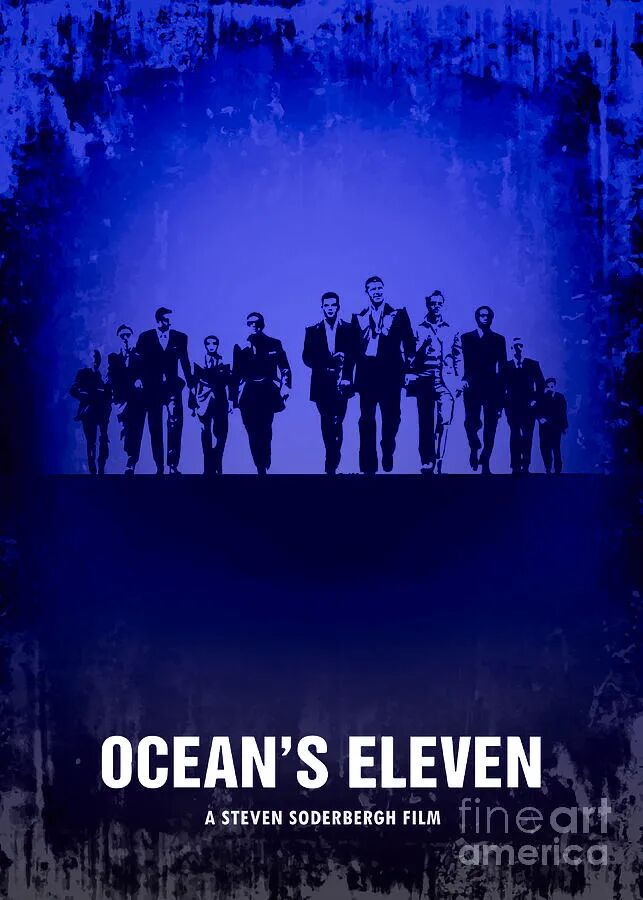
In Cao's view, experts from different fields compose this early-stage tech-focused VC team, and the chemistry between them is crucial. "Just as the boundaries between academic disciplines don't exist in nature but are drawn by academic affairs offices, the lines between investment sectors are also artificially drawn. The development of science and business should have no dividing lines in the natural and commercial worlds." Cao told Waves.
Indeed, many enormous commercial opportunities over the years have come precisely from cross-domain technologies: battery technology innovation brought electric vehicle opportunities, new-generation atomization technology brought e-cigarettes, and 3D printing technology unexpectedly blossomed in the invisible aligner industry.
Cao revealed to Waves that among Monolith's undisclosed investments is a medical device chip company, where Monolith led the round with two well-known healthcare funds following. This doesn't mean Monolith surpasses vertical healthcare funds in healthcare expertise, but rather that it has equipped personnel with expertise in both healthcare and chips.
Another key chemistry exists between Monolith's primary and secondary market teams. At Monolith, primary and secondary teams share memos, meetings are open to all, and Cao believes that for early-stage investors especially, attending secondary team meetings to see what endgame companies in an industry look like enables a complete rather than partial understanding of the industry landscape, leading to deeper and more comprehensive research cognition. If you find that companies in an industry remain small even at IPO, then from a VC perspective you can directly filter out that industry.

The synergy between primary and secondary teams is what Monolith aims to achieve, but could this synergy also become a drag?
Cao thought about this for a long time, eventually simplifying the problem to code: "You can't force synergy, because synergy should be a chemical reaction. The daily inputs are training data for the model — no single piece of data produces the final output. Synergy actually emerges."
Looking back at more than a year of entrepreneurship, Cao candidly admits that since starting his own firm, his admiration for former employers Tongchuang Weiyue and HSG, and for their two founders and his former bosses, has only grown. "Managing that much money, that many people, that many deals — not easy." Now, as the number one who must backstop the organization, Cao carries more responsibility on his shoulders. "The more you engage, the greater your reverence. You become more cautious about many things."
A Primal, Upward Force
Over the past decade, Cao — or China's primary market investors generally — have been people who rode a rapidly ascending elevator straight upward. Of course, being able to enter the industry as an investor a decade ago, or specifically as a dollar fund investor, was already a choice that put you ahead at the starting line.
In a private setting, someone once asked Cao: Why do you always make the right life choices? Cao answered almost without hesitation — clearly a question he'd been asked many times. His answer: "Spend the vast majority of your time thinking, and make only a small number of decisions."
Reviewing his life choices: because research had too many uncontrollable factors for his career, Cao gave up direct PhD admission and went to Tencent in Shenzhen; because he felt large companies had too many uncontrollable elements for the individual, he chose venture capital where he could put eggs in multiple baskets; because he believed TMT offered more opportunities in Beijing, he didn't go to Tongchuang Weiyue's headquarters in Shenzhen but stationed himself in Beijing; then in 2013 he joined HSG and boarded the express train of the era.
So at this moment, building a new fund is the decision Cao believes to be optimal. Regarding whether Monolith will consider RMB fundraising going forward, Cao's answer: "Currently in preparation."
For so-called "dark horse funds," this may be a good moment — many LPs currently lean toward looking at new institutions. Newly established firms carry no historical baggage and can travel light. By contrast, many established dollar funds are mired in layoff waves. Waves understands that Monolith's RMB fund investment direction may be next-generation digital industries and tech-enabled manufacturing.
Despite such dramatic market changes, Monolith has maintained active deployment in the first half of this year. Cao told Waves that Monolith has this year invested in general large models, large model computing power, AI+ gaming, AI+ education, medical device chips, XR applications, and other projects. Among them are leading star entrepreneurs such as former BAAI young scientist Zhilin Yang, Giant Network CEO Wu Meng, and Huaiting Zhang, former COO of GSX.
Some entrepreneurs note that despite being a startup, Monolith is already recognized in the industry as a first-tier fund. In the first half of this year, domestic venture capital deployment amounts fell by nearly half year-over-year. "Fundraising isn't easy. In the current market environment, getting their money is a plus — it also shows you're of the same aesthetic."
However, VC is after all a long-cycle industry. This is only the beginning; going forward, Cao will need to deliver more answers to this era.
Yang Tianzhen mentioned in our interview: "In the past you couldn't tell whether the era made you or you made yourself, but now you can distinguish." She believes that as contemporaries, this is a question both she and Cao face. In her view, at a moment when the era's pace has slowed, this is a moment of major life choices for everyone.
"This is not just Cao's question, but one our entire generation must answer."
Cao has always loved climbing mountains. The pleasure lies in "honestly, quietly climbing" — "the meaning of climbing is in the climbing itself. It's a primal, animalistic, upward drive." Cao says this is also what makes entrepreneurship most interesting.
The name Monolith comes from the mysterious black monolith in the classic sci-fi film 2001: A Space Odyssey, which possesses perfect mathematical proportions: 1:4:9, the squares of the first three natural numbers. In Cao's view, Monolith represents the ultimate truth and wisdom of the universe. Choosing this name expresses his and his team's curiosity, truth-seeking, and exploration of the nature of business and the world.
1:4:9
This name also signals to some degree that this will be a path that is destined to be different, yet long and fascinating.