Even Realities: The First Eye

The subject of smart glasses can only be glasses, and nothing else.


Roughly 523 million years ago, Earth was still a barren wasteland. Life existed mostly as primitive multicellular organisms spanning just 3 phyla. Then, on the skin of certain fish or crustacean-like creatures, a crystalline structure evolved — it slowly opened, and for the first time, saw the interplay of light and shadow in the undersea world.
This was the first eye on Earth.

In the 5 million years that followed — a mere one-thousandth of evolutionary history — those 3 phyla suddenly exploded into 38 (a number that remains unchanged to this day). Animals became predators and prey in equal measure, launching a massive biological arms race that kicked off the famous Cambrian explosion.
Much later, humans inherited this trait: over 90% of our external information comes through vision. The ancient Egyptians used the Eye of Horus to symbolize the sun's radiance and cosmic order; moderns express their visual reverence through the all-seeing eye. However the symbols change, the eye remains our most important organ for receiving information.
This is precisely why consumer electronics insiders see "smart glasses" as the ultimate form of human-environment interaction. The underlying logic: when a single device covers 90% of human information acquisition, users no longer need scattered smart devices like phones and watches. This is the final battle of hardware innovation, and the biggest window for birthing a trillion-dollar company.
Yet one question haunts the AI glasses industry: with phones, computers, and even TVs so mature, why would we need to strap a heavy device to our faces just to see a screen? Even Realities' answer: don't replace the phone. Replace the glasses.
This is one of Even's particularities. While "AI glasses" is a blazing-hot concept, Even has never called itself anything but smart glasses. While competitors keep adding weight and touting new features powered by large language models, Even stripped out the camera and headphones, making it look like an ordinary pair of glasses — with only the occasional WeChat or stock alert popping up to betray its secret. Oculus founder Palmer Luckey recently gave a TED talk wearing Even G1.
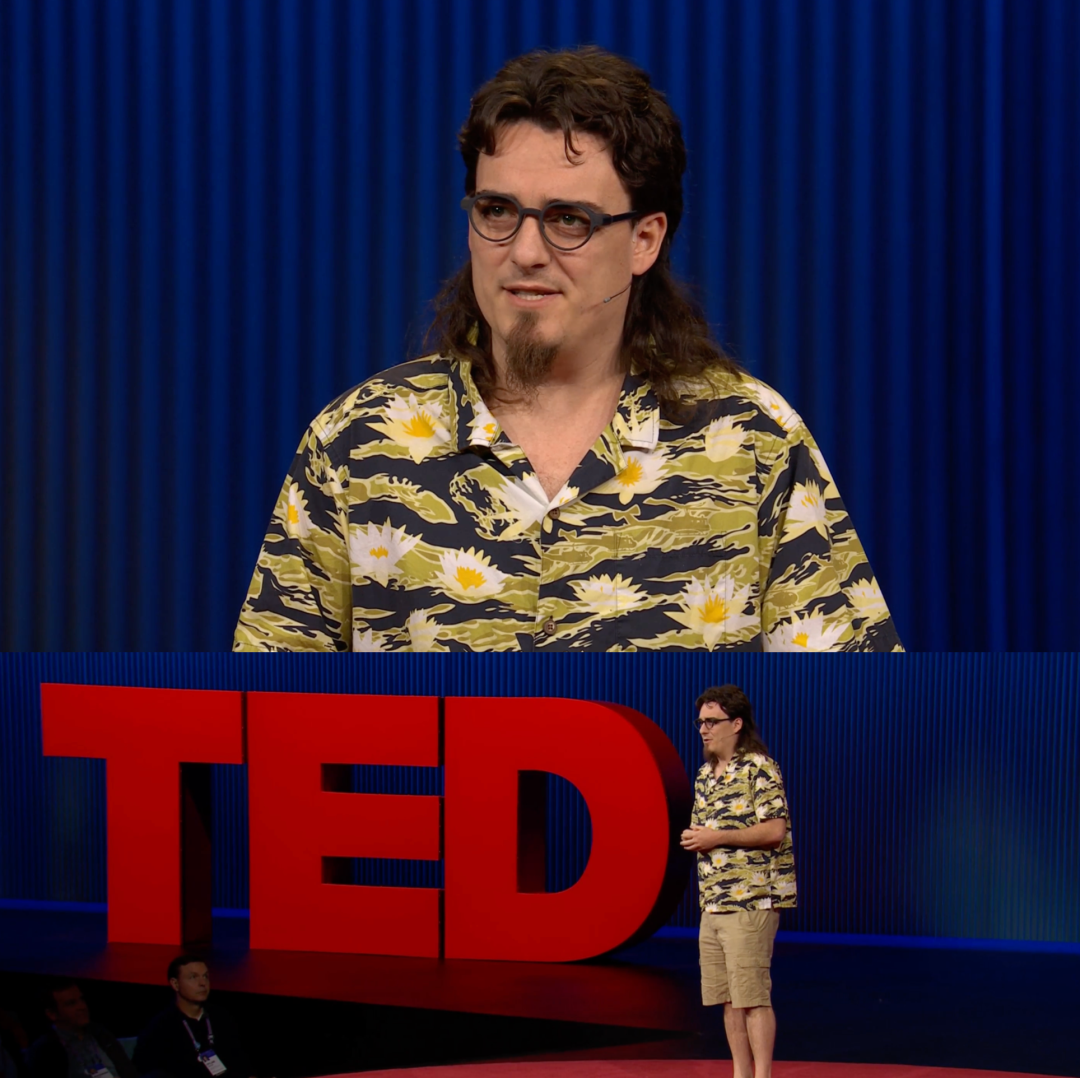
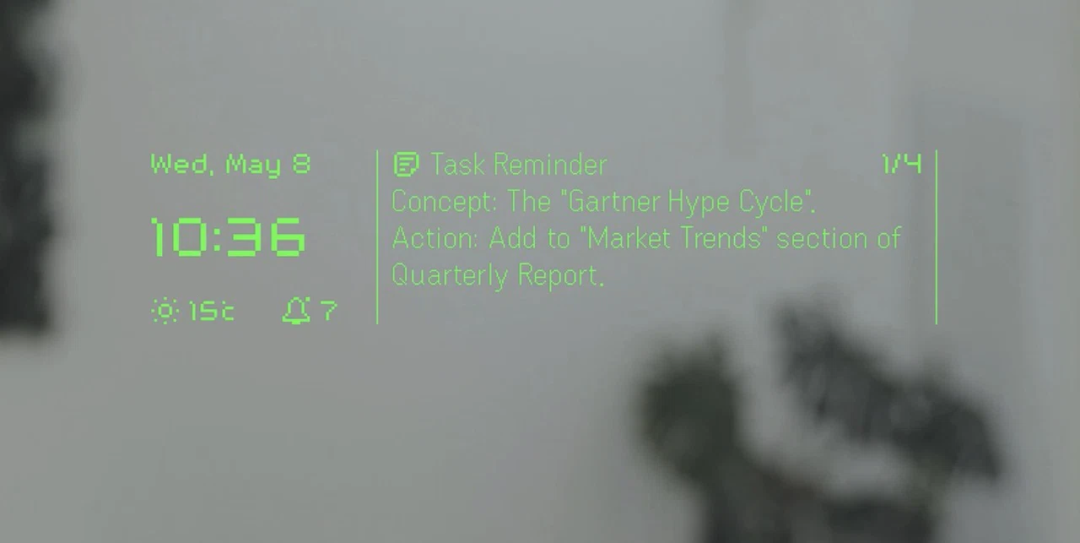
If you already wear glasses, switching to Even Realities requires zero adaptation. What's special: glance up to see real-time social media updates, tap the temple to record a voice memo:
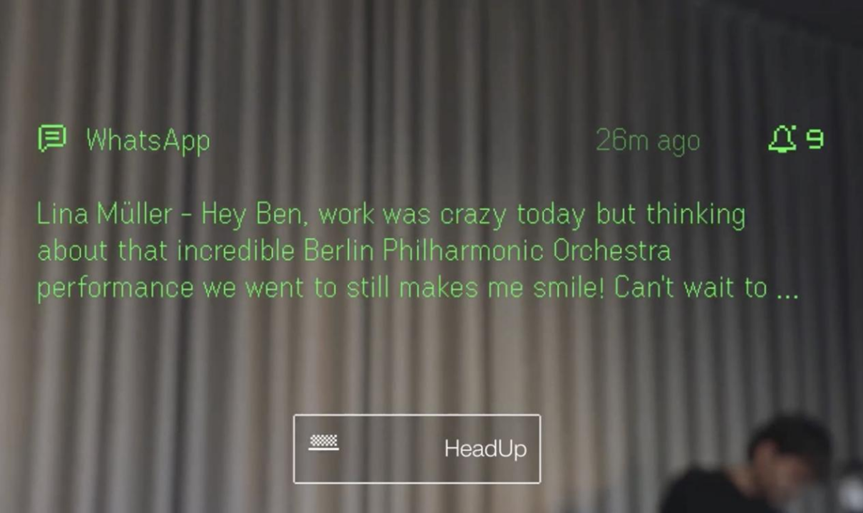
This may be Even Realities' greatest strength. On the eve of the so-called "hundred-glasses war," with heavyweights like Xiaomi and Baidu entering the fray, AR veterans pushing new products, and cross-industry players like Sharge and moody launching their own devices — most companies are selling the story that "in five years, AI glasses will fully replace phones." Even may be the only product you can actually wear this year, because it looks and feels enough like a normal, lightweight pair of glasses.
Compared to many AI glasses companies, Even has clearly invested far more in the "glasses" part itself. Look closely at the team and you'll find Chief Strategy Officer Nikolaj Schnoor, former Chief Commercial Officer and Executive President of Asia-Pacific at LINDBERG, who during his 26-year tenure led the brand from zero to one and engineered its phenomenon-level success in China.
For Even's founder Will Wang, leading this 2023-founded company means walking a lonely path. Even's glasses are currently sold only overseas, and rather than crowdfunding on Kickstarter, they've taken the cold-start route of selling through their own website.
This may explain his apparent coolness — the pressure of making unconventional decisions at every turn, even as first principles and industry insight tell him this is right.

In its year and a half of existence, Even has completed three funding rounds, with top Chinese strategic and financial investors already doubling down; Monolith is among its steadfast supporters. Even is currently among the top Chinese AR glasses companies by actual shipment volume, with sales continuing rapid growth this year.

The full interview follows, edited and condensed by Monolith:
Monolith: Even has no headphones or camera — yet these are exactly the selling points of many other AI glasses. Why did you choose to omit them?
Will: In the glasses form factor, only one thing is absolutely essential: display. Xiaomi and Huawei's audio glasses ship in the hundreds of thousands annually, while Bose's ear-clip headphones and later Huawei's Free Clip both hit millions. This shows users want their headphones to be headphones, not glasses. As for cameras: as an everyday-worn device, the privacy intrusion is exponentially greater than any other device. The higher your social status, the less acceptable this becomes. So from first principles, the core value of smart glasses is display alone — the immediacy of information access, and its privacy. Users need to see virtual information without obstructing their view of the physical world.
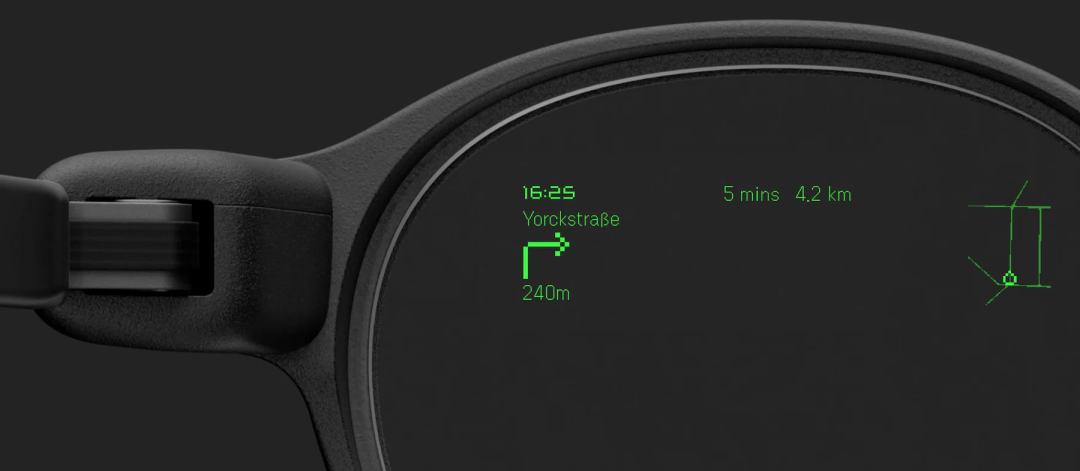
Monolith: This seems quite different from how most XR/AI glasses peers think.
Will: I feel like everyone's been thinking about this industry backwards. The prevailing logic is: I'll eventually build an awesome AR headset that everyone will wear; the only reason no one wears one yet is I haven't reached that endpoint. That's far too teleological.
Monolith: Many companies take this "teleological" approach because they need to sell the story that "XR will replace phones as the next-generation smart terminal." You don't buy this?
Will: That narrative is more investor-friendly — it triggers FOMO, the fear that missing this company equals missing Xiaomi in 2013. But hardware development follows objective laws of progress; capital usually can't accelerate it. You can only iterate one generation per year, and meaningful consumer feedback takes six months to a year to accumulate.
Monolith: But we have to admit, "AI glasses" is the hotter concept today, yet Even has never called itself anything but "smart glasses." Why?
Will: Terms like "AI hardware" or "AI glasses" may attract investors. But from a consumer perspective, emphasizing AI doesn't add actual product value. Electric toothbrushes can connect to the internet now, but you don't call them "internet toothbrushes." When AI truly matures, all glasses will be AI glasses — it'll be the default attribute of all products, nothing worth extra emphasis.
Monolith: So your decision to build Even actually had nothing to do with large language model technology?
Will: Nothing. Most functional objects in our lives are becoming smart — e-readers, e-cigarettes — so why hasn't eyewear, something so intimately connected to vision, been automated? Rather than building an "AI glasses" for the AI era, I'd rather "push the eyewear industry toward intelligence" — getting the billions of people worldwide who wear traditional glasses to start wearing smart glasses.
Monolith: So at your core, you want to get the glasses part right first.
Will: In "smart glasses," the subject is glasses, not something else. Yet look at how many AI glasses companies treat the "glasses" part: they collaborate. Meta partners with Ray-Ban, others partner with Bolon. But if you're genuinely trying to build the next generation of eyewear, how could you possibly develop that capability through collaboration? If I were Tesla trying to build a revolutionary electric car, I wouldn't partner with Porsche and only handle the electric part. That sounds absurd in the auto industry, yet it's actually happening in eyewear.
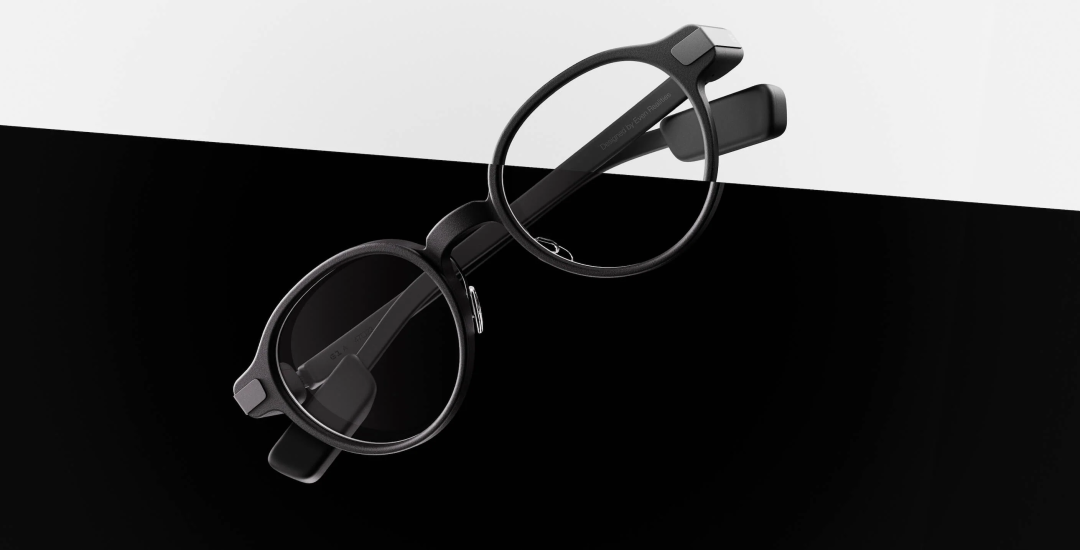
Monolith: So you brought in Nikolaj Schnoor (former CCO of LINDBERG).
Will: Simple: the people who make the best glasses in the world are in Europe, so we've recruited many who've spent their careers in traditional European eyewear. The core moat of smart glasses is display technology, but traditional eyewear craftsmanship is the foundation.
Monolith: Even's features are limited to memos, translation, teleprompting, message alerts — quite minimal compared to most AI glasses. Why this decision?
Will: Humans receive 90% of information through their eyes, so theoretically you could add infinite features to AI glasses — the kitchen-sink approach of Vision Pro. But subtraction is hard. My thinking: start with the most ordinary pair of glasses, and for every feature I add, I must be 100% convinced it's justified.
Monolith: What's Even's current user profile?
Will: First, tech enthusiasts — we speak to them in tech-native language: Even is the most comfortable AR glasses you can find, no need to leave them in a drawer. Second, high-end business users who actually need glasses — they don't care about AR technology, only practical utility. Our flagship use case is presentations, precisely targeting CEOs, investors, and others who frequently speak publicly. They're willing to pay for smart glasses that enhance their presentation experience — many TED speakers have proactively reached out to purchase.
But these two groups require completely different messaging. Using iPhone as analogy: Apple told iPod users "this is an iPod that can make calls," while telling phone users it's "a phone with music functionality." Channel strategy differed too: iPod upgrades through owned channels, phones through carriers. The core is adjusting product positioning and sales path based on each audience's existing mental model.
Monolith: What feedback have these consumers given you?
Will: Most importantly, consumers need a clear reason to buy. New products must anchor to a familiar need, not create vague concepts. Tesla was "electric car replaces gas car," e-reader was "replaces paper books." Vision Pro's problem is it seems to do everything, yet users don't know what it replaces — TV? Computer? Truly innovative first-generation products are usually simple: upgrade an existing category, clearly telling users "this is better than the old thing." If you can't cover basic needs, no amount of cool technology will get people to pay.
Monolith: Even currently sells only overseas. Why this strategy?
Will: We absolutely had to start from overseas. Eyewear is a category where brand hierarchy matters — people often talk about a consumer brand's "aesthetic sense," but aesthetic sense is class, and class only flows top-down. This is fundamentally different from the recent guochao ("national trend") culture. LV can only come from Europe, not Shenzhen.
The hidden barrier of aesthetic sensibility is extremely high — your perception of beauty depends on how much beauty you've been exposed to. Europeans generally have better aesthetic sense because the street signs, signage, even restrooms they encounter daily are more thoughtfully designed — it's like muscle memory, formed through long immersion in beautiful environments. Entrepreneurs from the 70s and 80s struggle with this; they grew up in material scarcity. This is where 90s-generation founders have an advantage.
Monolith: Building a premium brand is never easy, especially for a young company like Even. How do you ensure your premium positioning?
Will: First, find the right "venue." No Kickstarter crowdfunding, no Amazon or eBay — we need to sell on our own website, which means sacrificing a huge chunk of traffic.
Monolith: Cold start is genuinely difficult.
Will: Fortunately, glasses have natural content distribution advantages — especially when the product is good enough. There aren't many reference points for this path. It's like digging a tunnel: the scariest thing is going too long without positive feedback, giving up right before you break through. Of course, while persisting, you also need a rational stopping point.
Monolith: Eventually the giants will enter. What are Even's moats and advantages?
Will: Giants will absolutely emerge in this category, but smart glasses require full-stack innovation across technology, supply chain, product, brand, and channel. This demands a completely new, whole company to pioneer — not some division within a giant. Building comprehensive innovation advantages as fast as possible is the barrier Even ultimately needs to construct. Giants usually dominate most small-to-medium transformations in an industry, but history's largest transformations have almost always come from entirely new companies. I believe smart glasses will be the consumer electronics industry's next great transformation.
Engage with Monolith
After reading this piece on Even Realities, what are your impressions of the company and the "AI glasses" industry? Share your observations and thoughts in the comments. We'll select five users with the most thoughtful comments and highest likes to receive special commemorative gifts from Monolith. The deadline is 24:00 on May 1.