Let's Swim Until the Sea Turns Blue

When others see the spray, we see the shifting tide.


Anticipating the future
is a leader's essential homework.
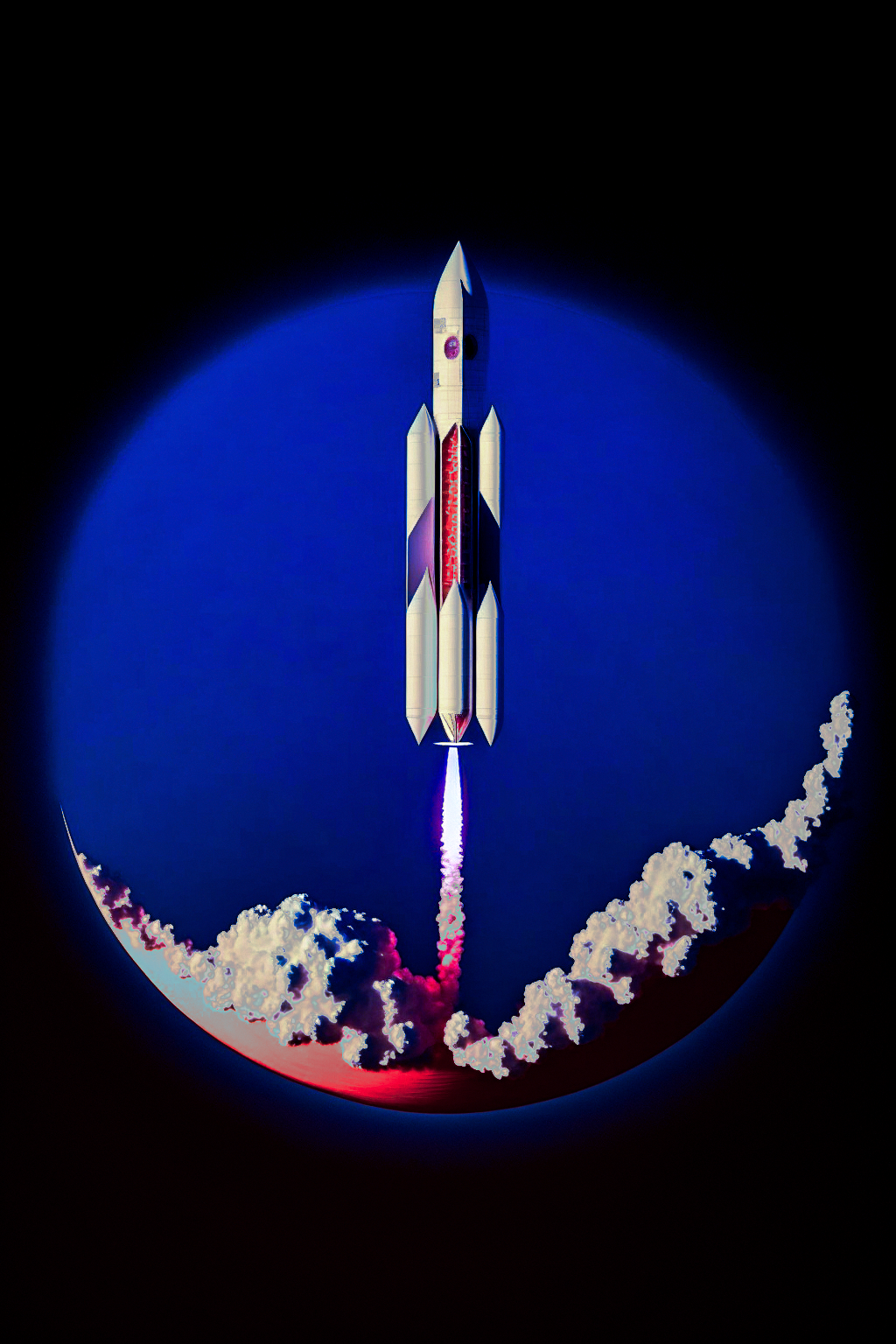
Unfortunately, predicting the future with precision is an irresistibly tempting yet impossible task.
Looking back from the future, the vast chapters of history and dramatic human stories seem as unpredictable as particles suspended in liquid. But when we gradually expand our temporal and spatial scale, do these contingent factors cancel each other out through the law of large numbers, allowing truth to emerge?
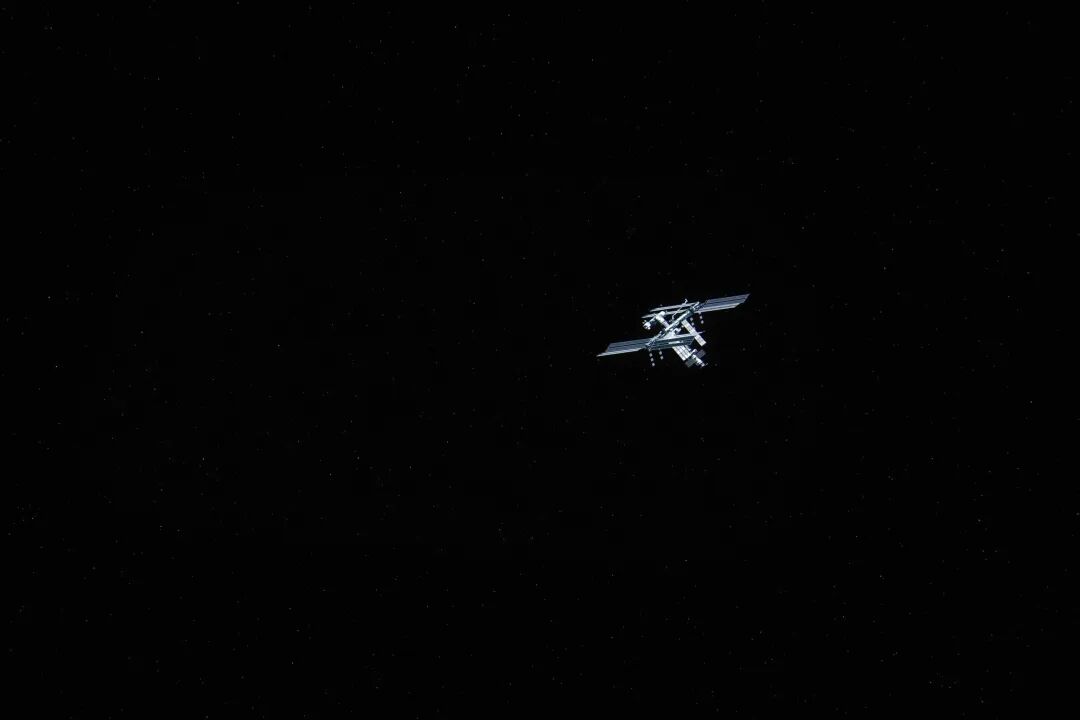
Initially, dust formed after the Big Bang attracted each other beyond a certain critical threshold, triggering nuclear fusion through the strong interaction force, ultimately forming stars and galaxies;
Later, scattered across Earth's surface at the dawn of humanity, we invented agriculture and learned to harness solar energy. As population density surged, villages formed, giving rise to language and civilization;
Now, large language models train through fill-in-the-blank exercises, and beyond a certain threshold, their accuracy suddenly skyrockets, giving rise to knowledge comprehension and logical reasoning capabilities. A new form of life — "silicon-based life" — is being widely discussed and anticipated.
Hundreds of billions mark a magical inflection point. The Milky Way contains roughly 200 billion stars. The human brain has over 120 billion neurons. GPT-3 has 175 billion parameters. Do these numbers conceal some underlying pattern?

Our fund is named MONOLITH. This mysterious black monolith possesses perfect mathematical proportions, representing the ultimate truth and wisdom of the universe — as well as our curiosity and pursuit of fundamental nature.
Looking back from the future, turning the pages of humanity reveals a long, tumultuous history and a magnificent, sweeping cosmos. History repeats itself in some places, while in others it refuses to follow the same rhythm. Our generation is fortunate to have, for the first time in history, located time's origin point. Are we now on the cusp of an even more disruptive era?
From a business perspective, we attempt to trace the pivotal moments in human technological history, uncovering the hidden yet fascinating connections among them — and to offer more imagination for today's transformative landscape.
We are unsurprised to find that every great revolution begins with a wave of fervor, yet true breakthroughs never emerge from sudden flashes of insight or overnight success. They are measured in years of diligent, painstaking progress, day by day. This may offer some inspiration for today's entrepreneurs.
We hope you find some strength in this.

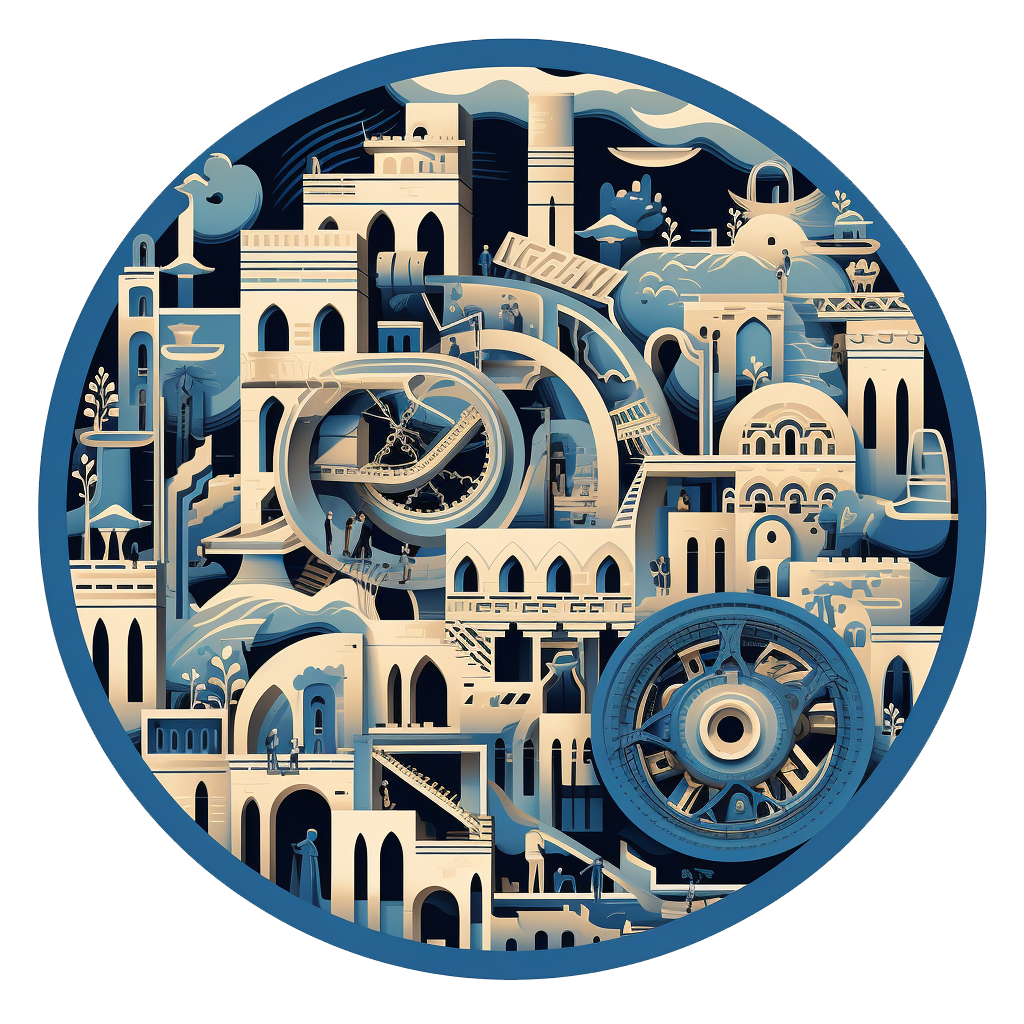
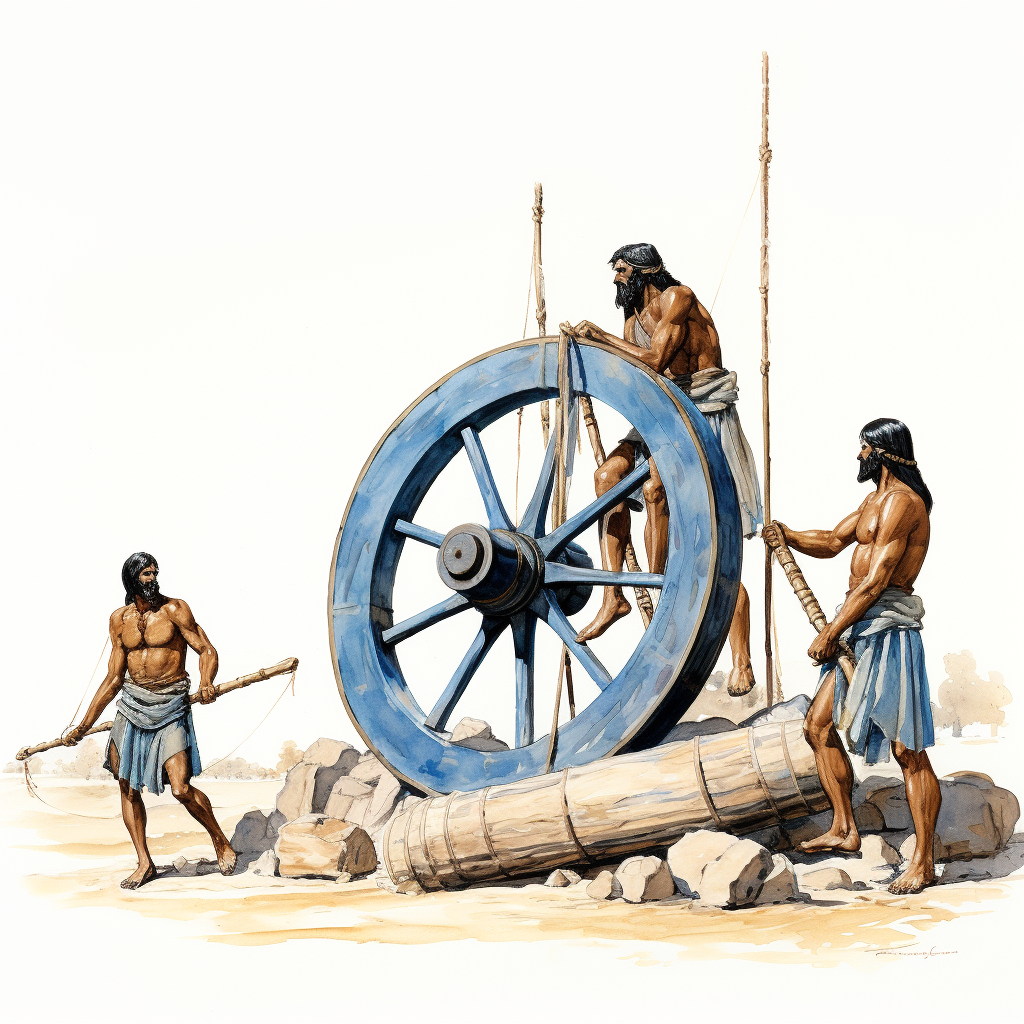
Around 3200 BCE, the Sumerians living in Mesopotamia learned to systematically refine logs into wheels, enabling humans to travel far and transport heavy objects, thereby making large-scale cities possible. Some historians have judged the wheel to be one of the greatest inventions in human history.


Swipe left or right to roll the wheel
In 1763, James Watt decided to improve the steam engine. Over the following thirteen years, funded by Matthew Boulton, he manufactured the first batch of new steam engines and put them into industrial production in 1776. Boulton told the King of England that their machines would supply something the whole world desperately wanted — power.
The steam engine's place in history needs no elaboration. Building on Watt's work, Robert Fulton began researching how to use steam engines to build self-propelled boats, and in 1807 developed the world's first steamboat, the Clermont, which traveled 240 kilometers upstream on the Hudson River in its maiden voyage. Notably, the invention of the steam engine enabled European porcelain manufacturing to surpass China's industrial capabilities for the first time, completely breaking our monopoly in the porcelain market.

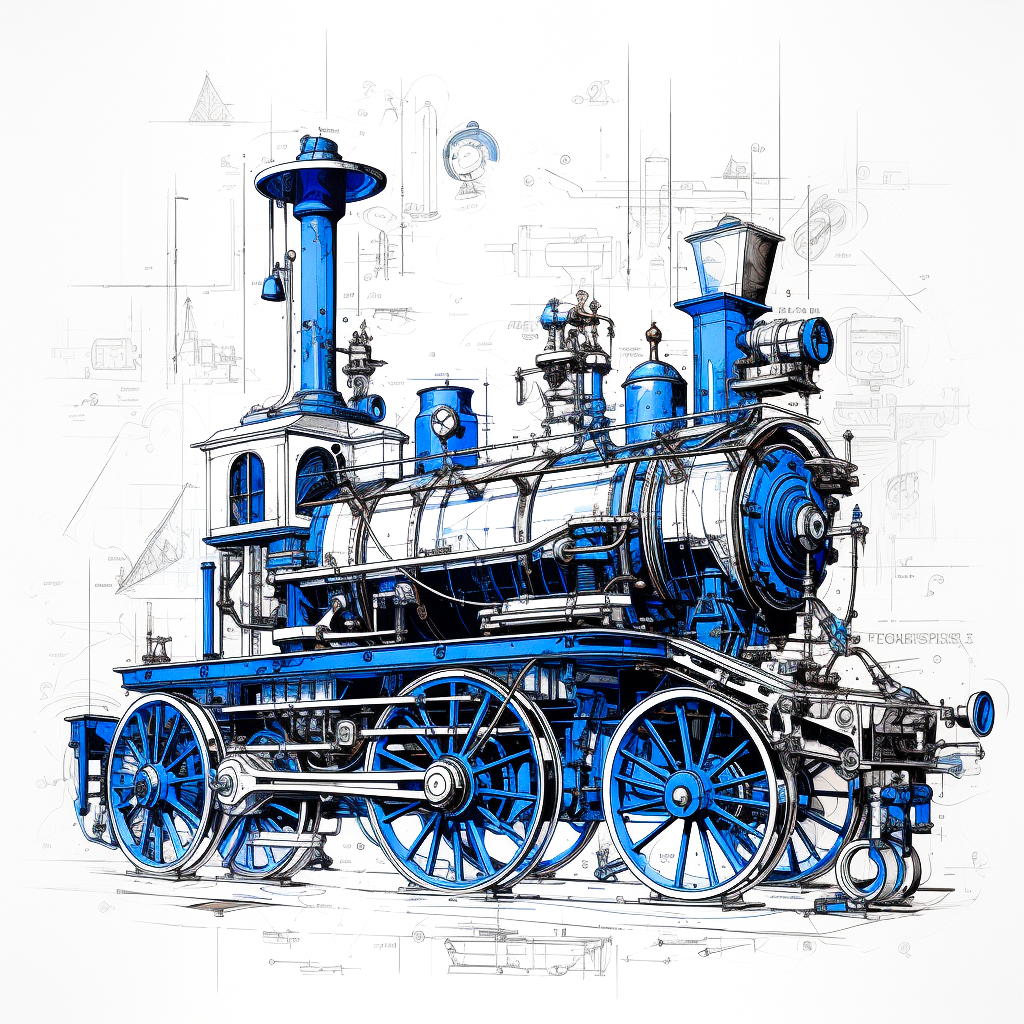


Swipe left or right to sail the boat
The porcelain industry example offers a lesson — if you were a Qing Dynasty porcelain merchant exporting goods in the 18th century, your business would only get harder, and no amount of individual effort could change this. By the time global transportation entered the steam power era, more than thirty years had passed since Watt's improved steam engine.
In 1752, Benjamin Franklin and his son William flew a kite in a thunderstorm, using a key tied to the kite string to draw down lightning and store it in a Leyden jar for various electrical experiments, first proving that celestial lightning and artificially generated static electricity were identical in nature. It was not until 1866, inspired by the accumulated research of many predecessors, that Werner von Siemens invented the world's first direct-current generator.

Swipe left or right to let electricity flow
Electricity is undoubtedly the discovery that has most extensively transformed human society. Since Franklin drew lightning from the sky, people successively created epoch-making inventions including the electric light, phonograph, motion pictures, telegraph, elevator, and telephone. During this period, information could travel at near-light speed for the first time. People began building skyscrapers in cities on a massive scale, and changed the habit of rising at dawn and resting at sunset that had persisted for tens of thousands of years.
Humanity's transition to electrification lasted well over a century — a sufficiently long and profound process. The names of great figures like Ørsted, Ampère, Faraday, Bell, Tesla, and Edison shine brightly through history.

The internal combustion engine was another world-changing machine. In 1876, after more than a decade of experimentation, Nicolaus Otto invented the four-stroke internal combustion engine, improving energy conversion efficiency by 2% (compared to steam engines).
A decade later, he and two colleagues — Daimler and Maybach — mounted this engine onto wheels invented by the Sumerians 3,200 years earlier, creating the world's first gasoline-powered four-wheeled automobile, ending a 200-year search for compact automotive propulsion.
Today, battery-powered electric motors are sweeping away the empire built by internal combustion engines, reshaping the global economic landscape.
How to Leave Earth's Surface tells us that without Otto's perfected internal combustion engine theory, more people might have sacrificed their lives in the process of inventing airplanes. The cautious Wright brothers successfully invented and test-flew the world's first airplane in 1905 at Kitty Hawk on America's west coast — more than thirty years after Otto's invention of the internal combustion engine.

For most of history, the pace of global progress was slow. Civilizations rose and fell. People accumulated wealth and squandered it. Global GDP barely changed. But starting roughly 150 years ago, the world economy suddenly began growing exponentially. Global life expectancy rose from under 30 to over 70. Literacy rates, extreme poverty, infant mortality, even height — all improved dramatically in similar fashion.
During this period, Albert Einstein proposed the famous mass-energy equivalence formula E=mc² in his 1905 special theory of relativity. The four papers he published that year virtually laid the foundation for modern physics, compelling everyone to reconceptualize space, time, mass, and energy.
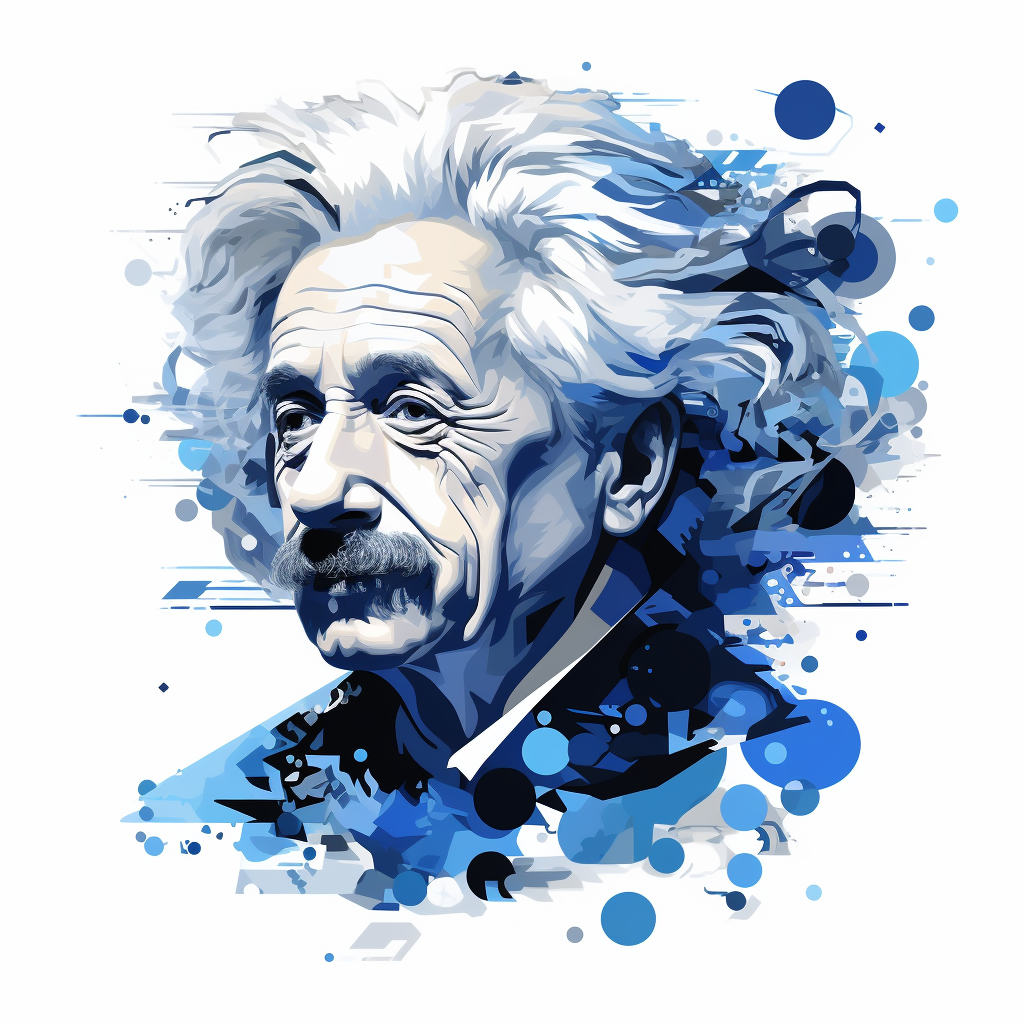
Subsequently, in 1910, Lord Rutherford conducted his world-shaking alpha particle scattering experiment. Humanity was on the verge of mastering a new energy source capable of propelling us beyond the solar system.
Of course, harnessing atomic energy was not achieved overnight. After Einstein, Lise Meitner experimentally confirmed that uranium atoms undergo fission under neutron bombardment. Later came the efforts of Szilard, Fermi, and others, leading to the creation of the world's first atomic bomb, Trinity. In 1950, the Soviet Union built the world's first nuclear power plant connected to the electrical grid — nearly 50 years after the mass-energy equivalence was first proposed.
As human understanding of the microscopic world deepened, the door to the information age was unexpectedly thrown open. In 1947, William Shockley — mentor to the "Traitorous Eight" — led his laboratory in creating the world's first semiconductor triode amplifier, later translated by Qian Xuesen as "transistor." Its emergence laid the groundwork for integrated circuits, microprocessors, and computer memory. In logical sequence: humanity invented the transistor on the foundation of quantum mechanics, then came electronic computers, then the internet and fiber-optic communications, and thus today's information society.

The recently popular Chip War notes that the first commercial product to adopt transistors was a hearing aid, launched by Sonotone in 1953 — the world's first civilian consumer product to use semiconductor technology.
In 1965, Intel co-founder Gordon Moore proposed the eponymous Moore's Law, which became the primary driver governing global economic development. Before this, no technology in human history had advanced at an exponential rate for over half a century.
Moore's greatest regret may have been Intel's missed opportunity to manufacture personal computers. He once called his question "Why would anyone want a computer in their home?" the stupidest thing he ever asked. Apple clearly had more foresight on this matter. In 1976, Steve Jobs and Steve Wozniak designed and hand-built the world's first personal computer — the Apple I — inaugurating the era of personal computing.
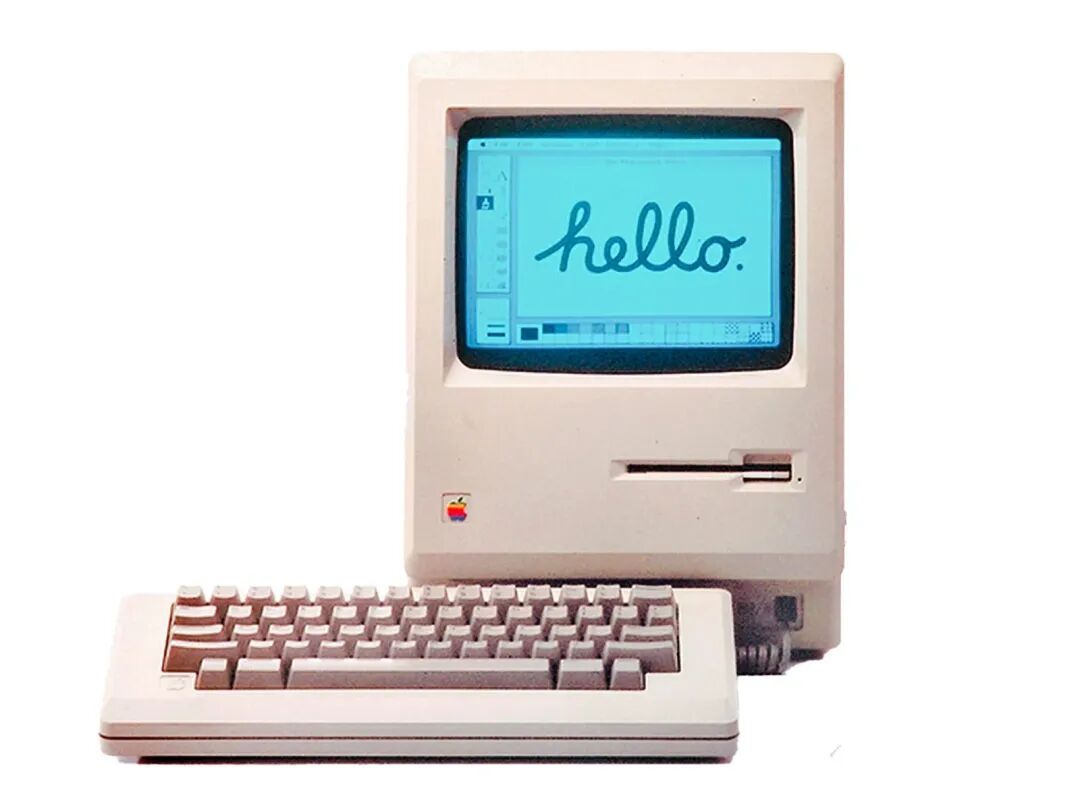
To build the first-generation Apple, Jobs sold his only motorized vehicle, a Volkswagen minibus, for a few hundred dollars. Wozniak sold his HP-65 calculator for $500 (equivalent to $2,274 in 2020).
History generously gave Intel a second chance. In 2007, Apple launched another epoch-making product — the iPhone — opening the door to the mobile internet era. Yet Intel's then-CEO once again rejected Apple's request to develop mobile CPUs, causing Intel to miss the optimal window for the smartphone and tablet chip markets and ceding ground to competitors like Qualcomm and NVIDIA. Today, NVIDIA's market cap is roughly ten times Intel's.
Of course, Intel remains a great company.
But if you
Over-believe in and cling to
the logic that made you successful
Then that very logic of success may lead you to mediocrity
Many other glorious companies emerged during humanity's march into the information age — IBM, HP, and Microsoft in the PC era; Motorola, which invented the mobile phone; and today's Google, Meta, and others. The conversion of scientific and technological knowledge into direct productive force accelerated dramatically. Yet still, nothing was achieved overnight. Today, the most advanced chips have transistor densities approaching 300 million per square millimeter — a 17 billion-fold increase in less than 60 years. Moore's Law continues to work its magic.
We have arrived at this moment.
In 2015, OpenAI was founded in San Francisco. Last year, its launch of ChatGPT unprecedentedly reached 100 million monthly active users in just two months;
In 2023, Apple released the Vision Pro, an MR headset in development for seven years.
From a historical perspective, are we positioned at 1776 when Watt improved the steam engine, 1879 when Edison invented the light bulb, 1965 when Moore's Law was proposed, or 2007 when the iPhone was first released?
?
Where is the next stop? Everyone has a different answer.
On the flip side, we observe that at every important node in the history of human technological development, vast amounts of wisdom and human effort were poured into directions that yielded no results and were never recorded by history. Opening Soviet time capsules reveals that people's predictions for fifty years ahead were often wrong.
People tend to overestimate short-term change and underestimate long-term transformation. Productive revolutions are never achieved overnight. They require patience, sufficiently deep and far-reaching cognition, and diligent cultivation. Meanwhile, in the early stages of massive change, there is always a wave of fervor investing in overly superficial and taken-for-granted transformations. But what truly endures tends to be those "second landing points."
Regardless, we believe this is another era that will witness great transformation. Those of us living through it should feel fortunate. As Rilke wrote in his poetry: "I recognize the storm and am stirred like the sea. I stretch out and curl up again, finally tearing free from myself, casting myself into the great storm."
Watt said in 1767, "I think of nothing else but this machine." Boulton told the king, "I sell here, Sir, what all the world desires to have — POWER." These are the two quotes on the back of the £50 note. They may be the most successful inventor-entrepreneur partnership in history.

Today, we too are searching for such people — those with sufficiently deep, long-term, abstract insight into the future, who can also roll up their sleeves and dive in, devotedly and passionately building that future. Our name is MONOLITH. We are willing to believe in this vision as Boulton did, and to provide everything you need.
MONOLITH has already invested in multiple projects this year across general-purpose large models, large-model compute infrastructure, AI+ gaming, and AI+ education. We welcome scientists, entrepreneurs, researchers, and industry practitioners from AI, XR, and other fields — whether you come from academia or industry, whether you want to start a company yourself or join one. We look forward to hearing from you. We will also subsequently launch Monolith Podcast, Monolith Dinner, Monolith Interview, and other events, and welcome your participation.
If you are personally building the future you envision, we will surely find a way forward together. Please scan the QR code to add Monolith Xiaoli on WeChat (please include a note with your company/title), or fill out the form linked in the original article. We will respond to all applications and emails within 48 hours.

The writer Yu Hua once told a story about swimming in the ocean as a child. The gist: as a child he saw that the sea was yellow, while textbooks said it was blue, so he dreamed of swimming until he reached where the water turned blue. It's a poetic expression. When we turn the pages of technological history, nothing happens overnight. Great transformations require sufficient wisdom, and even more so persistence, patience, and determination. Entrepreneurship and investing are the same. When others see the spray, we must see the shifting of the sea level itself. Hence our title — we hope to swim with you, all the way until the sea turns blue.
Monolith Interactive
After reading this article, what do you consider the most important breakthrough in the history of human technological development? What are your expectations for the current development of artificial intelligence? Are you interested in starting a business in this field, or already working in it?
We welcome your observations and thoughts in the comments. We will select five users with the most thoughtful comments and highest likes to receive special commemorative gifts prepared by MONOLITH, and may invite you to participate in subsequent offline Monolith Meet Up events. The deadline is 24:00 on July 28.
References
- How to Leave Earth's Surface, Xi Lu, Beijing Daily Press, 2021
- Chip War: The Fight for the World's Most Critical Technology, Chris Miller, Scribner, 2022
- The Universal History of Computing: From the Abacus to the Quantum Computer, Georges Ifrah, John Wiley & Sons, 2001
- The Man Behind the Microchip: Robert Noyce and the Invention of Silicon Valley, Leslie Berlin, Oxford University Press, 2005
- My Inventions: The Autobiography of Nikola Tesla, translated by Xiaojia Wang, Law Press, 2010
- Brighter than a Thousand Suns, Robert Jungk, Atomic Energy Press, 1991
- Where Wizards Stay Up Late: The Origins of the Internet, Katie Hafner, Simon & Schuster, 1999
- Intel Trinity: How Robert Noyce, Gordon Moore, and Andy Grove Built the World's Most Important Company, Michael S. Malone, Simon & Schuster, 2015
- The Light of Civilization, Jun Wu, Posts & Telecom Press, 2014
- Sternstunden der Menschheit: Vierzehn historische Miniaturen, Stefan Zweig, S. Fischer Verlag, 1943