Monolith portfolio company MetaX Technology passes IPO review on STAR Market

A landmark event in the capitalization of China's domestic GPU industry


On October 24, 2025, Monolith portfolio company MetaX (沐曦集成电路(上海)股份有限公司, hereinafter referred to as "MetaX") successfully passed its STAR Market IPO review.
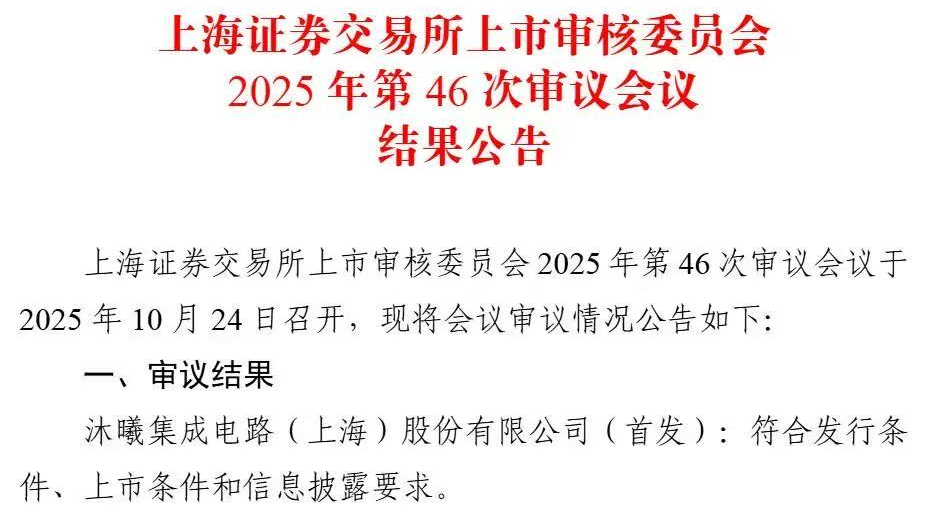
MetaX is a flagship investment for Monolith in the AI hardware and compute layer. Since its founding in 2020, MetaX has successfully launched multiple GPU chips and supporting solutions targeting diverse application scenarios. As its product technology matured and market recognition grew, the company's revenue entered a rapid growth phase, driven primarily by climbing sales of its C-series training-and-inference integrated chips — making it one of the domestic AI chip vendors with the strongest revenue momentum.
Xi Cao, founding partner of Monolith, was an early investor in MetaX, backing the company at its pre-Series A round. After establishing Monolith, he continued to invest in the company, steadfastly supporting MetaX's development throughout its journey, with the company's valuation subsequently rising more than 30x.
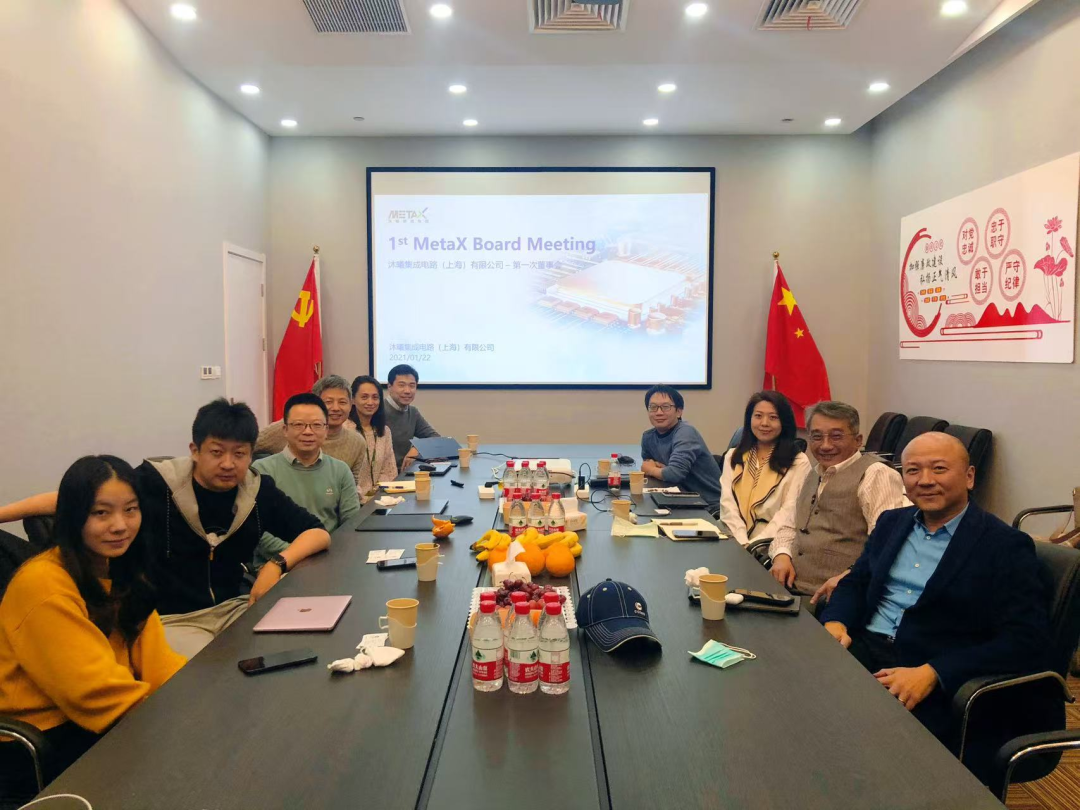
MetaX's first board meeting (Chen Weiliang, third from left; Xi Cao, second from left)
In recent years, MetaX's operating revenue has grown rapidly. According to its prospectus, the company's compound annual growth rate reached 4,074.52% from 2022 to 2024. Revenue in the first half of 2025 reached 915 million yuan, already surpassing the full-year 2024 figure. Meanwhile, as revenue grew rapidly, losses have narrowed, and the company projects it could reach break-even as early as 2026.
Per the announcement, MetaX's IPO aims to raise 3.904 billion yuan to fund three projects: "New High-Performance General-Purpose GPU R&D and Industrialization," "Next-Generation AI Inference GPU R&D and Industrialization," and "High-Performance GPU Technology R&D for Frontier Fields and Emerging Application Scenarios."
Monolith looks forward to MetaX continuing to break through technical barriers and accelerate large-scale commercialization, further contributing to the autonomy, controllability, and high-quality development of China's intelligent computing industry.