Why Are Young People Always the Drivers of Tech Revolutions | MonoX Event Registration

Where do great stories begin?


Every technological revolution has been driven by the young.
Recently we ran an interesting analysis — looking at the age at which founders of great companies first started their businesses across successive tech revolutions.
We chose "age at first startup" as our lens because people tend to focus only on these founders' moments of glory, overlooking the early experiences — successes and failures alike — that came before.
But we believe those first attempts are where their great stories truly begin.
Going back to the earliest era, during the Industrial Revolution, founders of what we'd call "great companies" had an average age of roughly 29.9 at first startup.
Some began even younger: William Procter started making candles at 17, while John D. Rockefeller launched his first venture — a grain trading partnership — in his early twenties.
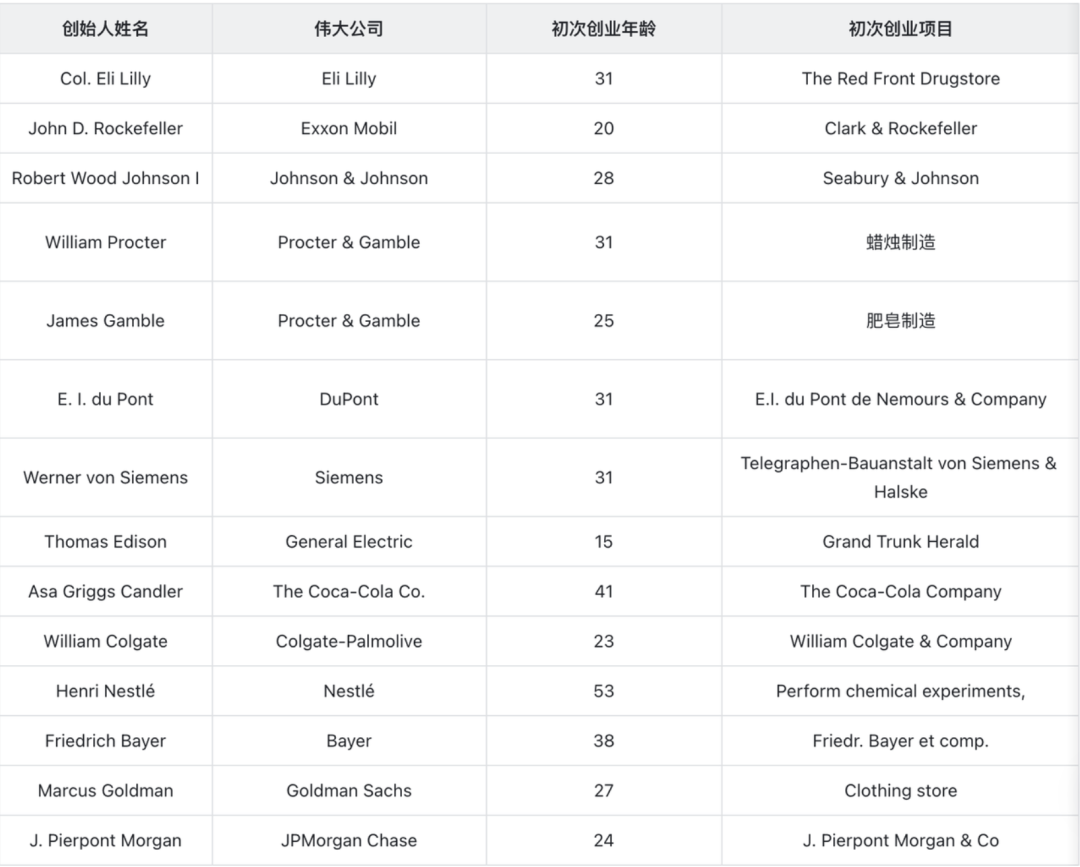
Industrial Revolution Founder Ages
By the internet era, the average age of pioneering founders dropped to about 29.2. Most started in their youth: Bill Gates began a traffic data analysis venture at 17 while still in high school, and founded Microsoft at 19; Larry Page and Sergey Brin started Google at 25 during their Stanford graduate studies. Even Jack Ma, whom we think of as a relatively late starter, was just 28 when he founded Haibo Translation Agency in 1992.

Internet Era Founder Ages
By the mobile internet era, that number plunged further to roughly 24.5. In this wave, almost no well-known company was founded by someone who first started a business after 30.
Mark Zuckerberg launched Facebook at 19. Daniel Ek, Spotify's founder, began building websites for local clients at 13, earning up to $50,000 a month at his peak.
The dominance of young founders in this era was unprecedented. The democratization of technology made productivity tools more accessible than ever — open-source software and cloud services were at everyone's fingertips.
At this point, a computer and a creative mind were nearly all the startup capital you needed. This gave young people the lowest barrier ever to turning ideas into reality, letting them seize their moment earlier than ever before.
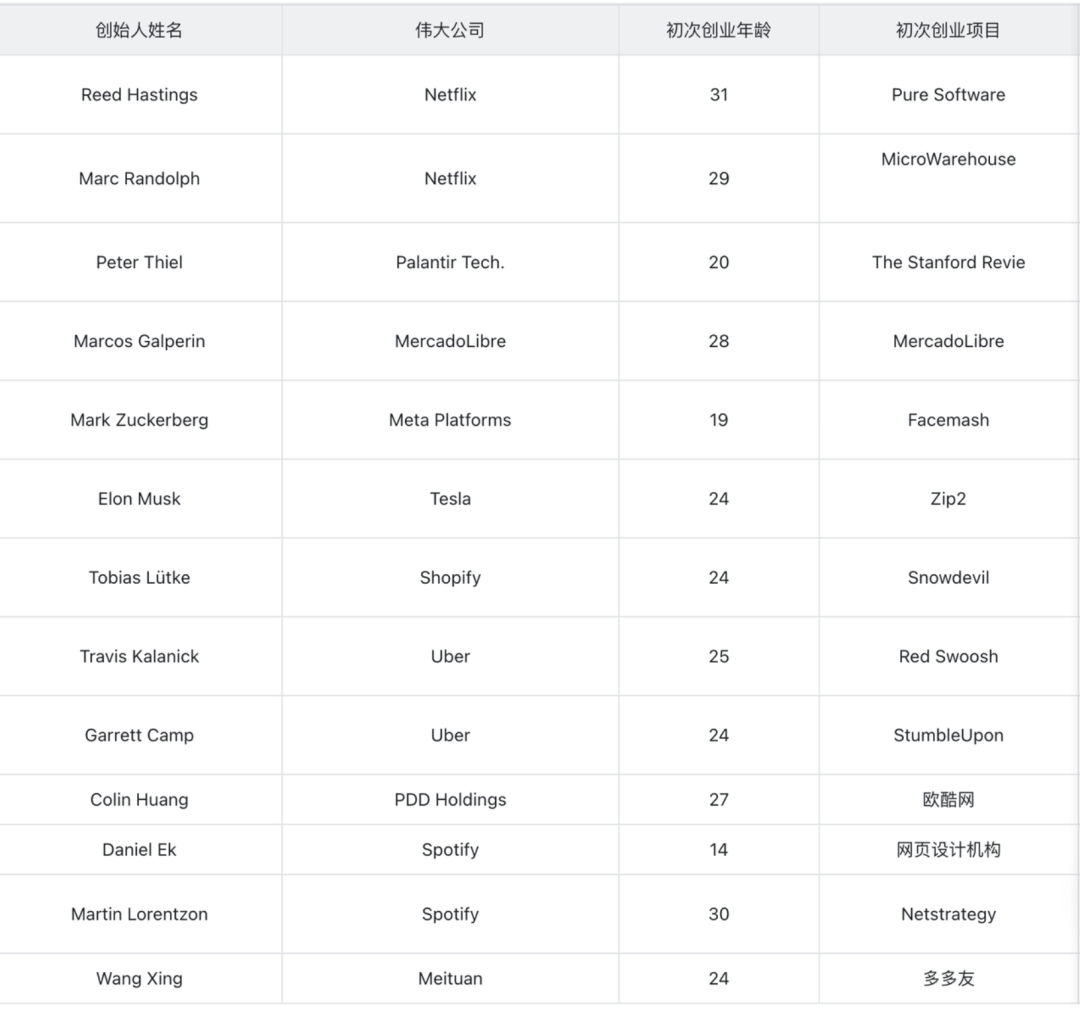
Mobile Internet Era Founder Ages
Beyond raw age, we also analyzed some founders' trajectories more deeply and identified two critical time windows.
First, the journey from first startup to first institutional funding takes roughly five years on average. This gives early investors a valuable but narrow window to identify talent. Once funded, these founders enter a long period of value creation.
Second, from first funding to reaching a $100 billion market cap takes an average of about 16 years. So even if you miss the early funding rounds, there are still many entry points along the way to participate in and benefit from their growth.
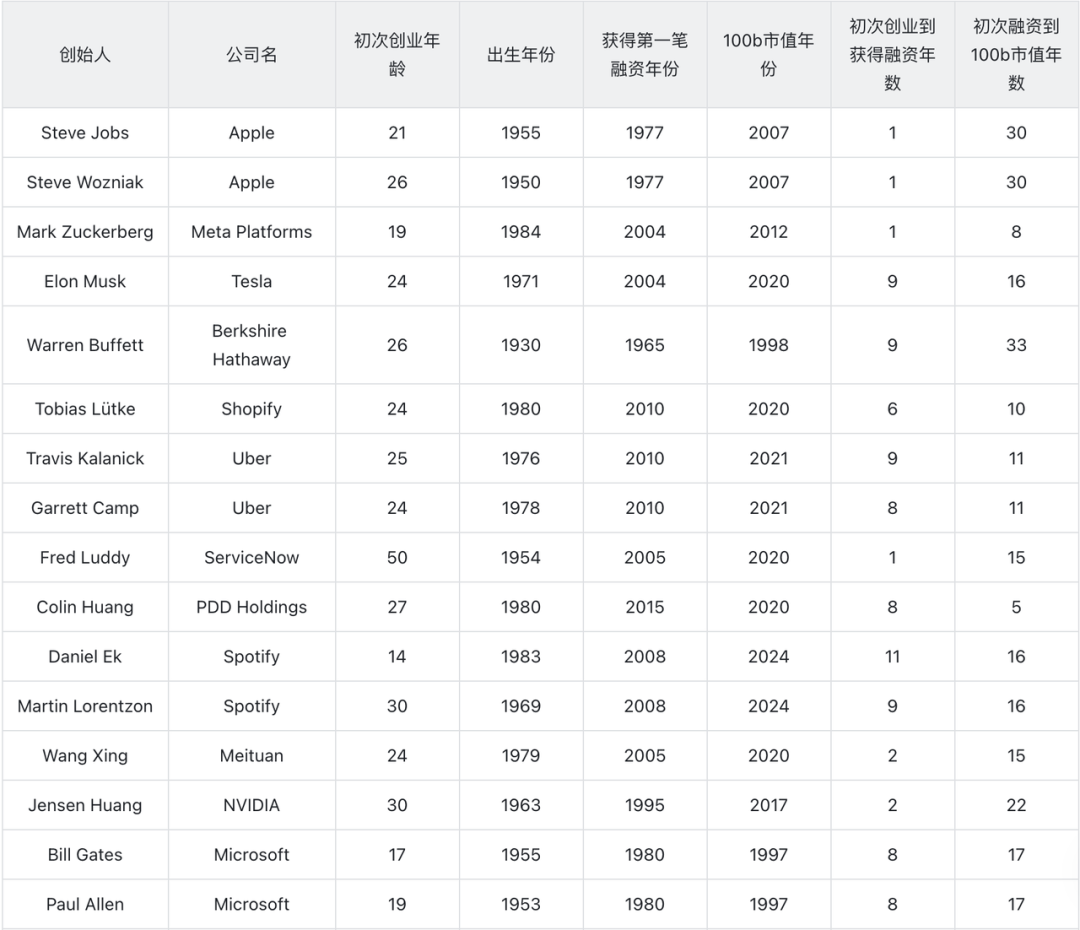
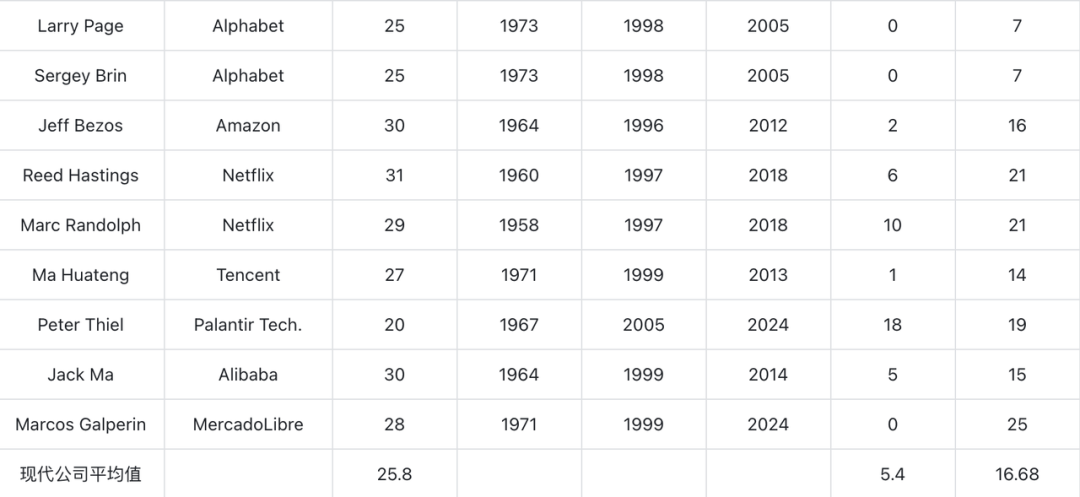
The Two Time Windows of Great Company Founders
Finally, more than 80% of these founders did not hit it big on their first try. But these "prelude projects" — successes and failures alike — laid the groundwork for what came later.
Nearly all of them, looking back, describe how these early explorations shaped their later companies in profound ways.
Burbn before Instagram. Twttr before Twitter. BackRub before Google. The examples are endless.
Through all of this, our most important takeaway is this: young people have always been the backbone of technological revolutions.
Even when they didn't found companies themselves, they were the ones contributing most to driving change.
As carbon-based lifeforms, humans are subject to a kind of "first principles" reality: the young tend to have the greatest cognitive flexibility and the least path dependence. Higher cerebral blood flow enables faster neural processing, letting young people absorb new knowledge more quickly and forge entirely new cognitive connections.
These days, terms like "lying flat" and "Buddhist-style" have become popular among young people — momentary emotional expressions. But from a historical perspective, the internal engine of human progress, that creative and transformative impulse belonging to the young, has never truly faded.
In fact, it's the cycles they create again and again that push human society forward. So far, the entire arc of technological development has barely looked back.
So as "carbon-based lifeforms," we have every reason to believe in young people.
As venture capitalists, Monolith's mission is to find and support these young people willing to change the world — and to back them at their very first attempt.
Since our founding, we've invested in a portfolio of youth-led startups, including more than seven founders born in 1995 or later, many of them first-time entrepreneurs.
Of course, we also believe that "young" doesn't have to mean age — it's more about mindset. We would never simply categorize founders by age alone.
If you see the possibilities in AI and want to reshape an industry with it;
If you want to probe the future with products, not replicate the past;
If you listen to the deepest voices of your users, not just follow trends;
If you have an intuition about the future and want to make it real;
If you still feel young, but refuse to use "young" as an excuse.
Then you are the "young person" we're looking for this time.
Soon, we'll be hosting MonoX, an event for founders, inviting the most transformative young people of this era to sit down and talk. We want to see, from their perspective, which communities they care about, what topics ignite their passion, and what future they're working to create.
Monolith hopes to create a relaxed, genuine, and open space for discussion — letting the people charging furthest ahead in this era exchange ideas freely, sharing their goals and where they stand.
Welcome to scan the QR code below and join this conversation. We'll notify you of the specific time and location via the contact information you provide. If you don't just want to listen from the audience but also want to speak up, please be sure to let us know.
If you're fully absorbed in your company, project, or product and can't make it to our gathering, you can also share your progress through the "Talent-BP Project Submission" option at the bottom left of the "Monolith砺思资本" WeChat public account homepage. We'll reach out within three business days.
Let's change the direction of the tide together.