The SpaceX of Pharma: Caida Lai's Nanorocket

Only those with fire in their eyes can build rockets.


"Whilst this planet has gone cycling on according to the fixed law of gravity, from so simple a beginning endless forms most beautiful and most wonderful have been, and are being, evolved."
"There is grandeur in this view of life, with its several powers, having been originally breathed into a few forms or into one; and that, whilst this planet has gone cycling on according to the fixed law of gravity, from so simple a beginning endless forms most beautiful and most wonderful have been, and are being, evolved."
This is the closing passage of On the Origin of Species. It is also the most moving passage for Chris Lai, founder of METiS Pharmaceuticals.
Lai's story with the pharmaceutical world began with a paper. As a chemical engineering undergraduate at National Taiwan University, he came across a study by Bob Langer: growing an ear on the back of a nude mouse. The sheer audacity of it stunned him — "the feeling that a technology from science fiction could actually be created."
With ambitions of becoming a scientist and winning a Nobel Prize, he went to MIT for graduate school, only to discover how much taller the mountain was. He gradually realized that while he might not reach the very pinnacle of pure research, he excelled at something else: translating scientific value into real products.
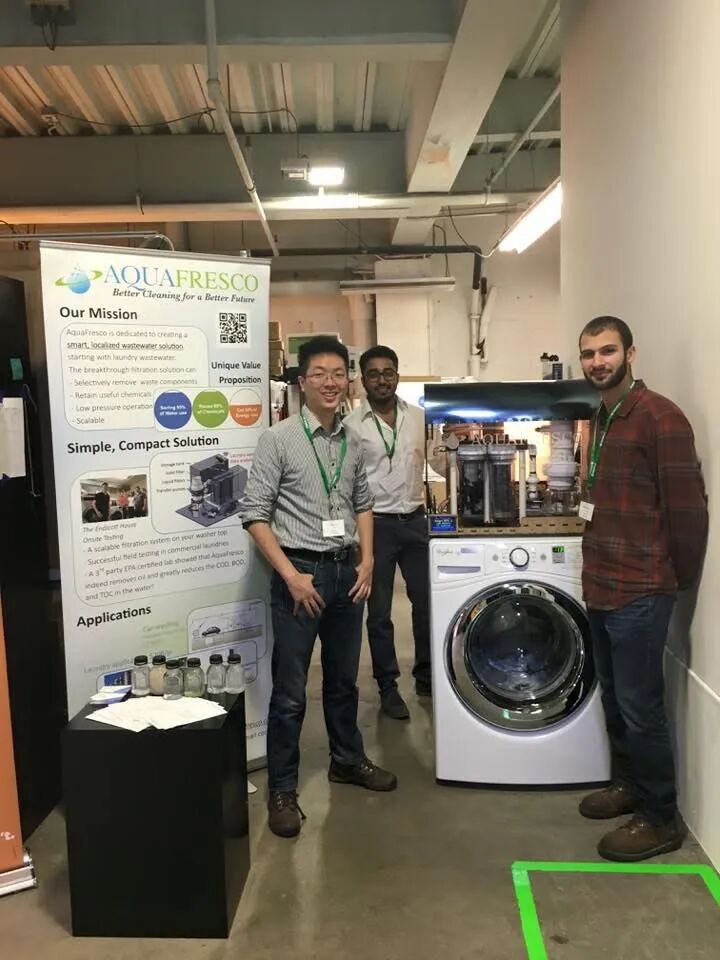
Chris Lai (far left) with an entrepreneurial project during his MIT years
After earning his PhD in 2016, he joined the early team at XtalPi, where he first encountered the full landscape of AI-driven drug discovery. Four years of seasoning later, on the eve of the pandemic in early 2020, he returned to Hangzhou to found METiS.
Five years on, METiS has achieved breakthroughs in precise lipid nanoparticle (LNP) delivery: targeted delivery to the liver, lungs, muscles, immune organs, and tumors. It is fair to say that METiS has been among the smoothest sailing of this wave of AI pharma companies.
Yet Lai told us this is only Day One.
He describes METiS as "the SpaceX of pharmaceuticals." The company is not building rockets of metal, but "nano-rockets" composed of lipids, proteins, and molecules — designed to deliver precisely engineered drugs into the "inner universe" of the human body, a system of thirty trillion cells.
People wonder how someone so young convinced top industry veterans with two or three decades of experience to fight alongside him.
We asked senior executives close to Lai. Their answer: working with this young founder lets them realize greater self-worth — METiS aims to make the world's best nanomaterials, to create real value for patients.
This is also evident in how Lai chooses partners. He has consistently sought out people who, despite having already achieved success, still have "unfulfilled ideals at their core." "Only those with fire in their eyes can build rockets," he says.
This spirit of curiosity and exploration is precisely what Monolith values. Monolith founding partner Xi Cao was METiS's angel investor, placing his bet even when Chris's entrepreneurial direction remained unclear.
Lai's fundraising journey had its share of bumps. He candidly admits, "Boss Cao probably invested in us based on the person, because back then we really had nothing."
It has been a while since we last recorded a podcast. Recently, METiS completed its Series D funding round. For this episode of First Mover, we sat down with Lai to talk about pharmaceuticals and AI, the rough patches of entrepreneurship, management philosophy, and the convictions that have never changed.


The full conversation below,
Edited by Monolith, with adjustments and abridgments:
"The Essence of AI Is Decoding the Most Unique Big Dataset — Humanity"
Monolith: Since AI arrived, what concrete changes have you witnessed in the pharmaceutical industry?
Lai: The logic of AI pharma actually stems from human complexity. We have roughly 30 trillion cells in our bodies, each containing 20,000 to 30,000 genes. The combinatorial possibilities reach trillions.
Why do people get sick? Usually because signaling in certain cells goes wrong, leading to disease or aging. The essence of AI is to decode this most unique, most complex big dataset — humanity — to understand it, and even attempt to change it. For instance, can we reprogram "sick cells" back into healthy ones? Or even into "super anti-aging" cells?
So the long-term value of AI in this field is to truly decode the human body as a complex system, and create effective treatments and products based on that understanding.
Monolith: Some say cancer may be solved within ten years. Do you agree?
Lai: I think cancer will ultimately be treated as a chronic disease. At its core, it's certain cells growing out of control, occupying space and consuming resources. Once we can deliver treatments precisely to the target, I believe these tumors can be "shut down."
The first value of large models here is helping us design nanomaterials that precisely deliver to different tumors. The second is using digital twins to transform tumors into predictable models, then achieving clearance through different target combinations.
Some are even researching prophylactic tumor vaccines — predicting antigens each person might develop and "injecting" them preemptively. All of this could very well happen in the next ten years.
Monolith: When so-called AGI arrives, what impact will it have on drug R&D?
Lai: Actually, before AGI arrives, AI will already bring massive breakthroughs. Because biopharma is fundamentally about decoding human processes, and AI excels at handling such complex systems. It will break through first in vertical domains. For example, creating a digital twin of the heart to find druggable opportunities. Or decoding the delivery distribution of nanomaterials, predicting protein folding and its relationship to efficacy.
Monolith: In this field, what can AI do that humans cannot?
Lai: How materials distribute and accumulate in the body is extremely difficult for the human brain to predict, because it involves dynamic, multidimensional information about material properties, protein binding, and so on. AI can process these complex connections and continuously optimize features to achieve precise delivery.
The human brain also struggles to fully predict protein structure and function — for instance, which antibody can generate immunogenicity while maintaining efficacy? AI is better at predicting these kinds of systemic problems.
But I believe human-AI interaction is crucial. AI can provide predictive power, but human experiential judgment remains essential.
Monolith: So the idea is to first establish a "digital twin" at the human body level, treating the body as a computable object, then have AI intervene and optimize. Is that the right understanding?
Lai: Yes, but that's the ultimate vision. As a company, of course we can't do all of this from day one.
"Building SpaceX, Making the World's Best Nanomaterials"
Monolith: What role does METiS want to play within this larger vision?
Lai: We often describe ourselves as a "rocket company." We use AI to design nanomaterials — "AI for Nano." The core is designing various "nano-rockets" that, once inside the body, can precisely navigate to the correct tissues and organs to deliver treatment.
Think about it: the human body has 30 trillion cells. The ones that are actually sick might number in the tens of thousands, hundreds of thousands, or even millions. You must navigate precisely to the right cells to truly treat the disease.
There is no GPS in this complex micro-universe of the human body. We use chemical signals, biological signals, combined with AI to understand these signals, and develop innovative materials that deliver drugs precisely to target cells and tissues. That is the direction we are working toward.
Monolith: So if the "digital human body" is like Google Maps, METiS is building the GPS — except this GPS has to be designed with AI. Is that right?
Lai: You could put it that way. Or perhaps it's more like SF Express — we absolutely must deliver the package to your doorstep. Any misdelivery could bring toxic risks. Our goal is "hit where we aim."
If we can achieve this, the entire pharmaceutical process could be disrupted. In the future, tumor cells could be precisely eliminated, nerve cells potentially enhanced, muscle cells regenerated, heart tissue rebuilt.
This is a major challenge for the entire biopharma field. METiS focuses on the "last mile."
Monolith: In the overall disease treatment process, there is a step called molecular design. It's somewhat like solving an equation in an enormous space. AlphaFold, for instance, largely solved the problem of molecular structure prediction. What METiS faces now is how to precisely deliver drugs to specific locations. So why did you choose delivery?
Lai: AlphaFold was an important breakthrough in AI pharma. For the first time, it directly converted amino acid sequences into structures through algorithms. Structure determines function. It essentially decoded over 90% of protein structures in nature. It was a starting point, profoundly significant, and thus deservedly won the Nobel Prize.
What we focus on is nanomaterials. It is a high-dimensional, enormous-space supramolecular assembly. A nanosphere is vastly larger than a protein, somewhat like a 3D puzzle containing different lipids, targeting molecules, and various new materials.
How do these components self-assemble into a "rocket"? This is nearly impossible for the human brain to deduce. At the same time, once a drug is injected into the body, it has to cross multiple protective barriers to reach its target area and release its therapeutic effect. Along the way, it will inevitably be engulfed by certain cells and distributed to different locations. But there's no GPS inside the body — how do we know whether it ends up in the liver, lungs, or heart?
What we want to solve is this entire "delivery" problem. You can think of it as building an "artificial, navigable" micro-device. Somewhat similar to a virus, it can precisely reach target organs or tissues.
Once the delivery problem is solved, the difficulty of drug development drops dramatically. As you know, many diseases can be addressed in vitro — tumors, nerve regeneration, anti-fibrosis, and so on. But why does it fail once inside the body? The key is whether you can deliver to the right cells.
As long as you can get it in, the in vitro experimental results have a chance of being replicated in vivo. This way, whether it's antibody drugs, protein therapies, or small-molecule drugs, a batch of previously "undruggable" opportunities could be opened up.
Monolith: What specific diseases or indications is XtalPi currently focused on?
Lai Caida: We mainly look at clinical pain points. The fastest-moving product is in CNS — central nervous system degenerative diseases. The goal is to alleviate or even reverse common aging symptoms. Things like swallowing difficulties, mood disorders, blood supply issues, and so on.
The second area is oncology. The core problem with tumors is delivery. How do you get drugs to actually enter solid tumors? Past treatments were somewhat like "carpet bombing" — civilians and enemies alike got hit. We hope to use nanomaterials to precisely deliver drugs into the "enemy fortress" and dismantle it from within, achieving better efficacy without harming normal cells.
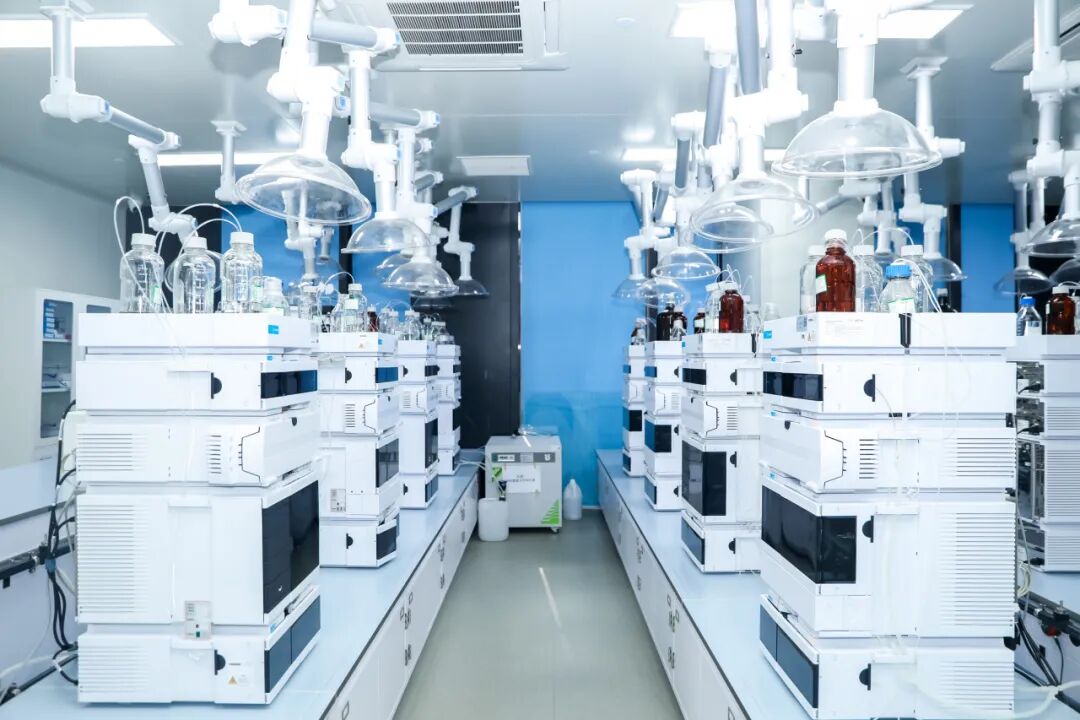
METIS Lab
The third category is autoimmune diseases. This market is even larger than oncology. We want to deliver drugs deep into immune organs, selectively eliminate overactive B cells, and achieve immune reconstruction.
Finally, metabolic diseases — weight loss, blood sugar reduction, lipid lowering, muscle gain, that sort of thing. If we can truly make it "effective when taken orally," you basically wouldn't need to spend every day at the gym.
Monolith: Looking at it from another angle, if AI continues to break through in protein computing and biological computing, could there emerge a company that can "reach all diseases"?
Lai Caida: That's my vision, I suppose. Our focus is on "being able to deliver to any cell, even a specific type of cell." The industry currently does well at the tissue level; we hope to truly achieve "hit wherever you point" in the future.
Theoretically, it's feasible. The human body's own antibodies, signaling molecules, nutrients, and so on can naturally penetrate various cells. Viruses are also nature's most powerful delivery materials, capable of precisely entering different cells. With AI, humans might be able to find the optimal combination in an "infinite" material space, achieving virus-like navigation capability. But getting to that point will still take time.
Monolith: Over the past few decades, in the life sciences field, companies that "make molecules" have typically been valued higher than companies that "do delivery." But your view now seems to be: if the delivery system is universal, it's a platform company that can solve almost any problem. Is that right?
Lai Caida: Yes, but this is our hypothesis. If we can truly deliver drugs precisely to the cellular level, the entire difficulty of drug development instantly decreases. This way, many tools humanity has already accumulated — antibodies, CRISPR, small molecules, and so on — can be repurposed. The value naturally becomes enormous.
ADCs (antibody-drug conjugates), which have been especially hot in pharma recently, are essentially delivery — using antibodies plus small molecules to get drugs into tumors. That's just one cell type, one carrier. Imagine if we could deliver to all cells, paired with various cargos — how much potential would that have?
XtalPi does both delivery and products, somewhat like "having both SpaceX and satellites." Before SpaceX existed, satellite companies were more valuable, but after SpaceX, rocket companies' valuations skyrocketed.
Monolith: Has XtalPi done any deep research in the large model space?
Lai Caida: What we've done most is "nano large models." In the past, we were very good at doing massive amounts of dry experiments to predict how nanomaterials assemble and which proteins they bind to; we also did massive amounts of wet experiments to verify which organs these structures distribute to in the body and where they accumulate.
Based on this data, we built something like a "lipid language library." We treat each fragment of a lipid as a token, then combine these tokens to generate different lipid materials. Then we trained a large model to act like a "top scientist," specifically understanding and generating the language of nanomaterials. Of course, it only speaks "lipid" — it doesn't understand other domains.
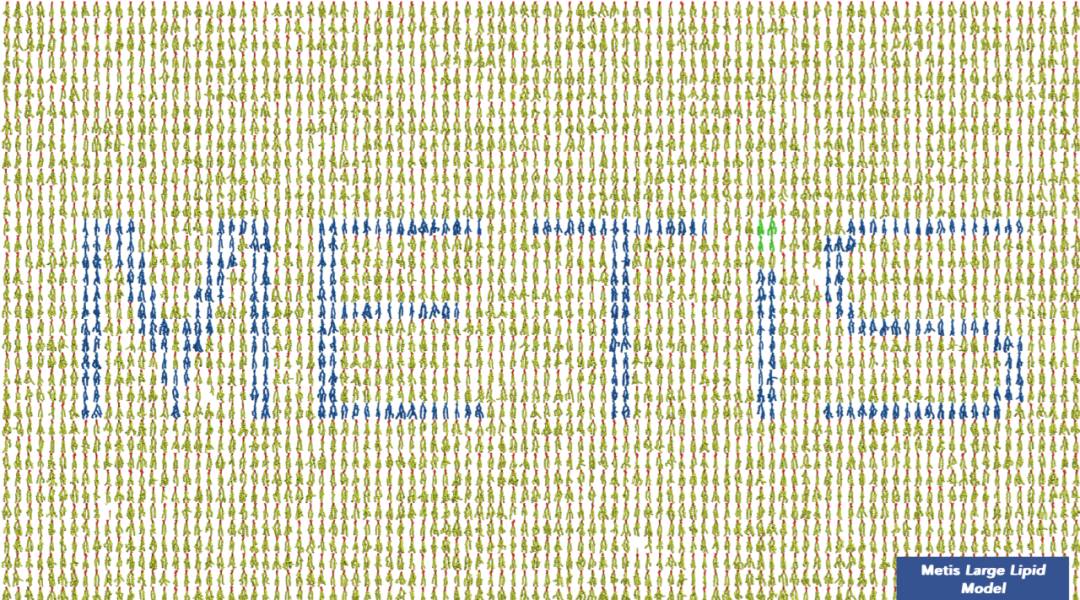
METIS Lipid Library
You can ask it: if I want to make a non-targeted delivery, which tokens are critical? It can give predictions, even generate 100,000 possible materials in one go. Then we first use dry experiments to screen for the best 100, use wet experiments for verification, and finally lock in the one material that actually works.
Once we打通 this pipeline, our efficiency in material delivery development improved dramatically. We now have a library of ionizable nano-lipids at the tens of millions scale, while the entire published data in the public domain is only around ten to twenty thousand. We've essentially expanded the design space by a thousandfold, and through this space, we can find many good materials that others can't.
"Turning research into products —
that's my strength"
Monolith: Tell us about your background. You've spent many years in Taipei, Boston, Hangzhou, and Beijing, right?
Lai Caida: I grew up in Taiwan and graduated from NTU's chemical engineering department. In college, I identified three major directions worth investing in: materials, information technology, and medicine. Of course, I never imagined I'd be doing AI pharma today.
Once I saw an article by Bob Langer about growing an ear on a nude mouse — that image was so shocking. If this could be done, theoretically all diseases could be solved.
At that moment, I thought: I have to go to MIT, to a place that can turn science fiction into reality.
I got lucky and got into MIT's chemical engineering program. I joined the Novartis-MIT Center. Only when I got there did I realize there are always people better than you — some could solve differential equations at a glance. Surpassing them at source innovation was too difficult.
I decided in my first semester to take a differentiated path. Gradually, I confirmed that maybe I'm not suited for pure research, but I'm good at turning research into products — that's my strength.
The entrepreneurial atmosphere at MIT was particularly strong. Around 2014–2015, people were starting companies from almost any idea. Many Chinese investors came to campus to chat with students, even brainwashing each other that you had to start a company.

MIT Entrepreneurs Band
At that time, I participated in XtalPi's early entrepreneurship. Their research direction was very close to mine — both were about crystal forms. Once at a competition, their booth was right next to mine, and I looked at their poster thinking, "Isn't this exactly what I'm best at?"
So I became their Scientific Advisor / Active CEO, helping with algorithms and platform implementation — my formal first step into AI pharma.
The entire industry was in a super early stage. When I talked to my advisor about whether AI could predict drugs, he said "that's impossible." A few years later, AlphaGo and AlphaFold came out, and the whole world was shocked. So I'm especially grateful that I happened to be standing at the crest of the wave.
Monolith: The US biopharma circle is mostly dominated by "old white men" — older guys who've been making drugs for decades. You're so young — how did you become CEO?
Lai Caida: This was also an important reason I returned to China. In the US, it would be very difficult to get to this kind of opportunity and influence at my age. US companies don't have such strong binding with founders. Founding scientists often get marginalized after angel or Series A rounds, becoming bench scientists or project leads, with many simply leaving the company.
But those years in China happened to be the transition from generic drugs to innovative drugs, from traditional pharma to AI pharma. The industry was short of this kind of "new technology + young scientist." Of course I couldn't be a good CEO from day one, but China happened to provide a "newbie village" kind of environment. I often joke with investors: 2016–2020 was the newbie village era, giving young scientists space to trial and error. The opportunity may not exist anymore after that.
Monolith: Early-stage fundraising is very important. Can you talk about your connection with Monolith and your impression of us at the time?
Lai Caida: Actually, Xi Cao from Monolith was roughly our angel investor. Back when he was still doing seed funds at HSG, he had already invested. To be honest, when we first connected with Cao, our pitch deck was still very primitive, and what we were doing wasn't exactly the same as now.
At the time, I had identified several directions worth pursuing for my startup: AI protein (protein wasn't hot yet then), AI antibody, and AI nano. Because our team was stronger in materials, we started with nano.
At the very beginning, we didn't know what could or couldn't be done. I still remember writing about nanomaterial LNPs in the pitch deck. Some investors said: "Too difficult to do, don't put it in for now, others won't buy in." So the first version of the pitch deck was written very simply — small-molecule formulation development, using AI to permutate and combine various materials. Then we stuffed in some use cases we had done in the US.
I think what Cao may have valued was that I had just come out of school and also worked at McKinsey for a year or two — I could see the industry quite clearly. At the time, he maybe wasn't 100% convinced we could pull it off (laughs), but felt we'd always find the right direction. Later on, we really did trial and error our way to the correct path.
Monolith: Actually, in the fundraising process, there are definitely more people who reject you than invest in you. Of these rejections, how much did you actually listen to? Did you ever change direction because of this feedback? Or did you mainly look for people who agreed with your view?
Lai Caida: Both. Some people didn't believe AI could break through in pharma from day one, didn't buy in at all — nothing to discuss there. There were quite a few of these investors at first, fewer later on; everyone gradually came to recognize that AI could make major breakthroughs in the industry.
Later on, more of the debate shifted to execution. Some questioned the product value, whether the market was big enough. At first we only worked on new drugs for infectious diseases, and investors would run the numbers and say this only sells in China, hard to go global, there's a ceiling. At the time I actually bought into that advice, and started thinking about how to break through later — our current work on LNPs, antibody delivery, and so on all traces back to that.
Investor feedback is probably half right, half wrong. We often try two steps, realize it's wrong, then pivot. But investors tend to be more accurate than us on macro trends — capital flows, policy direction — they can give us early warnings. That helps us time our fundraising better and handle government communications more skillfully.
Monolith: For you, coming back to China to start a company was the right decision. But you didn't actually know much about the mainland before. Since returning, what matched your expectations and what didn't?
Lai Caida: Honestly, completely different from what I imagined. I thought doing business in China meant baijiu first, three glasses down before talking shop. Not at all. Entrepreneurship here is all about efficiency and science — you talk data and team with investors, communication is very direct and efficient.
What surprised me was how strong government enablement is. District and municipal governments help you find talent, find space. When we first got to Hangzhou, we didn't know anyone, didn't know where the labs were. The government found suitable sites in Binjiang, Qiantang, and Xiaoshan within three months — landing, renovation, building the factory, all handled.
In Boston, who's going to help you find a lab? So at the time I felt this kind of "nanny-style" help in China was almost unbelievably good.
Monolith: In reality, starting around 2020, the primary market invested in quite a few AI pharma companies. You guys rank among the ones that ran especially smoothly. Over these years, your company's direction hasn't been without changes, but you've kept going — what's your trick?
Lai Caida: Around 2021–2022, the market was volatile, all kinds of noise everywhere. We also had a period of frequent direction changes — back then we were basically changing strategy every six months. The team couldn't take it and said, "Chris, can you just give us a three-to-five-year plan? Stop changing all the time."
After about a year we really settled down and went all in on one direction. Actually, the narrower you go, the deeper you dig into a vertical, the more value data and models can create. You can't own the whole chain from target innovation, target validation, molecular design, to delivery — but as long as you have differentiation in one link, you can make first-rate products and partnership opportunities. That was the key insight we discovered at the time.
I think the secret recipe is: focused enough, fast to product. Many friends in the early days just polished algorithms without landing products — the value was invisible. Our DNA is believing that whatever we build ultimately has to show value in patients.
We have three rules:
Patient-centric: We only do things that create massive value, not because the algorithm is cool.
Push boundaries: What others in the industry don't dare to do, we do.
Top-tier team: We recruit the world's best scientists — I'm willing to spend money and equity to attract people many times stronger than me.
"It's still only Day One"
Monolith: You mentioned some smooth sailing — so what's the biggest pitfall you've hit in these six-plus years of entrepreneurship?
Lai Caida: The biggest pitfall was building a large R&D team in the US. At the time we wanted to work on both delivery and small-molecule AI directions, hired a lot of top scientists, but US costs were too high.
Monolith: What do you mean by US costs being high? Quantify it.
Lai Caida: RMB to USD, rent is ten times, salaries inflate 8% annually, recruiting and poaching, experiments, data — extremely high costs. Slow efficiency, for an AI company doing experiments and generating data, too expensive.
The US is good for senior people to find direction, but the cost of landing experiments and producing data is too high. Later we found they were even outsourcing development to the China team — might as well just move it to China directly.
Monolith: Your partner is Academician Hongmin Chen. You were so young then, not even thirty — how did you convince him to start a company with you?
Lai Caida: Haha, that's probably my strength. Frankly, at the time I had no money, no experience — what I had was passion and vision.
Think about it — my partners previously took five to ten years to develop two or three drugs. If AI tools could compress that cycle to one or two years, their value directly multiplies by N times — of course they'd be interested.
And we already had some landed application scenarios, not empty promises. From first principles: China can produce world-class data, AI can amplify decision efficiency, boosting these top scientists' influence by 10, 20, 100 times. They felt this was truly a paradigm shift, and working with me might be the fastest path to realize it.
Of course, it wasn't signed on day one. Usually takes one or two years, sometimes longer — be friends with them while gradually working on it. Sometimes you talk until they're almost embarrassed, and then they're willing to join. So I often say: vision plus patience, slowly grinding, is how you get these senior legends on board.
Monolith: Some Chinese entrepreneurs are super PMs, everyone revolves around them; American pharma companies might have scientists as CEOs. You clearly didn't take those paths. How do you make decisions in your company? How do you ensure the final direction is right?
Lai Caida: Good question. Internally, our company is never fully aligned on anything. Whether to pursue a pipeline, how fast to push it — everyone has different views. Many people on the team are more experienced and capable than me, with completely different opinions. So my method is — show me the data. Give me data, then I can judge. We debate around data, find the optimal path — it's not rigid and unchanging.
Monolith: But many questions require resources to get data — how do you decide which ideas get resources to validate?
Lai Caida: We have something internally called the Vision Fund — a pool of discretionary capital. Scientists can propose directions, but they have to propose a killer experiment. After running it, you can clearly know whether it's viable or not. We don't interfere with early experimentation; after the data comes in, we decide whether to increase investment. This way early trial-and-error can yield good products before pushing forward. The broad direction is set by me and the executives, and sometimes I make the final call.
At first many partners didn't buy into my judgment, especially the first two years — they felt I lacked experience, my judgment wasn't accurate. But after five or six years, everyone discovered that Chris's intuition is still basically reliable, especially on pipeline differentiation direction.
Monolith: So in these intense discussions, is there attrition in the executive team?
Lai Caida: Definitely happens. People will argue: "You don't understand anything," "Your thing isn't that complicated" — a lot of that. But true executives don't need emotional management; they argue not to win, but to find the right direction. As long as the product can land and help patients, fighting doesn't matter. People who don't adapt to this model probably aren't right for our company.
Monolith: "True executives don't need emotional management" — that's a powerful line. What other traits do they have?
Lai Caida: I think with experienced people, you can see whether there's fire in their eyes. Many executives, two or three decades of experience, lost their passion — then they're not quite right for us. The scientists we like are those whose underlying ideals haven't been satisfied yet — they don't lack money, their reputation is enough, what they want is to truly "make their name."
For example, my CSO Dr. Wei Xu — he wants to become an industry mentor-level figure, lead teams, spread his ideals across various application scenarios. Fire in his eyes, I especially like that kind of person. My platform head also volunteered himself — he felt he could take the platform to the extreme, same fire in his eyes.
Once there's fire, then I look at what they've done, their experience, how they react to challenges, how they lead teams. When both sides have sparks, chemistry emerges.
Monolith: So how do you get these "fire-in-the-eyes people" to stay long-term?
Lai Caida: I see my role as an enabler. What makes me happiest is letting scientists realize their ideals, turning concepts into products. The key to retaining them is letting them work on the world's most cutting-edge and highly differentiated products. Of course good compensation and equity matter too, but more important is that the work itself fills them with passion every day, that they identify with the team and culture — that kind of team has strong combat power.
Monolith: What's your favorite interview question to judge someone?
Lai Caida: I ask two core questions:
First, what's the biggest challenge you've experienced. Dig 3–5 layers deep, and you can see their thinking patterns, coping methods, underlying logic, and behavioral reactions when hitting difficult problems.
Second, what's your vision? In five or ten years, how do you want others to see you? Some pursue pipeline success, some want industry influence, some pursue technical innovation.
Combining these two questions lets you judge their ceiling and floor, whether they're right for our team.
"My wife influenced me the most"
Monolith: Finally, we have a Kimi rapid-fire round. First question: describe Jitan Technology in three words.
Lai Caida: AI for Nano, leader in drug delivery, a company that creates value for patients.
Monolith: Describe yourself in three words?
Lai Caida: Curiosity-driven, wants to create impact, while having positive influence on people around me.
Monolith: Share a book you've read recently or particularly like.
Lai Caida: Recently read The Almanack of Naval Ravikant, haha — discovered my chosen path is very similar to his, both choosing entrepreneurship to create value, reading it gave me a "this is literally me" feeling.
Monolith: Share a song or album with us.
Lai Caida: Haven't been listening to much music recently. I used to like Guo Ding's songs, would listen to decompress when stressed.
Monolith: Who's the person who influenced your life the most?
Lai Caida: Definitely my wife. Not just family — she's had decisive influence on my career and my character.
Monolith: Specific example?
Lai Caida: Early in the startup there was a period of quite a lot of confusion and pain. But she always firmly believed in what I was doing, told me that as long as I create value for patients, there's no fear of not raising money, no fear of failure. No matter how busy, she supports me in doing what I want to do.
Monolith: If you could have dinner with anyone in history, who would you choose? Why?
Lai Caida: I'd want to have dinner with Darwin. I love On the Origin of Species — I want to know how he observed the world. From tiny symptoms, he actually discovered the process of evolution. His vision and macro understanding both shock me. He said something that really moved me: seemingly simple principles have infinite grandeur and greatness.
**
"There is grandeur in this view of life"
Interact with Monolith
After reading this article on Lai Caida's entrepreneurial journey and METiS Pharmaceuticals, what are your thoughts? What insights do you have on the AI + pharma space?
Feel free to share your observations and reflections in the comments. We'll select three users — those with the most thoughtful comments and the most likes — to receive a special commemorative gift from MONOLITH. The deadline is 24:00 on September 20.