Vanderbilt | A Fighter Who Never Rests

He has only two driving forces in life: making money and winning.


Cornelius Vanderbilt is not a name often spoken today, but in the nineteenth century it echoed across America. His statue still stands in the plaza of New York's Grand Central Terminal, gazing out at the railroad empire he created.
Vanderbilt went from an 11-year-old dropout to a sailboat peddler, then grew into a shipping magnate with routes spanning Europe and America and a fleet of more than a hundred steamships, earning him the reverent title "Commodore."
Unlike most successful businessmen, after achieving enormous success in shipping, he sold off all his vessels in old age and plunged headlong into the railroad industry, transforming himself into the "Railroad King." Fortune magazine ranked him as the second-wealthiest person in American history, surpassed only by Standard Oil founder John D. Rockefeller.
This is the second installment in our "Titan Profile" series. We selected Vanderbilt from the documentary series The Men Who Built America to examine how he profoundly shaped two of nineteenth-century America's great transportation industries — steamships and railroads — and built a corporate colossus without precedent.
Vanderbilt is such a vivid business titan: fiercely individual, combative his entire life. He embodied a fierce pragmatism and an extreme pursuit of operational efficiency and economies of scale — business philosophies whose echoes can still be seen in the internet era.
Looking back on the Commodore's sweeping life, what most intrigues us is this: what allowed him to stay ahead of the times for so long, even to pull the era forward with him? This article attempts to answer these questions about him.
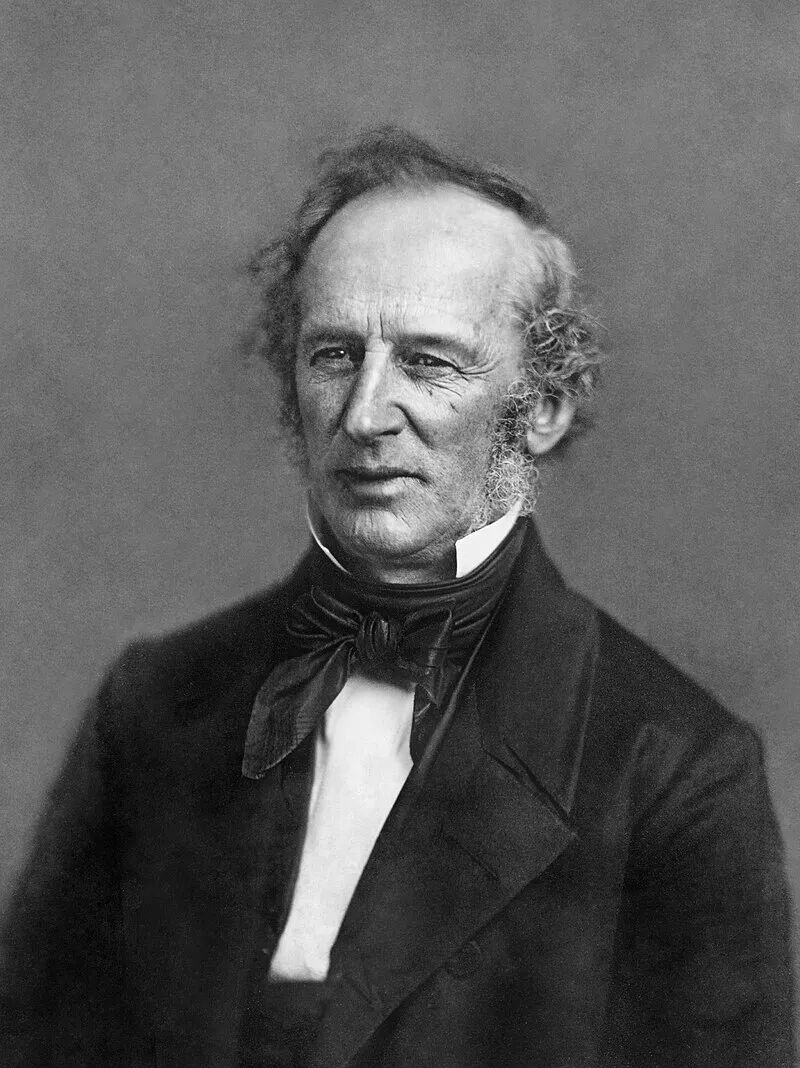
One of Vanderbilt's earliest daguerreotypes, taken in 1845

1. The Only Stint as an Employee
Vanderbilt left school at 11 to learn steering and sail-handling on his father's periauger. Later he acquired his own sailboat, ferrying fish and liquor across the waters and waterways near New York. Though his seamanship and physical strength made the sailing business go reasonably well, it remained confined to a small radius — he lacked the capacity and opportunity to reach farther routes or command more advanced steamships.
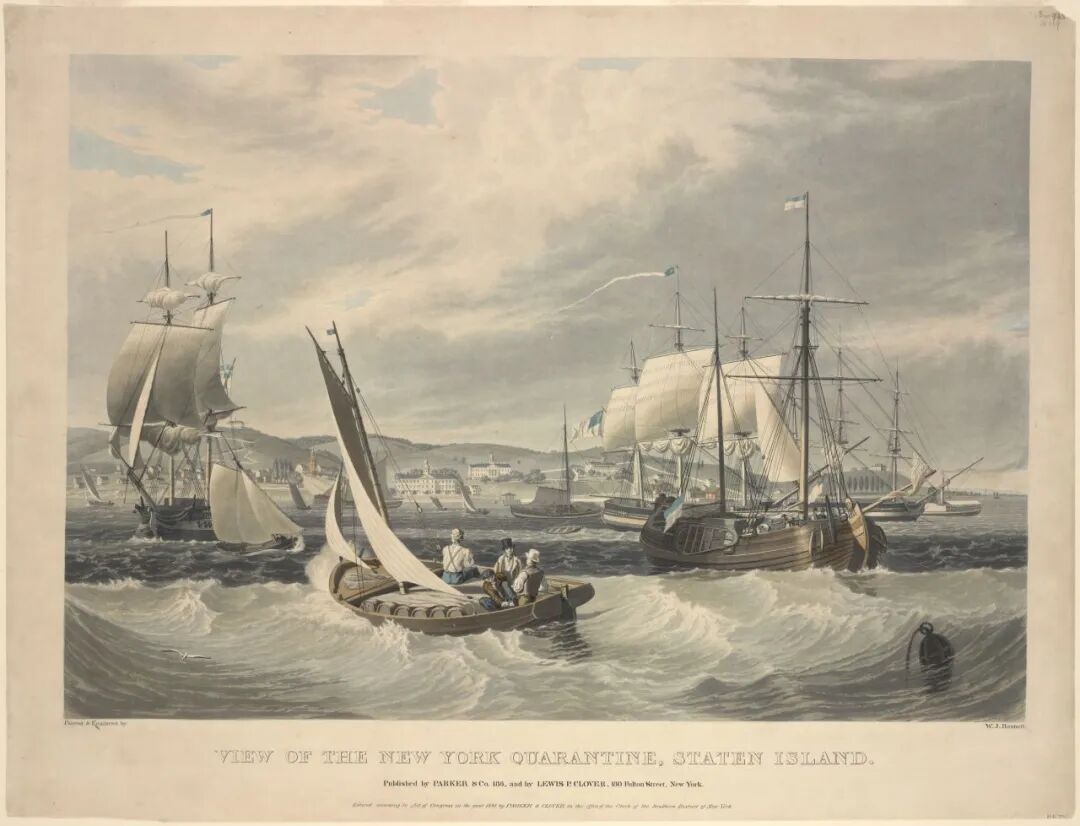
View of the New York Quarantine, Staten Island, 1833.
In his youth, Vanderbilt operated a sailing vessel similar to the one pictured
One day, a man in his sixties or seventies called out to him on the wharf. His gaze was sharp and demanding, his speech clipped: he wanted Vanderbilt to temporarily look after a small steamship nicknamed the "Mouse." The name alone suggested the vessel was nothing impressive — a secondhand boat just 14.3 meters long, smaller even than Vanderbilt's own sailboat.
What made this partnership seem even less likely was that this wealthy old steamboat merchant, Gibbons, was notoriously severe and intractable. Vanderbilt himself was hot-tempered and accustomed to giving orders; the two seemed impossible to reconcile.
Unexpectedly, Vanderbilt agreed quickly. Despite the probable personality clash and the Mouse's unimpressive appearance, it possessed something fundamentally different from his sailboat: steam power. Vanderbilt realized that steam meant a ship was no longer at the mercy of wind and current — it could sail in any direction. This would transform the shipping industry.
The future rumbled on the steamship, not on his sailboat.
And so Vanderbilt embarked on the only employee position of his life — one that would alter his trajectory entirely.
At the time, New York's steamboat operations were legally monopolized by the Livingston family. To break this stranglehold, Gibbons launched a protracted war spanning law, politics, and commerce. He tangled with his opponents in court and debate, while continuing to operate his steamships in open defiance of enforcement injunctions.
Vanderbilt, gradually becoming Gibbons's capable lieutenant, was naturally caught up in this conflict. The two hard, explosive men found unexpected consensus in their fight against monopoly, even working together with remarkable coordination. He skillfully piloted the steamship in speed races against the Livingstons' vessels, slashing ticket prices wildly to squeeze his rivals from the market.
But one day, standing on deck, he happened to see Officer Hayes approaching from the wharf with a superior smile, announcing that he had been ordered arrested by the admiralty court. Hayes threatened: "If you don't obey the court's decree, so help me God, I'll soon have you behaving." In shock and fury, Vanderbilt was seized by this officer notorious for his ruthlessness, dragged from the ship like a prisoner, and marched to the admiralty court.
The court found Vanderbilt guilty of violating anti-monopoly law. This was only the beginning — his opponents began filing endless suits with the admiralty court. Every time Vanderbilt's ship docked, officers would come to arrest him and his crew.
Rather than being cowed or subdued by his first humiliating arrest, Vanderbilt grew ever more contemptuous of laws and warrants. He wrote to Gibbons, confidently describing his countermeasures: "I now have all the crew keep out of sight, so they can't be caught. And I myself come and go on the New York docks. I pilot the ship myself, let them try to catch me."
He built a secret compartment on board and specially trained a female helmsman. Whenever police approached at docking, he would dart into the hidden chamber while the woman piloted the ship. When officers stormed aboard to find Vanderbilt vanished and this particular crew member at the wheel, they could only leave in embarrassed defeat.
Between evading arrests, Vanderbilt even found time to plot a counterattack against his enemies. Fighting fire with fire, he sued one of the Livingstons' ships and successfully had its crew arrested. He boasted to others: "(The trouble they ran into) was far worse than anything I encountered in New York."
These details reveal Vanderbilt's defiance of authority and his ceaseless combativeness. Faced with relentless trouble and condescending opponents, he didn't retreat an inch — instead, he grew increasingly adept and comfortable in the fray.
The campaign finally concluded when the U.S. Supreme Court declared the monopoly dead. The era of free competition had arrived.
Through this experience, Vanderbilt transformed his career profoundly. During this employment, he mastered every aspect of steamboat shipping: technology, operations, and law.
With Gibbons's compensation and his own savings, plus the shipyard owner his employer introduced him to, he acquired his first self-designed, self-built steamship, the Fanny — a vessel of considerable size, far larger than the Mouse he had once commanded.
The seemingly distant steamboat shipping industry had opened its doors to him. His understanding of technology and grasp of the era's trends let him see the door; reaching out to seize the opportunity Gibbons offered showed him how to open it.
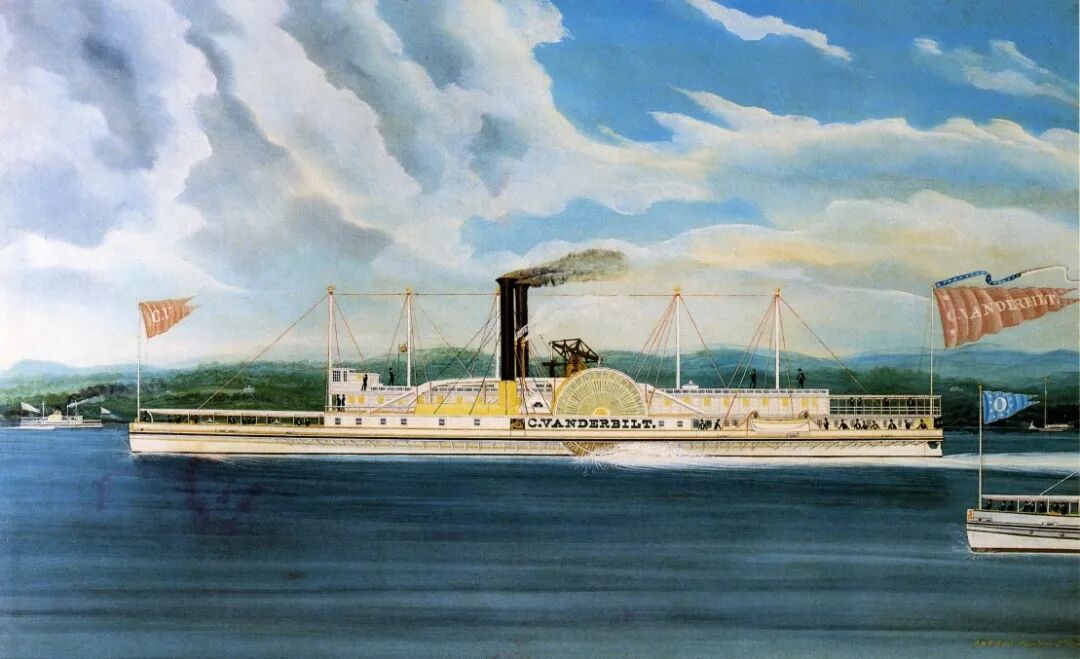
C. Vanderbilt, 1847.
Vanderbilt's most famous steamship, the Vanderbilt, racing against the Oregon
2. Captain Vanderbilt
On the Providence River, crowds jostled for position, all eyes fixed on the distant bend. This river connected southward to the Atlantic Ocean and the Long Island Sound, forming the essential passage from New York to Providence. Now they awaited the end of a momentous voyage.
At the edge of vision, a long, slender craft burst into view, slicing through calm waters. Its engine roared like some great beast, massive paddle wheels on either side thrashing the water as it hurtled toward its destination.
The crowd erupted in astonished cheers — the ship's speed far exceeded imagination, certain to be written into history.
At that time, the 338-kilometer journey from New York to Providence took a full 18 hours. But this long, slender, gracefully curved steamship, the Lexington, made it in just 12 hours.
Soon came even more startling and welcome news for passengers: Vanderbilt's People's Line had slashed ticket prices to $3, whereas before they had no choice but to pay the Transportation Company's $10 service.
Cheap, fast steamboat travel became something ordinary people could easily enjoy. Thanks to this transport value, Vanderbilt's services attracted ever more passengers. His steamship voyages weren't merely journeys to reach a destination — they let passengers participate directly in the speed competitions between rival steamship operators, feeling both thrilled and exhilarated. When the Lexington flew into port faster than all other vessels, they too experienced the joy of victory.
Good entrepreneurs can see and exploit human nature. Vanderbilt had long since discovered: cut prices, boost efficiency, and add distinctive experiences — like the thrill of steamboat races — and consumers will flock in. Then economies of scale drive down costs, while greater market share brings powerful influence and even pricing power. This business logic still applies in today's internet industry.
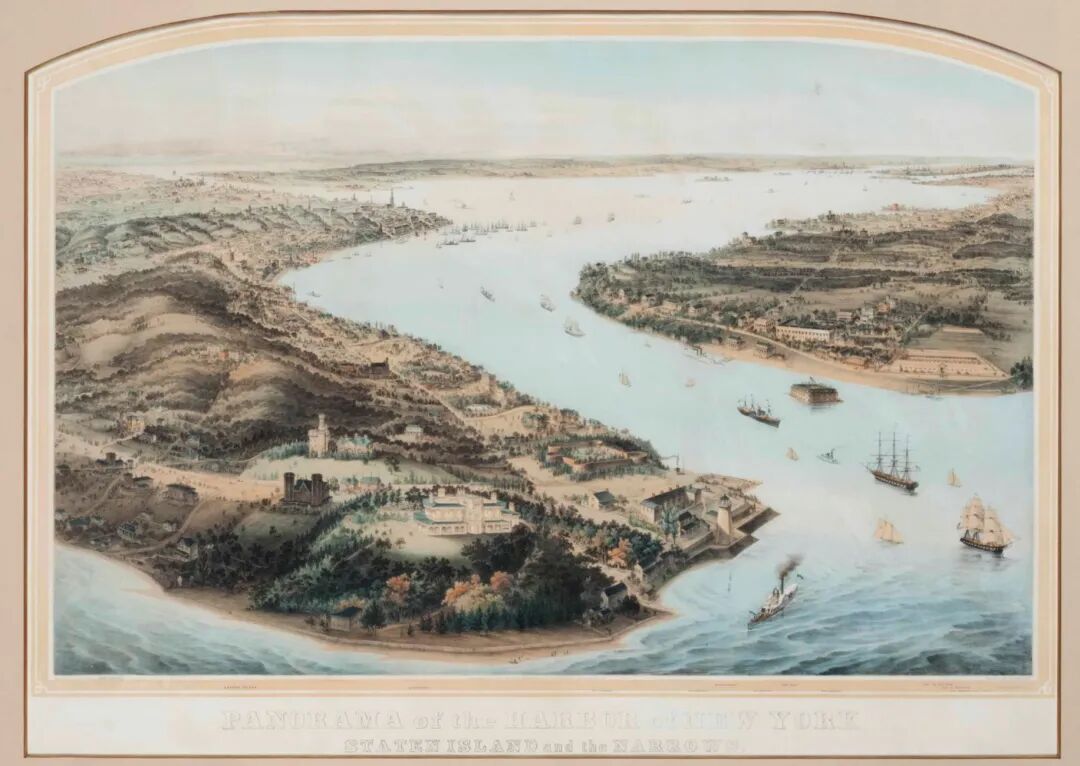
Panorama of the Harbor of New York, Staten Island and the Narrows, 1854.
The strait at the entrance to New York Harbor
Vanderbilt's opponent this time was the Transportation Company, an old hand at integrated sea-and-land transport. It had agreements with multiple railroad companies, using through tickets to attract passengers. But it couldn't withstand the blows from Vanderbilt's frenzied price cuts and speed advantages. What panicked his opponents even more was Vanderbilt's announcement that unless they paid $70,000 for the Lexington, he would slash ticket prices to $1 — a level where profit was impossible.
This was a tactic Vanderbilt habitually employed in commercial competition. He entered shipping markets through superior speed and lower prices, depriving rivals of customers and profit margins. But he didn't aim to make money this way — even with better cost control than his opponents, such low prices meant losses. Vanderbilt's true goal was to make competitors pay to concede defeat and withdraw from the route. This "war indemnity" was the core of his profit logic.
The outcome unfolded exactly as he envisioned. Shortly after Vanderbilt issued his threat, the Transportation Company and its partners split the $70,000 cost in exchange for his temporary withdrawal from the route.
"Competition with Vanderbilt is unprofitable. Whatever the terms, peace is better than war." So lamented the Transportation Company's general agent after the commercial battle concluded.
Historical writer Stephen Dando-Collins offered an apt assessment of Vanderbilt —
He had only two drives in life: making money and winning.
This time, he triumphed completely, forcing his enemies to bow and extracting a handsome "truce payment" from them.
An intense desire for conquest was indeed Vanderbilt's most distinctive trait. To win, he could temporarily abandon profits, and he would employ threats and extortion that respectable wealthy men considered beneath them. Rules meant nothing to him; only victory was worth pursuing. Yet for passengers, they genuinely gained cheap, high-quality travel experiences — even a transformation in their way of life.
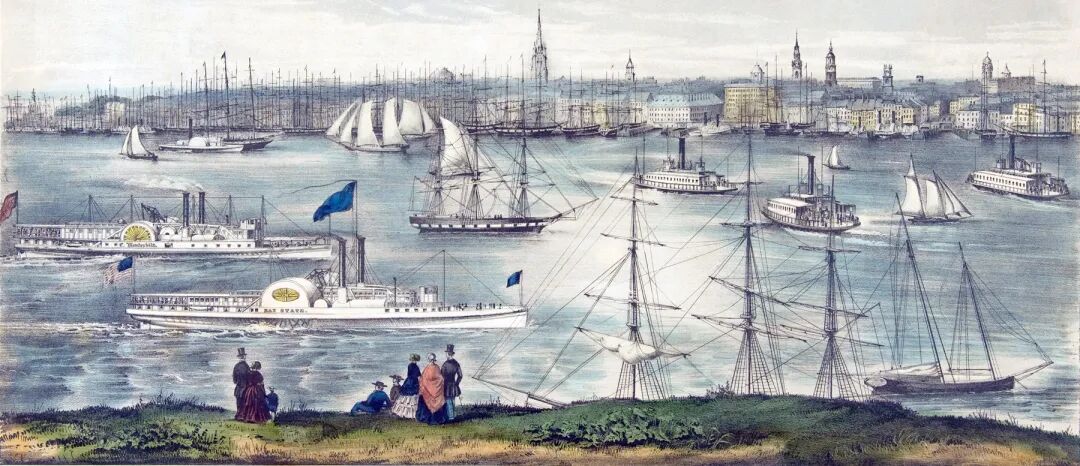
View of New York, from Brooklyn Heights, 1849
The Cornelius Vanderbilt trailing behind its rival, the Massachusetts
3. Railroad Empire: A New Venture in Twilight
In his sixties, Vanderbilt already owned more than a hundred steamships, controlled routes from New York to New Orleans and from the Atlantic coast to California, and held personal wealth exceeding $30 million (equivalent to 10% of the federal government's total annual revenue at the time). For a titan who had already conquered an industry, few would at this age discard everything achieved in the first half of life to plunge into another field entirely.
But Vanderbilt did exactly that. During the Civil War, he sold, leased, or donated most of his ships to the federal government, including his proudest vessel, the steamship Vanderbilt, named for himself. By 1864, at 70, he had completely exited the shipping industry to focus single-mindedly on building his empire in railroads.
Just as he had once pivoted from sailboats to steamships, he made another bold and precise decision — and staked his entire fortune on this new venture.
Behind this lay his reading of where transportation was headed. The tracks slowly unspooling across American land could cross rivers, tunnel through mountains, and deliver goods and passengers at two to three times the speed of steamships. It represented humanity's comprehensive and powerful mastery over time, distance, and motive power in the industrial age; replacing steamship transport, with its dependence on natural water conditions and weather, was only a matter of time. This was his most crucial read on the trend.
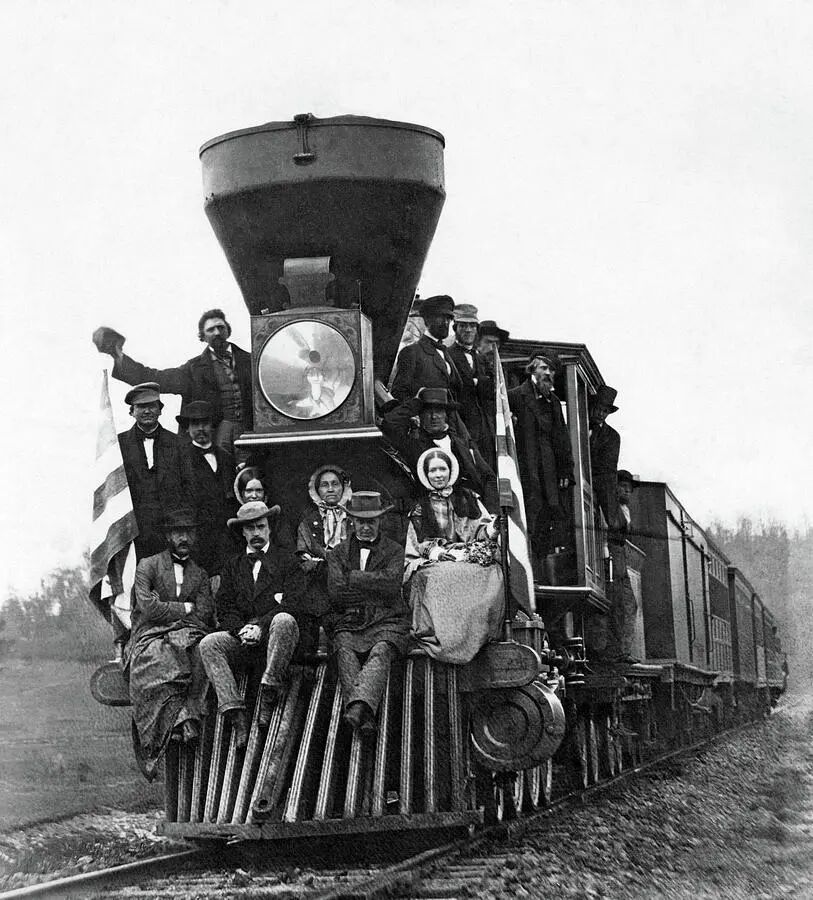
Steam Locomotive On The Baltimore and Ohio Railroad, 1860
A steam locomotive of the 1860s
In the final leg of Vanderbilt's career, one particularly brilliant episode stands out. This incident became the milestone of his railroad career, after which he was granted the title "Railroad King." It even more fully demonstrates that the Commodore in twilight remained as sharp as ever.
On January 15, 1867, urgent footsteps broke the relaxed, pleasant atmosphere of the Manhattan Club's card room. Several men hurried to the card table to petition an elderly man.
They were emissaries from the New York Central Railroad, visibly agitated, requesting immediate negotiations with Vanderbilt. But he was concentrating on his hand, not deigning to look at his visitors.
After a moment, he explained in a cheerful tone: "I have no time. Life is short, and I enjoy my cards. I never allow any business matters to disturb me at such times."
This was, of course, not the truth — merely his method of breaking down their defenses. A month earlier, the New York Central Railroad had reneged on its agreement with Vanderbilt's Hudson River Railroad, refusing to pay $100,000, and the two companies' cooperation teetered on collapse. When his son William came to report this, Vanderbilt had frowned deeply. Initially hoping for a peaceful resolution, he told William: "Talk with these people, settle terms. I don't want to be forced into a break with them. Go to Albany."
William traveled wearily to Albany to negotiate with the New York Central's directors. But he was met with cold mockery. When he conveyed Vanderbilt's position, President Kip sneered: "I am almost inclined to believe that your father cannot distinguish right from wrong." After this failed negotiation, the New York Central presidents played Vanderbilt false again: they failed to appear at the next scheduled meeting.
Vanderbilt realized they were determined to see this through. Either he bowed his head and surrendered substantial profits, or he fought them to the finish. Surrender was utterly impossible for him. "They think we dare not break with them," Vanderbilt told William. "We can break with them at any moment, tomorrow no exception." At the time, winter cold had frozen the waters near New York, making ferry service impossible and railroads the only viable transport. Vanderbilt controlled the vital passages in and out of New York; once he severed ties with the New York Central, the city would become an island. Of course, this would damage his own transport business as well.
Soon, the announcement of severed business ties swept through New York. This brought about the scene in the card room. The New York Central directors had underestimated Vanderbilt's methods with enemies, and now panicked. His leisurely demeanor only intensified their dread. President Kip immediately transferred authority to several directors and began dumping stock, trying to extricate himself.
In the end, the two sides reached a new agreement on Vanderbilt's terms, and business ties were quickly restored. In this episode, the New York Central's stock price took a beating; Vanderbilt seized the moment to buy in, and over the following year gradually increased his holdings. By year's end, he had become president of the company. New York's most important railroad was absorbed into his imperial map.
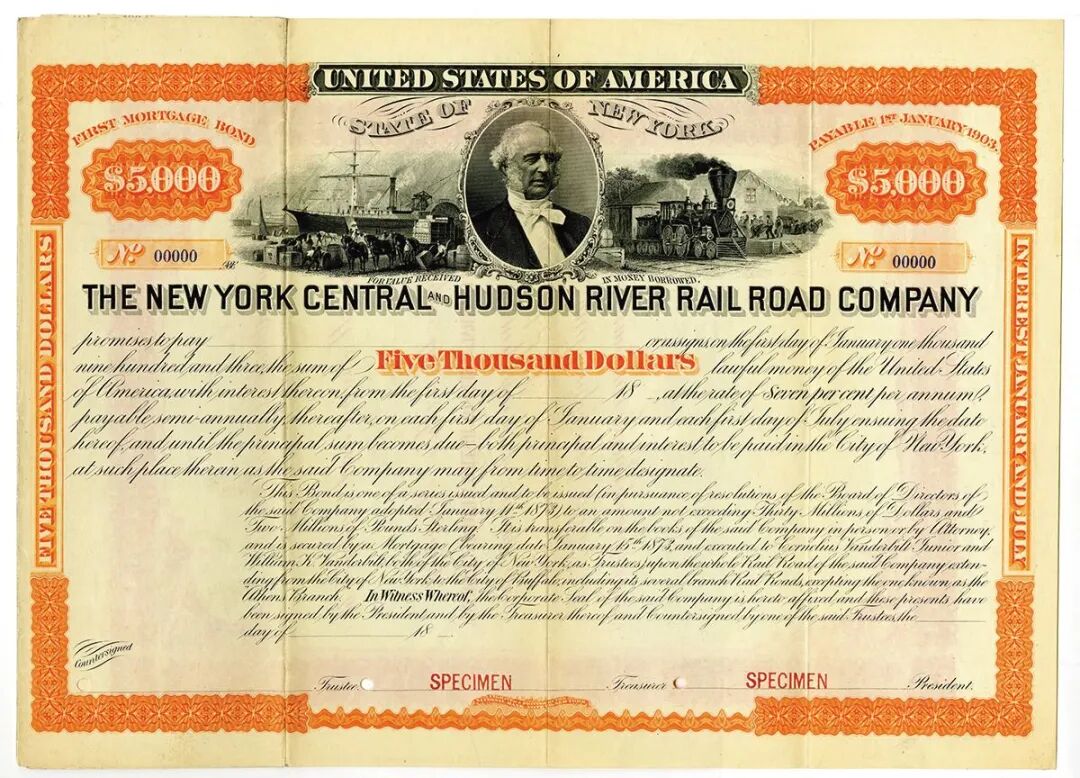
New York Central and Hudson River Rail Road Co., 1873
The New York Central and Hudson River Railroad merged in 1870; this colossal company marked the milestone of Vanderbilt's railroad career
One remark from Vanderbilt during this episode has become widely quoted:
"I will never sue, as long as I have the power to punish... Legal means are too slow for me."
With enemies, he remained as ruthless as in his youth, pursuing rapid victory.
What emerges here is an ironic transformation in Vanderbilt. Through various means he swallowed railroad companies, vertically integrating and eliminating unnecessary competition, ultimately building a vast railroad empire and inaugurating the age of the megacorporation. The champion of free competition from his early years had become the monopolist controlling the railroad network. Vanderbilt had become the very role he had resisted in his youth.
This intriguing shift actually relates to the distinctive nature of the railroad industry. Vanderbilt recognized early on that railroads differed fundamentally from steamships: they had extraordinarily high fixed costs, making it difficult to freely buy and sell routes and enter or exit markets as before. Moreover, numerous railroad companies then existed, the entire system fragmented, with different companies using incompatible track gauges. This made transport extremely inconvenient and fueled cutthroat competition. By combining multiple companies through vertical integration, Vanderbilt objectively improved efficiency and transformed the fragmented railroad landscape.
By 1877, when the Railroad King died, he owned over 4,500 miles of railroad, with an estate of roughly $100 million — if converted entirely to cash, representing 1/9 of the currency then in circulation.
Of course, these are merely the most superficial aspects of what this "great builder" left behind. Industries change, fortunes dissipate, but Vanderbilt's underlying character and thinking continue to offer endless inspiration.
He was America's first titan, the creator of the earliest megacorporations, and among the most accurate readers of the era's winds. Now the Gilded Age has receded, the smoke of war on ocean and rail has settled, yet Vanderbilt's grasp of the era's pulse, his unceasing spirit of struggle, and his courage to begin anew even in old age will never lose their luster with changing times.
Engage with Monolith
After reading this article about Vanderbilt, what are your thoughts on his life experiences and business philosophy? We welcome your observations and reflections in the comments. We'll select three users with the most thoughtful comments and highest likes to receive special commemorative gifts from MONOLITH. The event runs until 24:00 on June 6.