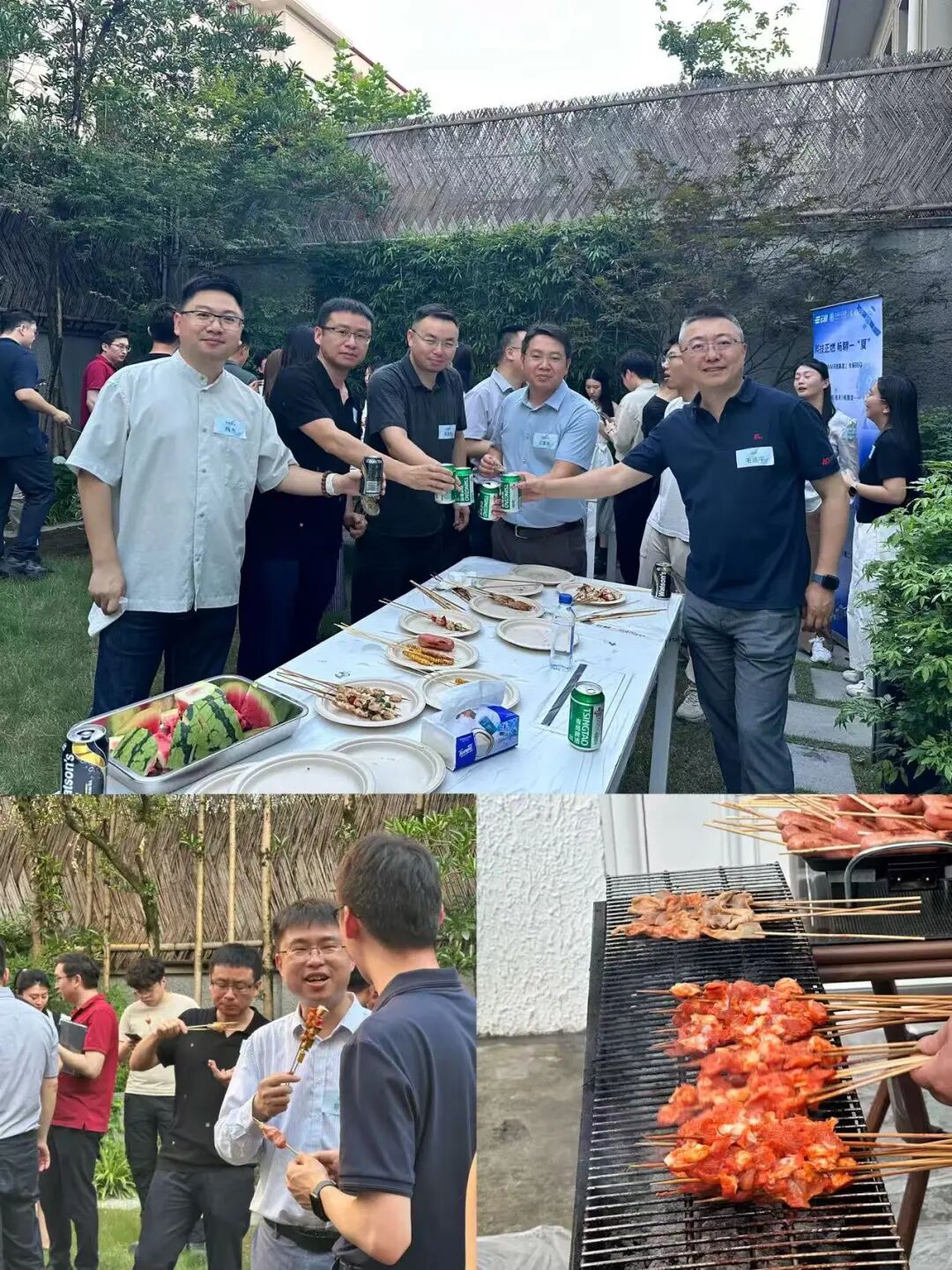
Quantum, Brain-Computer Interfaces, Fusion... We Talked the Future to Death | "SJTU–Yunqi Capital AI Angel Fund" BBQ Session

Brainstorming by day, barbecue by night
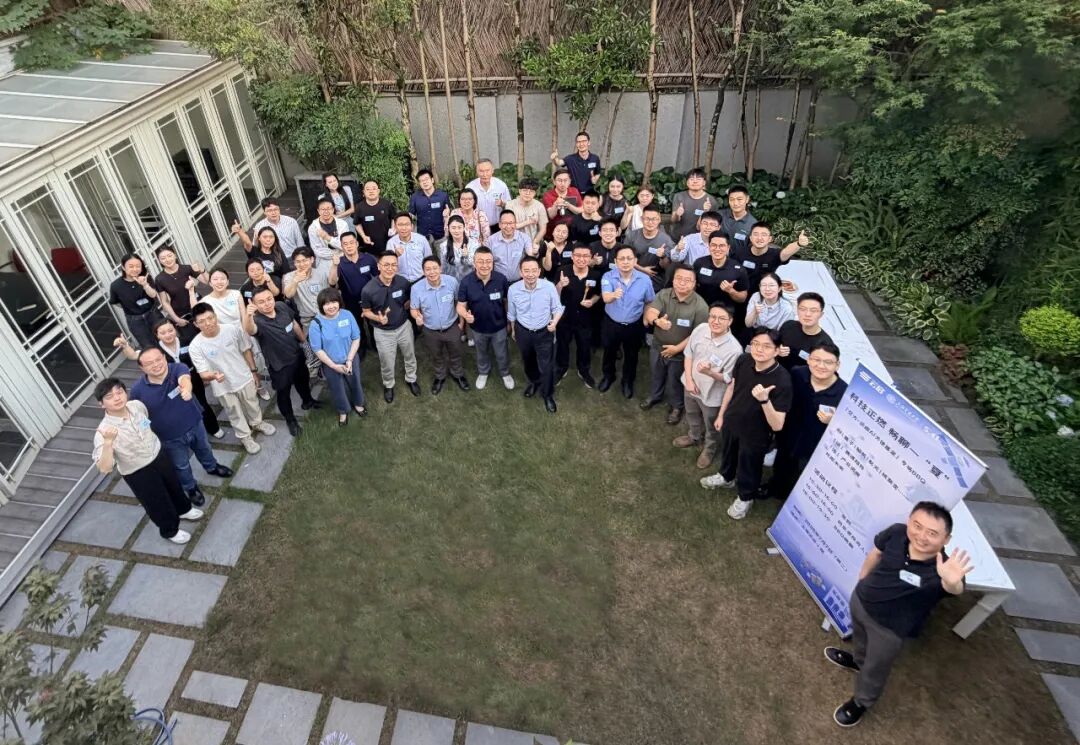
On July 7, Xiaoshu — the "Minor Heat" solar term — Shanghai finally saw a rare stretch of clear skies after days of rain. The heat hit hard, but what was even hotter was the stream of founders walking into the courtyard: startups working on world models, multimodal interaction, AI4S, quantum computing, photonic computing, brain-computer interfaces, and nuclear fusion. They gathered at Yunqi Partners' Shanghai courtyard to share and exchange ideas with investors, university professors, and industry partners.
In April last year, the "SJTU–Yunqi AI Angel Fund" was officially announced. To date, it has backed more than a dozen projects, drawing not only on Shanghai Jiao Tong University's research and alumni network but also teams from Tsinghua University, Peking University, Fudan University, the Chinese Academy of Sciences, and other institutions. It started from SJTU, but it doesn't end there.
This time, everyone sat down together — brains firing during the day, grilling over open flames at night. Each person briefly laid out the technological shifts, industry opportunities, and commercial paths they were watching. The real connections happened naturally, the moment glasses were raised.
Starting with a Fund:
Getting Frontier Technology Out of the Lab Earlier
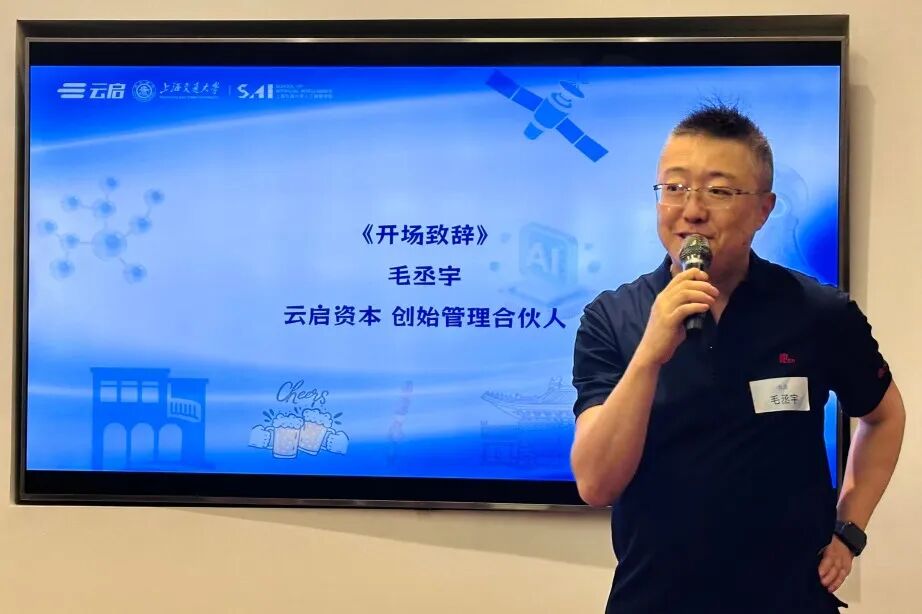
The event brought these projects together with the fund's core investors and industry investors. In his opening remarks, Michael Mao, Founding Managing Partner of Yunqi Capital, introduced the background and progress of the "SJTU–Yunqi AI Angel Fund."
He said the fund focuses on angel to Pre-A stage, with a priority on frontier AI technology and applications, as well as hard tech and future industries — covering world models, AI4S, multimodal systems, quantum computing, nuclear fusion, brain-computer interfaces, and commercial aerospace.
"This is the role the 'SJTU–Yunqi AI Angel Fund' wants to play: identifying paradigm shifts early enough, connecting university research, entrepreneurial teams, industry resources, and long-term capital, so that more 'just-emerging' hard tech projects can cross the first bridge from research to innovation faster."
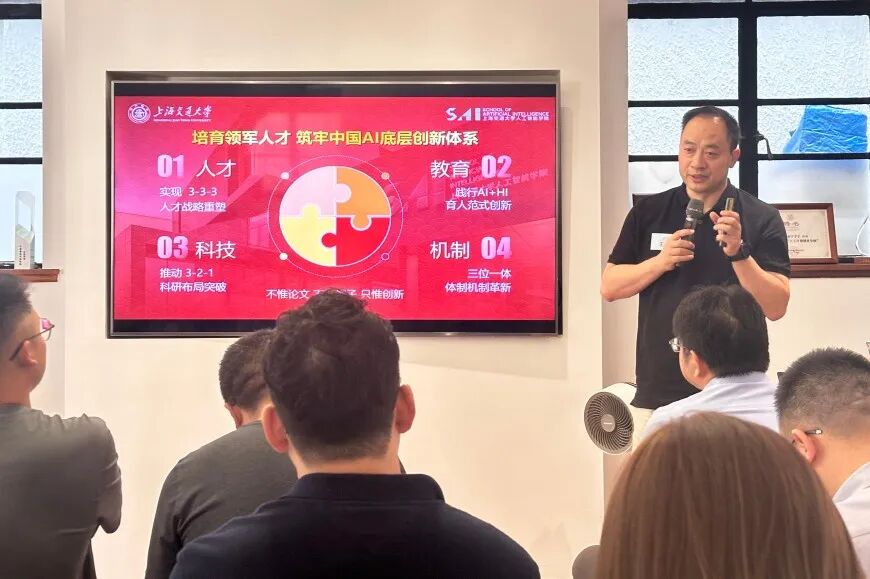
Yanfeng Wang, Executive Dean of the SJTU School of Artificial Intelligence, also noted in his remarks that AI isn't confined to any single school or discipline — it's becoming a foundational variable that nearly every field is embracing. The school's mission isn't just "using AI to transform the world," but "cultivating the people who will transform AI." To that end, the school has adopted a "three-thirds" talent structure, bringing in researchers from top global universities, leading domestic institutions, and industry. It also emphasizes that AI is, at its core, "a young person's game of decision-making."
On technology transfer, the school is pursuing two tracks: the "3030 Plan" for joint labs with leading enterprises, and support for faculty entrepreneurship. Through mechanisms like the "AI Future Fund" and the "SJTU–Yunqi AI Angel Fund," it pushes early-stage research projects toward market-based funding and industrial deployment.
This framed the central question of the event: How do we keep good university technology from dying in journal papers? How do we give the most cutting-edge scientific questions a shot at becoming genuinely sustainable companies? It's a long-term proposition. Yunqi hopes that by continuously backing early teams with real technical moats and industrial imagination, more innovations born in universities and labs can eventually reach the market and the real world.
AI:
From Speaking and Seeing to Understanding the Physical World
Yu Sang, Executive Director at Yunqi Capital, offered his analysis of the current AI landscape. He noted that Yunqi has spent over a decade making technology-driven investment decisions — from early computer vision to autonomous driving to today's large language models and next-generation AI. Behind every wave of technological change, there's a pattern of paradigm migration. And what the "SJTU–Yunqi AI Angel Fund" aims to do is identify these shifts even earlier, becoming one of the first backers of frontier model advances and technical trends.
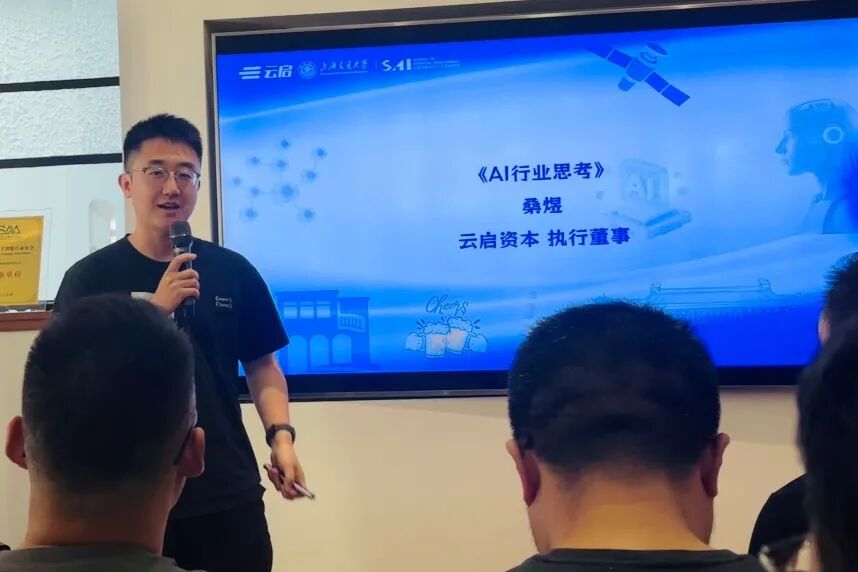
Sang believes AI's technological iteration is still accelerating, and the competition in large language models is far from over. At the same time, composite directions like world models and AI for Science are becoming new focal points for technology and capital. Behind these shifts, he identified two key trends:
First, deep fusion and capability extension across modalities. Future AI won't just write, speak, and see — it will combine language, voice, video, action, and physical understanding into more natural human-computer interaction and stronger world-modeling capabilities.
Second, the self-evolution of AI. AI is beginning to identify problems, write code, conduct evaluations, construct data, and feed that back into training on its own. It's somewhat analogous to the data flywheels of the internet era, except in the AI era, it reappears as "self-iteration."
Quantum Computing:
The Hardest Future Is Also Becoming Engineered
If AI is the hottest technology thread right now, quantum computing represents a different kind of future — longer-term, harder-core. Wei Chenrui, Vice President at Yunqi Capital, argued that quantum computing isn't a universal answer that "makes all computing faster." Rather, it changes the rules on a small set of critical problems. First, the reconstruction of cryptographic systems. Second, many simulations of the microscopic world are naturally suited to quantum computing.
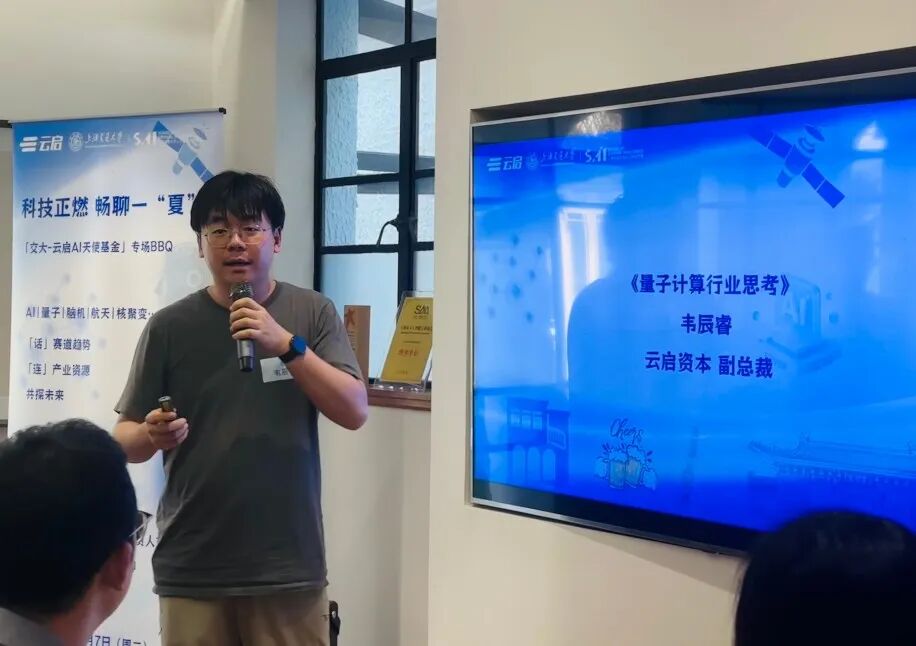
But he was candid: quantum computing still has a considerable journey before it unleashes productivity at the scale today's LLMs have. Precisely for this reason, Yunqi's read on quantum computing isn't short-term application explosion, but a long-term opportunity from scientific breakthrough to engineering deployment.
From a supply chain perspective, quantum computing remains at a stage analogous to early mainframes: the full system drives industrial chain development, algorithms gradually adapt to real scenarios, and the supply chain supports the system's evolution forward. Different technical routes — superconducting, trapped ion, neutral atom, photonic quantum, silicon spin — are each advancing along their own engineering paths.
In this process, cryogenics, lasers, vacuum systems, control and readout, packaging, and quantum software could all, driven by system-level demand, give rise to new industrial opportunities. Chenrui noted that while quantum computing remains distant from large-scale commercialization, it has already become a significant direction in frontier technology competition. Yunqi hopes to capture genuinely long-term value at the early stages of China's quantum computing supply chain growth.
Brain-Computer Interfaces, Photonic Computing, Nuclear Fusion:
Long-Horizon Imagination from the Human Brain to Energy
The discussion stretched toward even more distant frontiers. Hao Liang, Executive Director at Yunqi Capital, shared his observations on brain-computer interfaces. In his view, BCI is fundamentally an "input and output" system: on one end, how to read and analyze brain signals through sound, light, electricity, or magnetism, via invasive or non-invasive approaches; on the other, how to use those signals — whether to control external devices, such as helping motor-impaired patients complete movements, or to form closed-loop feedback within the brain for visual reconstruction, language reconstruction, or neural modulation.
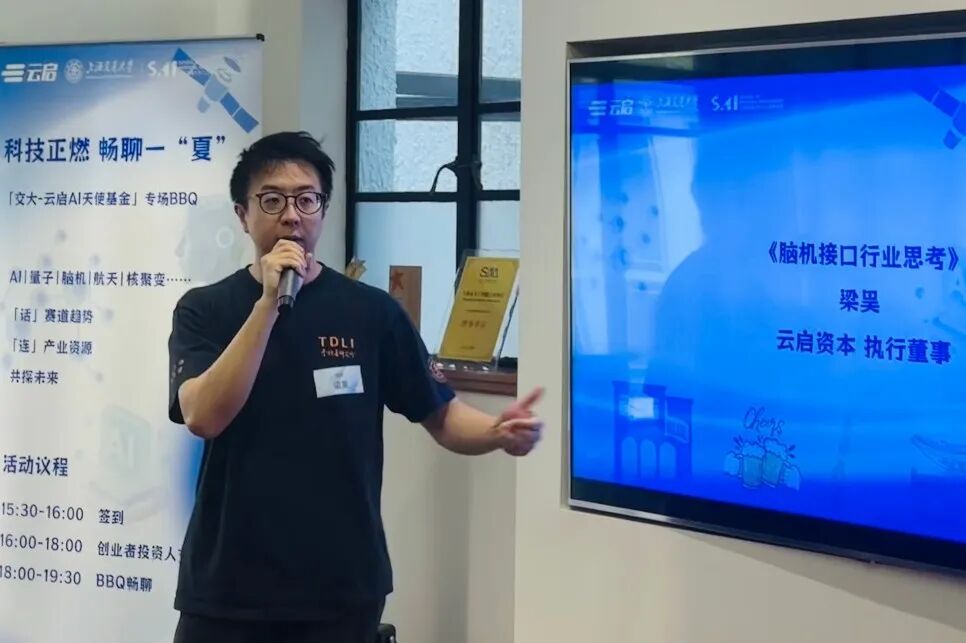
But Yunqi's interest in BCI extends beyond high-value medical and consumer scenarios to a larger vision: as AI's compute and model capabilities grow powerful enough, the limited bandwidth of human input and output is becoming a bottleneck in human-AI interaction. Brain-computer interfaces could become the physical infrastructure for next-generation human-computer interaction, enabling higher-dimensional, more direct information exchange between the human brain and AI.
On technical paths, invasive solutions retain irreplaceable value for high-precision scenarios like visual reconstruction, language reconstruction, and fine motor control. But non-invasive approaches are also evolving rapidly. With the development of new modalities like ultrasound and the improvement of multimodal large models in decoding brain signals, there's potential to open broader application spaces with lower risk and greater generalization capability.
This is why Yunqi invests not only in invasive BCI but also in technical paths that can generate ultra-large-scale, high-quality brain data, improve model generalization, and push brain-computer interfaces from single-task systems toward general-purpose interaction. The true endgame isn't merely having a device "read the brain," but establishing a bidirectional, high-dimensional, sustainable information channel between the human brain and AI.

Founders' Highlights
The founders of more than a dozen companies on site — including Yingtian Zou of YuanYu WuJie, Zhenghao Fang of TaiYi LiangSheng, and Changyong Zhang of KongShan Ci — also distilled perspectives from their respective industries and pain points:
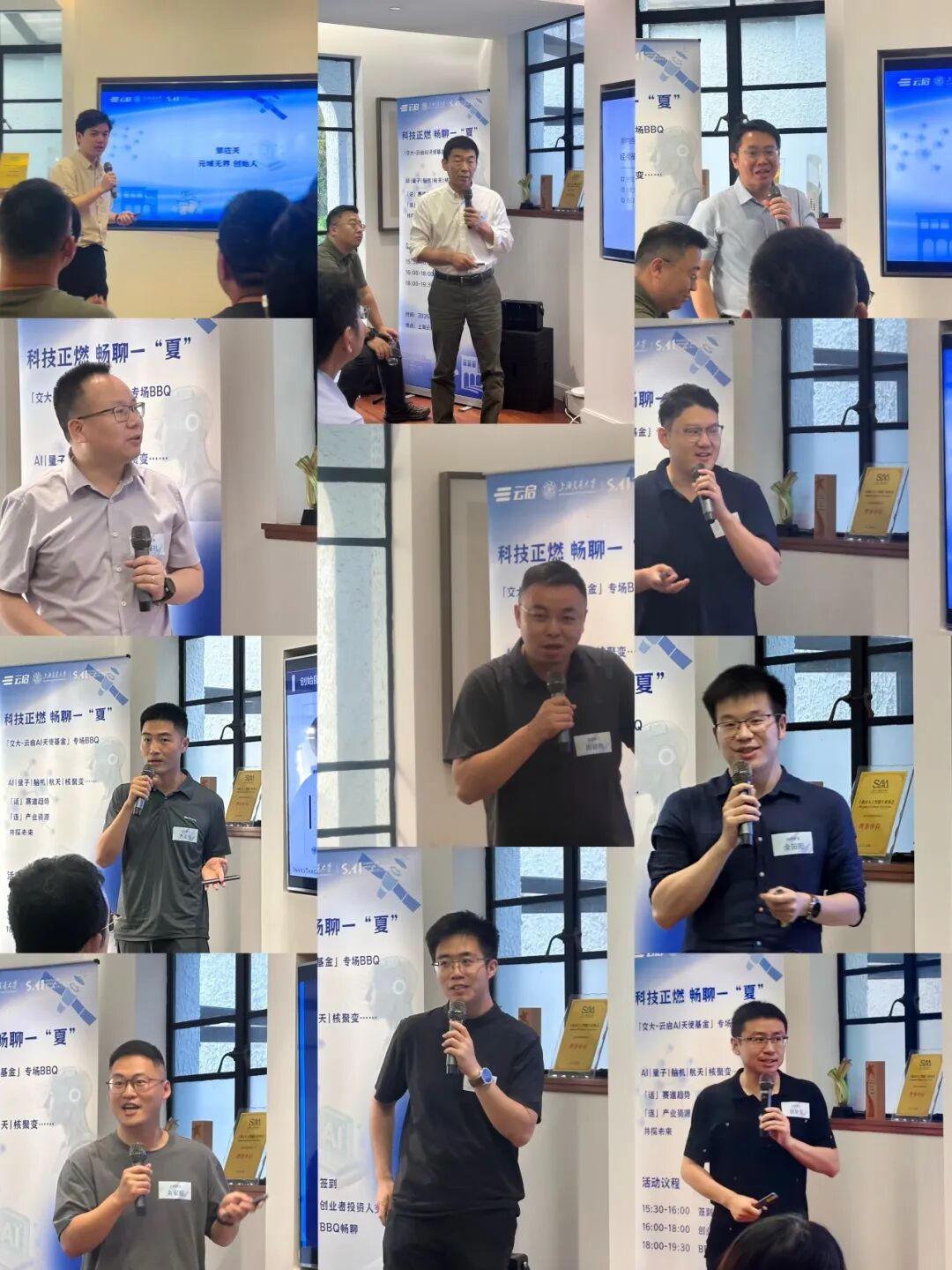
"What world models really need to solve isn't generating more realistic images — it's keeping AI from evading physics. The key to next-generation physical intelligence is getting models to understand states, actions, and laws, and continuously self-evolve through real-world validation."
"AI can't transform industries just by applying general-purpose large models to verticals. In hard-tech industries like optics, the real difficulties hide in R&D, simulation, testing, calibration, and production line debugging. The value of vertical large models is capturing expert knowledge, engineering processes, and industrial data, so AI can truly enter the field."
"The next step in multimodal interaction will move from 'waiting for human commands' to real-time understanding and proactive collaboration in continuous scenarios. AI needs to listen, speak, understand context, and also interrupt, follow up, and carry tasks forward on a timeline — ultimately evolving from a more tool-like Q&A system toward a more natural companion and collaborator."
"Materials R&D is entering a new computational paradigm. The key for AI for Materials is bringing first-principles accuracy to the engineering scale of millions of atoms, making complex simulations that once relied on high-performance computing clusters more efficient and accessible for materials design workflows."
"Quantum computing is shifting from a 'historical option' to a 'must-have' in future compute architecture. As Moore's Law slows and compute demand keeps climbing, new routes like neutral atoms have a shot at occupying key positions in the next computing paradigm."
"The challenge in quantum computing isn't just the full system itself, but also how to keep machines stable and genuinely usable. Software, algorithms, and architecture will determine whether quantum computing can move from research apparatus to computational tools that solve real problems."
"Quantum computing is still in a multi-route convergence phase, and engineering capability will be the differentiator. The opportunity for CV photonic quantum lies in leveraging room-temperature operation, optical interconnects, and supply chain compatibility advantages to turn frontier routes into usable, practical products that can reach real customers."
"General-purpose quantum computing is a forward-looking proposition for the next decade, but frontier tech companies also need realistic anchors. Laying out long-term routes while generating orders and cash flow in analog computing is how you push scientific problems toward genuine engineering."
"Growing more intelligent doesn't automatically mean growing happier. The long-term value of brain-computer interfaces and neural modulation lies in using more precise brain function computation and modulation to help emotions, cognition, and mental states return to more stable equilibrium."
"After Moore's Law slows, the tension between compute and energy consumption will push the industry to find new computing paradigms. The key for photonic computing is whoever can simultaneously solve scale, reconfigurability, and generality — they'll be closer to the next compute path."
"The end of AI is compute; the end of compute is energy. As models, brain-computer interfaces, and future computing continuously drive up compute demand, energy will shift from infrastructure to the true foundation of the next round of technological competition."
After two hours of dense sharing, Michael Mao, Founding Managing Partner of Yunqi Capital, finally pulled everyone back from the distant future with a joke: "Our portfolio company Poke Robotics is already using robots to make mapo tofu. Maybe in a few years, robots really will take over the grill. But at least for this Xiaoshu evening, the skewers at Yunqi courtyard are still being done properly by the grill master. After talking about futures far enough away, everyone can start by enjoying the skewer in front of you."