"Inside Google": During 10 Hours of Deep Conversation Across Silicon Valley and Shanghai, What New AGI Trends Did We Discuss? | FutureScope

Six Emerging Trends in AGI from a Global Perspective

The pace of iteration in AGI+ technology and applications shows no signs of slowing. Nearly every day, we see AI excelling at tasks that were "impossible" in the past.
What new opportunities will AGI bring? — We keep a close eye on the most cutting-edge technology; — How is AGI penetrating real-world scenarios and transforming industries? — We also go deep into industries, paying attention to how genuine needs and real scenarios are integrating AGI capabilities. Between this "fast and slow" approach, our global perspective on AI grows broader and our understanding deeper.
Going forward, we will continue sharing our latest insights on industries and technology in our "Yunqi FutureScope" column, and welcome entrepreneurs, technical experts, and industry specialists to connect with us.
Over the past two weeks, our "AGI+ Salon Series" went inside major tech companies, hosting discussions with frontline industry experts and entrepreneurs at Google offices in Silicon Valley and Shanghai on emerging trends in AGI development and implementation.
In Silicon Valley, under the theme "AI + Robotics," we explored research trends and potential application scenarios for embodied intelligence with industry experts from Google, Waymo, and Stanford. In Shanghai, under the theme "Cross-border + Global Intelligent Evolution," we shared the latest progress in AGI+ and its new applications in the going-global process with over 50 entrepreneurs and technical experts in attendance.
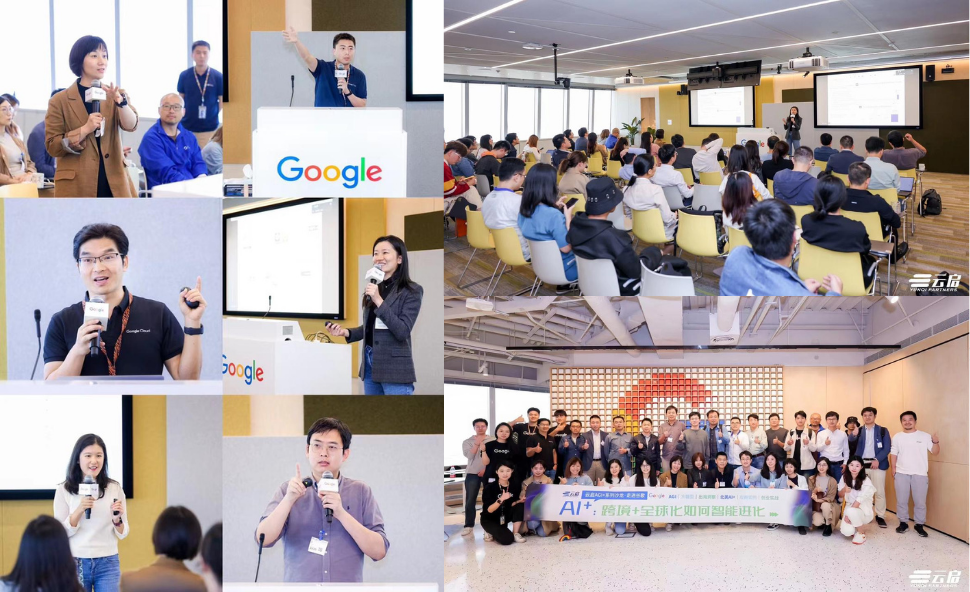
Yunqi @Google Shanghai
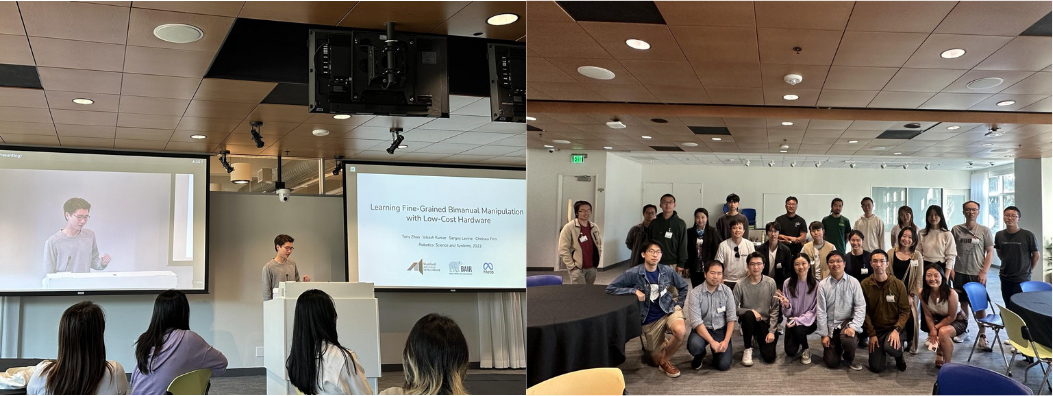
Yunqi @Google Silicon Valley
We've summarized the high-frequency keywords from these events and compiled the key insights associated with them. Enjoy below~


AGI+ New Trends: Safer, Cheaper, More Competitive
Emily, Vice President, Yunqi Capital: We've observed that AI deal sizes in Silicon Valley are increasing — up 40% last quarter — and the star effect of top projects is strengthening, all indicating a more stable market. Yunqi has always paid close attention to and actively participated in global AI opportunities. We believe that new scenarios and opportunities will continue to emerge in both AI infrastructure and application layers.
Desheng Lu, Solutions Architect, Google Cloud, expert in data analytics and AI: Deep AI, large models, and their extensive practical applications create new business value and innovation directions for developers while delivering excellent user experiences. Google continues to deepen its efforts in this direction, and Google Cloud will keep bringing new products that meet real business scenario needs to more enterprise developers.
1. Security and Compliance
Regional differences gradually emerging
Globally, AI-related bills and regulations are continuously being refined. As of Q3 2023, 37 relevant regulations have been issued worldwide. The consensus is that when promoting products in international markets, special attention must be paid to compliance and data security.
Regulations in China, the US, and Europe have begun to show divergence. Early investment in understanding these regional differences and embedding compliance measures into product design from the start is important for both application-layer and infrastructure companies. At the same time, we believe there are new entrepreneurial opportunities in data security within the new context of AGI+.
2. AI + Embodied Intelligence
China's hardware supply chain advantages are formidable
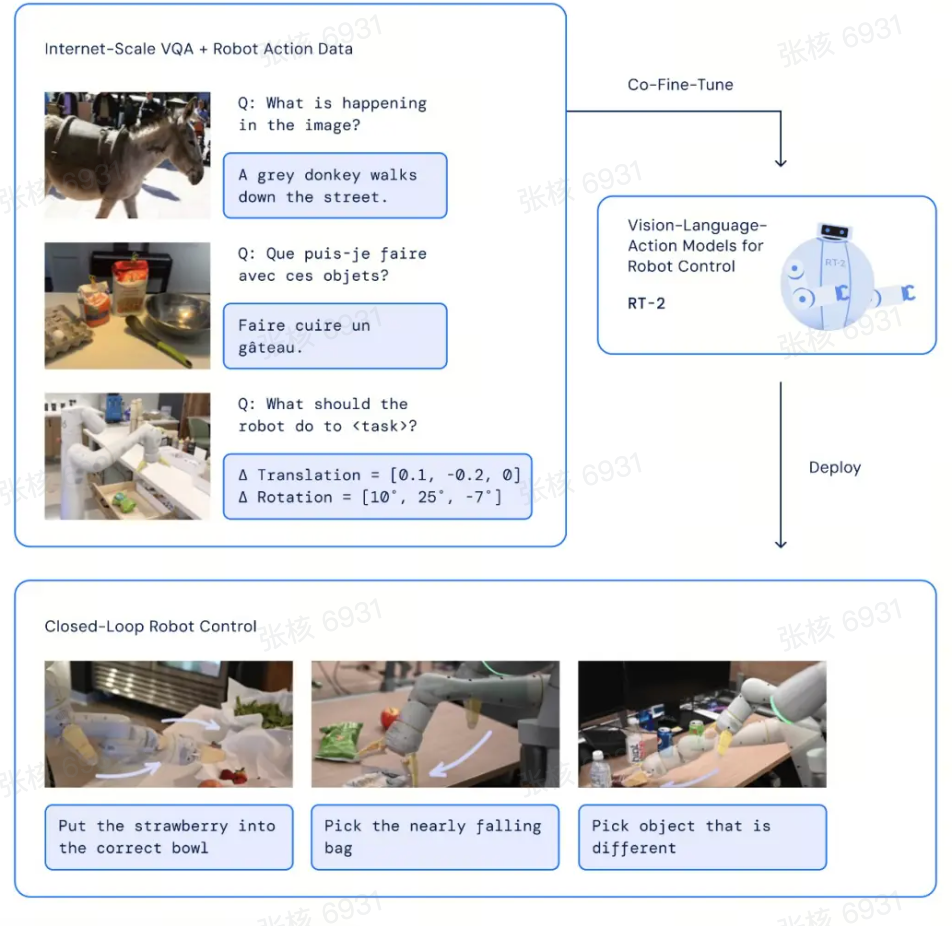
Embodied intelligence is an important application scenario for LLMs; hardware supply chains and data collection will be key areas where Chinese companies can excel. In terms of hardware supply chains, excellent quality control and reasonable pricing are important advantages for Chinese companies. In global competition, you need to identify your strengths and focus areas before you even set out.
However, language models represent only a small fraction of human cognitive models. At present, AI may still be unable to complete a simple action like picking up a bottle of water from a table, because there is a disconnect between the digital and physical worlds — a problem that requires long-term attention and resolution. One of the current research priorities for general-purpose robots is how to balance data diversity with cost. And defining the "dimensions of data collection" defines the strategy for training robots.
3. AI Agent
Cornerstone of the next-generation operating system
AI Agents are developing rapidly on open-source ecosystems, and total investment in this direction in Silicon Valley is also climbing quickly. It's foreseeable that as underlying models' reasoning capabilities and tool-use handling improve, software forms will undergo major changes. Taking common life scenarios as an example, AI Agents will play an "agent" role in the future, assisting humans with various tasks — checking calendar to-dos, booking flights, considering personal preferences, syncing schedules with relevant contacts, and more. Going forward, AI Agents will differentiate into B2B and B2C scenarios, but will deliver converged experiences in terms of utility and user experience.
Most Silicon Valley insiders believe that language models' reasoning capabilities can lay the foundation for a new generation of operating systems. Although early accuracy is not high and practical application in some scenarios is progressing slowly, the overall framework will develop and mature in this direction — which is highly significant for product design and underlying architecture.
4. Costs are already falling rapidly
Over the past six months, major tech companies, startups, and the open-source community have been trying every possible way to "compete" on cost, seeking to reduce sole reliance on Nvidia as much as possible. Recently, Microsoft and OpenAI announced plans to design their own chips, and Hugging Face announced a major partnership with Intel. The clear signal is that "cost reduction" will remain a key focus for AI companies — which will greatly benefit startups operating on the application layer. Taking full advantage of this trend may gradually make previously impossible scenarios achievable.
On the engineering side, there are more optimizations worth investing in. For example, when implementing auto-scaling, how can GPU resources be utilized to the greatest extent? What's known is that when running large models, GPU utilization is not high, and batch processing is very sensitive to model computation consumption. Additionally, making full use of different hardware types presents opportunities for significant cost reduction. Counterintuitively, CPUs can be used in place of GPUs during inference. Many infrastructure experts have made major breakthroughs in this area.
Silicon Valley startup Anyscale announced at its September developer conference that it has reduced costs to just one dollar per 100 million tokens for inference. OpenAI is holding its developer conference in November, and ChatGPT may also announce major breakthroughs on pricing.

AGI+ Going Global: Multilingual, Multi-opportunity, New Challenges
Xu Xu, Co-founder, Xunpanyun: China's foreign trade export structure is changing, and LLMs are providing new platforms and opportunities for the foreign trade industry. We are using the Milvus database developed by Yunqi Capital portfolio company Zilliz and PromptPerfect developed by Jina AI to greatly improve efficiency for our developers.
Lizzy Fan, Head of East China New Customer Business, Google Greater China: In the process of going global, startups need to flexibly apply marketing strategies according to actual scenarios. Google has been deeply engaged in this direction for many years and is actively introducing AGI capabilities, developing multi-tiered solutions for enterprise global marketing.
1. LLM multilingual capabilities:
A completely new workflow for foreign trade professionals
In the past, foreign trade enterprises were mainly concentrated in English-speaking markets. But with the advancement of initiatives like the Belt and Road, exports are increasingly going to countries in the Middle East, Africa, and beyond — and enterprises need to adapt to more diverse cultural and linguistic environments. LLMs happen to fill part of the need for "language experts," and multilingual content creation workflows have been greatly simplified.
As products' technological attributes increase and the complexity of exported solutions rises, higher demands are placed on the professionalism and marketing quality of content creation. Knowledge graphs can partially solve the problem of professional content extraction and learning, but ensuring that AGI-generated content is professional, accurate, and aligned with business contexts requires more engineering refinement.
2. Understand the scenario, use tools wisely
Ride with the tide
Currently, regions along the "Belt and Road," the Middle East, and Africa are seeing increasingly strong demand for mid-to-high-end consumer goods procurement. The proportion of high value-added products such as mobile phones, electric vehicles, and complete production lines is also rising rapidly. The technological content and complexity of China's foreign trade exports are increasing quickly. Competition in niche segments is intensifying, marketing and sales management processes are lengthening, and work environments are becoming more complex. In the AGI+ ecosystem, tools can effectively reduce costs and increase efficiency for foreign trade enterprises.
Returning to the essence of serving customers, the classic approach still comes down to the "three big questions" of business: What is the need? What is the scenario? What solution can be provided? AGI is helping us open up new ideas and scenarios, effectively raising customer expectations for one-stop, complete solutions. But more importantly, enterprises still need to balance their investment in AI against the actual value delivered to customers.
Our observations and thinking from a global perspective will continue, and the "AGI+ Salon" will keep going inside major tech companies. We look forward to exchanging ideas and putting them into practice with fellow deep thinkers. See you next time~