Open Source Annual Report! Yunqi Capital Partners Again with Open Source Society to Release *2022 China Open Source Annual Report* | Yunqi News

Open Source Is Entering Its Next Phase of Development

➤➤➤ The year just past, 2022, was one of upheaval and challenge. COVID policies, geopolitical tensions, and other forces shaped the trajectory of tech and the economy, while AIGC and ChatGPT redefined how we produce. One phenomenon worth noting: as technology, software, and open source drive change in the world, they are themselves being reshaped by it.
Open source is entering its next phase of development. China's open source community is increasingly embracing globalization, gradually becoming a major user and core contributor to global open source software.
As fellow travelers propelled by technology, we have always believed in the power of openness. This year, Yunqi Capital once again partnered with Kaiyuanshe, China's most influential open source community, to officially release the 2022 China Open Source Annual Report. Combining data analysis, survey research, and in-depth study, the report paints a comprehensive picture of China's open source landscape — covering major events, data trends, commercialization, and survey findings. The commercialization chapter was written by the Yunqi team.
In last year's commercialization chapter, we introduced the underlying drivers of successful open source commercialization, possible paths for open source companies, investor criteria for evaluating open source projects, and case studies. We traced the evolution of open source commercialization from the birth of the term in 1998 through to last year, sparking lively discussion among partners in the open source community.
This year's commercialization chapter builds on that foundation with a sharper focus on how open source projects can better seize global opportunities, address shared challenges, and advance into international markets. It also examines how the broader economic cycle is reshaping the drivers of open source commercialization and analyzes capital market sentiment toward open source projects over the past year — helping bridge the information gap between open source projects and investors.
Commercialization Chapter Overview
01 Open Source Software Commercialization Enters the Global Exploration Phase
02 Drivers of Open Source Commercialization
03 Capital Market Trends for Open Source Projects
Highlights from the Commercialization Chapter:
1. Drivers of Open Source Software Globalization
According to survey results from software companies that have successfully globalized their commercial operations, the main factors driving international expansion include the following:
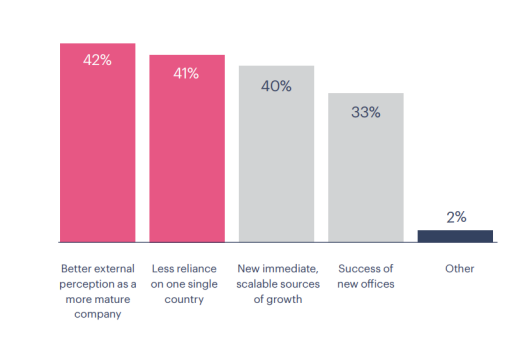
(Source: Paddle report, survey on primary drivers of international expansion)
For Chinese open source software companies, the more mature market size overseas, stronger customer willingness to pay, and higher software prices are the main attractions driving exploration of international markets. This is especially true for open source software: given the availability of a free open source version, domestic companies show noticeably lower willingness to pay than customers in mature Western markets. The same product often commands prices an order of magnitude higher in Europe and America than in China. The upside of successfully breaking into these mature overseas markets is therefore enormous for domestic open source software.
2. Challenges and Difficulties of Global Commercialization
The rewards of successful global commercialization are undoubtedly alluring to many open source software companies, yet the journey overseas involves navigating a series of challenges — including understanding product-market fit, overseas operations, and organizational structure.
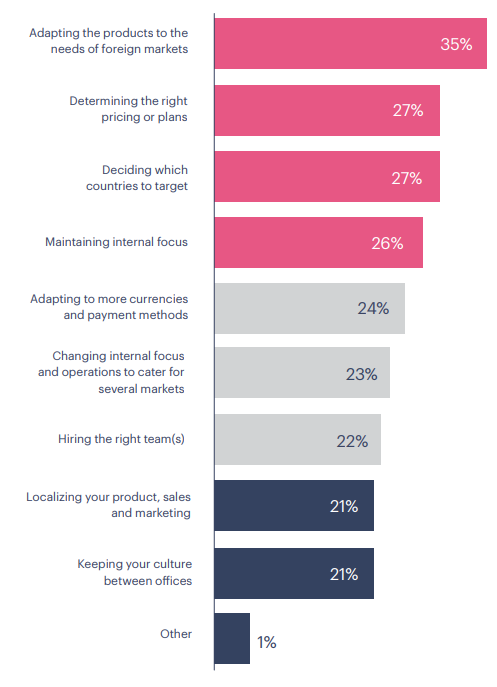
(Source: Paddle report, survey on primary difficulties of international expansion for software companies)
However, open source software companies face an additional challenge beyond these: building international open source communities. For open source software companies, the community is a critical factor determining success or failure. Take PingCAP as an example. As a pioneer among Chinese software companies going global, PingCAP has pursued an international strategy since its founding and successfully brought its flagship product, the TiDB database, to overseas markets. PingCAP's core team has noted that solving the trust problem is a key hurdle in globalizing Chinese software — especially for core infrastructure software like databases. Compared to the relatively seamless software interoperability between European and American markets, Chinese software globalization clearly requires more effort to earn customer trust.
3. Paths to Achieving Global Commercialization
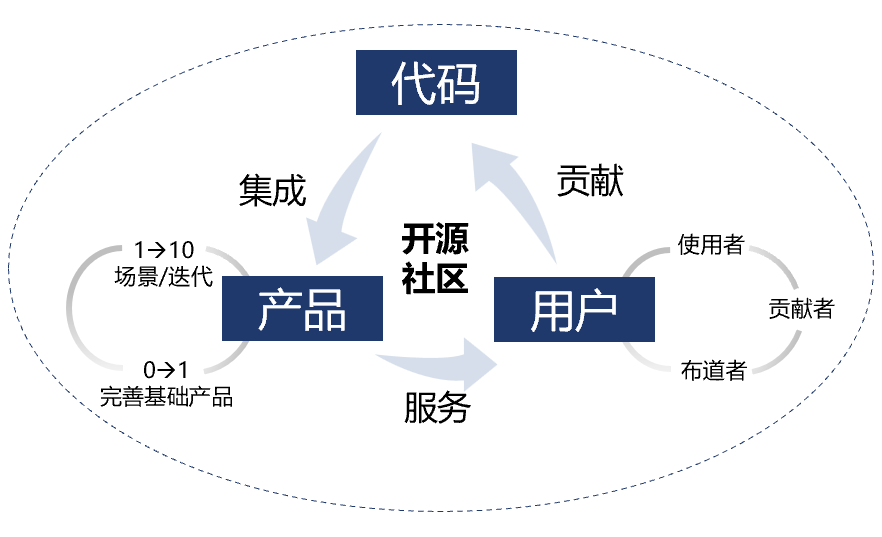
Open Source Community Ecosystem
For open source software, building the open source ecosystem is core to competitive advantage. This encompasses the open source project itself, community development, and participation in open source foundations. For any software company aiming to expand internationally, maximizing leverage of the global open source ecosystem is decisive to success. Moreover, as a mature software company, post-sales support is essential. Thus, deploying support services globally is also critical to long-term development during commercial globalization.
To read the full report
Follow the Yunqi Capital WeChat official account
And reply with "2022开源报告"
Additionally, over the past year
Yunqi has continued to contribute its years of open source expertise to building the ecosystem
👇👇👇
Serving as producer of the China Open Source Conference commercialization forum, actively expanding overseas boundaries
Yunqi served as producer of the commercialization forum at COSCon'22, the 7th annual China Open Source Conference — one of the industry's most influential open source gatherings. We invited partners including Kaiyuanshe, EMQ, Second State, Jina AI, RisingWave, and VMware to discuss commercialization strategies for open source software in the context of internationalization.

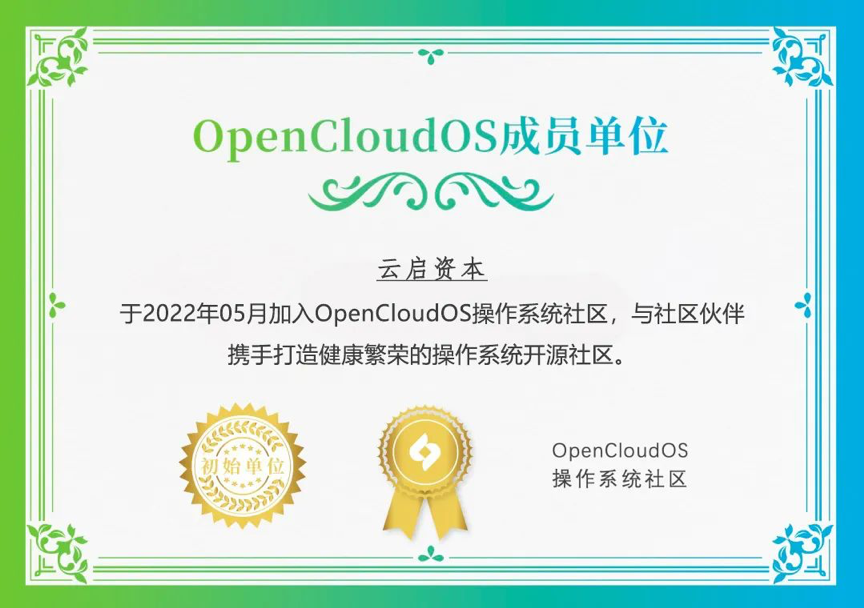
Joining the OpenCloudOS operating system community, collaborating to build community health and prosperity
In 2022, Yunqi joined as a founding member of the OpenCloudOS open source operating system community, alongside 47 leading enterprises and institutions including Tencent, Intel, ZTE, Tsinghua University, and Peking University. OpenCloudOS is China's first server operating system with full-stack domestic capabilities.
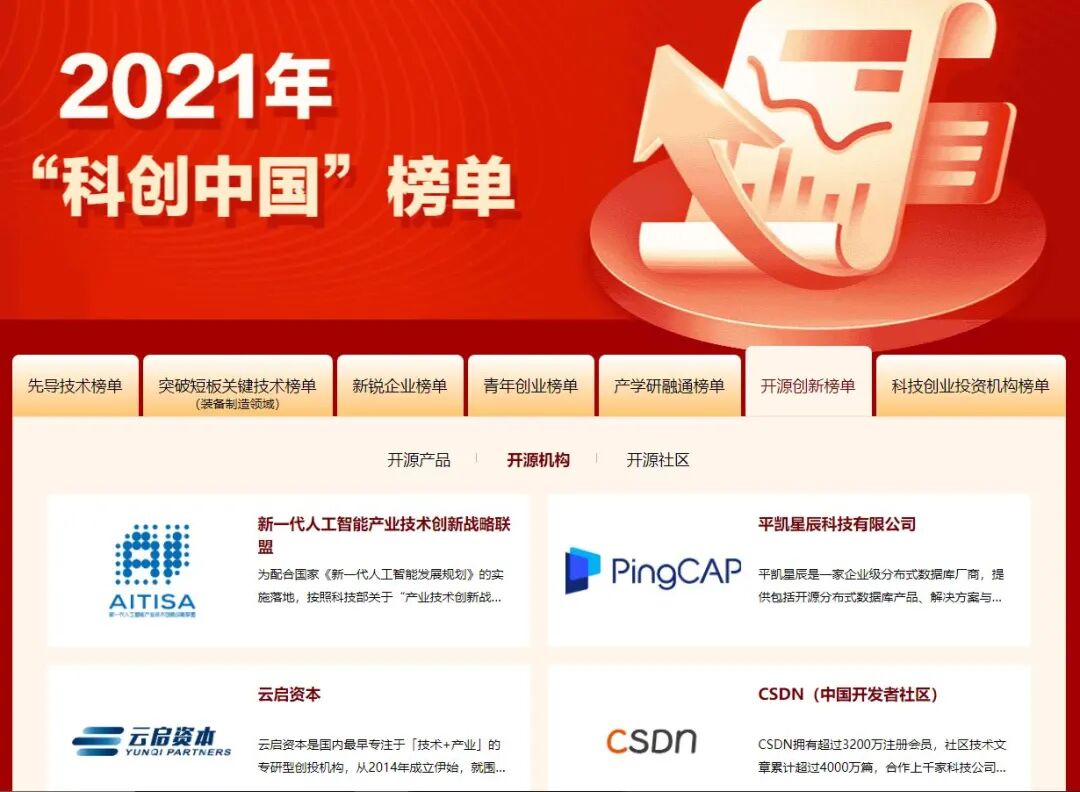
Named to CAST's "Sci-Tech Innovation China" open source innovation institutions list — the only investment firm
Yunqi received the "Sci-Tech Innovation China" Open Source Innovation Award for Outstanding Open Source Institution of the Year. Notably, Yunqi was the only investment firm among the four honorees, joining portfolio company PingCAP — the first unicorn in China's open source space — on the list.
Collaborating with Yunqi's open source family to explore cutting-edge trends
In 2022, we were deeply involved in early portfolio company PingCAP's annual DevCon summit, TiDB Hackathon, and PingCAP User Summit, and co-hosted the 1024 Developer Carnival with seed-round portfolio company Jina AI.
Moreover, multiple Yunqi open source portfolio companies continued achieving technical breakthroughs and gaining market recognition for their commercial potential.
PingCAP (led by Yunqi's Series A investment) — As China's only distributed cloud database provider, selected for Gartner's 2022 Voice of the Customer for Cloud Databases with the highest "Strong Performer" rating; and as the only infrastructure software company, named to Forbes China's 2022 list of the 50 Most Innovative Companies. Read more
Zilliz (led by Yunqi's angel round investment) — Closed a $60 million Series B+ round, continuing to advance its global market expansion. Read more
Jina AI (led by Yunqi's seed round investment) — Named to CB Insights' AI 100 for the second consecutive year, demonstrating its leadership and market value in neural search technology. Read more
RisingWave (led by Yunqi's seed round investment) — Closed a $36 million Series A round and officially announced its open source release