Here's Your 2024 Growth Playbook: How to Maximize "Sales Efficiency"

Minimum-Unit Collective Growth = Massive Gains in Organizational Efficiency

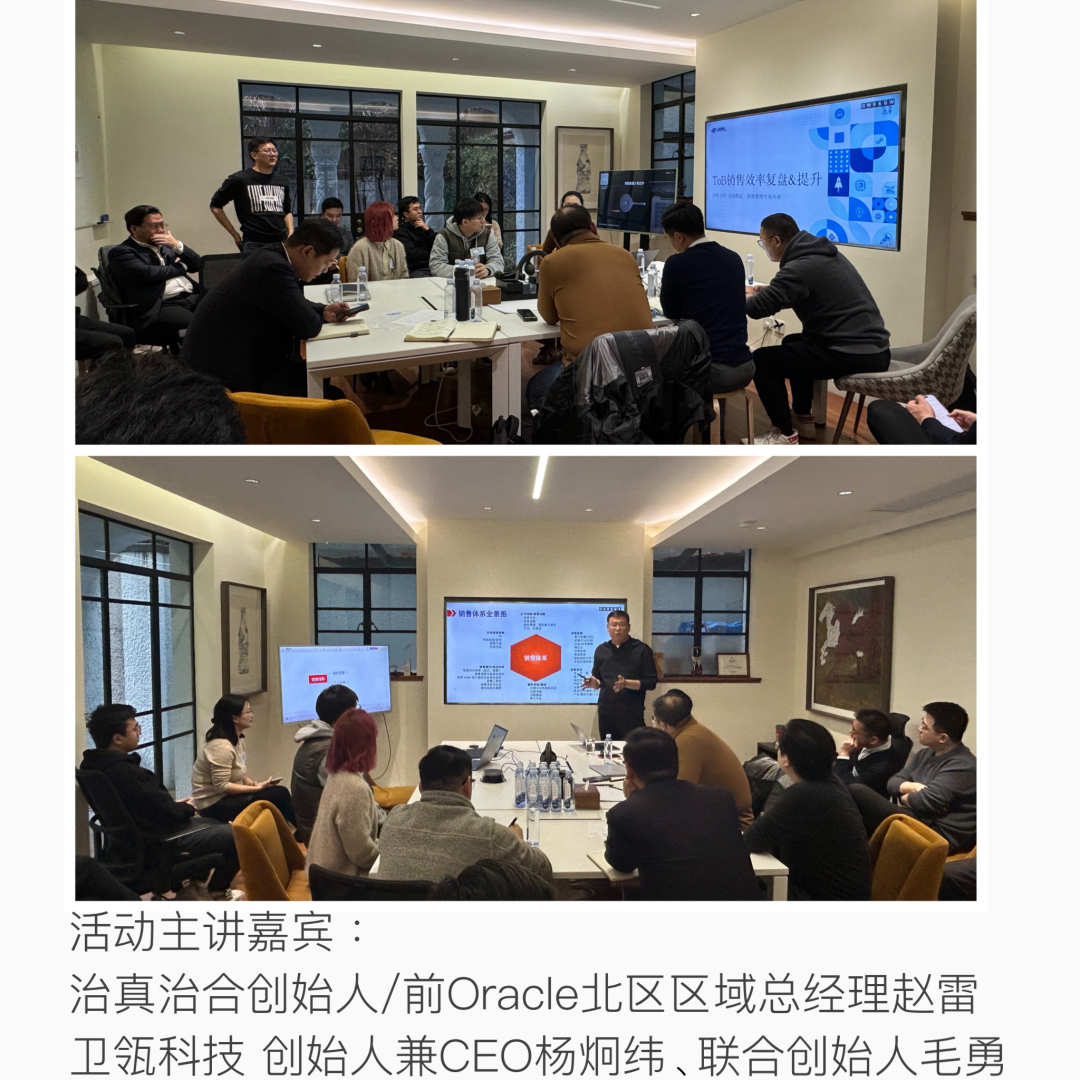
The new year is when companies look back and plan ahead, and "sales" is always the most critical piece of that puzzle. We recently hosted a portfolio networking event where we worked with our portfolio companies to break down how to think about managing "sales efficiency."
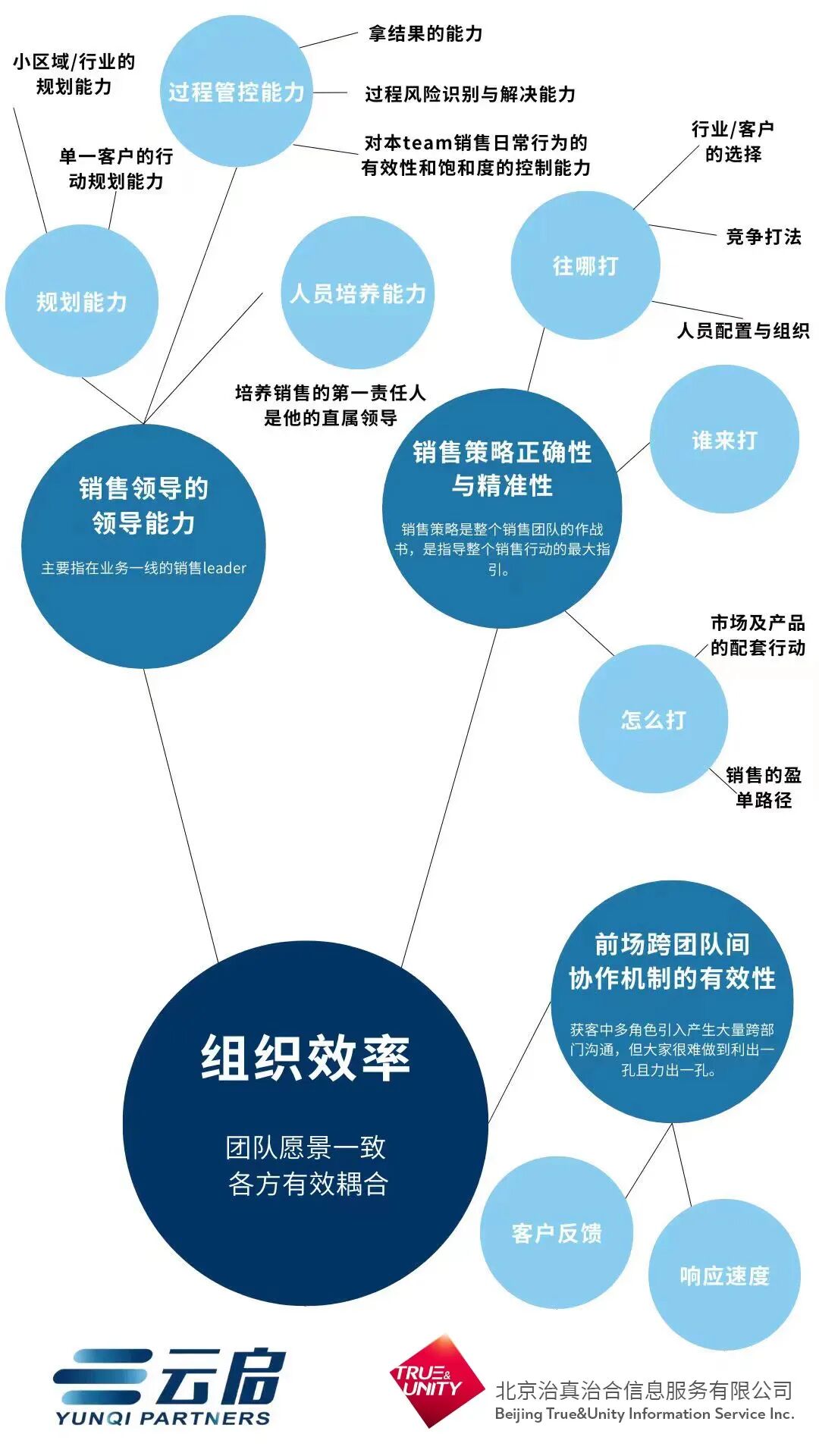
We've pulled some of the key takeaways from that session and turned the framework for dissecting "sales efficiency" into a mind map:
- Working from the center outward, you can examine the sales system holistically from an external perspective;
- Working from the edges inward, you can put yourself in the thick of it and scrutinize the efficiency and quality of each individual step.
At the event, we also discussed how to develop more concrete adjustments based on this breakdown. We'll continue running management-focused events on an ad hoc basis — follow us to stay in the loop on upcoming sessions.
(For the full mind map, reply "sales" in our backend to receive it.)

Organizational Efficiency
Part 1: Sales Strategy
At many B2B startups, when a new sales rep joins and asks their leader which accounts to target, the leader often says, "Start with the customers you already know." This itself is an efficiency killer. Are those familiar customers actually our target customers? Are they the most optimal or most urgent accounts to pursue? If you're going after the wrong accounts, efficiency will inevitably suffer.
Another common problem: sales reps get halfway through engaging a customer only to realize this isn't the kind of customer we should be pursuing at all, wasting significant time and energy. In these cases, poor efficiency isn't due to lack of effort — it's usually because the company has defined who our customers are, but hasn't clearly specified who they aren't, or which prospects to turn away even if they come knocking.
These two examples illustrate that the clearer, more precise, and more executable your sales strategy, the better your sales efficiency. Breaking down and formulating sales strategy is therefore paramount. Companies need to find a methodology and framework that fits them, then dig deep without tiring to develop a sales strategy tailored to their business.
Sales strategy isn't a one-and-done exercise. Strong strategies are built through continuous refinement and correction. So the work of deconstructing and setting strategy shouldn't happen only at the beginning of the year — it should accompany you throughout, reviewed and revised at least quarterly, becoming ever more precise and granular. Only then can you ensure the strategy's accuracy and precision.
Part 2: Sales Leader Leadership
Leaders need to build and manage their own teams, so they must have the ability to develop people. And sales reps aren't typically trained up through formal programs alone — they're cultivated through day-to-day work, with leaders constantly supporting them and fighting alongside them. The direct leader is the first and primary person responsible for developing a sales rep.
Often, when a sales team hasn't yet reached scale, the biggest bottleneck isn't the frontline reps but the frontline sales leaders themselves. A leader's leadership directly determines individual rep performance. So I often advise: if you're looking to improve sales capability, start by focusing on frontline sales leaders. Investing limited resources in elevating their abilities yields disproportionate returns.
Part 3: Cross-Team Collaboration Effectiveness
Customer acquisition involves many roles — sales, pre-sales, solutions/industry experts, product, CSM/implementation, and others. Everyone needs clear division of labor and full collaboration for each to be efficient. But internally, because roles differ, people sit in different teams under different leaders, creating massive cross-departmental communication overhead. And because expectations and short-term versus long-term interests diverge, while everyone appears aligned on goals, when it comes to specific accounts and actions, it's hard to truly channel all efforts and rewards in the same direction.
To achieve this, you must invest in collaboration mechanisms and incentive structures that align goals and interests, enabling maximum efficient teamwork.

Individual Efficiency
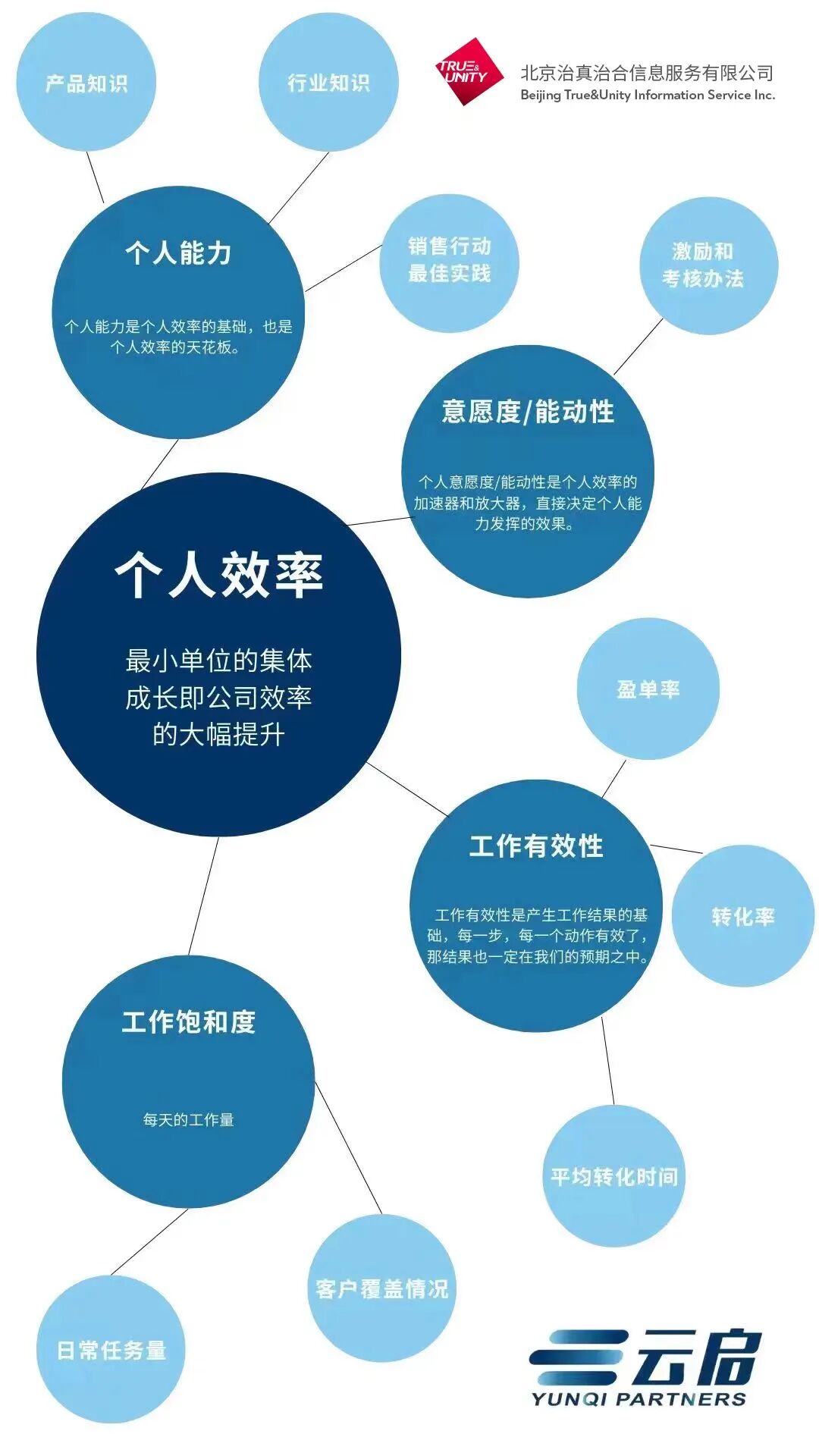
Part 1: Individual Capability and Motivation
At startups, our products and technology are mostly innovative, often redefining the industry. So for sales reps, learning ability usually matters more than hands-on experience.
This similarly tests a company's ability to select talent and its training enablement capabilities. There's a saying that people are selected, not interviewed — so selection doesn't happen only during interviews; what's more important is how quickly you identify and assess people during the probation period.
If individual motivation and proactivity are the accelerator and amplifier of personal efficiency, then incentives and assessment mechanisms are the accelerator and amplifier of company performance. Good incentive and assessment systems don't just prevent wasted spending — they ensure every dollar spent is measurable. More importantly, every dollar should serve as leverage to generate maximum returns.
When it comes to incentives and assessment, I always put incentives first. Our policies must prioritize motivation, giving sales reps recognition and encouragement, with assessment coming second. When designing assessment and incentive systems, they must be tightly connected to your business, to the current breakthrough points and bottlenecks. So I've always advocated that the primary owner of incentive and assessment design should be the head of sales, not HR. HR can provide good frameworks and principles, but if you want real execution, the choice of incentive and assessment items, evaluation rules, and implementation strategy matter far more! These must come from the business itself, from concrete practice.
Part 2: Work Saturation and Work Effectiveness
Often we see sales reps looking busy, but is their daily work actually tied to our goals? Are they spending time on what matters most? These factors directly impact results. So we want individual sales reps to maintain high daily work saturation, with correct priorities aligned with company objectives.
Achieving this depends partly on individual capability and the incentive system, and partly on sales leaders' review management. A leader's most important job is analyzing each deal's status and risks with the rep, jointly developing action plans, and checking execution results.
Win rate isn't just about whether specific deals are won or lost — it's about whether they can be won within the designated timeframe. In B2B, we often say that sales reps don't usually die from losing deals; they die from losing time. Most reps have plenty of pipeline opportunities, but far too few that actually close on schedule. From the company perspective, it looks like deals aren't being lost, or rarely lost — instead, many projects keep slipping and pushing out. The company becomes like a donkey chasing a carrot, always seeing it dangling ahead but never able to take a bite. So from a management standpoint, what should be visible is output and output forecasts within defined timeframes — that's the accurate assessment of business health.
This produces a phenomenon: many experts say to build your own sales funnel, clarifying deal count and value at each stage. It looks robust, but contributes little to actual operations. Because it's entirely static data — no expectations, no forecasts, no mechanisms to safeguard predictions. At the sales leader level, on one hand you need to work with reps to identify deal status and risks, have ways to address risks, and have mechanisms to develop action plans and check results. On the other hand, you need effective means to ensure output within defined timeframes — this is what improves and achieves win rate. At the company level, you need to build sales performance forecasting mechanisms, continuously evaluating forecast accuracy and tracking changes in forecasted deals. Only then can you be accountable for company sales output.
Sales and marketing are both critical drivers of company growth. At the event, our portfolio company WeLinking also shared their latest practices in AI + marketing. As a widely recognized efficiency tool, AI can actually help solve management problems too.
On the marketing side, AI can help companies rapidly organize information, identify key target individuals, build prospect lists, and conduct personalized outreach. By combining AI with company knowledge bases and customer profiles, it can generate personalized messaging for dormant accounts. The results have been remarkable: over 10% of customers who had been silent for more than 90 days were successfully reactivated and expressed interest in further conversations. Meanwhile, WeLinking has already adopted AI comprehensively internally, achieving significant efficiency gains in content generation and other areas.
AI is transforming how we work and expanding market opportunities. Sales and marketing are both deeply human-centric functions, and AI+ will further amplify human capability, making connections easier than ever.
Special thanks to our guest speakers
for their support of the insights above and this event