Can "Room-Temperature Superconductivity" at 21°C Really Ignite a Tech Revolution? | Yunqi Capital Science Chat

Is This the Real Deal? The Room-Temperature Superconductor That's Set the Internet Ablaze Cries "Wolf" Once Again

Electricity is an indispensable resource in our lives, and electrical resistance is a universal property of conductive materials. When electric current flows through a material, its internal lattice structure and impurities create resistance, causing energy loss. The discovery of zero-resistance superconductors could perfectly solve this problem, but nearly all superconductors we've found so far have critical temperatures (Tc) below 77K (-196°C).
On March 8, research on a "near-ambient-pressure room-temperature superconductor" exploded across the internet. The research team claimed they had achieved superconductivity at approximately 294K (about 21°C) under roughly 10 kbar (1 GPa, equivalent to about 10,000 atmospheres of pressure).
This viral room-temperature superconductor story still has several major question marks, and its authenticity remains to be verified. If other experimental groups can replicate the results, some predict it could ignite a technological revolution, radically transforming humanity's energy storage and transmission efficiency.
In this edition of "Yunqi Science Chat," we'll share information about "room-temperature superconductivity." Enjoy~
Source | WeChat public account "Fanpu" Author | Huiqian Luo (Researcher, Institute of Physics, Chinese Academy of Sciences)
On March 8, 2023, a "big story" simultaneously detonated the sensitive nerves of both the tech and finance worlds.
Ranga Dias from the University of Rochester and colleagues announced at the American Physical Society's March Meeting the discovery of a "near-ambient room-temperature superconducting" material — a ternary compound of lutetium-nitrogen-hydrogen (Lu-N-H) that achieves superconductivity at a maximum temperature of 294 K (21°C) under 10,000 atmospheres of pressure (1 GPa or 10 kbar).
On March 9, Nature published Dias's team's paper online, titled "Evidence of near-ambient superconductivity in a N-doped lutetium hydride" [1], alongside a News & Views article from scientific peers: "Hopes raised for room-temperature superconductivity, but doubts remain" [2]. Science also published a commentary: "'Revolutionary' blue crystal resurrects hope of room temperature superconductivity" (Figure 1). For a moment, the industry exclaimed that room-temperature superconductivity at ambient pressure might finally be within reach! A revolution in future energy and power technology was imminent! Yet, amid the excitement, fellow researchers viewed the announcement with considerable calm.
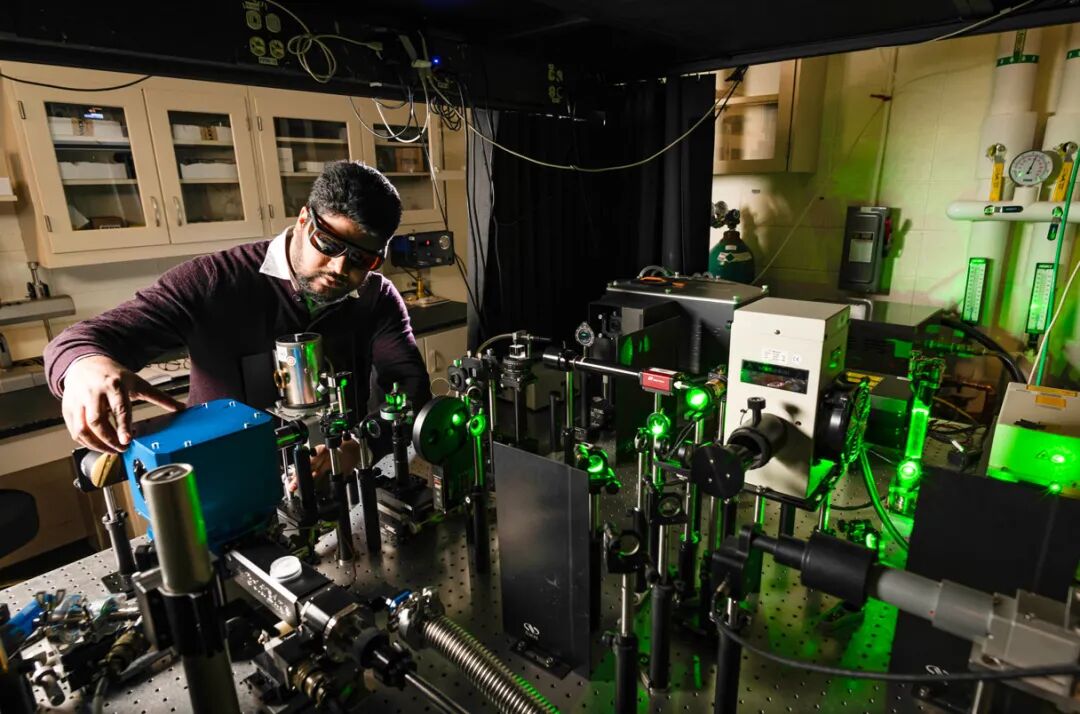
Figure 1. Ranga Dias's claimed discovery of near-ambient-pressure room-temperature superconductivity (Image from University of Rochester)
Why Did Nature Accept the Paper Again?
Indeed, "room-temperature superconductivity" is no longer a first-time "boy who cried wolf." The previous "room-temperature superconductor" report came on October 14, 2020, when Nature published a paper titled "Room-temperature superconductivity in a carbonaceous sulfur hydride." The paper had nine authors, with R. P. Dias as the corresponding author [4]. Six of these nine authors overlapped with the 2023 paper. That earlier "room-temperature superconductor" faced serious质疑 from numerous scientists in the field. After two years of controversy, the authors ultimately failed to produce convincing evidence, and no one in the industry could replicate their results. The Nature editorial board made a retraction decision on September 26, 2022 — even though all nine authors disagreed with the retraction. In less than half a year, Nature accepted and published another paper from the same team, prompting people to wonder: "Has the wolf returned again?" Moreover, it is reported that the team had recently (February 2023) "replicated and verified" their previously retracted work on carbonaceous sulfur hydride superconductivity, with the related paper already submitted [5]. Regarding whether this latest "room-temperature superconductor" is real or fake, skepticism in the scientific community clearly far outweighs belief.
In this paper, the Dias team presented multiple pieces of evidence for superconductivity in the Lu-N-H compound: 1. Zero-resistance effect — the material's resistance drops to absolute zero below a certain temperature; 2. Diamagnetic effect — upon entering the superconducting state, the material can repel external magnetic fields, producing negative magnetic susceptibility; 3. Specific heat jump — at the superconducting phase transition, the specific heat shows a discontinuous jump, a typical characteristic of a second-order thermodynamic phase transition (Figure 2).
Generally, these three pieces of evidence are sufficient to determine superconductivity in a material. Additionally, the paper presented X-ray diffraction and Raman spectroscopy data for the material, and combined theoretical calculations to infer the material's basic structure. One could say the "chain of evidence" appears quite complete! The paper's page on Nature's website also provides most of the raw data and data processing procedures, which interested readers can download and verify themselves. From these perspectives, there seems to be every indication that "the wolf has really come this time"!
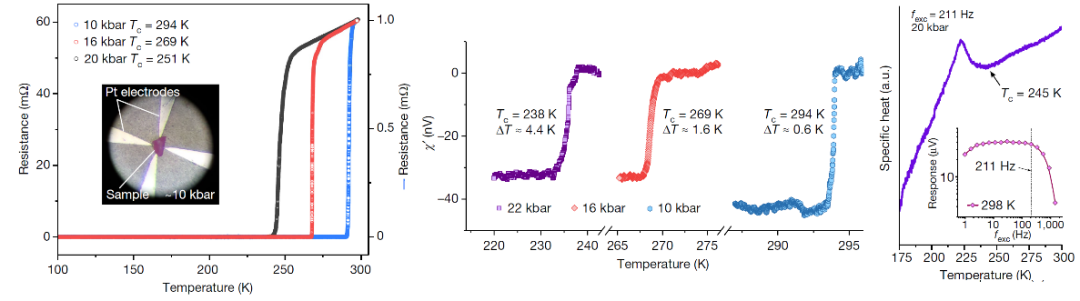
Figure 2. Evidence for superconductivity in Lu-N-H presented in Ranga Dias et al.'s paper: zero resistance, diamagnetism, and specific heat jump
Several Points of Doubt
But what puzzles the industry is their data conclusions. This material apparently exhibits superconductivity above 200 K at pressures below 30 kbar, and the lower the pressure, the higher the superconducting critical temperature Tc! The highest critical temperature reaches 294 K at around 10 kbar, after which the superconducting temperature drops below 100 K at even lower pressures (Figure 3a).
Even more bizarrely, this material is a blue crystal at ambient pressure, turning pink under pressure, and finally red — completely different from the black samples observed in traditional metallic hydride superconductors (Figure 3b). Such an anomalous temperature-pressure phase diagram and strange color changes are highly suspicious. Moreover, the molecular formula given in the paper shows an almost 1:1 ratio of Lu to N, with H content of only about 3, which doesn't match the familiar rare-earth hydrides containing 5 or 6 or even more H atoms. With such low H content, according to the material structure they provided, the H atoms are spaced quite far apart, essentially ruling out superconductivity originating from the H element itself (similar to metallic hydrogen or the previously discovered LaH₁₀). These peculiar phenomena make one feel that "even if this material is genuinely superconducting, it doesn't seem like a traditional BCS superconductor."
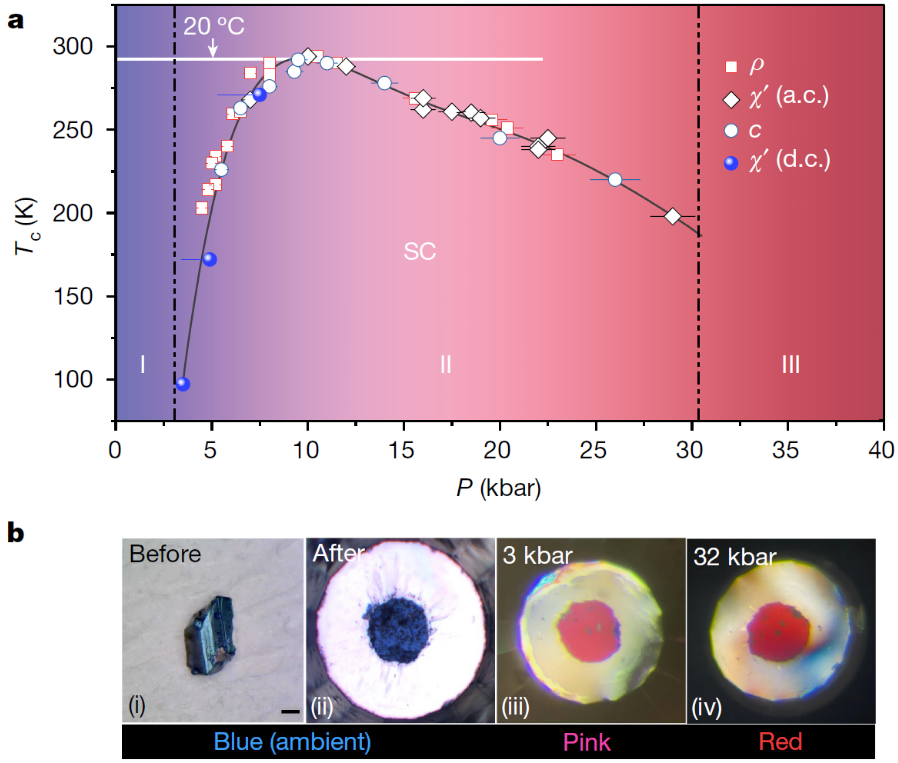
Figure 3. Temperature-pressure phase diagram and pressure-induced color changes of the Lu-N-H superconductor presented in Ranga Dias et al.'s paper
Of course, industry skepticism doesn't stop there. Some have conducted simple analyses of the raw data they published and found that their data processing remains overly crude. For example, the diamagnetic signal in the magnetic susceptibility data was obtained after processing a very large background signal plus a set of very messy measurement signals. Even the beautifully clean zero-resistance transition data was still obtained using methods of "background subtraction and noise reduction." As for how the background was selected and how the noise was "smoothed out," there is no way to know.
Theoretical Implications If the Experiment Proves True
Of course, if this research result proves to be authentic and reliable, it at least brings us some new insights: 1. Room-temperature superconductivity is entirely achievable — from an experimental perspective, there is no upper limit to the critical temperature of superconducting materials! 2. Hydrogen compounds under high pressure are the most promising route to finding room-temperature superconducting materials; they may not require pressures on the order of millions of atmospheres, and there is hope at much lower pressures; 3. If pressure can be further reduced, or if chemical stress inside or outside the material can be utilized to achieve ambient-pressure-stable superconducting materials, then the so-called "ambient-pressure room-temperature superconductor" will truly be realized! [6]
What would it mean if we truly discovered an ambient-pressure room-temperature superconducting material?
It would mean that the dream scientists have pursued for over a century has finally been realized!
It would mean that the journey to push critical temperatures higher in superconducting materials has entered a brand-new room-temperature superconductivity era! (Figure 4)
It would mean that the door to a new world of physics has swung wide open!
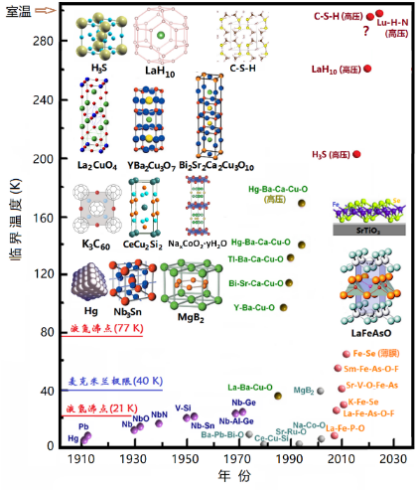
Figure 4. Discovery years and critical temperatures of various superconducting materials [6]
We can freely imagine the surprises that ambient-pressure room-temperature superconductivity might bring us — the future seems full of promise!
If It Proves True, Would It Be Enough to Ignite a Technological Revolution?
Clearly, the social response to this "near-ambient-pressure room-temperature superconductivity" incident has been far more animated than that within the scientific research community itself. I know of numerous media outlets that have shown particular interest in this event, and many have bombarded superconductivity researchers with interview requests, leaving us somewhat at a loss. Setting aside for the moment whether this paper's data is authentic, would the discovery described in the paper alone truly be enough to ignite a future technological revolution? The answer is clearly "too excited to perform." The reason: the "near-ambient pressure" (10 kbar) mentioned in the paper is still far from the ambient pressure we're familiar with (1 bar, or 1 atmosphere). In fact, 10,000 atmospheres is ten times greater than the pressure at the deepest point of the Mariana Trench, the deepest part of the world's oceans! How could such extreme pressure be conveniently scaled up for industrial applications? Moreover, the sample quantities produced under high pressure are extremely small — mostly on the microgram to milligram scale, and even the largest pressure chamber devices produce samples of only a few grams. Faced with industrial applications requiring ton-scale production, this represents an insurmountable chasm.
Furthermore, scientists still face several practical material challenges.
First, does achieving ambient-pressure room-temperature superconductivity mean that superconductivity can be relatively cheaply scaled up? Not necessarily! The bottleneck restricting whether superconducting materials can be scaled for application is not just the critical temperature parameter. In fact, superconductors also have critical magnetic fields — most superconductors have two critical fields (upper and lower). Once these fields are exceeded, magnetic flux lines will penetrate the superconductor's interior, causing energy dissipation or even completely destroying the zero resistance. Not only that, superconductors also have a critical current density. It's not the case that because resistance is zero, applying a small voltage will produce infinite current. For a specific superconducting material, once the current density exceeds the critical value, it will instantly "quench" — generating resistance, rapidly heating up, and completely losing superconductivity.
These three critical parameters — critical temperature, critical magnetic field, and critical current — are like hands gripping the throat of superconducting applications, and are often determined by the intrinsic properties of the material (Figure 5). So, merely having a superconductor with a critical temperature reaching room temperature is not enough; we also need to see whether it is a superconductor with "three highs" critical parameters — something that still requires investigation. For example, copper-oxide high-temperature superconductors were discovered nearly 40 years ago. Their critical temperatures are quite high, easily exceeding 100 K, and they only require liquid nitrogen (77 K) cooling. Yet their large-scale strong-current applications have still not been fully realized, one reason being their low lower critical field [7].
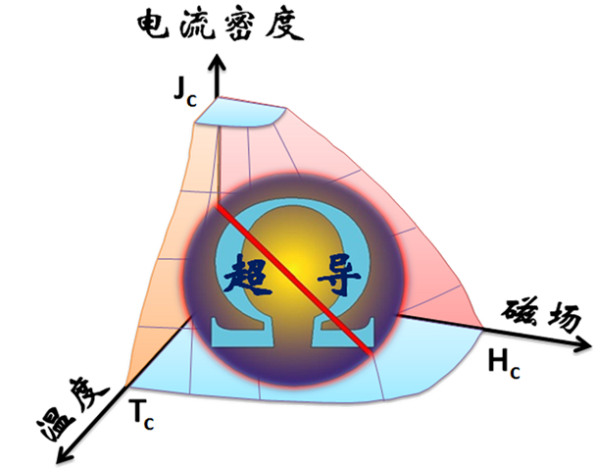
Figure 5. Three critical parameters of superconductors: critical temperature Tc, critical magnetic field Hc, critical current density Jc [6]
Second, if we find a "three highs" ambient-pressure room-temperature superconductor, does that mean it will be easy to use? Not necessarily! Because we also need to look at the specific behavior of the critical parameters. For example, most superconductors are "Type II superconductors" with upper and lower critical fields. Particularly for some superconductors with high critical temperatures, the critical fields often exhibit strong "anisotropy."
You can think of a superconductor as a thin flake: when the magnetic field is perpendicular versus parallel to the flake, the suppression effect on the superconducting critical temperature can differ by tens or even thousands of times! So, once the magnetic field reaches the lowest critical field, the superconductor's perfect diamagnetism or even zero-resistance properties are destroyed. The situation is so dire that what determines the ceiling for strong-current applications is not the upper limit of the parameters, but their lower limit. So even though copper oxides have upper critical fields above 100 or even 200 T, their upper critical field in another direction can drop below 1 T, and for the lower critical field, it can even drop below just 0.01 T. Imagine: with just a small applied magnetic field, before any real use even begins, magnetic flux lines have already penetrated, and their movement inside is difficult to predict, with various rich configurations (solid, liquid, plastic, glassy states, etc.). At higher magnetic fields, the reliability of the superconducting material becomes questionable (Figure 6) [8].
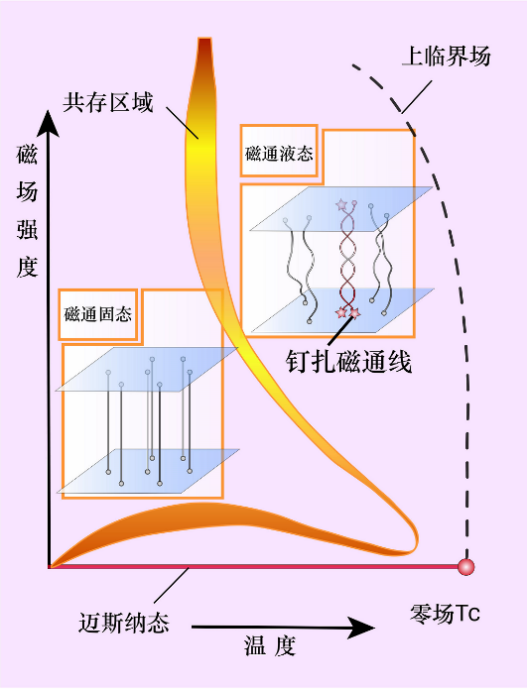
Figure 6. Schematic phase diagram of magnetic flux in copper-oxide superconductors [8]
Third, what if we find an ambient-pressure room-temperature superconducting material with good comprehensive critical parameters and low anisotropy? New problems still exist! Take iron-based superconducting materials, for example. Although their critical temperatures are not as high as copper oxides, their critical magnetic fields are still very high, reaching tens or even over 100 T, and they are nearly isotropic at low temperatures. Clearly, iron-based superconductors appear to be quite suitable for applications, with the additional advantage that their current-carrying capacity doesn't degrade much under strong magnetic fields, and they maintain good performance even after several temperature cycles. Unfortunately, current iron-based superconducting materials don't have high critical current density metrics, and their production capacity remains at the laboratory application stage, requiring further effort (Figure 7) [9]. Even if physical constraints are overcome, iron-based superconducting materials must also face chemical constraints — most iron-based superconductors are arsenides containing alkali or alkaline-earth metals, which are sensitive to air and water, and are toxic. Once scaled-up production begins, these safety hazards must be addressed.
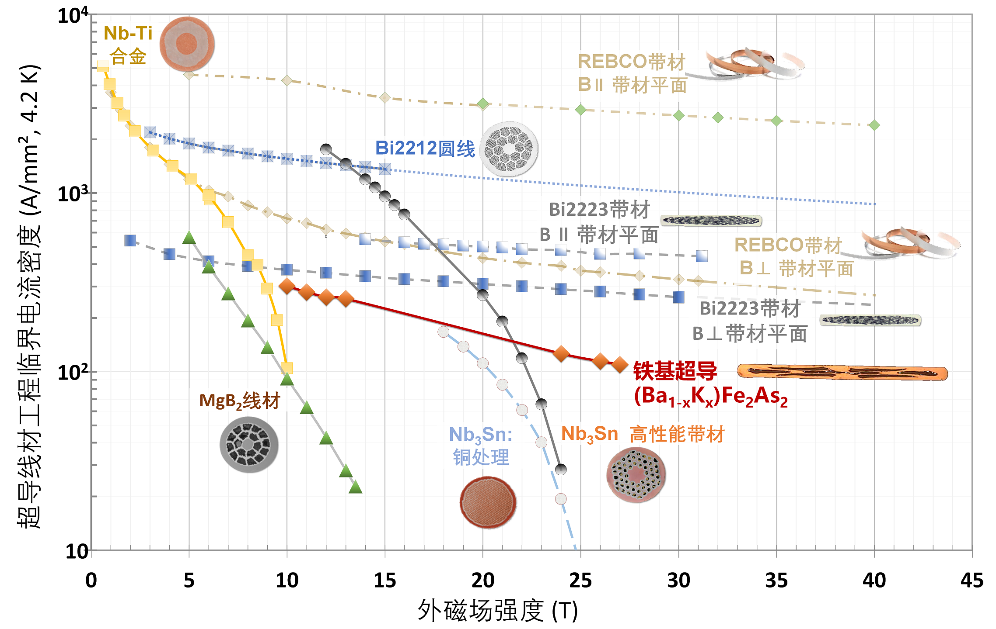
Figure 7. Relationship between critical current and external magnetic field for various superconducting wires and tapes [9]
Finally, if all the above conditions are overcome? Would such an ambient-pressure room-temperature superconductor finally be ready to use? Still not necessarily! Let's again use copper-oxide materials as an example. Suppose similar materials overcome all the above difficulties — copper oxides have another problem: as ceramic materials, they are extremely brittle with poor mechanical properties. Therefore, directly using copper-oxide materials to make wires is unrealistic; they are difficult to form and basically cannot maintain good current-carrying performance under various bending and winding conditions. Of course, over decades, scientists have made tremendous efforts. There are mainly two approaches: the powder-in-tube method and the coated-conductor method. The former involves packing superconducting powder into metal tubes, then drawing them into wires and heat-treating to improve superconducting performance. The latter uses a thin metal substrate, with various buffer and protective layers, to deposit a layer of superconducting material in the middle — the substrate is about 100 μm thick, and the superconducting layer about 1 μm thick (Figure 8). Ultimately, people found that the largest cost component of copper-oxide superconducting wires and tapes isn't the superconducting material itself, but rather the metal tubes or metal substrates used, plus the various heat treatment processes required afterward, with yield rates that aren't very good [6]. So if we had an ambient-pressure room-temperature superconductor, we would also hope it is a material with metallic ductility and toughness.
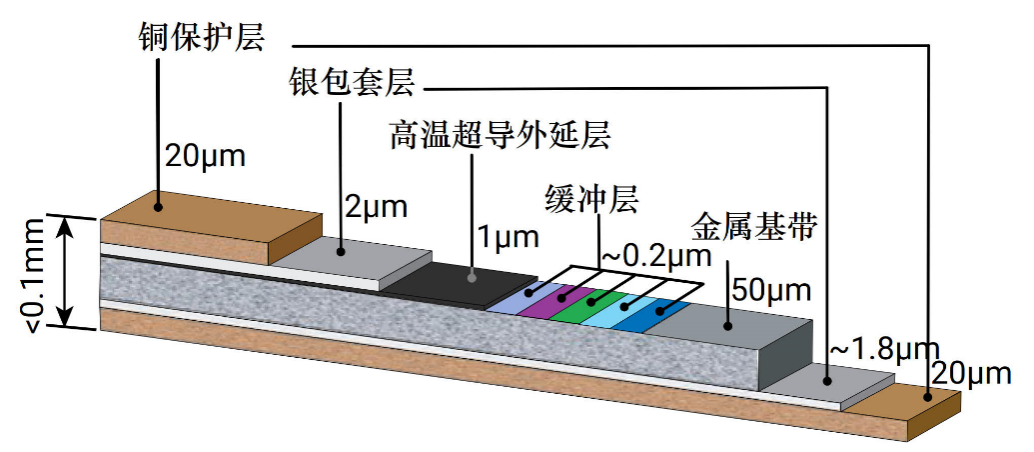
Figure 8. Structural schematic of copper-oxide high-temperature superconducting tape
The examples above concern only strong-current applications of superconductivity. For weak-current applications, even with ambient-pressure room-temperature superconductors, beyond generally having "three highs" critical parameters, we would also hope for good impedance performance, large coherence length, insensitivity to air, and ease of micro- and nano-scale processing. These are similarly difficult to achieve simultaneously.
So, although people have now discovered tens of thousands of superconducting materials, and quite a few with critical temperatures above 20 K, the most commonly used material for strong-current superconducting applications remains the traditional Nb-Ti alloy, with excellent strength, toughness, and reproducibility, but a superconducting temperature below 9 K — far below room temperature! Next are Nb₃Sn, Nb₃Ge, Nb₃Al, etc., with superconducting temperatures not exceeding 24 K! For weak-current applications, superconducting quantum computer chips mostly use aluminum or niobium, superconducting resonators basically use pure Nb, and superconducting single-photon detectors use NbN, etc. — all these materials have superconducting temperatures not exceeding 20 K. Only superconducting filters and terahertz detectors use high-temperature superconducting films. Among traditional superconductors, MgB₂ was found to have a critical temperature up to 39 K, but its critical parameters are pitifully low, basically only usable for applications below 3 T, and the material is too hard for processing and forming (Figure 9) [10].
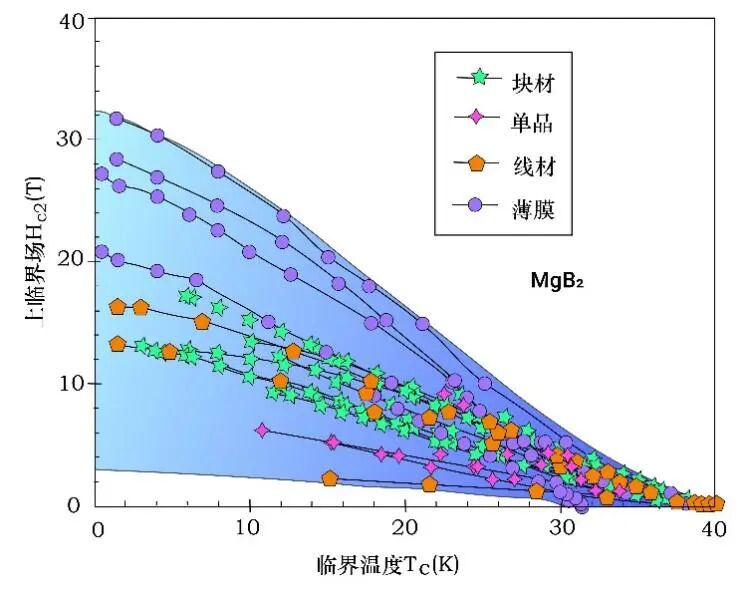
Figure 9. Relationship between upper critical field and critical temperature for various MgB₂ materials [10]
We can imagine that even with ambient-pressure room-temperature superconducting materials, large-scale application of superconductivity, while becoming more promising, would still be "a long road with many obstacles." Precisely for this reason, the exploration of superconducting materials, research into superconducting mechanisms, and application-oriented basic research require continuous and unremitting effort, ultimately to screen out the most suitable materials for various application scenarios. For specific materials, their rich physical properties need to be fully explored. There are no "useless" materials in the world, only materials you "don't know how to use"! Material exploration is like fishing in an electronic sea — the fish caught come in strange shapes, but each has its own use (Figure 10) [6].
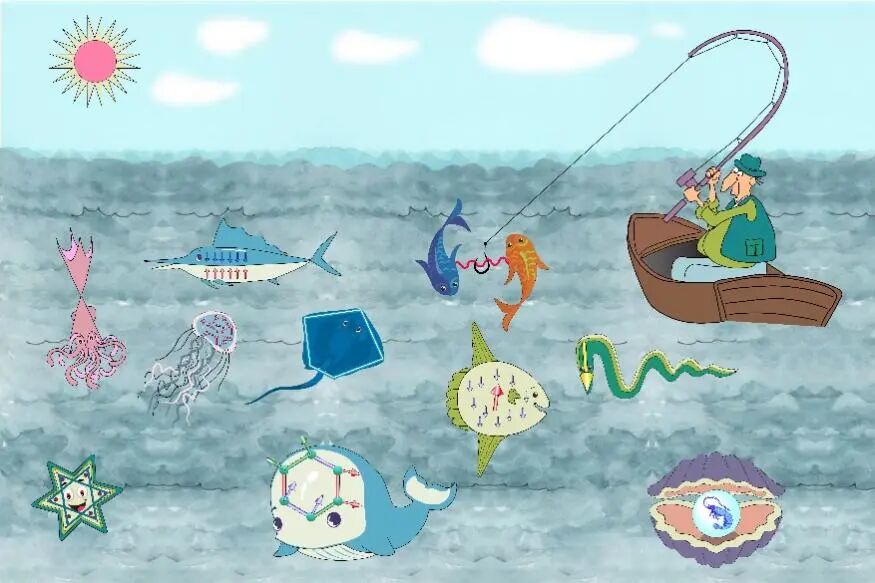
Figure 10. Material exploration is like fishing in an electronic sea [6]
In this wave of "room-temperature superconductivity" fever, I hope everyone maintains a clear and calm mind, insists on rational analysis, and ultimately judges based on facts. The exploration of superconductivity will continue to be full of surprises in the future. I hope everyone can maintain attention to basic research, learn more about the substance of the research, rather than asking "what's the use of this research?" after reading the news. Read more books about superconductivity, and you will gain much more! (End of article)

Figure 11. The "Small Era" of Superconductivity — The Past, Present, and Future of Superconductivity (Tsinghua University Press, 2022) [6]
References
[1] N. Dasenbrock-Gammon et al., Nature 615, 244 (2023). [2] C. Jin and D. Ceperley, Nature 615, 221 (2023). [3] Science News, DOI: 10.1126/science.adh4968 [4] E. Snider et al., Nature 586, 373 (2020). [5] H. Pasan et al., arXiv: 2302.08622. [6] Huiqian Luo, The "Small Era" of Superconductivity — The Past, Present, and Future of Superconductivity (Tsinghua University Press, 2022). [7] Haihu Wen, Physics, 2006, 35(01): 16-26 and 35(02): 111-124. [8] Yuheng Zhang, Superconducting Physics (University of Science and Technology of China Press, 2009). [9] H. Hosono et al., Mater. Today 21, 278-302 (2018). [10] C. Buzea, T. Yamashita, Supercond. Sci. Technol. 14, 115-146 (2001).