"Zhenling Technology" Closes RMB 70 Million Series A+ Round, Yunqi Capital Continues to Double Down | Yunqi Capital

Data-Driven Growth for High-Quality Enterprise Development

**➤➤➤ **Recently, "Zhenling Technology", a CVLM (Contract Value Lifecycle Management) SaaS solution provider, announced the completion of a RMB 70 million Series A+ funding round, led by Redpoint China Ventures, with existing investor Yunqi Capital among the follow-on investors. Previously, Yunqi had led the company's Series A round. The proceeds will be used for market expansion and product R&D.

Yunqi's Perspective
Yunqi has always focused on "technology innovation, industry empowerment". Enterprise services is one of its key investment areas, and besides Zhenling, Yunqi made early bets on outstanding companies including Coohom, PingCAP, Sobot, IceKredit, and Jijia ERP.
Yi Han, Executive Director at Yunqi Capital, commented: "As an integrated business-legal-finance platform, Zhenling focuses on the full lifecycle of contract value, with clear and deep industry expertise, rich and leading technical capabilities, and rapidly evolving organizational adaptability. We believe the trend and demand for digitalization in China is irreversible, and with the momentum of domestic IT innovation, the Zhenling team — with its rapidly improving customer acquisition capabilities and organizational efficiency — will provide greater impetus for high-quality enterprise development through data-driven solutions."
Zhenling Technology was founded in 2021 and is a leading domestic contract management solution provider. Its core team was incubated within "Hand Enterprise Solutions", a well-known comprehensive enterprise digitalization services provider in China, giving Zhenling an innate DNA of digital service capabilities.
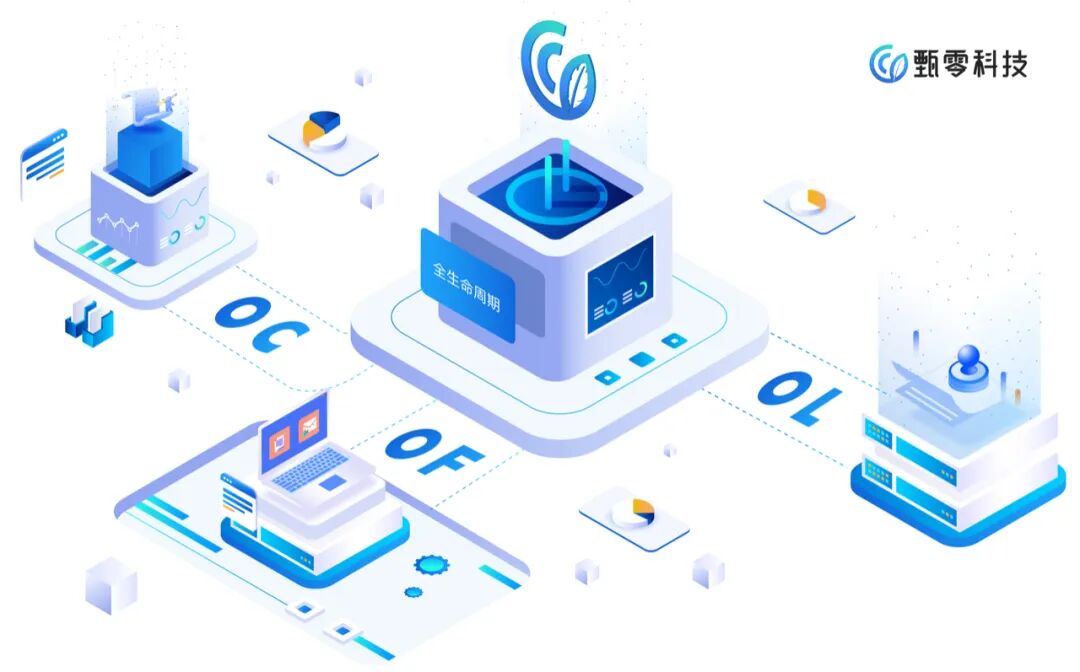
Zhenling Technology's self-developed platform product, "Yinuo Intelligent Contract Cloud Platform" (abbreviated as Yinuo Contract), includes the signing efficiency tool OC (OneContract), the fulfillment management tool OF (OneFulfill), and the legal tool OL (OneLegal). By managing each node in the contract value lifecycle — "pre-signing, signing, fulfillment, post-fulfillment" — it organically integrates the three main operational processes of business workflow, financial accounting workflow, and contract management workflow. This enables better mutual verification of real business data and financial data, achieving an upgrade for enterprises from "business-finance" integration to "business-finance-legal" integration, helping companies control operational risks and improve management standards.
Zhenling Technology's 2022 revenue reached tens of millions of RMB, triple that of the previous year, with NDR (Net Dollar Retention) hitting 120%. This indicates strong customer satisfaction with its product and a meaningful rate of successful upsells.
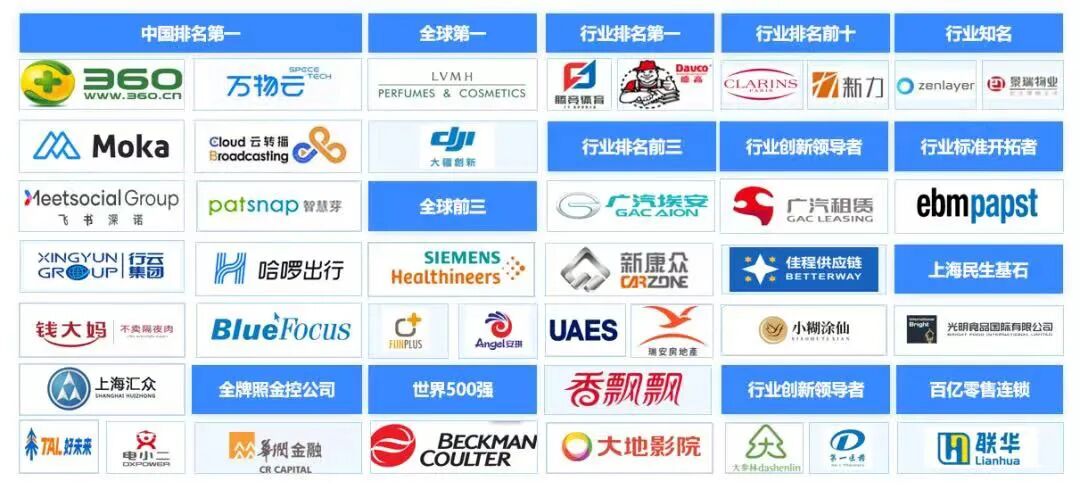
Currently, Zhenling's customer profile is stable at large enterprises with annual revenue exceeding RMB 1 billion and over 1,000 contracts. Among existing clients, the majority are concentrated in biopharmaceuticals, new energy, and broad internet sectors. Foreign enterprise clients account for one-quarter, while the proportion of state-owned and central enterprise clients has also risen noticeably compared to last year.
Since its incubation from Hand, Zhenling has served over 180 clients, with nearly 100 under direct contract. The proportion of independently acquired customers has risen from 45% last year to 85%, indicating the company has gradually found its suitable marketing approach.
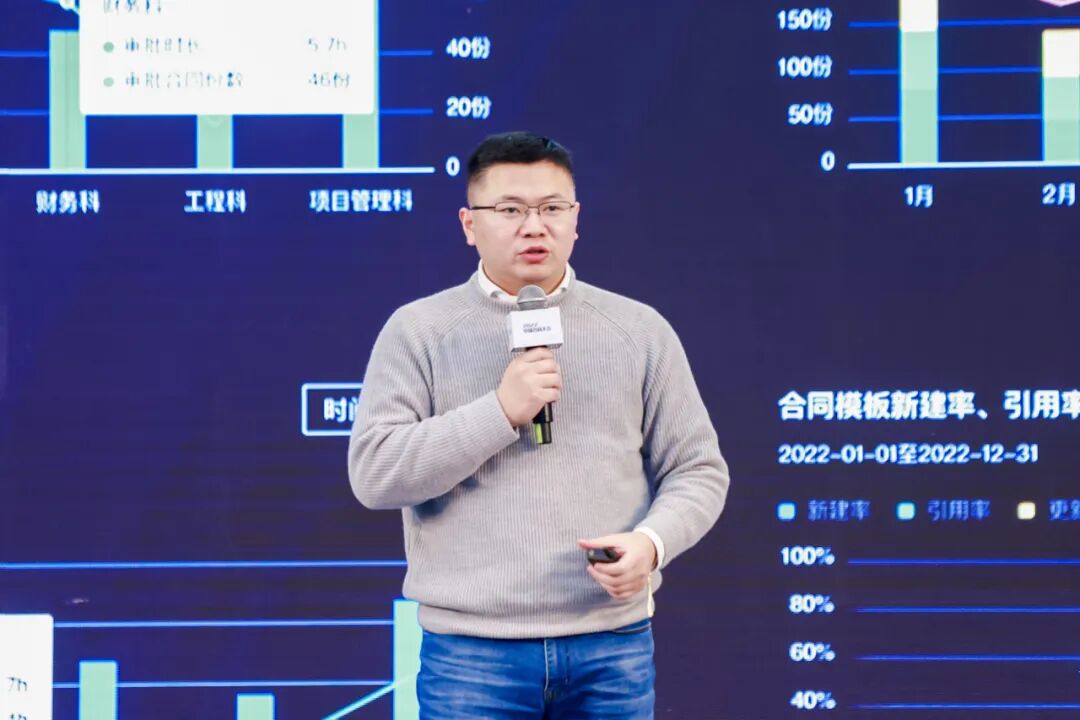
Xie Weihu, CEO of Zhenling Technology, attributes the revenue growth to two main factors: clear customer positioning and more mature products.
Regardless of stage, a company needs clear customer positioning. Where an organization focuses its energy — on what business and what customers — directly determines its next direction. "Last year, the company still had some 'wild growth' tendencies, but this year, we've started to consciously select the 'right' customers to work with — those who buy into the product iteration philosophy and understand that contract management isn't a one-and-done affair, but requires a complete service package. Get the customers right, and everything else follows," Xie said.
How to meet the needs of these "right" customers? Xie's thinking is that Zhenling was never a software company, but rather aims to provide the highest quality service within the scope of contract management, doing everything possible to solve customers' contract-related problems. Whether replacing legacy systems or purchasing new modules, the most important thing is giving customers confidence and expectation in continuous product iteration.
Take the typical problem of "historical contract initialization" as an example. When a company deploys a new system, new contracts naturally get drafted in it, but previously signed contracts — especially those still in fulfillment — become a thorny issue. In this situation, a software company's approach would be to provide a "contract import function" and let the customer handle it themselves. But the real difficulty usually isn't the "function" — it's organizing a properly formatted Excel ledger that meets the system's import requirements, a process that's time-consuming, labor-intensive, and delivers a poor experience. Zhenling's approach is to provide a complete service encompassing historical contract sorting, file organization, structured ledger preparation, system initialization, and alignment of payment status. This allows historical contracts to be merged into the fulfillment management pool alongside new ones. "This service doesn't make money for Zhenling — sometimes it's even slightly loss-making — but customers get a great experience," Xie explained.
Business philosophy needs product to support it. This year, OC's win rate improved from 40% last year to 70%; OF added lease contract management, major commitment contract management, and risk control modules; OL enhanced its class action scenario capabilities.
OC targets the contract signing phase, primarily solving signing efficiency issues — such as contract framework management, internal and external collaborative drafting, full-text search, e-signature, and contract archiving. However, OC isn't a high technical barrier domain; numerous e-signature companies, contract archiving companies, and online collaboration platforms have entered the contract management market from this angle, with no significant functional differentiation among them.
But Xie offers a different view. Looking 3-5 years ahead, the market may enter a phase of homogenized competition, but currently, product maturity varies widely across players. The gaps mainly show up in scenario richness (e.g., master-subcontract management), functional depth (e.g., deep internal-external collaboration), and usability (e.g., industry-specific initialization solutions) — which is also the main reason for OC's improved win rate.
OF is gradually becoming Zhenling's key differentiator against other vendors. This year, OF revenue accounted for 30% of Zhenling's total revenue. OF serves the contract fulfillment phase, creating data flows by integrating with enterprise MDM, ERP, SRM, CRM, SSC, PM, and other business systems, displaying fulfillment progress in real time and regularly reminding relevant personnel to push execution forward. Contracts represent the consensus of expectations between two parties and are the direct basis for enterprise receivables and payables. Driving business execution through a contract fulfillment perspective offers enterprises a new management option — and the higher the annual revenue, the greater the value OF delivers. Compared to OC, OF's product maturity depends on the vendor's understanding of contract management, comprehension of customer business, and richness of scenario coverage.
For Zhenling, sailing smoothly so far, the biggest challenge at this stage is perhaps achieving scaled sales and maintaining rapid growth. Xie identifies four key points:
First, operational standardization — letting standardization drive scale, thereby reducing dependence on individuals. This includes standardizing key person direct sales motions, SDR (Sales Development Representative) processes, business development, and marketing activities, while simultaneously setting strict ROI standards and full-process digital management.
Second, product-driven efforts — from product value proposition, to pre-sales demonstration of that proposition, to delivery fulfillment of the proposition, to customer success managers reinforcing the proposition through quarterly business reviews, helping customers comprehensively solve their problems.
Third, ecosystem development — strengthening effective cooperation with major ecosystem partners while actively exploring more efficient external channel partnership models.
Fourth, layering on a "good" contract criterion atop the existing target customer base. "Good" is defined as capable of generating revenue returns, so greater attention will be paid to customers' degree of rigid demand, payment capacity, and service extensibility. Extensibility refers to cross-regional scenario upsells, cross-contract scenario upsells, and same-product upsells within corporate groups. "So one of Zhenling's important target customer segments for 2023 is state-owned and central enterprises," Xie added.
For 2023 planning, Xie stated a conservative target of continuing to pursue 2x growth; on the product side, the focus will remain within the contract domain, attempting to use data-driven approaches to meet customers' deeper management needs.
(Content republished from 36Kr)