Starting at RMB 89,900, a High-Dexterity Robot Arrives: Astribot Unveils Next-Generation Robot T1 | Yunqi Capital

Moving Toward the Physical AI Era
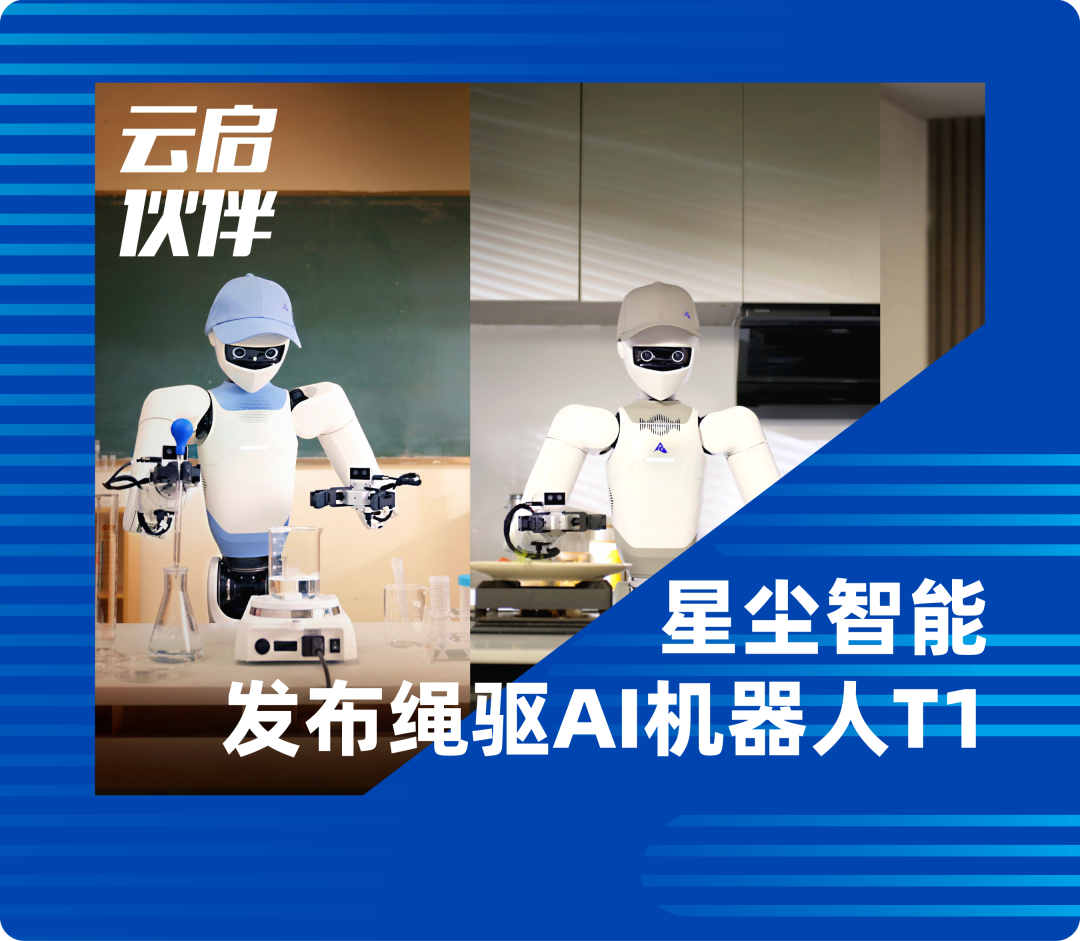
On May 27, Astribot, a Yunqi Capital portfolio company specializing in cable-driven AI robotics, unveiled its next-generation robot T1, priced from RMB 89,900 with shipments beginning June 1.
The T1 continues Astribot's cable-driven transmission approach, becoming the first high-dexterity manipulation robot to break into the sub-RMB 90,000 price range — tackling the scalability challenges of real-world deployment and advancing toward the Physical AI era. This edition of Yunqi Capital brings you the details.
Standing 1.55 meters tall and weighing approximately 66 kg, the T1 features 23 degrees of freedom (excluding end effectors) with a 5 kg single-arm payload. The product emphasizes compact portability, low-barrier development, flexible deployment, and extensibility for commercial applications. It offers rich interfaces, supports swappable end effectors and compute backpacks, automatic recharging and quick battery swaps, enabling long-duration continuous operation and multi-scenario switching to unlock developers' potential for "free innovation."
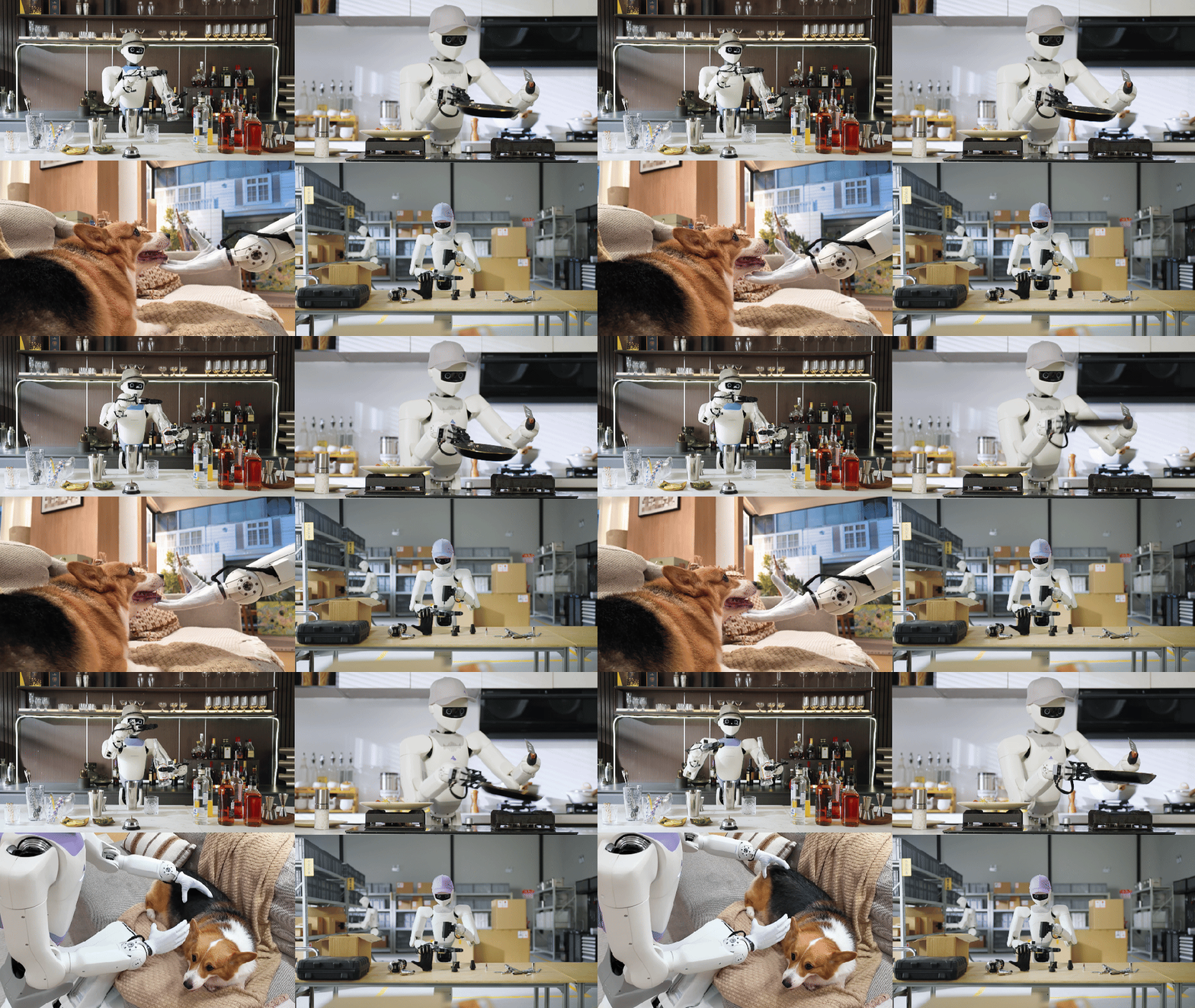
In demonstration videos, the T1 showcased continuous fine manipulation capabilities across multiple scenarios including steak frying, laundry folding and organization, cocktail mixing, chemistry experiments, auto parts sorting, and electric vehicle charging.
Astribot is the world's first and only company to achieve mass production of cable-driven AI robots. The T1 continues the cable-driven transmission approach, achieving highly human-like performance in precision, speed, and dexterity — core manipulation metrics — while delivering high-dexterity operational force, high human-like expressiveness, and high interactive safety that traditional rigid robots struggle to combine.
Moreover, cable-driven transmission features lower friction and continuous motion. Compared to traditional rigid structures, it reduces information loss from gear backlash friction and mechanical noise, transmitting higher-quality real-time force control data to AI more completely and intactly — demonstrating the advantage of Design for AI.
Astribot stated that the T1 is positioned as one robot for multiple uses, targeting five major scenarios: home, commercial, research, entertainment, and industrial applications, while also supporting task development and deployment across massive scenario varieties.
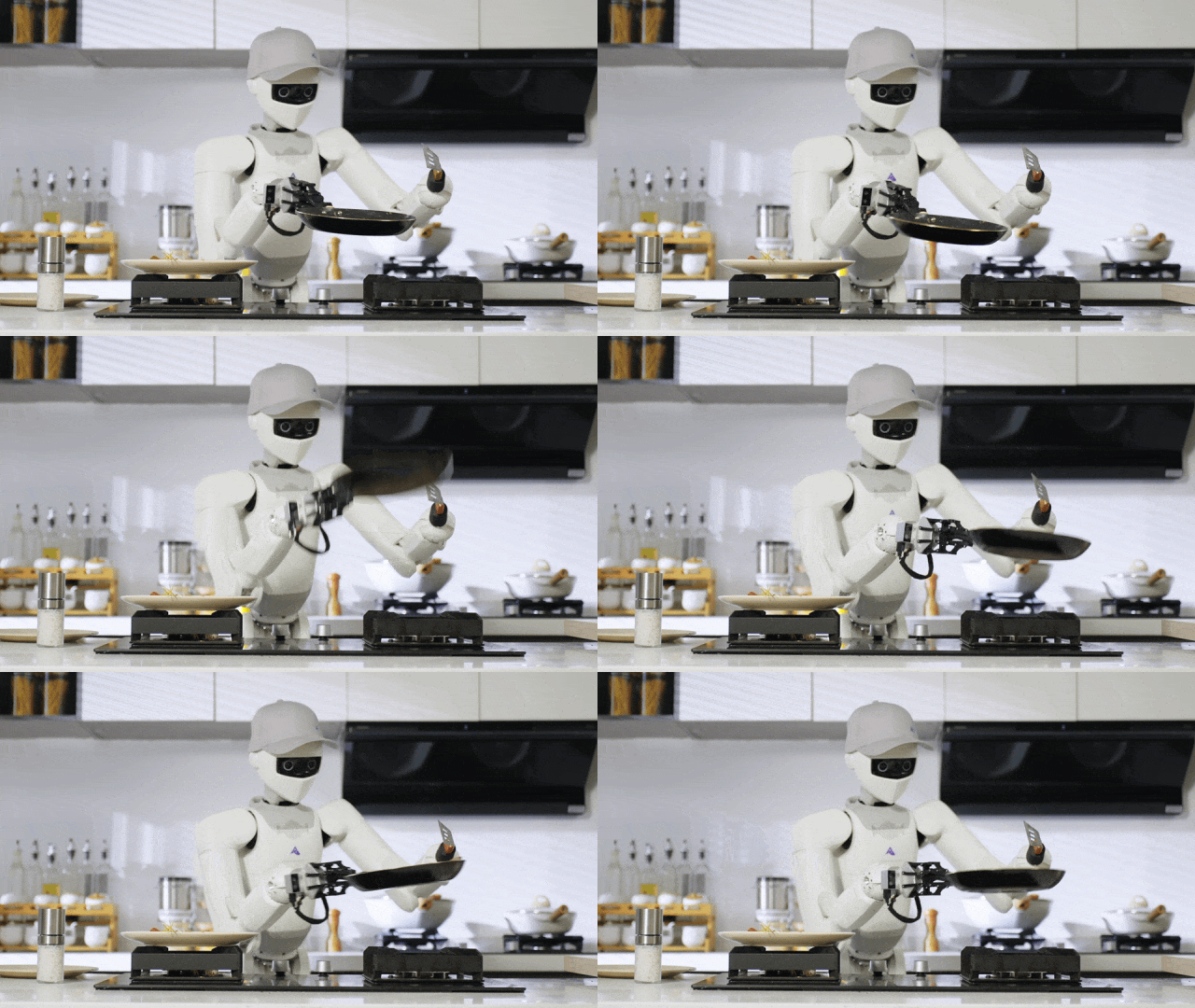
Since its founding, the company has adhered to the core philosophy of "Design for AI," building a fully self-developed full-stack system integrating "AI model — embodied OS — cable-driven hardware." Following the T1 hardware launch, its AI model and embodied OS will also see major announcements in the near future.
In recent years, humanoid robot attention has focused on locomotion — movement capabilities, dynamic balance, and complex terrain adaptation.
Yet in real-world scenarios, what determines a robot's value is manipulation — the ability to identify objects, understand tasks, and autonomously execute continuous fine movements in complex environments, while meeting safety and compliance requirements for human-robot coexistence.
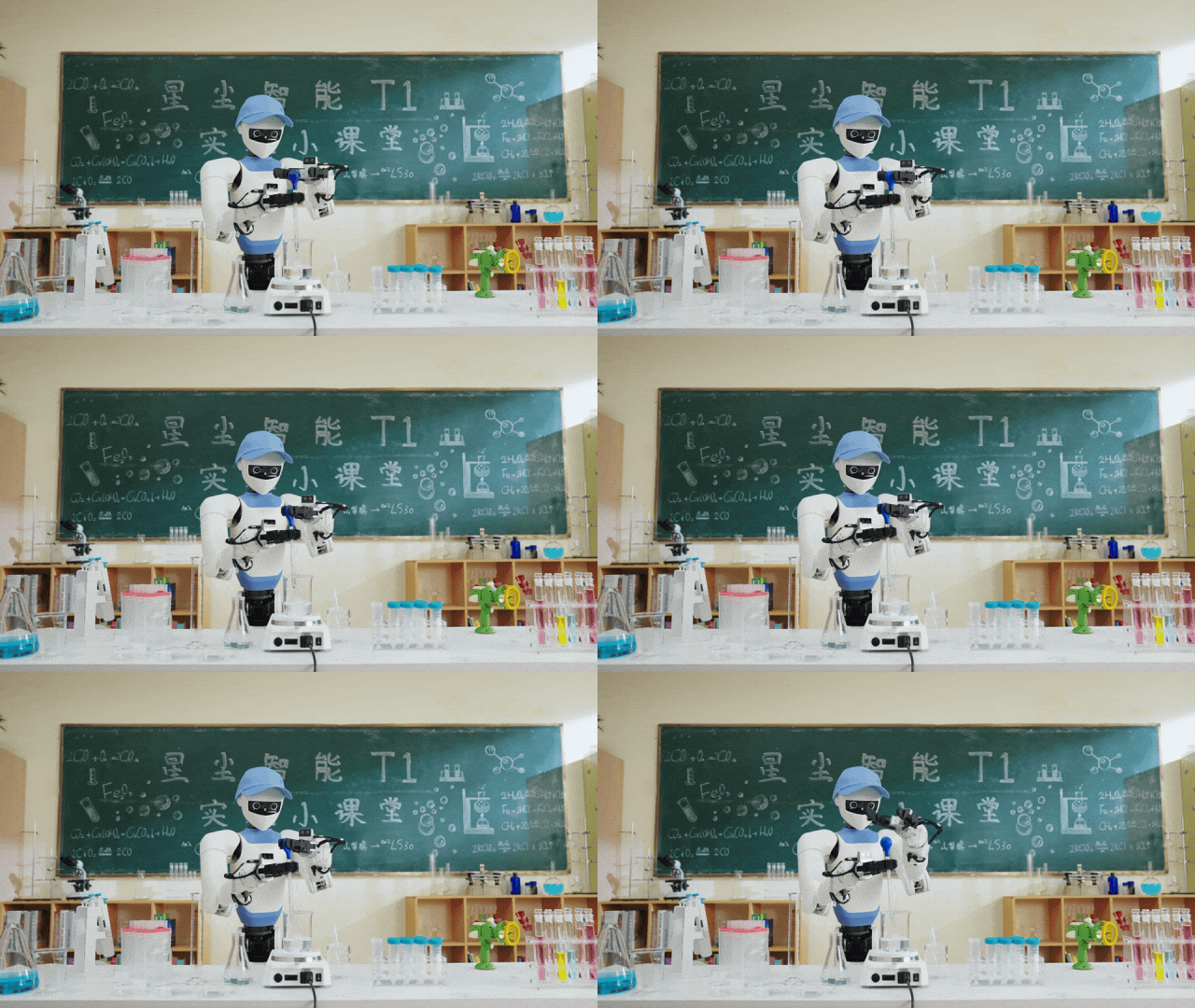
Real-world scenarios present multiple challenges: non-standard environments, frequently changing tasks, requirements for safe and compliant human-robot interaction, and the need to lower barriers for deployment and development — placing higher demands on AI robot systems.
In Morgan Stanley's December 2025 Robot Almanac (Volume 2), the firm judged that robot training is shifting focus from "brain" to "body," migrating from general intelligence toward physical manipulation intelligence (Physical AI). Manipulation plus unlimited scenarios is becoming the "hard currency" for robot commercialization.
At this critical juncture as Physical AI moves toward the real world, the emergence of Astribot's T1 — with its dual gravitational pull of "ultra-low price plus ultra-strong capabilities" — is expected to synergize with advances in AI models and embodied OS to accelerate penetration into massive real-world scenarios.