A Breakthrough Dual-Fuel Hydrogen Engine Could Spark a Revolution | Yunqi Science Talk --- *This article is republished from the WeChat public account: Yunqi Capital (ID: yunqicapital), author: Yunqi Capital, original title: "A Breakthrough Dual-Fuel Hydrogen Engine Could Spark a Revolution | Yunqi Science Talk", authorized reprint.* --- Hydrogen energy has always been regarded as one of the most promising clean energy sources for the future. However, the high cost of hydrogen fuel cells and the low efficiency of hydrogen internal combustion engines have long constrained its large-scale application. Recently, a research team from the University of New South Wales (UNSW) in Australia has developed a revolutionary **dual-fuel hydrogen engine** that achieves an astonishing **90% thermal efficiency** while completely eliminating carbon emissions. This technological breakthrough may completely change the landscape of hydrogen energy applications. ## How It Works: The "Diesel-Hydrogen Hybrid" Approach The core innovation of this engine lies in its unique dual-fuel combustion system. Unlike traditional hydrogen internal combustion engines that rely solely on hydrogen ignition — which suffer from low efficiency and tendency toward abnormal combustion — this engine adopts a **"

Diesel Engines Can Drive the Carbon-Neutral Revolution Too

In recent years, as global warming intensifies and traditional fossil fuels remain vulnerable to geopolitical turmoil, the development and adoption of clean energy has accelerated dramatically — hydrogen in particular. Electric vehicles and hydrogen fuel cells rank among the most prominent technologies helping us advance this cause. Yet due to cost and slow uptake, these technologies haven't meaningfully reduced our overall emissions.
Fortunately, researchers at UNSW Sydney may have just created a near-perfect bridging technology that can readily convert diesel engines to run on hydrogen, slashing carbon emissions in the process. But how did they pull it off? And could this spark a carbon-neutral revolution?
In this edition of Yunqi Science Snack, we're sharing the latest research from the hydrogen energy sector. Enjoy~
"What's the Cleanest Way to Decarbonize Transport?"
By: Will Rocket |
Translated by: Tang Shi |
Researchers at UNSW Sydney have retrofitted a diesel engine to run with up to 90% hydrogen in a hydrogen-diesel dual-fuel direct injection (H2DDI) light-duty single-cylinder compression ignition engine, cutting emissions by 85% to just 90 grams per kilowatt-hour while boosting engine efficiency by 26%!
The petroleum-derived portion of the fuel can easily be swapped for biofuel, requiring only minor modifications to enable fully carbon-neutral operation. Moreover, the engine doesn't require high-purity hydrogen — it can run on cheaper, more readily produced low-purity hydrogen.
But how does this engine actually work? And why is it better than pure biodiesel or pure hydrogen internal combustion engines? Three reasons: NOx emissions, efficiency, and supply chain reliability.

Why a Hydrogen Dual-Fuel Engine?

First, nitrogen oxides. Diesel engines operate completely differently from gasoline engines. Rather than spark-triggered combustion, they use compression. When the piston pulls down, it draws in air and atomized diesel, which mix together in the cylinder. As the piston rises, it compresses this gas, heating it up. The pressure of this compression can heat the mixture enough to combust, pushing the piston back down.
Hydrogen can be used in the same compression-ignition engines, but it has two significant drawbacks. First, it's not very efficient, meaning it produces far less power. This is because hydrogen burns much faster than diesel fuel, so it burns out before the piston reaches the bottom of the cylinder. This reduces the force exerted on the cylinder, cutting engine power.
Second, a homogeneous mixture of air and hydrogen produces more nitrogen oxide emissions than diesel. The high pressure and temperature inside a diesel engine cause nitrogen to react with oxygen, producing nitrogen oxides (also known as NOx). These emissions are then absorbed by clouds and produce acid rain, causing massive environmental damage. But because hydrogen burns faster, it ends up burning at higher pressure than ordinary diesel (and therefore much higher temperature). This leads to even higher NOx levels in hydrogen-powered diesel engines.
So why not pure biodiesel? Biofuels have a major problem. They take away from our food supply and cause habitat loss. Long story short, if we're going to use biofuels, we need to be extremely careful to avoid triggering ecological and humanitarian crises.

How the Hydrogen Dual-Fuel Engine Works
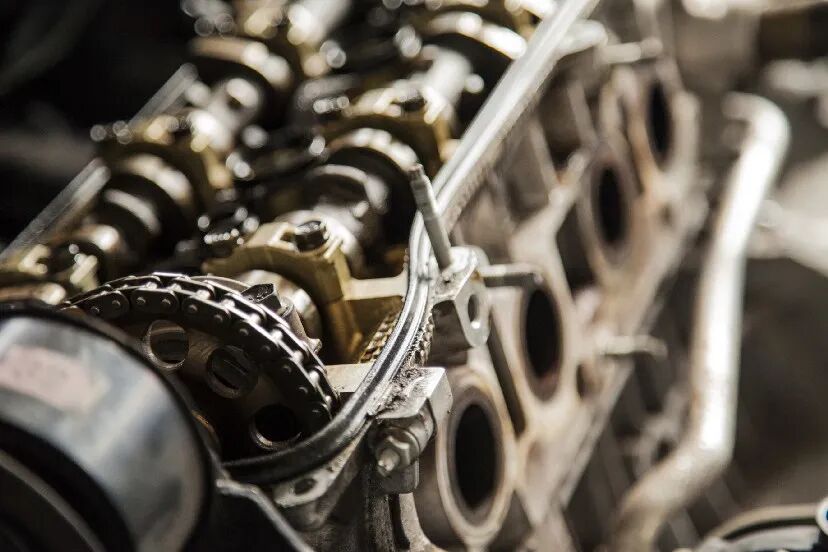
What's praiseworthy about this dual-fuel engine is that the research team retained the original diesel injection system and added hydrogen fuel injection directly into the cylinder, allowing the engine to run at a constant 2,000 revolutions per minute.
More importantly, the team's efforts also found a way around the high nitrogen oxide (NOx) emissions associated with hydrogen engines. Rather than putting all the hydrogen into the engine and letting it mix thoroughly, as many might expect, they added it in layers — which significantly reduced NOx emissions.
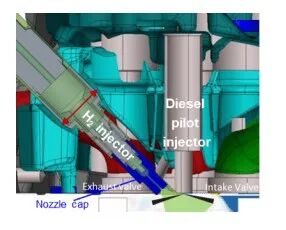
This approach slows hydrogen's flame speed, meaning hydrogen can exert greater force on the piston while burning at much lower pressure. Additionally, by timing hydrogen injection for the ideal moment — later in the cylinder cycle — hydrogen is present in some parts of the engine and scarce in others.
Overall, the dual-fuel engine reduces nitrogen oxide emissions that cause acid rain and air pollution.
In theory, an engine could be built to use hydrogen as its sole fuel in this manner. But the researchers wanted to retrofit diesel engines for faster adoption, and these engines are built differently. So they still need to use 10% diesel to maintain proper ignition. Still, the overall results are excellent: the engine can run in a carbon-neutral way without causing ecological catastrophe, and it's far cleaner than a standard diesel engine.
That's how this incredible engine works.

Advantages of the Hydrogen Dual-Fuel Engine
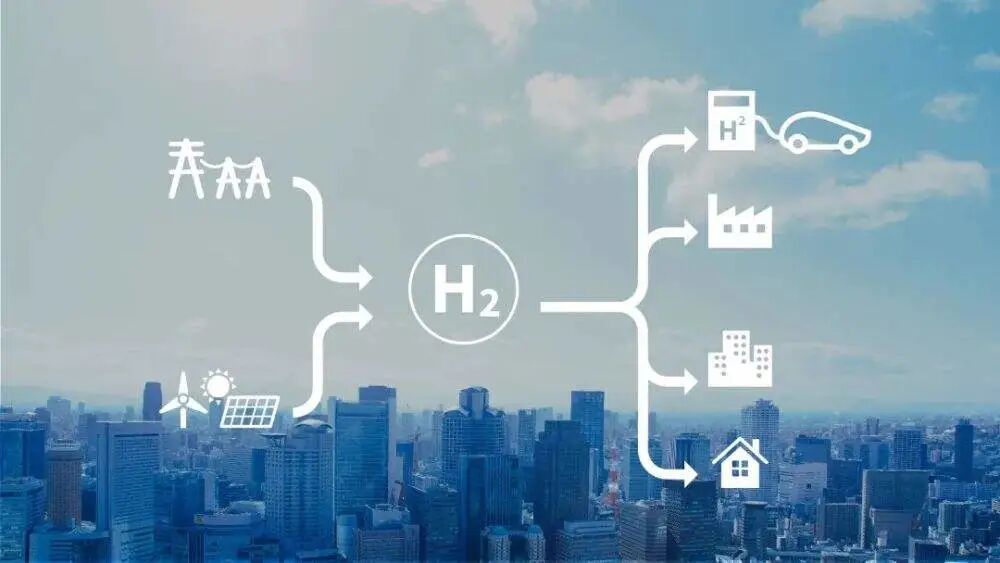
This system can be easily retrofitted onto any diesel engine. So everything from tractors to mining rigs, trucks, and even trains can switch over quickly at very low cost. This technology may be the fastest route to making these critical vehicles carbon-neutral.
Moreover, hydrogen infrastructure should be straightforward to build, requiring minimal cost to produce large volumes of low-purity hydrogen. But this hydrogen infrastructure may also prove surprisingly efficient. One major issue with hydrogen fuel cell technology — which uses hydrogen to generate electricity with water as the only byproduct — is its overall efficiency.
Powering electrolyzers and then refining hydrogen to sufficiently high purity is extremely energy-intensive and inefficient. But the hydrogen dual-fuel engine sidesteps these problems because it can do more with less. It only needs low-purity hydrogen to run normally, using less energy to produce the same power. Combined with the energy efficiency gains from this dual-fuel engine, the overall efficiency should be quite solid.
Given all this, it's no wonder these researchers hope to commercialize this engine within the next 12-24 months. In about a year, people around the world may be converting their commercial and agricultural diesel machinery to carbon-neutral, ultra-efficient, clean-burning dual-fuel hydrogen-diesel engines.

Closing Thoughts
The logistics of actually carrying out these conversions will be challenging. After all, not all diesel engines are built the same, so they may have to focus on one engine model at a time.
But at least in theory, this is an excellent way to rapidly convert diesel-powered vehicles to carbon-neutral operation. This bridging technology may be exactly what we need to fight climate change while we gradually adopt electric vehicle technology.

Further Reading
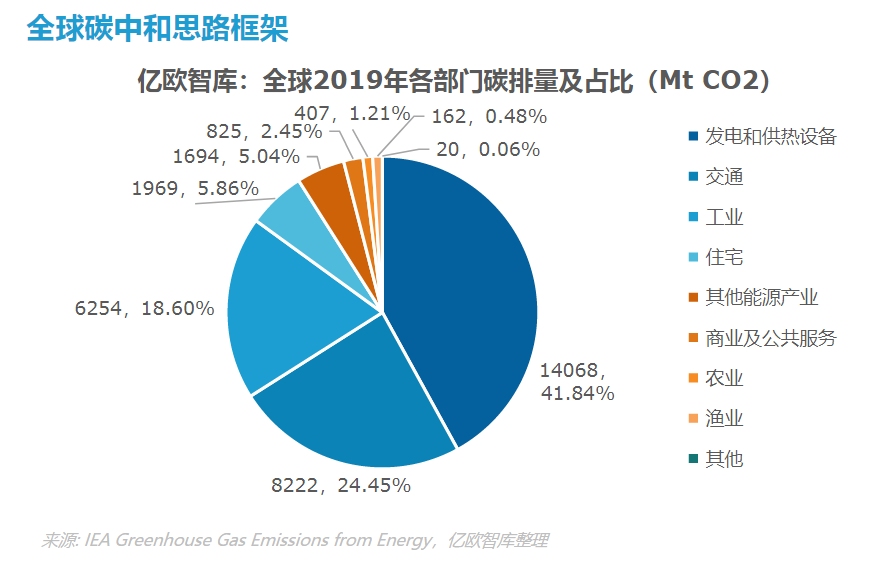
Affected by COVID-19-related restrictions, global fossil fuel CO2 emissions fell 5.6% in 2020, yet concentrations of CO2, methane, and nitrous oxide in the atmosphere continued to increase during 2020-2021. Aviation accounts for 2% to 3% of global CO2 emissions and 3.6% of European emissions.
According to World Meteorological Organization calculations, the global average temperature in 2021 (January to September) was about 1.08±0.13°C above the 1850-1900 average. Driven by rising greenhouse gas concentrations, global sea levels accelerated to 4.4 millimeters per year over the past eight years, reaching a new high in 2021. Glacier and ice sheet losses were equally concerning, with Arctic sea ice extent hitting its lowest point on record in early July 2021.
These startling figures all point to one conclusion: carbon reduction is urgent.
The information provided in this article is for general guidance and informational purposes only, and under no circumstances should the content be construed as investment, business, legal, or tax advice.