After Robots Go Global: How to Localize Worldwide? | The B-Side of Entrepreneurship · Keenon Robotics

Keen on robotics, always passionate.
"The Other Side of Entrepreneurship" spotlights tech ToB founders. In this column, we zoom in on Yunqi Capital's portfolio companies on the front lines of industry —
to see how they're engineering the extraordinary behind the scenes of our convenient lives and efficient production.
The World Robot Conference is in full swing in Beijing. On opening day, August 16, Keenon Robotics held its business presentation and new product launch under the theme "Always Keen" at its exhibition hall.
The company staged an eye-catching "robot fashion show" and unveiled two products: the T10, a "cross-generational" multi-functional delivery robot, and the C30, a new cleaning service robot. The T10 draws on years of product experience and innovative technology from Keenon. It features an open-format large-capacity tray, AI camera detection, significantly upgraded motion control performance, and an all-purpose chassis. It also introduces advanced sensor fusion unprecedented in its category, achieving true panoramic perception for the first time — once again redefining the heights of what a "delivery robot" can be.
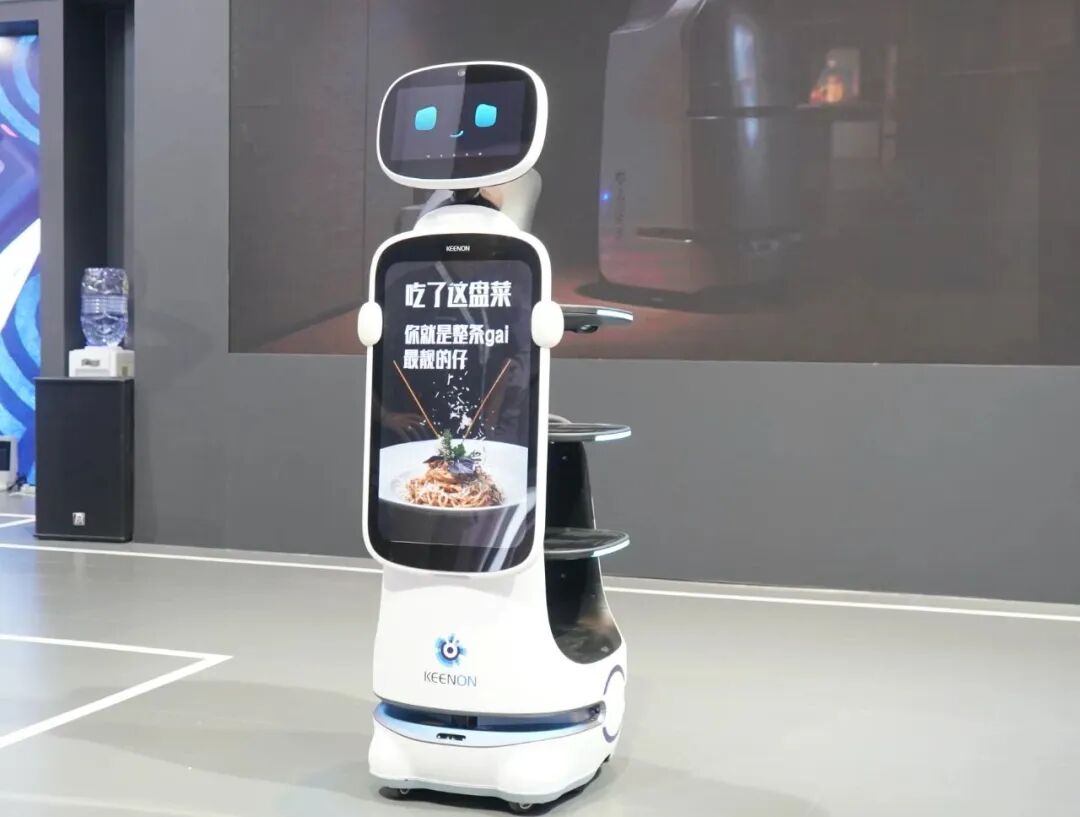
Li Tong, founder and CEO of Keenon Robotics, also reviewed the company's overseas expansion. Fueled by a passion keen on robotics, the team overcame management and cultural challenges to reach 60+ countries and regions, 600+ cities globally, and completed robot export certifications in 64 countries — achieving new leaps abroad.
For this issue of "The Other Side of Entrepreneurship," we invited Li Tong to share how Keenon pioneered and defined the food service robot category, and how it gradually expanded overseas to bring service robots into hospitals, restaurants, hotels, and everyday life.

To Go Global, You Must First Go Local
The Other Side of Entrepreneurship: Looking back from when Keenon decided to go overseas to now having operations across six continents, what's been the most important takeaway?
Li Tong: In the earliest days, around 2018, no one had ever seen a "food delivery" robot. People were naturally skeptical. That period was relatively tough. But the market has only grown since.
Looking back, I think the most important lesson is to return to product design itself and genuinely put yourself in the user's shoes. You can't stand on your own ground — you have to place yourself in the consumer's environment, think about what kind of product they need, what features matter, understand their daily routines, and let that determine your design.
So when we went overseas, we paid close attention to this. Different countries have different needs — culture, habits, environment all vary, and the final product characteristics end up quite different. For example, robots in Korea differ from domestic ones because Koreans love side dishes. The placement and arrangement of main and side dishes, plus performance requirements — many details turn out slightly different.
The same applies in North America and Europe. Previously, local labor costs far exceeded China's, so for them, robots serving as human assistants carry more value and meaning. This is also why Keenon robots could spread quickly.
The Other Side of Entrepreneurship: From the user's perspective, what are Keenon's core product advantages?
Li Tong: We created the largest service robot category — food delivery robots. We pioneered and defined this industry ourselves, and we keep redefining product standards. From the start, no one knew what a service robot should look like, so we've always been the industry leader. In 2022, Keenon Robotics' market share broke 60%, rising from 48.6% in 2021 to 60.4% in 2022. We've remained number one in food service robots, and our lead has only widened.
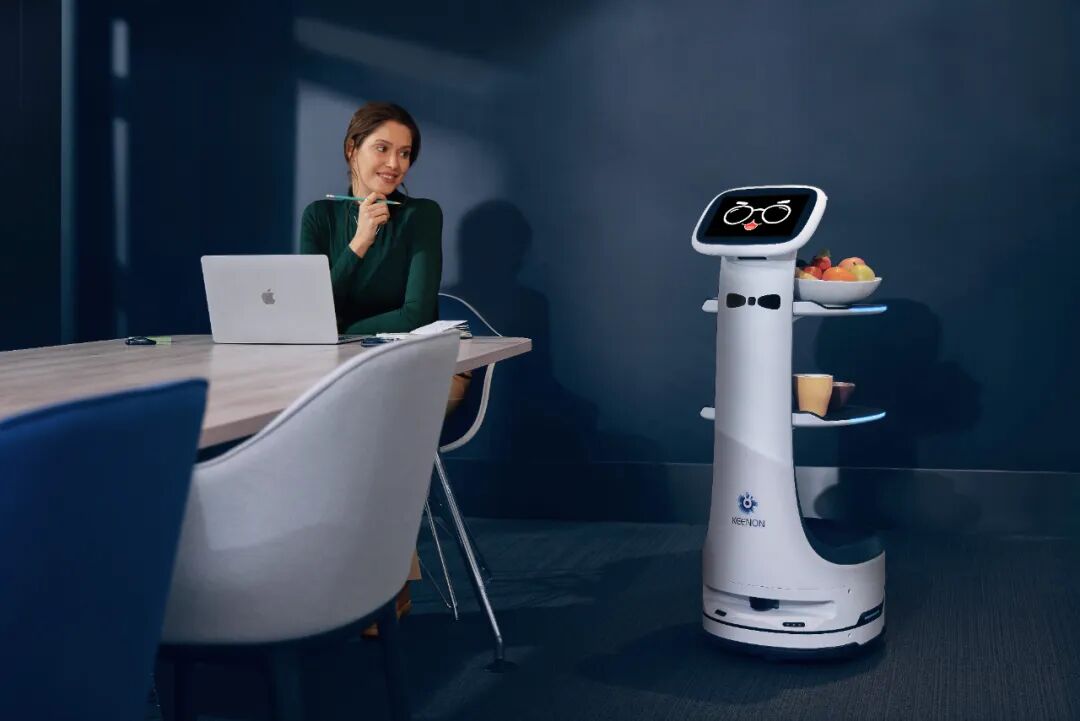
We've explored many dimensions — key performance, flexibility, reliability, human-centered design — while maintaining powerful functionality and strong adaptability to quickly take on different tasks across different scenarios.
During the pandemic, we actively shouldered social responsibility. We immediately formed a dedicated task force and dispatched over a hundred medical delivery robots and autonomous mobile disinfection machines to makeshift hospitals, quarantine sites, and medical facilities on the front lines. These robots worked 24/7 without interruption, providing efficient contactless service, effectively relieving pressure on medical staff, reducing infection risk, and helping restore social and economic activity.
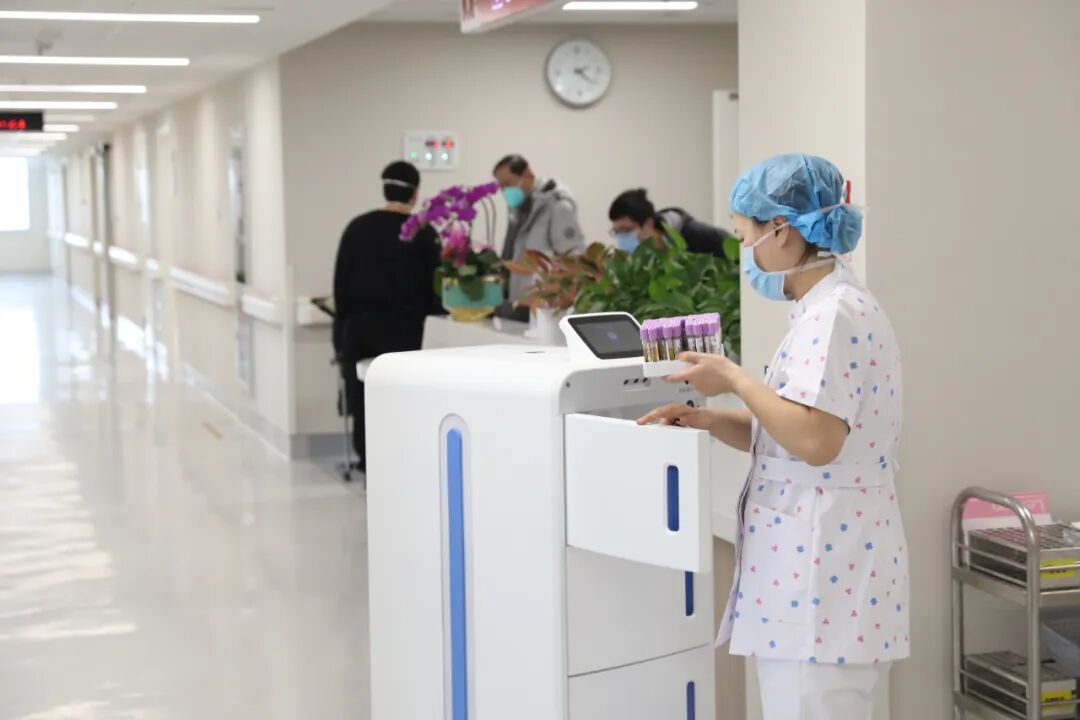
Thanks to the robots' strong adaptability and reliability, we discovered that hospitals are also an excellent application scenario. They not only reduce repetitive labor for medical staff and improve efficiency, but also deliver better patient experiences. So we established a dedicated medical division to accelerate the intelligent transformation of hospitals. Currently, Keenon Medical has built comprehensive intelligent logistics system solutions for entire hospitals. Medical delivery and disinfection robots are widely deployed in operating rooms, IV preparation centers, laboratories, hospital pharmacies, sterilization supply centers, and other key medical scenarios.

Robotics + AI, Expanding the Imagination
The Other Side of Entrepreneurship: In 2023, the AGI wave surged again, opening up even greater possibilities for robots. What new experiments is Keenon trying?
Li Tong: AGI and the broader concept of "artificial intelligence" are part of what makes a robot. First, AI breakthroughs significantly enhance robots' capabilities in multi-turn open-ended human-robot dialogue, multimodal interaction, machine vision, knowledge graphs, intent guidance, and content generation. As the functional ceiling rises, so do the scenarios — the commercial service robot market's potential has fundamentally changed.
Many of our products already incorporate these AI leaps. Take the W3 hotel delivery robot, designed for private, secure, contactless room service. With AI's second wave — large models and generative AI — we've moved from basic complex-scenario delivery to higher-order interactive experiences: more natural, more "human-like." This AI-powered leap delivers superior service experiences.
Additionally, our G2 greeting and guidance robot, T8 "Flying Fish" food delivery robot, M2 autonomous mobile disinfection machine for medical scenarios, M103 medical delivery robot, and S100 industrial robot all leverage AI capabilities for more agile obstacle avoidance and more natural interaction, substantially improving user experience.
The Other Side of Entrepreneurship: Compared to the past when the AI ecosystem wasn't as mature, has your approach to building robots changed?
Li Tong: Here's an example: my graduate research group was the AI group. A few years after I graduated, the group changed its name. At that time, people might joke that AI was synonymous with fraud — nobody really believed in it. Later, as machine learning in AI found real-world applications, people discovered that AI algorithms were increasingly reliable and capable of solving problems. The world began rapidly scaling with "AI+" everything. Robots back then may not have been as impressive as today, with relatively simpler functions. But the fundamental principles and architecture haven't changed — it's all about helping people with repetitive, tedious work. That design philosophy remains constant.

Using Robots to Change the World
The Other Side of Entrepreneurship: How did you first get the idea to start a company?
Li Tong: I loved robots in school. A robot is an incredibly complex system — one person can't build it alone. So we gathered people who loved robots, designed and built them together, applied for various innovation projects, and realized the robots we imagined. We formed a robotics team and kept working on projects — soccer-playing robots where robots played alongside humans, various robotic arms, home butler robots, and more.
The reason for wanting to start a company was simple: there were too few robotics companies at the time, and we wanted to realize a small dream. To change the world a little bit with robots, to make the world slightly different because we existed. That was our original intention, and we've kept at it. We genuinely didn't anticipate the AI explosion, including robots really entering daily life at scale. But after all these years of making it happen, we're pretty happy about it.
Keenon's culture reflects this too: "A little progress every day." We want innovative passion, but also pragmatism and grounded execution. Our current results come from combining both.
The Other Side of Entrepreneurship: Is there a gap between the company you envisioned back then and Keenon today?
Li Tong: I never imagined what the company would look like today, but the original intention hasn't changed. Back in 2017, there were just four of us. We rented an unfinished apartment in a residential complex — cheap, convenient transportation, not even doors on the rooms. But nobody thought it was a problem. We were full of hope, passionate about what we were doing, and happy.
Before meeting Yunqi Capital, Keenon didn't even know what capital was. How we were discovered is quite interesting. One of Keenon's robots was operating in a Red Star Macalline furniture mall, and it caught the eye of Chen Yu from Yunqi Capital. Then I received a text from Chen Yu saying, "I'm from Yunqi Capital, let's chat when you have time." My first reaction was wondering if this was a scam. But Yunqi continued following us and eventually led our Series A, transforming us from an unknown project to one that understood how capital could drive and support growth. We're especially grateful to Yunqi — without Yunqi, there would be no Keenon today.
To date, Keenon Robotics operates in over 500 cities across China. Overseas, it has established six global business regions covering North America, Europe, Asia-Pacific, South America, the Middle East, and Africa, serving numerous countries and regions including the US, Germany, Singapore, Japan, and the UK.