How Do You Get Large Models to Actually "Get Their Hands Dirty"? | Riding the AGI+ Wave in the Greater Bay Area

Searching for new forms, new extensions, and new frontiers of applications.
(To be updated)

Large language models open up far more room for imagination and productivity gains. We believe rapidly integrating LLMs to cut costs and boost efficiency is only the first step — the higher ceiling lies in how AI sharpens product quality.
Last Friday, our Wave AGI+ Salon Series joined forces with Qingteng Hui and Tencent Technology in Shenzhen for in-depth conversations with 50+ frontline entrepreneurs, academics, and industry experts. Together we explored the new forms, extensions, and boundaries of applications in the AGI+ era. Drawing on the thriving robotics industry in the Greater Bay Area and our years of sector experience, we also discussed how multimodal large models are elevating — and challenging — the robotics space.
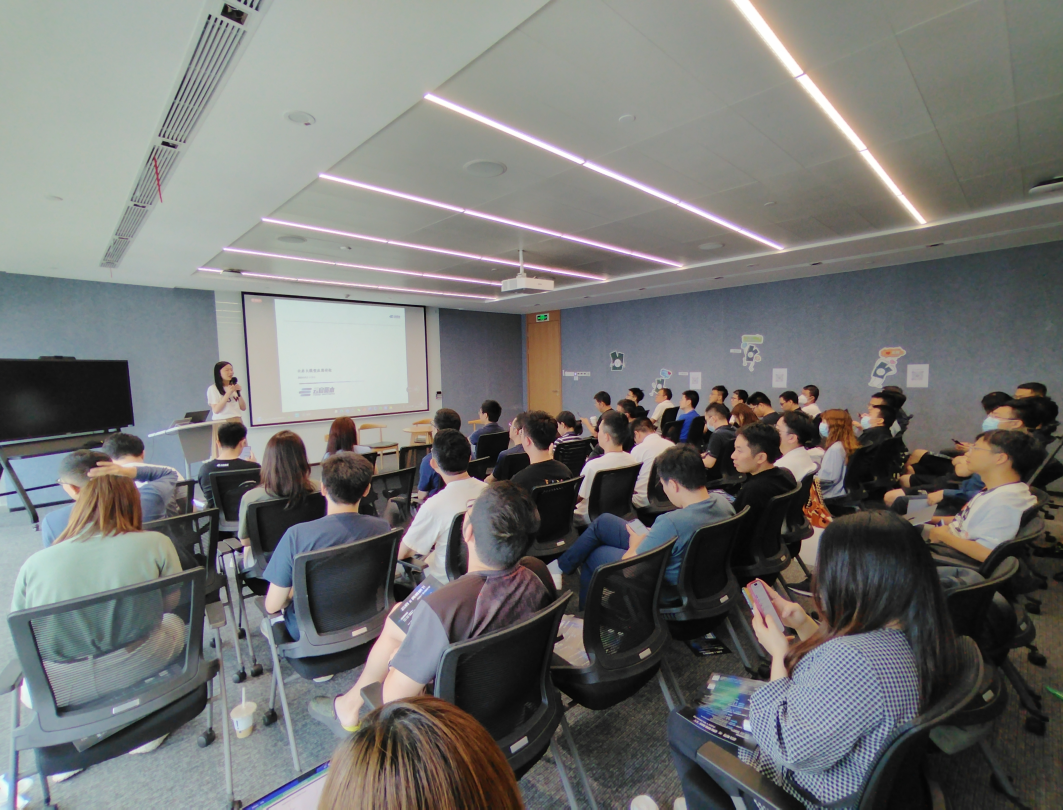

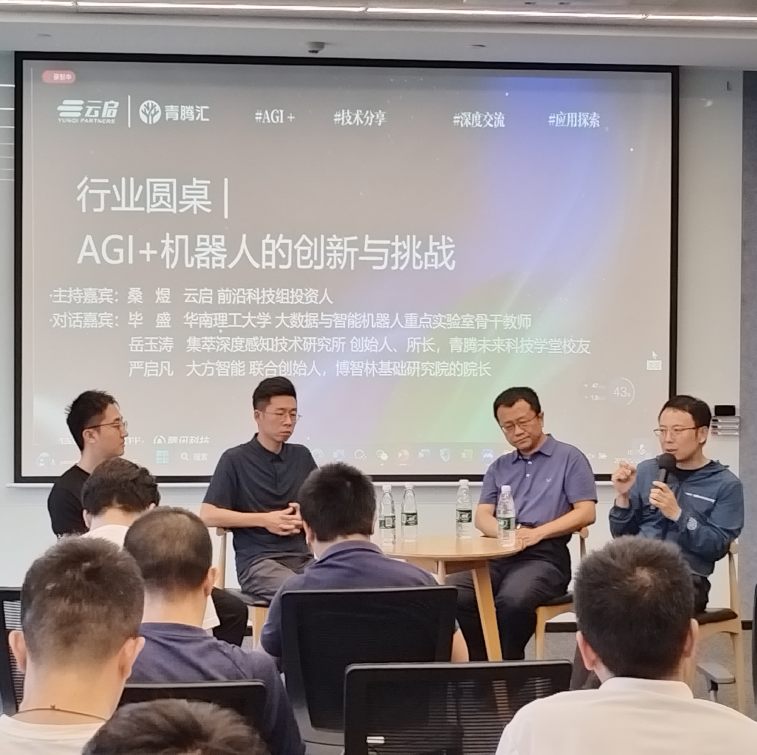
Below are highlights and dialogue transcripts from the event — enjoy!
Giving Large Models a "Memory Bank"
After ChatGPT quickly became a mass-market phenomenon, our angel-round portfolio company Zilliz was invited to provide vector databases for OpenAI. At this event, Zilliz co-founder Chen Li shared why vector databases have become standard equipment for large models. As an intermediate layer between foundation models and the application layer, vector databases serve as Memory for AI — storing, indexing, and searching massive unstructured datasets embedded by machine learning models, translating data objects into a language AI can understand.
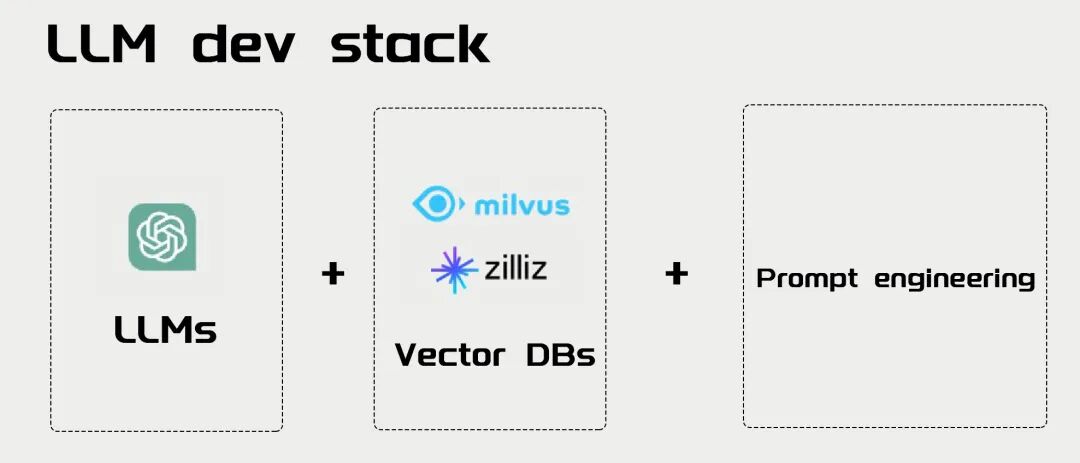
Unlike traditional computing architectures, neural network interactions in AI architectures happen through an Embedding process. The large language model functions as the central processor for Embedding, the database handles storage, and the Prompt serves as a delivery mechanism. Analogous to traditional architectures, intermediate computations are cached to improve efficiency — so when compute resources are strained, they can be called upon directly.

Chen Li
Co-founder, Zilliz
Building applications with large models creates massive demands for information storage. If all information goes into the model itself, not only does the model become unwieldy, but computational costs skyrocket — orders of magnitude higher than vector retrieval. That's why large models need vector databases to enable information linking and indexing, solving the memory storage problem.
Moreover, products like AutoAI and virtual agents have already begun commercial operations. To develop and maintain their personalities and behaviors, they too need "long-term memory" — vector databases for storage.
Zilliz doesn't just provide "memory" for large models; it also rapidly launched new applications for model users. Compared to traditional AI development workflows, Zilliz leveraged large language models, vector databases, and a single prompt engineer to quickly develop the AI application osschat.io. It ingests knowledge content from popular GitHub projects, enabling users to quickly retrieve information while preventing large models from hallucinating or going off-script — addressing specific scenario-based problems.
Chen Li also noted that large model capabilities will greatly benefit developers, and that "AI democratization" will create excellent opportunities for developers and entrepreneurs. Looking at current GitHub data, application developers still dominate on the developer side, while AI developers remain relatively scarce. But in the foreseeable next 3-5 years, traditional application developers will likely join the AI developer camp by integrating large models.

The Test of Defining "Good"
Following Yunqi Capital's AGI+ US Tour, we brought first-hand thinking and inspiration from Silicon Valley to the event. With the application-layer ecosystem of large models blooming in a thousand flowers, how to define a "good product" becomes the more important question. Midjourney attracted tens of millions of users in a short time because it draws "well." Since aesthetic quality carries subjective weight, this tests a company's ability to "define good" more than anything.
In the roundtable "The Future Boundaries of Creation and Technology," four guests answered audience questions about technology.
Gan Ruyi
IDEA Digital Economy Research Institute
Lead, Fengshenbang Open-Source Large Model Team

That generative AI using natural language has demonstrated such good results is truly exciting. On the data front, we need to prioritize quality over quantity — further improving data quality rather than blindly expanding dataset size.

Wendy Yao
Former GoogleX AI Scientist
Founding Engineer, GoogleX Tidal
In a rapidly evolving technological environment, we still don't know what the future holds. AI may not generate entirely new insights, but it should be able to level all information gaps with existing digitized and informatized data.
Chen Yu
Partner, Yunqi Capital

Many products can be redefined and rebuilt on top of large models — as long as the model is good enough, many imagined products can be realized. But entrepreneurship is a long game; genuine industry feedback for a product or company always comes with a lag. Moving too fast can compromise product quality.

Emily
Investment VP, Yunqi Capital
Going forward, open-source and proprietary models will coexist. Open-source models offer richer choices, stronger controllability, and easier fine-tuning; all-in-one closed models provide better stability and, in full-feedback-loop mode, facilitate model evolution while further improving accuracy and reliability.

AI + Robotics: Bringing Large Models into the Physical World
Robotics is seen as a critical medium for extending large models into the physical world. With the emergent capabilities of large models, robots can rapidly iterate on perception, decision-making, interaction, and mobility — solving problems previously considered intractable.
In the roundtable "Innovation and Challenges in AGI + Robotics," three guests joined Yunqi Capital investors to discuss what new opportunities and challenges the large model + robotics ecosystem is facing.

Bi Sheng
Associate Professor, South China University of Technology
Key Laboratory of Big Data and Intelligent Robots
Large models can give robots cognitive judgment capabilities to better serve humanity. Going forward, robots may need to balance edge and cloud deployment, potentially adopting an edge model + cloud computing approach in certain scenarios to fully leverage ultra-large model capabilities.
Yue Yutao
Director and Chairman, JSTI Institute of Deep Perception Technology
Alumni, Qingteng Future Tech Academy

With the advent of multimodal models, robots can now be trained based on natural language and symbols. When encountering unexpected scenarios or complex tracking and detection, robots may be able to handle these through neural networks. Large models face three key challenges going forward: first, closed-loop interaction capabilities with the physical world; second, arbitrary multi-step logical reasoning; third, autonomous training and learning capabilities.

Yan Qifan
Co-founder, Dafang Intelligence
Dean, Bozhilin Basic Research Institute
Traditional robotics still separates perception, decision-making, control, planning, and actuation, applying different weightings based on each direction's requirements for timeliness and accuracy. When deploying large model compute in the future, we'll need to carefully evaluate cost investment.
Sang Yu
Investor, Frontier Tech Team, Yunqi Capital

Large models have leveled the playing field between skills and cognition, but they remain confined to the virtual world. Robotics provides AI with greater space to enter the real world and engage in physical interaction. Given sufficient high-quality industry data, large models enable robots to potentially perform adaptive and personalized processing. In practical deployment, companies must also optimize cost-effectiveness, finding the balance between power consumption and capability.
Our AGI+ series salons will continue — we welcome more AGI+ practitioners to stay tuned and join us on-site for deep conversations as we step into the AGI+ new era. Great insights and promising projects are always welcome — add our Chief Information Officer Yun Xiaoqi and chat anytime!