Eight Hard Thoughts on the Vitality of AI Hardware | Yunqi Capital × Zhixing Attent!on Shenzhen Recap

From *One Punch Man* to *Ready Player One*
How do you pick smart hardware products with real growth potential? Will consumers actually buy traditional hardware with AI bolted on? Is there a consensus on model deployment for smart hardware yet?
Last Friday, carrying these and other questions about AI hardware, "Attent!on" — Yunqi Capital's AGI+ salon series — landed in Shenzhen. Together with innovation and entrepreneurship enabler Zhixing Research Institute, we joined nearly a hundred deep practitioners: smart hardware founders, frontline Big Tech product and engineering leads, algorithm scientists, and tech investors for an in-depth discussion. From their varied vantage points, they tackled the industry's shared concerns, each contributing a piece to the collective puzzle.
The three-plus-hour event yielded plenty of sharp insights and valuable reflections. We've excerpted some highlights into 8 Hard Thoughts on the Vitality of AI Hardware for your consideration.
(PS: There's an exciting event preview at the end — don't miss it!
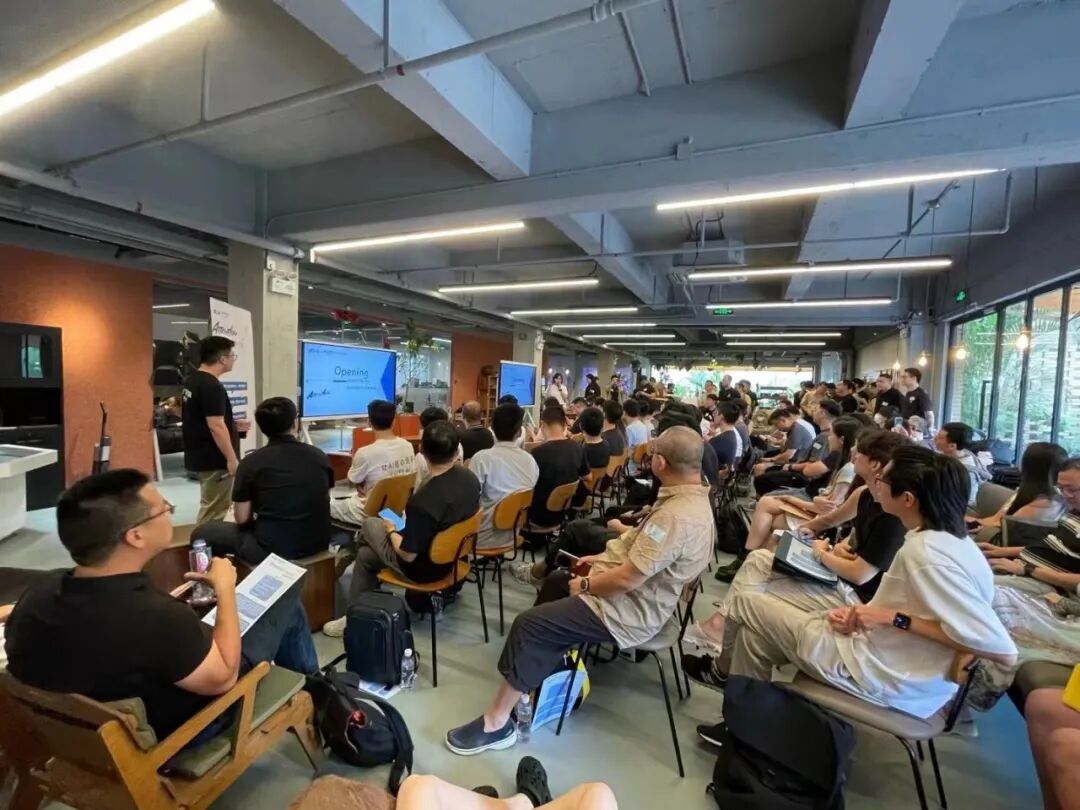
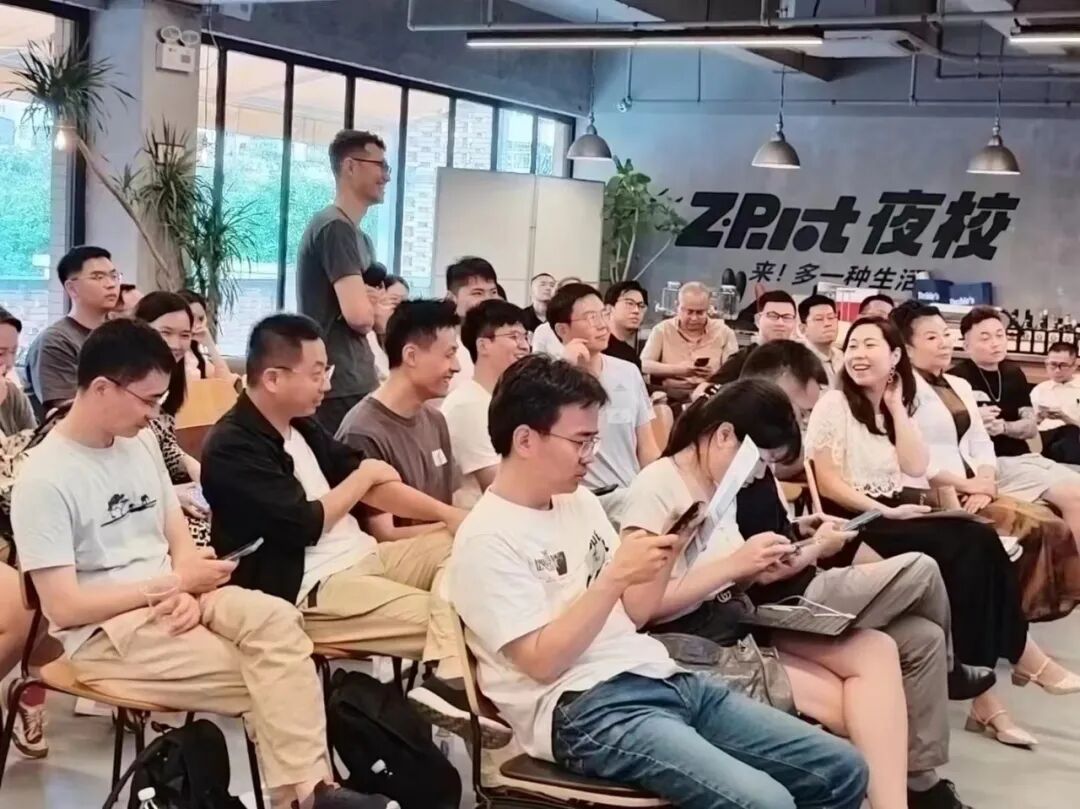
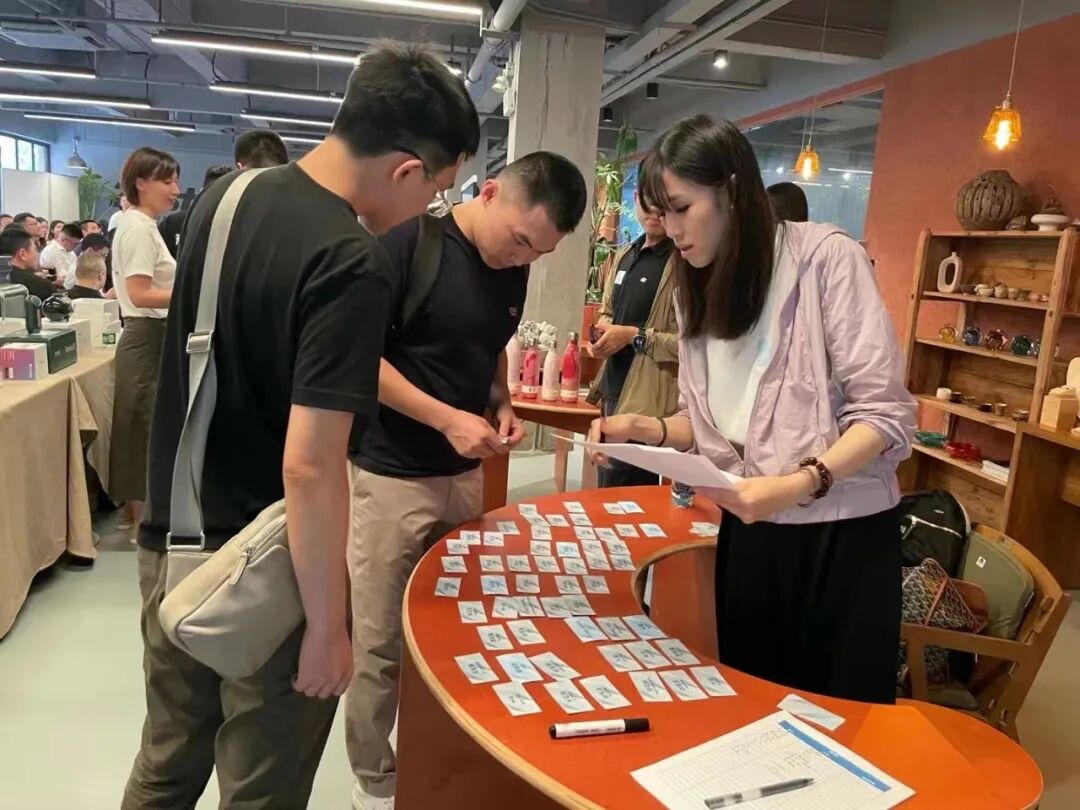
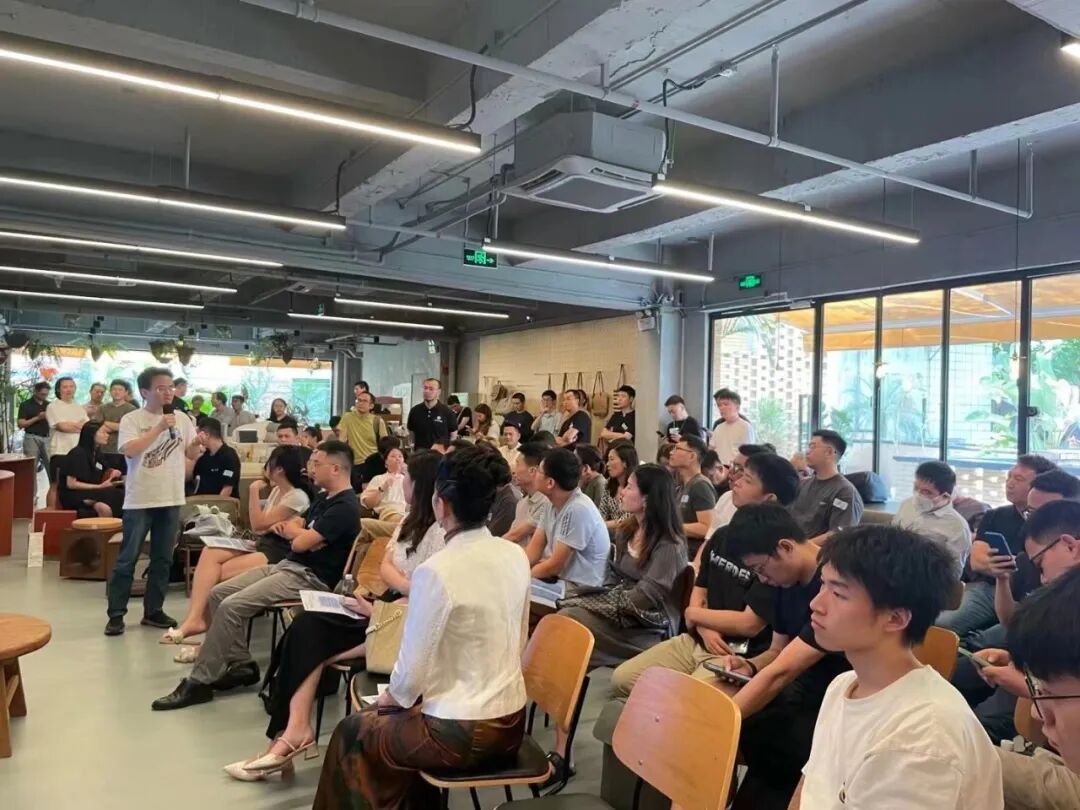
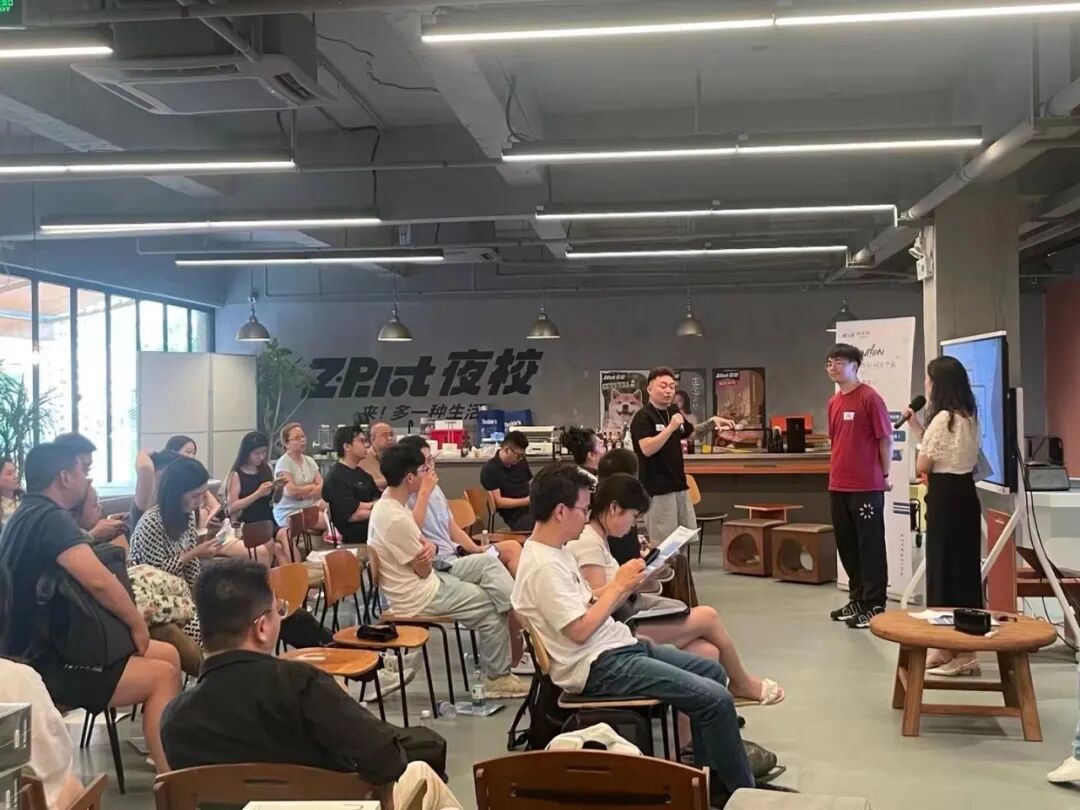
Swipe to see more from the event
Before diving into AI hardware, Yunqi Capital shared frontline dynamics from overseas AI markets, with Silicon Valley as the focal point. We found that competition among foundation models in the US remains fierce, but progress on the application layer has fallen short of expectations. 2B scenarios, in particular, have underperformed due to hallucination and controllability issues requiring deep workflow integration, combined with budget tightening across the economic cycle.
2C and prosumer tools have fared relatively better. Especially for Chinese companies going global with engineering cost advantages, leveraging AI for functional gains in gaming, emotional companionship, and other non-serious scenarios has yielded some AI-native software applications that found PMF. But overall retention lags behind the previous wave of internet products — few cases exceed 30%.
Yunqi Capital also shared its thinking on AI capabilities and how to unlock them. For hardware entrepreneurs, three core questions stand out: technology leverage, foundation model capabilities, and the balance between cost, performance, and willingness to pay. And because the boundary between AI technology and product is far blurrier than in the mobile internet era — with foundation model boundaries, product boundaries, and engineering improvement methods all shifting rapidly — AI-native product managers face a harder and more important job than before.
Following the warm-up, we engaged attending guests in deep exchanges on AI hardware products, models, chips, and more. Below are excerpts.
Selected Participants
Smart hardware practitioners from Tencent, Huawei, SenseTime, iFlytek, Yuan Sheng Intelligence, MiniMax, Zilliz, Kickstarter, Global OneClick, Qinglantu, Hive Box Technology, Timekettle, Hong Kong X Foundation, Zhixing Research Institute, Shenzhen InnoX Academy, and others
Yunqi Capital team members including Mengyu Jiang, Chenrui Wei, and Enduo Zhao
"On Product"
What Changes and What Doesn't in Smart Hardware Markets
Yunqi Capital
What doesn't change: the laws of growth. From a market structure perspective, smart hardware has a "quagmire" — massive market size, but tiny market share for even the leading startups. Achieving both high market share and high revenue is the ideal state for smart hardware products. Three elements get you there: a clearly defined segment with room to grow; a core user base with strong viral properties, meaning low customer acquisition costs; and building brand, supply chain, and channel moats before technology diffuses outward.
What changes: technological capability. For mature hardware markets like PCs, phones, tablets, and headphones, the generalization of AI capabilities means products with limited differentiation can potentially blow past competitors by leveraging AI. For niche markets, advancing AI capabilities create explosive opportunities for AI-native hardware, compounded by improvements in mechanical and optical technology and demographic shifts that could expand demand for new categories like exoskeletons, electric wheelchairs, companion robots, and eldercare hardware.
Lessons from Viral AI-Native Hardware Flops
China Strategy Representative, Creative Project Funding Platform
Some disappointing AI-native hardware has novel form factors, but the needs they aim to solve aren't necessarily pre-existing needs.
What kind of AI-native hardware has a shot? First, the form factor should ideally be new, but that doesn't mean the need is new. Novelty for novelty's sake doesn't guarantee longevity. Take PLAUD, which has performed relatively well — it's a ChatGPT-powered recording device that sticks to the back of your phone. It solves the pre-existing need of recording audio; only the product form is new.
Second, a sensible hardware form factor plus excellent software experience must combine for 1+1>2.
Founder, Product Marketing Consultancy; Cross-Border Operations Strategist
We've summarized a principle we call the "80/20 Rule": 80% of a hardware product's success comes from its inherent soundness and market fit, with the remaining 20% from efficient technology, marketing, and so on. The same applies to AI hardware: the category logic must be solid first — that's the 80% — then add 20% AI functionality. Not the reverse, where you focus only on AI and neglect the hardware's fundamental soundness and substantive logic.
Investor, Hong Kong Tech Startup Fund
How do you avoid becoming a "one-punch man" in hardware entrepreneurship? Three core points: first, deep cultivation of technological breakthroughs — many hardware form factor breakthroughs are driven by technological leaps; second, creating extreme user experiences; third, continuously tracking market dynamics, dynamically calibrating your technology and market choices based on market response.
"Rules" for Smart Hardware Product Selection
Head, Cross-Border Tech Services Company
Either focus deeply on a specific domain, accumulating industry expertise and effective moats. Take Shokz, the leading sports headphone brand — it started over 20 years ago with military-grade headphones and speaker R&D, building profound acoustic technology and product experience.
Or find new opportunities in mature domains. Consider Oladance, the headphone brand acquired by ByteDance: when traditional in-ear headphones dominated, it independently developed OWS (Open Wearable Stereo) technology and launched open-ear headphones.
CEO, Home-Based Elderly Care Consumer Electronics Brand
Based on personal and team "pitfall" experience, three principles:
First, for a decent probability of success, your target customer base shouldn't be too large. Oversized markets already have giants in them; sufficiently niche markets give you enough time and space to grow.
Second, the niche segment you're targeting either lacks good solutions or hasn't yet seen formidable competitors.
Third, as you extend categories and SKUs, will the boundaries of your user base keep expanding?
On this foundation, combine technology, policy, competitive differentiation, and technical moats to comprehensively judge whether your target category offers an advantage.
Multiple Paths for Hardware + AI
Technical Co-Founder, Head-Mounted Smart Hardware Company
I agree with the "80/20" principle. The clearer current thinking is adding AI to already-pervasive hardware. A few examples based on this approach:
One: traditional printers with AI capabilities, which not only enhance hardware functionality but also generate revenue through AI value-added services like content summarization and study material generation.
Two: smart glasses we developed in collaboration with rice research institutes and the Chinese Academy of Agricultural Sciences, supporting voice-controlled photography. Agricultural extension workers wearing the glasses can take photos hands-free, with images transmitted in real time to computers or phones for crop pest identification — no hands needed throughout.
Overall, two key points for good AI hardware: first, if using your hardware means not needing to pull out your phone, then it works; if the product requires pairing with a phone, users will just use the phone, rendering the hardware pointless. Second, the hardware must be used frequently by users — products with high daily usage barriers or costs won't survive.
CTO, Smart Headphone Startup Brand
AI is first and foremost a productivity tool for hardware companies, while also providing capabilities to optimize user experience.
But in our PMF process, one crucial mindset is calculating ROI for users. For a product or feature, if users spend $100, it needs to deliver at least $200 of value to be viable. Otherwise it's a鸡肋 feature.
The Imperfect "Innovation" of "Phone + AI"
Consumer at a Major Phone Manufacturer
Many phone makers now have AI features across image, voice, and text, but these fancy-looking functions haven't significantly boosted sales. They mostly help manufacturers retain existing users rather than driving disruptive change.
Because phone replacement cycles run about 3-4 years, and with hardware fundamentally unable to differentiate further, manufacturers can only rely on software feature updates to stimulate purchase intent. Apple's AI overhaul may be worth anticipating, since it's building across the entire system, including connectivity between different products.
"On Models and Chips"
Model Deployment: Cloud or Edge?
AI Hardware R&D Engineer, Major Tech Company
The core advantages of edge deployment are low latency and data security. If pursuing edge deployment, we need to answer: how strong are the real-time and privacy requirements for this product? If neither is particularly demanding in practice, cloud-first is the way to go.
The benefits of cloud are clear: first, scalability and system-level optimization; second, enabling all device makers to collect user information for iterative product improvement. Unless there's a highly customized scenario with extremely strong real-time and privacy needs.
But such scenarios face an awkward reality: chips are basically defined by applications, making it hard to define a chip before a killer app emerges.
Chip Expectations: Are Edge-Friendly Chips Coming Soon?
Sales Head, Major Domestic Chip Company
Most domestic smart hardware startup products are priced between 500-1,000 RMB. If replacing cloud with edge large models and edge chips, based on currently known market information, you'd likely need a card in the 2,000 RMB range. A 500 RMB smart hardware product paired with a 2,000 RMB compute card — that math doesn't work.
Chip design is an industry of extreme cost focus. As a slice of hardware, it has long lead times from project initiation. This also means the application side needs to scale first, using algorithms to define chip form factors.
Currently, edge applications like image recognition and voice recognition are becoming widespread, and in China the cost-performance ratio has been pushed to the extreme. But getting multimodal large models onto the edge still appears to need more time.
Model Evaluation: How Should AI Hardware Evaluate Models?
Large Model Engineer, Major Tech Company
First, define what direction your product needs to excel in — this directly connects to which capability dimensions of large models to prioritize. Is it stronger mathematical ability? Better knowledge completion? And so on.
Another point is integrating product-level evaluation. When a model is deployed in a product, there's always a specific application point — is it performing well there? Establish clear criteria.
Overall, for model selection: first, can the model solve the product's application scenario? Second, consider from the angle of model deployment and ecosystem integration; third, the cost perspective — how can costs be progressively reduced.
With heat waves and enthusiasm intertwined, we collectively mapped directions for finding the next AI ACE product. Technology keeps evolving, exploration and reflection never stop — the future demands more exchange and collision to discover more possibilities.
Attention Please
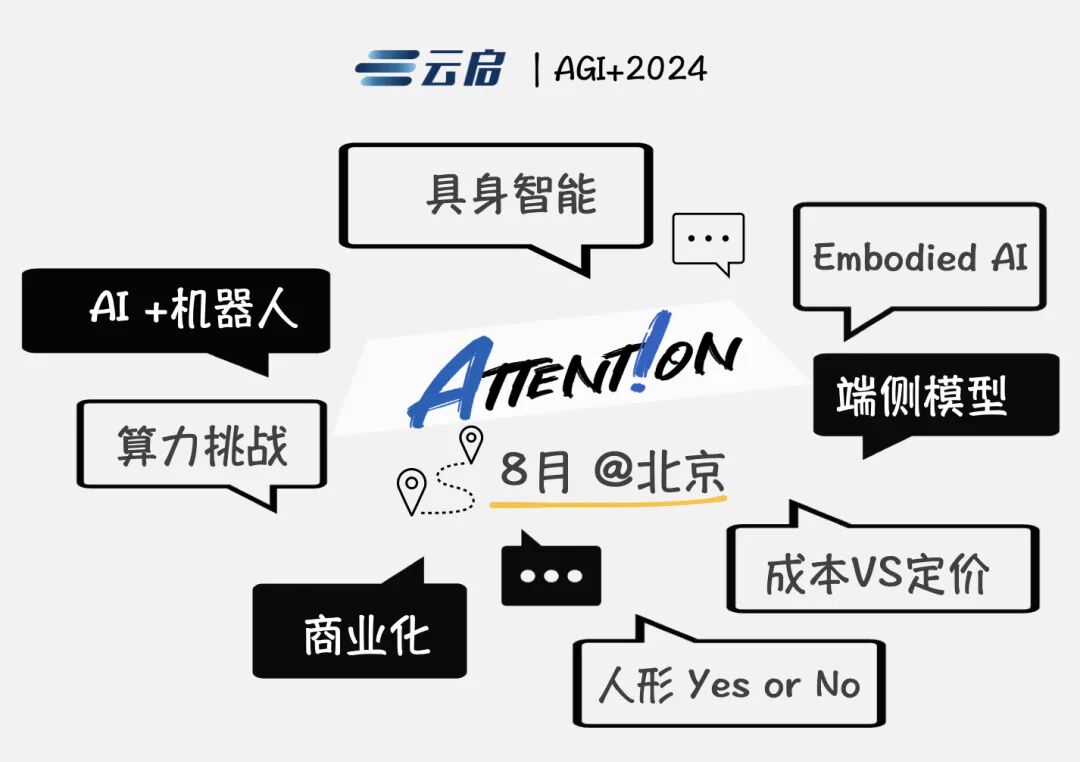
As the physical-world vehicle for AI落地, embodied intelligence is also a key direction in Yunqi Capital's exploration. Over the coming month, we'll meet you with two embodied intelligence-themed events.
1. Yunqi Demo Day · Embodied Intelligence Edition
Date: July 16
Format: Online
Tech investors, scan the QR code to register

2. "Attent!on" Yunqi AGI+ Offline Salon · Beijing Station · Embodied Intelligence Edition
Date: August
Location: Beijing
Details coming soon!