Yunqi Capital | Embarking on Embodied Intelligence: Angel-Round Portfolio Company Astribot Unveils Next-Generation AI Robot Astribot S1

AI Brain + Best-in-Class Operational Performance, Naturally Yours
As the bridge connecting the digital and physical worlds, robotics is seen as a critical application layer for large language models, and general-purpose robots represent one of humanity's ultimate aspirations. NVIDIA CEO Jensen Huang once predicted: "The next wave of AI will be embodied intelligence."
With Google RT series, Figure 01, Tesla Optimus, and others emerging in rapid succession, the robotics industry has entered a new era of embodied intelligence, with generalization as its core technical characteristic and commercial advantage. Yunqi Capital has been deeply rooted in AI and robotics for many years, leading the angel round in Astribot last year, and will continue to invest across the global embodied intelligence value chain.
Astribot started with upper-body manipulation — the area with the greatest commercial value and technical complexity — and built its entire hardware and software architecture around AI. On the software side, it developed a robotic manipulation foundation model and a multi-source, multi-modal data flywheel that continuously iterates its AI capabilities. On the hardware side, it designed proprietary solutions for robotic arms, dexterous hands, and tactile sensors, achieving human-equivalent motion performance while deeply integrating these components into the AI model's data flywheel. We expect the Astribot team to continue leading innovation in embodied intelligence through its advanced AI practice, agile hardware capabilities, and rich application scenario data.
In this edition of Yunqi Capital's portfolio spotlight, we bring you the latest product updates from Astribot. Enjoy.
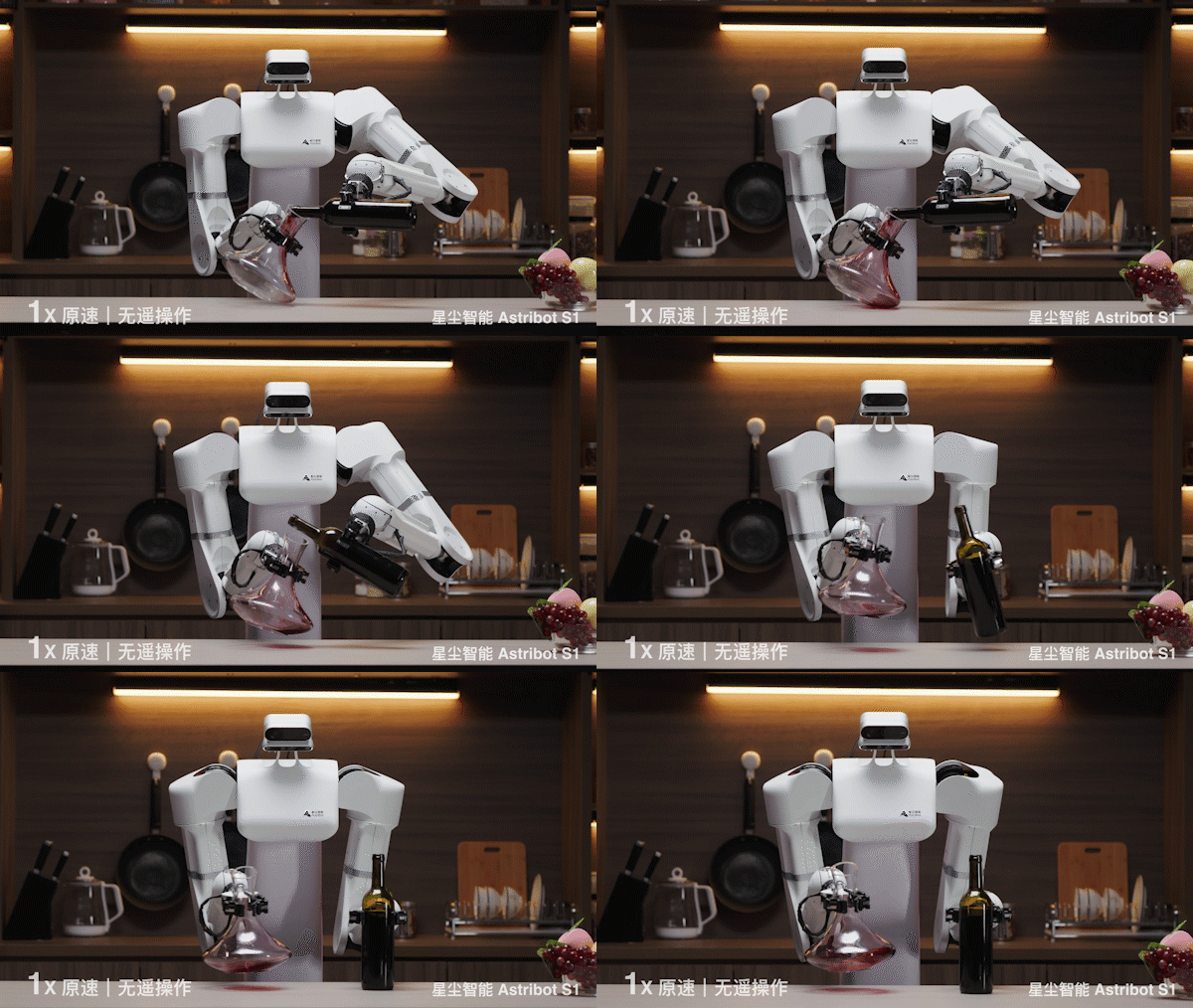
Recently, Astribot successfully developed its AI robot Astribot S1, which delivers "the strongest manipulation performance" among robots of comparable specifications. Through imitation learning, S1 executes multiple complex, human-useful tasks with the agility, flexibility, and smoothness of an adult, setting a new standard for AI robotics. S1 has already been integrated with foundation model testing and is expected to achieve commercialization within 2024.
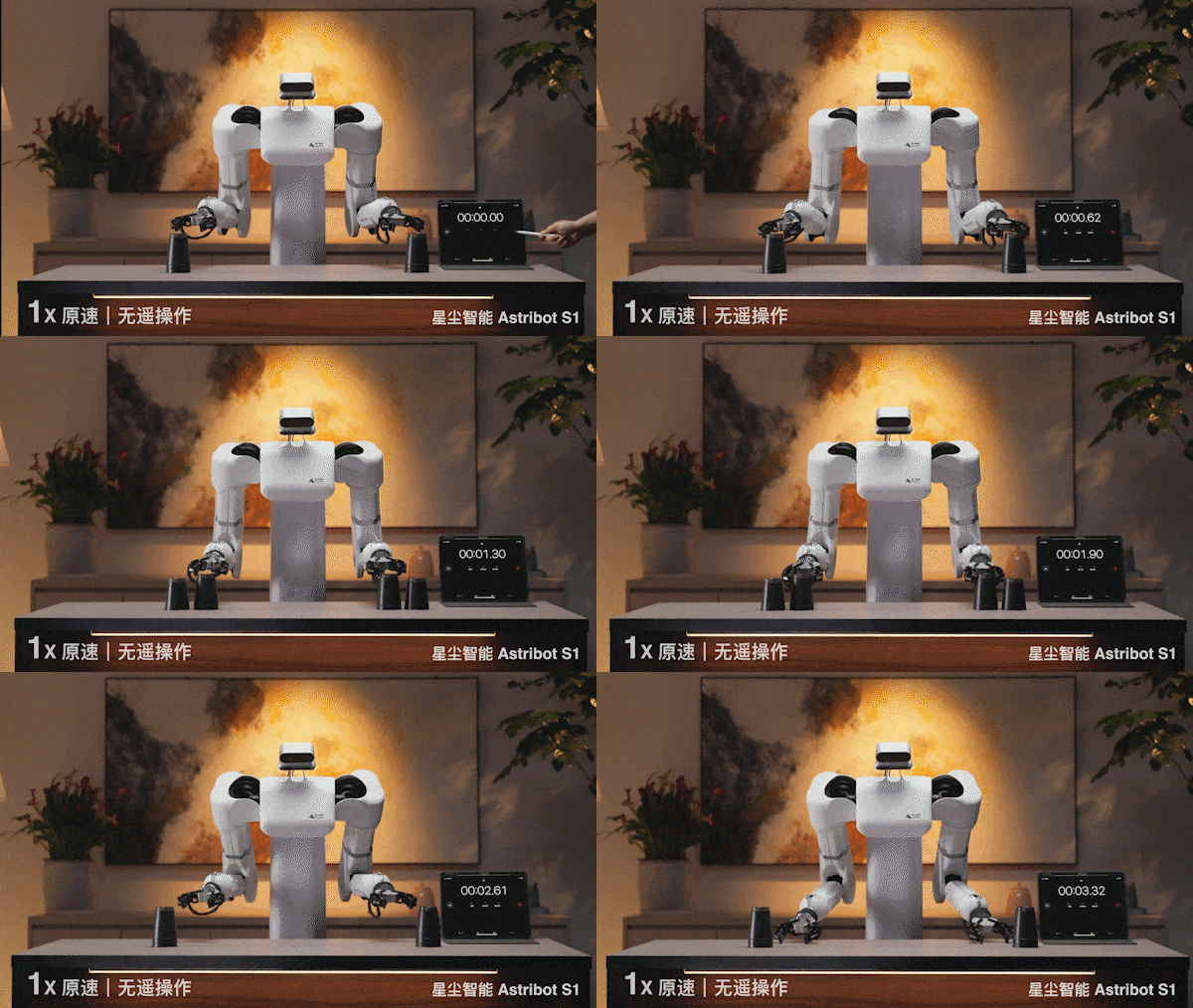
In unaccelerated 1x speed video, S1 demonstrates imitation learning with the agility, flexibility, and smoothness of an adult, completing a series of complex and useful tasks in home and work environments. Details below: In unaccelerated 1x speed video (the industry norm is 3–10x speed), S1 showcases exceptional performance across home and work scenarios, completing complex tasks including folding clothes, sorting items, wok-tossing stir-fry, vacuum cleaning, and sport stacking.
As AI accelerates toward the holy grail of AGI (artificial general intelligence), the convergence of foundation models and robotics is an inevitable trend. For decades, the single-purpose robotics market has approached saturation, while the vast potential of AI general-purpose robots remains largely untapped.
Astribot CEO Jie Lai stated: "Our goal is to give billions of people AI robot assistants. The new generation of AI robots is 'Naturally Yours' — able to learn, think, and work like humans, use human tools and equipment, help people with tedious, difficult, or dangerous tasks, and even adapt to environments and changes, so they can truly care for families young and old. Such a world will require millions, even billions of robots. We welcome everyone to demand more from S1, so its capabilities can grow from 55%, to 85%, to 99.99%, infinitely approaching human level."
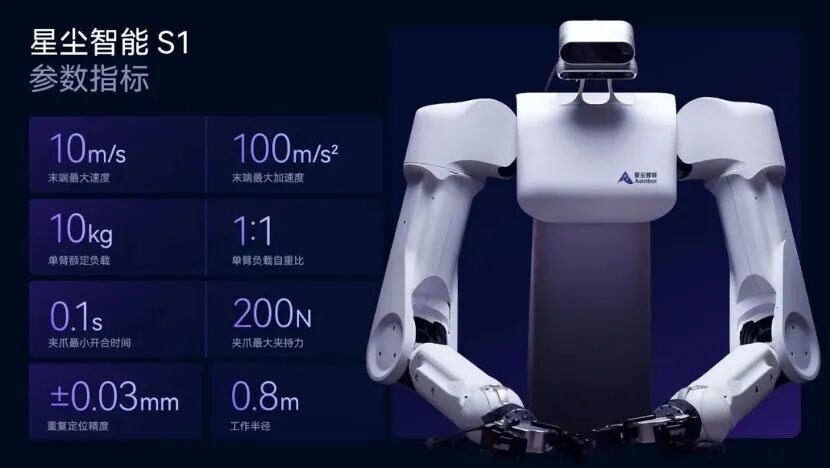
Astribot's R&D team achieved a critical breakthrough in "software-hardware synergy." S1 was developed over one year, featuring both an intelligent "brain" (software) and an agile, flexible "body" (hardware).
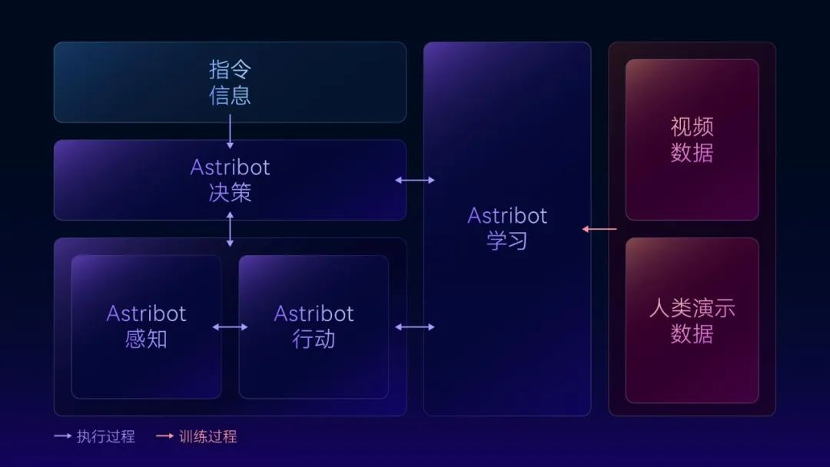
On the software side, it supports multiple data collection methods including video, motion capture, and teleoperation, and can complete learning and training through reinforcement learning, imitation learning, and multi-modal foundation models. The robot can continuously improve its intelligence and multi-task generalization through software upgrades.
On the hardware side, a self-developed high-performance motor transmission system, refined through multiple iterations, integrates control, sensing, transmission, and drive systems — providing S1 with agile, flexible, smooth dynamic manipulation capabilities approaching industrial robot speed and precision. Additionally, the head, hands, and torso use modular design, enabling flexible assembly or disassembly according to different requirements, enhancing task adaptability.
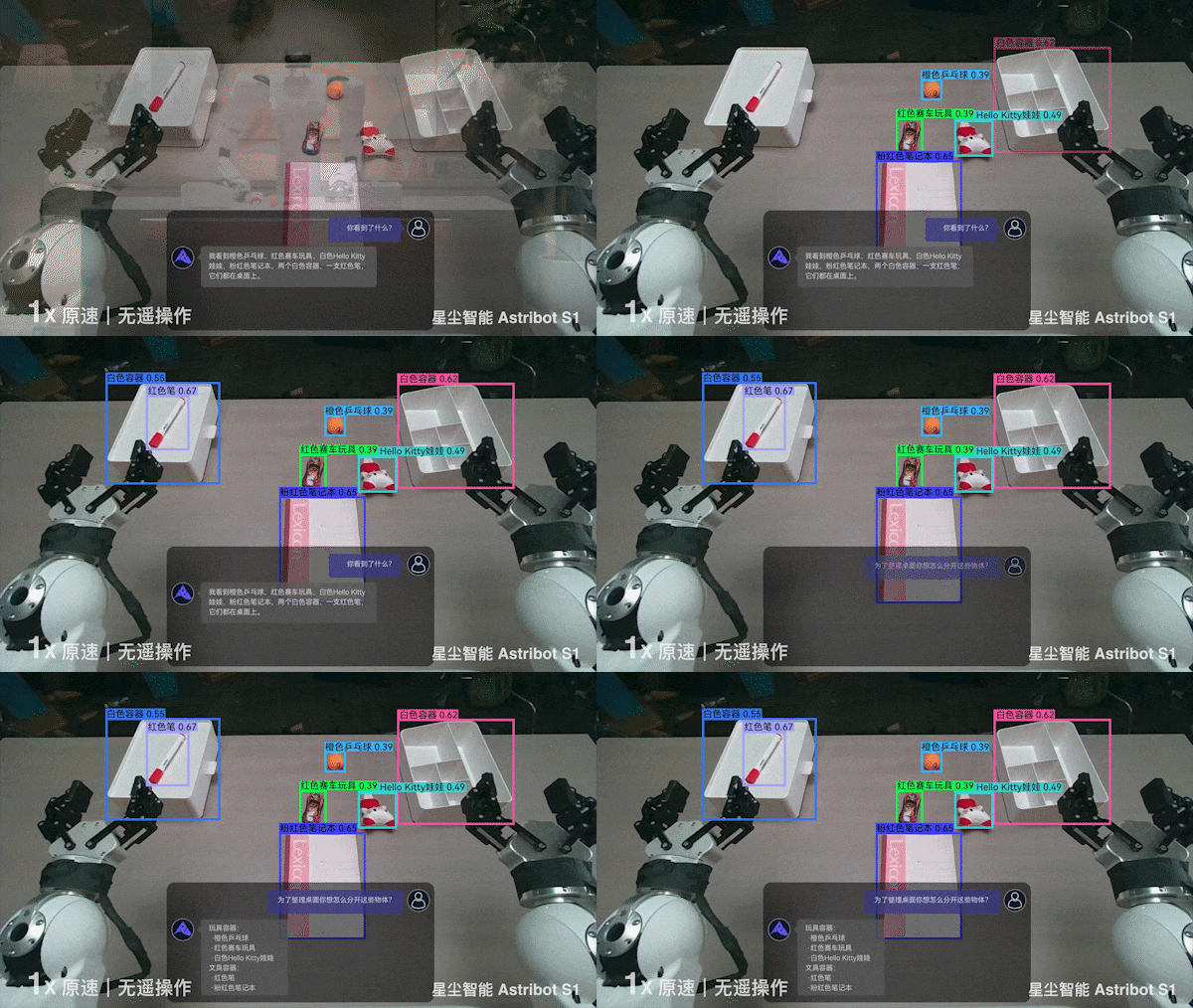
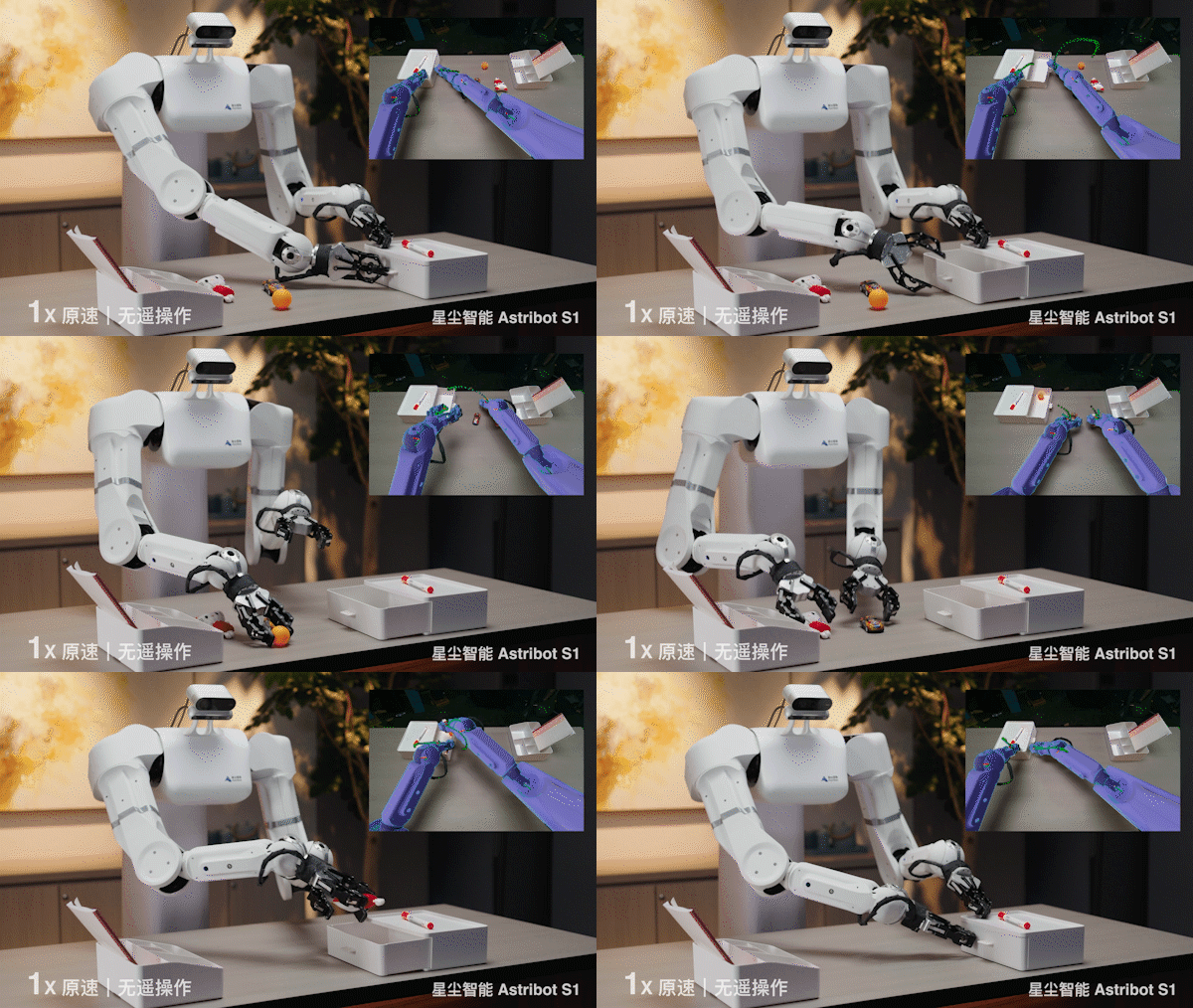
Notably, Astribot uses safe interaction as its baseline, adopting an innovative "force-centric" design approach that gives S1 safety comparable to collaborative robots. It can precisely control interaction forces with humans, objects, and the environment, ensuring it does not harm people, damage objects, or injure itself during motion.
Astribot founder Jie Lai has 16 years of robotics R&D experience, having worked at Tencent Robotics Lab (first employee), Baidu's "Xiaodu Robot" (team lead), and Hong Kong Polytechnic University, among others. He has designed multiple novel robots, led the development of the wheeled-legged robot Ollie at Tencent, and has continuously advanced the integration of robotics and AI technology.
The team's background includes Tencent, Google, UBTECH, Baidu, and Huawei and other frontier technology companies, with extensive experience in solving unprecedented scientific challenges and translating innovative technology into commercial products.
Astribot's name derives from the Latin adage Ad astra per aspera, meaning "through hardships to the stars." Jie Lai explains: "It will still take five to ten years of effort for AI robots to enter millions of households. Partners who share this long-term vision are welcome to join us, and together make AI robots a reality."