AIGC + Game: New Potential for LLMs in Gaming | Riding the AGI Wave × Silicon Valley

Understand the disruptive transformation that tools bring about.
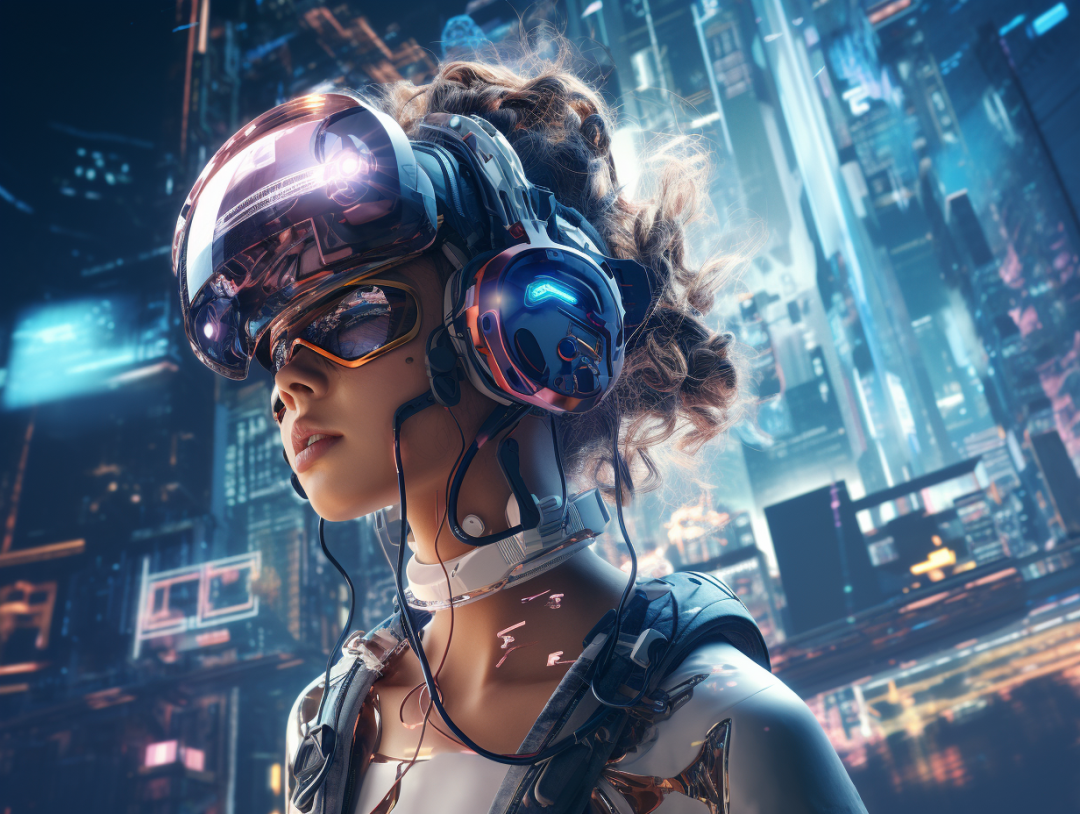
AI is driving paradigm shifts across every link in the gaming value chain. As the boundary between content creators and consumers gradually blurs, the very definition of games is changing: players have evolved from passive recipients into "co-creators," using games as a new kind of media platform for interaction, socializing, and content publishing — and thanks to the rapid iteration of multimodal generative AI, games are becoming a new form of pan-entertainment.
Recently, Yunqi Capital, together with the Silicon Valley AI+ Community and Linkloud, gathered industry experts from Xbox, Riot Games, Tencent, and Inworld, alongside game entrepreneurs and investors, to discuss the impact of LLMs and GenAI on gaming and the entrepreneurial opportunities emerging from it.
We've compiled the following insights from the event discussions and industry research. Enjoy~
I ►
AIGC + Gaming: New Applications
01
Asset Generation
The emergence of AI tools has shattered the classic "cost-quality-speed" impossible triangle in gaming. Anyone with simple tools can now unleash creativity, rapidly iterating to create countless variations — dramatically improving efficiency across the industry.
Previously, game producers and designers, merely to validate "creative feasibility," had to first align with artists and modelers on requirements, then repeatedly revise based on feedback — a back-and-forth process that consumed enormous time and energy.
Now, AI tools have drastically shortened the time from "concept to visualization." With locally deployed AI models, game development efficiency has improved: one project expected to take eight months was completed in six, with overall costs reduced by roughly 10%, and an estimated 30% reduction expected by Q1 2024.
Many major game studios already have AIGC pipelines in production. NetEase Games, known for its art platform, has been actively pursuing AIGC. Its current pipelines focus on mass-production-grade assets, including UI icons, concept art, and top-down maps, where precision requirements remain relatively forgiving.
Multiple Silicon Valley startups have entered this space, providing game asset generation platforms for developers. Take Scenario: users simply upload a small amount of raw material — images, video, audio — to train an AI model, then adjust parameters and output formats according to their game's style and needs, generating high-quality, stylized game assets.
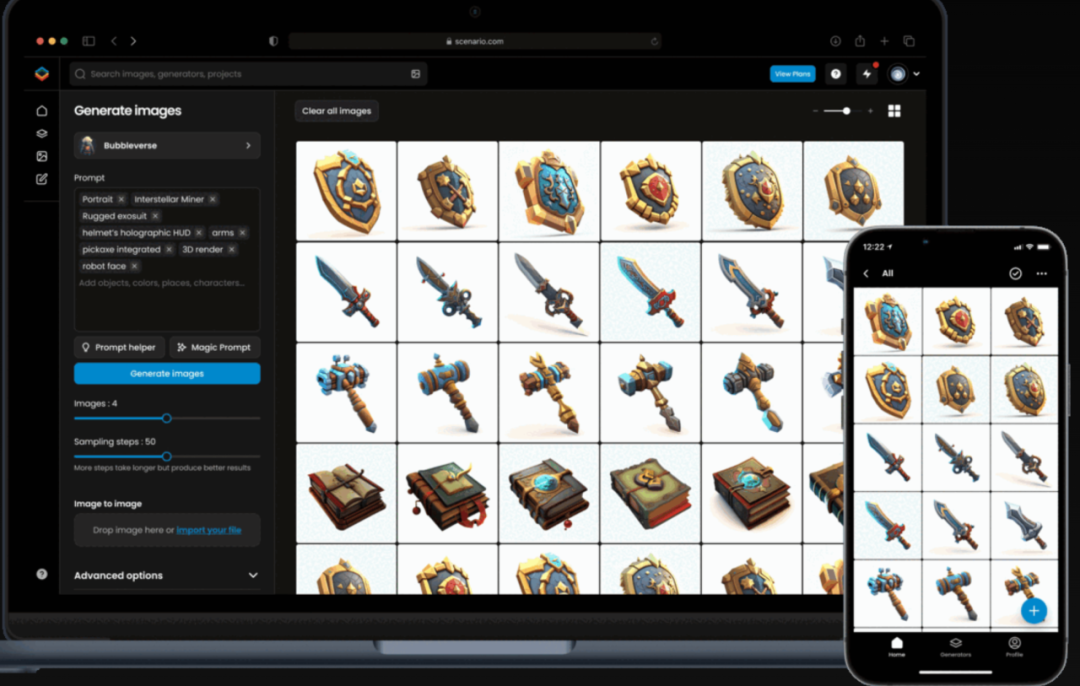
Scenario-generated game assets
Compared to 2D design, 3D design involves more complex workflows, demands higher model quality, and costs more — creating ample opportunity in this gaming sub-segment. For example, Kaedim, which has already integrated with Unity, has begun charging thousands of dollars. Some game companies are also already using services for 3D texture and material generation.
NVIDIA GET3D can train using only 2D images and generate 3D graphics with high-fidelity textures and complex geometric details, creating shapes as triangle meshes and covering them with textured materials. Creators can modify shapes, textures, and materials themselves.
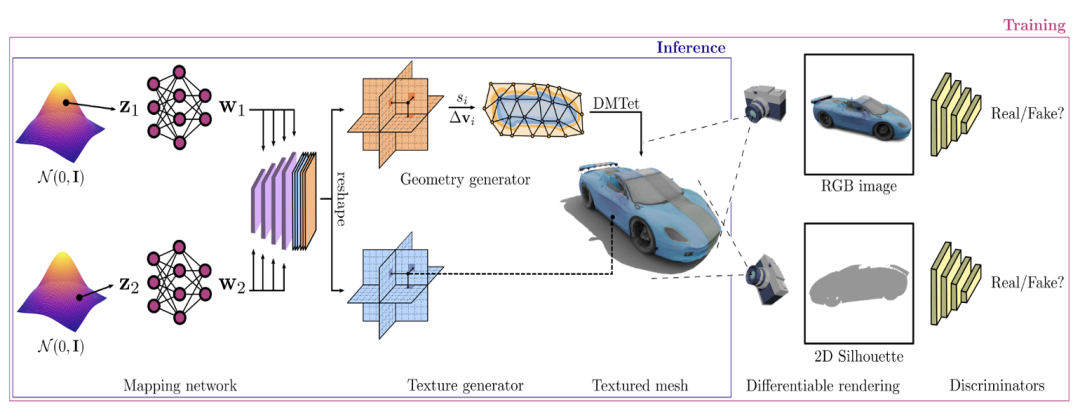
NVIDIA GET3D
02
Organizational Structure
Changes in workflow will directly impact gaming companies' organizational structures and human efficiency.
Game development demands exceptionally high creative capability. As the industry often says, "a 99-point product equals zero." To reach 100 points, or even exceed them, every tiny "creative spark" can prove decisive — so how can optimal organizational structures protect these sparks and maximize their impact?
AIGC tools have dramatically lowered the barrier for "creative review," reducing communication costs. At some studios, it's already possible to compress what was originally three months of work into one week, freeing more resources for creative endeavors.
Whether talent can adapt to AI, and what further organizational evolution AI might trigger, are also critical questions right now. AI enables "generalist" professionals to fully unleash their capabilities, compressing production teams that once required hundreds or thousands of people into supercell formations of just 10+ employees to complete full game production — an approach increasingly being tested by game companies, with transformative long-term implications for the industry.
03
Game Design Philosophy
Introducing AI doesn't automatically produce better gaming experiences. Players won't pay simply because developers used AI. Return to "first principles": make the game fun. The most important question developers still face is: what are players actually looking for in a game? How do you attract new players and increase stickiness?
The more relevant question for the present moment: what new design approaches does this technology enable?
Drawing inspiration from ChatGPT and Midjourney, some game companies have designed games where players generate "fantasy worlds" through interaction and then explore them.
Founded in 2020, "Hidden Door" has developed proprietary generative AI that lets players adapt existing public IP novels into online social role-playing games, making personalized choices within the original novel's worldbuilding framework to generate personalized story endings and game worlds. Most of the game's text and art is AI-generated. The company has raised over $10 million in total funding.
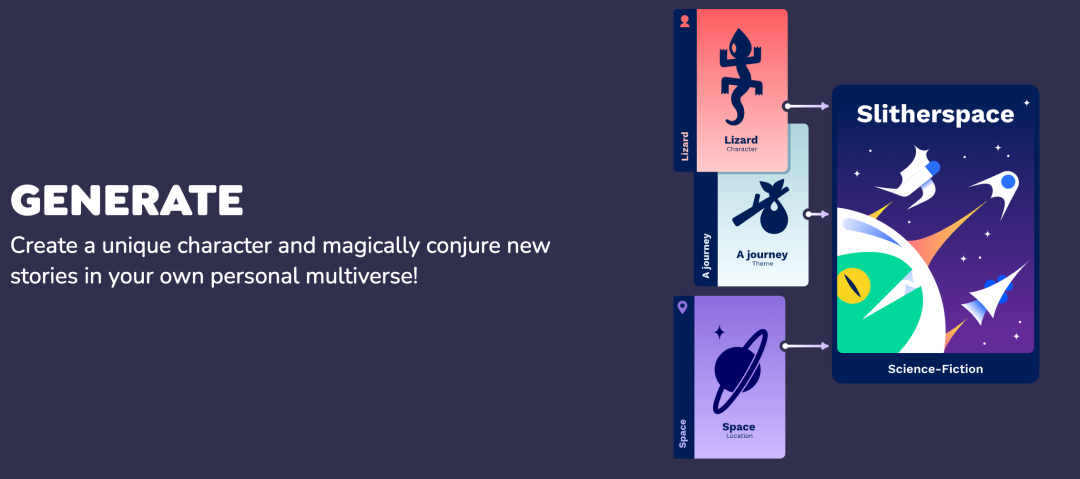
Hidden Door
One entrepreneur at the event noted that each in-game interaction currently costs 0.2 cents — relatively high. The team is currently testing whether the market will pay for AI-designed games.
Notably, the uncontrollability of generative AI isn't necessarily a flaw; leveraged well, it can enable novel and fun gameplay. "Snip it," the first-place winner at HuggingFace's recent inaugural AI game competition, cleverly exploited this — players must cut a piece from a museum painting and then solve the mystery behind it through an AI-randomly-generated "painting behind."
But "AI hallucination" remains an unsolved problem. For instance, its inconsistency can lead to unified game logic breaking down. During discussions, one guest shared his gaming experience: an NPC blew out a lightbulb, then returned to "reading under the lamp." Such physically implausible behavior degrades the gaming experience.
04
Operations Chain
AI's transformation of gaming extends beyond production to distribution, operations, marketing, and every other link in the chain. In marketing, for example, AI tools can improve efficiency in distribution and ad buying, business analytics, and sentiment analysis.
More directions merit deeper exploration. How can backend data analysis connect directly to production and design? How can marketing methods directly link to player experience? We believe AI has the potential to build more efficient operational systems across these connections.
II ►
New Uses for AI Agents
In the "Stanford AI Town" experiment, 25 agent entities not only lived out their backstories and daily routines but also interacted with each other based on their personalities, making their own decisions — the evolution of AI agents is gradually breaking existing game design paradigms and offering developers new gameplay possibilities.
NPCs' ability to "respond" to players can now be dramatically upgraded through large models, extending beyond traditional dialogue or immediate action feedback to include memory of player preferences and continuous feedback on inputs. Furthermore, through storylines and ongoing conversation, drawing players into "emotional connections" with game characters is a crucial factor in stimulating intrinsic motivation. The higher a game's emotional interactivity, and the more it connects to fundamental human needs, the more likely it is to increase user stickiness.
For example, in Red Dead Redemption, each NPC has a unique personality, rich emotional states, and the ability to "remember" and "experience" past events. If a player previously attacked a specific NPC, they'll remember it and be more likely to show hostility toward the player's character. NPCs possess perception-think-action loops and judge relative strength (such as ally-to-enemy ratios) to decide whether to continue fighting or flee.
AI Agent designs that feel more human greatly enhance player "sense of involvement." NetEase's recently launched Justice (Ni Shui Han) has made some explorations in this direction, but everything is just beginning.
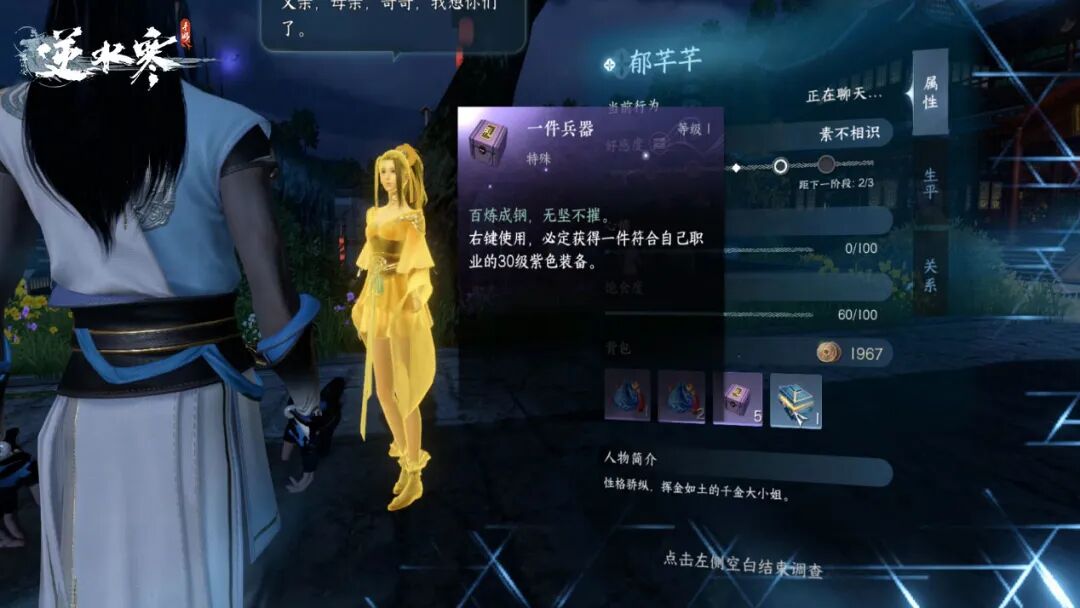
AI Agents are also already being used for automated testing. Previously, automated game testing required enormous manual effort to run through all levels; now AI Agents as "testers" replace human labor, significantly reducing development costs.
In AI Agent development, "safety" is a critical concern requiring attention, encompassing both data security and user protection in specific application scenarios. For example, a company targeting educational scenarios must ensure all AI Agent output is absolutely safe when delivered to child users.
III ►
New UGC Play Patterns
UGC is viewed as a core component of game operations. It can boost community activity. And in classic games like Roblox and Mario, UGC is itself central to the gameplay.
Successful UGC examples share common traits: players find them easy to pick up, and through interaction they form social ecosystems that continuously energize the game community and extend lifecycle.
But in the past, many games pursued "UGC for UGC's sake," binding players through psychological depth by making game assets extremely complex — requiring dozens of hours of tutorials before players could create anything. This often backfired on overall operations.
AIGC tools have broadly lowered the creative barrier, benefiting further UGC innovation.
Such content production communities, once AI tools become widespread, could become the next new platform competing for screen attention time, analogous to Douyin. When the "instant accessibility" of AI tools becomes as simple as shooting short videos, games have the opportunity to become a media platform, continuously renewed through spontaneous user creation and extending product lifecycles.
But notably, the core of UGC isn't UGC itself — the game's core logic and gameplay must be compelling enough for players to be motivated to become content producers.
People come to games for all kinds of reasons: some prioritize emotional resonance, others simply seek easy fun, some want to learn English... What game designers can offer is diverse, and players choose according to their different goals — AI provides both sides with more convenient, more powerful tools simultaneously.
IV ►
New Explorations, New Questions
For developers, gaming scenarios are arguably large models' best playground — a highly digitized, structured environment that serves as the "optimal scenario" for testing technical feasibility.
Consequently, in the AGI era, the gaming industry's ceiling for imagination seems infinitely raised. But as experimentation deepens, practitioners must also confront new challenges.
First, cost and compute power remain the biggest constraints. After integrating large models, costs grow exponentially, and functionality is limited by the models themselves. Currently, large models still score very low on consistency for complex scenarios and long-period memory processing, while response times are lengthy — detrimental to gaming experience.
Second, packaging large model capabilities into reusable components requires solving problems of "generality" and "scalability," but achieving this remains extremely difficult. Even for single-use prompt instructions, finding the most accurate one requires considerable time and cost.
The AGI ecosystem is still early; most developers are in an "experimental phase." Single-task tools empowering developers are proliferating, but it's already foreseeable that such tools lack the scale to enter the "commercialization phase" as "products." No successful precedent has yet emerged for finding "pricing models" that share compute costs with developers — another question entrepreneurs need to consider in advance.
Games represent the culmination of content production. Increasingly, entrepreneurs from AI, gaming, creative, and other backgrounds are entering this space. We believe that understanding the disruptive changes tools bring, unleashing creativity, establishing new product paradigms and ecosystems, and deepening user relationships are the "keys to winning" in this AGI wave.
Amid the vigorous development of the AGI ecosystem, we also believe future products with longer lifecycles and greater transformative potential will emerge.
Going forward, we will continue tracking AI + gaming industry developments, and welcome more entrepreneurs to reach out and connect with us via WeChat.
Yunqi AGI+ Series ✖️ Silicon Valley Event Hosts
Ning Gao Founder, Linkloud
Lynn Founder, Silicon Valley AI+ Community
Emily VP, Yunqi Capital · Frontier Technology Group