We Invested in an AI That "Roasts" People: A Conversation with Kicker's Founder | Yunqi Y Talk

The Post-'98 Founder Who Hit 20 Million RMB in Revenue in Two Years Wants to Build a Product That "Gets" You Better
There's a type of founder who seems to pivot constantly, but each turn isn't a retreat — it's a step closer to the same question.
Alex Jiabei Liu, 28, is a serial founder. He dropped out of HKU as a senior to launch the tech media startup Suyuan Yuxin, pioneering the "10,000-word long read" as a content format on WeChat. Then he pivoted to overseas gaming, raised a North American seed round, and built a product with 1 million registered users.
Five years, two sectors. The user feedback Alex treasured most: "I feel like you get me." He compressed this signal into a conviction: products that truly move people aren't the most useful — they're the ones that understand you best.
And so came Kicker: an AI product that roasts you but wants to be your best friend. It connects to your calendar, email, and chat history, actively inserting itself into your life as a "toxic bestie" that nudges you toward becoming who you want to be.
In winter 2025, Gavin Wei, an investor at Yunqi Capital's Frontier Tech team, met Alex for the first time. That same night, he downloaded Kicker's TestFlight beta and found the team pushing new builds every day at midnight.
Soon after, Kicker became one of the first investments in Yunqi's Gen Z-focused "Y Transformers" program.
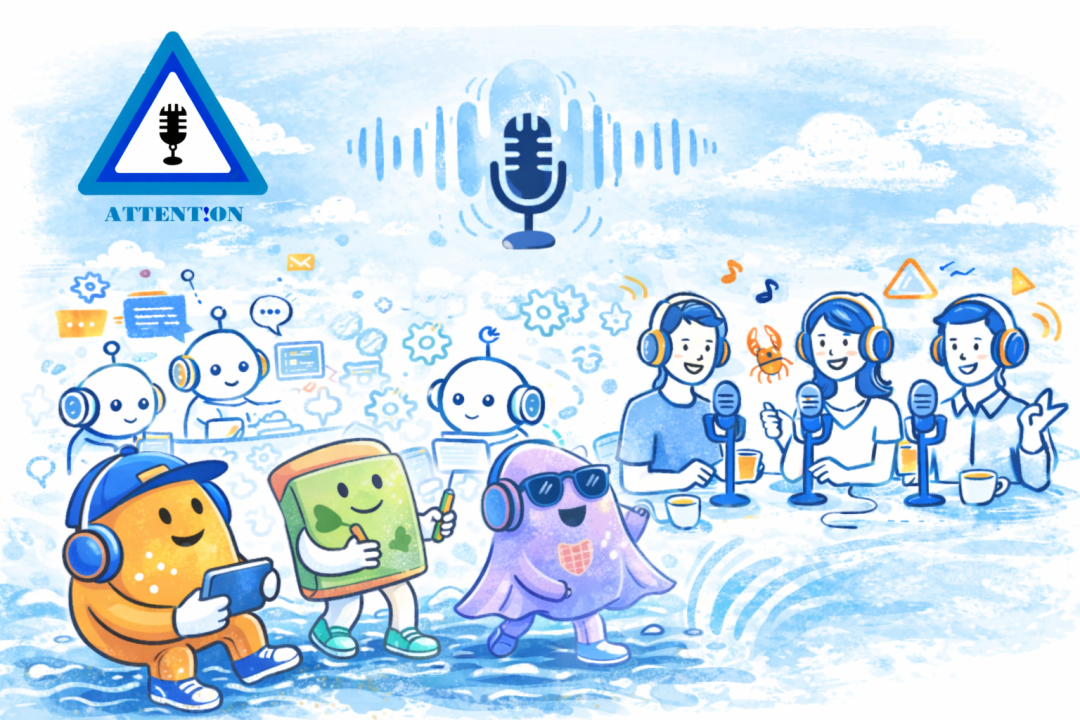
In this episode of the Yunqi podcast, we sat down with Alex and Gavin to talk about: the growth logic of a "serial tinkerer," how an AI product that's "roasting you" is actually "getting you," and how the team rebuilt their technical architecture in six days after Openclaw's debut.
$2
What you'll hear in this conversation:

Growth trajectory: From 10,000-word long reads to overseas gaming to AI life coach — how a serial founder keeps "tinkering" and growing
Founder DNA: Downloading the beta after one meeting, staying up for midnight updates — what did the investor see in Alex?
Product philosophy: Why is "getting you" harder than "helping you"? How do you design memory, emotion, and gamification into a proactive AI coach?
Technical judgment: After Openclaw emerged, why did fixed workflows lose to sandbox agents? How did Kicker switch architectures in six days?
Guests
Alex Jiabei Liu — Founder & CEO of Kicker, a proactive AI life coach
Gavin Wei — Investor, Yunqi Capital Frontier Tech team; lead investor for Y Transformers
Host
Linda — Managing Director, Yunqi Capital
$2
01
Tinkering Is How I Interact With the World
Linda:
Alex, you've dropped out twice — the second time right before graduation. Everyone around you was cramming for civil service exams or chasing Big Tech jobs. Where does this restless energy come from?
Alex Liu:
One sentence: tinkering is how I constantly interact with the world and open up new experiences.
It started in high school. At Nankai, I did English debate. A lot of our coaches came from top universities at home and abroad, and they drilled into us: when you have the chance to explore something new, grab it, take the unconventional path. "Critically examining the world" — that's the engine behind my restlessness.
In college, I happened to meet seniors who were already founding companies, or had already exited. I thought: if they can do it, so can I.
Actually, my maternal grandfather founded the first photo studio in his city. Color photography, videography — that was "frontier tech" in the 1960s and 70s. This kind of runs in the family.
Linda:
Walk us through what you did before Kicker.
Alex Liu:
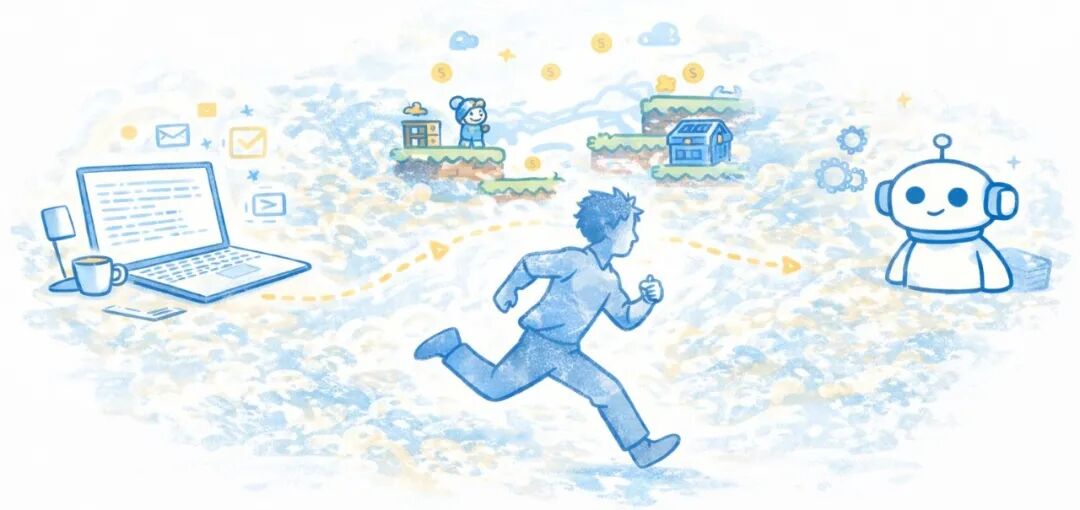
First was tech media. Dropped out of HKU as a senior and founded Suyuan Yuxin, focused on deep research on VC funds and GPs. Around January 2020, we were among the first to use "10,000-word long read" in a WeChat headline. Our second article hit 2 million+ reads, with 5–6 million reposts across platforms. At peak, we were producing 3 pieces a week, had 200,000+ followers, and raised roughly RMB 12 million.
We picked the VC vertical for a specific reason: you could borrow the brand leverage of top-tier funds, stack that with the leverage of their star portfolio companies, and quickly build audience and brand — plus this vertical had relatively high willingness to pay.
After two-plus years, I hit a ceiling with text. It traveled well within niche audiences, but it couldn't be remixed or spread virally like short video or games. So I moved on.
Second was overseas gaming. I'm a hardcore gamer — 440+ games in my Steam library. We made a counterintuitive call: multi-studio, running several sub-studios in parallel. Build demos, test with paid acquisition, and only pour in remaining production budget if metrics looked good — instead of betting everything on one title.
A lot of investors pushed back: you've never made games, getting one right is hard enough, how can you manage multiple? We gradually figured it out. We launched five games, two of which took off. Annual revenue hit $3 million-plus, about RMB 20 million. The funny thing: the strategy game we thought would be a hit did okay, but a casual dog-clicker we whipped up in two months peaked at 500,000+ players — people said it helped them decompress on the subway. User feedback was completely inverted from our assumptions.
Linda:
After studying so many funds and founders, what kind of person actually pulls off something big?
Alex Liu:
I've distilled a common pattern: they all have a burning question. They look at the world and see something wrong, and they keep trying through entrepreneurship until they find a way to make peace with it.
Whether it's a great investor or founder, what drives them isn't opportunity — it's this impulse to reconcile.
Linda:
What did these experiences leave you with?
Alex Liu:
Doing content, I studied countless funds and founders, and slowly realized: people who truly accomplish something big have a burning question, they keep tinkering through massive negative feedback, and their tinkering has a theme.
Doing games, I learned user feedback is always inverted — you have to validate fast, don't get too attached to your own judgment.
And together, both experiences left me with one core question. I've engaged with huge numbers of users aged 18 to 30, and the feedback that stuck with me most wasn't "your content is useful" or "your game is fun." It was: "I feel like you get me."
02
Why Kicker:
The Investor's View
Linda:
Gavin, what was your first impression of Alex? Why did you decide to invest in Kicker?
Gavin Wei:
From the first meeting, I felt this was a founder with very distinctive traits.
On paper: two dropouts, media startup scaled to eight-figure RMB funding, gaming startup with North American seed funding. These experiences themselves reveal character. Qualitatively, he deeply understands distribution and has a systematic grasp of product and operations.
But what excited me more was the direction itself. I was looking at a lot of memory-related infrastructure companies at the time, and I've always believed memory is the key infrastructure for enhancing AI app experiences. But to truly scale it, you need an application built on top of that infra that can break out on its own merits. Alex's vision — agentic memory, proactive engagement, full context — aligned almost perfectly with what I was looking for, and at the time, it was a relatively forward-looking direction.
After our first chat, I immediately downloaded their TestFlight beta. Then I noticed they were pushing updates every day between midnight and 1 a.m. That execution velocity scored major points.
There was also an external signal — in 2025, Google Play's Best App of the Year was Focus Friend, a concentration tool built around "anthropomorphic companionship + gamified feedback." That confirmed this category already had strong user traction overseas. Kicker had deeper technical foundations and AI-native design in this direction, which made me feel this was genuinely a viable bet.
Linda:
Alex, what was your first impression of Yunqi or Gavin? Anything noticeably different this time around?
Alex Liu:
A clear difference: Gavin had sharp, clear judgments on technical understanding and the latest technical paths. We didn't need to spend much time aligning on that — we could jump straight to "so what do we do next."
Also, when I talk to many investors and ask if they've used Focus Friend or Forest, most haven't, and I have to spend forever explaining what it is. But with Gavin, he directly sent me a Focus Friend and said, "You mean this?" — and we happened to be researching that product internally at that exact moment. Investors with this kind of product-manager-level understanding of vertical apps are rare.
03
"Getting You" Is Far Harder Than "Helping You":
How Kicker Is Designed
Linda:
What exactly is Kicker?
Alex Liu:
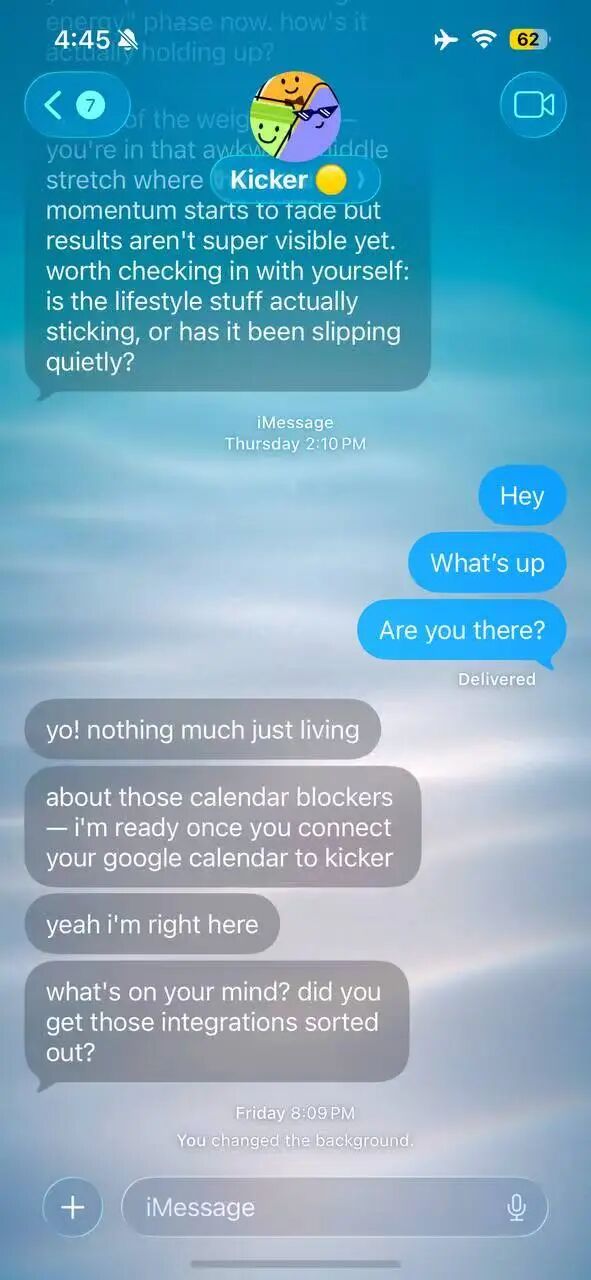
Think of it as an AI friend, but its purpose isn't companionship — it's solving the "lazy but want to get better" needs.
We're designing a "unified session" user experience, not the traditional AI product with a task bar on the left and execution terminal on the right. Through adjusting dialogue strategy, memory architecture, and user preference tags, we make users feel like they're talking to a real person, gradually lowering their psychological guard.
And in terms of output, Kicker might send you a video, an image, voice, or even ignore you and just react with a "facepalm" emoji to your message. We call this "the open-world experience that IM enables" — users never know what Kicker will throw at them next.
Once users lower their guard, we observe a "capability generalization" phenomenon.
Someone might start using Kicker to push themselves to lose weight, but by day two or three, Kicker reads their context, picks up on their study needs, and executes a new plan. Through these hooks, by day seven, the user fully trusts Kicker to handle all kinds of life stuff.
But "getting" someone is hard. The first time users connect Gmail, Notion, and so on, it feels terrifying — this AI is going to know everything about me. We spent three months on Google ecosystem security audits, data encryption, making sure the AI can only request keys and access information, never hold the keys directly.
On the "getting" design side, we built hybrid retrieval and memory decay mechanisms in our agent sandbox: what the user has mentioned repeatedly recently gets highest priority; content related to personal growth gets pulled forward; Slack and emails from work colleagues get low priority unless super urgent.
Our assumption is: you're using Kicker to level up your personal growth and life experience, not to handle work tasks. Top priority is always your life, your friends, and that thing you promised Kicker during onboarding that you wanted to achieve.
Gavin Wei:
From a macro perspective, this is actually a great time to build this. AI is pushing productivity even higher, people will spend far less time on transactional work, and naturally shift more energy toward personal growth. This direction is a macro tailwind.
Technically, things have finally caught up too — multimodal and long-memory AI architectures have developed to where Alex's vision can actually start landing.
Linda:
But users are exhausted after work, they open their phones to a flood of short video and games — why would they open Kicker?
Alex Liu:
Kicker specifically targets your "lazy but want to get better" needs. It pushes you through your context, your emotional state in conversation, shared memories you've built together, and inside jokes only you and it understand. We're also inspired by Duolingo and Finch.
The core is intrinsic motivation design. What's remarkable about Duolingo isn't points and rewards — it's that they etched the "hero's journey" narrative structure into the product: departure, overcoming obstacles, hitting bottom, rising again. This is hardwired into human psychology. You work all day and still open Genshin Impact — not just for rewards, but because your character is growing, going to new places, having new realizations.
We have similar design — your AI companion grows up, goes out exploring, tells you what it saw online today. It's alive. It cares about you.
Then there's proactive outreach. We've integrated WhatsApp, Telegram, iMessage. These channels are so much stronger than app push notifications — it can send a message that breaks through your defenses. Say you haven't paid your utility bill in three days; Kicker asks: "Do you want your power cut, or your internet?" After adding iMessage, we saw user experience jump dramatically. This isn't human-machine interaction — it's warm, human nudging.
Gavin Wei:
My own experience: it's way more savage than I expected. It got my calendar, saw I had a meeting scheduled late evening by the Huangpu River, and straight up said: "What's this late meeting about, wear something warm."
Another time, it connected my GPT chat history with my calendar, saw I was preparing an internal presentation, and proactively set a reminder: "How's that PPT coming? You've got the internal review Wednesday." I hadn't even connected those two pieces of information myself — it did.
But the core challenge in truly "getting you" is still privacy. How do you get users to open up more context to Kicker, while Kicker protects and isolates that data properly — because only with rich enough context can AI truly understand the full picture of who you are. Overseas this is relatively easier; Google, Notion, and others have mature API openness, and there's compliant paths for data access. That's one reason Kicker is launching overseas first.
Alex Liu:
There's something quite personal here. Why Kicker is so focused on "getting you" and "genuinely caring about your life" — it really stems from my own experience and that of my co-founder York.
We both left home for boarding school at 14 or 15. Then I dropped out twice in college, doing things that mainstream society didn't understand or accept. That left a deep loneliness. A lot of people have told me I have an anger, an over-defensiveness.
This loneliness isn't just something emotional connection fixes — it's also a craving to be understood, to be cared for. That's our starting point. We believe people in the AI era will ultimately want to pursue being understood, being gotten, being cared about.
04
Six Days to Rebuild an Architecture
Linda:
In February you shipped a WhatsApp version of Kicker based on Openclaw and Minimax, very fast. Was Openclaw an accelerant or a disruption?
Alex Liu:
Accelerant — massively so.
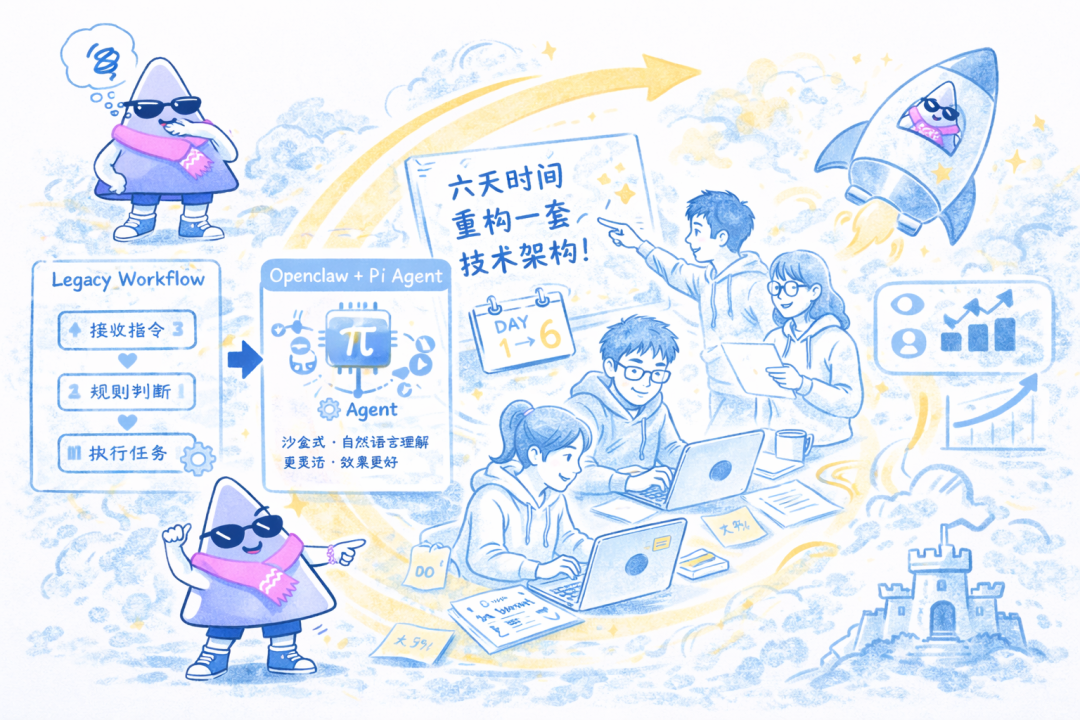
I'd been pushing to abandon fixed workflows for a sandbox approach, letting AI interact with and understand users through natural language. But before Openclaw, this approach was expensive, and we couldn't prove it would crush fixed workflows. There was ongoing internal debate.
Openclaw dropped, and we started using it around January 6 or 7 — back when the official Discord only had two or three hundred people. After some customization, it clearly outperformed fixed workflows on our core capabilities. Direction set: not copying Openclaw's stack wholesale, but building our own version based on its underlying Agent framework, Pi Agent.
From three days before New Year's through the third day of Lunar New Year, about six or seven days, we shipped the first version. It hit roughly 350,000 views on X and converted a lot of users. This wasn't disruption — it was validation. We were already heading this direction; now we could just floor it.
Gavin Wei:
Software's value isn't just code — it's the externalization of workflows and management philosophy. For AI application teams, what really matters isn't whether you're using the best model, but whether you can closely track the technical frontier, even bet ahead of it, and rapidly adjust your product. That's one of the core factors in whether you can build a hit product. Alex's team shipped a new version days after Openclaw dropped — that iteration velocity itself says a lot.
Linda:
How do you define Kicker's core competitive advantage?
Alex Liu:
Continuously accumulating context, and iteratively extracting from that context the ability to deliver more value to users. Getting you takes time. The longer you use it, the more it gets you. That accumulation itself is the moat.
05
What's Different About
Post-'98 Founders

Linda:
Gavin, when evaluating post-'98 founders, do you treat narrative ability as an important criterion?
Gavin Wei:
Narrative ability splits two ways — internal narrative is product definition capability; external narrative is the ability to promote yourself and your company.
For me, product definition matters more, and it's not a one-time thing. Technology is changing so fast now, new stuff drops every week. Can the founder closely track, even bet ahead, and rapidly convert new tech into product capability — that's the core of whether you can build good products, hit products. Being able to tell a story is a plus, but a company ultimately needs profit, needs to deliver real value. Not everyone who can talk is building a good company.
In the AI era, I weight two things most heavily: first, product definition ability — can you uncover unmet needs, orchestrate existing and next-gen tech appropriately, and have AI serve that need in the best way? Second, embrace of change — no fear of failure or iteration. This is a trait excellent AI founders broadly share now.
Linda:
What differences do you observe between post-'98 founders and the previous generation?
Gavin Wei:
Two things. First, confidence. This generation grew up in an era when China was already building products used globally. They're not doing Copy to China — they believe their original work can lead globally.
Second, global from day one. Whether software or smart hardware, it's global launch from the start. Many founders have lived across China and the West from a young age; they have the ability to define a global product.
If there's a common directional trend, I'd say it's emphasis on personal experience — more than the pure efficiency gains of before.
Alex Liu:
Two things I find interesting.
One is aesthetics. The AI-native founders I know often have core themes in their spirit and culture, but those themes almost never come from their native culture. Ask them what movie influenced them most, and the first answer is almost never a domestic work. It's a very global aesthetic.
The other is anti-disruption. There used to be a classic entrepreneurial narrative — I'm going to destroy traditional industries, I'm going to rebuild everything. But the AI-native founders I observe aren't like this. They don't want to destroy anything; they just want to say: with this technology, what should the world look like? Then they build that world and let it exist parallel to the existing one.
Full episode available on Ximalaya
Search and subscribe to "Attent!on" to listen

The Y Transformers program is still accepting applications. Apply to join us and build together!
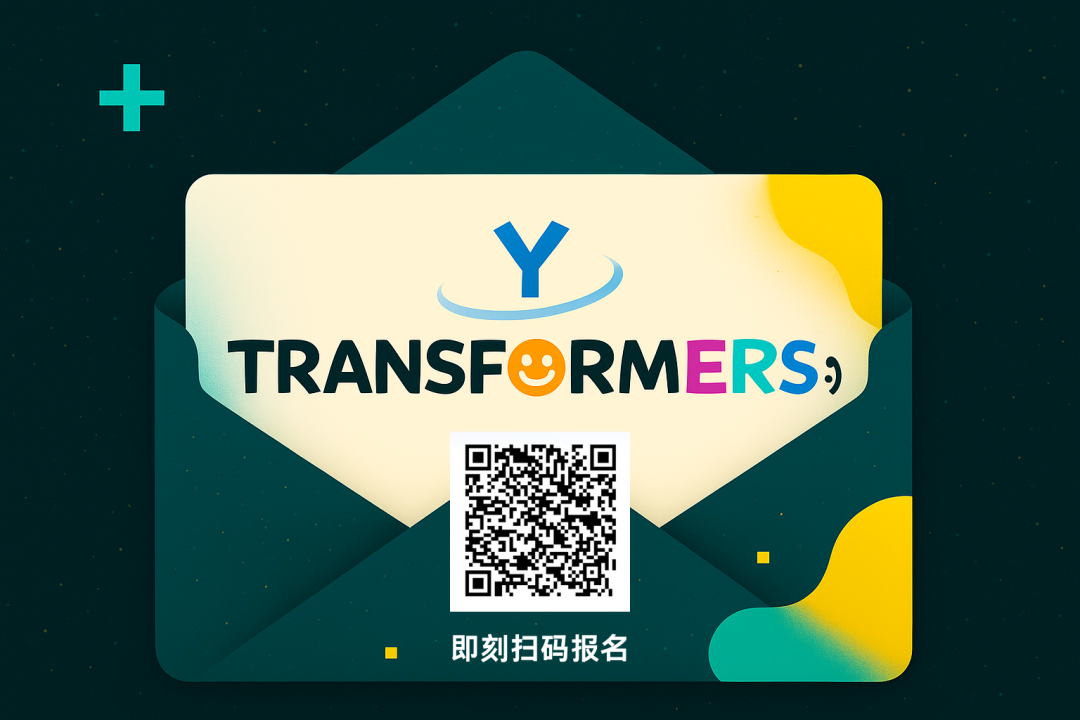
Listener Giveaway

We'll randomly select 1 listener who uses Kicker and participates in this episode's discussion to receive a Mac mini. See the Ximalaya episode page for giveaway details.
Try Kicker:
https://www.usekicker.com/get-started