The AI "Battle of a Hundred Glasses" Is On — How Is Google Returning to the Fray? | Yunqi Tech π
Google's AI Glasses Take Another Shot, Android XR Reboots

AI glasses are currently one of the hottest categories in smart hardware. At its recent I/O conference, Google made a high-profile debut of Android XR, officially rebooting its AI glasses strategy. Sergey Brin took the stage personally, Gemini was positioned as the core brain, and hardware development was handed off to partners like Samsung and XREAL.
Shifting from self-developed hardware to ecosystem collaboration, XR devices are becoming a critical entry point for deploying multimodal AI capabilities. Can this "second act" for AI glasses help Google replicate the success of Android? In this episode of "Yunqi Tech π," we break down the details.
Source: GeekPark WeChat account | Original title: "Deep Dive into Google's AI Glasses Strategy: The 'Hundred Glasses War' Hasn't Arrived, But Google Wants to Make Gemini 'Great Again'"
After this year's Google I/O, Android XR was once again presented in detail as a critical step in Google's strategic push into AI glasses — not only did Google's own Android XR-powered AI glasses appear as the grand finale during the keynote.
Such high-profile treatment inevitably evokes memories of 2012, when the "ancient" AI glasses Google Glass was unveiled at the same Google I/O. Back then, Sergey Brin wore them while jumping out of an airplane cabin, livestreaming the entire stunt — still one of the most talked-about moments in tech history.
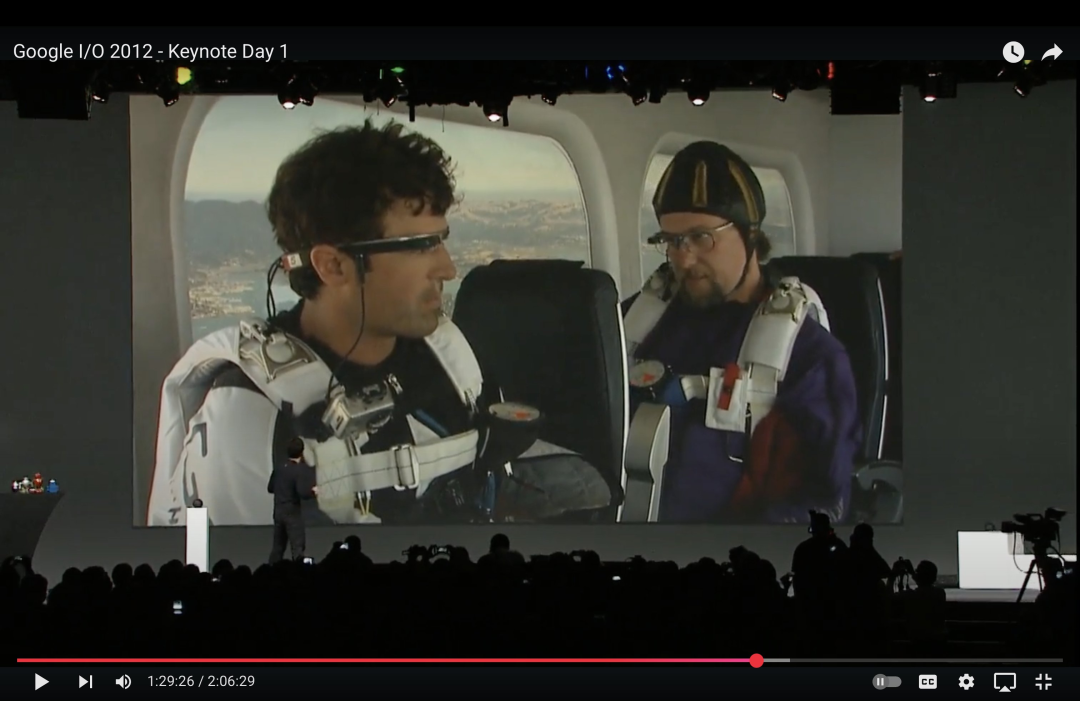
But Google Glass was not a commercially successful product. Thirteen years later, Sergey Brin returned to the I/O stage to endorse Google's next step in AR glasses, going so far as to admit in media interviews that he had "made quite a few mistakes" on the Google Glass project. "I simply didn't understand consumer electronics supply chains, really, or how hard it is to build a pair of glasses like that, sell them at a reasonable price, and manage all the manufacturing processes," Brin "confessed" during the interview. Brin also noted that there was a "technology gap" when Google Glass was born over a decade ago, but that no longer exists today. "Now with AI, these glasses can help you without constantly distracting you — that's much more useful than before."
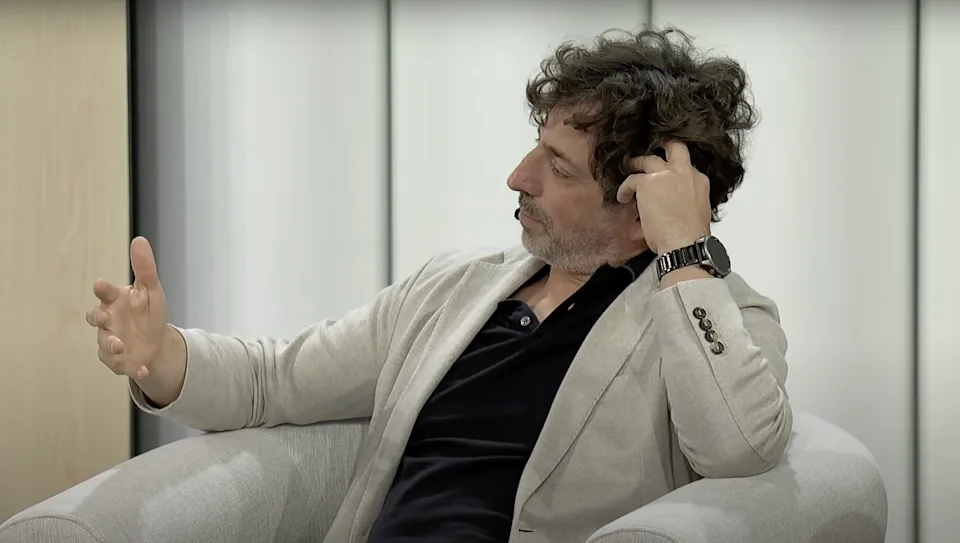
Sergey Brin in a media interview | Image source: Google
In recent years, as Google has gradually gained market footing through Gemini and a series of AI-powered products, Sergey Brin — the legendary entrepreneur of yesteryear — has returned to active involvement at Google, participating in Gemini's R&D. His remarks largely represent Google's current attitude toward Android XR and AI glasses: the hardware platform, including Android XR itself, is not the current priority; the comprehensive AI capabilities represented by Gemini are.

Google's AI glasses demo at the event | Image source: GeekPark
At the Gemini AI capabilities exhibition area, Google's AI glasses demo drew the longest lines; many developers stood under the sun for over an hour just to experience Google's AI glasses capabilities for less than five minutes in the highly restricted demo zone.
It wasn't just Sergey Brin — Google went so far as to declare during the keynote that glasses would be "the best vehicle for Gemini," positioning them above smartphones and all other AI hardware form factors.
As the Silicon Valley giant stepping into the same river after Meta and Apple, can Google really rely on Gemini to replicate Android's success in the XR space?
01 A Dream Thirteen Years in the Making
Perhaps for Sergey Brin, the failure of Google Glass remains something difficult to accept — especially when you saw the future before anyone else, but had to abandon it due to technological limitations, only to watch Meta achieve commercial success first.
In interviews, Brin specifically pointed out that Google no longer has to go it alone, now having "excellent partners" like Samsung (Project Moohan) and XREAL (Project Aura) to develop Android XR together.
According to the author's understanding, the Android XR project was initiated in 2022, before the current wave of AI hardware had fully taken off. The initial core goal was to create AI glasses that could "operate as independently as possible, without relying on smartphones or other external computing devices" — meaning the glasses needed built-in processors, batteries, and various sensors, so early prototypes looked more like bulky ski goggles.
But such a product clearly diverged from the "all-day wearable AI assistant" concept that Google leadership envisioned. Thus, Project Iris was reported in early 2023 to have suffered a "major setback," accompanied by a series of personnel changes and a significant product direction adjustment.
After the pivot, Project Iris no longer pursued standalone computing on the glasses themselves. Instead, it pursued computational coordination with Android smartphones (particularly Google's own Pixel series), with the phone handling the bulk of processing needs while the glasses served as a "terminal sensor," only completing necessary sensor information processing and collection.
Following multiple rounds of layoffs at Google between 2023 and 2024, the AI glasses team was affected, and plans for self-developed AI glasses were completely scrapped. They were replaced by partnerships with companies like Samsung and XREAL, which would handle the main hardware development and final launch/sales — these are also the hardware partners for the two Android XR devices set to launch this year.
At this year's Google I/O, Samsung's Project Moohan was available for hands-on experience with noticeably higher completion. After trying it, the author felt it held a massive weight advantage over Apple Vision Pro. Currently, Gemini can leverage more powerful computing to complete scenarios including screen content recognition and automatic content recommendations.
According to Google employees, while Android XR still technically belongs to the Android family, Google has actually been building it as an "operating system for native AI demands," making substantial adjustments on top of stock Android to allow Gemini to run at low power at the system level, thereby meeting the "low-power always-on operation" target as much as possible at the system level.
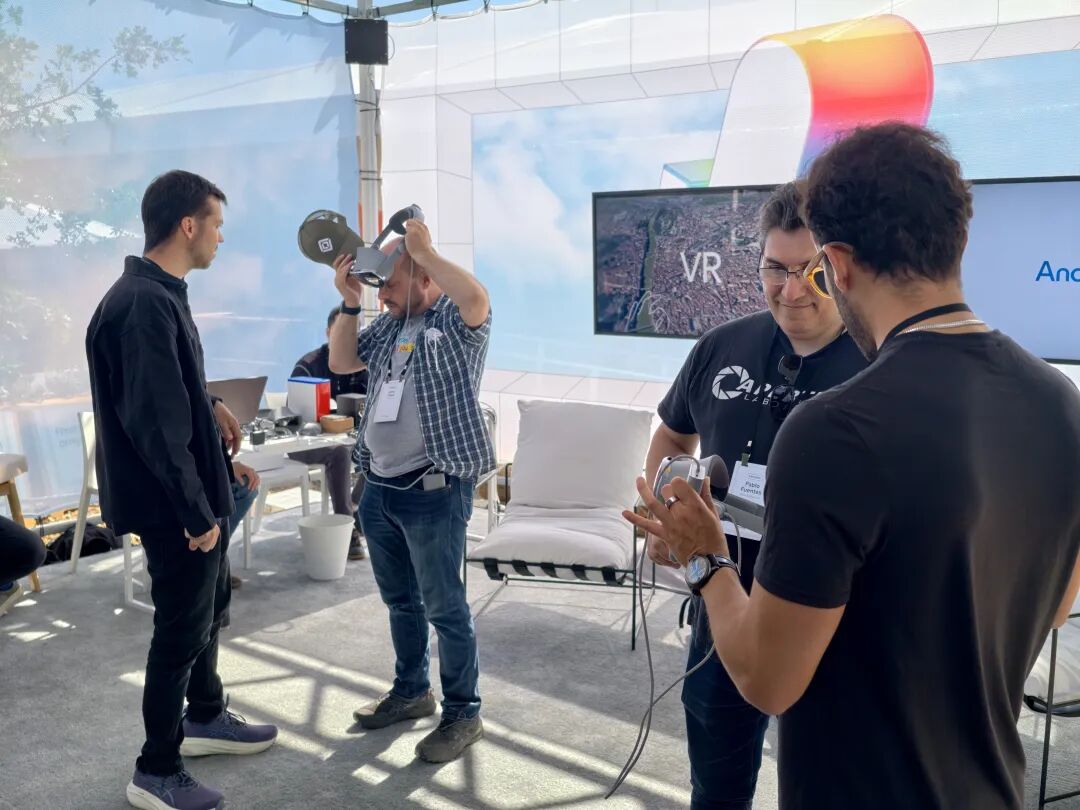
Samsung's Project Moohan experience at Google I/O | Image source: GeekPark
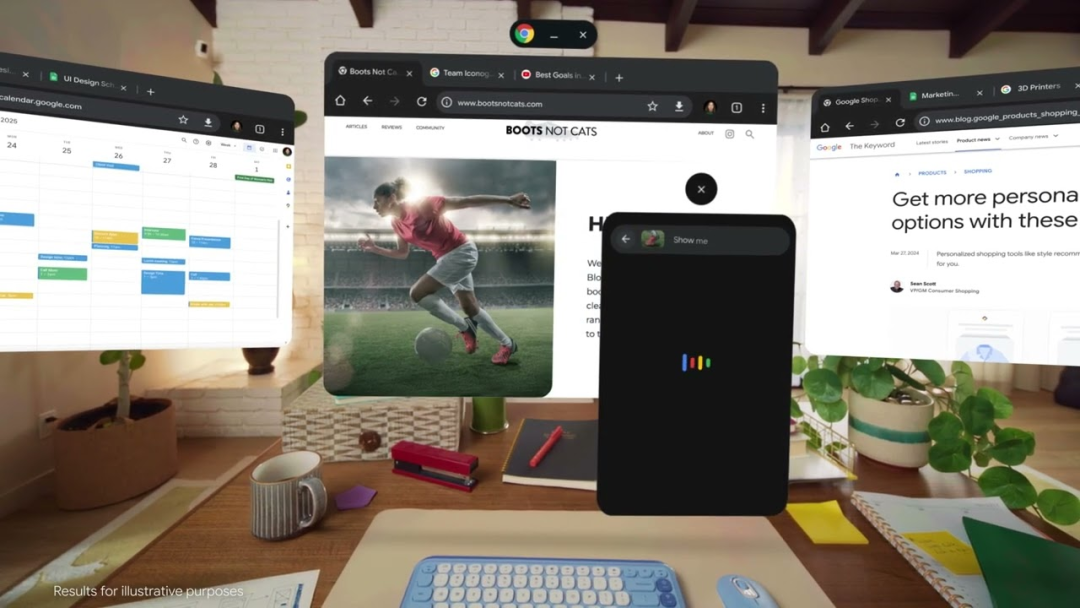
During the hands-on demo, the author not only experienced direct voice interaction with Gemini in a virtual display operating system, but also saw Gemini read all currently displayed screen content without requiring additional permissions. For example, when you enter a restaurant review in search and ask Gemini "how do I get to this restaurant," Gemini can immediately create a new navigation interface.
But under the impact of multiple rounds of layoffs at Google, Android XR's hardware product direction was ultimately set as "partnering with OEMs to build Android XR hardware" — which is the Samsung and XREAL launch lineup we see today.
This model closely resembles Google's early partnerships with smartphone manufacturers on the Android system: Google focuses on Android system development itself, while market share expansion relies on smartphone brands — only this time, Gemini is the new protagonist, and Android XR is simply a native new platform for Gemini to showcase its capabilities.
For Gemini, the greatest potential of XR devices lies in their ability to perceive information from both the virtual and real worlds at a system level, unlike smartphones or computers confined to single scenarios, thereby significantly increasing the proportion of user daily activities that Gemini can take over. AI glasses in particular can access nearly "unlimited" real-world information, substantially boosting Gemini's presence in users' daily lives.
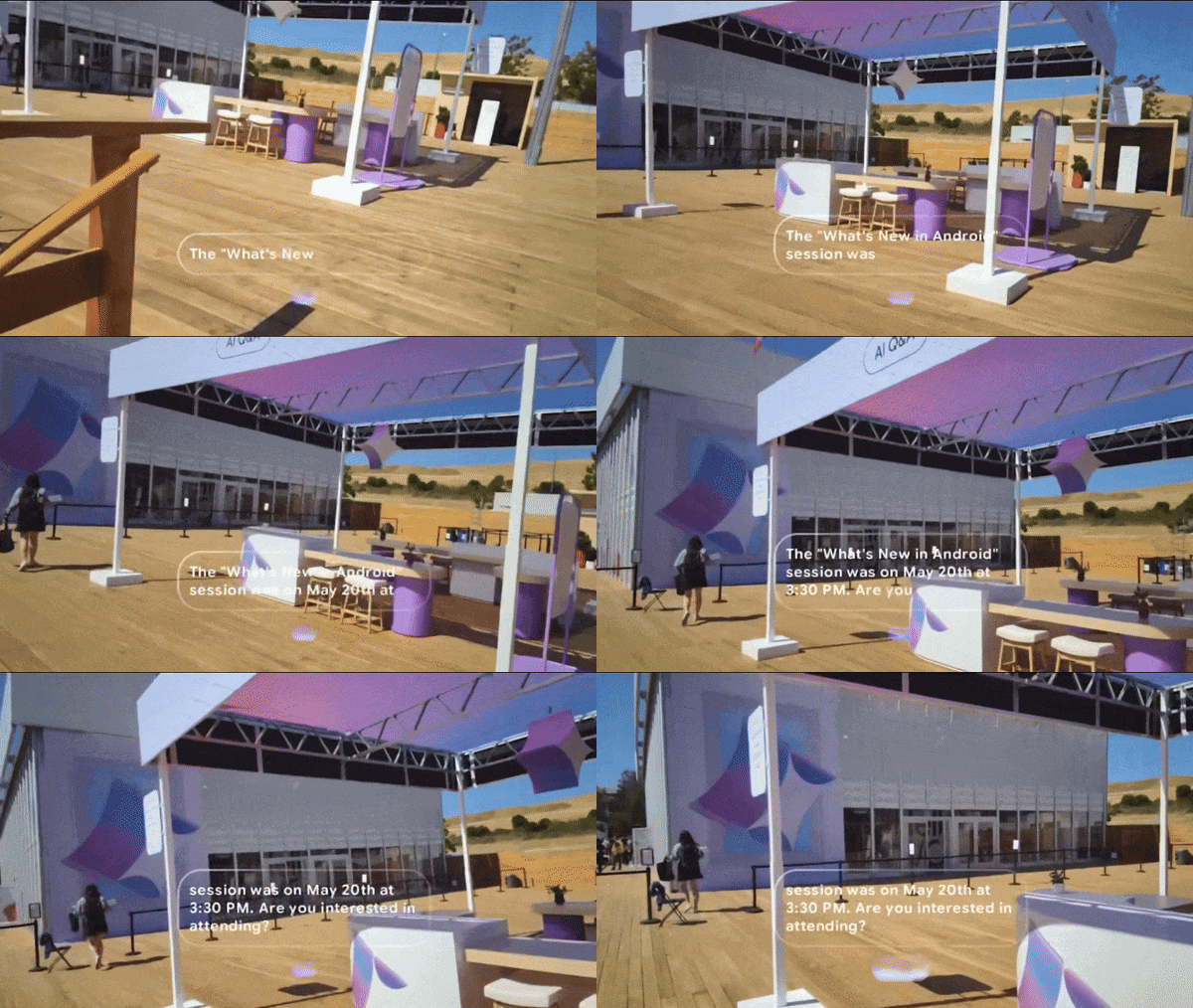
Gemini conversation effects in Android XR | Image source: GeekPark
Around such scenarios, Google has actually been laying groundwork for some time: in 2024, Google DeepMind unveiled Project Astra, a cutting-edge AI assistant project aimed at creating a general AI assistant capable of understanding and responding to the world around us. Built on Gemini, it goes beyond passively answering questions to actively attempting to understand user intent, using key information memory + multimodal recognition capabilities to achieve contextual recall like "where did the user put something." It also performs real-time language translation and assists with information processing tasks.
Google's long-term investment in multimodal models has successfully made Gemini the "star" of the entire Android XR concept, igniting external expectations for the AI glasses category. Especially with Google's promoted scenarios of "all-day environmental awareness" and "proactive prediction of user needs," it seems that truly intelligent multimodal AI glasses have finally arrived.
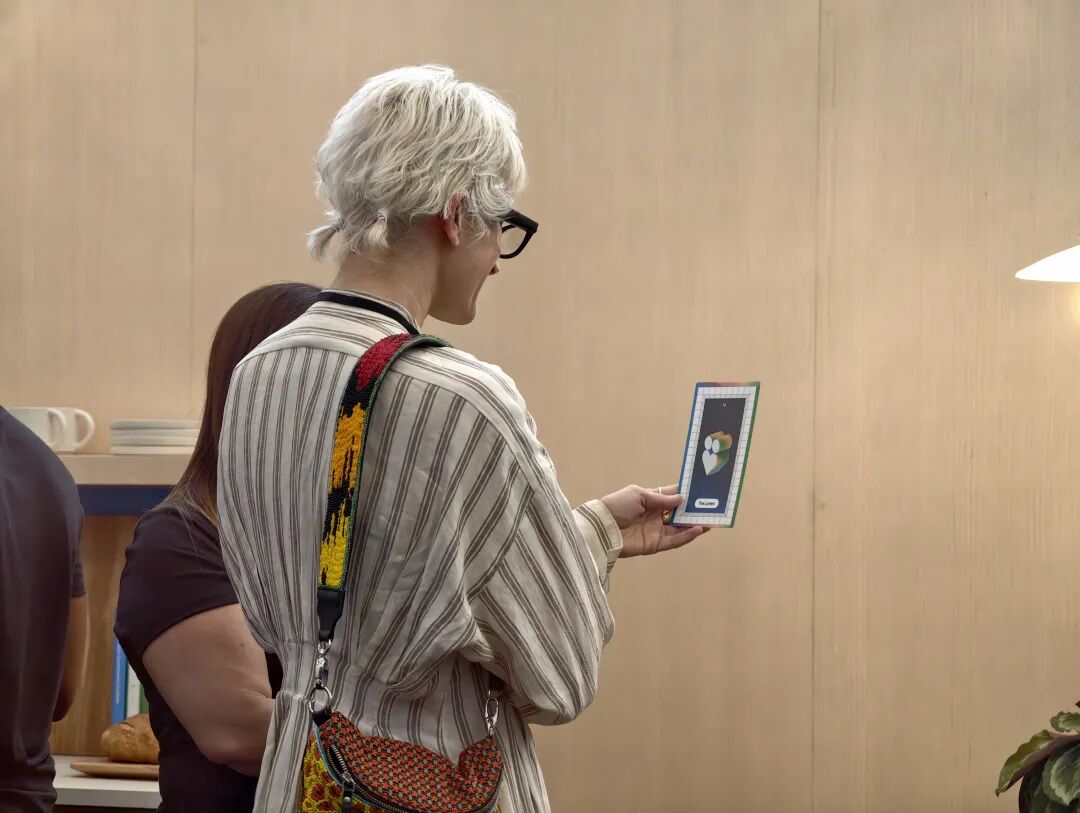
Google's on-site demo of Gemini identifying content through AI glasses | Image source: GeekPark
In the AI glasses demo shown at Google I/O, the overall product form was similar to products previously released by Rokid and RayNeo. The main difference was that this AI glasses demo ran Android XR and could to some extent support Android XR apps converted from existing Android applications.
In Google's vision, Android XR should cover all existing XR devices — from the largest form factor, the Apple Vision Pro-rivaling Samsung Project Moohan, to the AR glasses Project Aura built by XREAL running the Android XR operating system, to Google's own AI glasses prototype available for hands-on experience at the event.
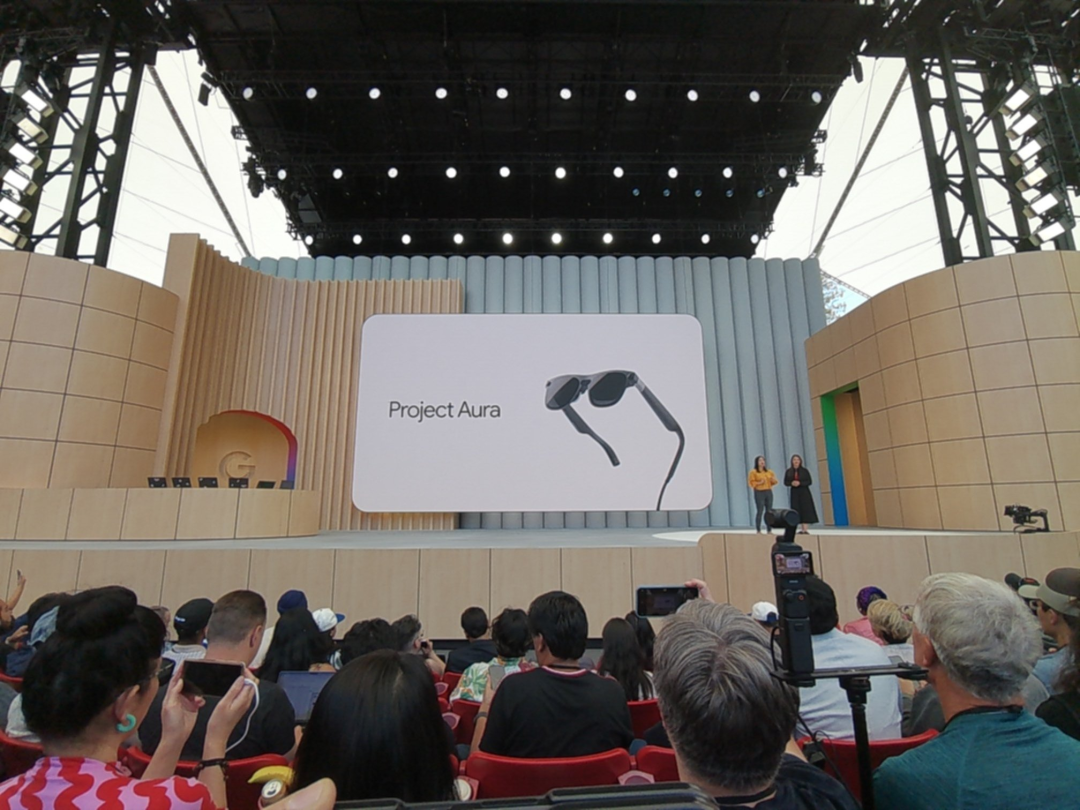
XREAL's Android XR glasses "Project Aura" appearing in the Google Keynote | Image source: GeekPark
According to an Android team engineer interviewed by GeekPark, Samsung's Project Moohan was initiated after Apple Vision Pro's official launch, positioned to counter Apple's XR strategy. Samsung was also counting on Apple to use its considerable market influence to solve the hardest parts of the XR space — whether supply chain or user market education for XR headsets.
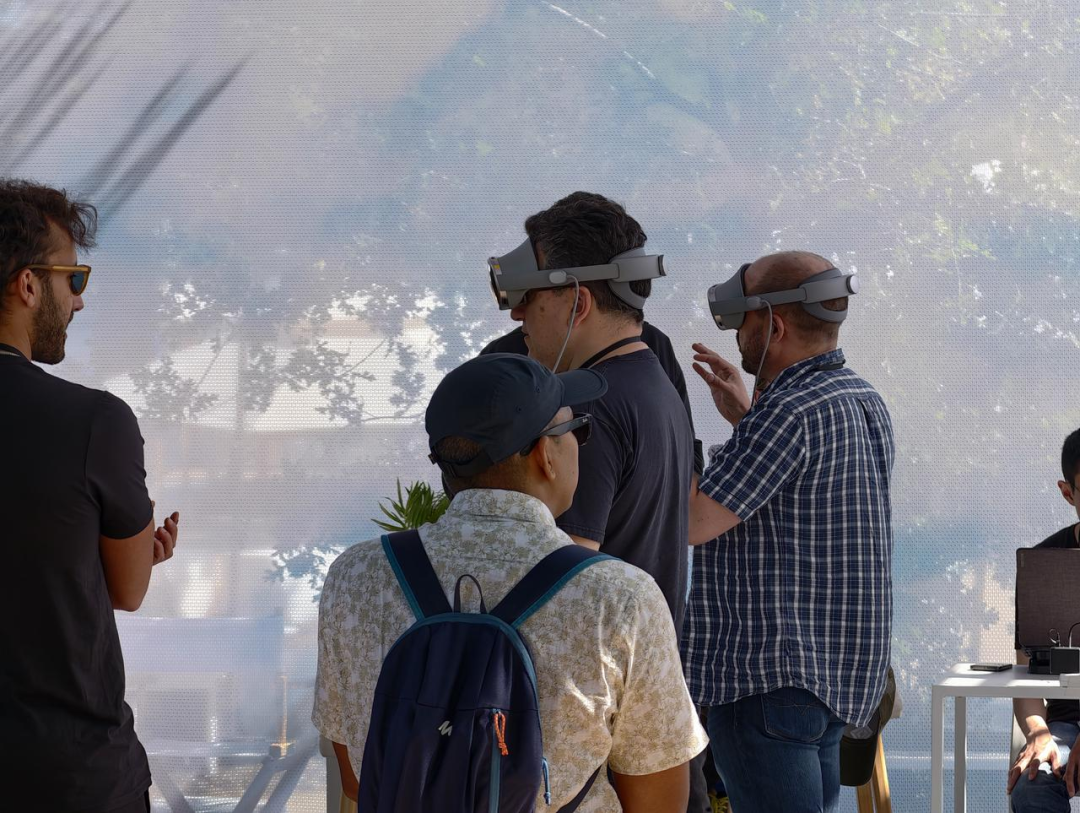
But Apple Vision Pro's sales and market reception fell short of expectations, which significantly affected Google and Samsung's confidence in this project. Google subsequently drastically lowered Project Moohan's shipment forecasts, while the lower-priced and significantly lighter XREAL Project Aura was given greater expectations as the main product carrying shipment targets among the first Android XR hardware launches — according to XREAL's estimates, the first Android XR-equipped AR glasses will sell over 300,000 units.
As for the AI glasses shown and experienced in small-scale demos during this year's Google I/O, they were actually remaining inventory from the Project Iris project and will not ultimately come to market.
According to XREAL founder Chi Xu, in current projections, AR glasses will be the highest-shipment devices among Android XR's first wave of launches. This is also the critical step determining whether Android XR can rapidly expand and gain user recognition this year. Therefore, hardware-wise, Project Aura is almost entirely led by XREAL, leveraging relatively mature hardware experience supplemented by the Android XR operating system to achieve rapid ecosystem building for Android XR.
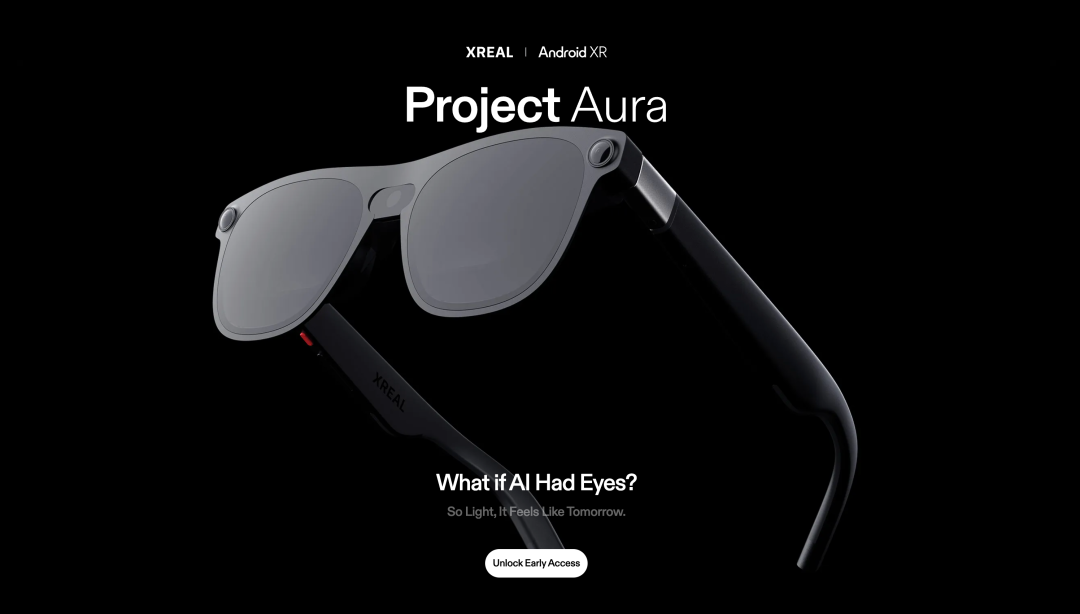
XREAL Project Aura positions AI as the main selling point | Image source: XREAL official website
Both XREAL and Samsung plan to release developer kits before final product sales, giving developers early access to the new operating system and what new interfaces Gemini can provide to third-party apps in this new spatial operating system, as well as on-device AI capability support.
02 A "Hot Potato"
To be sure, smart glasses supply chains thirteen years later are mature enough to produce hardware far exceeding Google Glass. But whether current hardware can actually deliver the "always-on AI assistant" that Google promotes remains deeply challenging. Despite Brin's confidence that "there's no longer a hardware gap," Google's ultimate abandonment of first-party AI glasses was largely indeed constrained by current hardware technology's inability to fully realize the usage scenarios Google envisioned for Gemini on the AI glasses form factor.
According to project members involved in Android XR, usage scenarios like Project Astra's near-constant perception and processing of various information in the user's surrounding environment are currently beyond the power consumption capacity of smart glasses. Thus, how to support glasses with acceptable daily battery life, and how to handle user/environmental data received by glasses sensors on the device side, remain the main pain points.
Unlike Meta Ray-Ban, which relies on Bluetooth protocols to transmit all user data received by the glasses to the user's phone for processing before sending results back to the glasses, Google's early prototype for Android XR-powered AI glasses attempted to have the glasses handle the main data processing, only forwarding large model interactions and instant information queries to the phone.
Architecturally, Android XR can meet such requirements. But hardware-wise, even with Google's Android system advantage over Meta, the limitations remain stark for the goal of an "all-day wearable AI assistant."
"Whether it's power consumption or battery life, none of these are simple problems — they're all pitfalls," an Android XR engineer described the challenges Google encountered in its AI glasses project.
According to the engineer, mass-producing AI glasses first requires DFM (Design for Manufacturing), while the demo produced must be efficiently manufacturable. But Google's internal demo completely ignored battery life; in other words, this product was more about demonstrating to the outside world the maximum possibilities of what Gemini could do on the AI glasses form factor, rather than a product targeting final mass production. Simply using Gemini to recognize and interact with content in front of the user, this demo's actual battery life couldn't exceed two hours.
Meanwhile, how to run various real-time perception-based display content on the extremely limited computing power of smart glasses remains a difficult problem; including the real-time navigation using Google Maps that Google demonstrated late last year, which is currently still impossible to implement.
Even with these bottlenecks, Google engineers still hope to make Gemini the focus of future AI glasses interaction. Thus Google has embarked on the same technical path as Meta — prioritizing glasses without display capabilities.
Notably, while Google itself is a veteran in the wearables space, it lacks sufficient experience in how to build good AI glasses to compete with Apple and Meta. But even while conducting layoffs, it has recruited numerous industry frontline R&D personnel from outside, including notable hires from former Meta and even former AVG (Apple's internal division responsible for Vision Pro).
Currently, Google has an internal development team of thousands working on refining Android XR for this hardware and subsequent support. While the AI glasses demo Google publicly showed this year will not ultimately come to market, Google is still vigorously expanding the Android XR ecosystem, leveraging Gemini's dominant position within it.
In 2024, Meta's collaboration with EssilorLuxottica (Ray-Ban's parent company) on the Meta Ray-Ban series achieved great success. Starting in 2024, Google also began seeking partners in the fashion space with "strong willingness to collaborate."
Ultimately, Gentle Monster — which had previously partnered with Huawei to build smart glasses but parted ways due to diverging visions — and Warby Parker, an American本土 eyewear brand emphasizing fashion, became Google's fashion brand partners for building AI glasses.
But these fashion brands lack sufficient hardware development capabilities, so their AI glasses projects still require experienced hardware partners for OEM manufacturing. Thus, the final mass production and iteration of these products will still be completed by corresponding Chinese AI glasses OEM factories.
Unlike the demo Google showed with basic display capabilities, the AI glasses that these two fashion brands will build with Google will be similar to Meta Ray-Ban — without content display capabilities, relying entirely on voice and Gemini for complex interaction.
Even if Google still has plans to build AI glasses in the future, it will focus on the "partnering with hardware manufacturers" direction, reducing Google's own hardware investment in AI glasses and concentrating on refining Android XR — especially the Gemini experience that Google values most.
Beyond the form factor now widely familiar to the outside world that directly rivals Apple Vision Pro, Samsung is also planning two additional devices running the Android XR operating system: Project Haean and Project Jinju. Like Moohan, which corresponds to the Korean word for "infinite," these two devices' codenames also come from Korean transliterations, meaning "seaside" and "pearl" respectively.
The former is an AI glasses product built by Samsung running the Android XR operating system, with a lightweight form factor supporting voice interaction with Gemini and longer battery life than Meta Ray-Ban. The latter is currently known to few even within Google, but based on current information, Project Jinju will be an experimental product with more complex content display capabilities.
Even if AI glasses must still go through 2-3 years of market maturation, Google can still leverage Android XR for ecosystem positioning, plus partnerships with established industry giants like Samsung and emerging AR glasses manufacturers like XREAL that already hold certain market share. It's attempting to replicate Android's success, not Google Glass's failure.