"Yunqi Attent!on · Embodied Intelligence Forum" | Turning Robots Into Olympic Champions: How Many Steps Does It Take?

Unlocking a Touchable Future
What AI highlights did it bring to the Paris Olympics? Beyond the Olympic venues, how do robots grind away at table tennis? While the Games rage on, we've rounded up some fascinating applications of "AI + Sports" and "Embodied AI + Sports" both inside and outside the arena to share with you.
Beyond existing explorations, what tangible futures might embodied intelligence unlock with AI's boost? On August 20, Yunqi Capital — together with SeeFund Infinite Fund, with support from Beijing Zhongguancun Startup Street Technology Service Co. — will kick off the "Attent!on Offline Salon" Beijing stop · Embodied Intelligence session.
Event details and registration at the end — don't miss out!
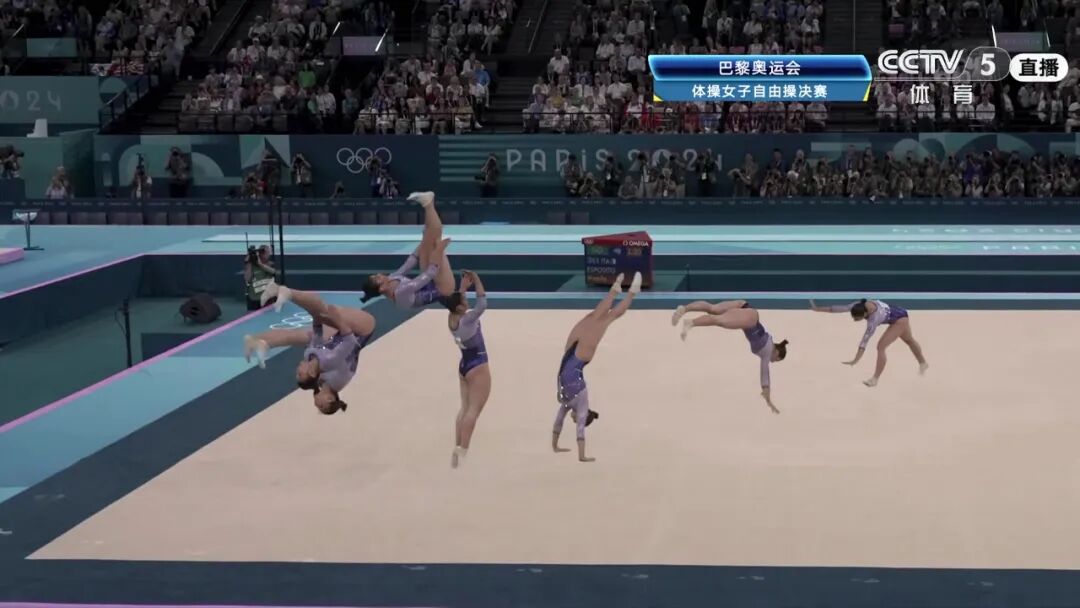
If you've watched any gymnastics coverage from the Paris Olympics these past few days, you may have noticed this detail: after a gymnast finishes a routine, the broadcast replays a sequence of freeze-frames breaking down their movements, with a distinctly sci-fi feel. This is the "bullet time" technology applied across multiple events, which works by performing real-time spatial reconstruction and 3D rendering of live footage in the cloud.
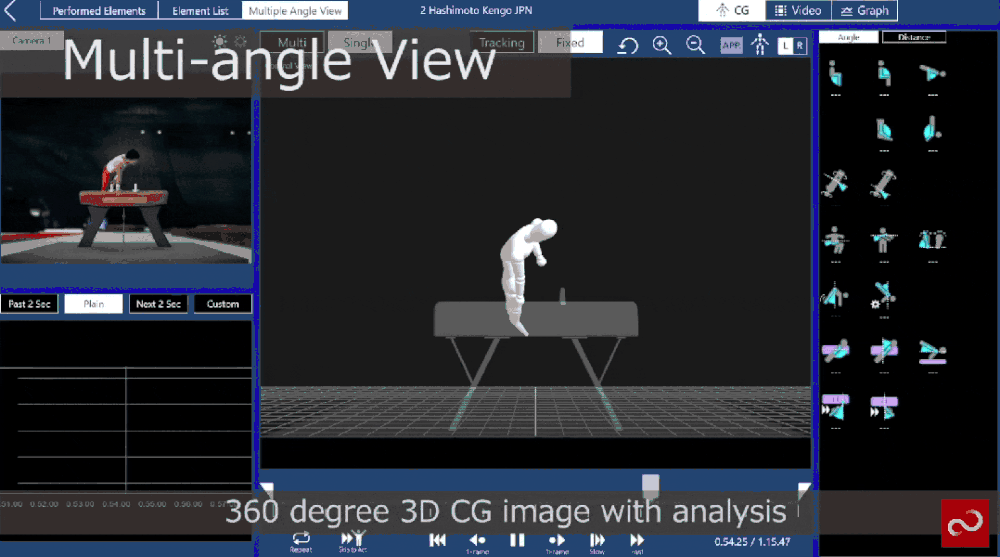
From the gymnastics judges' perspective, there's also an AI "judge" assisting them in identifying scoring points or deductions in fleeting competitive movements. This is the Judging Support System, making its Olympic debut. The system uses 4-8 pre-positioned HD cameras to capture athlete movements and create 3D models, which AI then analyzes and compares to help judges cross-reference against scoring criteria.
This is just a snapshot of AI's major showing at this year's Olympics. As the first Games since ChatGPT went viral, the Paris Olympics are unquestionably the most AI-dense in history. Beyond broadcasting and judging, AI has shown up in fan engagement, venue management, athlete training, event security, and numerous other scenarios both inside and outside competition venues. Reportedly, this Olympics features over 180 AI application scenarios.
Beyond these high-profile black technologies on Olympic display, AI elements have gradually permeated mass sports in recent years. While watching the Games, we discovered that in table tennis — an enormously popular sport — early traces of embodied intelligence have long appeared: table tennis robots. How capable are these robots at hitting the ball? Let's look at several well-known industry cases.
01 Omron:
The World's First Table Tennis Coach Robot
Our first case comes from veteran automation control and electronics manufacturer Omron.
In 2013, the then-80-year-old company introduced a "new species": the table tennis coach robot FORPHEUS. But due to poor computing ability for critical information like ball position and timing, this product — recognized by Guinness World Records as the world's first table tennis coach robot — couldn't even return a single ball at birth. Beyond that, seeing the ball, predicting its trajectory, and executing basic stroke techniques were all challenges the first-generation product faced.
Sensing, control, and thinking are the core capabilities tested in table tennis robots. After a decade of iteration, FORPHEUS has gradually advanced across these dimensions. The third generation's introduction of artificial intelligence marked a crucial turning point. AI deep learning enabled this generation of FORPHEUS to learn and digest human players' movement information, significantly improving return accuracy. Since then, while continuing to enhance AI capabilities, FORPHEUS has also optimized hardware aspects like robotic arms and sensors, aiming to achieve coordination of "eyes, ears, mouth, hands, and brain."
The latest generation of FORPHEUS debuted at the 2023 CIIE — the eighth generation. By this point, the robot had improved in understanding players and providing "tailored" coaching solutions. It can use visual sensing technology to three-dimensionally capture incoming balls and identify players, employ algorithms to perceive and predict ball trajectories, combine facial recognition to judge human players' emotional and physical states, remember opponents' characteristics and ball trajectories while continuously self-improving, and control swing timing and direction in increments of 1/1000th of a second.
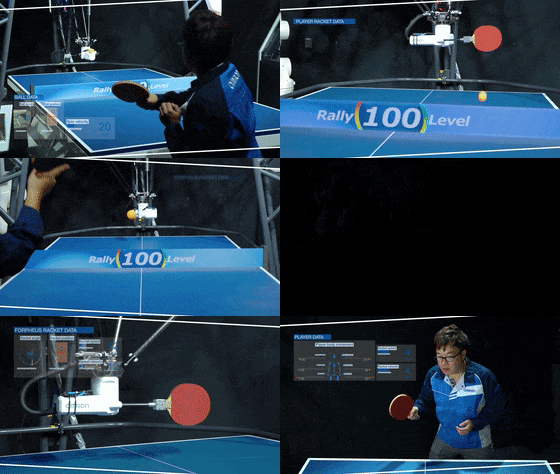
FORPHEUS fifth-generation rally performance (Image source: Omron official website)
02 Google:
When Table Tennis Coaches the Robot
If human players can grind fundamentals with tireless robot coaches, robots can also hone key capabilities like human-robot interaction through table tennis training. Table tennis demands extreme speed and precision, and features highly structured play and multi-agent collaboration, making it an ideal experimental vehicle for studying human-robot interaction and reinforcement learning.
Google, which has invested years of serious effort in robotics, is using table tennis to "train" robots. In a 2022 blog post, it introduced two related projects: i-S2R and GoalsEye. The former aims to train robots' ability to cooperate with humans, achieving a "record" of up to 340 rallies in 4 minutes with amateur human players through a model that can learn human behavior.
GoalsEye, meanwhile, hopes robots can learn practical skills from amateur players. The project combines behavioral cloning technology to learn precise target-positioning strategies, aiming for a "hit where you point" effect. After approximately 13,500 demonstrations, shot accuracy rose to 43%.
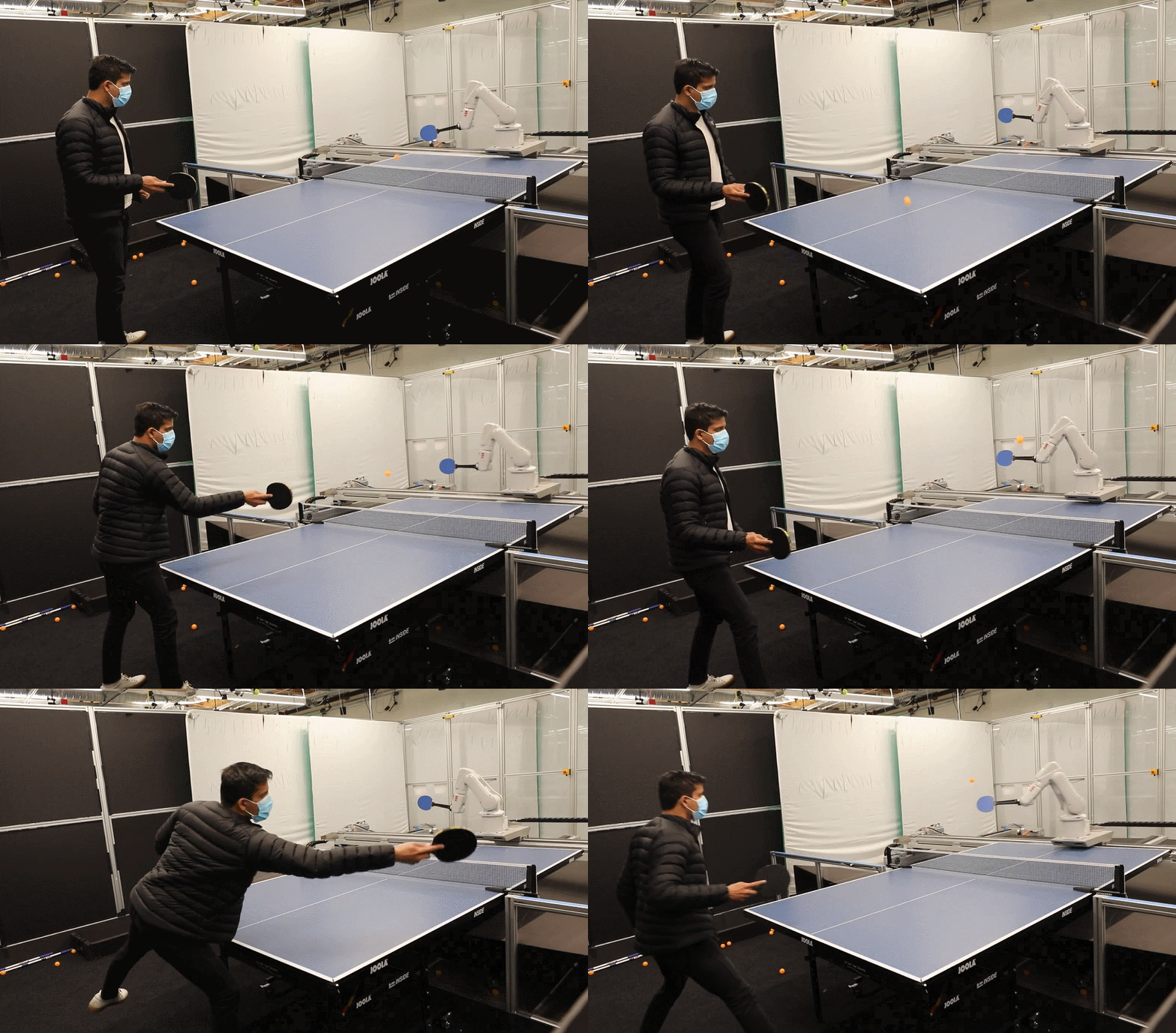
i-S2R project: robot rallying with human (Image source: public reports)
03 Pongbot:
The Serve Robot Aiming to Become "AI Xu Xin"
During the 2023 Hangzhou Asian Games, world champion Xu Xin briefly faced off against a special opponent — "AI Xu Xin." This opponent was the Pongbot M-ONE arm-style serve robot developed by startup Chuangyi Technology. According to company disclosures, this robot collected data on Xu Xin's attacking, looping, and chopping techniques, using digital intelligent control to "replicate" the spin, arc, and speed of his shots.
"AI Xu Xin" represents the concentrated showcase of Pongbot serve robot technology. This robot, developed for the table tennis education and training market, hopes to replace human coaches in the highly repetitive serve segment. The top-tier M-ONE can real-time collect athlete movement information and return data, analyzing athletes' training status through deep learning algorithms and adjusting serve strategies and training plans accordingly.
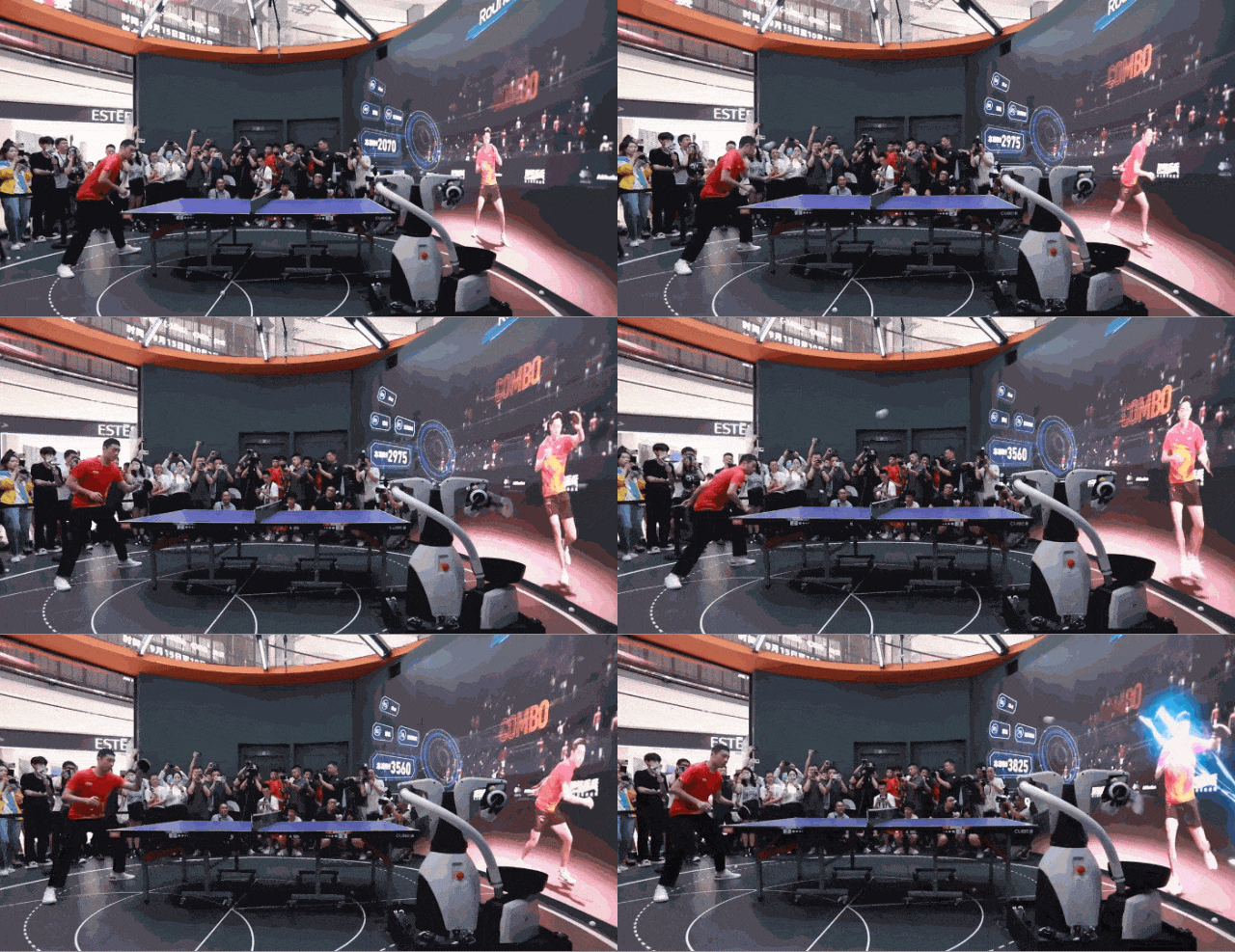
Xu Xin versus Pongbot table tennis serve robot (Image source: public reports)
04 More Possibilities Unlocked by Embodied Intelligence — Let's Talk in Person
What's the capability boundary of AI-enhanced robots?
What consensus and gaps exist in embodied intelligence R&D at home and abroad?
How far is embodied intelligence from commercialization?
...
On August 20, Yunqi Attent!on Beijing stop · Embodied Intelligence session looks forward to seeing you offline.
Event details and registration in the poster below. Limited spots — register soon!

*This article is compiled from public news reports