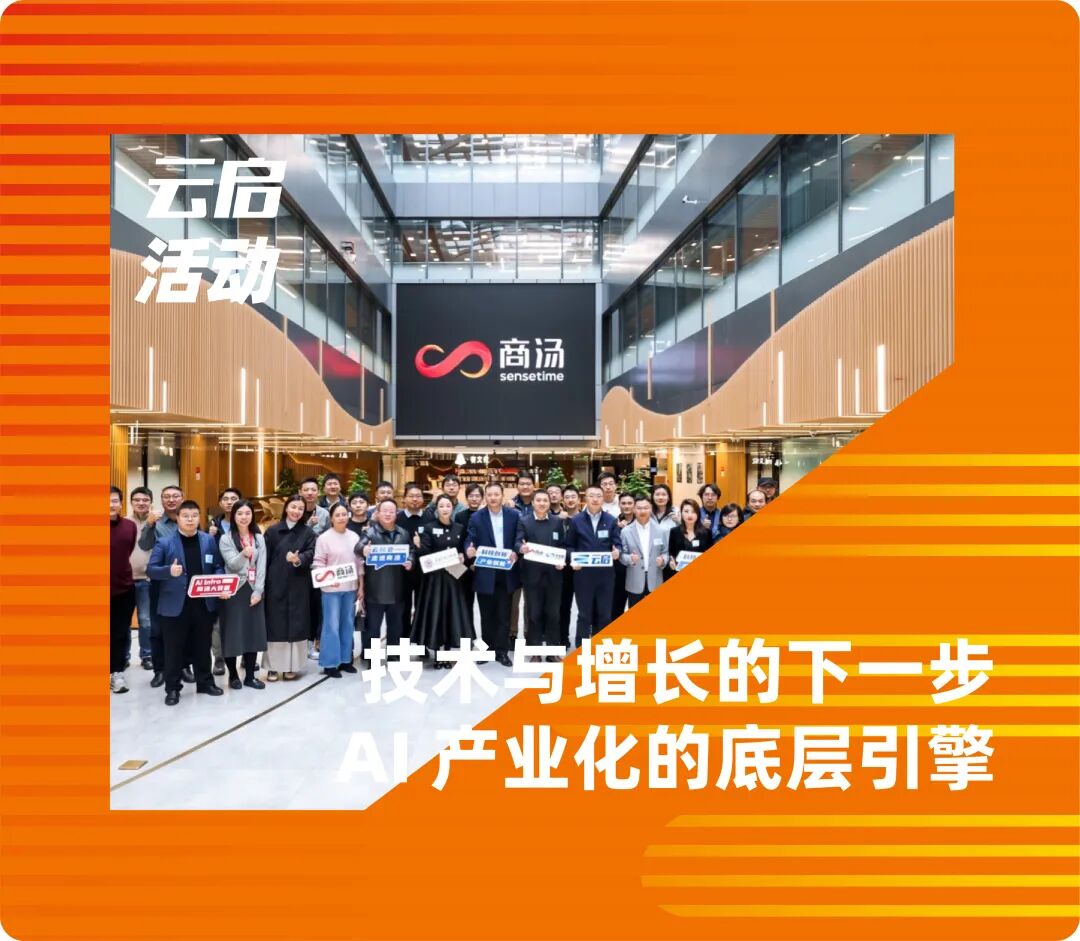
Cloud Summit · Inside SenseTime | The Next Step for Technology and Growth, The Underlying Engine of AI Industrialization

Exploring the Deep Integration of Technology and Industry
In the era of Agentic AI, large model capabilities are evolving rapidly, continually pushing the boundaries of technology and application. At the same time, industry attention is shifting upstream — how to transform model capabilities into scalable, sustainable productivity has become the critical new question.
As AI moves from technical exploration to real-world deployment, what determines the depth and breadth of its adoption is no longer just breakthroughs in the models themselves, but also infrastructure, engineering systems, productization capabilities, and deep integration with actual business scenarios.
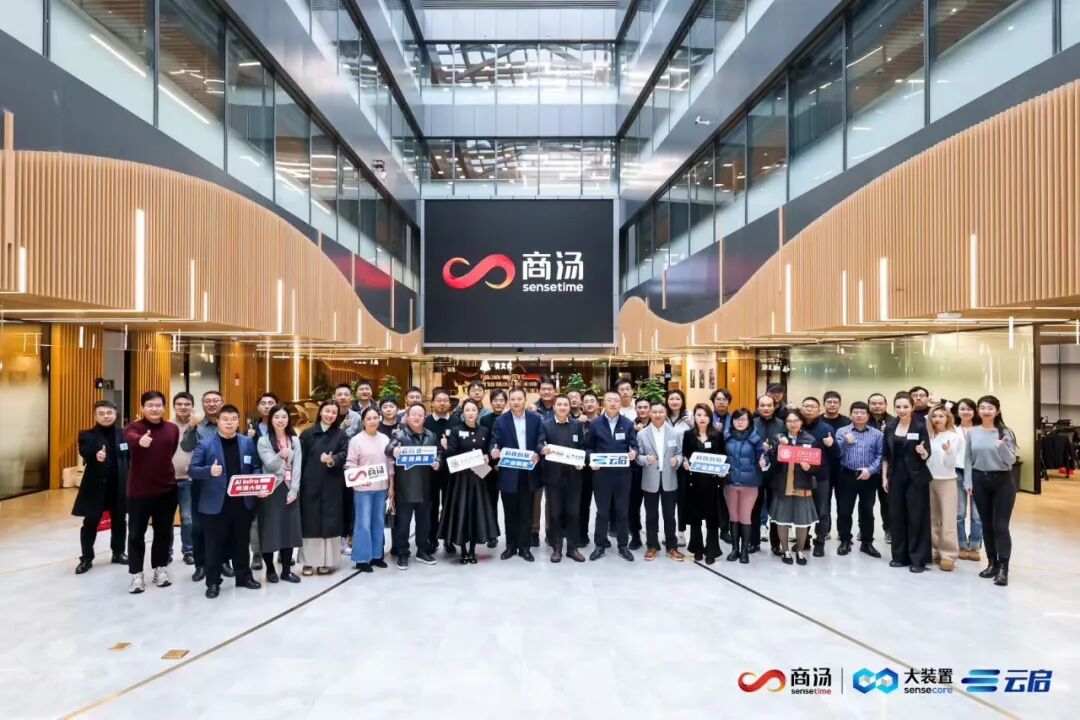
Recently, Yunqi Capital brought together several of its portfolio companies and upstream/downstream partners of SenseTime for a visit to SenseTime. This event was co-hosted by Yunqi Capital and SenseTime's SenseCore division, with support from Shanghai Jiao Tong University's Industrial Technology Research Institute and its AI Alumni Association, to explore the deep integration of technology and industry.
In his opening remarks, Yang Fan, co-founder of SenseTime and president of the SenseCore Business Group, reviewed SenseTime's years of continuous accumulation in algorithms, computing power, and platform capabilities, and noted the company's consistent long-term approach.
He stated that SenseTime Group is centered on a "SenseCore — Large Model — Application" trinity strategy, deeply integrating computing infrastructure, large model R&D, and industry scenario applications. From underlying computing architecture to model capability optimization to large-scale deployment, the company has established a relatively complete closed-loop system.
He emphasized that in the process of large model industrialization, startups with technical insight, genuine understanding of industry problems, and willingness to dig in for the long haul are an important force driving collective industry evolution. SenseTime looks forward to forming long-term synergies with more outstanding entrepreneurial partners, deepening cooperation in technology co-development, ecosystem complementarity, and industry deployment, jointly advancing AI from "usable" to "practical" and "scalably deployable."
Yunqi Capital founding partner Mao Chengyu traced another timeline of connections between Yunqi and SenseTime: from early industry intersections during their IDG days, to investors and entrepreneurs in Yunqi's team coming from the SenseTime ecosystem; from sustained conviction in foundational technology and AI directions, to a long-term relationship of parallel progress and mutual cooperation with SenseTime at different stages. He also noted that it was precisely the collaboration and exploration space between Yunqi's portfolio companies and SenseCore across model, application, and engineering layers that made this visit possible.
In his view, these connections are not accidental, but built on shared technical judgment, long-term commitment to industry, and consensus on the path to realizing AI value.
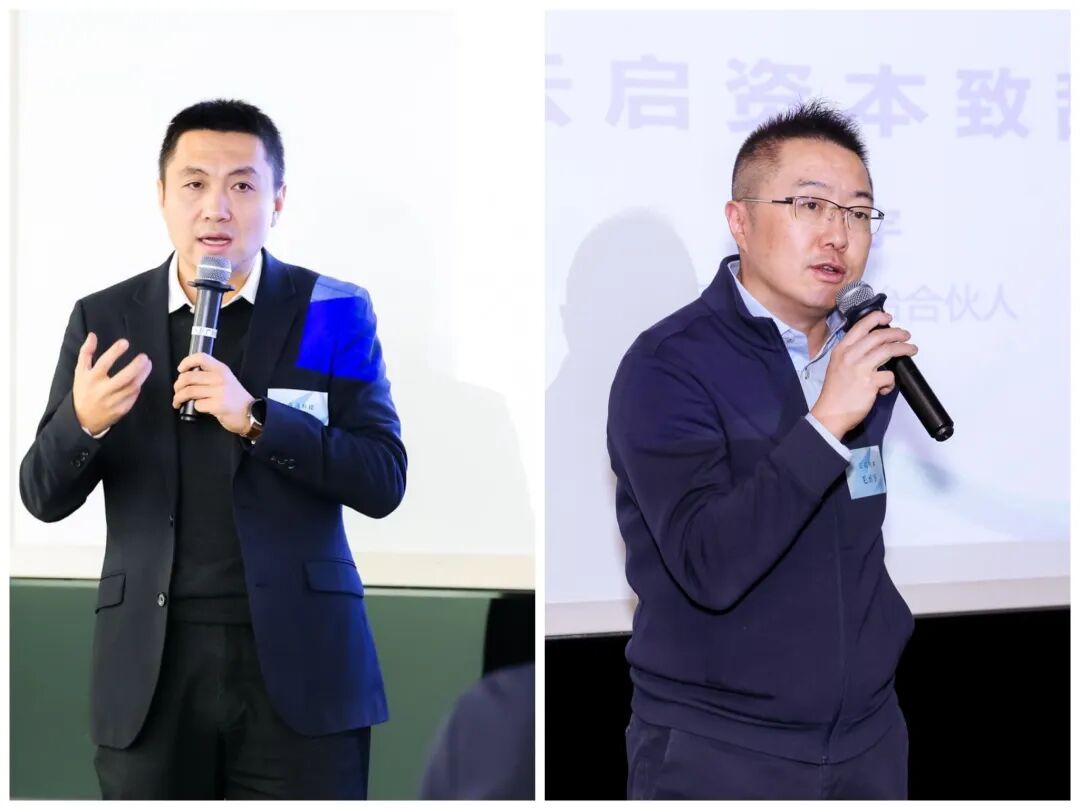
Left: Yang Fan, co-founder of SenseTime and president of the SenseCore Business Group
Right: Mao Chengyu, founding partner of Yunqi Capital
From Infrastructure to Application Scenarios
How SenseCore Supports AI Deployment
In the subsequent thematic sharing session, the SenseCore team systematically broke down SenseCore's positioning and value in AI industrialization across three layers: infrastructure, product capabilities, and scenarios/ecosystem.
Infrastructure Layer: Making Models "Run Affordably and Stably"
Dai Ji, general manager of solutions for the SenseCore Business Group, introduced the overall design logic of SenseCore as AI infrastructure from a platform perspective.
In his view, as large models move toward industrialization, the real challenges go beyond model capabilities themselves to compute scheduling, training and inference efficiency, stability, and cost structure. If these underlying issues cannot be systematically resolved, models will struggle to operate long-term and stably in real business scenarios. Addressing these key constraints, SenseCore has built a set of foundational capabilities oriented toward scalable deployment, enabling models to continuously deliver value in complex, long-running scenarios.

Product and Capability Layer: Turning Model Capabilities into "Usable Tools"
Focusing on the product system built atop SenseCore, Liu Yefeng, product director of the SenseCore Business Group, highlighted the forms of multimodal capabilities, toolchains, and Agentic workflows in practical applications.
He emphasized that for large models to truly enter business processes, what's needed is not just APIs but composable, schedulable, and sustainably evolving tool systems. Through standardized product capabilities and workflow orchestration, SenseCore is helping developers and enterprise users access models, build applications, and rapidly experiment and iterate across different scenarios with lower barriers.

Scenario and Ecosystem Layer: AI Enters Real Industries
From a perspective closer to industry practice, Wang Tingting, deputy general manager of SenseTime Group's Shanghai company, shared SenseCore's applications in urban governance, industrial parks, and regional ecosystems.
She noted that AI in most industries is not "plug-and-play" technology, but requires long-term embedding in specific scenarios and collaborative evolution with industry partners. Around industrial clusters like the West Bund, SenseTime is building more open cooperation networks with enterprises, institutions, and entrepreneurial teams through SenseCore, allowing model capabilities to be continuously validated and refined against real demands.
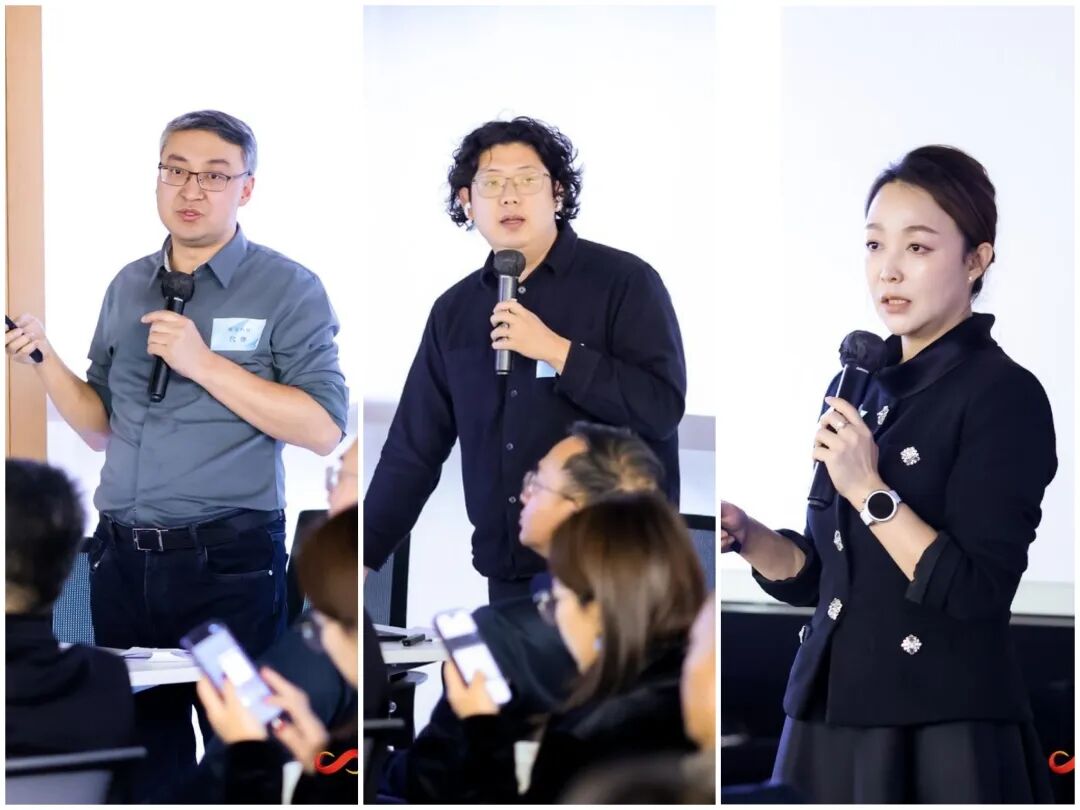
Left: Dai Ji, general manager of solutions for the SenseCore Business Group
Center: Liu Yefeng, product director of the SenseCore Business Group
Right: Wang Tingting, deputy general manager of SenseTime Group's Shanghai company
Aligning Through Exchange: Technology, Product, and Real Demand
In the subsequent innovation sharing and free exchange session, multiple entrepreneurs on site engaged in in-depth discussions around the technical problems they were solving, product capabilities, and potential synergies.
Additionally, the visiting group took an immersive tour of SenseTime's AI Experience Center. Centered on SenseCore and its To B and To C product systems, the center presented a concentrated showcase of its AI capabilities and application forms. From intelligent solutions for enterprises and industries to generative AI products for individual users, the visiting group directly experienced how SenseTime continuously transforms technologies such as multimodal model capabilities, generative AI, and Agentic workflows into product forms that real users can engage with.
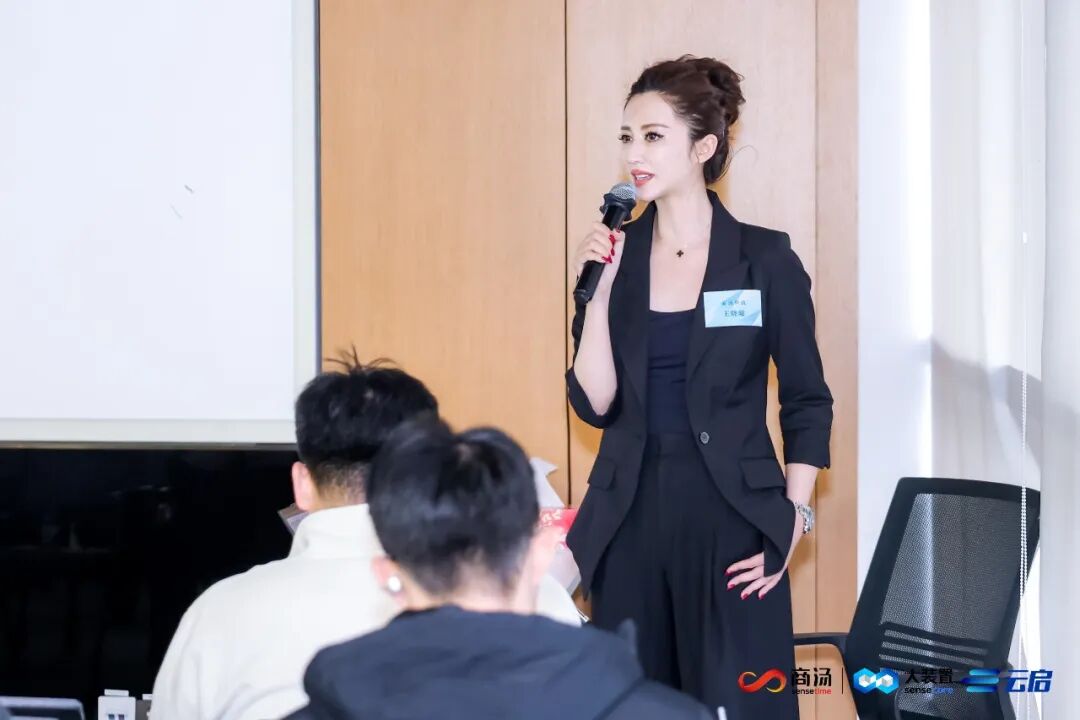
Cameron Wang, director of business and ecosystem cooperation for SenseCore
At the close of the event, moderator Cameron Wang, director of business and ecosystem cooperation for SenseCore, stated: "SenseCore not only provides full-stack infrastructure but is committed to building an open and mutually beneficial ecosystem. We look forward to working with ecosystem partners to continuously co-build the ecosystem, drive collaborative industry innovation, jointly explore deep AI application scenarios, and accelerate technology deployment and shared industry success."
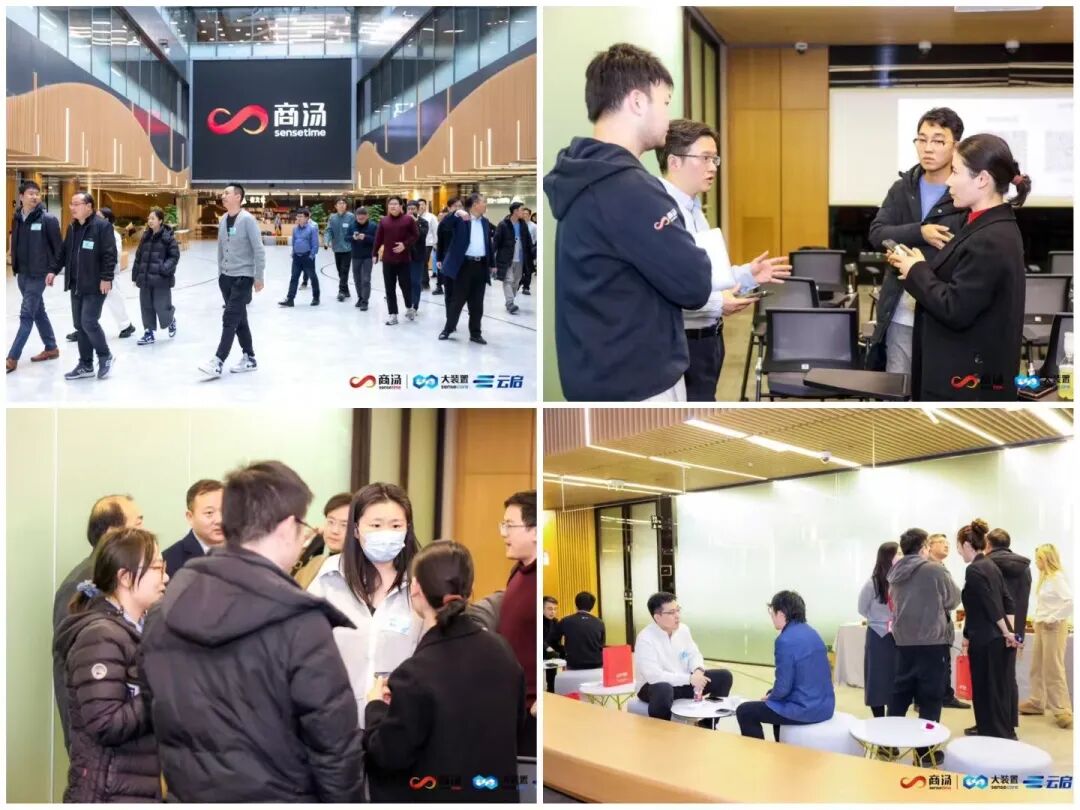
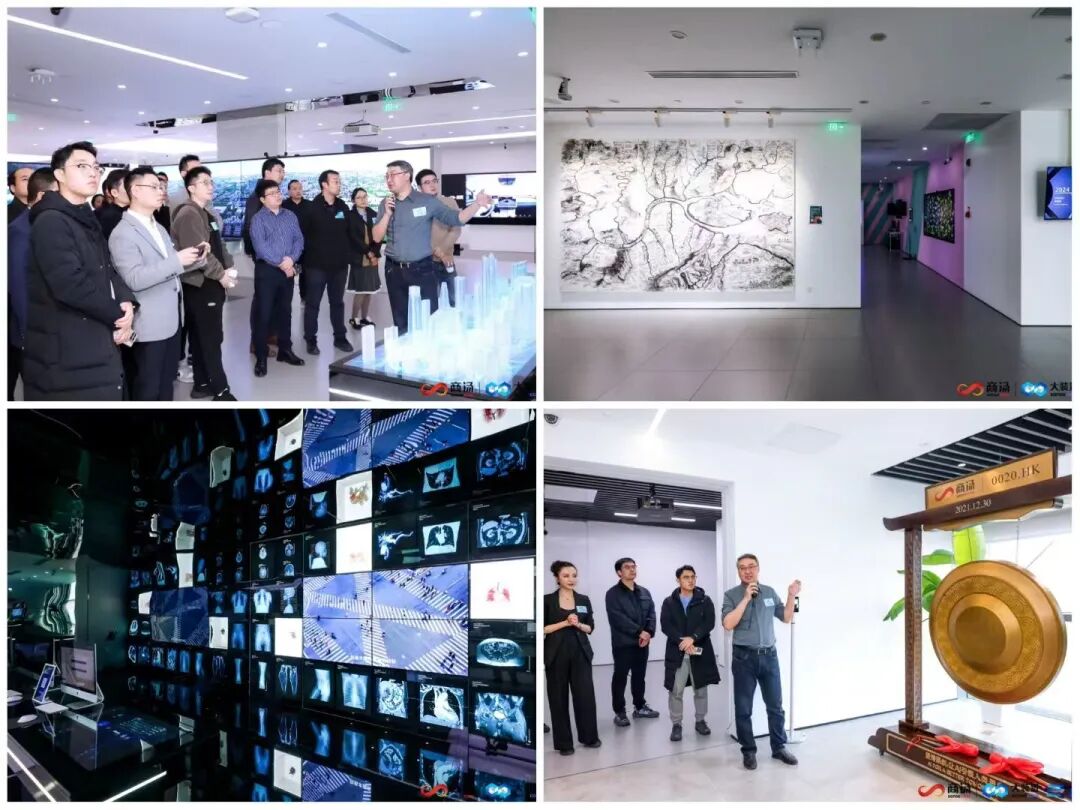
The value of technology will ultimately be validated in the complex real world. Through this "Yunji Gathering · Into SenseTime," Yunqi continues to explore, alongside entrepreneurs, its understanding of industry structure, collaboration models, and technology deployment paths — enabling innovation to flow more smoothly into the real world. Going forward, Yunqi will continue to walk alongside industry partners and entrepreneurs, exploring more possibilities for AI industrialization.
Yunji Gathering
One of Yunqi Capital's flagship empowerment initiatives
Designed to build bridges for value exchange between portfolio companies and partners. Since its inaugural event in 2017, Yunji Gathering has evolved from early-stage tech investment and financing roadshows to encompass industry visits, ecosystem matchmaking, and regional exchanges. To date, it has cumulatively attracted nearly 5,000 investors and entrepreneurs, brought sustained communication interest from over 100 institutions to each startup, and facilitated multi-level industry cooperation, technology collaboration, and ecosystem connections.