Cooking Robot Startup T-Chef Turns Profitable, Yunqi Capital Leads Nearly 100 Million Yuan Strategic Follow-On Round | Yunqi Partners

Global Deployment, Boundless Reach
Recently, Yunqi Capital early-stage portfolio company T-Chef, a smart cooking robot enterprise, announced the completion of a new strategic funding round of nearly RMB 100 million. This round was led by China Merchants Capital, with Yunqi and other existing shareholders making additional investments above their pro-rata rights.
Yunqi Capital has backed T-Chef since its Pre-A round. From reliably reproducing a single dish to understanding real-time variations in ingredients, temperature, and heat control, T-Chef is transforming Chinese cooking — long dependent on individual chefs' experience — into a product capability that can be developed, replicated, and continuously iterated, centered on "cooking robot hardware + AI digital dish large models." The company has already surpassed RMB 100 million in revenue and maintains profitability, with products deployed across multiple countries and regions globally. Learn more details alongside Yunqi Capital.
The following content is republished from "Hard Kr" (硬氪)
Original title: "Hard Kr Exclusive | First to Achieve Profitability, T-Chef Secures Nearly RMB 100 Million Led by China Merchants Capital"
Recently, smart cooking robot company T-Chef officially announced the completion of a new strategic funding round of nearly RMB 100 million. This round was led by China Merchants Capital, with Yueqian Capital participating, and existing shareholders including Yunqi Capital and Qifu Capital making additional investments above their pro-rata rights.
In the current capital environment, existing shareholders' oversubscription often represents the most direct vote of confidence in a company's commercialization capabilities and technological moat. With "cooking robot hardware + AI digital dish large models" at its core, T-Chef is converting the aspects of Chinese cooking that heavily rely on chefs' experience into standardized, scalable product capabilities. Following this funding round, the company will continue advancing physical AI R&D and accelerate the global deployment of Chinese and pan-Asian cuisine.
AI Digital Dish Large Models: Empowering Products and Delivery, First to Achieve Profitability
The commercial smart cooking sector has entered deep waters. For restaurant clients, purchasing cooking robots has never been about the machines themselves — it's about stable, delicious dish output. But traditional program-controlled stir-fry machines can only execute fixed instructions; different brands and regions define taste differently, and ingredient selection, meal budgets, and portion sizes all vary, meaning the "dish programs" required are completely different. To eliminate these differences, the industry's conventional approach has been to continuously invest heavily in dish R&D and service personnel, developing customized solutions store by store — using human labor to compensate for insufficient intelligence, resulting in persistently high delivery and operational costs. This has long been one of the key reasons why players in this sector struggle to achieve profitability.
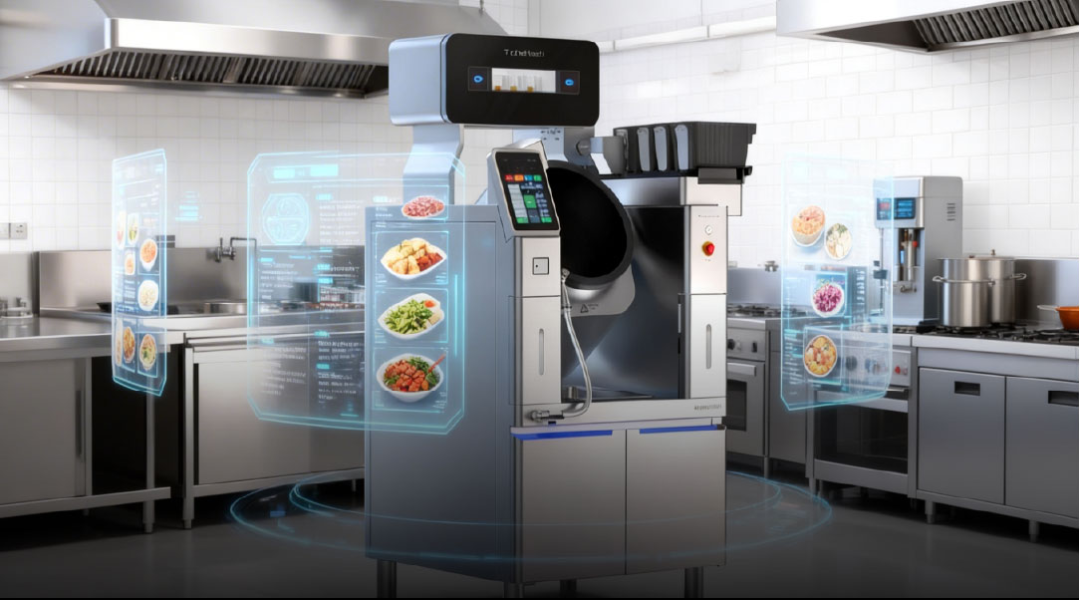
T-Chef's "AI Digital Dish Large Model"
T-Chef's answer is a standardized, scalable product: on one end, cooking robot hardware; on the other, an "AI digital dish large model" running simultaneously in the cloud and on the machine itself. The hardware handles stable execution, while the digital dish large model shifts dish development from reliance on human experience to model-driven processes — clients can nimbly develop and iterate dishes at the model layer, accounting for local taste preferences, ingredient supply chain characteristics, meal budgets, and even per-portion size differences. Combined, these form a complete "hardware + AI digital dish large model" product, rather than a passive device executing preset programs.
Behind this lies a design that appears contradictory but is actually critical. There is no universal standard for deliciousness; diversity and individuality are the very soul of Chinese cuisine. What T-Chef provides is not a rigid, fixed cookbook, but rather a "standardized dish development capability" — empowered by this standardized capability, clients can actually produce more personalized dishes. The recipes are standardized, the flavors are diverse, and what bridges the two is the model, not human labor.
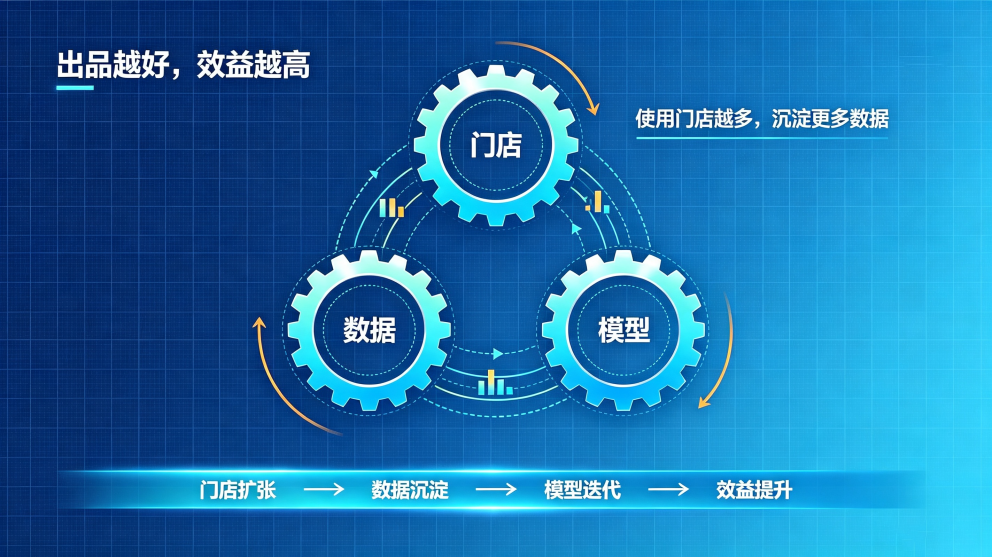
More critically, this model-driven product naturally creates a "data flywheel" effect for clients: every time a robot operates, its real cooking and operations data continuously flows back; millions of structured real cooking data points accumulated daily train the cloud model; after model iteration, updates are pushed in batches to all smart terminals, making every device's output more stable and dish development more efficient.
Better output leads to higher efficiency, more store deployments, and more data accumulation — stores, data, and models drive each other, and the flywheel spins faster and faster. It is under this flywheel that dish quality becomes fully traceable throughout the process and stably reproducible across different stores and regions; the company's growth no longer depends on linear stacking of human resources, but accelerates with expanding data scale — this is T-Chef's deepest moat.
"The wok-tossing techniques, intuitive heat control, and seasoning secrets of veteran chefs — those unique skills held in master chefs' hands, those local flavors on the verge of being lost — are being preserved as traceable, inheritable digital assets through data collection and model training," said Dr. Kaiping Geng, T-Chef's founder.
In his view, cooking robots with smart hardware as their载体 and powered by AI digital dish large models are building a "digital ark" for millennia-old Chinese culinary arts.
This business model centered on standardized products and data platforms is being validated in performance. In a sector where losses are generally accepted in exchange for scale, profitability is the true touchstone of a viable business model — and T-Chef is one of the few cooking robot companies with revenue exceeding RMB 100 million that has achieved profitability. Existing customers show strong repurchase rates, while new customers are diverse and continuously expanding; the company is developing healthily and rapidly overall, with projected 2026 revenue maintaining 300% growth over 2025. It is understood that the company's products have penetrated diverse sectors including smart manufacturing, senior care, campus dining, fast-food chains, fresh retail, and cultural tourism hotels; recently, it has also deployed at the后勤食堂 of the world's largest new energy vehicle manufacturer and rolled out批量 in Beijing-area school cafeterias, with clients including leading enterprises and institutions across various fields.
When "Heat Control Intuition" Meets Hardcore Engineers
If the AI digital dish large model solves "what to cook," then to reliably reproduce the same dish across different stores, another hurdle in the physical world must be crossed: ingredient batches vary, ambient temperatures fluctuate, and deploying the same dish model across different terminals doesn't necessarily produce the same taste. Traditional stir-fry machines remain at the "numerical control execution" stage, mechanically repeating preset times and temperatures, unable to handle this complexity. The "physical AI" that T-Chef has been continuously developing is precisely designed for this.
The essence of "physical AI" is enabling machines to no longer mechanically follow recipes, but to understand real physical processes and adjust in real time. Its long-term goal is to transform the heat judgment and operational habits that excellent chefs develop through experience into measurable, analyzable, verifiable, and continuously iterative engineering parameters and algorithmic models, forming a complete closed-loop control system — so that the output of dish models is precisely converted into stable results for every cooking session.
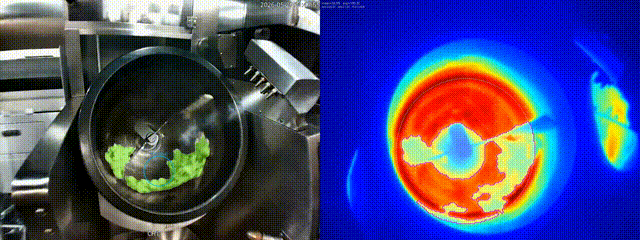
T-Chef's multimodal AI perception system
At the end of 2025, new CTO Vincent officially joined T-Chef and drove the establishment of an independent AI cooking R&D team. Vincent received his bachelor's and master's degrees from Tsinghua University and his Ph.D. through a joint program between the National University of Singapore and MIT, subsequently serving as a senior engineer at Apple. Over the years, he has accumulated deep hands-on experience in robotics, sensors, algorithms, and software-hardware system development, and was deeply involved in the R&D and large-scale mass production of consumer smart hardware.
Currently, the team is conducting R&D and small-scale validation around cooking data collection, multimodal perception, and cooking parameter optimization — identifying key differences in ingredient initial states and cooking processes through temperature, weight, visual, and equipment operation data, and沉淀 the relationships between these differences and parameters such as heat level, timing, rotation speed, and ingredient-adding rhythm into continuously trainable models.
"I hope our smart cooking robots can become 'intelligent partners' for food service professionals, transforming cooking from an experience-dependent 'physical labor' into an enjoyable activity that can be precisely controlled and freely created," Vincent said.
From "Going Out" to "Integrating In": Overseas as the "Second Growth Engine"
Overseas markets are opening new growth space for T-Chef.
Since the end of 2025, average daily overseas client visits have increased approximately threefold, with visit-to-contract conversion rates exceeding 50%. Its overseas business growth rate ranks among the industry's highest, with products already deployed in Europe, North America, Australia, Southeast Asia, Japan, and Korea.
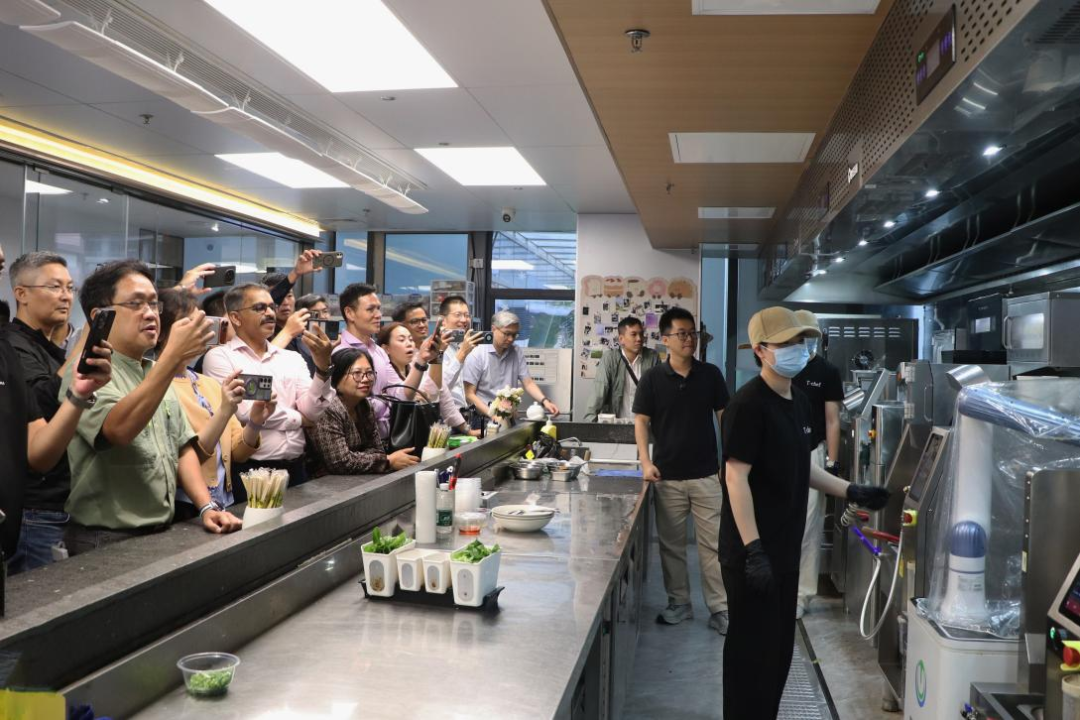
Overseas clients show strong interest in T-Chef's smart cooking robots
Behind this high growth lies deep insight and judgment about overseas food service markets. "In the global food service market, pan-Asian cuisines represented by Chinese, Japanese, and Southeast Asian food continue to see rising consumer demand and steadily expanding market scale," said T-Chef's overseas business lead.
In March this year, Italian restaurant owner Marco brought a T-Chef smart stir-fry robot into his kitchen. Unexpectedly, this robot enabled his restaurant to overnight "grow" more than a dozen new Chinese dishes — from Kung Pao Chicken to Dry-Fried Beef Ho Fun, with stable output and authentic wok hei. Guests had more new options to try, repeat visit rates increased, and monthly revenue rose by nearly 30%. Marco said with a smile: "It broke the mystery of Chinese food for me, injected new vitality into the restaurant, and achieved new revenue growth for the store."
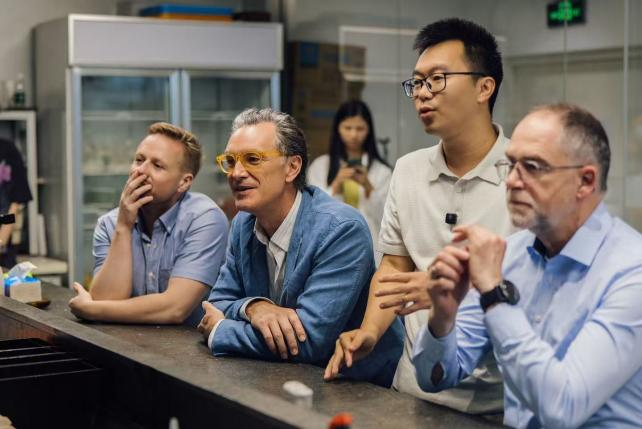
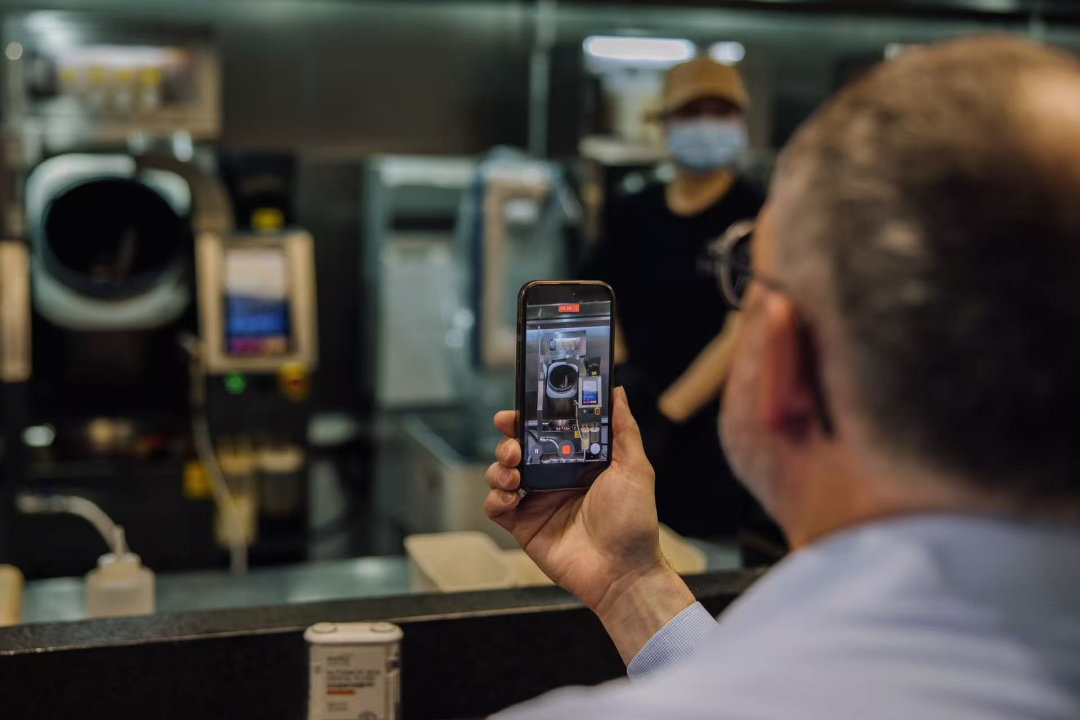
Overseas scenarios differ from domestic ones; true overseas expansion is not about copying the China solution. In the process of co-creating with overseas clients, Brian, a Chinese restaurant owner in the United States who had long struggled with back-of-house staffing shortages and unstable output during dinner rush, exclaimed "Amazing!" after using T-Chef cooking robots; Mr. Ono, a Japanese izakaya operator, said it perfectly reproduced and融合 local teriyaki sauce flavors; Turkish client Muhammad candidly stated that the machine's stir-fried noodle uniformity surpassed manual cooking, sincerely exclaiming: "This is exactly what we wanted!"
"Cooking robots are one of the few areas in smart robotics that can truly land in business scenarios and create closed-loop user value; we are very confident in their large-scale普及," said a China Merchants Capital investor. "Through in-depth research of the industry's major players, we found that the T-Chef team, with the least capital in the industry, has built the best product and run through the most efficient commercialization path."
From T-Chef to Qianyi Intelligence: A Future-Oriented Strategic Upgrade
It is understood that to better align with its globalization strategy and the technological core of "cooking big data + physical AI," T-Chef is about to complete a comprehensive brand upgrade, officially renaming itself "Qianyi Intelligence" — "Qian" (仟) represents thousands of智能终端 deployed globally, while "Yi" (弈) represents intelligent博弈 driven by data and models. Behind this brand upgrade lies a more fundamental vision: technology that makes cooking borderless and美食平权.