Deep Dive into Open-Source Commercialization: AI Is Rewriting the Value Logic | Yunqi Insights
Co-published the open source report for four consecutive years

AI has come a long way, and open source remains an unavoidable keyword.
Over the past year, open models have continued to evolve, with agent frameworks, inference optimization, data infrastructure, and developer toolchains staying active. Robotics and embodied intelligence have also begun leveraging the open-source ecosystem to accelerate scenario exploration. Open source is no longer just a collaboration model for developer communities — it's becoming a critical mechanism for technology diffusion, industrial division of labor, and commercial deployment in the AI era.
This has given "open-source commercialization" new meaning. In the past, it mostly revolved around offering enterprise editions, cloud hosting, or technical support for an open-source project. Now, the test isn't just about openness and community buzz, but product capability, growth efficiency, ecosystem organization, and the ability to close commercial loops. Notably, the boundaries of open source are also extending into the physical world — open robot hardware designs, control systems, simulation environments, and embodied intelligence foundation models are becoming new focal points.
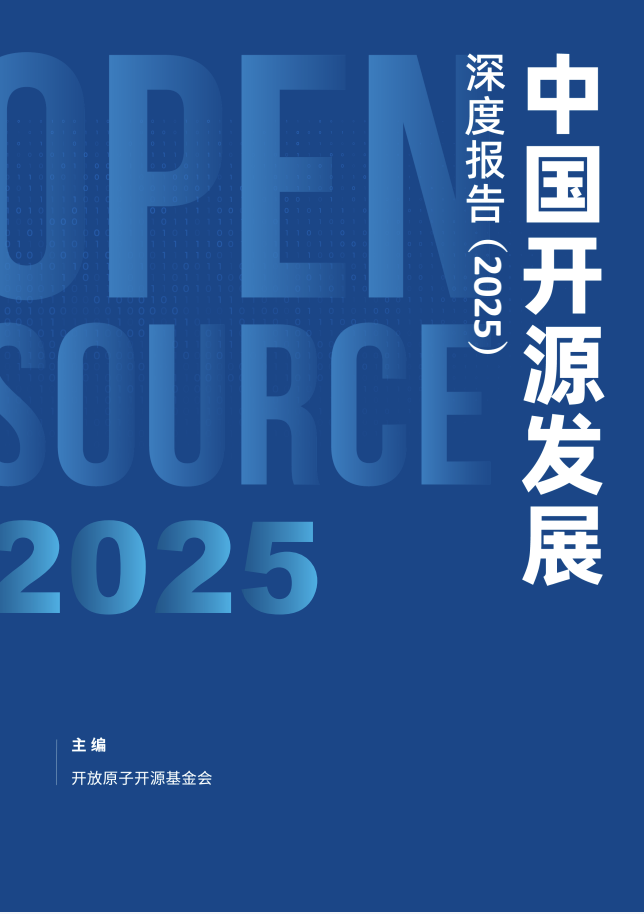
Today, the China Open Source Development Deep Report (2025) is officially released, with the "Open Source Commercialization Trends" chapter authored by Yunqi Partners. From the perspectives of global AI open-source commercialization, capital market trends, AI hardware, and embodied intelligence, we attempt to answer a key question: as AI rewrites software, hardware, and industrial ecosystems, how can open source truly translate into commercial value?
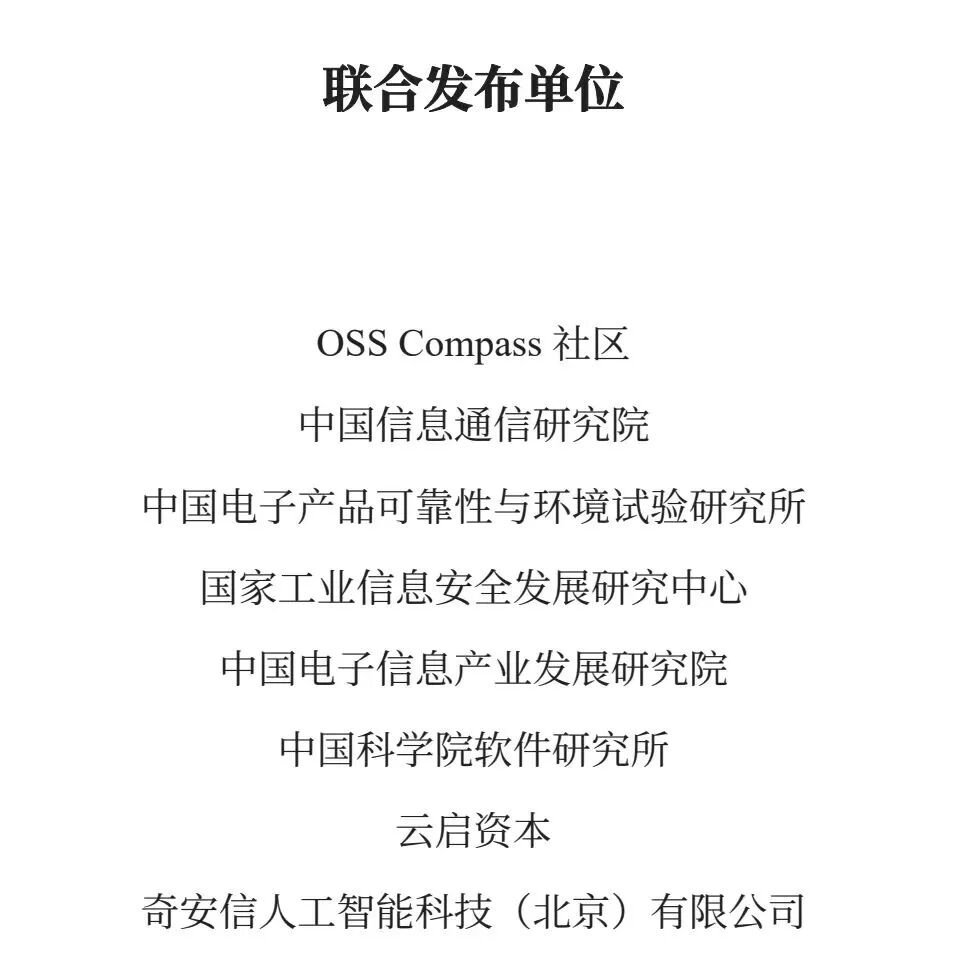
As an early-stage investment firm that has been deeply rooted in the open-source ecosystem for over a decade, Yunqi has partnered with leading industry institutions for four consecutive years to compile this open-source development deep report. This edition of "Yunqi Insights" shares the team's key takeaways from the latest report.
(P.S.: Click "Read More" at the end of this article to download the digital version of the report.)
Open-source commercialization is entering an AI-driven new phase
This year's report's core assessment of open-source commercialization can be summarized as follows: global open-source commercialization is accelerating its shift from "service-oriented" to "intelligence and ecosystem-oriented."
The logic of traditional commercial open-source models was: build around an open-source project by offering enterprise editions, managed services, on-premise deployment, and technical support; use community influence to reach developers, and use stability and enterprise-grade capabilities to monetize.
The AI era has changed this logic. Model capabilities, compute resources, data systems, toolchains, and application ecosystems are now more tightly integrated. The commercial value of an open-source project no longer depends solely on "whether it's open source" or "whether the community is active," but on whether it can find its place in the complete chain, whether it can convert developer ecosystem into product growth, and ultimately establish a sustainable commercial loop.
In other words, the core of open-source commercialization is no longer just "what to open source," but whether product, ecosystem, and business model can grow together around open source.
China's open-source first tier has filled the ecological void left by Meta's exit
In 2025, a significant shift occurred in the global open-source model competitive landscape: Meta gradually withdrew from the global open-source SOTA position due to extended R&D cycles for the Llama 4 series and strategic contraction. Meanwhile, the release of DeepSeek-R1 became an industry inflection point — it validated the feasibility of achieving "low-cost SOTA" through reinforcement learning and architectural optimization, breaking the linear growth logic of relying purely on compute scaling.
This shock directly prompted Moonshot AI (Kimi), MiniMax, and other vendors that had previously maintained closed-source strategies to actively release flagship model weights to the community. As a result, the "China open-source first tier" centered on DeepSeek, Qwen, Kimi, MiniMax, and Zhipu AI rapidly took shape, establishing new global technical standards for high-capability, low-energy-consumption models.
This also means that dominance over the global open-source ecosystem is evolving from a few international vendors toward a multipolar格局.
A continuously swinging pendulum exists between closed-source and open-source
Open source and closed source are not zero-sum competition, but rather exhibit a structural pendulum effect.
From May to September 2025, open-source model market share once approached 30% of the total. DeepSeek-V3, Qwen2.5, and other Chinese open-source models, with their extremely high cost-performance ratios, demonstrated GPT-4-level capabilities in standardized tasks such as coding assistance and text summarization, at inference costs only a fraction of those of closed-source competitors. Large volumes of basic application traffic consequently migrated toward the open-source side.
But after October 2025, as a new generation of closed-source flagships established new capability ceilings, and the proliferation of AI coding agents and complex reasoning tasks drove high-end traffic to rapidly flow back to the closed-source camp.
The pattern is clear: closed-source vendors release powerful models to build moats, then open-source vendors close the gap through distillation and architectural optimization to reclaim the mid-to-low-end market — repeating in cycles.
Open-source valuation returns to emphasizing product, growth, and moats
In the past, the market sometimes tended to measure open-source project value by GitHub Stars, community buzz, and developer voice.
But the report notes that as commercialization enters its mid-to-late stage, operational metrics have returned as evaluation priorities: whether the product solves high-frequency, hard needs; whether there are clear paid scenarios; whether there is a continuously growing customer base; and whether moats can be formed in engineering capability, performance optimization, security governance, and ecosystem operations.
Open source can raise the "starting point for growth," but cannot substitute for the "commercial loop" itself. Current leading open-source AI companies, whether taking the To B enterprise privatization route or the To C consumer subscription route, generally show impressive revenue growth. But due to extremely high compute and R&D costs, the commercial loop has not yet truly closed. This is the common situation across the entire open-source AI track, not an isolated case — open source lowers the technology barrier, but not the difficulty of commercialization.
Capital concentrates toward the top; open-source AI captures nearly 70% of funding
In 2025, total global funding for commercial open-source software enterprises was approximately $6 billion. Of this, the open-source AI track accounted for nearly 70% (about $3.8 billion), a significant increase from 30% in 2024. Chinese open-source AI companies raised approximately $1.1 billion for the year, accounting for nearly 30% of global open-source AI funding.
In terms of capital structure, AI infrastructure absorbed about 61% of full-year funding, with active toolchain transactions. Series C and later rounds, representing about 20% of deal count, took 75% of the capital — funding is highly concentrated among a small number of top projects with clear commercial paths.
On the exit front, M&A is becoming the mainstream path. In 2025, there were 29 global M&A transactions in commercial open-source software enterprises, a significant increase from 2024. Buyers were 73% from the United States, mainly focused on data infrastructure, cloud infrastructure, and AI capability integration. Yunqi portfolio company Jina AI was fully acquired by Elastic in October 2025, a representative case of this trend — its long-term, focused approach to embedding models and RAG core components ultimately gained high recognition from a strategic buyer.
From software to hardware: open source is entering the physical world
This year's report adds special observations on AI hardware and embodied intelligence open-source commercialization.
As AI moves from screens to the physical world, the objects of open source are also extending — not just code, models, and software toolchains, but also robot hardware designs, control systems, simulation environments, data collection methods, and foundation models. Open-source robotics commercialization mainly unfolds along three lines: hardware sales, operations and maintenance services, and scenario-based solutions. "Open-source base + commercial services" is becoming the mainstream structure in this field.
But hardware open source is more complex than pure software: it requires not just community collaboration, but also involves supply chains, manufacturing costs, hardware reliability, and scenario delivery capabilities. The role open source plays here is to lower innovation barriers and shorten iteration cycles through ecosystem collaboration, not to replace commercialization itself.
Conclusion: the long-term value of open source lies in ecosystem compounding
From Yunqi's perspective, the long-term value of open source comes from a kind of ecosystem compounding — letting excellent technology be seen faster, letting developers participate in building earlier, letting industry needs feed back into product iteration more quickly, and letting startups have the opportunity to build their own technical influence and commercial boundaries outside of giants.
Since 2015, Yunqi has continued to deploy in open-source-related technology and infrastructure, investing in PingCAP, Zilliz, Jina AI, RisingWave, TabbyML, and a number of other globally competitive open-source projects. Multiple portfolio companies including MiniMax, Independent Variable Robotics, and Manycore Tech have also open-sourced major products.
AI is bringing open source into a new, more complex phase. Whether models are truly open, how communities can sustain governance, how commercialization can close the loop, and how security and compliance can be balanced — there are no standard answers yet. But what is certain is that open source remains an important entry point for observing the next generation of technology ecosystems.
The release of the China Open Source Development Deep Report (2025) is not just a record of China's open-source ecosystem over the past year, but also provides a window for understanding the new phase of open-source commercialization. Going forward, Yunqi will continue to focus on open-source infrastructure software, AI infrastructure, developer tools, data infrastructure, embodied intelligence, and other directions, accompanying more long-term-oriented technology entrepreneurs to find truly sustainable commercial value in open ecosystems.