"A Deep Dive" into Smart Hardware: Three Hours on Mass Production, Crowdfunding, and Gen Z | Yunqi Capital Event

The "Basics" and "Real Questions" of AI Hardware Innovation
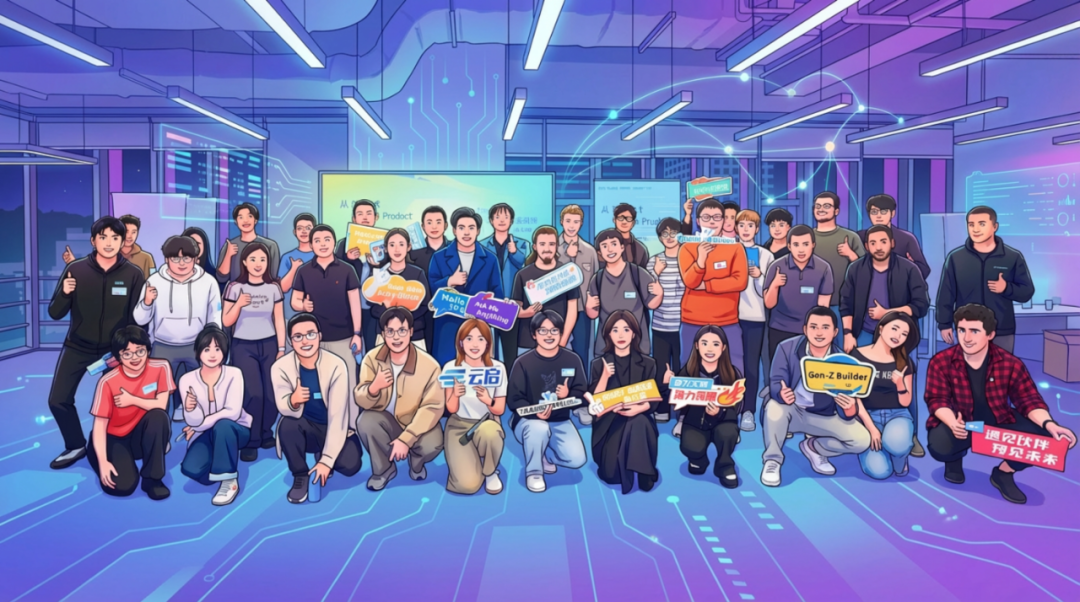
As AI capabilities become increasingly general-purpose, "what hardware it's packaged in and how it enters daily life" is emerging as the new frontier where winners will be made.
Rings, glasses, musical instruments, designer toys — whether "old objects" supercharged with AI buffs or wildly imaginative "new species," the proliferating categories all attest to the智能硬件 boom. And the field of entrants is growing more diverse too: beyond traditional hardware manufacturers and big-tech teams, Gen Z founders are becoming an undeniable force in this wave of innovation.
Different players excel at different pieces of the puzzle. Connecting scattered knowledge and resources like jigsaw pieces may be the only way to reach greater possibilities. Recently, we assembled exactly such a puzzle in Shenzhen — a hub of智能硬件 innovation — where Yunqi Capital, in partnership with Shenzhen MOLI AI Ecosystem Community (模力营), Yingji (硬迹), HKAI LAB, and SZ RoboX, hosted a deep-dive meetup on智能硬件.
Three hours of dense, information-rich conversation yielded plenty of real-world experience and concrete paths from the front lines, along with fresh Gen Z inspiration. Here's a recap of the highlights.
↑ Click the video for a quick look at the event
AI Entrepreneurship Is Moving Beyond Solo Mode
In the opening session, Yunqi Capital investor Hao Liang shared updates on the firm's "Y Transformers" investment program, a dedicated initiative for post-98 AI-native founders. Since its launch in early October, the program has already invested in five AI agent projects spanning personal growth, education, and emotional relationships.
"Yunqi hopes this program can serve as a platform that connects resources for more young founders with ideas and execution ability," Liang said.
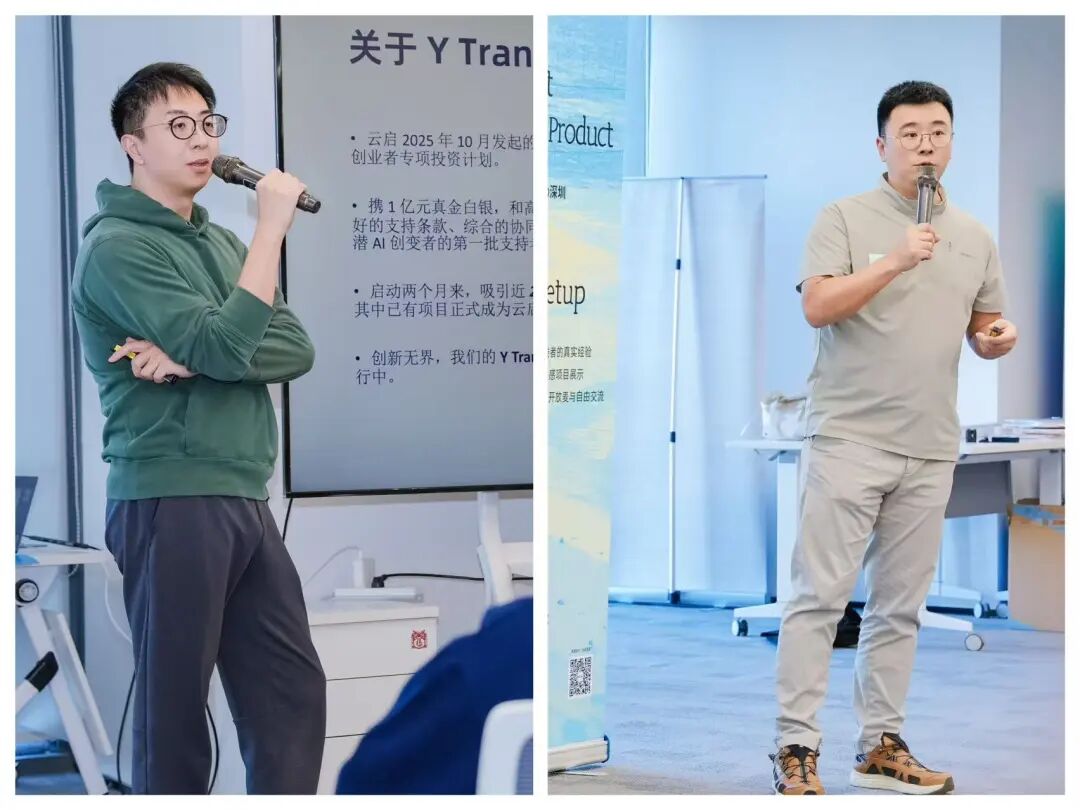
Hao Liang of Yunqi Capital (left) and He Fei, head of MOLI (right), delivering the opening remarks
He Fei, head of Shenzhen MOLI AI Ecosystem Community ("MOLI"), shared how the organization operates. MOLI primarily serves startups within three years of founding and under 30 employees, offering a comprehensive service package that includes physical office space, free compute credits, and dedicated AI investment fund support.
From Building It to Selling It:
Battle-Tested Advice from the Front Lines
From R&D to mass production, what quality-control pitfalls await? For brand going global, what are the hidden tips for "mastering" crowdfunding platforms?
On these unavoidable, real-world questions in hardware entrepreneurship, partners from Yunqi's hardware portfolio and brand-globalization consultancies shared judgments honed over years on the ground. Attendees also shared their map of Shenzhen's founder ecosystem through the eyes of global entrepreneurs.
R&D to Mass Production Quality:

Wu Yuan'an
Head of Quality Center, Hohem Technology | Hohem builds accessible smart imaging products and is the pioneer and leader in "AI stabilizers"

- Profitability is the primary purpose of most company operations. Before committing heavy R&D resources, first establish a "product P&L model" to judge whether the product is worth developing at all.
- Quality control isn't the final gate — it's a closed loop that continuously feeds back from design, manufacturing, and after-sales service.
- At the early product design stage (EVT), use DFMEA to systematically identify all potential risks in each design module — essentially shifting quality control's center of gravity from "fixing after the fact" to "preventing before it happens."
- A product sample performing perfectly in the lab doesn't mean it's ready for mass production. Two fundamentally different validation phases are usually required — DVT (Design Verification Test) and PVT (Production Verification Test). This separation ensures both the "what it is" and "how to build it" dimensions are sufficiently robust, paving the way for production.
- Market feedback isn't the endpoint — it's the starting point for amplifying brand voice and refining customer-centric thinking. We don't just focus on "whether something went wrong," but on whether better prevention mechanisms, control methods, and processes exist after problems arise, and whether we can rapidly self-iterate and self-correct to meet customer expectations.
Crowdfunding's "Two Gates":
From Precision Product Selection to Eight-Figure USD Campaigns
The Underlying Logic of Execution
Wei Jiao
Founder of "Cross-Border Jiaojiaozi" and Partner at Vinyl | Long-time operator of hardware crowdfunding campaigns at the million- and ten-million-USD level

- Audience profile: Crowdfunding means dealing with "the pickiest people on earth"
Stop talking about "selling solutions." Kickstarter's core audience (men aged 35–45, Silicon Valley geek archetype) are fundamentally the world's most demanding, opinionated consumers. They can dissect your PowerPoint product from a single video, and deduce your supply chain level from a glance at specs. Crowdfunding isn't selling to "newbies" — it's submitting to the judgment of "enthusiasts."
- Category screening: A good product doesn't equal a crowdfunding-ready product
Because crowdfunding platforms have extremely fixed audience attributes (hardcore, tools, efficiency, geek), certain categories inherently hit a "ceiling." Not being suitable for crowdfunding doesn't mean it's not a good product, but pouring heavy investment into the wrong battlefield is the biggest strategic mistake. Crowdfunding is just one validation path, not a panacea.
- Four structural shifts worth close attention in 2025
- Desktop-ification and professionalization of DIY tools: Moving workshop-grade professional tools to the desktop, making them compact yet powerful, with overall price bands shifting upward.
- AI infrastructure × scenario integration: Embedding AI directly into the underlying experience (AI vision / AI optimization / AI assistant)
- Trust-driven brand compounding: Top projects almost always come from three categories: 1) big-tech experiments, 2) category kings, 3) vertical champions. Strong brands naturally command trust and traffic.
- The full rise of prosumers. The real gold mine lies with people who use equipment to make money — Etsy sellers, small shops, custom businesses, small-batch production. They care most about efficiency and payback speed.
- Crowdfunding has never been low-cost financing — it's a capital-intensive business.
Another common misconception: treating crowdfunding as a "low-cost way to scale" or "something to try when you're broke." The reality: for a mature crowdfunding campaign, platform fees, marketing costs, service provider fees, content production, and fulfillment preparation typically add up to roughly 40% of funds raised. So crowdfunding isn't a "free traffic pool" — it's a high-stakes game of exchanging money, resources, and expertise for trust.
- On pre-launch: Crowdfunding's "explosion" doesn't happen the moment you go live
The 3–4 week pre-launch warm-up serves at least two core functions: user acquisition — gathering the people most likely to pay for this category in advance; and trust-building — repeatedly proving to this audience that you can build the product, that you're making progress, that you can deliver. Sales in the first three days after launch often account for 40–50% of total funding.
This isn't luck — it's the concentrated release of pre-built trust, plus the boost of free platform traffic.
- On trust: Trust is vitally important for crowdfunding projects, but it's not a slogan
After experiencing numerous delays, missed deadlines, and outright failures, users really care about only one thing: can you actually build the product and ship it to me on time? How well you answer this question determines the campaign's ceiling.
- There's no standard answer for path selection. Some products suit crowdfunding-first then e-commerce; others fit better going direct to DTC or platform sales. Crowdfunding is just one validation path.
On Path Selection
- Not fitting crowdfunding doesn't mean it's not a good product. One final clarification: crowdfunding isn't the only right path, nor a mandatory rite of passage for all products. Because crowdfunding platforms have highly fixed audience profiles, not every product belongs there.
- Some products are better suited to entering DTC or platform e-commerce directly. Some should build sales volume through channels first, then use crowdfunding for amplification. For others, crowdfunding is merely one validation step, not the destination. Truly mature decision-making means choosing the most suitable path based on the product's inherent attributes, rather than force-fitting a "crowdfunding template."
In summary, crowdfunding's real difficulty lies in "two gates": choosing a category suitable for extreme-user scrutiny, and systematically executing to earn trust bit by bit.
Shenzhen's Hardware Ecosystem Through Global Entrepreneurs' Eyes
Liu Tuo
Founder, SZ RoboX AI Hardware & Robotics Open-Source Community
- Shenzhen is becoming an essential stop for an increasing number of overseas AI and robotics entrepreneurs. Not just for the supply chain, but because here ideas can rapidly become working prototypes.
- Overseas teams tend to have more experience in product definition, branding, and market expression. Shenzhen local teams hold clear advantages in engineering execution and hardware iteration speed.
- Hardware entrepreneurship is shifting from "single-point capability competition" to cross-regional, cross-background collaboration models. Shenzhen is becoming a critical node in this collaborative network.
- For many overseas entrepreneurs, coming to Shenzhen isn't "relocating operations" — it's filling in the hardware-capability puzzle piece.
Gen Z Hardware Inspiration Sharing
After the high-density deconstruction of hardware entrepreneurship's practical challenges, the mic passed to several young founders still in early stages. Their projects are still growing, but their inspiration almost all stemmed from very specific, deeply personal moments.
Couldn't Take Good Photos of Myself,
So I Wanted a Different "Photographer"
Inspiration 1

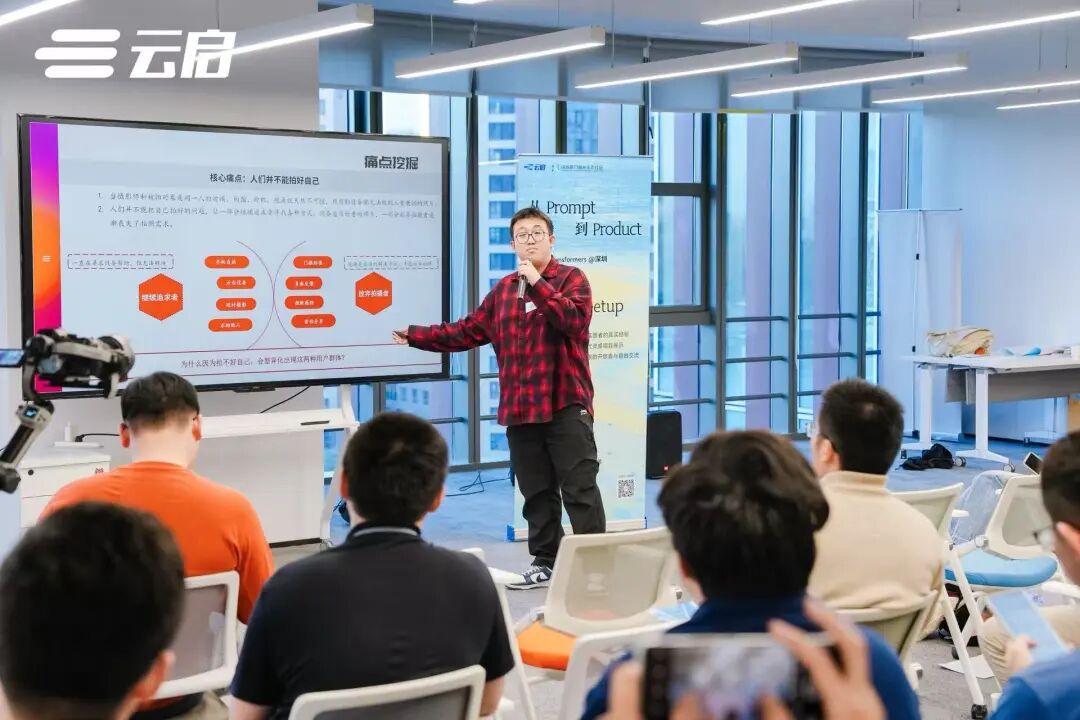
The idea for AI personal photographer project "Aperture Spirit" (光圈灵动) started with an utterly ordinary trip.
Founder Xu Zicheng took photos of his sister, who complained they looked terrible; when she tried shooting herself, the results were equally unsatisfying. In the argument, a question surfaced: when the photographer and subject are the same person, composition, perspective, and timing are almost uncontrollable.
In subsequent research, Xu discovered that many people don't actually dislike taking photos — they've simply given up on documenting themselves because they "can't take good photos of themselves."
Around this problem, he chose a flying robot form to create an AI personal photographer that "understands composition, has aesthetic sense, and can make its own decisions": not making people adapt to the device, but making the device revolve around the person.
In this vision, flight capability solves perspective freedom. More central is the photography decision system — when to shoot, how to shoot, to what degree — so it feels more like "someone who understands you."
When Paper Books Disappear, What Happens to Blind Readers?
Inspiration 2
"Boundless Voyage" (无界启航) focuses on a less-discussed group: the blind.
Founder Li Cheng spent time living with a blind couple during a university social practice. This experience made him realize for the first time that while smart devices evolve at breakneck speed, blind people's tools remain extremely limited.
A direct question followed — as paper books gradually exit mainstream reading scenes, do blind people have their own "e-books"?
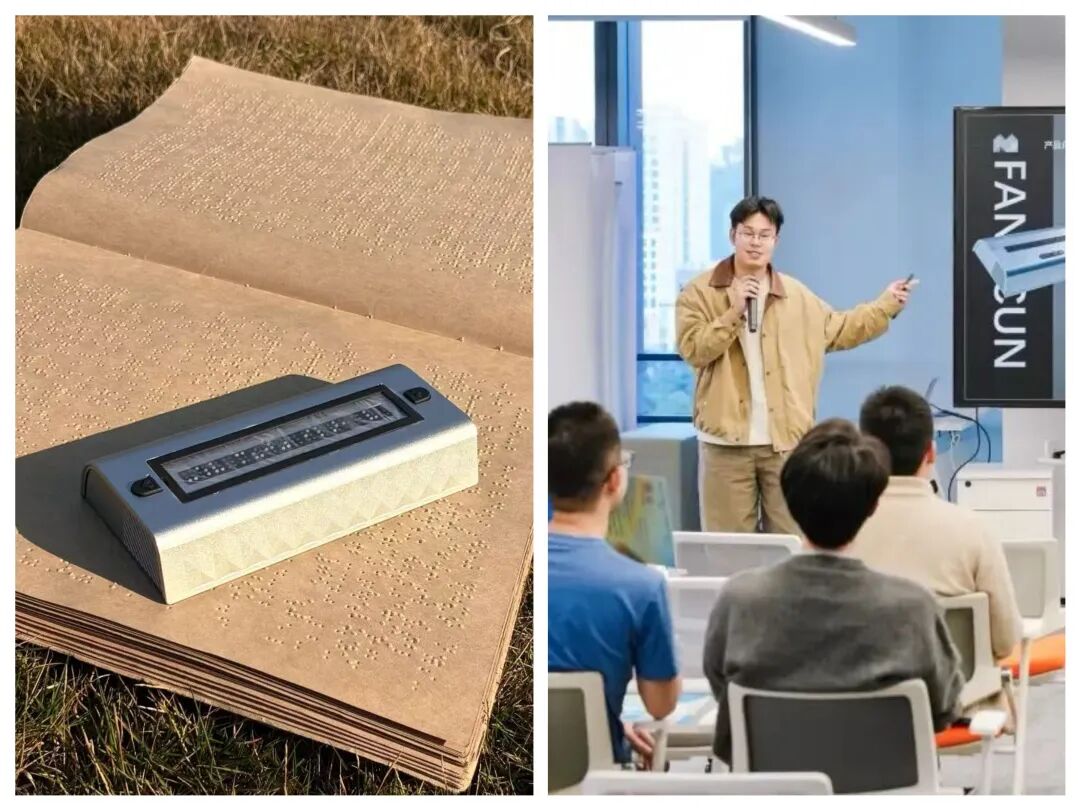
This question ultimately evolved into Boundless Voyage's product direction: a dynamic braille e-reader and accompanying braille translation system.
Leveraging AI and large model capabilities, the team raised braille translation accuracy from 92% to approximately 99.7%, making information access more stable and reliable.
A Glasses Journey That "Takes a Lot of Beating"
Inspiration 3
Zhenguan Innovation (贞观创新) founder Huang Kai's sharing felt more like recounting years of sustained personal choice.
From reading Steve Jobs in high school, to encountering AR in college, to entering the eyewear industry after graduation, he has always believed "glasses will become a major entry point for next-generation computing devices."
Now he and his team are building a glasses-form-factor action camera. From digital cameras to action cameras to thumb cameras, imaging devices have trended toward miniaturization and invisibility for decades. Huang believes glasses are the form factor aligned with this trajectory. "Compared to similar products, we can achieve 4x the performance while being lighter and cheaper," he explained.
In Huang's view, AI hardware entrepreneurship is more like an ascetic journey that "takes a lot of beating" — solving algorithm problems while confronting the more traditional challenges of mass production, supply chain, and market fit. Precisely for this reason, he chose to self-develop the full hardware-software stack. Not to showcase capability, but as another possible interpretation of "Intelligent Manufacturing in China."

Building AI Pets with a Sense of Life
Inspiration 4
Dimension Link (次元连接) founder Zhou Lei's entrepreneurial idea also came from an everyday scene: accompanying his girlfriend to a guzhi (merchandise) shop.
He noticed young women have intense investment in and attachment to emotional products, yet many AI companionship products remain largely confined to screens and voice. Does true companionship still require a touchable physical vessel?
So he chose what seems like a "red ocean" direction — plush pet robots — but with a very clear entry point: not competing on displays, not stacking TTS features, but returning to touch and movement.
In Zhou's view, a sense of life isn't "spoken" into being — it's felt. Like certain IP plush toys, the moment they truly "come alive" comes from a sequence of slightly clumsy yet emotionally charged movement feedback.
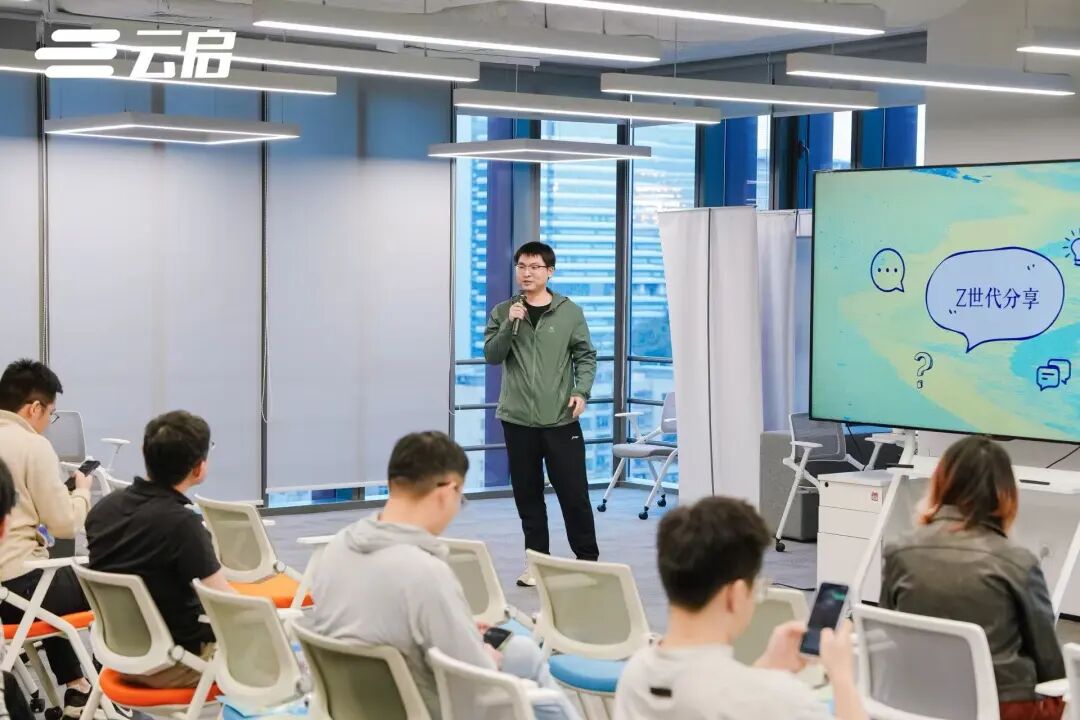
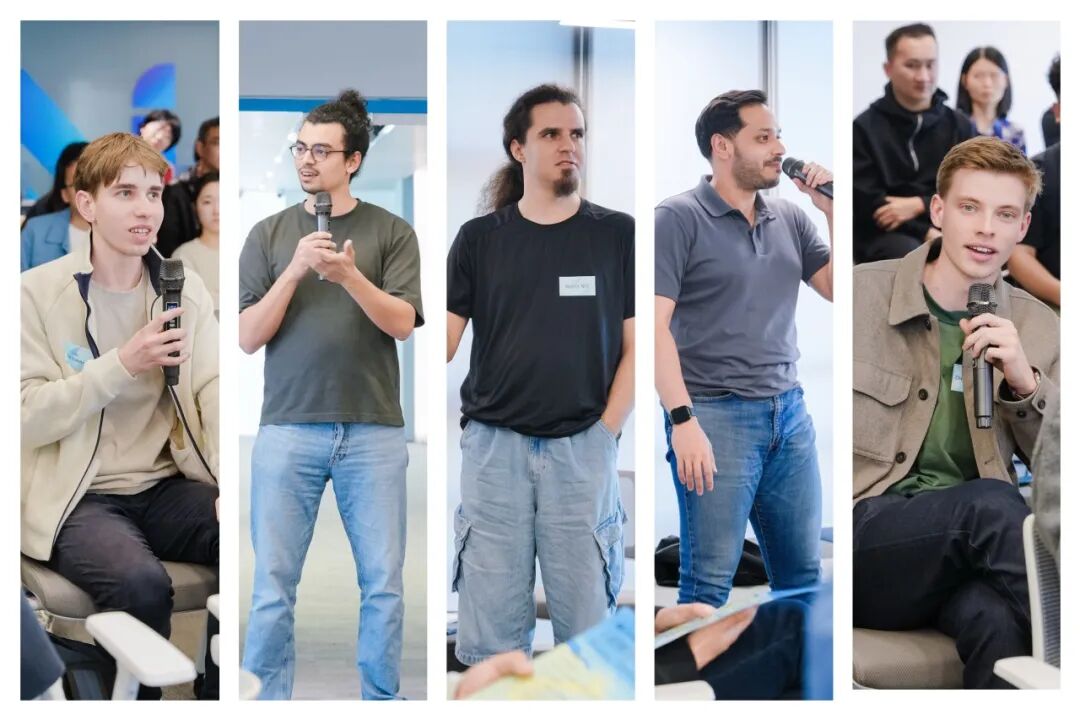
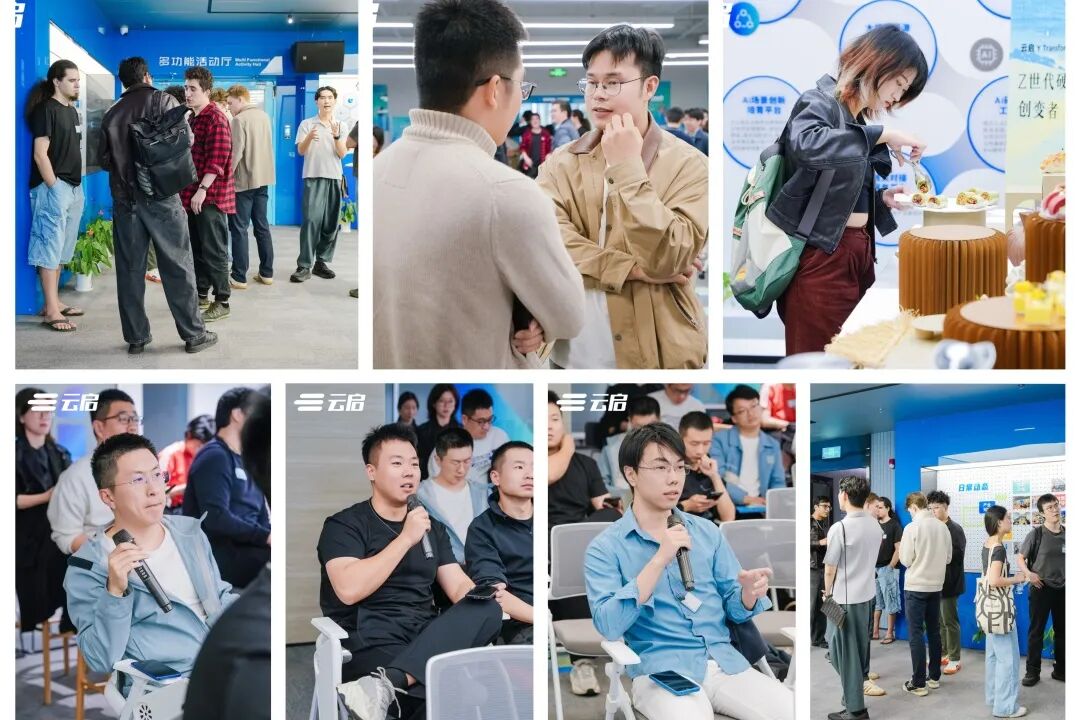
During the open mic and free networking session, discussion enthusiasm kept building. Partners from Amazon Web Services and other tech giants joined hardware founders in real-time discussions on compute power and early product validation. Overseas entrepreneurs from Portugal, Germany, the US, and elsewhere joined the exchange. Some pressed for product details; others chatted about team recruiting, supply chain choices, and go-global paths...
Swipe left for more photos
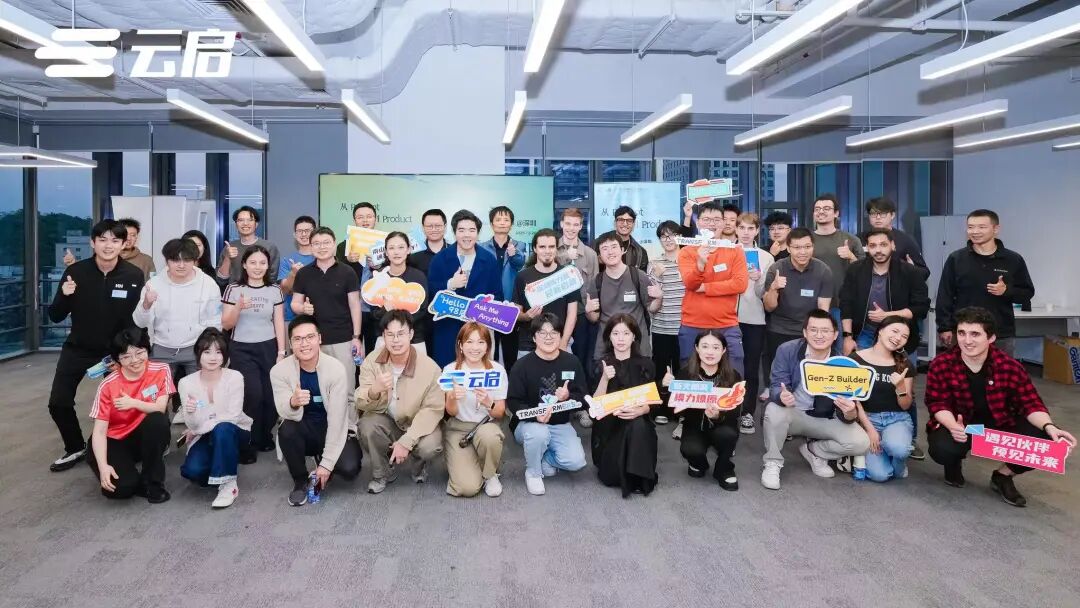
Looking forward to exploring more new possibilities with you, full of fresh ideas, in the coming new year.