DeepRoute's Real-World Road Test: When AI Learns to "Fear," the "Black Box" of Assisted Driving Is Opened | Yunqi Capital

When Cars Begin to Understand the World
In the AI era, intelligent driving is evolving at a staggering pace. As an early-stage investment firm dedicated to bringing frontier technology into everyday life, Yunqi Capital pays close attention to both the "ceiling" of autonomous driving tech races and the "floor" — the baseline concerns:
Can AI actually earn users' trust? How do we safeguard the safety baseline and crack the "black box" that stands between intelligent driving technology and large-scale commercialization?
Recently, leading OEM Great Wall Motor partnered with Yunqi Capital's angel-round lead portfolio company DeepRoute.ai on its latest-generation CP Master ADAS system, offering a remarkably insightful solution.
For the first time, this system presents the process of "how the car understands the world" in a more open, interpretable way — a direct reflection of DeepRoute.ai's "defensive driving" philosophy: teach AI to be afraid first, then grip the steering wheel.
A fast-rising "dark horse" in the high-end ADAS market, DeepRoute.ai has delivered city NOA mass-production vehicles "from zero to 200,000 units" in just 14 months. In October this year, it captured nearly 40% of the third-party ADAS market in monthly share, firmly securing its place in the top tier.
What changes does DeepRoute.ai's technology bring to the end-user driving experience? Recently, Great Wall Motor CTO Wu Huixiao and Tim, founder of the well-known review media outlet "影视飓风" (Yingshi Hurricane), conducted a test drive + VLA Talk. Let's dive in with this issue's Yunqi Capital.
The following content is republished from "差评X.PIN" (Chaping X.PIN).
Original title: "After Watching Great Wall CTO and Tim's VLA Talk, I Finally Get Why ADAS Is No Longer a 'Black Box'"
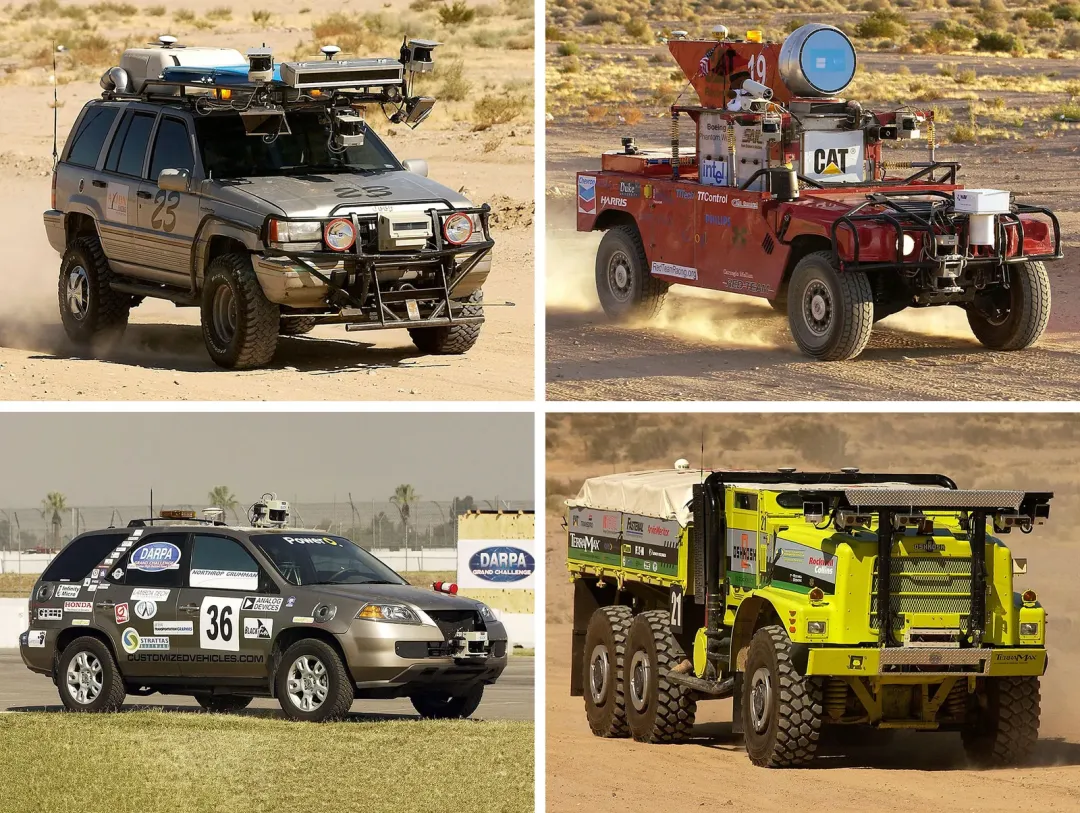
In 2004, an autonomous driving challenge called DARPA in the United States kicked off the era of intelligent driving.
Five years later, Google's Robotaxi took this momentum global.
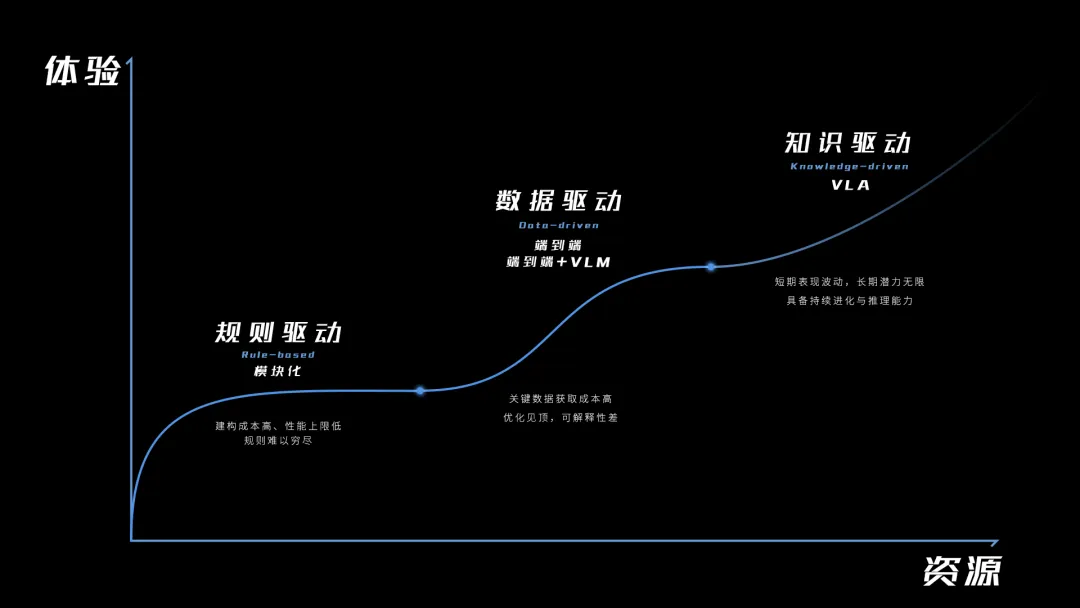
But early ADAS was like a robot that only followed fixed instructions — it could only handle what it had been taught, and would simply crash when encountering anything unfamiliar.
With the recent breakthrough of end-to-end systems from theory to practice, enabling human-like learning, we've clearly felt ADAS improving by the day.
The pace of development is faster than me putting on long johns in winter.
Just a couple years ago, everyone was talking about high-definition maps; this year, basically crickets. And last year, when we made an end-to-end explainer video, it became outdated within months.
This year, to handle more complex scenarios and develop relevant reasoning capabilities, automakers have begun shifting toward VLA (Vision-Language-Action) and world models (WA). The fast movers are already preparing for production deployment.
Sure enough, at the just-concluded Guangzhou Auto Show, Great Wall took the lead in releasing its VLA large model.
Today, Great Wall Motor CTO Wu Huixiao and Tim from Yingshi Hurricane also experienced the WEY brand's all-new Blue Mountain Intelligent Advanced Edition equipped with the VLA large model, and held a VLA Talk.
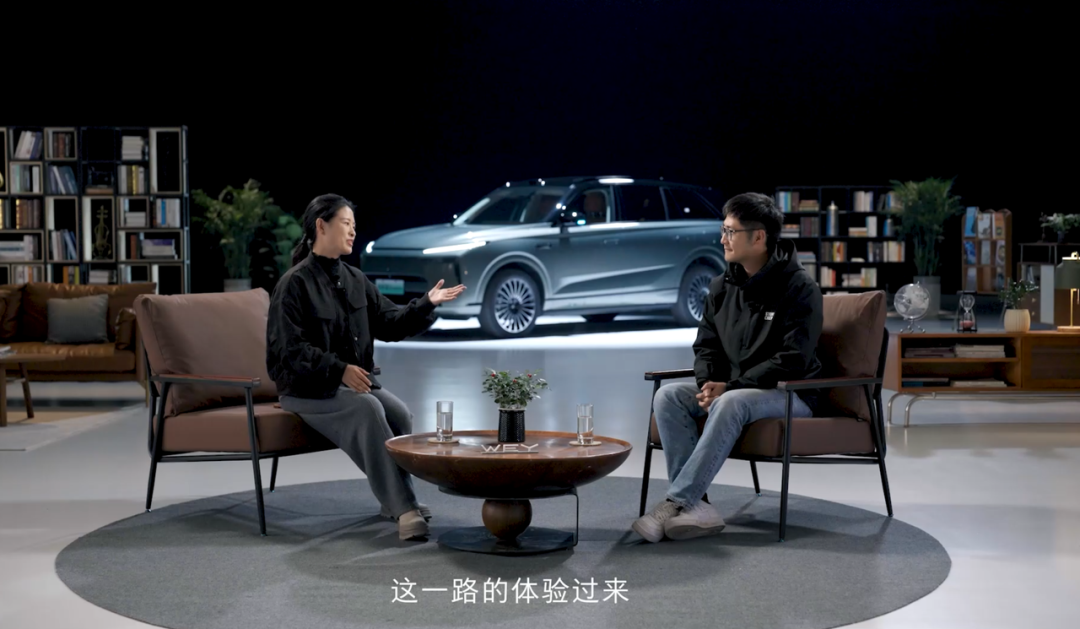
I have to say, listening to two people with strong internet sensibilities is a pleasure. They showed us the core capabilities of Great Wall Motor's latest-generation CP Master ADAS system — "understands speech, sees clearly, thinks smart" — and explained the underlying logic of VLA in simple, accessible terms: using vision to observe the world, language to cognize the world, and action to shape and change the world.
After watching, I feel like there's one more ADAS system worth paying attention to.
Actually, by a happy accident last year, we drove the WEY brand's all-new Blue Mountain for a full month — road trips, highway business trips, moving house, the works. It was basically a long-term test of the third-generation Coffee Pilot Ultra ADAS system.
So this time, Great Wall's all-new CP Master system felt like a noticeable step up.
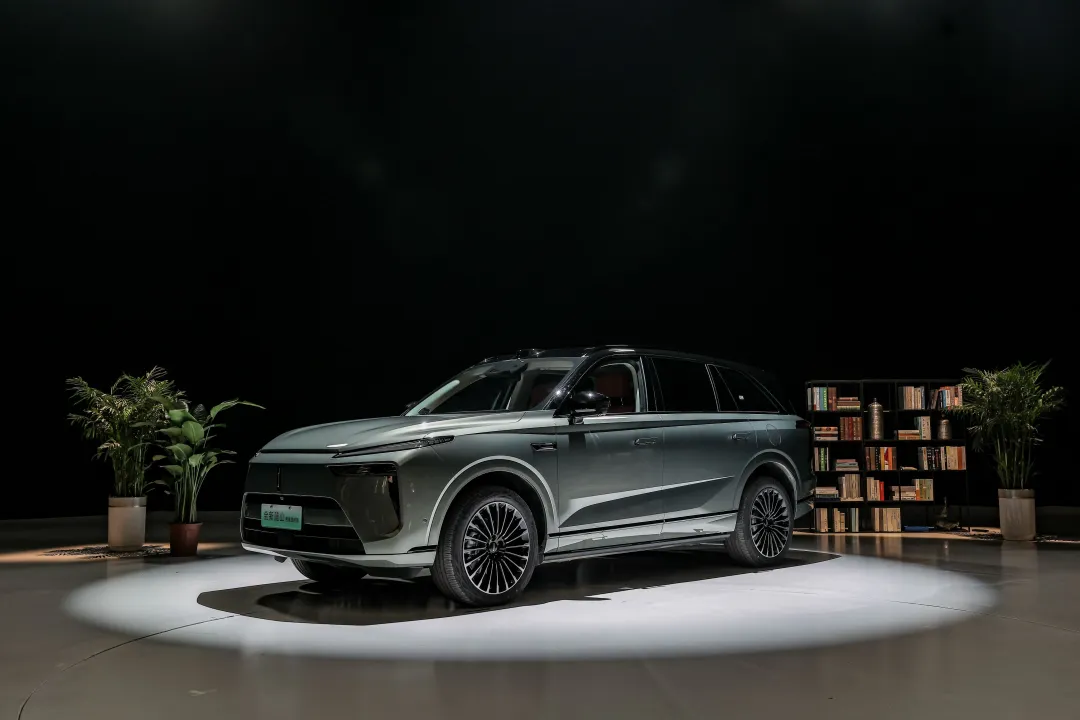
And more importantly, in an era obsessed with the upper limits of ADAS, Great Wall's VLA also pays more attention to the "floor" — they have some unique understanding of "safety," and that's really worth discussing.
Without further ado, let's look at the intuitive experiences of Great Wall's VLA.
First, the most noticeable change is voice-controlled driving.
In the livestream, after Tim got in and exchanged greetings, the driver called out to the voice assistant "Little Wei," activating NOA on the spot, and the car started driving itself.
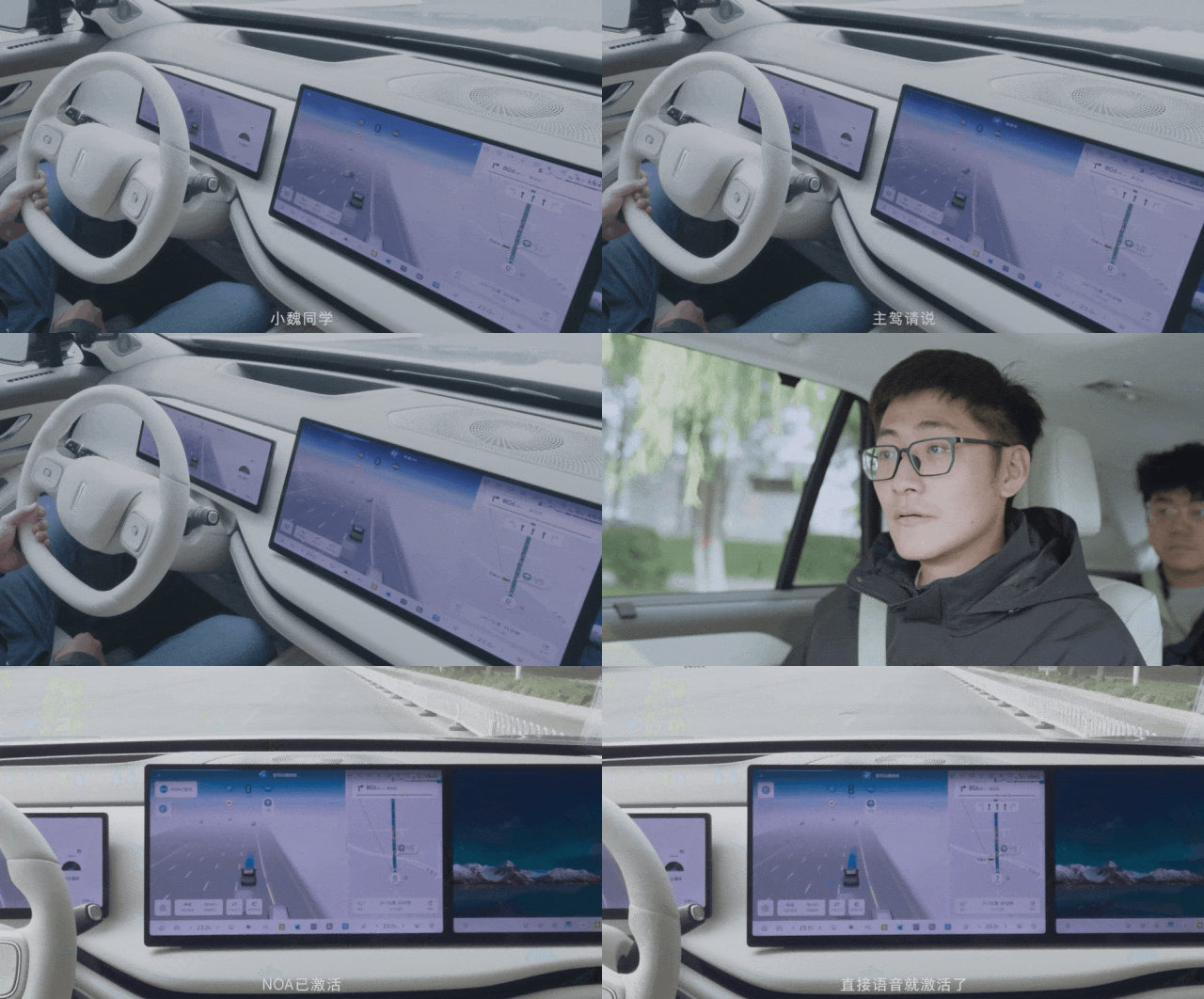
Later in the test drive, they also achieved voice control for lane changes, speed, following distance, and other commands we'd normally set manually.
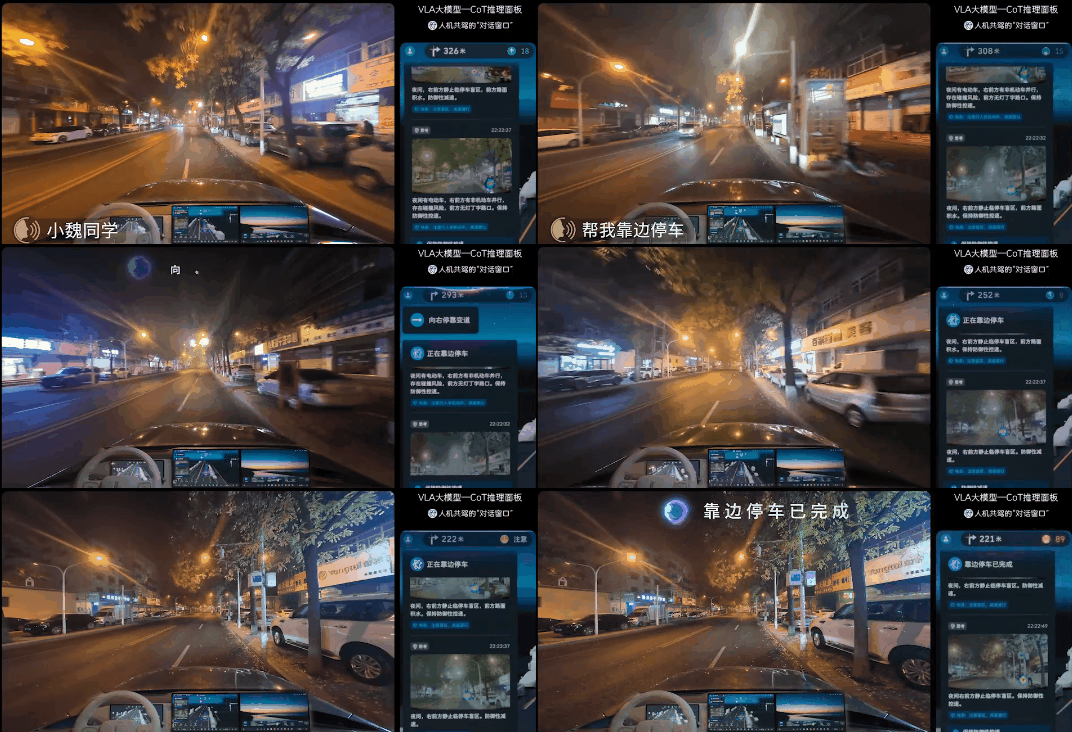
In the Guangzhou Auto Show launch video, they even demonstrated voice-controlled pull-over parking.
But voice-controlled driving is just the appetizer. The real magic of the VLA large model lies in the "L" — the semantic layer that gives the model logical reasoning ability, what the launch called "sees clearly, thinks smart." Let's look at some scenarios.
Here, the left turn is almost complete. The vehicle ahead accelerates away, while a small car on the right speeds up rapidly from behind, and there's another vehicle on the sidewalk trying to merge in.
But the small car on the right is slightly left-leaning, and hasn't turned on its blinker.
Through associative reasoning, VLA judges that the right-side vehicle may be annoyed by the slow car ahead, and there's a merging vehicle risk. It ultimately chose defensive driving, slowing down to yield and let the small car pass first.
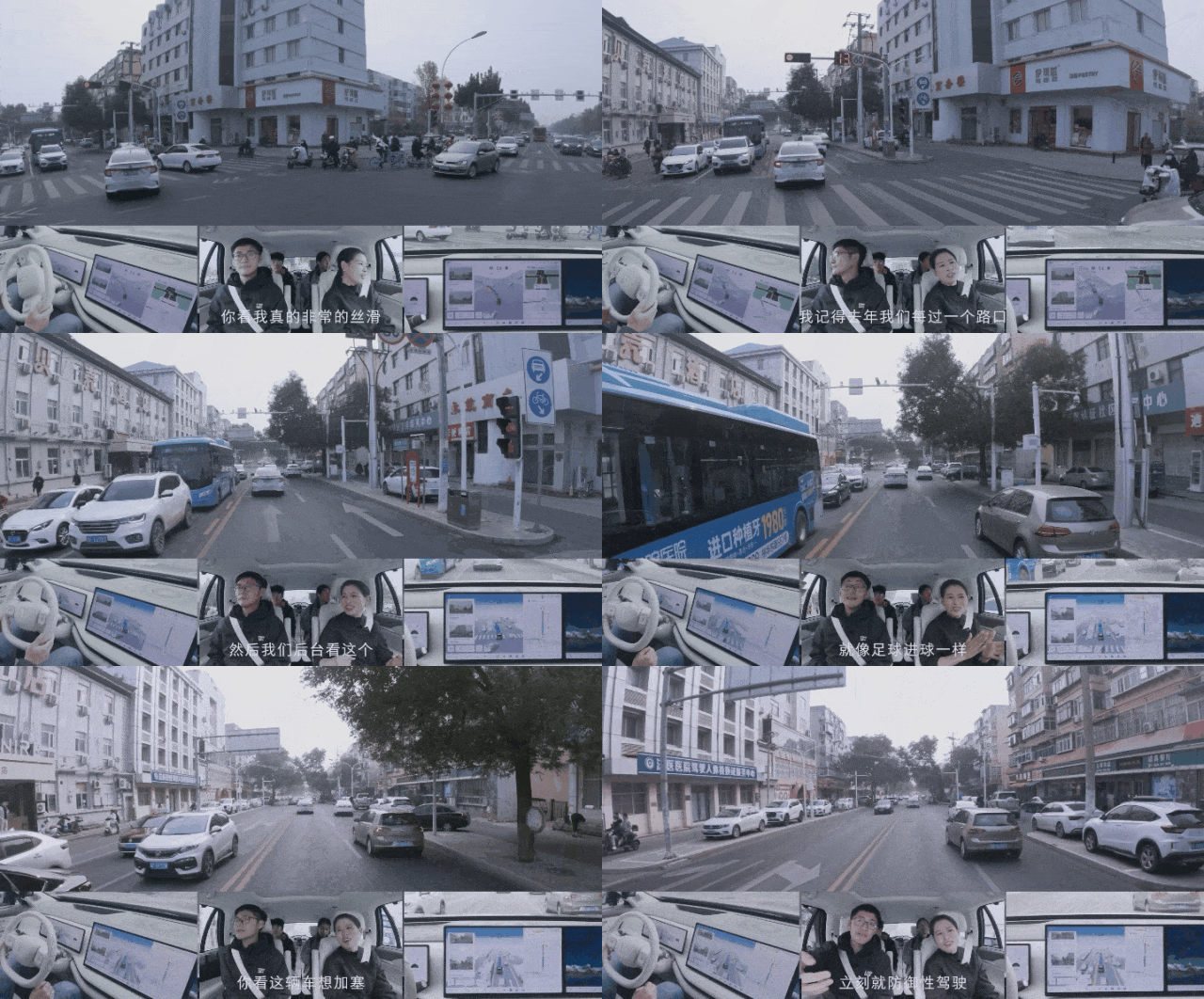
And there's something even harder: a two-way, two-lane road with illegally parked cars all along the right side, no traffic light at the intersection — a classic old-city district scenario.
This was particularly dramatic. As the car approached the crosswalk, a delivery driver suddenly burst out from the right on an e-bike, not looking at the road at all.
Another ten meters or so ahead, a small car that had been properly parked on the right suddenly crossed two lanes and the double yellow line to make a U-turn, without signaling.
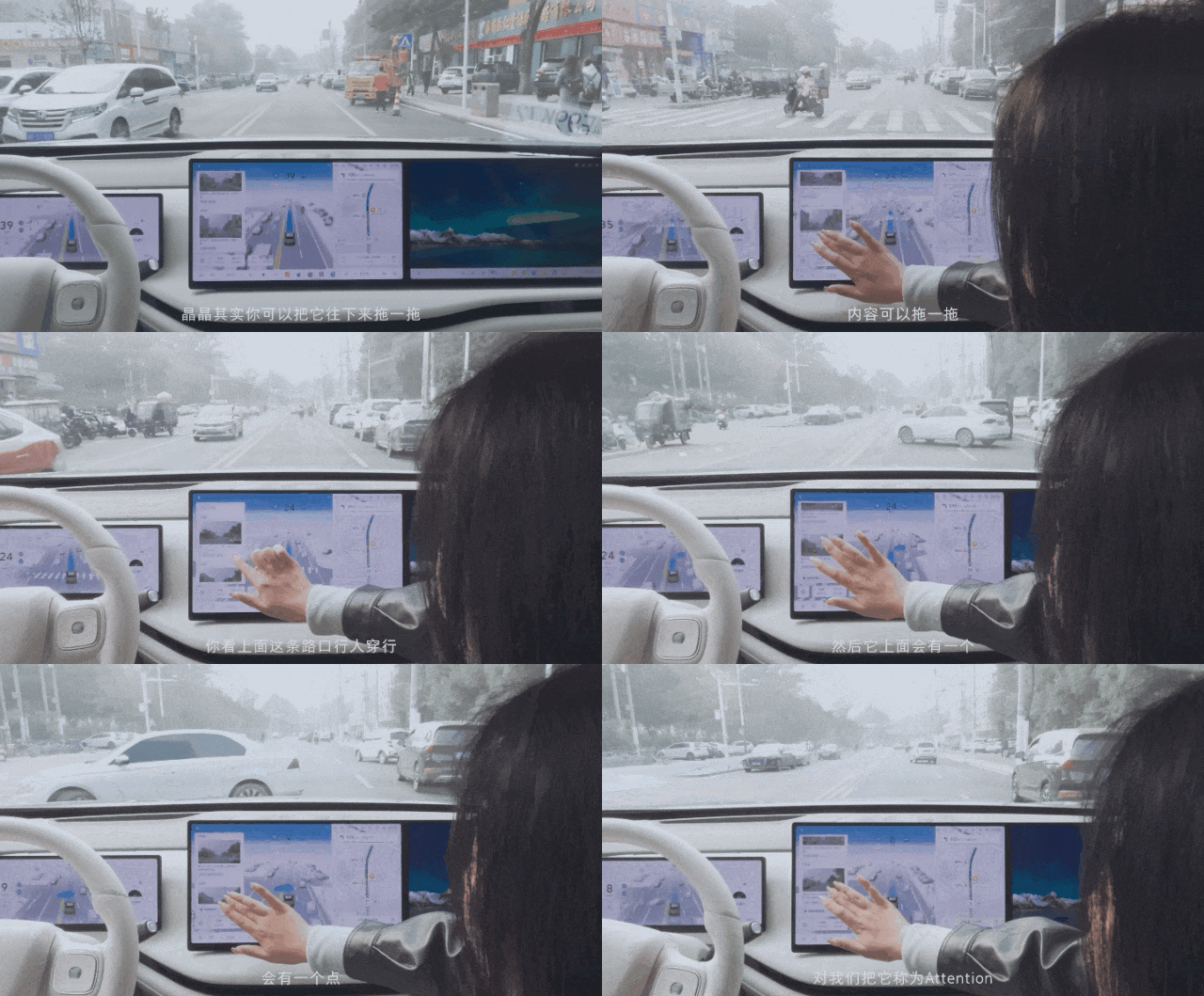
And VLA clearly anticipated both. The dashboard card read "pedestrians crossing at intersection, stationary vehicle on right." It also marked the vehicle's blind spot with a "Spot heat point" — visualizing the neural network's attention mechanism.
Ultimately, the vehicle performed defensive driving, controlling its speed and avoiding an accident.
Honestly, for us veteran drivers, this might just be hovering a foot over the brake and cursing under our breath. But if the driver were a newbie, panicking could lead to who knows what.
So this is VLA's understanding of potential risk — it possesses judgment like an experienced driver.
And there's something even more extreme.
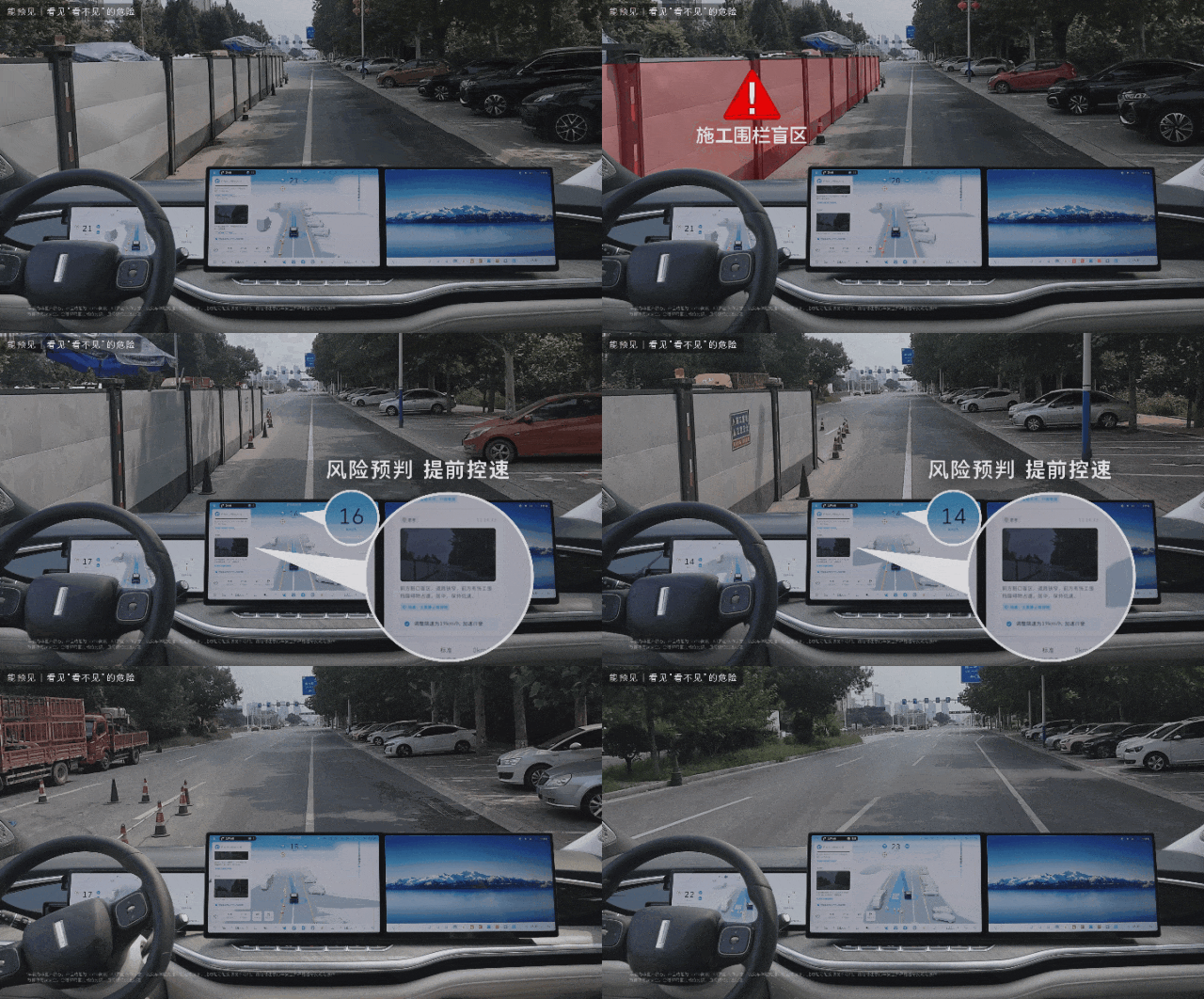
In the VLA Talk, there was this demonstration: ahead was a construction zone that directly occupied one and a half of the two lanes. The car identified it roughly 50 meters in advance, then began changing lanes and decelerating, from 64 km/h all the way down to 20 km/h.
But after understanding the construction zone, VLA didn't stay in the original lane — it borrowed a bit of the non-motorized lane to pass through.
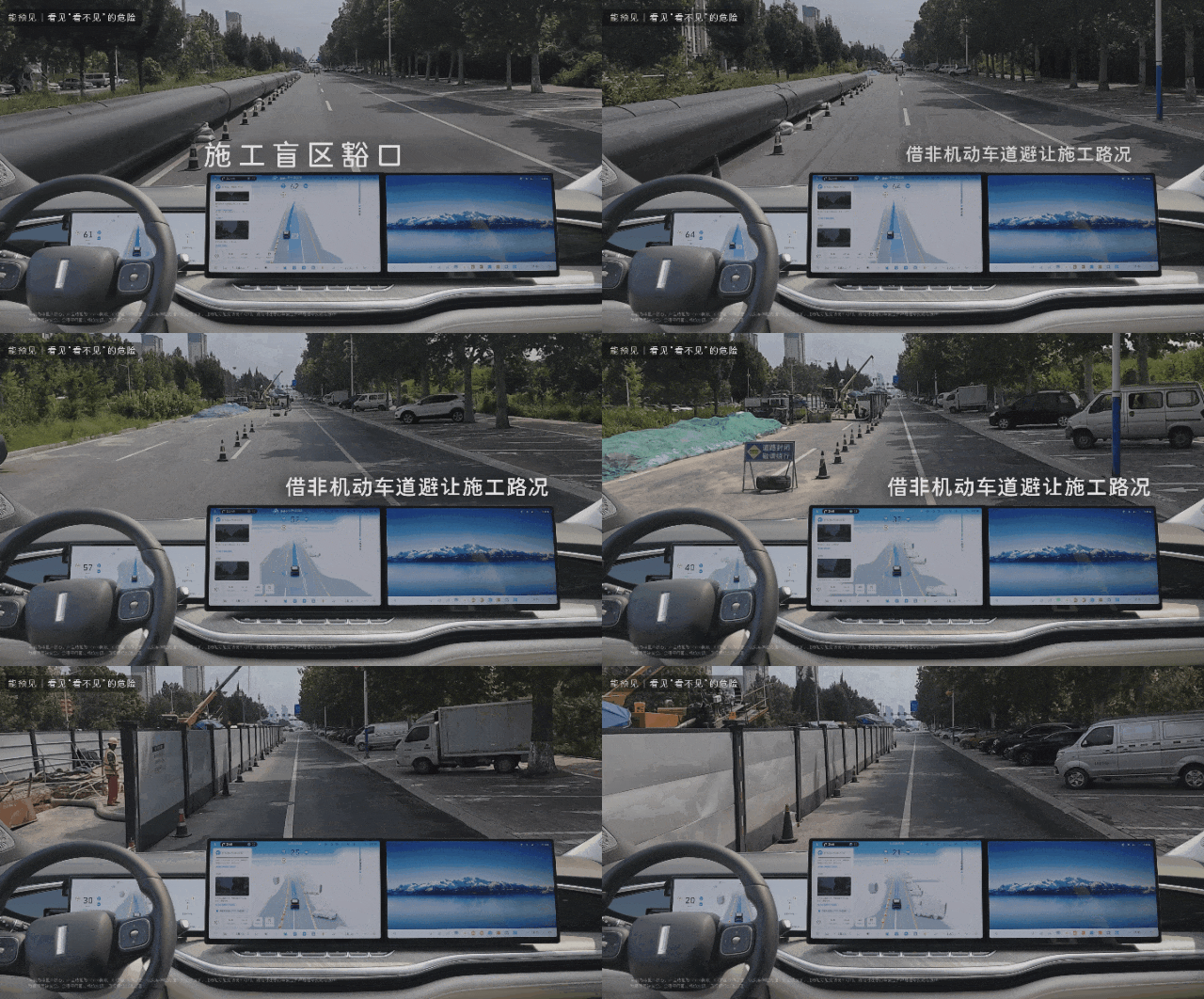
And before exiting the construction zone — hey, it even paused briefly, really like an experienced driver leaning forward to check the A-pillar blind spot.
Great Wall later also showed VLA's performance in special scenarios like rainy days, gravel mountain roads, and rural single-lane roads. In the videos, you could see the car associating rain with slippery roads, gravel with obstacles and potholes.
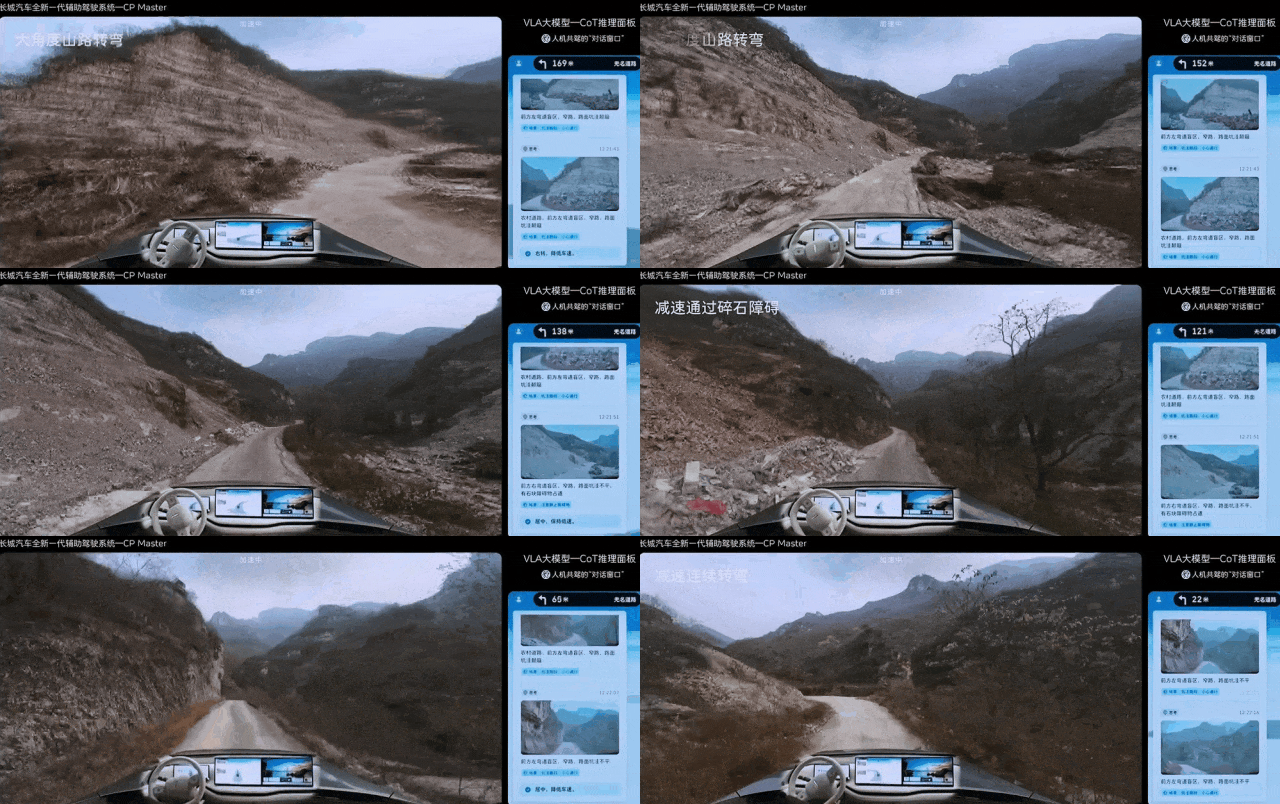
Every deceleration here reflects the all-new CP Master's understanding of the world environment.
A bit regrettably, the weather in Baoding today was quite nice... clear skies in the livestream, so testing these special scenarios will have to wait for next time.
Overall, Great Wall's CP Master system, with VLA's加持, appears remarkably smooth.
This smooth performance is precisely why Great Wall insists on doing VLA: only when AI begins to understand the world can it know what humans "fear," and achieve "human-like" behavior during ADAS operation.
But as we all know, AI is a black box. Often we need a window to understand it before we can feel at ease.
Great Wall thought of this too. That long string of cards we saw on the left side of the dashboard earlier? That's the newly launched CoT (Chain of Thought) card.
It directly shows the current scene image, paired with the car's own analysis, interacting with the driver so everyone understands what the car is thinking — only then can mutual trust be established.
This is then supplemented by the updated SR (SENSEREALITY) display: when the car performs defensive driving, the original NOH blue driving trajectory turns purple. This makes the entire human-machine co-driving interface much clearer.
And with that, we've covered the visible innovations in Great Wall's VLA this time.
Not sure what you all think, but I quite like these CoT chain-of-thought cards.
After all, what's scary about AI isn't that it can't do something — it's that we can't understand what this black box is thinking. We've all experienced moments where the SR clearly showed a red light, but the car ran it anyway. Six points gone, just like that, with nowhere to complain.
Now that we can know what AI is thinking, it's naturally easier to complete human-machine co-driving operations.
In all these cases, I can feel that Great Wall has made many human-centric optimizations in the details. This is exactly what Great Wall CTO Wu Huixiao mentioned in his chat with Tim: authentic insight into user needs is the direction their technology advances.
As the conversation progressed, they also explained Great Wall's thinking on technical routes when implementing user needs.
For instance, while everyone was heatedly debating whether VLA or world models represent the ultimate path to autonomous driving, Great Wall believes the two aren't actually in conflict — they can even walk on two legs, complementing each other.
For example, VLA training in practice requires high-quality data, and world models are particularly well-suited to solving this problem.
In a virtual world, all kinds of extreme cases can be simulated however you want: say you need to turn right, but there's a wedding convoy on the right with hazard lights on. How does the AI recognize hazard lights and "convoy"? That's training for an extreme case.
Ultimately, VLA and world models — one empowering from the cloud, one running stably on the vehicle — together pave the way for user safety. Why not do both?
So, did you notice?
Great Wall's focus on ADAS isn't just on operational smoothness and pushing limits. Its ultimate landing point is always user safety and experience.
To this end, they can even sacrifice some cutting-edge experiences — for example, foregoing the "wave-to-stop" function that certain foreign cars have demonstrated. Because Great Wall worries this feature could be exploited, they chose not to launch it for owner safety.
Under this premise, CTO Wu Huixiao put it quite plainly: they do hope this system is number one. But this number one isn't about ranking against competitors — it's about being number one in safety and experience.
Actually, if we trace back through Great Wall's history of making cars, we can see that their technical thinking has always been this kind of "steady progress."
According to Wu Huixiao's own account, over a decade ago Great Wall selected a group of experts from those working on active safety to begin developing ADAS.
In 2021, videos of the pure-gasoline WEY Mocha with city NOH were already circulating, but Great Wall, for safety reasons, still only launched highway NOH.
And those years were precisely when everyone was crazily talking about ADAS city launches, competing to see who could open the most cities. In the end, they all found the results less than ideal and collectively delayed their promises.
Only in the last two years has "available nationwide" gradually become reality.
But this is still far from the finish line. The occasional ADAS accident still reminds us that being overly aggressive on ADAS intelligence will ultimately bring you back to square one.
After all, at this stage it's still ADAS. Since humans are still responsible, the car must absolutely be safe.
But enough talk — technology is just technology. You have to actually test it in the car and compare horizontally to know how it stacks up.
Still, it's undeniable that Great Wall's targeted "caution" is undoubtedly the most responsible approach for owners right now.
As Great Wall Motor CTO Wu Huixiao repeatedly emphasized throughout the VLA Talk:
Great Wall is a company that knows how to be "afraid."
In its early years making pickup trucks, off-road vehicles, and SUVs, Great Wall adhered to the principle of "safety without compromise," making features like airbags and ABS standard.
Keep in mind, this was an era when ESP was still a selling point, and every safety feature cost extra.
And this safety基因 (gene) etched into Great Wall's bones allowed them to maintain this steady restraint when developing the VLA large model.
Is developing VLA not difficult? It is difficult. CTO Wu Huixiao also believes there was an element of "gambling" when they first embarked on this map-free approach.
But map-free solutions, and now the VLA large model, can deliver superior experiences to users.
So even if it's hard, it must be done.
And this pursuit of long-termism, this commitment to users.
It seems, over 35 years of Great Wall making cars, it has been validated countless times.