How China's Largest Commercial Autonomous Vehicle Fleet Was Built: The Story of Neolix | Yunqi Tech π

Build the world's largest commercial autonomous vehicle fleet

"Yunqi Tech π" shares updates from Yunqi Capital's portfolio companies, exploring how cutting-edge technology expands the boundaries of real-world applications and tracking the present and future of tech commercialization. Recently, Yunqi's Series A portfolio company Neolix has built the world's largest commercial autonomous vehicle fleet, securing a leading position in its niche. This edition of "Yunqi Tech π" brings you the latest on Neolix Autonomous Vehicles.
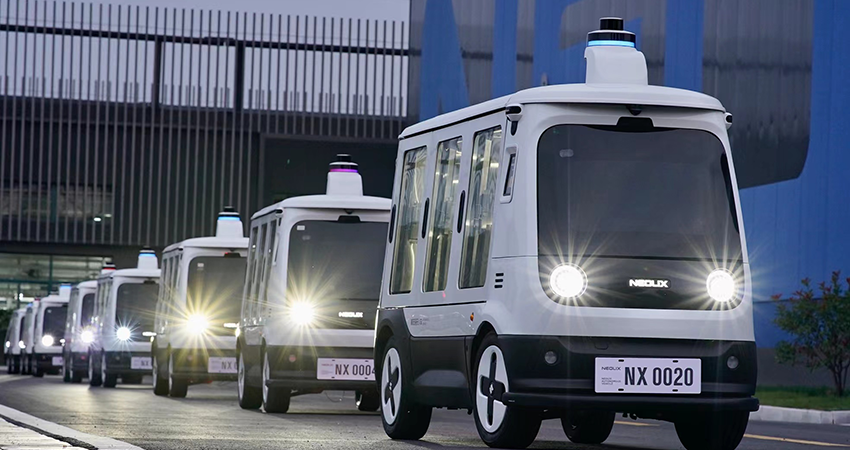
|Neolix Pushes to Build the World's Largest Commercial Autonomous Vehicle Fleet
Author | Juice
Editor | Xiaohan
Autonomous driving has become the hottest topic in the automotive industry, and within autonomous driving, commercialization is what everyone cares about most.
Among the many autonomous driving segments, industry consensus holds that goods-carrying autonomous vehicles will be the first to achieve large-scale deployment, with the segment now on the eve of commercialization. Chinese autonomous driving startup Neolix is precisely a standout player in this space.
As of September this year, Neolix has deployed vehicles across 13 countries, more than 40 cities, and over 100 scenarios globally, with cumulative deployments exceeding 1,000 vehicles spanning logistics, retail, urban services, education, and other sectors — building the world's largest commercial autonomous vehicle fleet.
Neolix vehicles have now accumulated more than 6 million kilometers of safe driving, delivering over 2 million orders to more than 300,000 users, placing the company at the head of its segment.
At present, Neolix is pushing toward its goal of deploying 10,000 autonomous vehicles, doubling down on the trillion-scale existing market for unmanned delivery while also expanding into unmanned retail as a growth market.
So how is Neolix actually faring in its development? And what technical capabilities underpin its growth?
01 Products Across 13 Countries: Neolix Builds the Largest Commercial Autonomous Vehicle Fleet
In February 2018, Neolix Intelligence Technology (Beijing) Co., Ltd. was formally established. That November, Neolix released the world's first mass-producible L4 autonomous vehicle, featuring a proprietary vehicle-grade by-wire chassis, a self-developed triple-redundant autonomous driving safety system, and an intelligent connected-vehicle AI platform — instantly making it a star startup in the industry.
Over the following four years, Neolix built an autonomous vehicle mass-production factory, established an L4 intelligent manufacturing production line, and continued iterating products, refining technology, and expanding markets.
Today Neolix combines autonomous driving, new energy vehicles, and robotics into a key participant in smart cities, becoming a leader in unmanned delivery and unmanned retail scenarios.
As of December this year, Neolix has deployed nearly 300 unmanned retail vehicles in cities including Beijing, Shanghai, and Guangzhou, completing more than 2 million orders from last year to date.
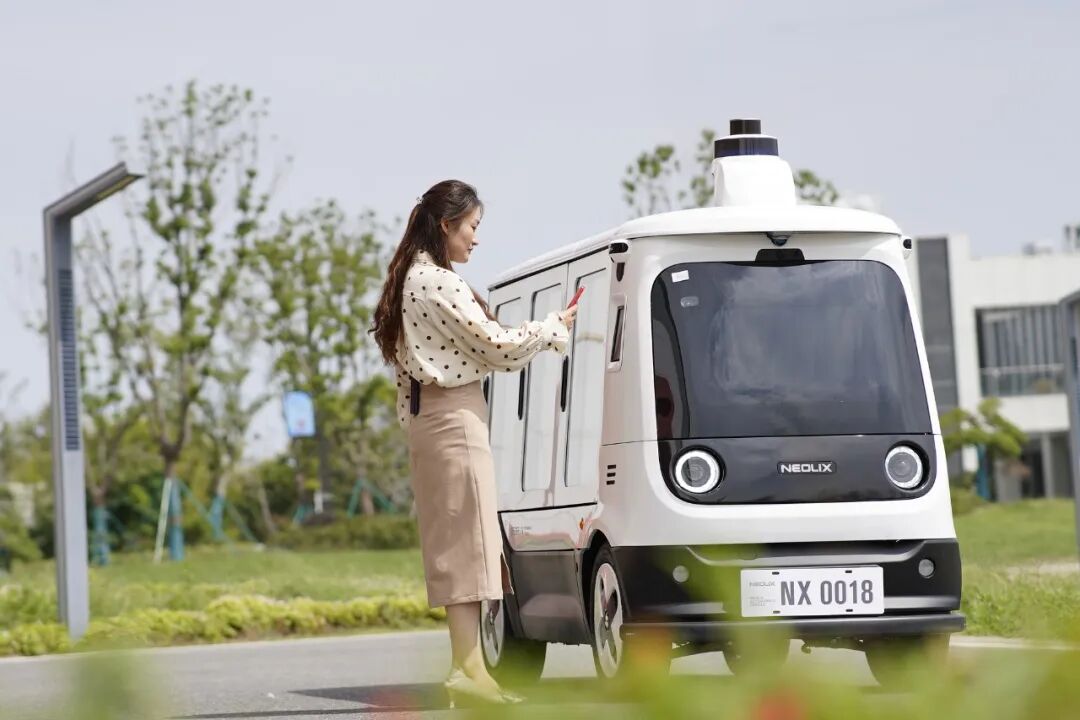
▲ A customer purchases goods from a Neolix unmanned retail vehicle
However, Neolix's vision has never been limited to the domestic market — it targeted overseas markets early on. In Neolix's view, countries with severe aging populations like Japan, and sparsely populated Nordic regions, are particularly well-suited for unmanned delivery.
Thus when approaching overseas markets, Neolix focuses on these regions' demand for unmanned delivery. Neolix autonomous vehicles have now entered Singapore, Dubai, Japan, Switzerland, and other countries and regions.
As of September this year, Neolix has deployed across 13 countries, more than 40 cities, and over 100 scenarios globally — a pioneer in exporting autonomous driving technology.
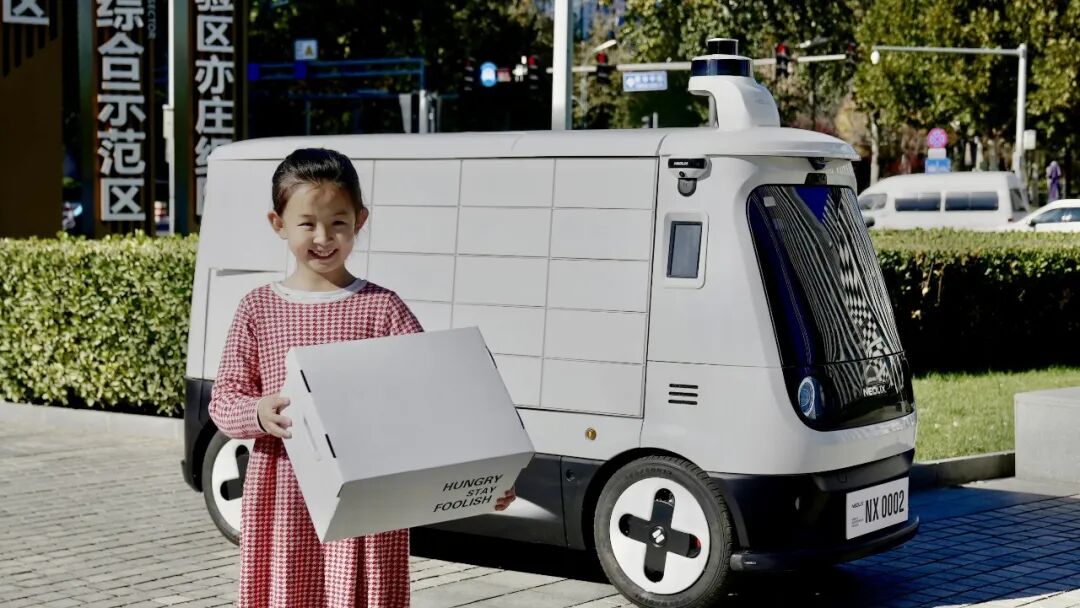
▲ A customer retrieves a package from a Neolix unmanned delivery vehicle
Whether judged by domestic development or international expansion, Neolix has already positioned itself at the forefront of its segment — and continues to grow rapidly.
As a company founded just over four years ago, how did Neolix achieve such leapfrog development?
02 Continuous Technology Iteration: BEV System Already Deployed
In the technology-driven autonomous driving sector, if a company achieves rapid growth, it must be inseparable from continuous technical breakthroughs.
Neolix has made clear R&D progress in perception algorithms, localization algorithms, and planning algorithms, and has established a cloud-edge-device data closed-loop system for continuous algorithm iteration.
At the perception level, Neolix autonomous vehicles employ a vision-plus-lidar solution, using an 8-megapixel front-facing camera to enhance visual perception, while two lidar units can detect stationary or small objects that cameras and millimeter-wave radar struggle to identify.
Moreover, while multiple industry players are still exploring BEV (Bird's Eye View) perception systems, Neolix has already deployed BEV on its vehicles, achieving superior environmental awareness.
This perception system currently enables seamless 360-degree awareness within 120 meters front and rear, and 30 meters to either side of the vehicle.
In daily autonomous vehicle operation, beyond demanding perception systems, localization systems face equally high requirements — when vehicles travel under bridges or tree-lined roads with weak GPS signals, more precise localization becomes essential.
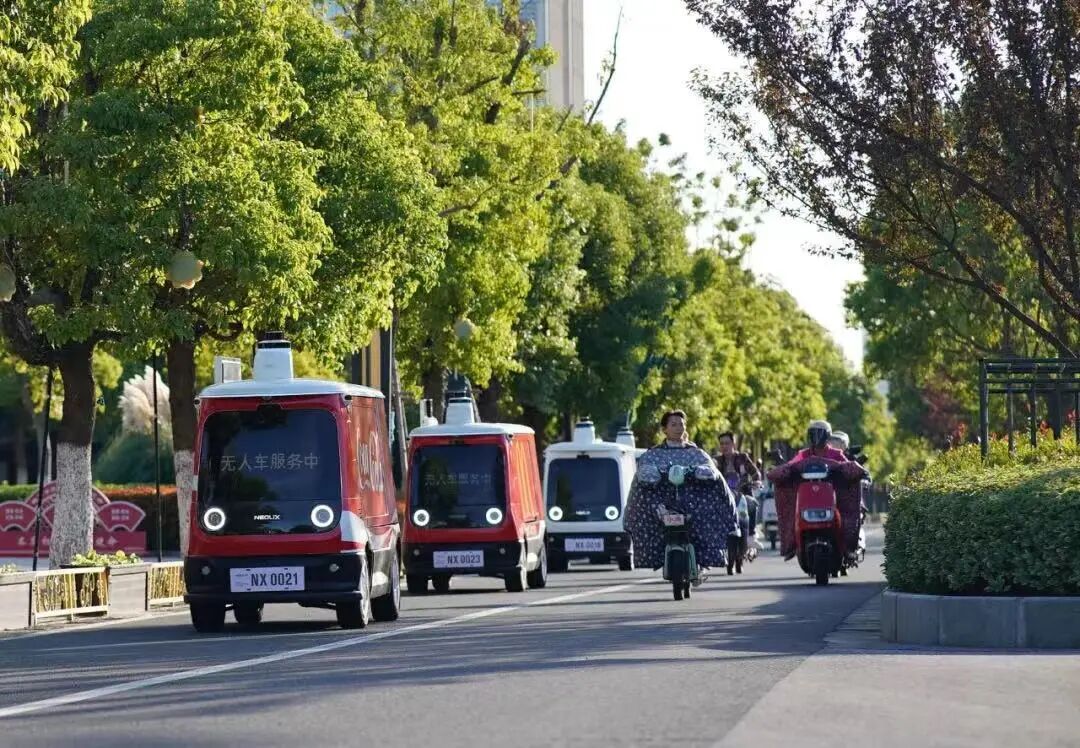
▲ A Neolix autonomous vehicle operating on the road
Rather than relying entirely on any single algorithm for vehicle localization, Neolix fuses three localization subsystems — GPS/IMU/Odometer, lidar point-cloud localization, and visual localization — achieving complementary strengths and continuously providing stable, high-precision positioning during operation.
In daily operation, autonomous vehicles must handle numerous scenarios, including no shortage of corner cases. Addressing these corner cases is a problem every autonomous driving company must solve. For Neolix, however, its vehicles mostly operate at low speeds and primarily on non-motorized vehicle lanes, facing more complex road scenarios and correspondingly greater challenges.
To address this, Neolix has pursued two approaches. First, it adopted NVIDIA's vehicle-grade Orin-X chip, whose single-chip computing power reaches 254 TOPS — more than double the 96 TOPS of Neolix's previous AI computing power. This higher AI computing power enables faster processing when facing more scenarios, improving overall system adaptability.
Second, the data closed-loop system is also among Neolix's core weapons. At present, nearly all autonomous driving companies collect data from daily vehicle operations and conduct continuous simulation training, gathering massive datasets through both methods.
After annotating these data and applying machine learning, they can feed back into algorithm development, enabling continuous iteration while better tapping hardware potential and further reducing costs.
New algorithms are then deployed to vehicle models to continue data collection, forming a complete data-algorithm technical closed loop for continuous optimization.
But one problem arises in this process: the daily data volume is so enormous that uploading everything to the cloud creates massive pressure.
Neolix has built a cloud-edge-device data closed-loop system for this purpose, establishing edge cloud infrastructure at its sites. When vehicles return from data collection, the edge cloud first performs preliminary data cleansing — collecting, storing, and cleaning data within its scope, then transmitting only the most valuable data to the central cloud system.
This reduces data transmission pressure while making the data relayed to central cloud more targeted, thereby facilitating algorithm model training and upgrades.
Overall, Neolix has established a complete data-driven closed-loop system. As deployed vehicles increase, it will collect more data and continue achieving technical iteration and upgrades.
03 New Model Launched, Gains Authority Certifications
As mentioned above, achieving continuous technical iteration also requires continually deploying more autonomous vehicles. Neolix now has its own autonomous vehicle production line, with products upgraded to a fourth generation.
Its fourth-generation vehicle, the X3 Plus, already carries the full suite of technologies described above, with numerous design improvements.
On previous models, sensors were distributed across multiple positions on the vehicle body. On the fourth-generation model, over 90% of autonomous driving sensors are concentrated in a front sensor module — improving both perception precision and reducing installation costs.
Additionally, the new generation integrates various in-vehicle controllers into a three-domain control system architecture, reducing overall parts count.
These designs further reduce vehicle costs. According to Che Dongxi (车东西), fourth-generation model costs are 30% lower than the previous generation.
Meanwhile, through integrated design, cargo space has also increased. Without changing vehicle dimensions, cargo capacity reaches 2.4 cubic meters, carrying 600 kg of goods — further improving autonomous vehicle efficiency.
With its outstanding design and performance, the Neolix X3 Plus has gained numerous domestic and international authoritative certifications.
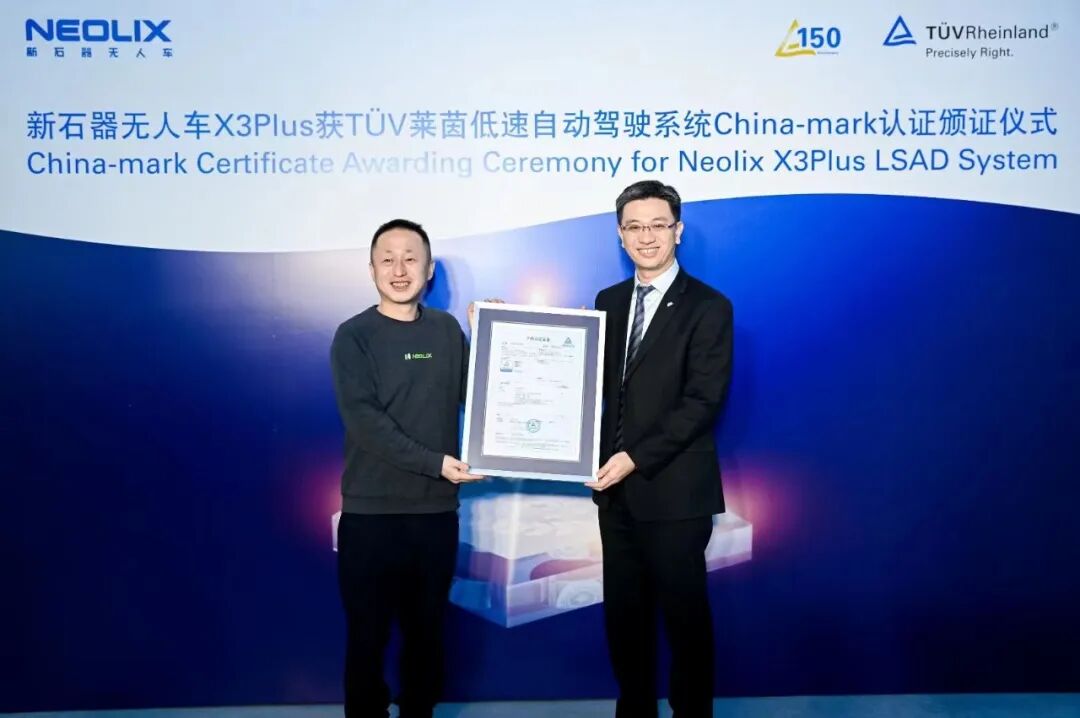
▲ Neolix receives China's first "Low-Speed Autonomous Driving System Performance Test" China-mark certification
Recently, this model received the first "Low-Speed Autonomous Driving System Performance Test" China-mark certification issued in China by TÜV Rheinland, an international independent third-party testing, inspection, and certification organization — further certifying Neolix's autonomous driving capabilities and safety reaching new levels.
Furthermore, as early as 2019, Neolix equipped vehicle-grade chassis meeting L6e light electric vehicle standards and EU E-MARK certification, aligning with "global standards."
Neolix's manufacturing factory in Yancheng, Jiangsu has been successfully completed and put into production, with fourth-generation autonomous vehicles already rolling off the mass-production line. With production capacity in place, Neolix will now push toward its 10,000-vehicle deployment goal, targeting "the commercial autonomous vehicle company with the world's largest fleet."
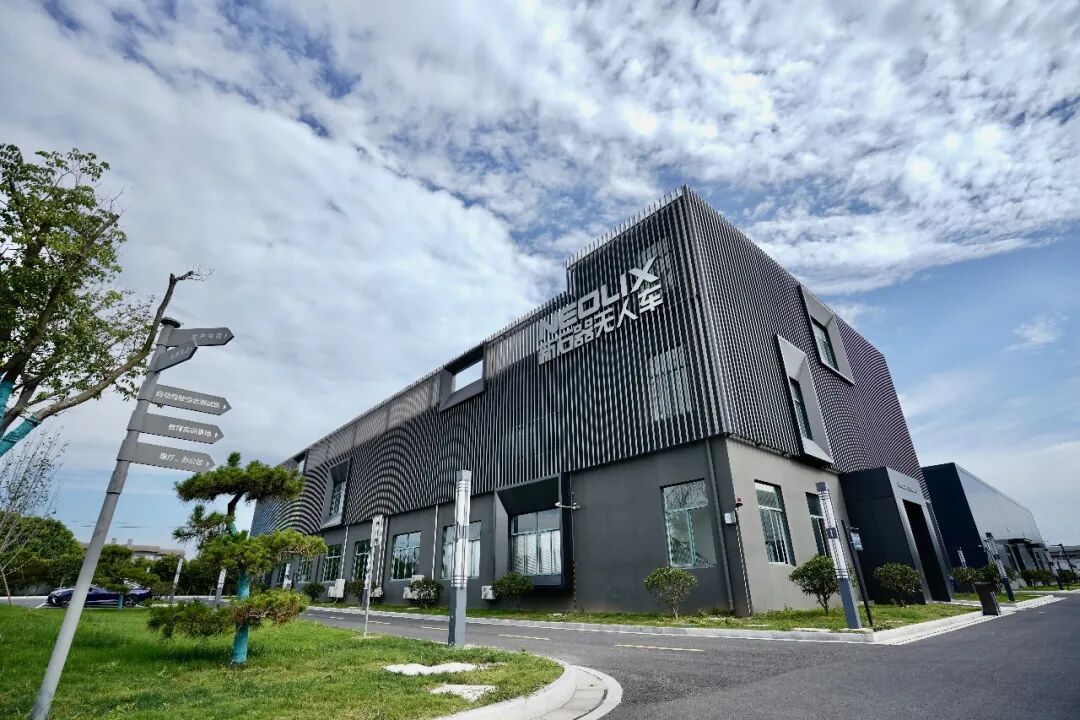
▲ Neolix Yancheng Factory
04 Conclusion: Neolix Is Developing Rapidly
For autonomous driving companies, continuously refining technology and opening new markets are both essential.
Neolix has achieved notable success on both fronts — on one hand optimizing algorithms and iterating new vehicle models; on the other, continuously expanding into new markets.
Neolix's fourth-generation autonomous vehicle has now gained certifications from authoritative domestic and international bodies, and its factory is rapidly ramping production, with potential to achieve 10,000-vehicle deployment in the future.