Intelligent Technology + Beauty and Humanities = A New Product Philosophy? Aosogena's Dialectical Reflection on Technology

Help more people create high-tech smart products infused with elements of humanities and art.
In today's booming intelligent industrial sector, aesthetics, humanities, and art are rarely discussed concepts. To most people, "beauty and humanistic spirit" seems like a luxury far removed from technology or industry — or an element that doesn't directly align with tech's monetization models.
But one scientist-turned-entrepreneur focused on industrial design aesthetics is trying to shatter this perception: Dr. Yang Ji, founder and CEO of Aosogena, who "graduated" from his position at the German Aerospace Center (DLR) to return to China, firmly believes that the entire process from design to R&D of tech products should incorporate the beauty of humanities and art: "We hope to convey the humanistic spirit of innovation, care, and design aesthetics to every user through countless subtle details in our products."
How can aesthetics and humanistic philosophy be shaped within the intelligent technology industry? Dr. Ji draws from his personal journey and entrepreneurial practice to share the accumulated reflections that led him from years of academic exploration to founding a startup, along with his dialectical thinking on aesthetics, humanities, and technology.
In fact, as a startup, Aosogena focuses on the computer-aided design and engineering market, specializing in professional software and proprietary hardware solutions for intelligent product design. Its addressable market reaches tens of billions of dollars globally, with core technologies already covering intelligent products in aerospace, automotive, robotics, marine vessels, and other sectors. Unlike most industrial software companies, Aosogena's product philosophy places unusual emphasis on aesthetic elements, elevating the team's deep thinking on industrial aesthetics to equal importance with technical factors — a clear manifestation of "industrial R&D and design" as intersecting core disciplines.
To this end, Aosogena has assembled an R&D team comprising both artists and scientists, choosing to put down roots in a lane-house office in Shanghai's sycamore tree-lined former French Concession. Compared to the stereotypical tech startup, Aosogena's workspace exudes a strong literary and artistic atmosphere, with German industrial designer Dieter Rams's ten principles of good design hanging on the office wall.

Aosogena's office in a Shanghai lane house
Thanks to this distinctive product and business philosophy, Aosogena has completed two rounds of financing totaling several million dollars. At the end of 2023, founder Dr. Yang Ji received an honor from his alma mater — the 2023 "TUM Ambassador" award from Technische Universität München. As a presidential award from one of Germany's top universities, this recognition is no small feat; past recipients include Nobel laureates and the president of Imperial College London. Dr. Ji's award made him the first non-academic in the university's 150-plus-year history to receive this distinction as an entrepreneur. Reflecting on receiving the award personally from President Prof. Dr. Thomas F. Hofmann at the annual concert, Dr. Ji was deeply moved: "When I first enrolled at TUM in 2000, I didn't know that the president's office was right above the freshman registration desk. It took me 23 years to walk from the first floor to the second."
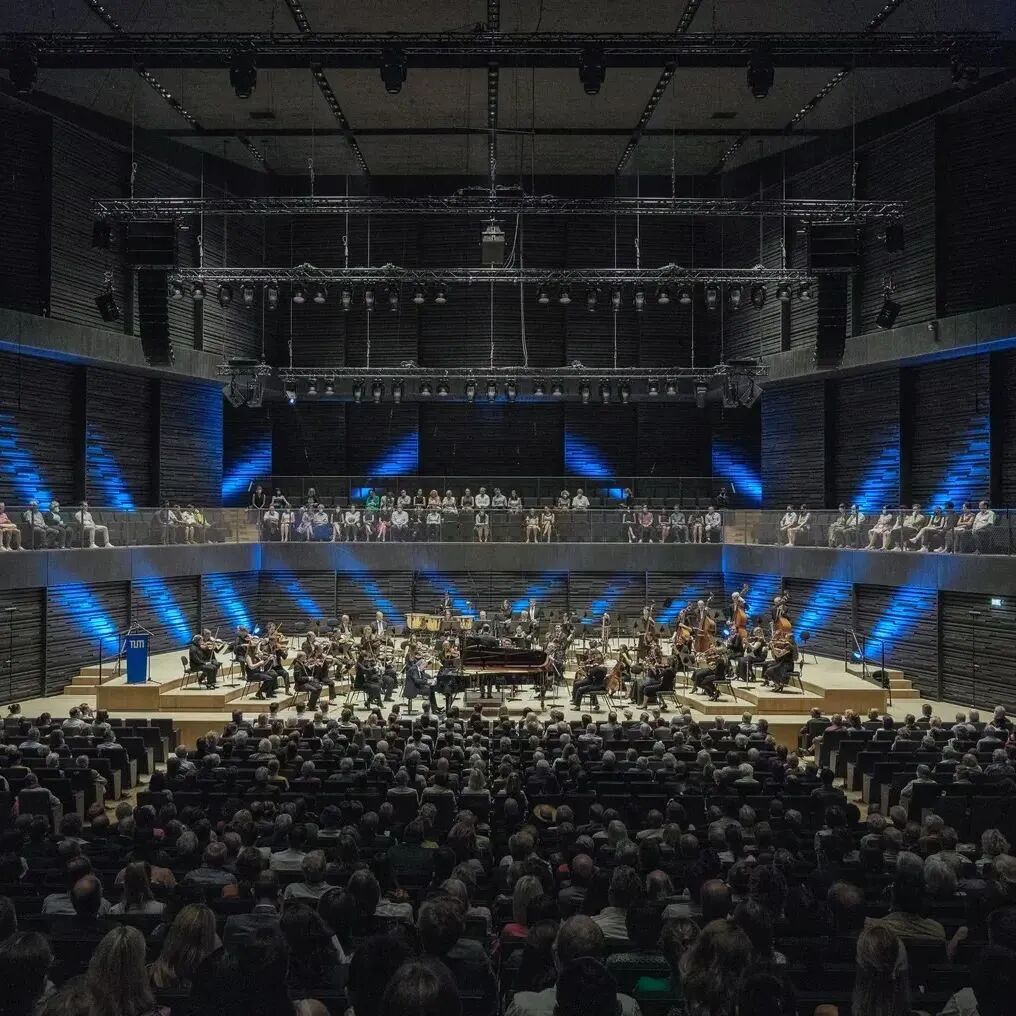
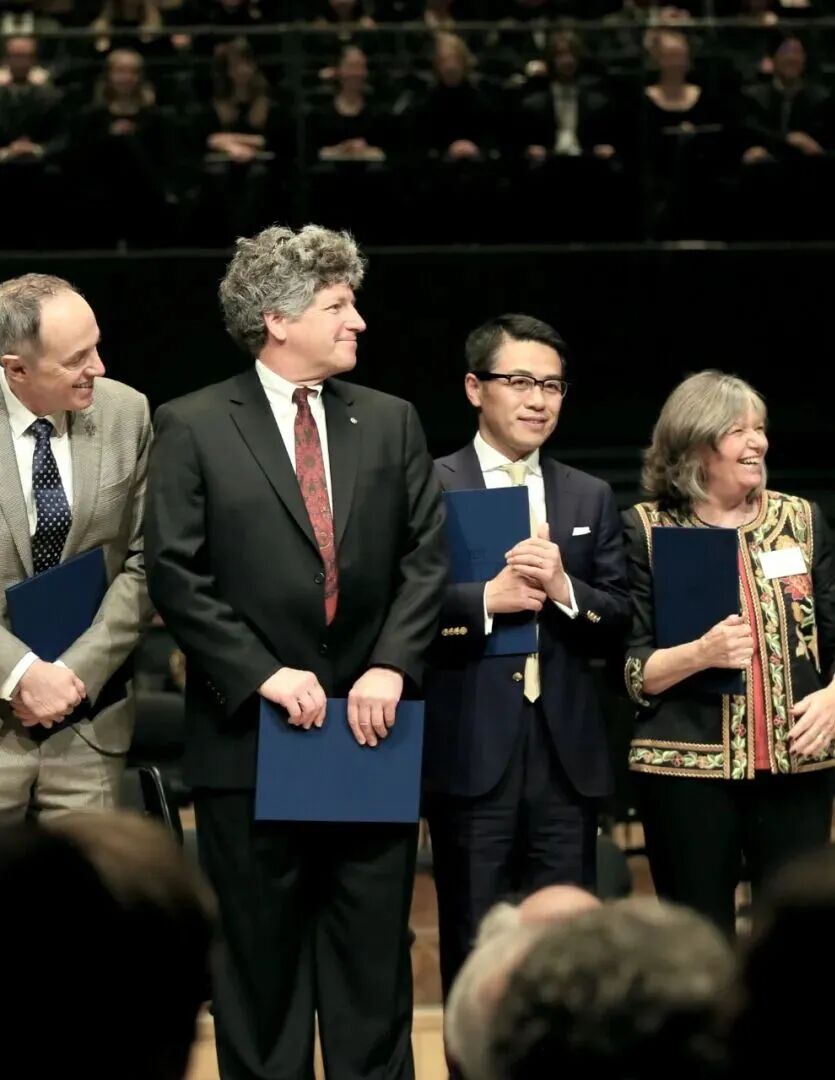
TUM Ambassador 2023 Award Ceremony
The Aosogena team's entrepreneurial goal is to help more people create high-tech intelligent products infused with humanistic and artistic elements.
How can aesthetics and humanistic philosophy be shaped within the intelligent technology industry? Sifangyi Think Tank made a special trip to interview Dr. Ji, who worked as a senior scientist at DLR for ten years — one of very few Chinese scientists there — and is an expert in Modelica, the simulation design computer language, having been the only Chinese doctoral student of Professor Martin Otter, president of the Modelica Association.

The Scientist's Entrepreneurial Challenge
Not From Commercialization
Sifangyi: You worked at DLR as a senior scientist for many years, participating in numerous EU and industry research projects related to Modelica technology. How did this experience influence your decision to found Aosogena?
Dr. Yang Ji: Modelica is a computer language for physical behavior simulation, a very important underlying technology I frequently used in my work at DLR. Simply put, Modelica describes physical behavior as a computational engine capable of modeling dynamic behaviors across electrical, mechanical, hydraulic, pneumatic, thermal, and other physical domains in intelligent products. Many games also have physics engines, but compared to those, Modelica is a far more rigorous scientific physics engine.
Applying Modelica technology is an excellent solution to address the vast majority of pain points in robot design and R&D. However, existing industrial design software based on Modelica, such as products from Dassault or Siemens, already has 20 to 30 years of history, with many industry pain points urgently needing resolution. So I wanted to create an entirely new product that could disrupt existing tools, hoping to revolutionize the user experience in designing future intelligent products.
DLR was certainly a great job with excellent environment and conditions in every respect, and I gained tremendously there. But over time, I gradually realized it wasn't a place suited for building products — it focuses more on innovating and breaking through underlying technologies, whereas I wanted to create products that most people could actually use. The technical capabilities I accumulated during those ten years at DLR, particularly in underlying technology R&D, give our team exceptional clarity about where the technical boundaries of product innovation lie when developing products, and consequently how far product development can realistically go. I believe this is an essential skill for a technical startup CEO.
Sifangyi: As a scientist-turned-entrepreneur, what was the biggest challenge in your transition? How did you overcome it?
Dr. Yang Ji: This is a question I get asked often — many government leaders and investors are concerned about it. The common worry is that scientist-entrepreneurs aren't good at commercialization, marketing, sales, and customer relations.
But I believe that if the product itself is excellent enough, the challenges on the commercialization side aren't particularly high. Excellent scientists and great entrepreneurs don't require vastly different qualities; they actually share more similarities — resilience, innovation, rebelliousness, patience, pursuit of perfection, even kindness.
Scientists are accustomed to working with government or corporate funding to contribute better scientific methods or solutions in their research fields; the essence of this work model is consulting and services. For entrepreneurs, the most important mission is to make good products. So beyond the qualities mentioned above, entrepreneurs also need the talent and conviction to build excellent products. In other words, transitioning from scientist to entrepreneur, from the inherent consulting service model to a product creation model — successfully building a great product is the biggest challenge, even surpassing commercialization. In my view, scientists who want to build good companies should learn from excellent artists, just as they pursue their paintings without end, they must pursue products with ultimate dedication. Our original entrepreneurial intention was to create world-class great products.
Sifangyi: At the end of last year, you were awarded the "TUM Ambassador" honorary title. What significance and impact does this have for you personally and for the company?
Dr. Yang Ji: Since 2013, Technische Universität München has annually selected a group of world-class scientists and awarded them the "TUM Ambassador" honorary title, recognizing their achievements in future-oriented research fields and their contributions to building TUM's global community.
Being honored in the tenth year as the first non-academic in history to receive this distinction as an entrepreneurial businessperson, I was tremendously excited. I deeply felt that my entrepreneurial choice received enormous recognition and encouragement from my alma mater, and that Aosogena has left its mark on the development history of this 150-plus-year-old top German university.
During the two-day award activities, I had in-depth exchanges with the four other ambassadors selected this year and university leadership. Although everyone came from different regions of the world with different professional backgrounds, we all focused on and discussed global issues such as reducing childhood cancer rates and solving energy supply and education in underdeveloped African regions. This beautiful vision dedicated to the common progress of human society left a deep impression on me, and it is also Aosogena's most important spiritual core.
This honor has meaning for us in two main aspects. First, it makes us more firm and confident on our entrepreneurial path. TUM hasn't historically placed particular emphasis on rankings, but in recent years the university has increasingly encouraged students to innovate and start businesses, even proposing to manage the university like a business. In 2023, the school's QS ranking shot up to 37th, with a future goal of becoming a top-ten global university. The recognition and support from our alma mater gives us more confidence and assurance. Second, this honor will serve as powerful endorsement for the company's international expansion. When we seek global commercial support or partnerships with top research institutions in the future, this honor will provide us with the most direct facilitation. As a TUM Ambassador, I automatically become a lifetime member of TUM's Advanced Technology Institute. Additionally, starting from 2024, I will establish new research projects and courses at TUM as a visiting scientist, allowing Aosogena's latest tools to be put into practical application there, thereby taking the first step toward rapid product promotion in Europe. A number of world-class clients including DLR, Technische Universität München, Daimler, BMW, Bosch Group, and COMAC have already confirmed they will become our early customers at the product launch in early 2024.

Taste Is a Productive Force
Sifangyi: In your product philosophy, aesthetics and humanistic artistic elements hold important positions in tech product design. Why do you value this so much?
Dr. Yang Ji: Because first of all, what we're making is a design tool, and this tool can be used to design future intelligent products, such as service robots. We hope these future intelligent products will be able to move people's hearts — only then can they be called great products. Therefore, the design tools we provide should also be able to move people's hearts, and to do so they must incorporate aesthetic and humanistic artistic elements.
I want to emphasize that aesthetics and technology are not mutually exclusive. People's subconscious easily separates the two, as if aesthetics belongs to art academies and technology belongs to engineering universities, but in reality, we can easily see that the influence of aesthetic design on tech products is everywhere.
I particularly like the concept of "emotional design" proposed by Hartmut Esslinger, founder of the world-class design firm frog design — a successful product should be able to touch people's emotions and reach their hearts. For example, Apple's products are designs that move people's hearts. Aesthetics is the most direct and intuitive way to touch people's hearts, so our products themselves should first possess aesthetic qualities. We believe that only under beautiful design tools can beautiful designs emerge.
Sifangyi: In this regard, do you have any companies or brands you admire or benchmark against? What is Aosogena's aesthetic style?
Dr. Yang Ji: I believe Apple and Sony are both great companies, and their product designs taught me that "taste" is productive force. We're also quite confident in our own taste, believing it can become a key factor in attracting and moving users.
All Aosogena products are browser-based, but this doesn't simply mean deploying existing software from local environments to browser environments. We believe web-based tools should seek more transformation. Apple and Sony's designs have given us much inspiration, and I hope our tools can achieve simplicity, ease of use, and timeless classic appeal.
So I particularly like German industrial designer Dieter Rams — on Aosogena's office wall are posted his ten principles of good design. His designs, through extensive沉淀 and reflection, contain meticulously crafted surprises with a quiet temperament that brings warmth and emotion — this is also what we pursue.
Sifangyi: How do you view brand building and marketing for industrial tech companies? Will the role of aesthetic elements and human-centered design in enhancing product user experience and building emotional connections with users be reflected in Aosogena's brand strategy?
Dr. Yang Ji: Aosogena places great importance on brand marketing. We hope to build a unique DNA for Aosogena products — so that in the future, when users see any of our products, whether software tools or hardware products, they can immediately perceive that this is from Aosogena. Of course, this will take time to accumulate.
I have to say that the words "industrial tech company" have been constructed in popular discourse as seemingly far removed from daily life, but this isn't actually the case. In brand building, we want to break this stereotype, so whether in products or in PR and brand communication materials, there are no academic professional terms — only "plain language" that ordinary people can understand. I often emphasize to the team not to use the kind of scientist-summarized terminology that only a few experts understand. We want to make things that people consider remote and inaccessible become easy to understand — this is the goal we hope to achieve.
Furthermore, we plan to regularly share design cases and news on social media in the future, or build a community platform where everyone has the opportunity to try innovation, freely sharing ideas and works, rather than relying solely on traditional tech industry trade shows to showcase product features.
We hope to create brand "consistency." Consistency can establish a clear brand tone. Aosogena's products hope to reduce users' cognitive burden and learning costs through "consistency" — this is the differentiation of Aosogena's one-stop service compared to other products. In short, our core marketing logic is to promote the experience users can obtain, not to talk about product features.

Using "Kindness"
To Unite the Team
Sifangyi: What do you value most when selecting team members? Especially regarding the balance between art and technology, design and innovation.
Dr. Yang Ji: This really gets to the current pain point — as a startup, selecting team members is truly not easy. The biggest difficulty lies in the balance between art and technology. We hope team members have both technical backgrounds and artistic sensibility, so the first thing I value most is members' cross-disciplinary backgrounds. Second, we equally value whether the person is kind. Here kindness doesn't simply mean good versus evil, but more the temperament and substance they convey. Tech companies don't lack for smart minds, but to make a company strong and its products move people's hearts requires upholding kind values and a team that identifies with these values.
Sifangyi: Is Aosogena's team a diverse team? What management challenges has this diversity brought? How do you address them?
Dr. Yang Ji: Currently, designers make up 40% of Aosogena's team members, including two German designers, with most of the remainder being technical developers with IT backgrounds. So from whatever perspective, we are a diverse team. However, I haven't felt too many management challenges from diversity so far. On one hand, Aosogena employees mostly have some international background, whether in education or work experience — everyone has experience interacting and dealing with people from different cultural backgrounds. On the other hand, thanks to flat management and emphasis on corporate culture building, our team can easily reach consensus on company development goals.
Aosogena is committed to becoming a company driven by product design innovation with continuous pursuit of excellence. The core of all our advocated philosophies is letting users feel the care conveyed by our products. I particularly like a quote from the Beatles — The love you get is equal to the love you give.

Two books Dr. Yang Ji recommends he's been reading recently:
-
A Fine Line by Hartmut Esslinger
-
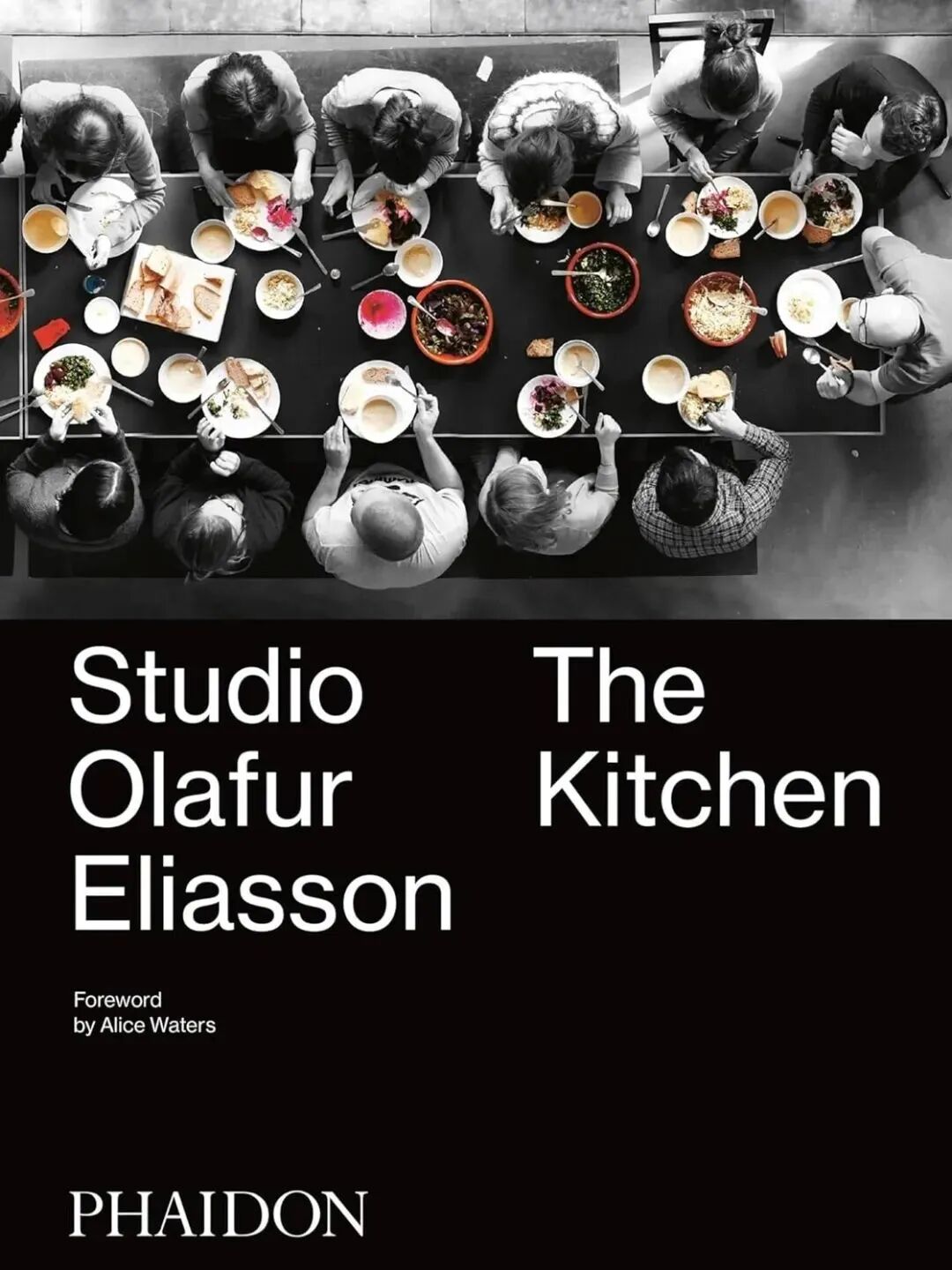
The Kitchen by Studio Olafur Eliasson