Constantly Hitting Potholes? A New Early-Stage Tech Founder Guide to Avoiding Them | CloudView · Watchtower

A CEO who can't manage money isn't a good CFO either.
Cloud Vista · Steady Departure
Steady Departure
In today's rapidly evolving tech startup landscape, many early-stage founders dream of breaking through to build transformative technologies. Yet along the way, they often stumble into unexpected pitfalls.

Glossary compiled with @ChatGPT
Navigating through these layers of complexity, we'll identify two major "traps" that tech startups commonly fall into — financial management and equity incentives — to help companies better control capital and maximize human capital efficiency. Drawing from real-world entrepreneurial experience, we aim to equip early-stage tech founders with the foresight and precision needed for the long journey ahead.
This article distills key insights from three industry partners at Yunqi Capital, drawn from the recent "Cloud Vista | A Founder's Guide to Avoiding Pitfalls" panel co-hosted by Hanyuan Asset, Zhangjiang Science & Technology Investment, and Yunqi Capital. Enjoy~
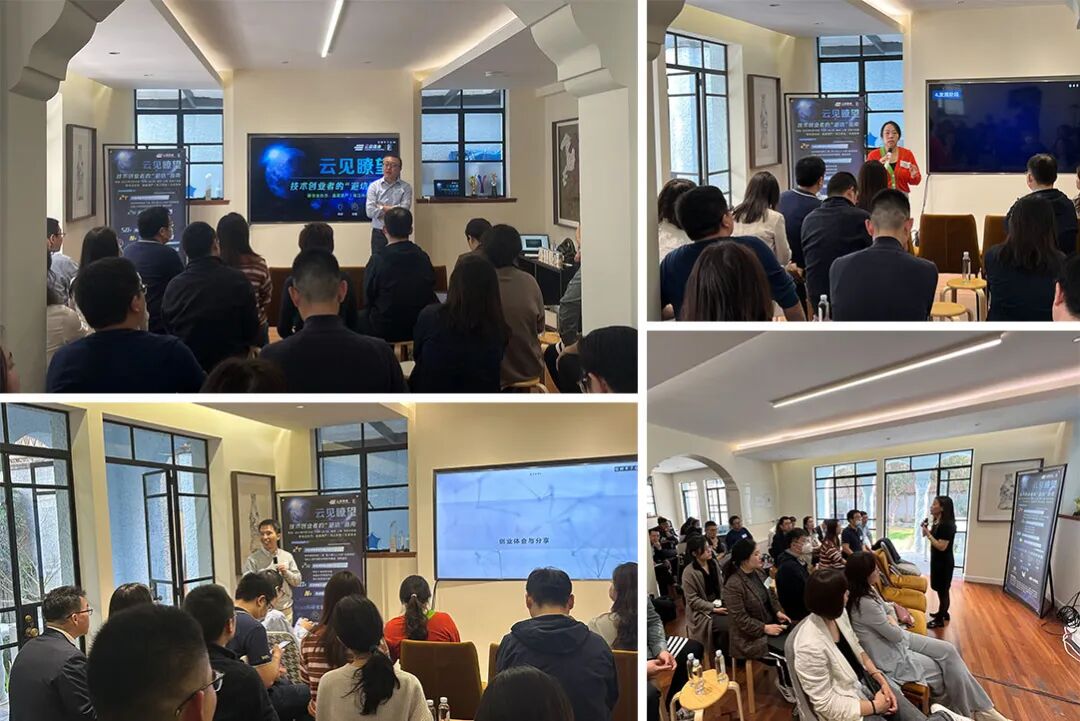
@Cloud Vista

Financial Management: A CEO Who Can't Manage Money Isn't a Real CEO
Speaker
Financial management expert
Global Chartered Management Accountant
Currently serves as independent director and audit committee chair for multiple US/Hong Kong-listed companies

Image generated by AI @DALL-E
1. The "Skeleton" and "Musculature" of Financial Management
Financial analysis can be broken down into several core functions: accounting and reporting, capital management, cost control, tax management, and capital operations — all underpinned by comprehensive budget management and compliance/risk control systems. While early-stage startups may not need dedicated finance departments, the CEO must consciously address each of these areas.
Two additional dimensions constitute a company's underlying capabilities: a digital and intelligent evaluation system for financial management, and a talent development pipeline for finance professionals. Building this foundation in the early-to-mid stages sets the stage for healthy financial management as the company scales.
2. How CEOs Should Engage with Financial Management
What should CEOs focus on when setting financial budgets? Let's start with the basic budgeting process.
First, strategic planning is the CEO's primary responsibility across all business functions, including finance. This planning must build on historical performance while adapting to external changes.
Second, the CEO needs to analyze the assumptions and metrics behind the budget. Early-stage teams may focus more on R&D costs, while commercially mature teams shift attention to customer metrics.
With core metrics and assumptions in place, the company can then develop its income statement, balance sheet, and cash flow statement. But after preparing these statements, a frequently overlooked step is using projections to adjust the overall strategic plan, enabling dynamic budget calibration.
3. Pitfalls Early Founders Face from Zero to One
On the infrastructure front, early-to-mid stage teams often suffer from weak back-office staffing, which drags down operational efficiency. Additionally, overly simplistic financial systems can block data integration with business operations, severely hampering productivity and cost optimization.
Regarding overall control, founders who delegate budget formulation and adjustment to the finance department, or make adjustments too late, risk derailing company operations. Missing financial policies and processes can create operational vulnerabilities and even legal compliance risks. While a trial-and-error mentality is understandable for early-stage founders, they should still use financial analysis to inform product and R&D decisions, pushing forward commercialization.
Finally, founders must beware of fundraising traps. Blind optimism about internal and external conditions, with a single-minded pursuit of high valuations, can cause them to miss market opportunities entirely if they get too caught up in the numbers.

Equity Incentives: Employees Are Buying More Than Stock
Speaker
Equity attorney with decades of HR experience
Dual degree in Law and Human Resources from a Project 211 university

Image generated by AI @DALL·E
As a powerful tool to instill ownership mentality across the entire company, equity incentives require founders to make multiple careful decisions. The earlier the company stage, the more founders need to think ahead, crafting appropriate equity incentive plans amid complex and unpredictable factors by considering project characteristics, team traits, and the specific development stage.
1. Using Mechanisms to Unlock Maximum Potential
Whether at the startup stage or approaching IPO, equity incentives for venture-backed companies must always revolve around four elements: talent, human nature, motivation, and development stage.
Incentives are designed from the perspective of talent retention and recruitment, but the process inevitably faces tests of human nature. To overcome employee indifference and achieve internal balance in distribution, the core of motivation lies in trust and respect, with financial rewards following. Creating an incentive environment that offers security, a sense of value, and ritual through clear agreements and smooth communication is essential. The essence of management is to unlock employees' maximum potential through incentive systems and constraint mechanisms.
2. Startup Stage: A Dynamic Incentive Model
Beyond the employee perspective, founders must also consider how evolving talent capabilities match the company's current needs. For early-stage startups, equity allocation plans require particular care — set exit provisions in advance when granting equity, and avoid overstaffing for the current stage. The priority for equity incentives at this phase is creating a sense of motivation among partners/senior management and core employees.
An expert-developed tiered dynamic equity incentive system offers an effective reference model, guiding founders to design flexible plans that can expand or contract, advance or retreat from the earliest stages.
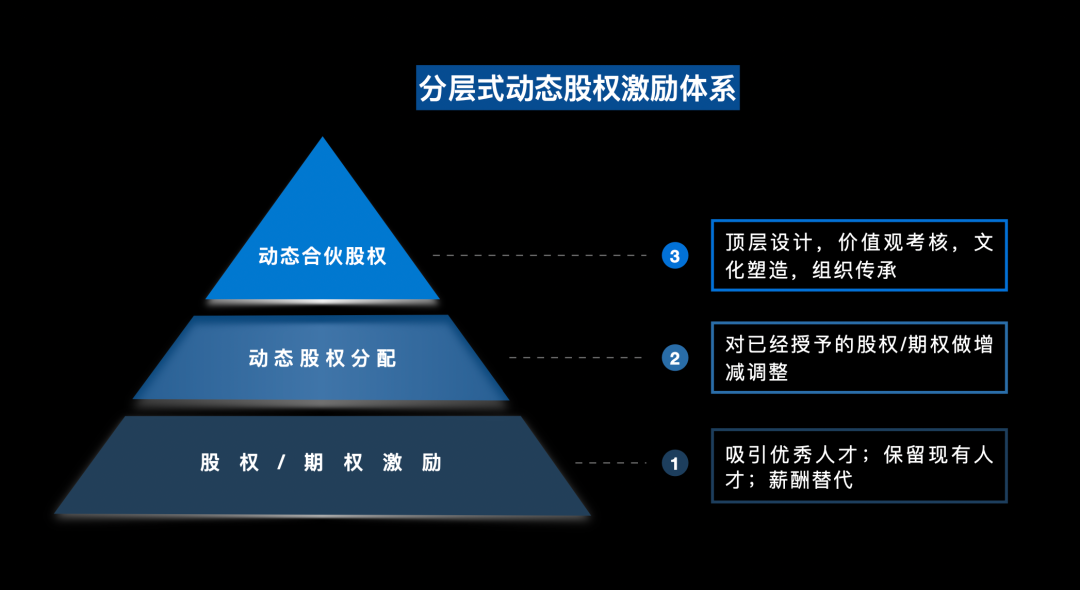
Based on different roles' functional responsibilities and psychological profiles, the author designed various equity allocation types and mechanisms — both facilitating retention of grassroots talent and promoting unified values at the top.
3. Rapid Growth Stage: Dynamic Adjustment Rules
As startups enter the pre-IPO maturity phase, standardization and adjustment of equity incentives become systematic priorities. At this point, the "position" being incentivized matters as much as the "person".
To systematically analyze dynamic adjustment strategies, here is the "Ten Determinations" framework for plan adjustments:
(Swipe left/right to view images 👇🏻)
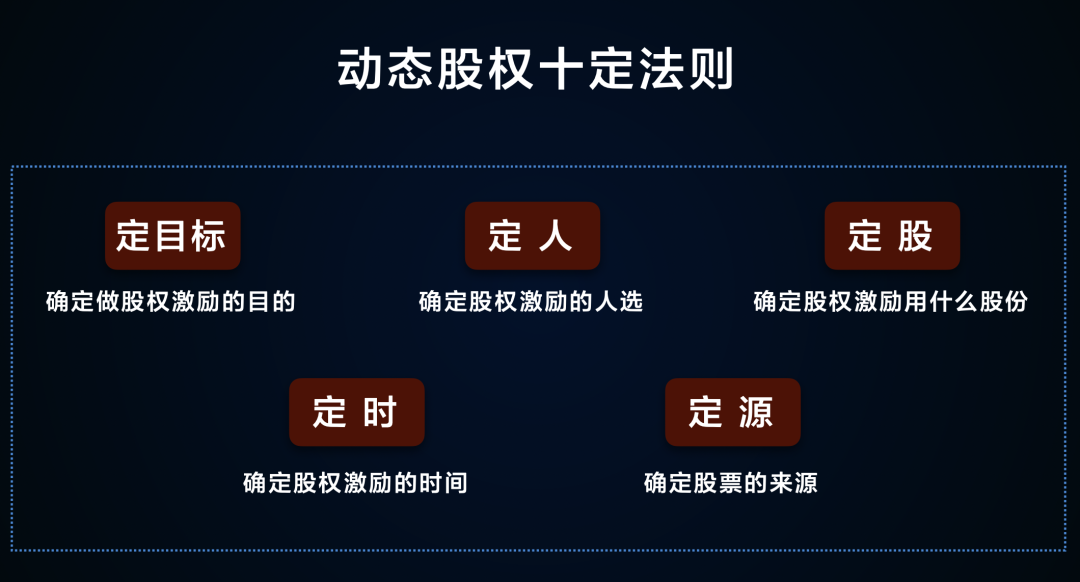
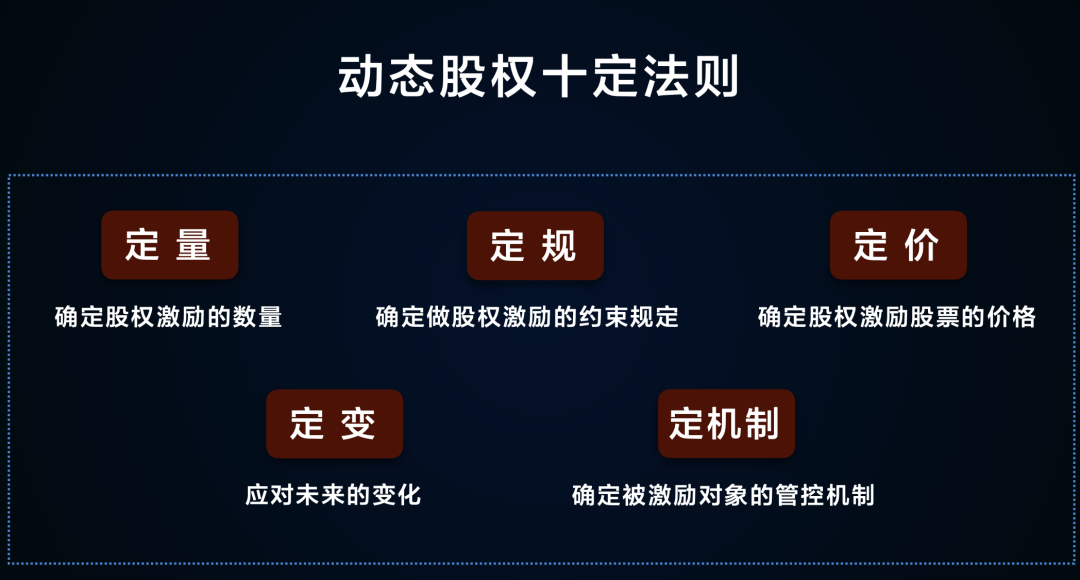
Beyond careful deliberation of the ten rules, companies must note these key points: the plan matters more than the documents, yet matters less than reaching consensus; human nature can challenge consensus, but cannot withstand the power of shared values. At its core, equity incentives represent something deeper for startup employees — they are buying not just company stock, but aspirations for a better life and opportunities to change their destiny, along with the delayed gratification and shared struggle required to achieve them.

Entrepreneurial Battlefield: Like "A Chef Opening a Restaurant"
Speaker
Founder with 12 years in automotive R&D toolchains

Image generated by AI @DALL·E
1. Grounding in Reality, Thinking Ahead — The Entrepreneur's Normal
Startup opportunities don't always come from grabbing a slice of a big pie. Sometimes, earning the right to start a company means finding things that currently score 30-40 out of 100, then pushing them to 60. Once you choose entrepreneurship, you must ground yourself in reality. For technically-trained founders, it's like "a chef opening a restaurant" — taking lower pay and doing more work offers the best shot at breaking through cycles and achieving qualitative change from quantitative accumulation.
For tech companies choosing R&D center locations, careful consideration of real-world labor costs, organizational models, competitive intensity, and macroeconomic shifts is essential, with flexibility when circumstances demand. The final footprint of institutional locations becomes a milestone in the entrepreneurial journey, proof of founders' hard-won efforts.
A company's first funding round isn't always a deliberate choice. Sometimes, when a team actively expands its business coverage from a single point to a broader surface, funding opportunities and considerations naturally emerge. But founders must remember: funding means taking "expensive" money to buy "even more expensive" time — and in fast-changing markets, time is the most precious commodity, worth using well.
2. Every Decision Is the Result of Logical Reasoning
Reflection 1: "A Company Is Not a Family"
A family means never abandoning anyone, but since a company operates in a competitive environment, trade-offs are inevitable — this is a value that must be shared across the organization.
Reflection 2: "The Traditional Auto Industry Hasn't Failed"
When people eagerly compare high-speed rail to the auto industry, founders should be wary of the comparison framework — given the vast difference in scale, direct comparison is logically unsound. With 100,000 auto experiments versus ten rail experiments, the auto industry actually represents the more complex and mature end. The same logical principle applies to cross-industry comparisons.
Reflection 3: "Choices at Different Company Stages"
Companies inevitably face different choices at different development stages. Founders may gradually step back, but the direction they set must always move the company forward. The fundamental goal of entrepreneurial effort is to increase certainty throughout the startup process.
These represent just some of the challenges early-to-mid stage tech companies may encounter in their development. But with timely anticipation and preparation, the right choices become possible. Beyond this exclusive Yunqi guide to avoiding pitfalls, we sincerely invite founders and industry experts currently navigating the enterprise software space to join us for Yunqi's offline "China Enterprise Software Chronicle" exchange this Friday (3/31) in Beijing. Together we'll explore valuation logic, value quadrants, and new frontiers in Chinese enterprise software, including but not limited to:
🌟 Exclusive report highlights from the Yunqi Capital investment team 🌟 Founders of leading companies and industry experts on new frontiers in enterprise software 🌟 Open discussion on the infinite possibilities of enterprise software + GPT
Interested participants are welcome to scan the QR code below to register before noon this Wednesday. Attendance is limited; the exact venue will be shared upon confirmation after registration screening.