Academicians Gather at Quantum Industry Conference, Sam Mao in Conversation with Academician Hongbo Sun

From Basic Research to Industrial Application
Top Academics and Multiple Quantum Projects Make Their Debut at the Conference
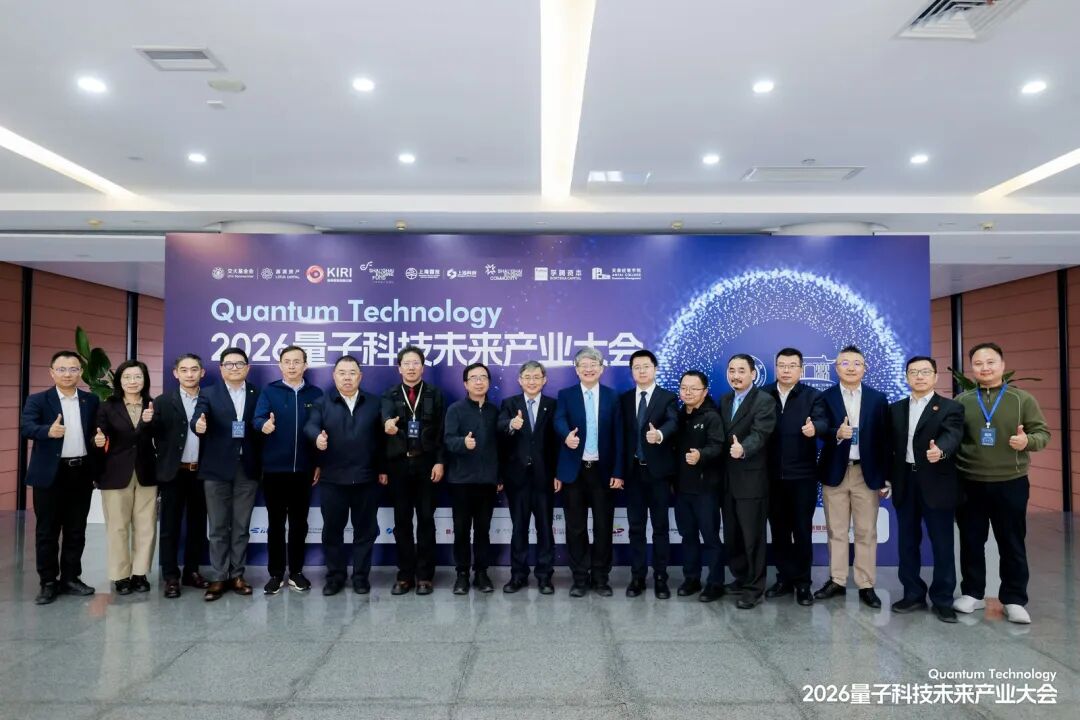
On March 31, the "2026 Quantum Technology Future Industry Conference" was held at Shanghai Jiao Tong University's Xuhui campus, jointly hosted by SJTU Hanyuan Capital, Haitong International Innovation Center, Shanghai SDIC Future Industry Fund, Shanghai SDIC FT Capital, Shanghai SDIC Sci-Tech Innovation Group, Shanghai Future Starting Point Community, and the Antai College of Economics and Management at Shanghai Jiao Tong University.
The conference brought together leading academics and industry representatives in quantum technology and related fields. Attendees included Kailing Ding, Academician of the Chinese Academy of Sciences and President of Shanghai Jiao Tong University; Jianwei Pan, Academician of the Chinese Academy of Sciences and Director of the CAS Center for Excellence in Quantum Information and Quantum Physics; Hong Ding, Academician of the Chinese Academy of Sciences, Deputy Director of the Tsung-Dao Lee Institute at Shanghai Jiao Tong University, and Founding Director of the Haitong Institute; Weinan E, Academician of the Chinese Academy of Sciences and Chief Advisor of the School of Artificial Intelligence at Shanghai Jiao Tong University; Hongbo Sun, Academician of the Chinese Academy of Sciences, Tenured Professor at Tsinghua University, and expert in laser precision manufacturing; Wei Qu, Deputy Director of the Shanghai Municipal Science and Technology Commission; and Guohua Yuan, Secretary of the Party Committee and Chairman of Shanghai SDIC, among others. Nearly a thousand guests from the innovation, entrepreneurship, and venture capital communities focused on the development of "quantum technology" participated.
Yunqi Capital was one of the conference partners, and Founding Managing Partner Chengyu Mao was invited to attend, engaging in a dialogue with Academician Hongbo Sun on "The Commercialization Prospects and Investment Logic of Photonic and Quantum Chips."
Quantum technology is a future industry direction explicitly laid out in the 15th Five-Year Plan, and also one of the hottest frontier tracks in current VC discussions. From computing power to materials, from communications security to precision measurement, breakthroughs in quantum technology industrialization are deeply intersecting with AI development across multiple dimensions.
As an early-stage investment firm with a long-term focus on frontier technology, Yunqi Capital has been closely monitoring quantum technology. The "SJTU-Yunqi AI Angel Fund," launched in partnership with Shanghai Jiao Tong University in 2025, counts quantum technology among its investment directions.
In Conversation with Academician Hongbo Sun:
The Commercialization Path for Photonic and Quantum Chips
At the conference, Chengyu Mao and Academician Hongbo Sun held a dialogue on "The Commercialization Prospects and Investment Logic of Photonic and Quantum Chips," presenting dual perspectives from technology and capital.**
Academician Sun has long specialized in laser precision manufacturing. His team developed "nonlinear laser manufacturing technology," which uses femtosecond lasers for three-dimensional through-processing inside transparent media. Through the original "optical far-field-induced near-field breakdown" effect, the team broke through the optical diffraction limit, achieving "super-stealth dicing" with lateral precision below 10 nanometers and an aspect ratio exceeding 15,000 — an improvement of 1 to 2 orders of magnitude over existing international technology.
During the dialogue, Academician Sun noted that the success of integrated circuits was objectively a matter of "nature's gift" in the form of silicon, and subjectively the result of developed manufacturing technology. For photonic technology, no single material can dominate everything, so greater effort is needed. His team uses silicon dioxide as the base material and ultrafast laser processing as the core tool for three-dimensional integration, carving out a new path for quantum integrated devices.
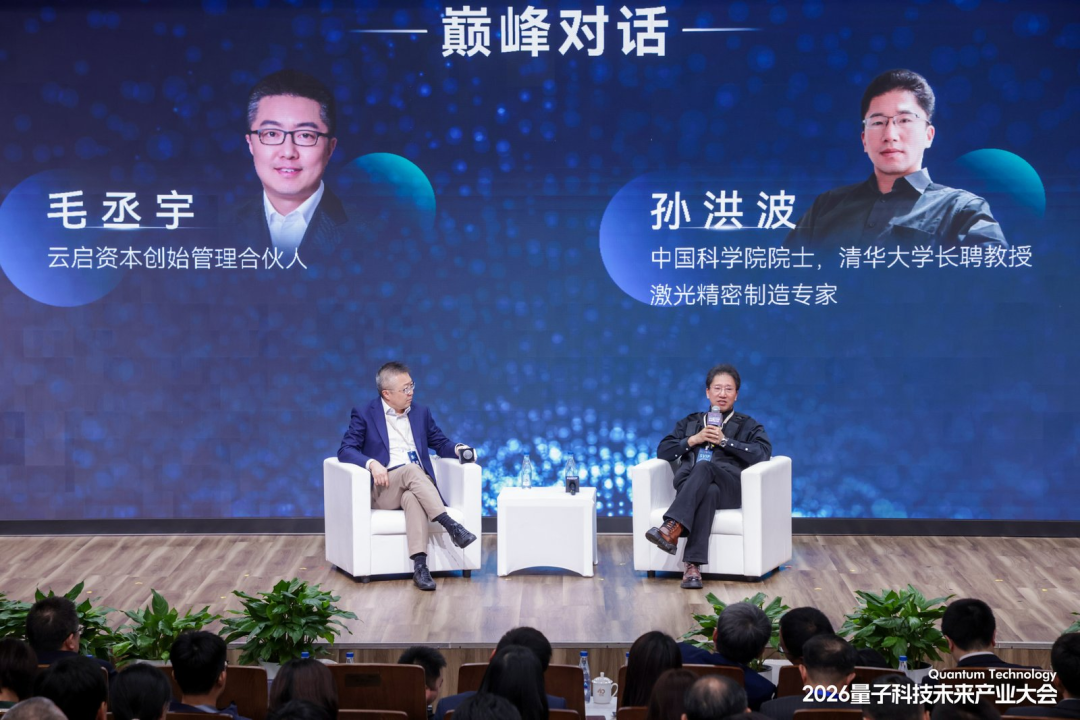
Yunqi Capital Founding Managing Partner Chengyu Mao in dialogue with Academician Hongbo Sun
When Mao asked about the technology's "future industry progress," Academician Sun revealed the development strategy for "nonlinear laser manufacturing technology": "Quantum chips are 'high art' — while the technology is ready, system-level application scenarios are still lacking; therefore, the current revenue mainstay for 'nonlinear laser manufacturing technology' remains equipment and components for the new energy and semiconductor sectors."
Mao noted that this "high-low pairing" strategy was impressive — combining the lofty ambition of quantum chips with the solid orders from advanced equipment, featuring high technical barriers while being able to "lay eggs along the way."
From Research to Capital:
Consensus on the Quantum Industry
At the conference, guests from research, industry, and capital also shared their observations on the current state and prospects of quantum technology.
SJTU President Kailing Ding pointed out in his address that quantum technology, as a future industry with forward-looking layout in the 15th Five-Year Plan, is a key domain for seizing future technological high ground; Shanghai Jiao Tong University has gathered top scientists and young scholars through platforms such as the Tsung-Dao Lee Institute, the School of Physics and Astronomy, and the School of Artificial Intelligence, and has carried out a series of foundational frontier explorations in quantum computing, quantum communications, and other fields, empowered by artificial intelligence and other technologies. He also introduced that the university is promoting the construction of a topological quantum computing engineering research platform and a quantum college, and through initiatives such as establishing a "Future Industry Fund of Funds," is driving collaborative innovation among government, industry, academia, and research, bridging the "last mile" for quantum technology commercialization.
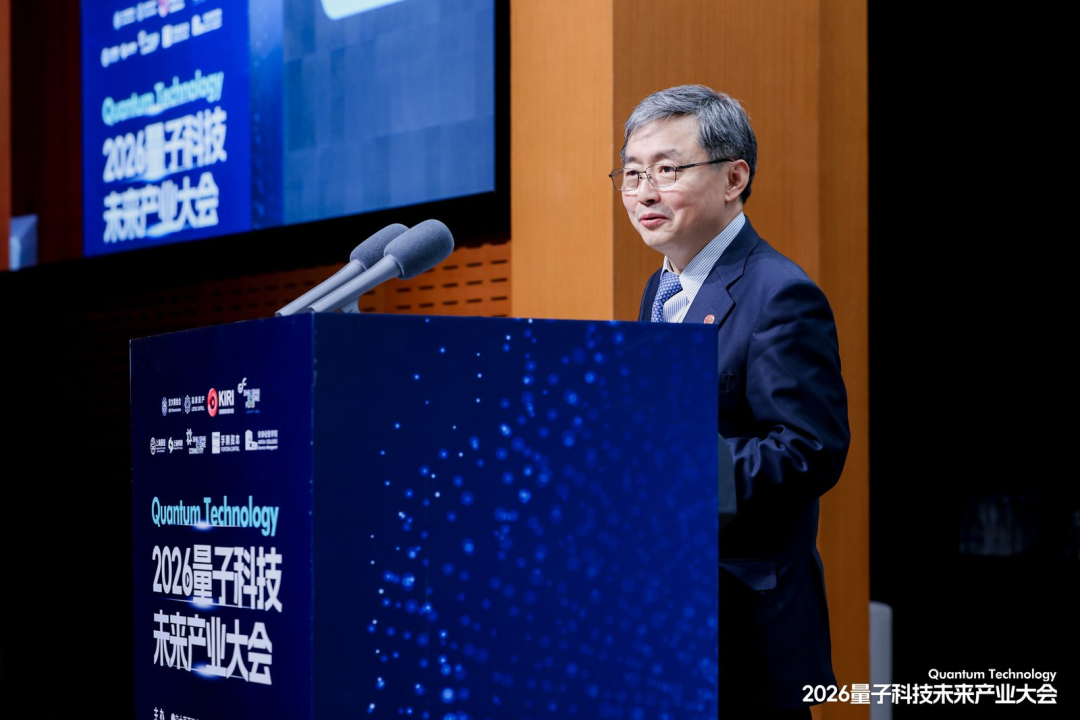
Kailing Ding, Academician of the Chinese Academy of Sciences and President of Shanghai Jiao Tong University
Guohua Yuan, Secretary of the Party Committee and Chairman of Shanghai SDIC, stated that future industries are a key focus of Shanghai SDIC's strategic layout. As strategic capital, it must not only focus on financial returns but also on whether it truly solves "bottleneck" problems. Shanghai SDIC is willing to be a "knowledgeable" long-distance runner and an "empowering" connector, focusing on quantum computing, security, communications, and measurement to support research teams willing to tackle hard problems, accompanying them with patient capital across the long journey from laboratory to market, and helping future industries take shape and gain momentum faster.
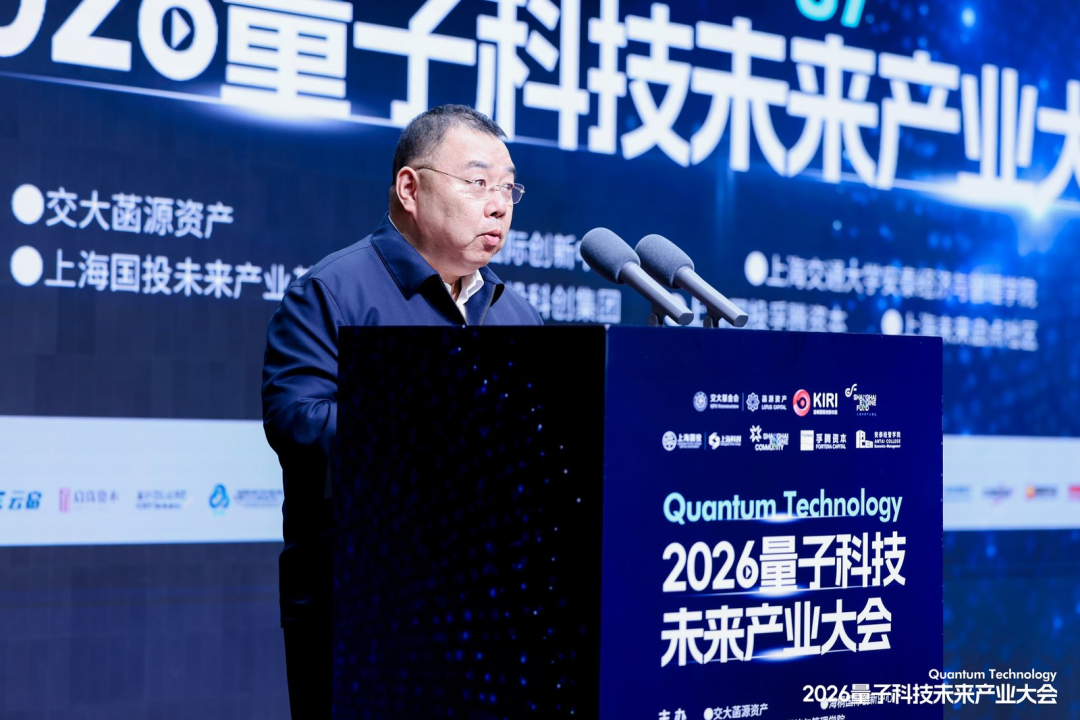
Guohua Yuan, Secretary of the Party Committee and Chairman of Shanghai SDIC
Wei Qu, Deputy Director of the Shanghai Municipal Science and Technology Commission, stated that Shanghai has designated quantum technology as a key future industry, issuing dedicated plans and continuously tackling key technologies. Currently, the city has more than 40 quantum-related enterprises, which are accelerating their aggregation and development, actively exploring quantum+ application scenarios. Progress has been made in mathematical computing, deep-earth exploration, and anti-quantum encryption scenarios, while new scenario validations such as typhoon prediction, logistics optimization, and quantum-supercomputing integration are being accelerated. Shanghai will continue to optimize the policy environment to safeguard quantum industry development.
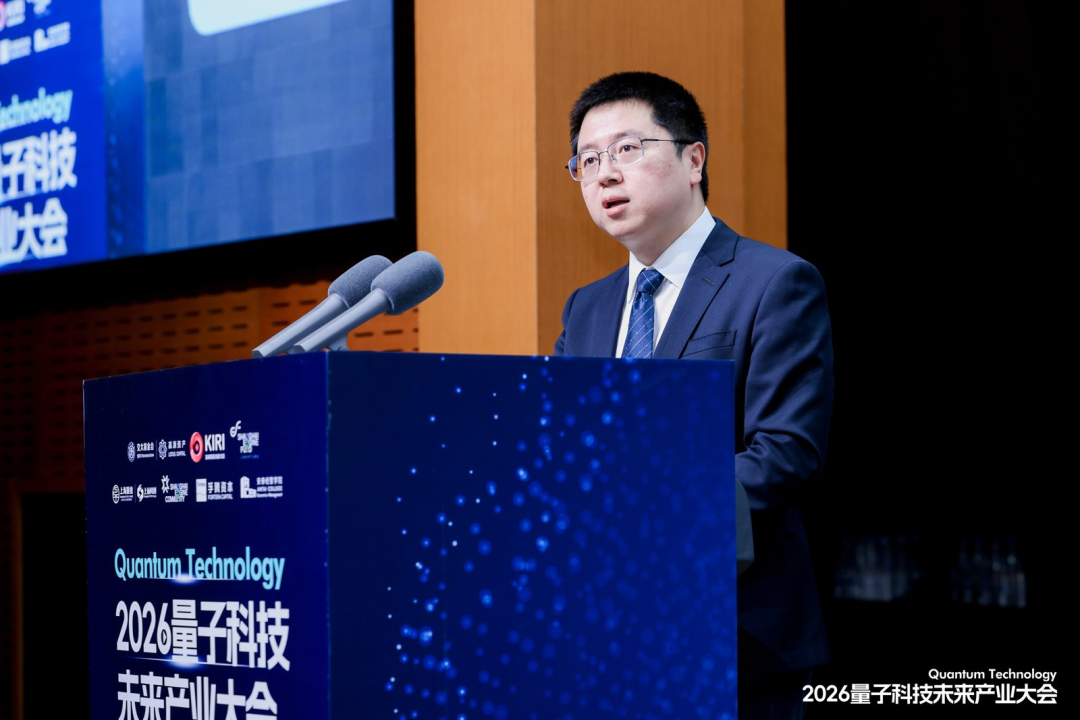
Wei Qu, Deputy Director of the Shanghai Municipal Science and Technology Commission
In the keynote speech session, Academician Jianwei Pan of the Chinese Academy of Sciences noted that quantum information technology is leading the second quantum revolution, with core coverage of three directions: quantum communications, quantum computing, and quantum precision measurement. Among these, quantum communications is relatively mature, while quantum computing is the "Mount Everest" requiring long-term攻关.
Pan stated that China has made considerable progress at the research level, but for long-term development, there is an urgent need to establish an effective science and technology finance system. "Between 2019 and 2023, social investment in quantum technology in the US was 1.5 times that of government investment; social investment in China remains insufficient." He called for building a more complete science and technology finance ecosystem, allowing social capital and research teams to resonate at the same frequency, and through models such as "social capital + national team" joint R&D, pushing quantum technology from the laboratory to industrialization.
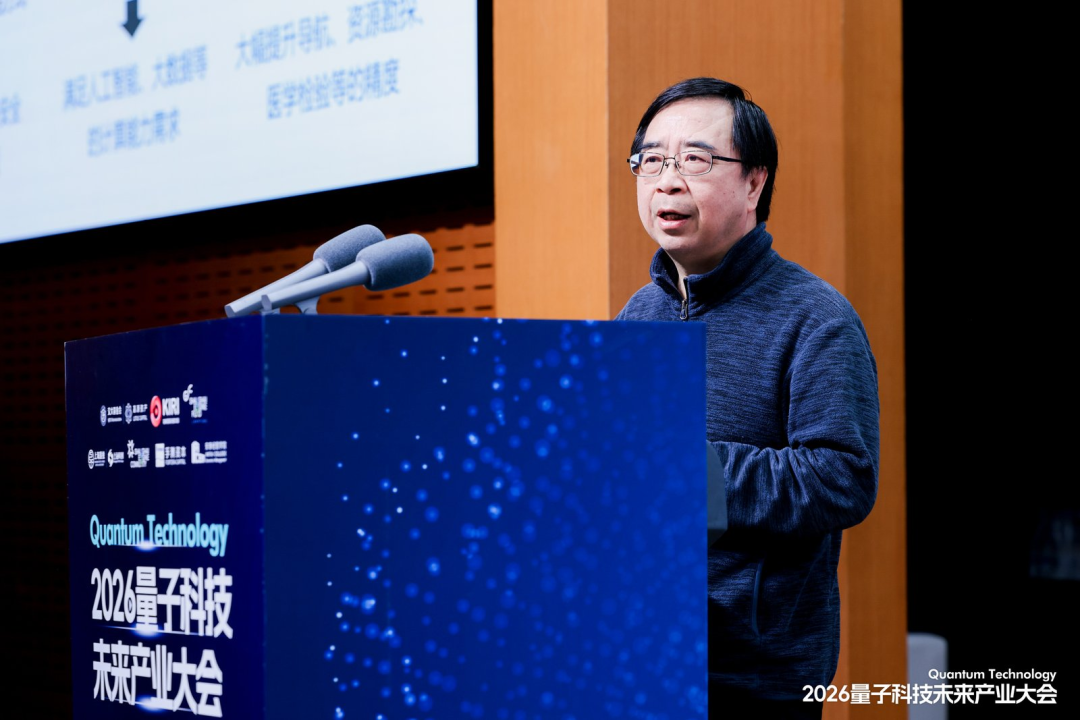
Jianwei Pan, Academician of the Chinese Academy of Sciences
In a dialogue between Wei Fanjie, General Manager of Shanghai Future Industry Fund, and Academician Jianwei Pan, when Fanjie asked "are we ready for quantum computing industrialization," Pan recalled that in 1999 he had considered quantum computing "fundamentally unreliable," while today his team has achieved control of over 3,000 photons, far beyond what he could have imagined. He acknowledged that while universal quantum computers still require 10 to 15 years or more of攻关, he is confident that various special-purpose quantum simulators can be developed in the near term.
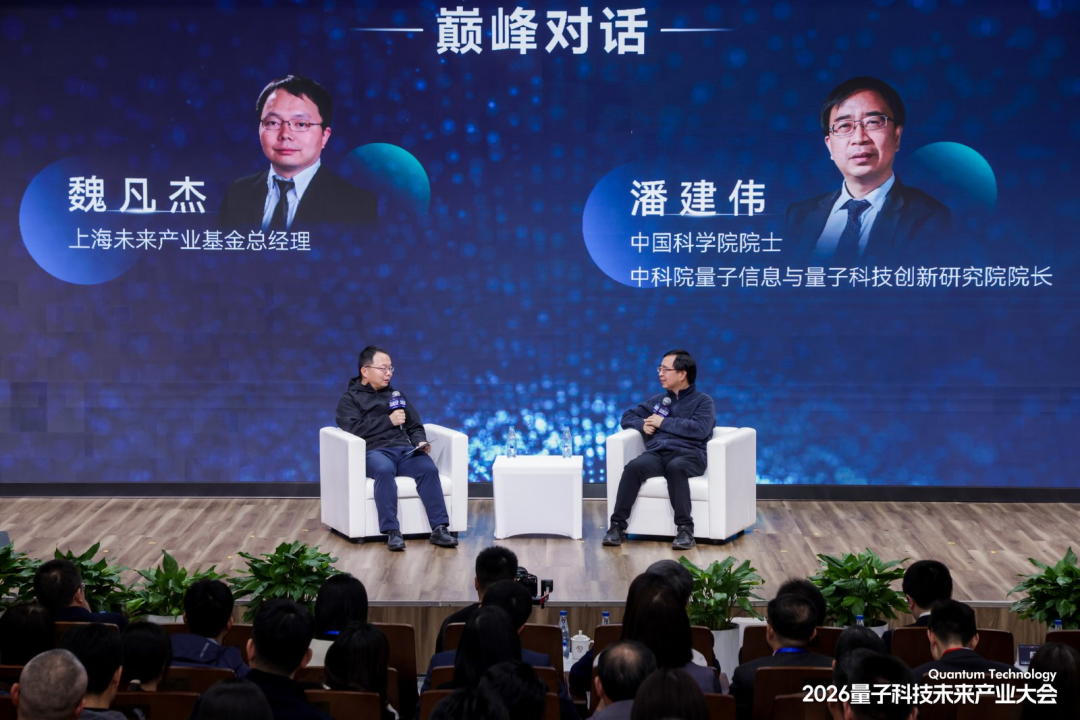
Wei Fanjie, General Manager of Shanghai Future Industry Fund, in dialogue with Academician Jianwei Pan
Topological Computing, AI4S, and the Innovation Ecosystem
Hong Ding, Deputy Director of the Tsung-Dao Lee Institute at Shanghai Jiao Tong University and Founding Director of the Haitong Institute, revealed the unique advantages of topological quantum computing in achieving universal quantum computing. He pointed out that while quantum computing possesses exponential computing power advantages, its core bottleneck lies in the extreme fragility of quantum bits. Topological quantum computing, however, uses the global topological properties of matter to protect quantum information, like putting a "bulletproof vest" on quantum bits, making them immune to local noise.
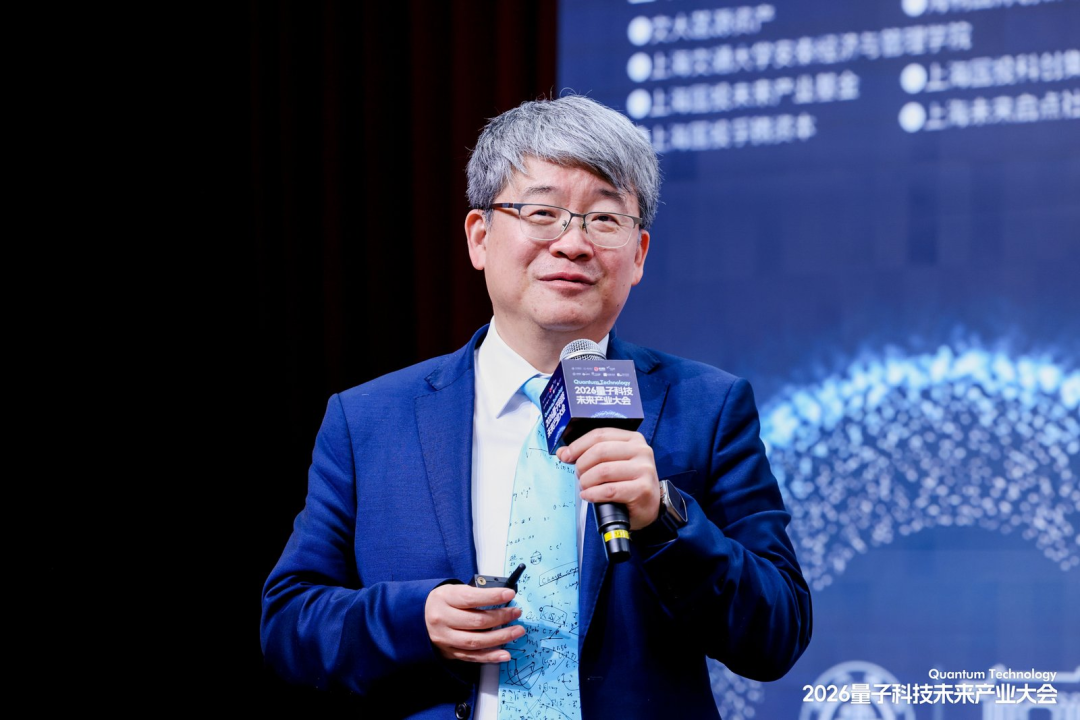
Hong Ding, Academician of the Chinese Academy of Sciences, Deputy Director of the Tsung-Dao Lee Institute at Shanghai Jiao Tong University, and Founding Director of the Haitong Institute
In a dialogue between Ding Gang, Partner at SJTU Hanyuan Capital, and Academician Hong Ding, they discussed the commercialization potential of topological quantum computing. Academician Ding believes the quantum industry is shifting from an academic competition purely focused on qubit count to application exploration aimed at solving practical problems. Addressing industry concerns about "overly long quantum investment cycles," Ding Gang noted that with accelerating technology, this timeline may be shorter than imagined — and this is precisely the long-term value that "patient capital" needs to hold firm to.
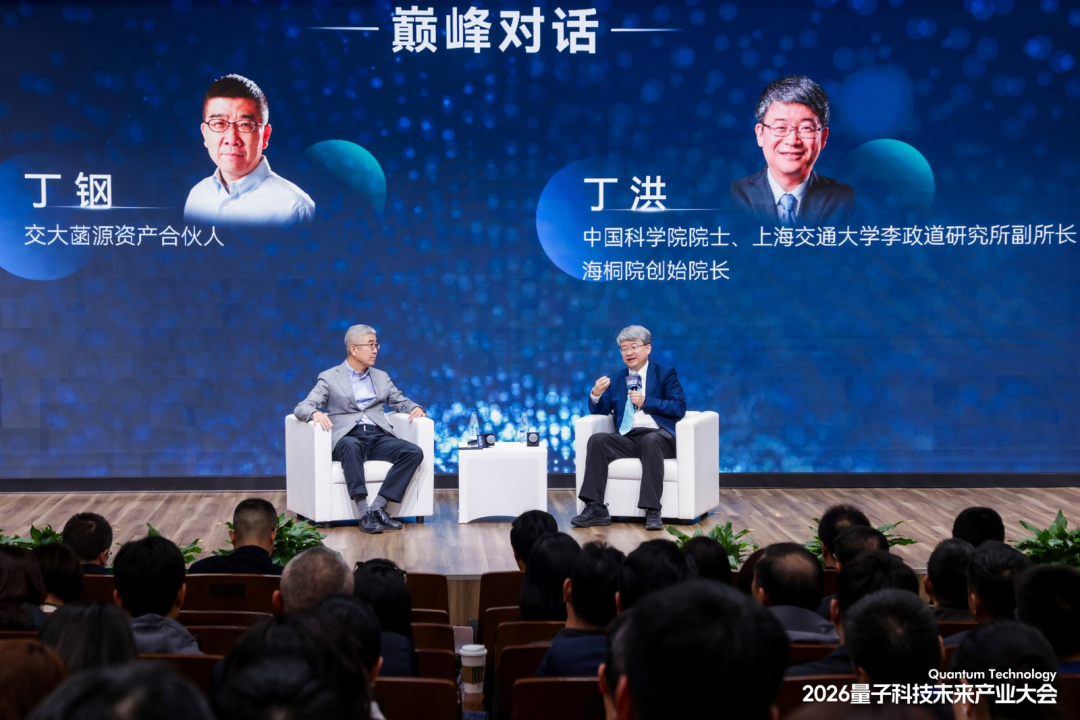
Ding Gang, Partner at SJTU Hanyuan Capital, in dialogue with Academician Hong Ding
Weinan E, Chief Advisor of the School of Artificial Intelligence at Shanghai Jiao Tong University, systematically explained the key path for AI for Science to move from concept to scaled implementation. He noted that the key infrastructure for AI for Science has gradually taken shape, and scientific research is approaching its "GPT moment." This system is not only reshaping the scientific research paradigm but also demonstrating enormous potential on the industrial side.
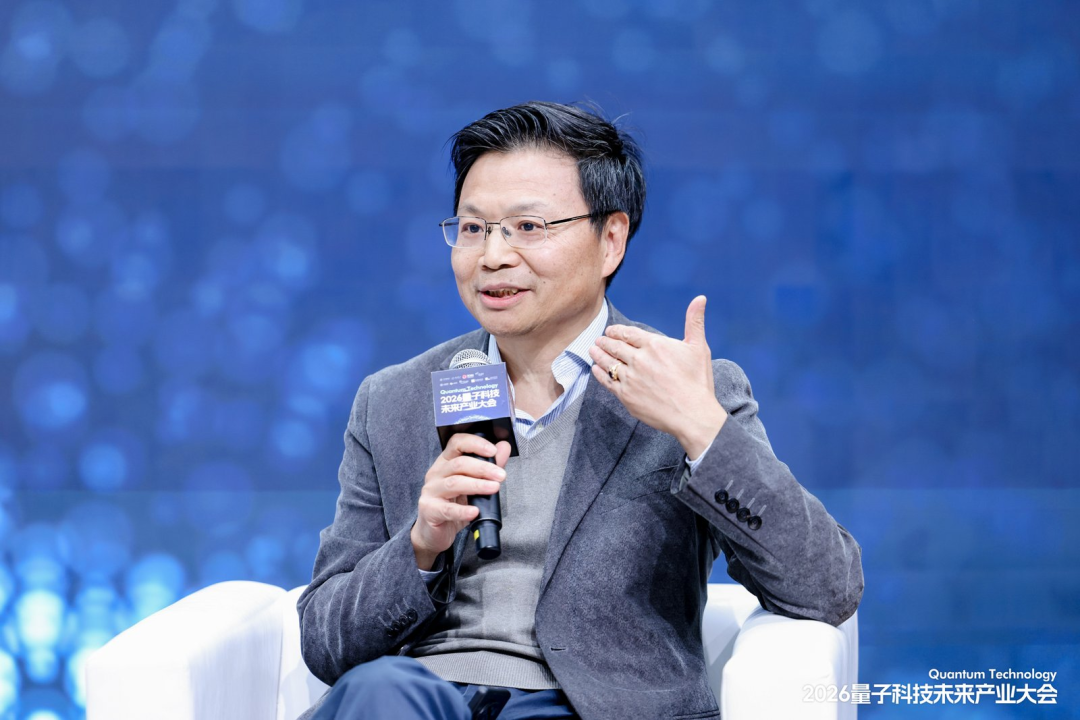
Weinan E, Academician of the Chinese Academy of Sciences and Chief Advisor of the School of Artificial Intelligence at Shanghai Jiao Tong University
In the subsequent dialogue with Zhu Min, Chairman of Shanghai SDIC Sci-Tech Innovation Group, one focus was the resonance between capital and industry. Zhu Min candidly noted that facing the future industry layout of the 15th Five-Year Plan, investment institutions face the balancing pressure between high project valuations and long-term returns. Weinan E gave a clear judgment: valuations in the AI for Science domain are not currently overheated, and capital should not stop at "investing early and small," but should also possess industry foresight capabilities.
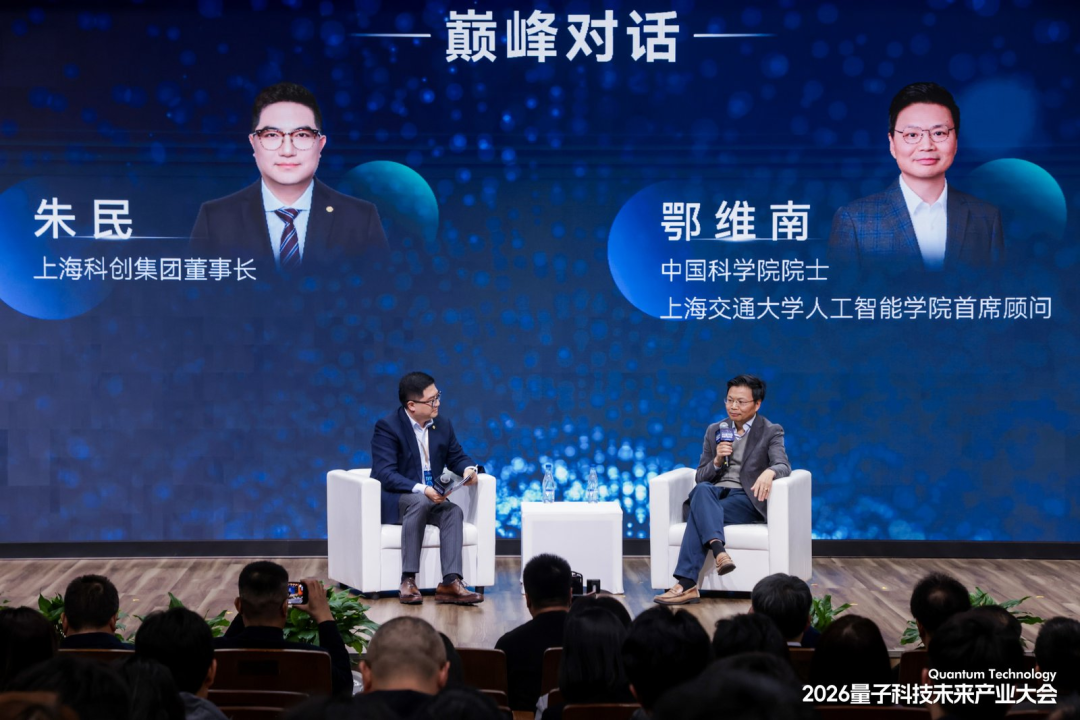
Zhu Min, Sci-Tech Innovation Director of Shanghai SDIC, Secretary of the Party Committee and Chairman of Shanghai Sci-Tech Innovation Group, in dialogue with Academician Weinan E
In two roundtable forums, multiple scientists, enterprise representatives, and investors in the quantum technology field engaged in in-depth discussions on technological breakthroughs, scenario implementation, and capital empowerment, jointly mapping out the ecosystem picture of quantum technology's journey from basic research to industrial application.
In the conference closing session, Zhenyu Yang, Vice Chairman of the SJTU Education Foundation and Founding Managing Partner of SJTU Hanyuan Capital, stated that SJTU Hanyuan Capital is expanding from an on-campus venture capital ecosystem to a broader "SJTU alumni + friends" collaborative network. In the future, it will continue to build platforms around AI for Science, innovative drugs, brain science, and other fields, calling on all sectors to jointly support the entrepreneurship and venture capital ecosystem and help drive China's technological innovation.
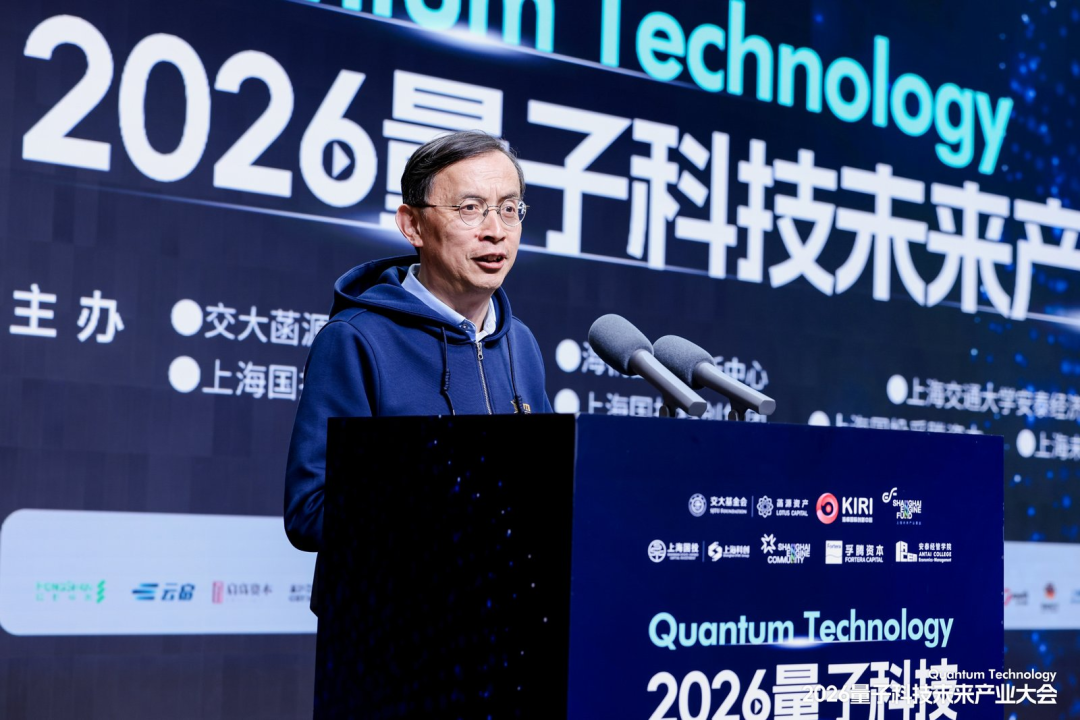
Zhenyu Yang, Vice Chairman of the SJTU Education Foundation and Founding Managing Partner of SJTU Hanyuan Capital
Quantum technology's path to industry requires long-term collaboration among scientists, entrepreneurs, and capital. Yunqi Capital will continue to monitor frontier developments in this field, and looks forward to working with more like-minded partners to contribute to the commercialization of quantum technology.