Manycore Tech's Huang Xiaohuang: The "Hammer" and the "Stars" of 14 Years Building a Company | Yunqi Capital Doers

From GPU Rendering to Spatial Intelligence
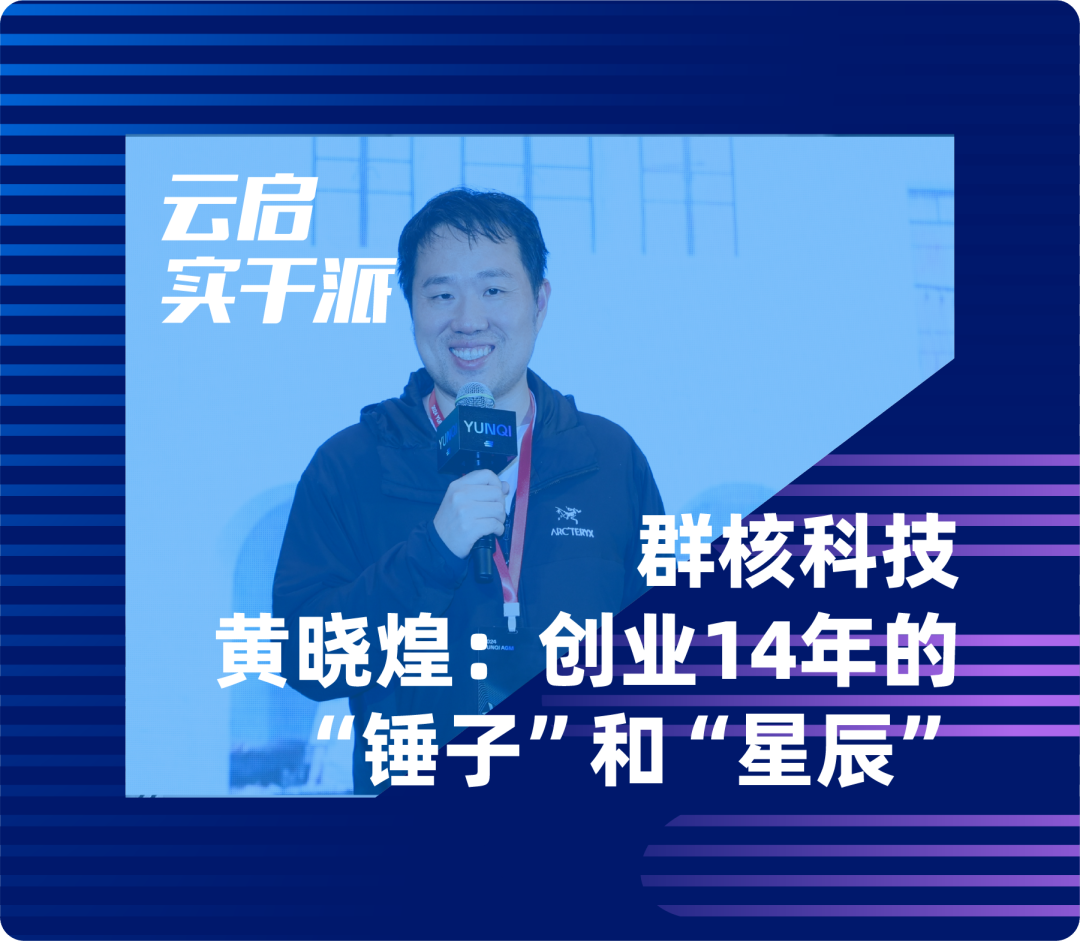
"When all you have is a hammer, everything looks like a nail." As Manycore Tech leads the "Hangzhou Six Little Dragons" in the race to IPO, this team's story is reaching a wider audience. Recently, Manycore Tech co-founder and chairman Xiaohuang Huang sat down with CCTV's Face to Face for an in-depth interview about his entrepreneurial journey, and how the company is embracing open source and the new era of physical AI.
In 2013, Mao Chengyu, founding partner of Yunqi Capital (then a partner at IDG), led Manycore Tech's Series A as its first institutional investor. At the time, the venture capital world was fixated on "O2O" and "platform economy" — the hammer in Huang's hand, "GPU rendering," was still an unfamiliar concept. But for Mao, who was deeply immersed in the home improvement market, Manycore's technical background directly addressed a critical industry pain point. Moved by this, Yunqi Capital continued to bet on Manycore after its own founding in 2014, investing across multiple rounds and standing by the company through the years.
The decade-plus of accompanying Manycore Tech through technology cycles has also been a decade of mutual support between two no-nonsense, get-things-done teams. In this edition of "Yunqi Doers," we take you inside Manycore Tech's entrepreneurial journey.

This article is republished from the "Manycore Tech" WeChat official account. Original title: Manycore Tech's Xiaohuang Huang: Better to Open Source Than Guard a "Gold Mine"
On Entrepreneurship: Build the Hammer First, Then Change the World
In 2012, Geoffrey Hinton and his students crushed traditional algorithms in an image recognition competition using deep convolutional neural networks, opening a new chapter in the AI revolution and making GPUs famous overnight. Through its partnership with Amazon, NVIDIA began entering the cloud services battlefield. At that time, Manycore Tech's young team was already running down the path of finding nails for their hammer — their hammer being a physically accurate rendering engine powered by GPUs. "Physically accurate" means the rendered images align with real-world physics across all parameters.
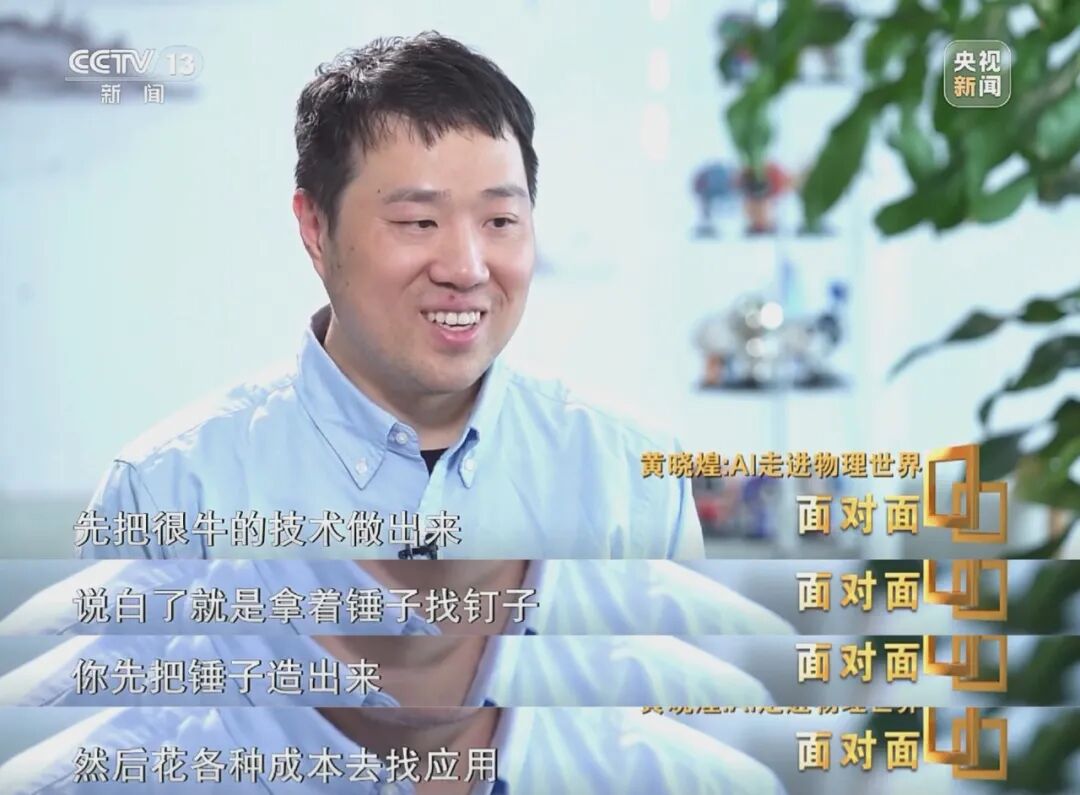
Xiaohuang Huang: I took this physically accurate rendering from something that originally took half an hour, an hour to produce one image, down to 10 seconds.
Dong Qian: Why did you insist on physical accuracy?
Huang: Because physical accuracy has stronger universality, stronger stability.
Dong Qian: I have a question — why were you able to accumulate this physically accurate data, while some companies, including those in the US, didn't?
Huang: This is something we achieved when we reached Industry 4.0. All the digital assets we've accumulated in the digital world correspond one-to-one with the physical world. Being able to actually manufacture them was a critical milestone. The US doesn't have such a massive industrial system, so companies doing this there didn't have much use for it.
I think you probably couldn't find a second country in the world with this scale — so large that human production alone can't handle it, you need unmanned factories running automatically.
Dong Qian: As someone immersed in technical research, did you ever think about how this technology connects to the real world?
Huang: When I worked at NVIDIA, I noticed the entire company's methodology was to first build amazing technology, then spend all kinds of resources finding applications for it. So I was trained in the "hammer looking for nails" approach — build the hammer first.
Dong Qian: So "the times make the person" — sometimes you have this hammer, but if you don't catch the right era, you might not find a nail to hit.
Huang: Yes, in some ways we've been lucky. But on the other hand, we've always believed this technology has value.
On Technology: The New Era of Physical AI Is Just Beginning
Physical AI can be understood as AI that understands the rules of physics. Only autonomous machines that grasp physical rules — robots, self-driving cars — can perceive, understand, and execute complex operations in the real physical world.
But in reality, training robots is prohibitively expensive and hard to scale, while using data to train robots faces a bottleneck of scarce high-quality 3D data. Thus, the current bottleneck for AI entering the physical world is the lack of interactive 3D data.
Huang: We think this is just the beginning of a new era.
Dong Qian: What new era?
Huang: Physical AI. To put it simply — say you buy a robot to do chores at home. It first has to fall down dozens of times in your house before it can work for you. Would you be scared? Of course you would. So it needs to get all its falls and mistakes out of the way in a digital world first, then come to your house and work properly.
Dong Qian: What can you do in this process?
Huang: We have to help train the robots. We're laying groundwork for this future world, making sure humans and machines see the same things.
Huang: In the future world, say ten or twenty years from now, all equipment will be intelligent — homes, offices, factories will all have embodied robots or humanoid robots.
In 2018, building on its massive accumulation of indoor spatial data from its core business, Manycore Tech partnered with several domestic and international universities to launch the InteriorNet dataset.
Before this, there were already many well-known datasets internationally, but most were static or non-interactive. InteriorNet was one of the few datasets composed of interactive 3D data, and became the world's largest indoor scene cognition deep learning dataset.
Huang: Before 2018, we had no idea how to train for this, so we thought — why not just open up the data?
Dong Qian: What did you get from that?
Huang: Better to let everyone try together than let it rot in our hands. Maybe at some point someone will have a flash of insight and figure it out.
Dong Qian: Why did you have this idea? You'd rather give it to others than keep it to yourself?
Huang: Honestly, I think it's just interest. For me, pushing this forward matters more than how much money we make. We believe that if we create value, we'll definitely make money in the future. But if we don't push this forward, other places in the world might not have the resources, and it'll just stay stuck forever.
Dong Qian: So if you can't do it alone, you gather the world's best minds to build on what you have.
Huang: Yes. I think this should be wealth that belongs to all humanity — everyone working together to break through. Then whoever makes money from it, that's up to fate. Otherwise there's no opportunity at all. But if you hoard it and hide it, you can't research it yourself, and others don't have the conditions to research it — doesn't that just kill the whole赛道?
Dong Qian: But isn't it possible that while you're hoarding, someone else strikes gold and even surpasses you, making you irrelevant?
Huang: That's possible, that risk exists. But at least you still have the mine. If you know others can extract from it, you can always cooperate, right?
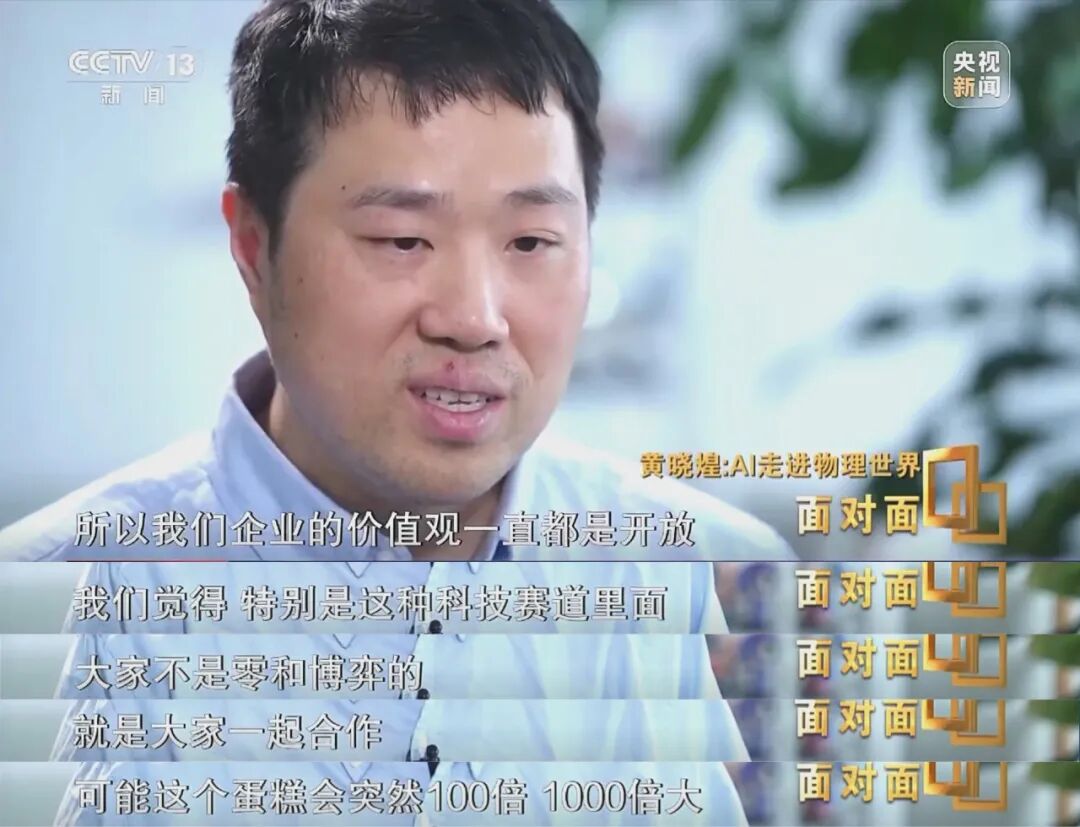
Our company's values have always been about openness. We especially feel that in technology, this isn't a zero-sum game. When everyone cooperates, the pie can suddenly become 100 times, 1,000 times bigger.
Dong Qian: Can you alone make it flourish, make it huge?
Huang: Not alone — we're contributing our small part to the entire industry. We first have to make it a thriving, massive ecosystem, then we can get our share.
On Open Source: Embracing Openness Is How You Outrun the Times
Today, China's open source force has become a significant driver in the global open source ecosystem.
In March 2025, Manycore Tech released and open-sourced its self-developed spatial understanding model SpatialLM. Combined with its previously launched spatial intelligence platform SpatialVerse, this enables robots to complete the full closed loop from cognitive understanding to action-based interaction training.
With the explosive growth of embodied intelligence, Manycore Tech has a new possibility — becoming one of the cloud infrastructure giants for spatial intelligence training.
Dong Qian: If we use an analogy — your SpatialLM plus SpatialVerse together, which part of today's large language models does that correspond to?
Huang: SpatialVerse is like the corpus of a large language model, SpatialLM is like the model itself. Right now it's still relatively early stage — I'd say around GPT-2.5, GPT-3.0 level.
Dong Qian: But you're the only one doing this.
Huang: Right. So we'll keep iterating.
Dong Qian: So to some extent, you're like a ChatGPT-type company.
Huang: Yes. But they're closed, we're open.
Dong Qian: What difference will your openness and their closedness make?
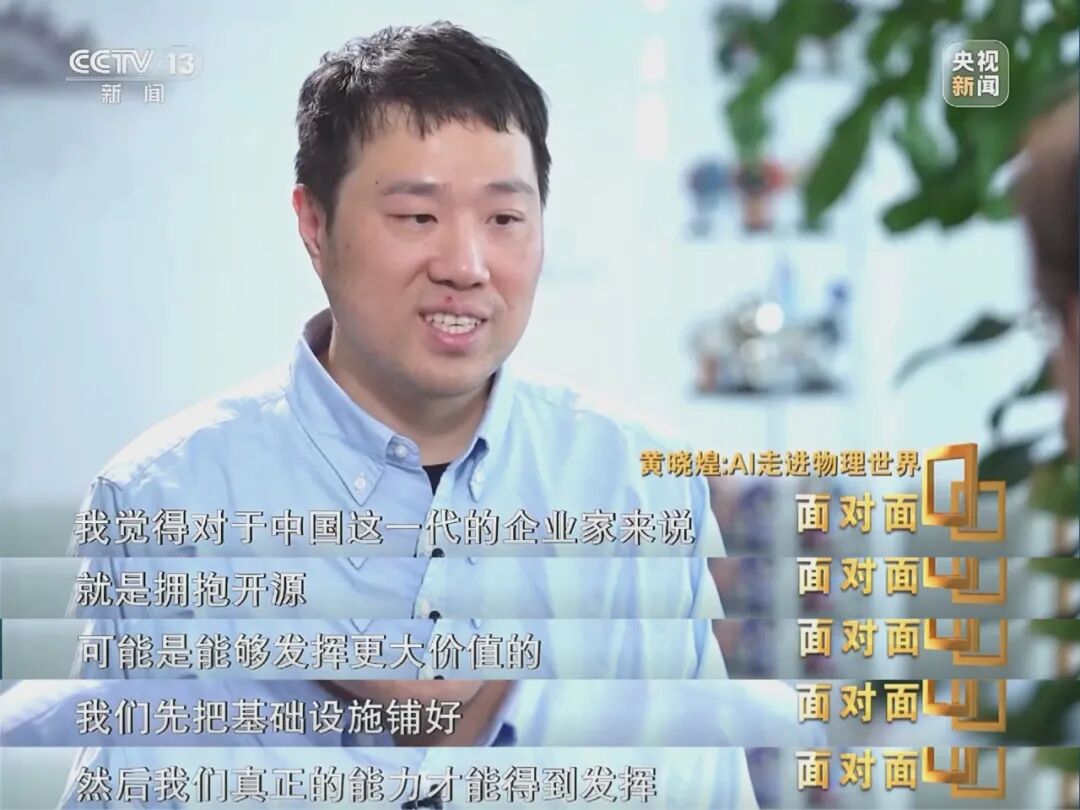
Huang: I'm looking at the business 10, 20 years from now. We first lay the infrastructure, then real capabilities can be unleashed. I think for this generation of Chinese entrepreneurs, embracing open source may be how we can create greater value.
Dong Qian: This brings us back to your original entrepreneurial intention — what is it, even now? What drives you?
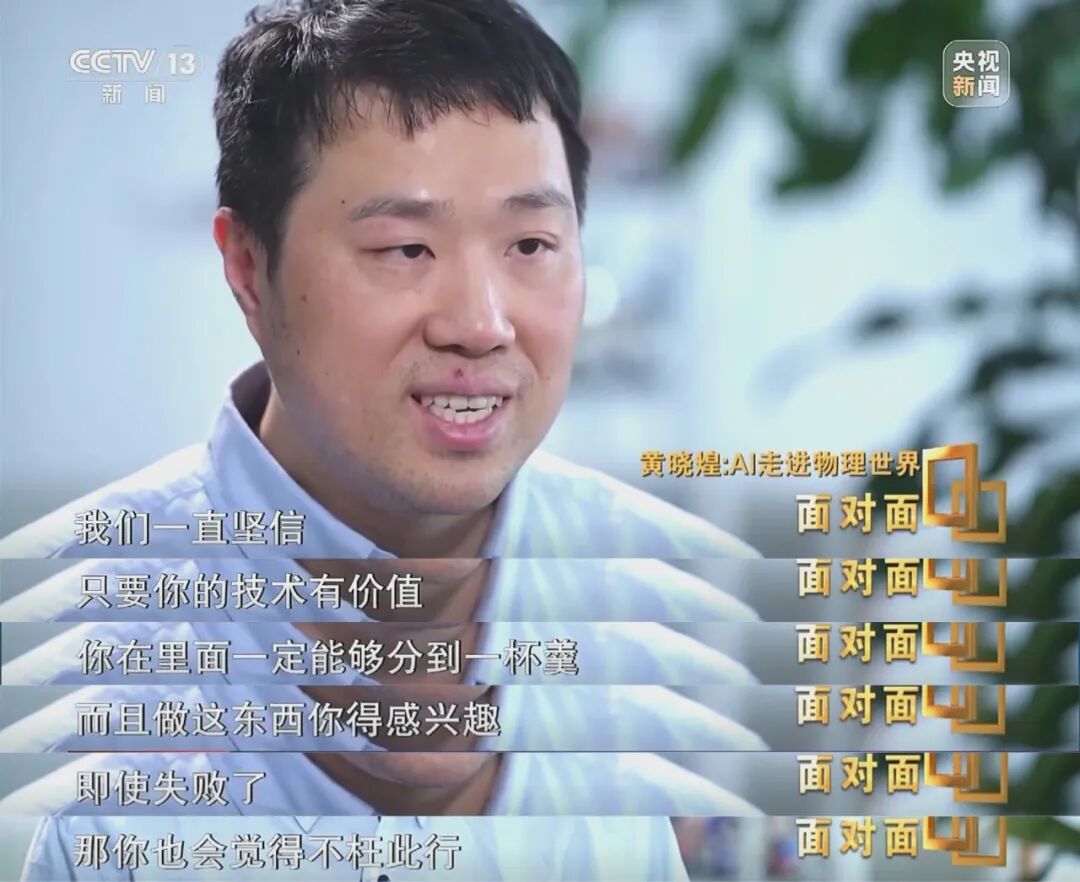
Huang: We've always believed that as long as technology has value, and this赛道 thrives, you'll definitely get your share.
And you have to be interested. Even if you fail, the process itself is joyful, exciting, fulfilling. Even if you ultimately don't make money, you'll feel it was worth the journey.
Click the video below for more 👇
Closing Words
From GPU rendering to spatial intelligence, Manycore Tech is approaching an ever broader horizon using the "hammer" it aimed at early on, together with its open and open-source approach. And as an investment institution focused on frontier technology, Yunqi Capital has also been continuously involved in building China's open source ecosystem — leading early investments in open source projects including PingCAP, TabbyML, Zilliz, Jina AI, and RisingWave Lab, and accompanying a cohort of outstanding Chinese open source companies in establishing global influence.
In 2025, we continue to partner with industry professionals to release an open source report — coming soon, stay tuned!