"Neolix" Accelerates Into Pharmaceutical Delivery, Unlocking a 100-Billion-Yuan Market | Yunqi Partners

The potential of autonomous delivery vehicles is expanding from parcel delivery into the far more complex world of urban logistics at large.

The potential of autonomous vehicle delivery is expanding from parcel express into the far more complex universe of urban distribution.
Recently, Yunqi Capital portfolio company Neolix has accelerated its push into pharmaceutical retail and distribution, partnering with several industry leaders to achieve regularized deployment across warehouse-to-store replenishment, network下沉 for门店, and nighttime medicine delivery.
Pharmaceutical distribution demands higher standards for speed, regulatory compliance, temperature control, and cost — putting Neolix's flexible dispatch capabilities and structural cost reduction to the test. Moving from "capacity replacement" to "supply chain重构," Neolix is opening new growth vectors for autonomous delivery in urban distribution. Read on with this edition of Yunqi Partners.
The following is reprinted from "Logistics Evolution"
The potential of autonomous vehicle delivery is still scaling up.
Over the past two years, autonomous vehicles have proven their ability to dramatically improve cost efficiency for logistics enterprises at scale. Now, this重构 of cost structure and fulfillment efficiency is rapidly diffusing from parcel express into urban distribution, from general cargo into cold chain, from niche applications into full-scenario coverage.
In 2025, technology players, platform players, and automakers are all rushing in. The technology-focused leaders have quickly raised the industry threshold to the ten-thousand-vehicle level. In a sense, the past year was one of market validation; now, as autonomous vehicles accelerate their penetration into细分 markets, first-tier players like Neolix are driving rapid differentiation among the leaders.
Recently, in pharmaceutical retail and distribution, Neolix has triggered another supply chain reshuffle premised on cost efficiency: LBX Pharmacy deployed 120 stores in Nantong over eight months,九州通 achieved round-the-clock warehouse-to-store operations, and Yixintang normalized nighttime delivery...
Pharmaceutical delivery has entered "autonomous racing" mode, and Neolix has charged into another "hundred-thousand-vehicle"增量 market.
Autonomous Delivery
Accelerating Into Pharmaceutical Distribution
From parcel express and FMCG to food service, retail, pharmaceuticals, and auto parts, more and more operators are asking: how can the structural cost reduction of autonomous vehicles be embedded into their supply chain models?
In the pharmaceutical distribution segment specifically, the autonomous delivery model is rapidly integrating into manufacturing, channel distribution, and retail endpoints,重构 the "cost-efficiency-experience" equation across the entire B2B2C chain.
Take retail endpoints as an example. According to重磅 data from the National Medical Products Administration, the number of pharmacies nationwide has surpassed 680,000. This is merely the offline terminal channel; viewed from the full chain of manufacturing, distribution, and retail, this represents at least a "hundred-thousand-vehicle" market.
China's pharmaceutical distribution sector currently sits at a juncture where "policy is forcing transformation, and margins are forcing precision."
Why are leading players like LBX Pharmacy,九州通, and Yixintang rapidly introducing autonomous delivery? Several key drivers are at work:
From a cost perspective, pharmaceutical urban distribution has historically relied heavily on labor and fixed scheduling, facing a "two highs, one low" problem: high cold chain and compliance costs, high末端运力 costs, and low high-frequency delivery capacity.
From a speed perspective, low delivery frequency corresponds directly to inventory, and thus capital efficiency. Under the old low-frequency model, stores had to hoard safety stock to guard against stockout risks, tying up capital and risking expiration losses.
From an experience perspective, on one hand, temporal inefficiency — delivery drivers' midday empty runs, the lack of elastic nighttime capacity — meant "unplanned demand" never found cost-effective fulfillment. On the other hand, spatial reach demanded more cost-effective delivery models, particularly for network coverage granularity in下沉 markets like townships.
These pain points align precisely with the autonomous delivery "cost-efficiency-experience" model. Beyond helping express companies strengthen cost capabilities amid "price war"内卷, autonomous delivery amplifies flexibility and adaptability at the末端.
First, dramatic cost reduction. Autonomous delivery's structural improvement to distribution costs directly transforms urban delivery's labor and energy cost structure, freeing up more than half the cost space — enough for enterprises to adjust their legacy supply chain models.
Second, frequency uplift. Whether in parcel express or pharmaceuticals, food service, or retail, order fragmentation is driving "small batch, high frequency" demand. Autonomous delivery's flexibility doubles pharmaceutical delivery frequency at lower cost.
Third, time extension. Legacy delivery tools depend on "people," and human working hours determine a company's temporal coverage; autonomous delivery extends this to full-day operation, easily handling nighttime medicine demand.
Fourth, value enhancement. In legacy supply chain models, both "warehouse-to-store" and "store-to-community/consumer" scenarios suffered from "people waiting for vehicles, people finding vehicles" pain points. Autonomous delivery enables "vehicles waiting for people," reducing human dependency in the delivery环节, liberating human efficiency from logistics fulfillment and redirecting it toward higher-value-added services.
On this basis, Neolix has accelerated its深耕 of the pharmaceutical segment, successively reaching operational partnerships with九州通, LBX Pharmacy, and Yixintang. Pharmaceutical autonomous delivery has moved from pilot testing to batch commercial deployment.
Comprehensive Cost Reduction of 64%
Proving Out the Full "Warehouse—Store—Consumer" Chain
In parcel express scenarios, autonomous delivery mostly amplifies a single-point cost model of "collection point/sorting hub—to branch网点." In pharmaceutical distribution, Neolix has begun running a new "warehouse—store—consumer" full-chain paradigm.
Pharmaceutical distribution is a high-barrier segment:
From a scenario perspective, the叠加 of logistics and commercial flow attributes means its scenarios now span the full chain of manufacturing, channel distribution, and retail endpoints;
From a product attribute perspective, pharmaceuticals have rigid requirements for transit environment and delivery时效;
From terminal demand, nighttime medicine needs and the awkwardness of privacy-product delivery are problems legacy运力 has never fully solved.
Addressing these pain points, rather than selling standard products like the general cargo market, Neolix has proven out scenarios and developed a specialized "warehouse—store—consumer" full-chain solution:
B2B Urban Distribution: Warehouse—Store/Warehouse—Hospital
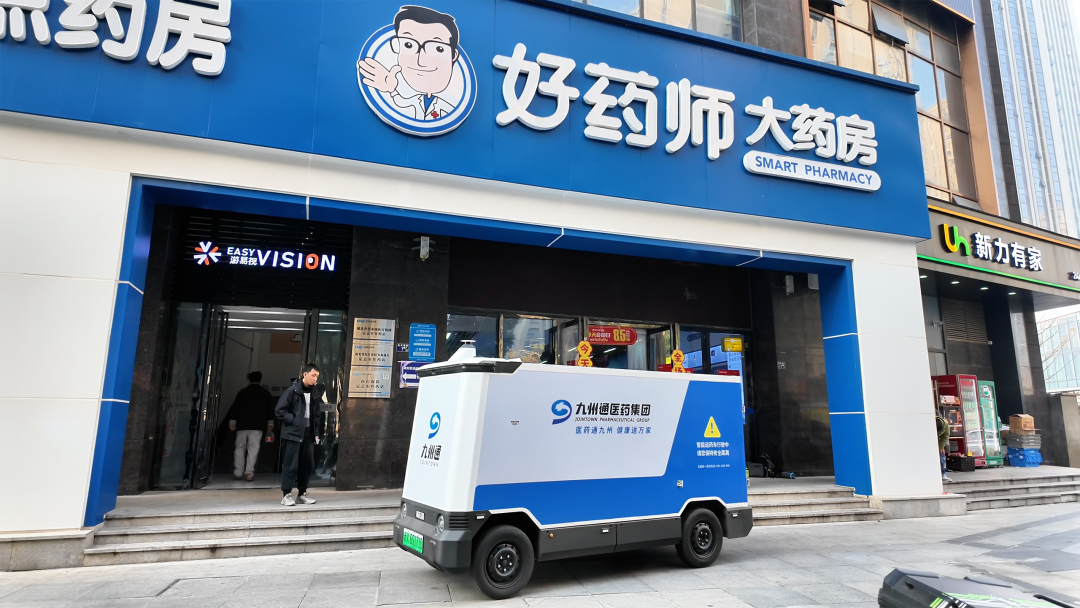
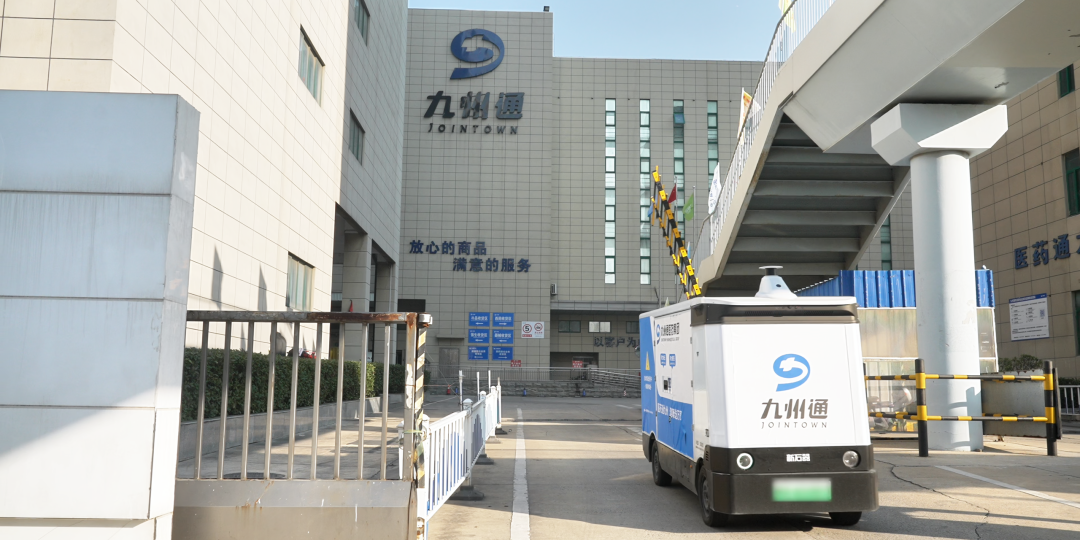
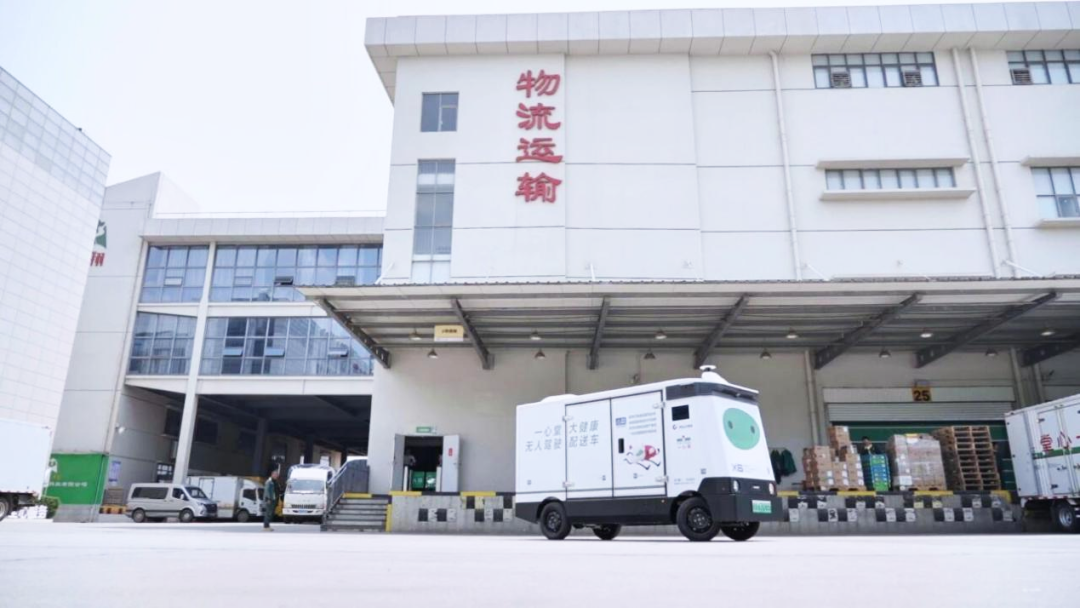
Taking Neolix's pharmaceutical client九州通 as an example, it was among the first to explore and achieve operational "warehouse-to-store" scenarios at its Wuhan facility. Autonomous vehicles assumed high-frequency, low-cost主力接驳 tasks, effectively eliminating information lag and empty-run waste from traditional manual transit models, significantly enhancing the operational resilience of large pharmaceutical logistics hubs;
Chain Store Operations: Serial Replenishment/Network下沉
LBX Pharmacy, a market leader with over 15,000 terminal stores nationwide, has had Neolix autonomous vehicles operating continuously in Nantong's Hai'an and Rugao districts for eight months since September 2025, covering 120 stores.
On one hand, reducing replenishment delivery costs. Store delivery frequency rose from 2 times daily to 3-4 times, dramatically lowering required "safety stock" and significantly improving capital turnover efficiency.
On the other hand, accelerating network下沉. Delivery costs, safety stock, and capital turnover are key factors affecting store efficiency in下沉 markets. In Neolix and LBX Pharmacy's pilot in Tongliao, Inner Mongolia, autonomous delivery's cost and efficiency capabilities are helping the company下沉 its network more cost-effectively. The initial 45-store coverage is expanding its delivery radius from city centers to surrounding townships.
B2C Delivery: Store—Community/User
Neolix's partnership with Yixintang extends the scenario to terminal consumers.
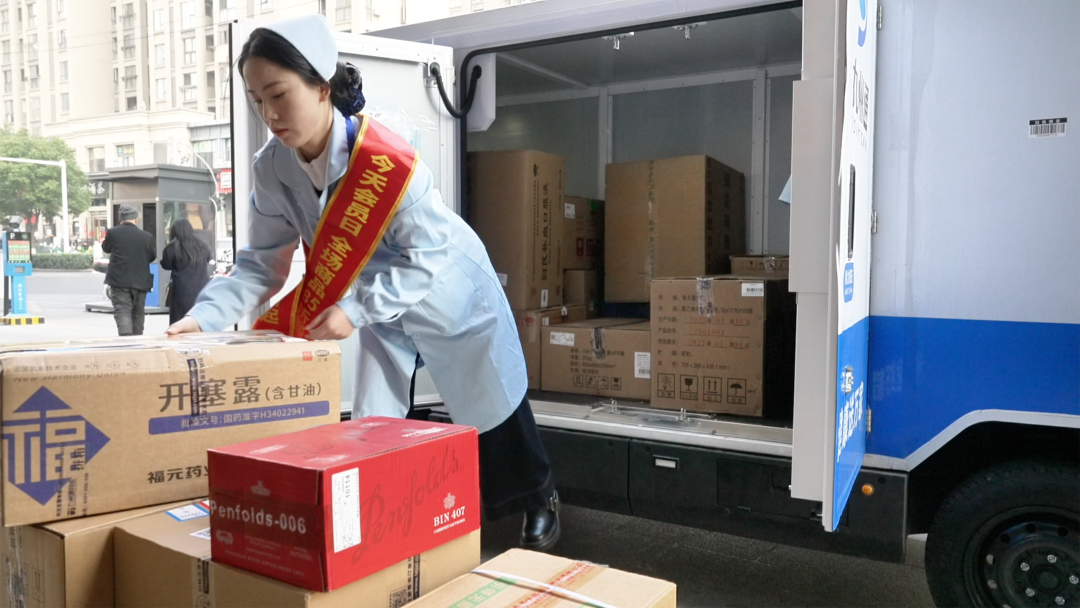
In select pilot cities, Yixintang has integrated Neolix vehicles into its chain pharmacy末端 network. Late-night orders from elderly customers living alone for chronic disease medication, young users purchasing privacy-care products — autonomous vehicles stably complete these deliveries without face-to-face handoff.
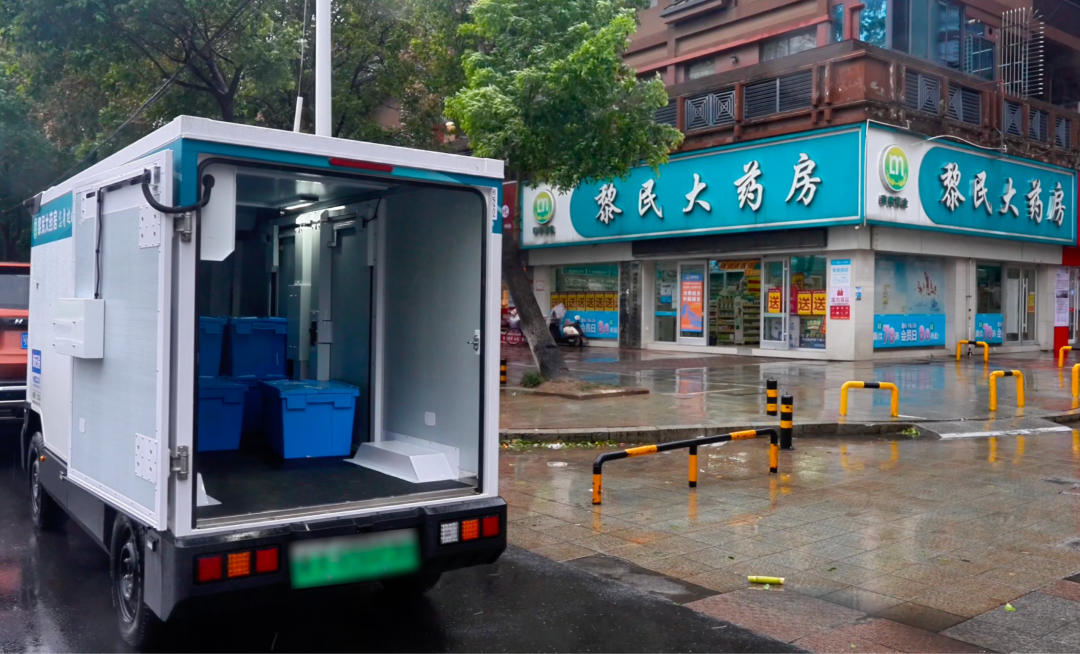
According to available information, Neolix's mainstream pharmaceutical delivery model is the X6, combining 6 cubic meters of capacity with 200km+ range, serving in actual operations as an all-weather, mobile恒温周转 unit ensuring product quality and transit standards.
In actual operations, taking LBX Pharmacy's Nantong pilot as an example: eight months of operation across 120 stores validated a 64% comprehensive operational cost reduction.
In this process, Neolix has proven out the full "warehouse—store—consumer" pharmaceutical delivery chain, embedding the systematic advantages of autonomous vehicles into pharmaceutical distribution supply chains.
From Logistics to Commercial Flow
Value Creation Matters More Than Price Wars
Neolix is finding the key to unlocking the urban distribution market.
From capacity replacement to commercial重塑, Neolix is deeply participating in its clients' supply chain transformation.
Urban distribution scenarios are inherently intertwined with complex manufacturing,商品流通, channel building, and末端 delivery chains. This means autonomous delivery must evolve from the single-point cost mindset of parcel express to a full-chain commercial flow mindset.
Judging from Neolix's client cases above, its entry into pharmaceutical distribution is not merely capacity replacement, but a rewrite of pharmaceutical delivery's supply chain and commercial logic through "L4 autonomous driving + IoT temperature control + intelligent dispatch."
First, from a supply chain transformation dimension, autonomous delivery has crossed the critical threshold from "single-point pilot" to "full-chain embedding."
As scenarios are segmented, Neolix and its early adopters have proven out warehouse transit, store replenishment, and C-end delivery, making autonomous delivery a pharmaceutical intelligent logistics infrastructure. In this process, the shift is essentially from cost center to value creation center.
Take九州通 as an example. In the evolution of pharmaceutical logistics, the core moat is BC warehouse-delivery integration upgrade — serving both B-end hospitals and chain pharmacies, small-b clinics and independent pharmacies, and C-end consumers. Logistics industry profits mostly come from scale effects, but in today's era of order fragmentation, small orders often have higher时效 requirements.
Neolix's full-chain embedding with九州通 essentially achieves BC warehouse-delivery integration upgrade at lower cost, faster时效, and better experience.
Second, from a commercial logic perspective, the shift from "capacity-driven" to "service-driven" is helping pharmaceutical companies unlock growth flywheels. One core capability of autonomous delivery is cost; another is flexibility.
Take chain pharmacies as an example. If you look closely, a typical city neighborhood has 5-8 pharmacies, and leading chain players have total store counts basically reaching 10,000-18,000. For pharmacies, on one hand they must control inventory, using optimal stock to撬动 market; on the other hand they must enhance growth service capabilities, using professional capabilities to gain market share.
Thus, when cost and flexibility are simultaneously unleashed, at lower delivery costs and higher delivery frequencies, pharmaceutical companies and pharmacies can撬动 market with more cost-effective supply chain capabilities, driving store scale growth and building moats through network effects and scale effects. Meanwhile, stores can redirect resources freed from delivery and inventory toward licensed pharmacist professional services, achieving store performance growth.
This transformation of the pharmaceutical distribution industry's overall commercial paradigm has shifted the competitive focus from "whether to use autonomous vehicles" to "who scales deployment first, who captures supply chain efficiency dividends first."
For autonomous vehicle companies themselves, opening the urban distribution market is also a high-barrier endeavor. In a sense, pure cost models can find an entry point in a细分 market, but what truly allows Neolix to跳出 the single-track parcel express内卷 and take root across the full urban distribution赛道 is its integrated solution that empowers partner logistics to cut costs and improve efficiency while driving business growth.
Today, autonomous vehicle末端 scenarios are penetrating from parcel express into商超 retail, community group buying, fresh groceries, pharmaceuticals, cold chain, and multiple other industries. Neolix's normalized commercial deployment in the pharmaceutical赛道 proves its ability to serve professional markets and its commercially replicable capabilities; its technology base is now溢出ing to the full industry.