"Looking for Next-Gen AI Founders" Event Recap: We Co-Created an Agent Startup Guide

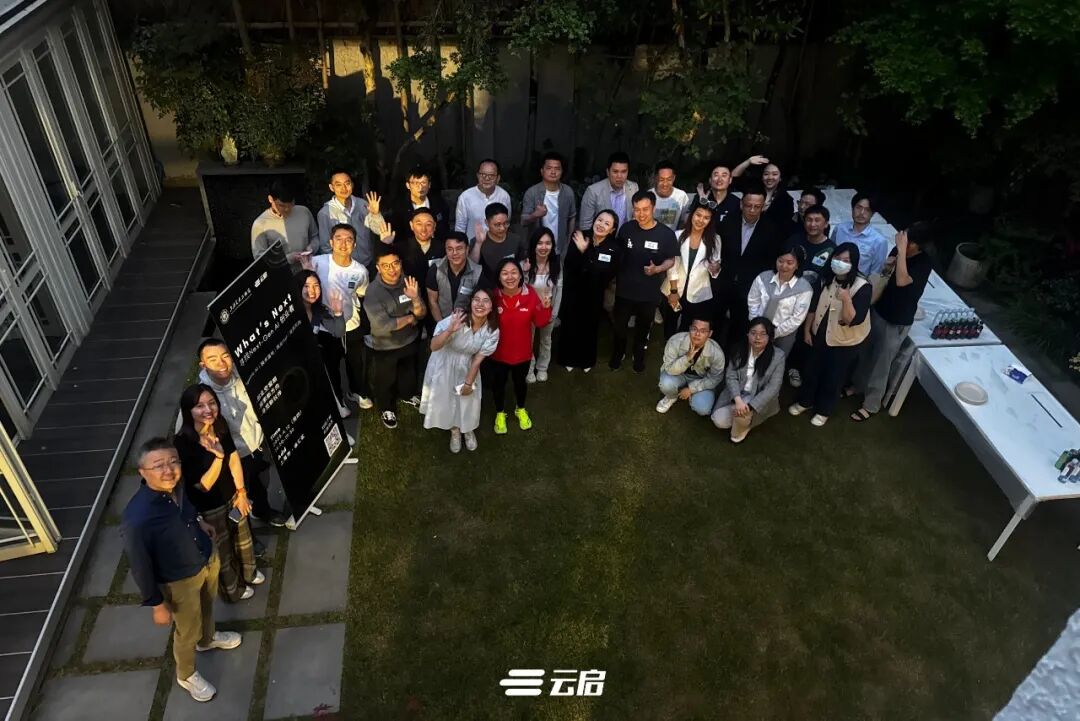
On April 10, the **"What's Next: Finding Next-Gen AI Founders"** closed-door exchange event, co-hosted by Yunqi Capital and Shanghai Jiao Tong University's Industrial Technology Research Institute, concluded in Shanghai.
On April 10, the closed-door event "What's Next: Finding Next-Gen AI Founders", co-hosted by Yunqi Capital and Shanghai Jiao Tong University's Institute of Industrial Technology (SJTU IIT), wrapped up in Shanghai.
Over 30 entrepreneurs eager to "make things happen" in the GenAI era joined Emily from Yunqi Capital, the AI innovation incubator team from SJTU IIT, and the chairman of Beisen Holdings, who has been actively exploring Agent-based businesses, to discuss new entrepreneurial opportunities in the Agentic AI ecosystem.
What sparks flew during the five-plus hours of sharing and BBQ? Here are the highlights from the event. (P.S. More exclusive events for AI founders are in the works — stay tuned.)
01
Yunqi Capital x SJTU IIT: Collaborating to Incubate AI Startups
"Despite an increasingly complex and volatile macro environment, whenever I see founders around me continuing to seek opportunities and growth regardless of circumstances, I'm struck by the gap between micro and macro conditions."
Kicking off the event, Mao Chengyu, founding partner of Yunqi Capital, delivered welcome remarks on behalf of the organizers. He noted that regardless of cycles, a gritty, action-oriented entrepreneurial spirit has always been a fundamental source of China's economic competitiveness; from NLP to large models to Agents, continuous technological progress is also a crucial long-term driver of societal advancement. He expressed hope in building more bridges from 0 to 1 for promising AI innovation teams.
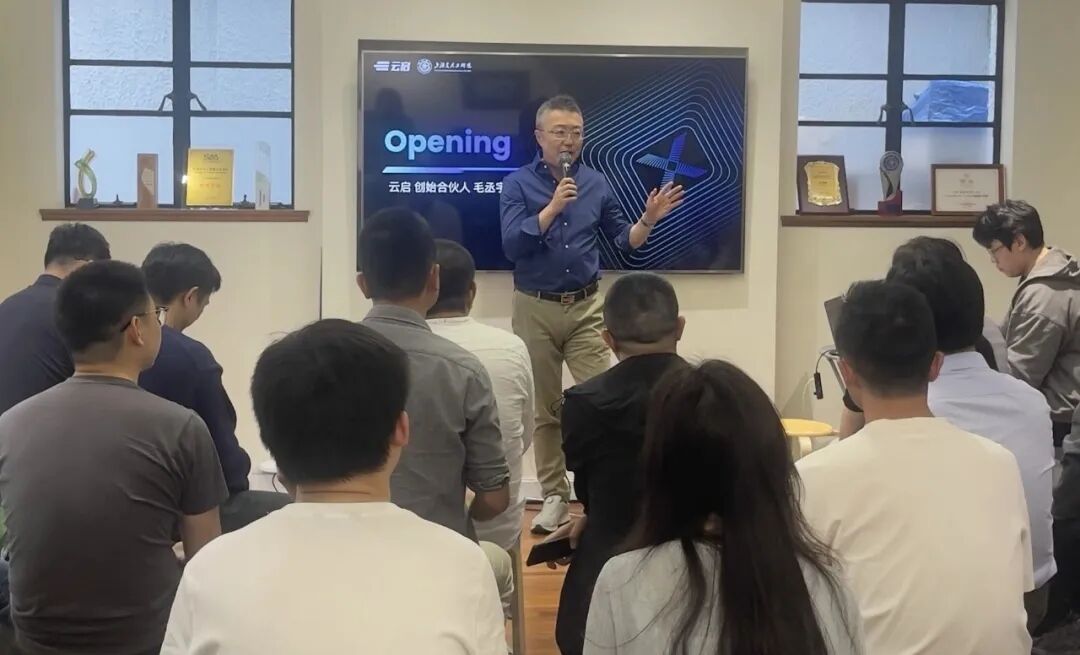
Mao Chengyu, founding partner of Yunqi Capital, delivers opening remarks
Wang Jialiang, executive director of SJTU IIT, drew from his own experience as a serial entrepreneur to introduce the "AI-native" concept — emphasizing incubating companies with AI technology rather than merely developing AI products. With talent competition intensifying in the AI era, he called attention to cultivating "technology + business" hybrid talent, nurturing cross-disciplinary founders through university-industry partnerships and hands-on projects to meet the challenges of talent competition and rapid technological iteration.
According to Wang Jialiang, SJTU IIT operates as an "AI-native incubator", providing comprehensive AI resources for startup teams. Its offerings include: an AI middle platform serving as a "technical co-founder" to provide robust technical support and lower innovation barriers; an "AI talent pool" as a talent pipeline and exchange platform; a "super individual lab" exploring the incubation of lean "one-person companies"; and an AI proof-of-concept center accelerating the path from technology to product.
Finally, Wang outlined a vision for a serial entrepreneur incubation program, hoping to leverage SJTU IIT's strengths to support more founders and drive technological innovation and industrial development.
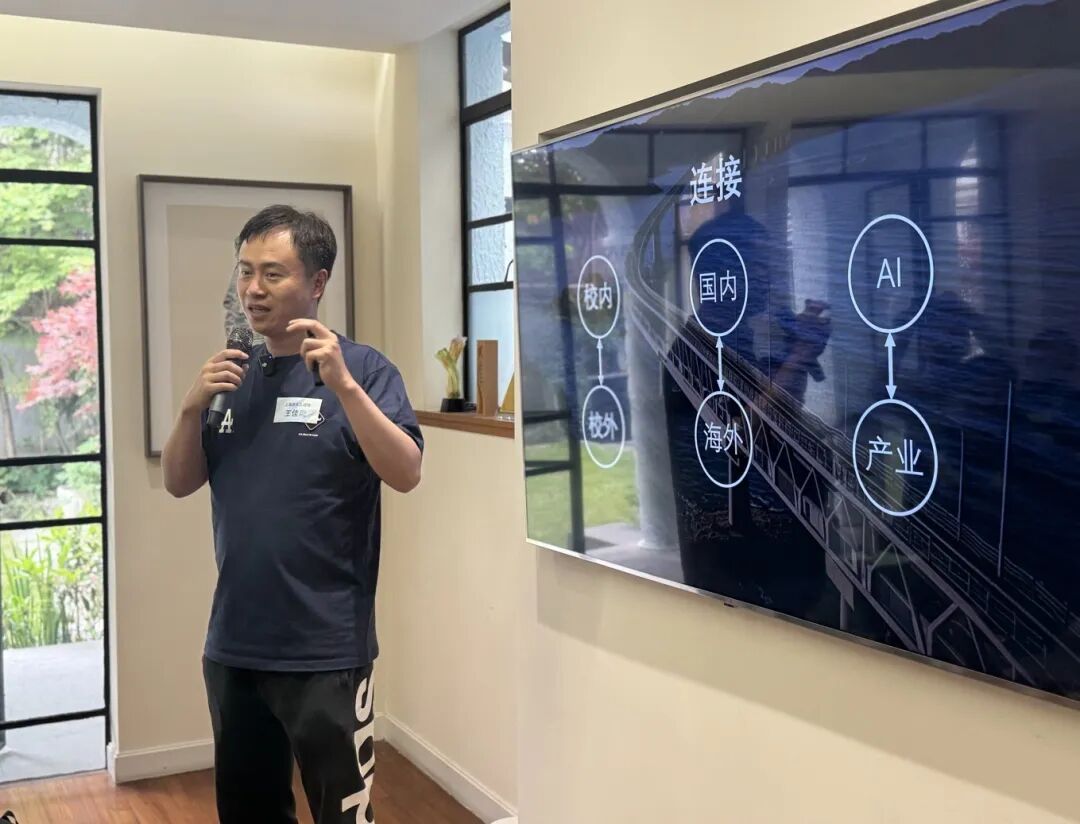
Wang Jialiang introduces SJTU IIT's incubation model
02
VC Frontline: The Software Ecosystem Being Reshaped by AI Agents
Centered on the theme of "Agentic AI Entrepreneurship and Innovation," the event invited Zhaohui Wang, chairman and co-founder of HR tech company Beisen Holdings (9669.HK), and Yi Han, executive director at Yunqi Capital with long-standing deep tech expertise, to share observations and insights from their respective vantage points as practitioner and investor.
Beisen's Zhaohui Wang:
From SaaS to AI Agent: Beisen's AI Evolution in Practice
Wang systematically analyzed Beisen's AI transformation efforts built atop its existing SaaS products, along with market feedback and lessons learned. He pointed out that for enterprise software, AI technology doesn't mean wholesale revolution — it's about reshaping specific scenarios. As AI capabilities have evolved, Beisen has followed an "AI In All" philosophy, continuously exploring how AI can integrate with employees' full lifecycle from interview to exit. Its 2024 AI Family launch includes 7 AI assistant products covering 30+ HR scenarios, which have already completed commercial validation.
How to identify the right entry point from traditional business scenarios for effective, market-validated AI transformation? Wang shared insights combining specific product positioning and market feedback:
- Define products from narrow entry points with hard demand. For example, "Beisen AI Interviewer" focuses on the first-round interview in high-volume recruitment — a scenario with hundreds of millions of interviews annually requiring substantial interviewer resources, where ensuring evaluation fairness and recruitment efficiency represents a genuinely acute pain point.
- Agents work best when seamlessly integrated with existing products and scenarios, tightly coupled — otherwise they add maintenance costs for clients and struggle to achieve effective commercial reach. Product resilience plus commercial reach constitutes the moat for Agent products. For instance, Beisen's new AI course-creation assistant is tightly coupled with its existing eLearning system, enabling effective client touchpoints.
- AI transformation of traditional business scenarios is now an open strategy, not a hidden one. Startup teams can no longer claim significant first-mover advantages in either technology or scenarios. But note: AI's role is to amplify existing content and approaches; accumulated commercial, data, and know-how assets in the original track become key to building moats. The "AI Leadership Coach," for example, is a high-barrier product built on Beisen's 20 years of talent development expertise and industry know-how.
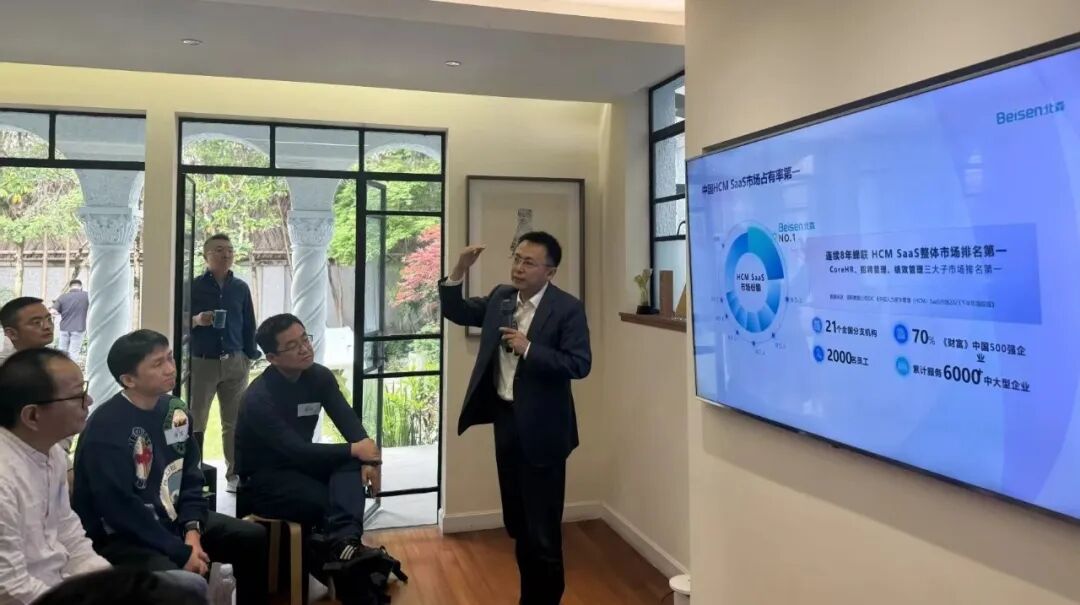
Zhaohui Wang introduces Beisen's business
Yunqi Capital's Yi Han:
AI Application Entrepreneurship: Opportunities and Trends
Han analyzed the 2025 AI application market landscape at home and abroad, the current state of enterprise AI software ecosystems in China and the US, and dissected paradigm shifts in the enterprise software stack driven by AI technology evolution.
He argued that a key principle for enterprise software Agentization is continuously decoupling underlying technical capabilities to focus on core business needs and interaction. "Enterprises only need to focus on essential business needs; Agents are orchestration layers built atop all systems and data to serve those needs." This thinking contains numerous entrepreneurial opportunities.
For founders with prior business-building experience, what adjustments should they make for the new AI era? Han offered several suggestions from an investor's perspective:
- Large model iteration hasn't converged; stay attuned to frontier advances in model intelligence.
- The overseas technology lead has significantly narrowed; founders' focus should no longer be Copy to China, but Go Global.
- Business models are shifting from "selling tools" to "selling outcomes" — for clients, "what results can you deliver" is more comprehensible than "what kind of tool is this."
- Beware of showing off tech; technical capability is the floor, commercialization is what raises the ceiling.
- Amid information overload, practice subtractive thinking — don't be swayed by definitions, don't spiral into analysis paralysis, think bold and act bold, creating value through practice.
03
Open Mic & BBQ: Founder x Founder = Infinite Possibilities
"Open Mic" and BBQ are signature elements of Yunqi Capital's offline events, designed to give participants a platform for open conversation and deep exchange.
At the April 10 event, entrepreneurs eager to keep building in the AI wave shared their impressive track records and startup ideas candidly during the Open Mic, then engaged in deeper discussions during the BBQ where energy and atmosphere mingled.
We look forward to joining hands with founders to create more innovation possibilities in the Agent era.
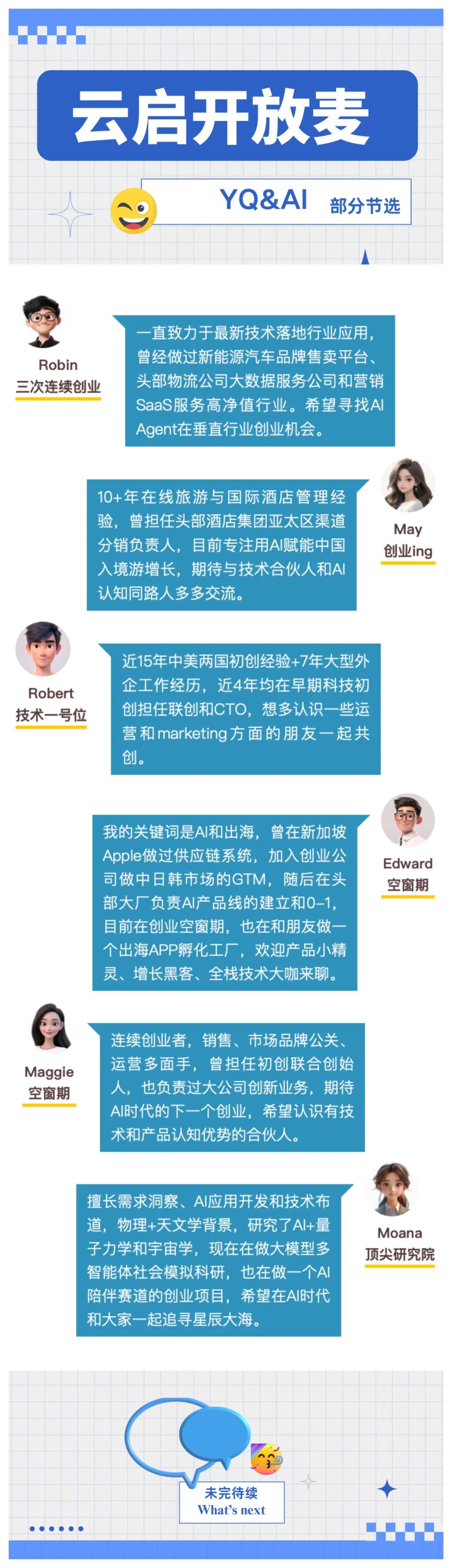
Selected participant introductions below:
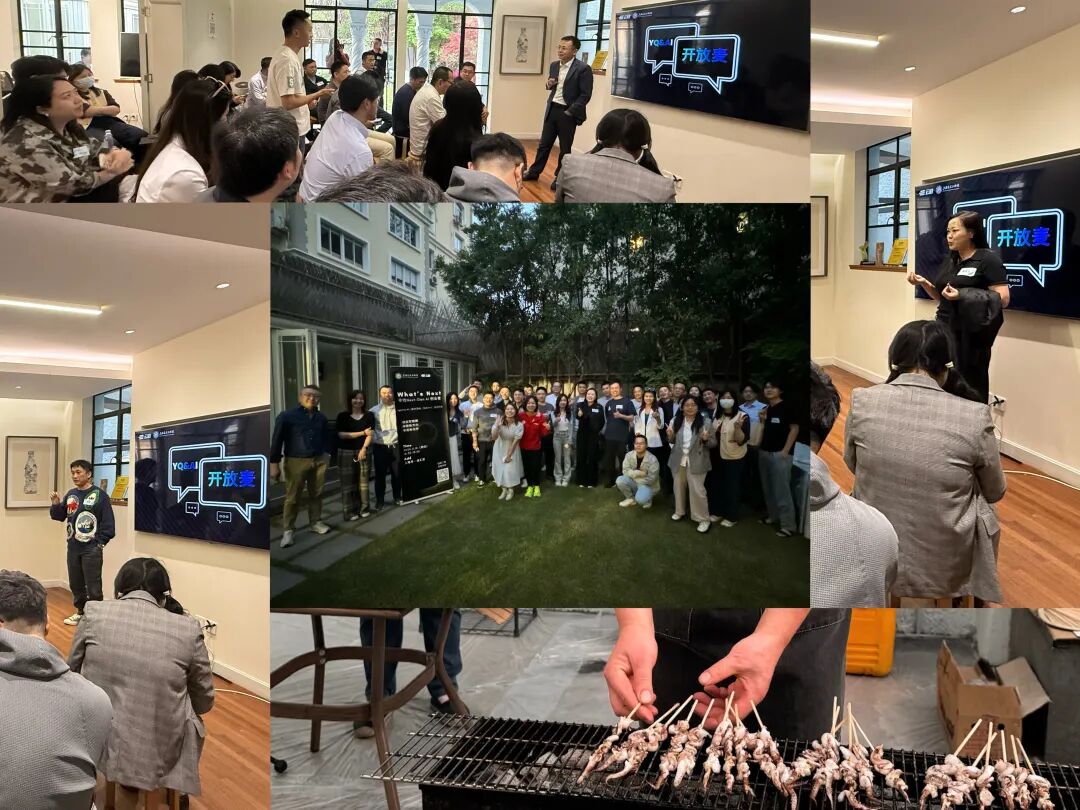
More event highlights 👇
About Co-organizer SJTU IIT
Shanghai Jiao Tong University Institute of Industrial Technology (SJTU IIT) is an AI incubator and accelerator jointly established by Shanghai Jiao Tong University and Shanghai's Xuhui District Government. It operates in an integrated tripartite structure alongside SJTU's School of Artificial Intelligence and Shanghai Algorithm Innovation Research Institute, building a full-chain innovation pathway from "0 to 1," "1 to 100," and "100 to N." This打通区域原始创新、成果转化策源以及产业集聚的新通路,实现产研转化的自循环。 connects original innovation, technology transfer, and industrial clustering to create a self-sustaining cycle of research-to-commercialization. IIT bridges on- and off-campus, domestic and international, and within and beyond the AI industry, with focused breakthroughs in embodied intelligence, AI globalization, and AI for Science/Engineering. Through services including an AI globalization accelerator, AI community, and AI empowerment middle platform, it cultivates an innovation micro-environment that values "truth-seeking over hierarchy" and champions "AI-native" thinking — empowering "eternally believing" young people to find breakthrough paths amid complex industrial ecosystems, ultimately打通产研转化的关键通路,实现高校、地方政府和产业的价值共创。打通关键通路 for research-to-commercialization and enabling value co-creation among universities, local government, and industry.