Piecing Together the First Fragments of the OpenClaw Ecosystem | A Yunqi Portfolio Company "Shrimp Catching" Chronicle

Claiming a Spot in the Crayfish Ecosystem
OpenClaw continues to generate buzz, and the trend of AI moving from "chatbox" to "execution" is becoming clearer. But beyond the hype, real-world challenges are emerging: difficult local deployment, unstable memory mechanisms, and high token costs.
Amid the "noise" of this technical explosion, we're more focused on who can seize the main thread first and solve the real problems standing in the way of widespread adoption.
In fact, shortly after OpenClaw went viral, Yunqi Capital conducted its own evaluation and summarized the deployment gaps. Yunqi portfolio companies have also moved quickly to fill key positions in the ecosystem: some providing more capable "brains," others building more stable infrastructure, and still others turning tools that once belonged to geeks into out-of-the-box productivity solutions...
In this edition of "Yunqi Capital", let's look at how some Yunqi portfolio companies are filling critical gaps in the OpenClaw wave.
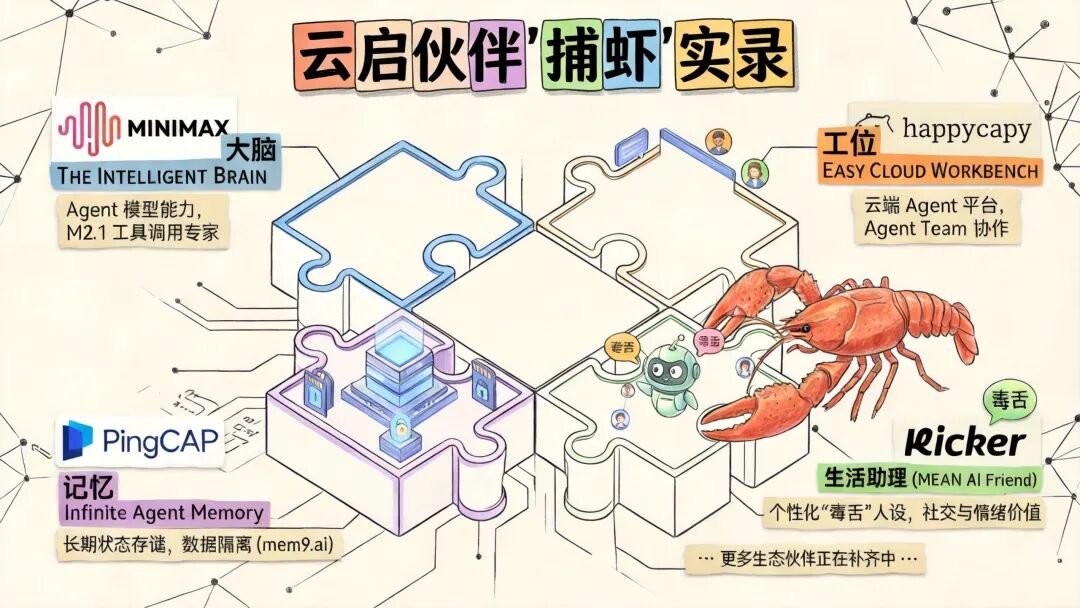
01 / MiniMax
From Model Capability to Plug-and-Play
Getting Agents to Actually Run in Workflows
OpenClaw's explosion introduced many people to Agent capabilities for the first time. But users quickly discovered: getting an Agent to run isn't hard; getting it to run stably and connect to real workflows is much harder.
To address these issues, MiniMax — an early adopter of the OpenClaw ecosystem — has done several things: providing more stable Agent model capabilities, reducing long-term operating costs and barriers to entry, and productizing complex deployment workflows.
Model layer: MiniMax's M2.1 has been adopted by many developers as the core engine powering their OpenClaw setups. With its balanced tool-calling accuracy and cost control, M2.1 has been described by developers as an "extremely efficient workhorse model," and was one of the most-called base models during the early days of the OpenClaw boom.
Cost side: To address the high-frequency consumption of Agents running 24/7, MiniMax introduced its Coding Plan, which significantly reduces the marginal cost of long-term operation.
Capability layer: The Expert mechanism further lowers the barrier to building Agents. Users simply describe their needs in natural language, and the system automatically maps out SOPs and orchestrates tools. The platform has already seen over 16,000 expert Agents created, covering everything from financial modeling to code debugging.
Deployment layer: MiniMax launched MaxClaw, a cloud-based solution aimed at solving OpenClaw's complex local deployment problem. Users can run Agents directly from their browser or mobile device without configuring servers or API keys, and can assign tasks through Lark, DingTalk, and other tools.
02 / Happycapy
Turning OpenClaw Into
An "Out-of-the-Box" Cloud Agent
If MiniMax solves the execution capability problem, then Happycapy — developed by the trickle team — tackles a more immediate issue: many people want to use OpenClaw, but installation and configuration are simply too complex.
Notably, Happycapy wasn't built after OpenClaw went viral. The product's original inspiration came from Claude Code, and the team had been exploring how to make Agent workflows more accessible well before launch. The timing proved fortuitous: the product shipped right as OpenClaw was blowing up in developer communities, and Happycapy soon topped Product Hunt's February leaderboard.
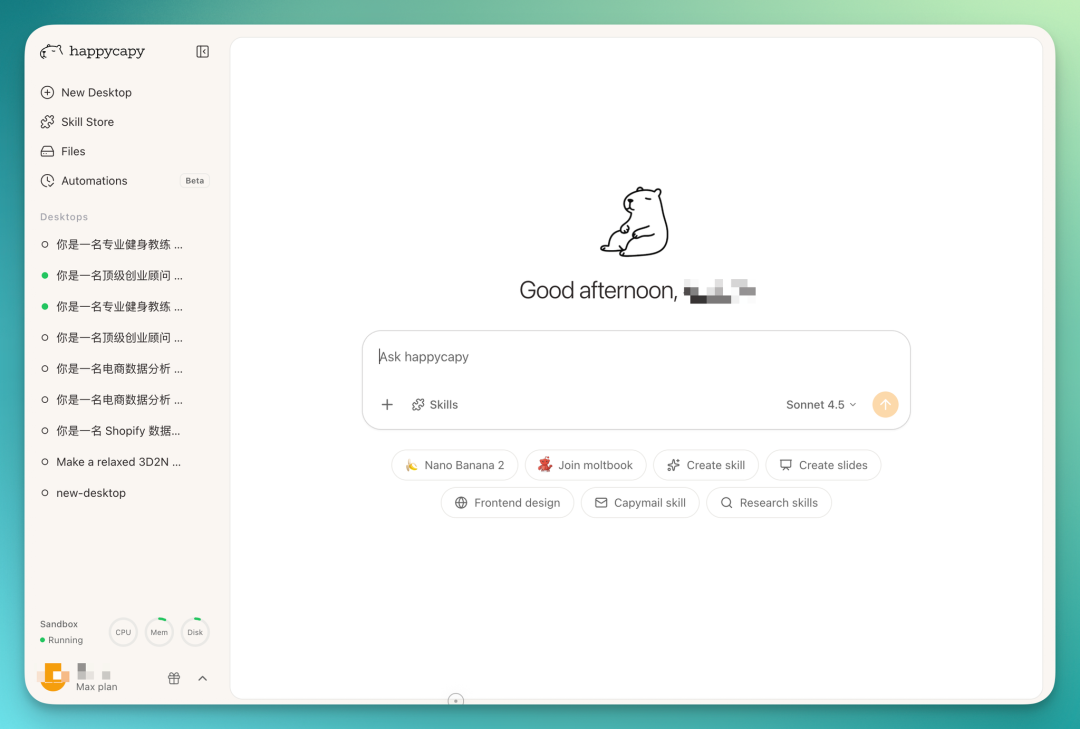
Happycapy's core approach is straightforward: move the entire runtime environment to the cloud. Users don't need to download or configure anything locally — they can launch OpenClaw directly in their browser and run their Agents in the cloud.
On the capabilities front, Happycapy also introduces the concept of Agent Teams. The system can orchestrate multiple sub-agents to collaborate, breaking complex tasks into parallel steps.
For the common pain point of token consumption during Agent operation, Happycapy offers an unlimited token subscription plan.
In a sense, Happycapy's emergence signals that OpenClaw is evolving from a developer-oriented open-source project into a broader Agent work platform accessible to more users. (Learn more)
03 / PingCAP
Giving Agents a Memory
That Won't Get Lost
Stable, persistent memory is a critical problem to solve as Agents evolve from tools into long-term digital assistants.
Due to context window limitations and compaction mechanisms, OpenClaw often "loses the thread" after conversations end: information from earlier exchanges gets compressed or dropped, causing sudden logical breaks.
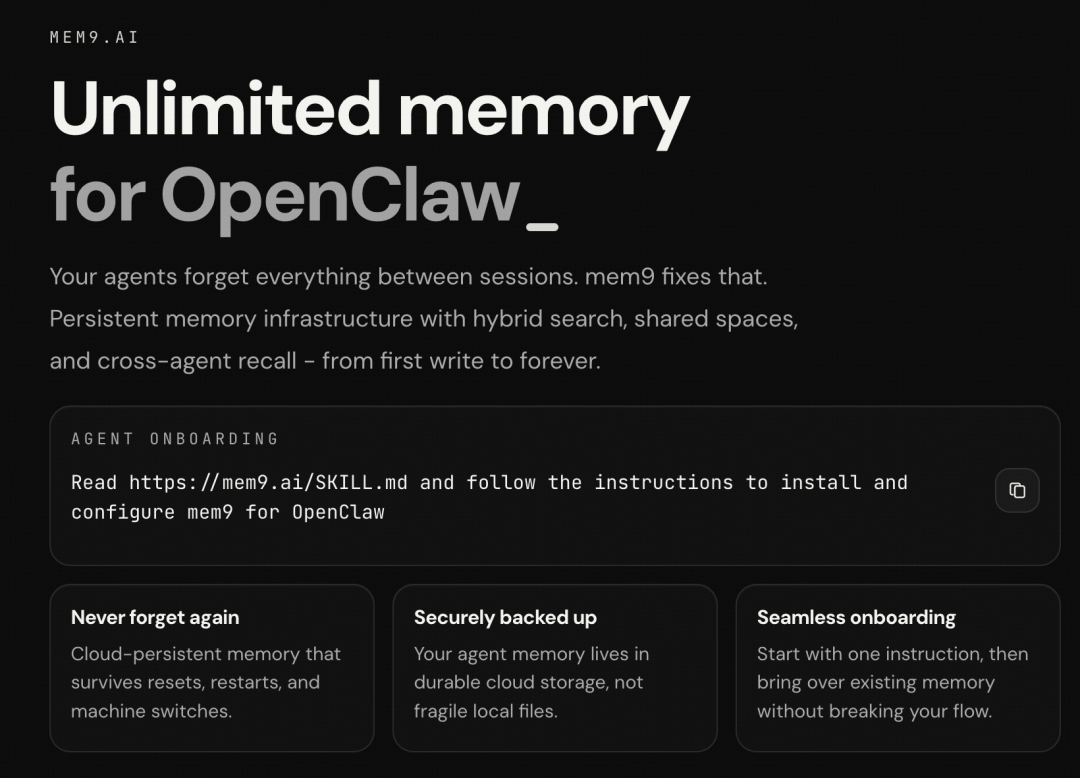
mem9.ai, developed by PingCAP co-founder Dongxu, is built specifically around this problem.
At its core, mem9 is infrastructure that provides long-term memory capabilities for Agents. By combining vector search with full-text search, it transforms information that previously existed only temporarily in context into persistent memory that can be continuously stored and retrieved.
mem9 also minimizes friction in adoption. Developers simply send a Skill instruction to their Agent to complete installation — no complex registration or deployment required. The design follows a "one shrimp, one database" principle, where each Agent's memory is stored and encrypted independently, leveraging cloud capabilities while reducing privacy risks from data commingling. (Learn more)
04 / Kicker
When Agents Start
Entering Consumer Apps
If the explorations above have mostly happened at the infrastructure and tooling layers, some consumer-facing products are also beginning to experiment more aggressively with OpenClaw.
Kicker, a project in Yunqi's Y Transformers program, is one such example.
On February 13, Kicker released a version based on an OpenClaw-powered Pi-style Agent. The product form is intentionally simple: no standalone app, no complex dashboard. Users just add it to their chat tool and interact with the Agent as naturally as texting a friend — while still having it execute tasks.
In terms of positioning, Kicker aims to be an "AI friend that tells you the truth." Unlike conventional chat-based AI, Kicker proactively reminds users of tasks, tracks progress, and even delivers direct, sometimes brutally honest feedback to push users into action.
Behind this design lies an interesting product hypothesis: when Agents can continuously execute tasks, they can gradually take on aspects of a "personal assistant" role.
Experiments like Kicker are also helping the OpenClaw ecosystem expand from developer tools into application forms aimed at everyday users.
Coming Soon: More on OpenClaw!
The efforts above represent just a small slice of this rapidly expanding Agent ecosystem. As AI moves from "conversation" to "execution," infrastructure, tools, and applications around Agents are growing quickly. We'll continue engaging with builders on the front lines.
More OpenClaw discussions coming up — 2 podcast episodes and 1 offline meetup:
🎙 Podcast: A conversation with Happycapy founder Jarod on why he turned OpenClaw into an "out-of-the-box" Agent product
🎙 Podcast: A conversation with the Kicker founder on early explorations of Agents in consumer applications
Subscribe to Yunqi's brand podcast, Attent!on ↓↓

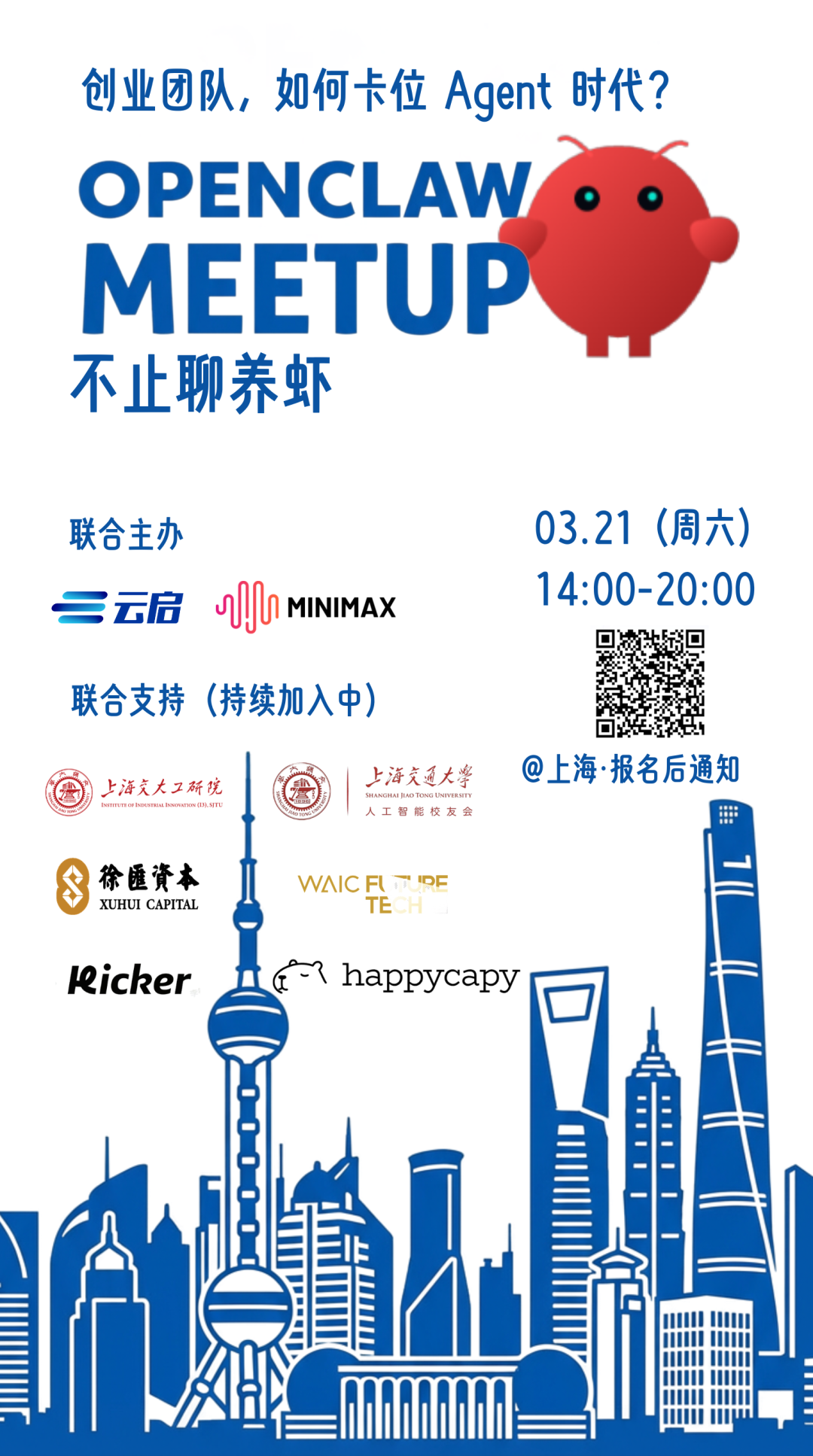
📍 March 21 · Shanghai OpenClaw Meetup: Exchange practical experience and entrepreneurial directions with fellow founders