*Oppenheimer*: Nolan Interview — When Smart People Get Pandora's Box | Yunqi Capital Science Chat

The greatest danger to humanity is the abandonment of responsibility.
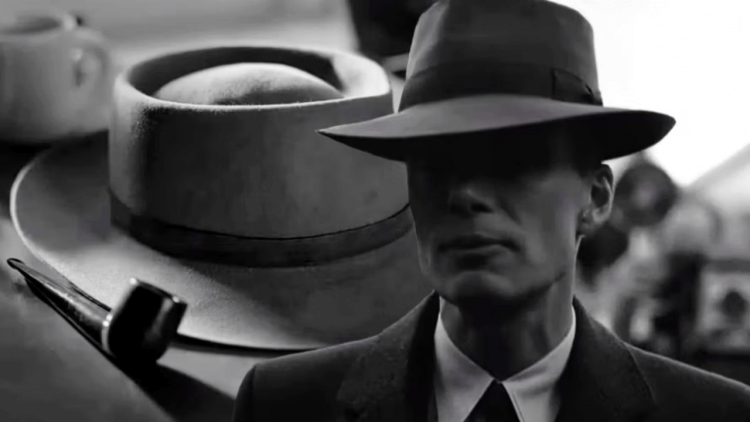
On August 30, Oppenheimer opened in Chinese theaters. Spanning half a century, Christopher Nolan presents what he calls "the most dramatic moment in human history" — and the complex human calculus behind it.
Technology marches forward, and every generation has stood at the pass: What happens to human society when we unleash the full potential of new technology?
In this edition of "Yunqi Science Chat," we bring you a long-form Wired interview with director Nolan. He speaks candidly about the origins of his work, the fears he confronts, and his views on AI and emerging technologies. He returns again and again to one point: technology is merely a tool, and we must beware of elevating tools to sacred status. The greatest danger lies not in the tool itself, but in humanity's abdication of responsibility.
This may be the best possible moment — bar none — for British director Christopher Nolan to release a new film.
After Tenet "faltered" due to COVID-19, his new film Oppenheimer opened domestically on August 30, two days ago.
The film chronicles the life of J. Robert Oppenheimer, "father of the atomic bomb" — focusing on how a charismatic and brilliant man led "the greatest minds on Earth" to solve problems of physics while inventing the world's most dangerous weapon.
The fear of nuclear threat that defined Nolan's generation has found new resonance today. Except this time, the bomb has a new name: AI.
ChatGPT technology has reignited artificial intelligence mania, with fear and excitement rising in equal measure. Hundreds of AI experts signed an open letter warning of AI's potential to cause human extinction.
Wired recently published an extended interview with director Christopher Nolan, in which he addresses the hotly debated "AI threat" and draws comparisons between artificial intelligence and the nuclear threat of seventy years ago.
Nolan — who once used love to save humanity in Interstellar — believes that AI's gravest threat stems from a human instinct: the desire to elevate our creations to godlike status, thereby absolving ourselves of all responsibility.
The director cuts to the quick: compared to the struggles and resistance of Oppenheimer's generation of scientists caught between science and political power, today's AI practitioners' calls for regulation are "hypocritical."
Meanwhile, as an old-school filmmaker devoted to celluloid, Nolan harbors curiosity about generative AI's development in film and television — though what he wants to do remains "giving actors a real atmosphere and environment."
"The greatest danger to humanity is the abdication of responsibility," Nolan says in the interview.
Below is the original interview dialogue, with editorial revisions that preserve the original meaning:

Destroying the World, the Atomic Bomb Came First
Q: It feels like your work with Emma [Nolan's wife and longtime producer], in a way, has been building toward Oppenheimer.
Nolan: That's how I feel about this film. I feel that way about every project I undertake. Because I try to move forward building on what I've learned before. Every time you finish a film, there are questions left hanging. So in your next film, you pick up the questions you've left behind.
With Oppenheimer, quite literally, Oppenheimer was mentioned in Tenet.
Q: So he's been in your mind for a while.
Nolan: The Oppenheimer story has been with me for years. It's an incredible notion — that someone tried to calculate the relationship between theory and the real world, and there was a very small possibility they would destroy the entire world. And yet they pushed the button.
Q: Very dramatic.
Nolan: I mean, it's simply the most dramatic moment in all of human history.
Q: Many people may not realize that when we dropped the bomb in 1945, it wasn't just a terrible moment — it was the moment humanity learned we now possessed the ability to wipe out all of humankind.
Nolan: My sense of Oppenheimer is that many people know the name, know he was associated with the atomic bomb, know something complicated happened in American history, and that's it.
Frankly, for me, that's my ideal audience for this film. People who know nothing will have the most insane experience. Because it's an insane story.
Q: You mean his personal story?
Nolan: The audience should know, because he's one of the most important people who ever lived.
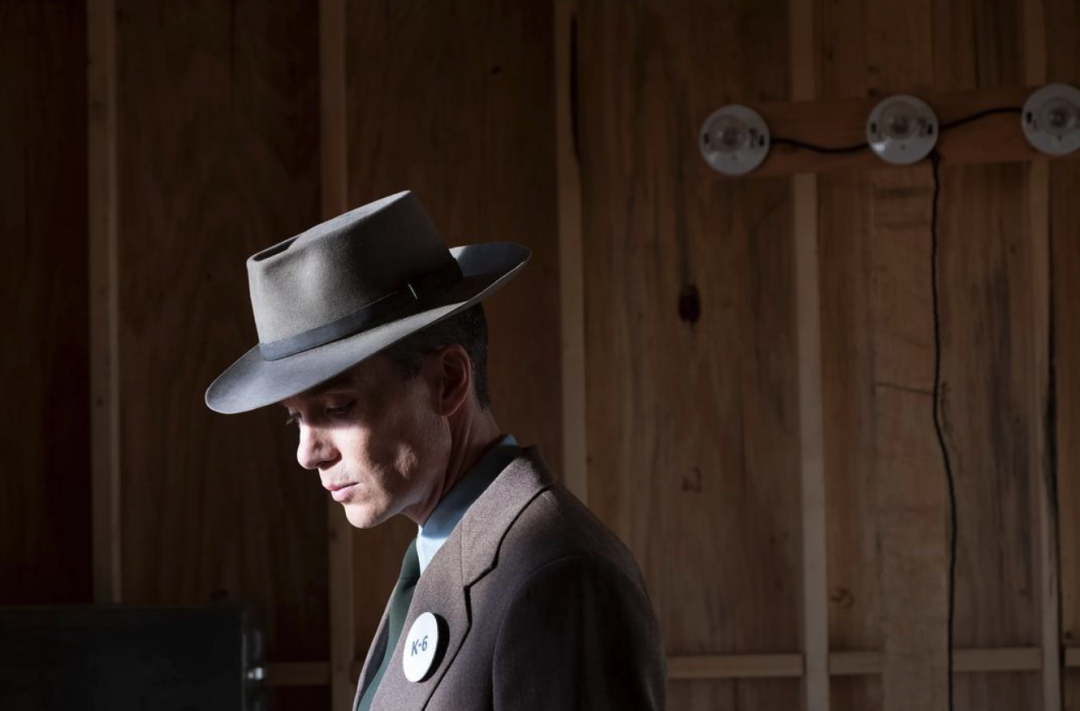
Nolan regular Cillian Murphy plays Oppenheimer in the film | Douban
Q: There's a line in the film where someone tells Oppenheimer that you can get anyone to do anything. Something like that. He was a brilliant manager, knew everything that was happening — scientists doing X in one room, scientists doing Y in another — someone who could keep it all in his head.
Nolan: He knew how to motivate people through the drama of his persona, projecting his own radiance. He gave all the scientists, officials, everyone a focal point.
Q: He had genuine charisma.
Nolan: Charisma — that's the perfect word. It made everything cohere, and the film deals with this repeatedly: it was his charisma that enabled these scholars, these theorists, to come together and build something so massive, so consequential, with their own hands. It's a miracle.
Q: Speaking of building something massive, I was recently at TED in Vancouver, and one of the most interesting sessions was a series of talks on generative AI. Many speakers referenced the atomic bomb, nuclear weapons. The final speaker was a technologist — he spoke about the inevitable weaponization of AI.
At the end of his talk, he said the only way to maintain world order is to have better AI weapons. As a deterrent. It sounded very much like how people thought about the atomic bomb. It feels like your film has found the most apt release timing.
Nolan: I think the relationship is an interesting question. It's not the same. But it's the best analogy — that's why I used it in Tenet — for the danger of unleashing new technology upon the world without due consideration. It's a cautionary tale. We can learn from it.
That said, I do believe that in terms of technology that changes and endangers the world, the atomic bomb is unique.
Q: And the origins of these technologies are different?
Nolan: Fundamentally different. The scientists studying atomic fission kept trying to explain to governments: [nuclear energy] is a fact of nature, from God, or whatever creator. It's simply knowledge about nature, and it will inevitably happen. No one can hide it; we didn't create it, we don't own it. That's how they saw it.
Q: In other words, they felt they were merely revealing what already existed.
Nolan: And I think you'd have a hard time making that argument about AI. Though I'm sure some people will try.
Q: You must have grown up in the shadow of the bomb.
Nolan: I grew up in 1980s Britain, we had all these nuclear disarmament campaigns, people were very, very aware of the nuclear threat. When I was 13, my friends and I believed we would ultimately die in a nuclear catastrophe.
Q: But you didn't, and the world moved on.
Nolan: I was talking to Steven Spielberg about this one day — he grew up under the threat of the Cuban Missile Crisis in the 1960s. Exactly the same.
There have been moments in human history when the danger of nuclear war was so immediate, so visceral to us, that we were very aware of it. Of course, we can only worry for so long before moving on and starting to worry about other things. The problem is, the danger hasn't actually gone away.
Q: Right. I mean, I feel like a month ago we were all worried that certain countries might actually use nuclear weapons.
Nolan: I remember in the '80s, the fear of nuclear war receded and shifted to fear of environmental destruction. It's almost as if humans can't sustain fear of a single threat for long — we have a complex relationship with fear. Yes, certain countries have been waving this doomsday threat and this fear like a flag. It's deeply unsettling.
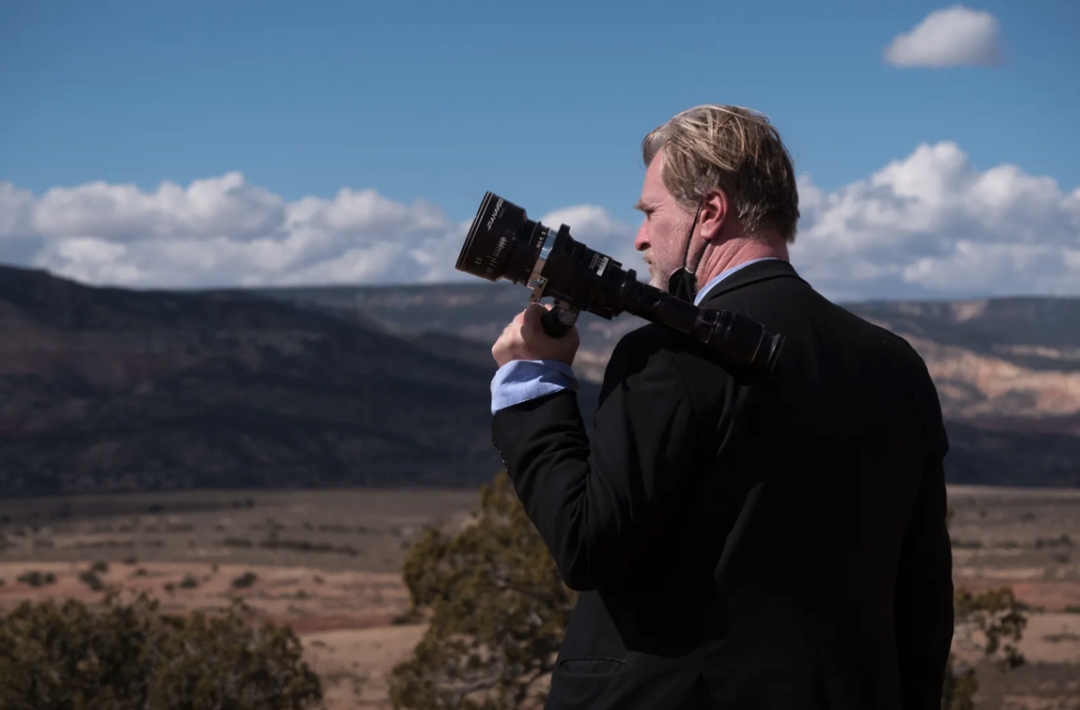
Director Nolan at work | Universal Pictures

Elevating AI to Sacred Status Is the Real Danger
Q: As unsettling as the threat of AI apocalypse?
Nolan: Well, the growth of AI in weapons systems and the problems it will create have been obvious for many years — few journalists bothered to write about it. Now there's a chatbot that can write an article for a local newspaper, and suddenly it's a crisis.
Q: We in the media have been doing this for years. Chasing blindly. Some of us are writing about AI because it could make us lose our jobs.
Nolan: That's part of the problem. For me, AI is a very simple issue. It's like the word algorithm. We've watched companies use algorithms, now AI, as a means of evading responsibility for their actions.
Q: Say more about that.
Nolan: If we endorse the idea that AI is all-powerful, we are endorsing the idea that it relieves people of responsibility for their actions — militarily, socioeconomically, and so forth.
The greatest danger of AI is that we attribute these godlike characteristics to it, thereby letting ourselves off the hook.
I don't know what the mythological basis of this is, but throughout history, humans have had this tendency to create false idols, to shape something in our own image and then say we have godlike power because we made these things.
Q: That feels very, very correct. Like we're at that inflection point.
Nolan: Exactly.
Q: With these large language models, machines might even begin teaching themselves next.
Nolan: There was an interesting article in the LA Times about ChatGPT and OpenAI. Basically, ChatGPT is a sales tool — OpenAI is now a private company. They have the greatest sales machine in the world, and that's a very dangerous thing. Maybe we shouldn't have pushed it to the masses, because now everyone wants an AI assistant.
That doesn't mean there's no real danger here, because I think there is. But personally — and this is just my view — I believe the danger lies in the abdication of responsibility.
Q: People keep saying we need an international body to regulate AI.
Nolan: But that's the oldest political trick in tech. Right? It's what SBF did with FTX; Zuckerberg has been asking to be regulated for years. Because they know the bureaucrats we elect can't wrap their heads around this stuff.
Q: As we've seen from congressional hearings?
Nolan: What are they going to say? I mean, this is extremely specialized stuff. The relationship between those in power and creators — let me bring this back to Oppenheimer.
Oppenheimer's problem was that he placed great faith in the role of scientists after the war — as experts who had to figure out how to control nuclear power. But when you see what happened to him, you understand that was never going to be allowed.
It's an extraordinarily complex relationship between science and those in power, and it's never been as brutally exposed as in Oppenheimer's story. I think there are all kinds of lessons to be drawn from it.
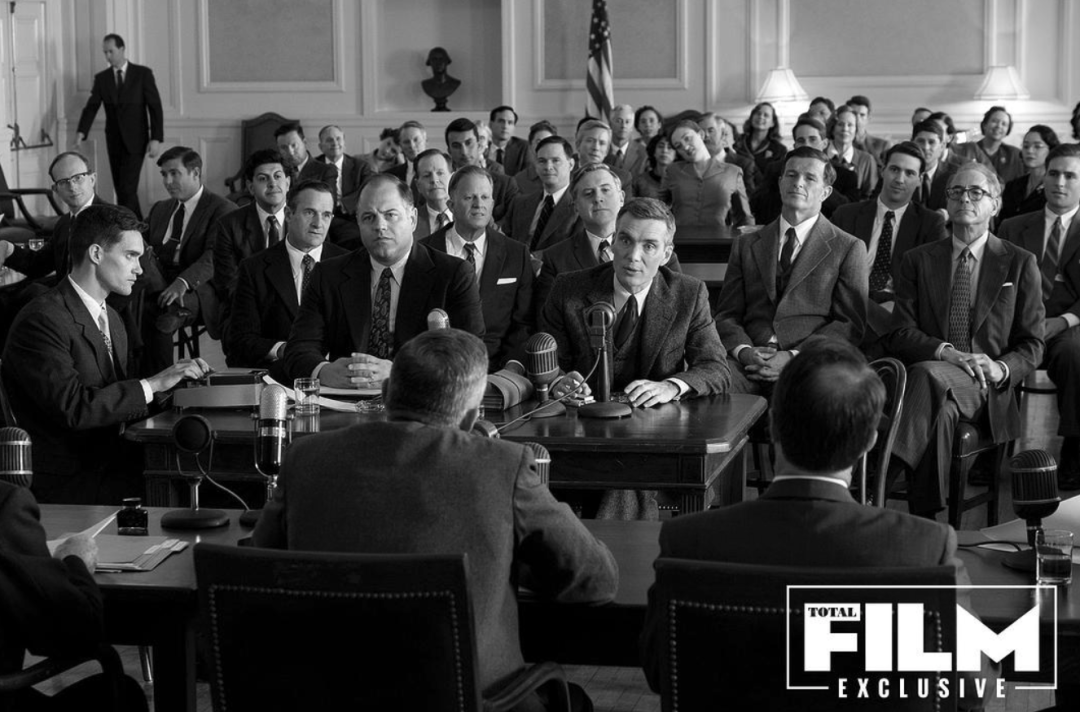
Oppenheimer likewise had to navigate between power and science | Total Film
Q: Such as?
Nolan: So he tried to work from within the system, rather than turning around and saying, you know, what we need is love, or whatever. His approach was very practical, and he was still crushed. It's very complicated. I think these current "inventors" saying "we need to be regulated" is deeply hypocritical.
Q: Oppenheimer wanted science to be shared.
Nolan: He used the word Candor. Candor.
Q: His thinking seemed to shift with the emergence of the hydrogen bomb?
Nolan: No, he believed in the hydrogen bomb too. It's interesting because in a way, it's a bit of a spoiler. But in another way, it's history — you can Google it.
At this crucial moment, as the hydrogen bomb program advanced, he began giving speeches where he said, "I wish I could tell you what I know. I can't. If you knew what I know, you would understand that we must all share information. Essentially, it's our only means of avoiding the destruction of the world."
So candor was what he saw as the most practical means. He believed the UN would be a powerful institution with real agency in the future. He believed global control of atomic energy was the only guarantee of world peace. Obviously, that didn't happen.
Q: He didn't foresee what's happening now — the slow decline of democracies.
Nolan: I don't think he saw that at all. It was still a very optimistic moment.
Q: Which is why there should be a global AI governance body.
Nolan: Right. But the problem is dealing with tech companies that refuse to be bound by geography. Institutionally, tech companies are incentivized and permitted to evade government regulation. It's become a kind of "morality."
By the way, this makes me sound like I think Silicon Valley is evil, that all these people are terrible. I don't think that. It's just the System. That's how it operates.
Q: On the security level, nuclear weapons require specific elements to manufacture, but AI has no such constraints.
Nolan: During World War II, Britain's nuclear program was extremely complex. They had many brilliant scientists. But the Churchill government realized they simply didn't have the resources. So they gave everything to the Americans. They said, you have the scale, you're away from the front lines, you have the industrial base.
In my research, I read a statistic about the number of Americans involved in building the first atomic bomb — roughly 500,000. Multiple companies involved, it was a massive physical process. That's why even today, it's easy to detect when a country conducts secret nuclear tests. So there are things that give us some assurance that this process can be managed. And I don't think any of those constraints apply to AI.
Q: Right, they certainly don't apply to AI — especially when some of what we're talking about with AI is a "softer" threat. The rapid spread of disinformation, technological unemployment.
Nolan: Indeed, but I'm not — I think AI can still be an extraordinarily powerful tool. I'm optimistic about it, genuinely optimistic.
But we must view it as a tool, and the person wielding it must maintain responsibility for wielding that tool. If we grant AI human status, as we've done with corporations at certain times, then yes, we'll have enormous problems.

AI Is Good, But It's Just a Tool
Q: Do you see beauty in AI, particularly in filmmaking?
Nolan: Oh, absolutely. The whole machine learning applied to deepfake technology is an extraordinary advance in visual effects and audio. In the long term, in terms of environment creation — generating a door or a window, for instance. If you compile massive databases of how things look, how light reflects off surfaces, it becomes an extraordinarily powerful tool.
Q: Would you use AI to create?
Nolan: I'm a very old-school "analog" filmmaker. I shoot on film, I try to give actors a complete reality.
My stance on technology, as it relates to my work, is that I want to use technology where it's best applied. For example, if we're doing a stunt, a dangerous stunt. You can do it with more visible rigging and erase it in post, things like that.
Q: Meaning this would improve the convenience and efficiency of visual effects.
Nolan: It's not something for nothing — it starts from a more detailed, more data-driven idea. It may ultimately break down the barrier between animation and photography, because it's a hybrid.
If you tell an artist, for instance, to draw a picture of an astronaut, they're inventing from memory or reference material. With AI, it's a different approach — you're actually using the entire history of imagery.
Q: Using real images.
Nolan: Using real images, but in a completely, fundamentally reconstructive way — which of course raises major artistic copyright issues that must be properly addressed.
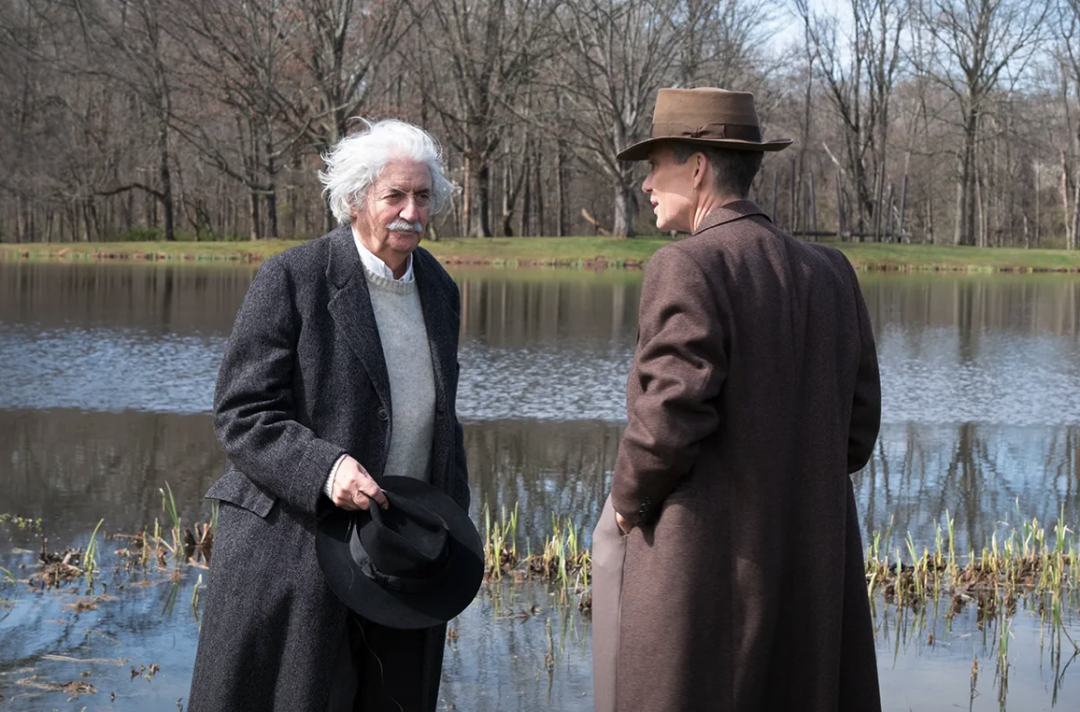
The film attempts to recreate exchanges between Oppenheimer and Einstein | Universal Pictures
Q: Let's return to science and your films. In the December 2014 issue of WIRED that you guest-edited, you wrote: "The relationship between storytelling and the scientific method fascinates me. It's not really about intellectual understanding. It's a feeling of grasping something." Tell me about your love of science.
Nolan: Well, I've always been interested in astronomy and questions of physics. I explored this fascination in Interstellar. When my brother [Jonathan Nolan] was writing the screenplay, he would look at Einstein's thought experiments, and he found a particular melancholy in some of them, all related to parts of time.
Like, separated twins, one taken away and returned, the other has aged a bit, you know? Einstein thinking about physics, and how you do these thought experiments, how you conceive of these ideas — has very much the same literary quality. The visualization process physicists need is not so different from literary creation.
Q: Do you feel this way during the editing phase of your films?
Nolan: I feel this way at every stage of filmmaking. Much of my work is trying to express intuitive feelings and senses about the shape of things. It can be difficult, and complex.
Q: I've found that if I'm working on a story but I don't know the structure, the flow, there's a problem. I can't talk about the work in a meaningful way.
Nolan: I think about structure and pattern in a very geographical or geometric way. Over the years, I've tried to adopt a structural approach from the ground up, but ultimately it's a very instinctive process: does this feeling have a narrative shape, and how is it formed? I'm fascinated to realize that physicists engage in very similar processes. Really interesting.
Q: Perhaps as a tribute to Interstellar, but physicists always seem so deeply in love with physics.
Nolan: I'm passionate about the pursuit of truth, about loving the scientific method. I hate seeing it distorted by scientists in the media, or by media speaking on behalf of scientists. The pure scientific method, and the idea that science constantly seeks to refute itself, elevates the human mind more than religion or anything else.
Q: Before this interview, I watched your film with my mother. She felt your films might convey a very anti-nihilistic message. Dunkirk, Interstellar, Batman. Or is it optimism?
Nolan: The ending of Inception, exactly. Some people have a nihilistic reading of that ending, right? But at the same time, he's looking forward, he's with his children. That ambiguity isn't an emotional ambiguity. For the audience, it's an intellectual ambiguity.
Interestingly, I think there's an interesting relationship to explore between the endings of Inception and Oppenheimer. Oppenheimer has a complex ending, complex feelings.
Q: How have early audiences reacted?
Nolan: Some people leave the film in absolute devastation. They're speechless. The fears that exist on the historical and factual level — the film delivers on all of them. But the love for the characters, the love for the relationships, is as strong as in all my previous work.
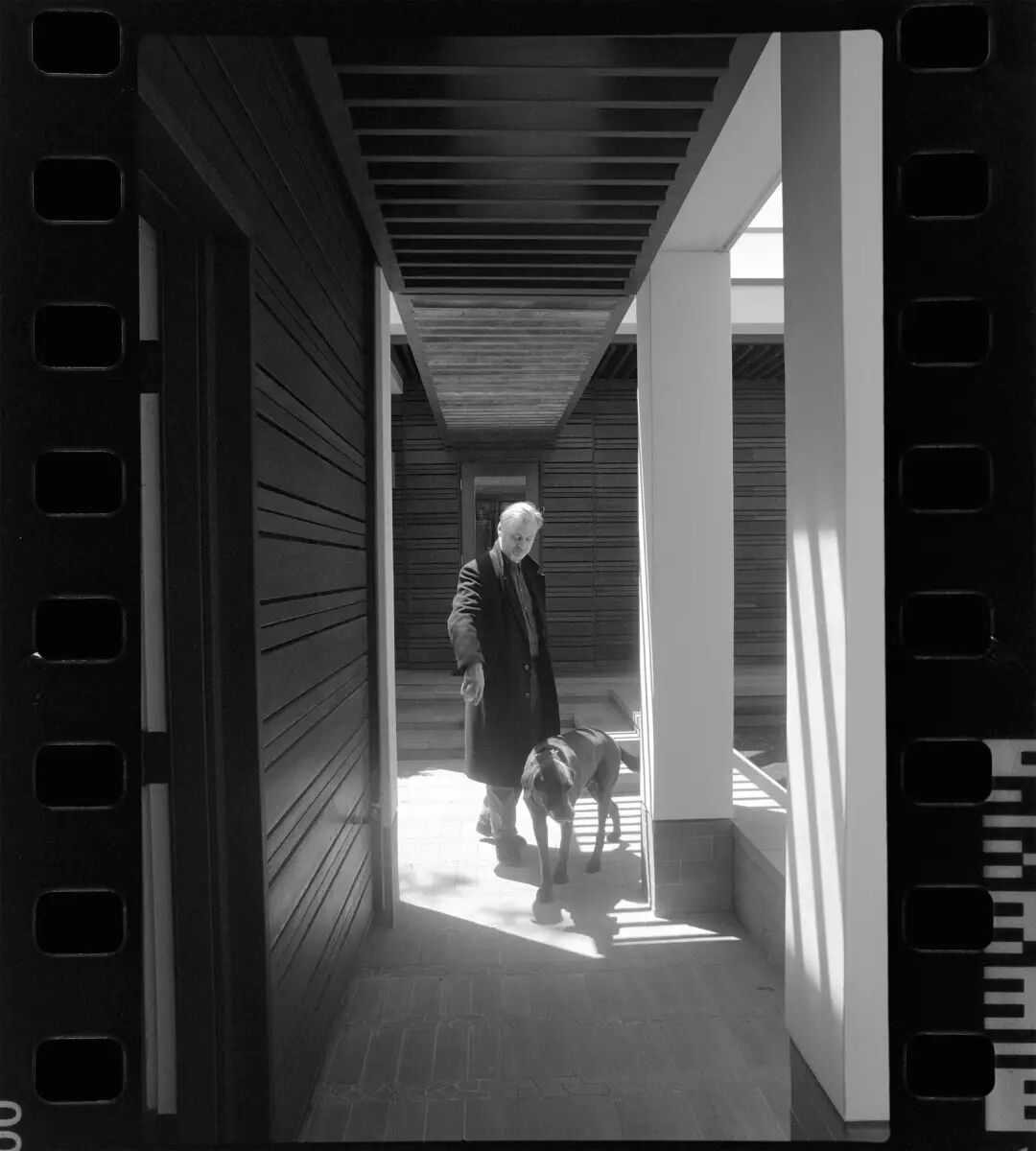
The director at his Los Angeles home, filmed by his son | MAGNUS NOLAN
Q: And thematic complexity.
Nolan: Oppenheimer's story is a collection of impossible questions, impossible ethical dilemmas, paradoxes. There are no easy answers in his story, only difficult questions — and that's precisely why the story is so compelling.
I think we can find much to be optimistic about in the film, but with this overwhelming, overarching question hanging above it all. I felt it necessary to pose some questions at the end, to let people turn them over in their minds and spark discussion.
Q: What do you think was going through Oppenheimer's mind before and after the bomb was dropped? What do you think he would have thought?
Nolan: The answer is in the film. I wrote the screenplay in the first person. This is what I said to Cillian [Murphy, who plays Oppenheimer]: you are the audience's eyes. And he delivered. For most of the story, we never go beyond his experience. That's my best attempt at conveying the answer to that question.
Q: I'm a bit nervous about seeing the complete work.
Nolan: I think you may have to wait a while. It's an intense experience because it's an intense story. I recently showed it to a filmmaker who said it's a horror film, and I don't disagree.
Interestingly, you used the word nihilism earlier — I don't think my work connects with nihilism. But as I was finishing this film, I began to sense this color that wasn't in my other films, pure darkness. It's there, and the film wrestles with it.
Q: Does it affect you? Do you sleep well?
Nolan: I sleep well now, relieved to have finished production. But I very much enjoy watching the film. I think when you see it, you'll understand. Being drawn to terrible things is a complex feeling, you know? That's how horror works.
Q: Have your children seen it?
Nolan: Yes.
Q: Did they know about Oppenheimer before?
Nolan: When I started writing the script, I told one of my sons, and he actually said to me: "But nobody really worries about this anymore, nuclear weapons." Two years later, he wasn't saying that. The world changed again.
That's a lesson for all of us, but especially for young people. The world changes fast.
This article is republished with permission from the WeChat official account "GeekPark" (ID: geekpark)
Title: How Christopher Nolan Learned to Stop Worrying and Love AI
Link:
https://www.wired.com/story/christopher-nolan-oppenheimer-ai-apocalypse
Author: MARIA STRESHINSKY
Translated and compiled by: Jing Yu