Space Startup "Astrostone" Closes Pre-A+ Round as Its "Space Android" Takes Shape | Yunqi Capital

Yunqi Capital continues to increase its stake
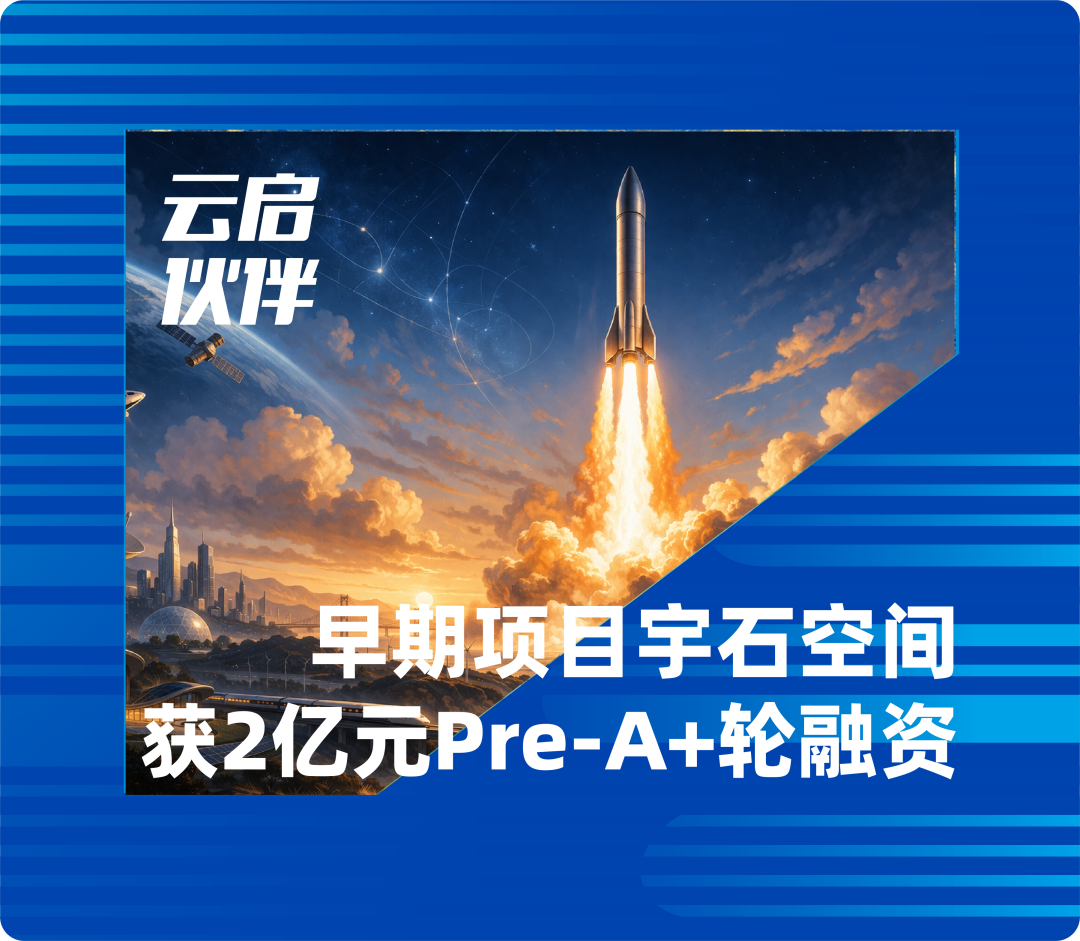
A commercial space company barely two years old is turning "building rockets" into a sustained, steadily delivered engineering operation.
Recently, Space Epoch announced the completion of its Pre-A+ round led by Hillhouse, with Yunqi Capital following on as an existing shareholder. In early 2025, Yunqi Capital invested in Space Epoch's angel+ round, backing the company from its earliest days and continuing to double down in subsequent rounds.
From our perspective, rocket development has never been about single-point technical breakthroughs alone — it's a composite game of talent density, capital efficiency, and engineering capability. In a long-cycle, heavy-engineering domain, Space Epoch has demonstrated rare execution speed and organizational efficiency, delivering on these capabilities one by one. This edition of Yunqi Capital takes you inside the details.
The following is excerpted from "36Kr Future Industries"
Original title: "Hillhouse Leads, Corporate and Family Office Investors Join: Space Epoch Closes Nearly 200 Million RMB Pre-A+ Round"
Space Epoch, founded less than two years ago, has consistently pushed team expansion and technical engineering at an extreme pace.
In a conversation three months ago, Space Epoch's team numbered around 120. Today that figure has surpassed 170, with over 70% in R&D roles.
Behind this team expansion lies multiple drivers: technological progress, funding, and a shifting competitive landscape.
36Kr has learned that Space Epoch has completed a new 200 million RMB Pre-A+ round, co-led by Hillhouse and Xingxiang Capital, with Minghui Zhiyuan (Inovance family office) participating. Proceeds will primarily fund rocket assembly and testing, chopstick recovery technology validation, rocket production capacity buildout, and team expansion.
For a domain as technically complex as rocket development — with long engineering chains and heavy demands for cross-disciplinary talent collaboration — capital and headcount are merely starting points. The product of talent density, capital efficiency, and organizational efficiency must find more direct expression in engineering milestones.
A long-term focus of 36Kr's coverage, Space Epoch specializes in developing large-payload, low-cost, rapidly reusable liquid rockets. It raised nearly 300 million RMB across nine months, and with this latest round, cumulative funding has approached 500 million RMB. Matching this financing velocity, in January this year, Space Epoch delivered its first 70-meter-class reusable stainless steel liquid rocket, the AS-1, at its Hunan rocket development base.
This group of rocket builders achieved a from-zero-to-one breakthrough in under 20 months.
01 A Vaster Space, A More Open Ecosystem
The AS-1 is Space Epoch's first low-cost two-stage medium liquid rocket, employing stainless steel construction with liquid oxygen-methane propulsion and "chopstick" capture-arm recovery and reuse. The rocket stands approximately 70 meters tall with a liftoff weight of roughly 570 tons, a body diameter of 4.2 meters, an expendable LEO payload capacity of 15.7 tons, and a reusable LEO capacity of 10 tons. It will primarily target the medium-low orbit payload launch market.
A core set of targets: Space Epoch aims to reduce single-launch costs to 20,000 RMB per kilogram, reusable launch prices to 10,000 RMB per kilogram, and ultimately shorten rocket turnaround to 10 days.
In an extraordinarily expensive field, with greater payload capacity, lower prices, and faster turnaround, Space Epoch wants to drive equitable, accessible access to space transportation.
But unlike previous launch vehicles focused purely on the "express delivery" business, Space Epoch sees rocket companies as more akin to operating systems — either iOS, elegant, closed, and self-contained; or Android, open, compatible, and equitably accessible, where users both employ the system and build their own space applications atop its platform capabilities.
**Over a month ago, Space Epoch founder and CEO Tang Wen first proposed the "Space Android" positioning at the company's "AS-VISION" annual ecosystem conference. He wants Space Epoch to build an open, shared low-cost space transportation foundation platform rather than a closed system, empowering global space exploration and innovative applications.
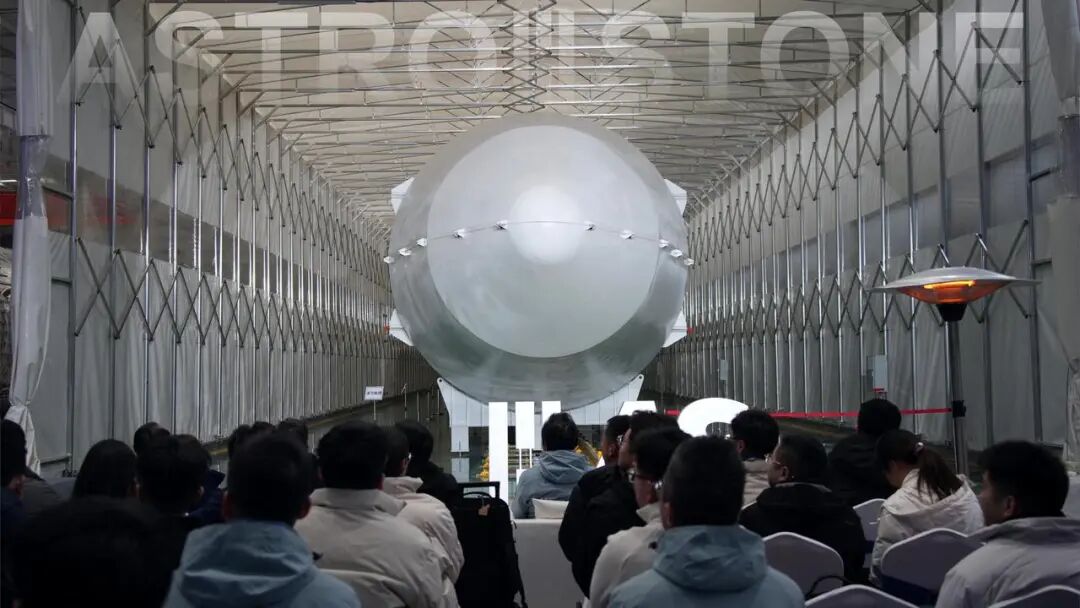
Space Epoch's inaugural "AS-VISION" annual ecosystem conference
What does open sharing mean? A more immediate example: Space Epoch has independently cultivated a stainless steel rocket body supply chain, now controlling the full process from raw material production to tooling and fabrication. This brings enormous cost advantages, and as capacity scales further, the company can also open stainless steel rocket body manufacturing to external customers.
"Space Epoch's self-developed stainless steel rocket body costs one-tenth that of aluminum alloy alternatives," noted Space Epoch co-founder Zhu Xinwen, "with production efficiency improved several-fold, and fastest delivery in just one month. Several 'sister organizations' are already in discussions with us about collaborations on stainless steel structural rocket bodies."
But Zhu also emphasized that with the team concentrated on technical breakthroughs and product validation, Space Epoch's immediate priority is preparing for maiden flight. "Internal needs first, external considerations later. Once we've validated batch production capabilities, we'll gradually open up our supply chain capacity."
Regarding the progressive construction of the "Space Android" ecosystem and commercialization roadmap, Tang Wen laid out a clear three-phase plan:
Phase one, before the AS-1 successfully completes maiden flight: solidify the "underlying driver" — focus squarely on the rocket itself.
"All resources concentrated on technical validation and capacity building. Cash flow isn't the core KPI, but we're still 'laying eggs along the way' — supply chain capacity export, for instance, serves as both cash flow supplementation and an entry point for ecosystem connections."
Phase two, from maiden flight completion to scaled operations: build the "platform layer."
"Once rocket capability is stably delivered, commercial launches become routine, but this isn't simply 'selling express delivery.' It's deep collaboration with satellite and various spacecraft customers, adapting the rocket to diverse needs. At this stage, the more important metrics are ecosystem partner quality and quantity."
Phase three, after achieving scaled operations: activate the "application layer."
"When launch costs drop low enough, the 'space consumption era' arrives — satellites are no longer luxury goods, and universities, research institutions, even ordinary individuals gain access to space resources. At that point, Space Epoch is both builder and service provider of the 'Space Android' platform, and also a participant in 'space applications.' Space Epoch's business extends beyond launch services to space manufacturing, on-orbit servicing, even business models that don't exist yet — truly realizing our ultimate vision of 'Everything in Space.'"
Undoubtedly, this is a long relay race toward the vast cosmos, requiring more forces to join.
02 Be an Athlete, and Strive to Be a Referee Too
The past year has seen commercial space heat up dramatically. The China National Space Administration established a commercial space bureau, local governments rolled out targeted policies intensively, mega-constellation plans were clarified, and capital and talent have accelerated inflow.
Entering 2026, change is happening faster still.
Zhu Xinwen's sense is that policy implementation is fast, capital response is fast, talent movement is fast. "What used to take a year can now land in two or three months. Our Zhuzhou, Hunan base went from contract signing to delivering the first rocket in just over four months — the best proof."
This dense inflow of policy and funding has brought unprecedented resource investment and development space to commercial space startups. Starting last year, large numbers of investors began systematically engaging with commercial space, from rockets to satellites, from upstream materials innovation to downstream operations and services, with institutions deploying capital frequently.
"The heat is theirs; progress is our own." Despite Space Epoch's accelerating fundraising pace, Zhu Xinwen prefers to separate external perception from internal rhythm. "However hot the industry gets, we still build our rockets one by one, run our tests one by one."
In 2025, Space Epoch delivered China's first 4.2-meter stainless steel thin-wall common-bulkhead tank, and hundred-ton-class "chopstick" capture arm prototypes passed validation successively. On production capacity, the Hebei test and manufacturing base began operations, and the Hunan development base broke ground and entered production, initially forming a "one center + two bases" R&D and manufacturing layout.
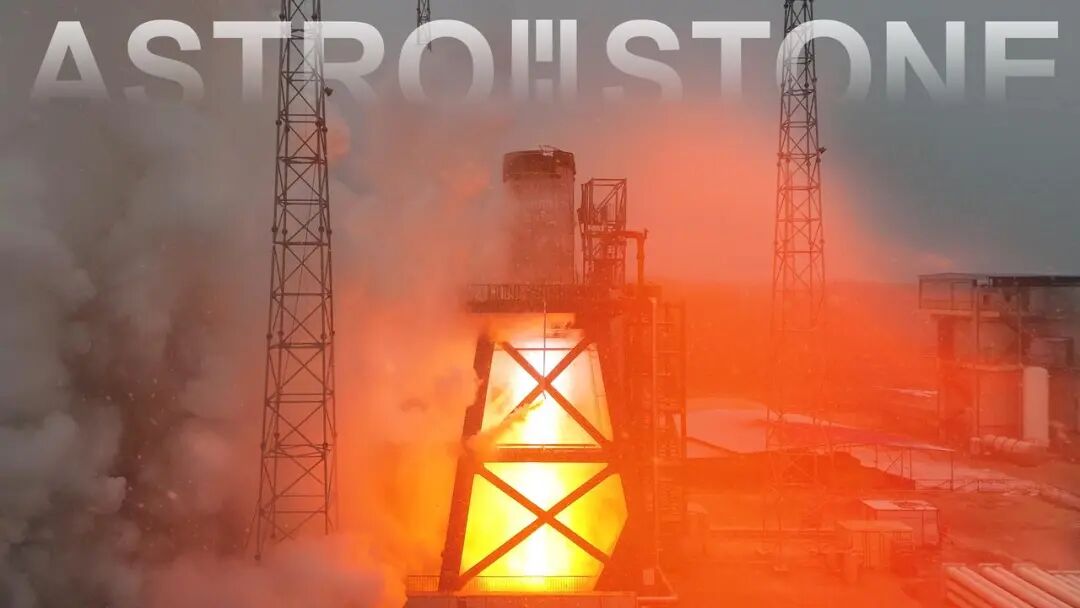
Space Epoch AS-1 liquid rocket second stage static fire test
Internally, Space Epoch has designated 2026 as its "decisive year," with all work centering on one goal: making the AS-1 ready for maiden flight.
Broken down, this year's four key tasks are: full-scale capture arm prototype ground joint testing; maiden flight rocket first stage assembly and integration; maiden flight rocket first stage static fire test; and maiden flight rocket full-vehicle assembly and integration.
On capacity building, Zhu Xinwen noted that Space Epoch's Zhuzhou, Hunan base will reach full production this year, and rocket recovery base construction will commence. On team size, by year-end headcount will expand to over 300 — a figure that doubles from early this year.
In a rapidly ascending industry cycle, only faster talent organization and resource concentration can yield faster results and establish scale.
Everything is accelerating, and competition often manifests more intensely.
Yet this cohort of space entrepreneurs generally maintains optimism — in a phase of growing the pie, investment of human, material, financial, and other resources tends to be healthy, productive competition. Whether in supply chain building, business model exploration, or talent pool enrichment, the ultimate beneficiaries are enterprises persisting in the right direction.
In Zhu Xinwen's view, in the current reusable rocket track, choices of propellant, rocket body material, and recovery method vary across players, but technical routes are converging and points of non-consensus are gradually diminishing.
"We chose 'stainless steel + chopsticks' not because it's the easy path, but because we're convinced it's the lowest-cost solution in the endgame. Long-term, the competitiveness of different routes will gradually diverge, but at this stage, whoever breaks through technically first, whoever reduces costs first, is blazing the trail for the entire industry," Zhu emphasized. "We don't fear competition. Only through competition can costs truly be driven down; only when costs come down will the space consumption era truly arrive."
Tang Wen expects the commercial space track to undergo a round of industry consolidation in three to five years, much as the logistics industry has SF Express, JD.com, and the "Three Tong and One Da" players, each with distinct advantages and positioning — no single dominant player, with possibilities ranging from one super-leader plus strong followers to multiple strong players coexisting.
Inside Space Epoch, the team's formulation is: be an athlete, pushing hard forward ourselves; and strive to be a referee too, using our experience as athletes to clarify standards and technical directions for the field.
"Both racing and running alongside — that's the role we want to play going forward," Tang Wen summarized.