"Smart" Heavy Trucks: How Windrose Technology Conquered the European and American Markets | YunXun

Stay committed to ground-up R&D, stay committed to original innovation, and stay committed to premium hardware and software specs.
The heavy-duty truck and trunk logistics industry is undergoing profound transformation: advances in new energy and autonomous driving technology are steadily driving down logistics costs.
Windrose Technology, a Series A portfolio company led by Yunqi Capital, is China's first pure ground-up developer of new energy autonomous heavy-duty truck solutions. Its products feature entirely new designs for wire-controlled architecture, electric powertrain, exterior, and interior — including a fully redundant wire-controlled electric chassis purpose-built for L4 autonomous driving.
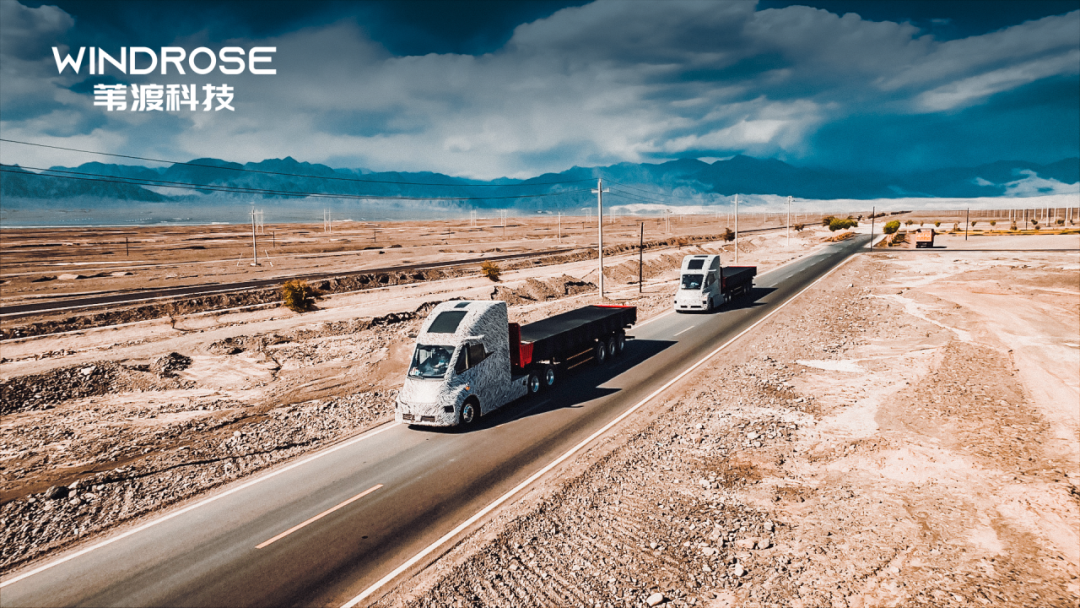
Windrose is methodically executing its planned "testing to delivery" roadmap. Prior to its partnership with Kerry Logistics, the company completed 40 days of high-temperature and high-altitude testing with Decathlon and Rokin Logistics. In ambient temperatures of 48°C in Xinjiang and at altitudes of 4,700 meters in Qinghai, Windrose's heavy-duty truck carried a full 49-ton load across 10,000 kilometers, thoroughly validating the vehicle's reliability and adaptability under extreme conditions.
"Windrose's first electric heavy-duty truck will be officially delivered in Q4 next year. We're currently conducting joint testing with Decathlon, Rokin Logistics, and Kerry Logistics. This vehicle will come with advanced driver assistance capabilities that can be iteratively upgraded to autonomous driving," said Han Wen, founder, chairman, and CEO of Windrose Technology.
What exactly makes this heavy-duty truck stand out? How does Windrose control manufacturing costs amid these advantages? Why did the company target China, the US, and Europe simultaneously with its first product? And why is Windrose so confident in the current environment? Recently, Han Wen sat down with China News Service to address these questions one by one.

A "Disruptive" Heavy-Duty Truck
For the past five years, Han Wen has been immersed in the heavy-duty truck industry. After completing his MBA at Stanford University, he joined GSR Ventures, then moved into an investor role at Plus, an autonomous trucking company. In helping Plus engage with markets across China, the US, and Europe, Han gradually realized that building heavy-duty trucks was something "interesting."
For the past five years, Han Wen has been immersed in the heavy-duty truck industry. After completing his MBA at Stanford University, he joined GSR Ventures, then moved into an investor role at Plus, an autonomous trucking company. In helping Plus engage with markets across China, the US, and Europe, Han gradually realized that building heavy-duty trucks was something "interesting."
According to data from the China Digital Freight Logistics Development Report, China's road freight market reached approximately 5 trillion RMB in 2022. Coming from an investment background, Han saw that road freight in the US and European markets were also trillion-scale markets. A single-category market of this magnitude represented an obvious opportunity.
Having gone abroad for secondary school and developed extensive cross-cultural communication experience throughout his life, Han noticed that while heavy-duty truck production and R&D are highly regional, customer application needs span extremely wide geographies. "You can imagine, if you could connect with a multinational corporation like Decathlon Group and coordinate vehicle needs across China, the US, and Europe from a global perspective, you could use a single vehicle model to meet their iterative needs for intelligent and electrified products in every region."
This is precisely why Windrose chose Decathlon for joint testing. As a multinational with diverse operating scenarios, Decathlon maintains its own "high standards" for heavy-duty trucks, including requirements that vehicles achieve 600 km of range in harsh environments like high altitudes and extreme heat, as well as fast-charging solutions during loading and unloading. Han revealed that in Q3 next year, Windrose's heavy-duty truck will begin transporting goods on precise routes designated by the customer — a demand that is "not difficult" for a vehicle that has already passed severe environment testing.
Having passed Decathlon's rigorous standards, Windrose's heavy-duty truck boasts undeniably premium specifications. As a first-generation product, facing market and demand differences across China, the US, and Europe, plus variations in individual driving habits, should the company segment its offerings? Is there really a need for this "premium" product?
"First, the electrification and intelligentization of trucks can dramatically improve the driving experience. So if you provide users with a truck that's 'good enough' and 'anyone can drive,' individual usage habit differences become less important. Second, in terms of transportation scenarios, heavy-duty trucking across China, the US, and Europe is primarily highway-based, with very high similarity. We've done the statistics: 60-70% of US heavy-duty trucks travel under 160 km one-way, while 60% of Chinese heavy-duty trucks operate within 500 km. So we designed for 600 km maximum, because that covers the vast majority of one-way trips in both China and the US. On vehicle configuration, we essentially found the least common denominator — building one truck that covers most known major markets. Additionally, our fast-charging technology can meet customer needs for long-haul routes like Beijing-Shanghai, Beijing-Guangzhou, and Shanghai-Guangzhou without impacting driver operating time."
"Of course, our large battery pack delivers 600 km of range, but we can also do 300-500 km configurations. Our battery uses a modular design that's integrated into the vehicle's overall architecture," Han acknowledged. Windrose Technology aims to build a genuinely "disruptive" heavy-duty truck product.

The "Camel" of Heavy-Duty Trucks: Smart, Capable, More for Less
The "disruptiveness" of this heavy-duty truck lies primarily in its ground-up development approach and exceptionally high degree of modularity.
Traditional trucks are built around internal combustion technology, with architecture to match. In the new energy era, pure electric vehicles don't need transmissions, engines, or drive shafts — the legacy architecture of the fossil fuel age. Thus, new energy heavy-duty trucks are structurally "fundamentally different" from traditional diesel trucks. "It's like phones going from physical keypads to touchscreens — our ground-up development is equally 'disruptive.' Every component, from the frame to the internals, is designed for electrification," Han explained.
Why could this transformation happen at Windrose Technology? Han identifies four key factors.
1
Team Capabilities
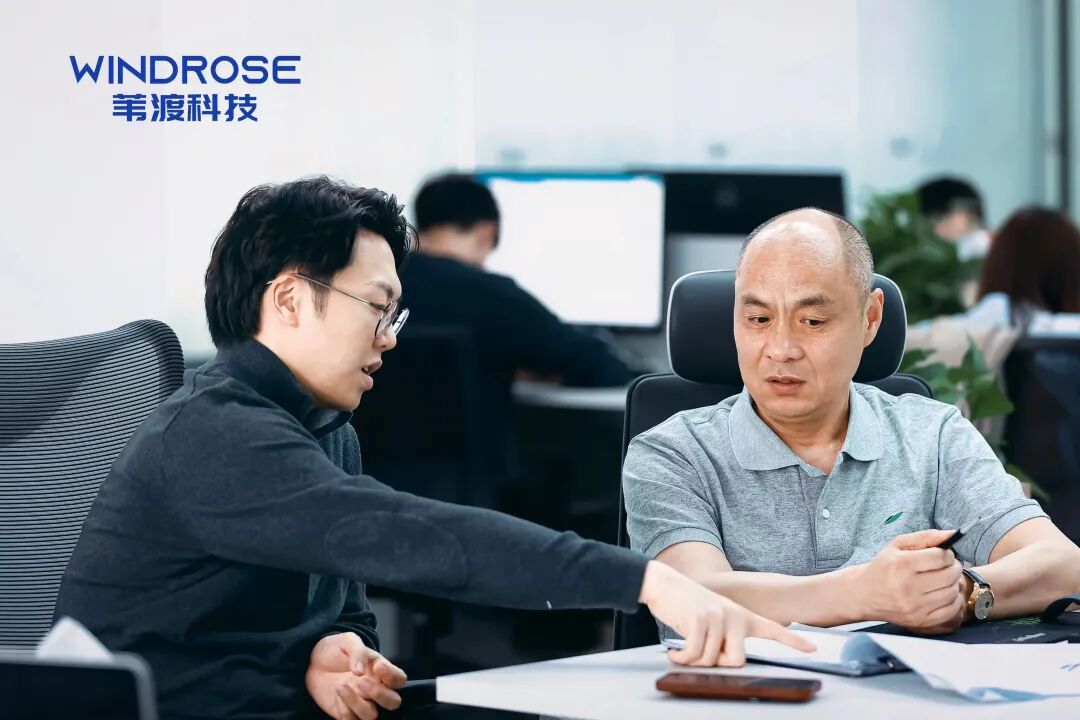
Founder Han Wen's autonomous driving background enables him to define hardware requirements for this heavy-duty truck through the lens of autonomous driving needs. "Think of me as an app developer — I understand what phone specs are needed to run this app." The clear and strong demands of autonomous driving gave Han a precise vision of what he wanted, "including the wire-controlled platform, the vehicle's electronic architecture, and so on."
Windrose co-founder and CTO Chen Haoli is a 13-year veteran of Dayun Motor Group, where as general manager he oversaw the development and production of Dayun's first diesel heavy-duty truck, first electric heavy-duty truck, first hydrogen fuel cell heavy-duty truck, and first batch of electric passenger vehicles — a wealth of experience. The two leaders' division of labor: Han defines product requirements from an intelligentization perspective, while Chen Haoli leverages his extensive vehicle-building experience to navigate the pitfalls and landmines of manufacturing. Beyond this, Windrose has assembled a professional R&D team of over 100 people, 80 of whom have more than 8 years of experience. To date, the team has filed over 200 invention patents for Windrose.
2
Genuine Commitment to Customer Needs
Windrose's heavy-duty truck was designed from the outset with genuine commitment to customer needs. Current customers include multiple multinational corporations spanning different geographies, transportation scenarios, and cargo types. Take Windrose's partnership with Kerry Logistics: Kerry's requirements for long range and fast charging capability pushed Windrose to accelerate charging technology development following its Decathlon collaboration.
Beyond this, co-development with suppliers and an international financing strategy also enable Windrose's ground-up development approach.
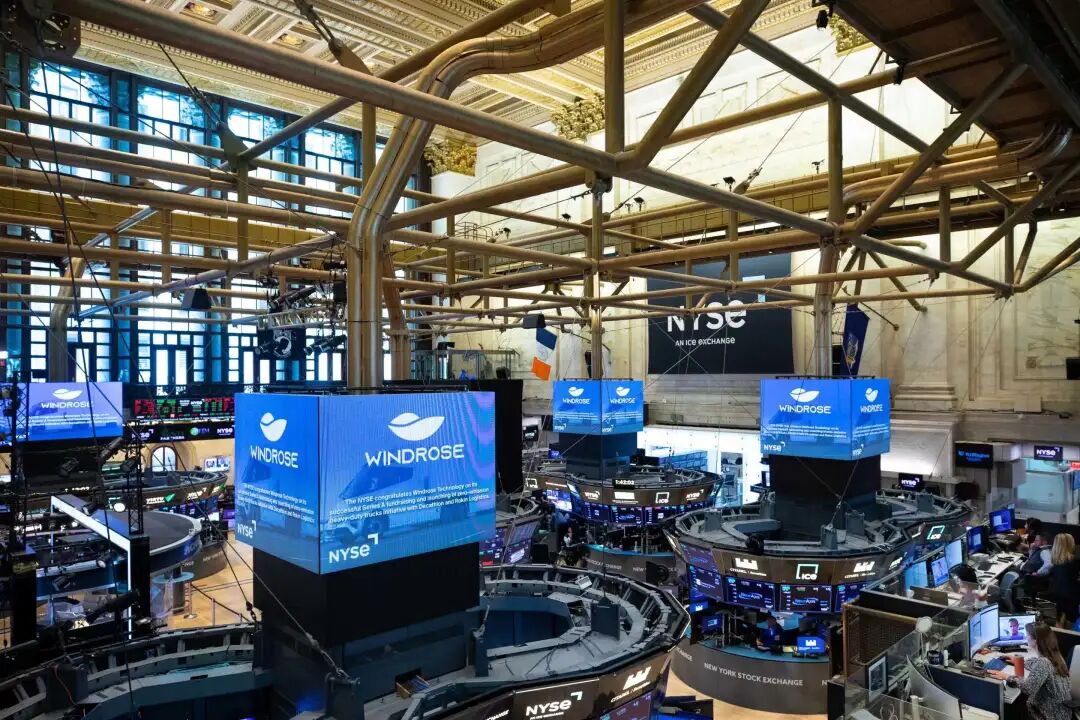
Han defines "ground-up development" as the core components of this electric heavy-duty truck being redesigned by Windrose and co-developed with suppliers to meet various customer requirements.
If ground-up development is what makes this heavy-duty truck "disruptive," then L4-level autonomous driving is what makes it genuinely transformative in practical use.
In 2014, SAE International provided a practical classification scheme that established standards for autonomous driving levels. This system divides automation intelligence from L0 to L5. L0 refers to manual driving — vehicles with no automatic control functions, where the driver maintains full control at all times, representing the vast majority of vehicles on roads today. L5 is full automation — you simply get in, state your destination, and the vehicle handles everything automatically; such vehicles might not even have steering wheels.
Full L5 automation remains distant. To meet L4 highly automated driving requirements, Windrose designed a fully redundant wire-controlled electric chassis for this heavy-duty truck. Han believes autonomous driving is an inevitable trend, but a gradual one. The fully redundant wire-controlled electric chassis provides upward compatibility for future autonomous driving capabilities, while the software layer will progressively evolve from driver assistance to autonomous driving based on this new architecture.
Han calls his company's heavy-duty truck the "Camel." In his view, Windrose's Camel has multiple advantages. Because the Camel's "skeleton" is entirely ground-up developed by Windrose with extensive "lightweighting" and "drag coefficient reduction" design, this Camel weighs less than others and has the lowest wind resistance of current heavy-duty truck models, while maintaining the same cargo capacity. This weight advantage at equivalent payload allows the Camel to go farther and faster.
The Camel's "hump" capacity benefits from Windrose's self-developed battery pack technology, with energy capacity reaching 750 kWh — approximately 60% higher than most domestic diesel-to-electric conversion models. Paired with Windrose's 800V high-voltage fast-charging platform, the Camel can "refuel" rapidly. This means fewer charging stops and shorter charging times during long hauls.
Ma Zheren, founder and CEO of Inceptio Technology, which focuses on autonomous truck network operations, believes that "customer requirements for heavy-duty trucks haven't changed from day one: first, sufficient safety; second, genuine cost reduction benefits." Examining Windrose's Camel reveals that this camel has no traditional "ears" (side mirrors), because digital mirrors are integrated inside. "The digital mirrors are two large screens on each side, each with normal and wide-angle views, effectively eliminating blind spots during driving. Combined with our advanced driver assistance features, this makes driving safer."
Currently, electric truck operation costs 20-30% less than diesel. The Camel's advantages in energy efficiency and charging efficiency enable further cost reduction and efficiency gains.
3
The "Camel Bell" Enters European and American Markets
Commitment to ground-up development, commitment to forward development, commitment to premium hardware and software — yet none of this compromises the Camel's "high quality at affordable prices" advantage.
Despite substantial R&D investment in hardware, Han believes the Camel's modular design creates excellent compatibility space, with strong extensibility for a single platform that can significantly reduce subsequent co-platform development costs. "This is the importance of correctly defining your product — it doesn't cost you much more, and these designs can extend to future models. Over a vehicle's full lifecycle, electric trucks are already cheaper than diesel trucks."
Another cost advantage comes from China's manufacturing environment. In 2022, China's battery production capacity exceeded the rest of the world's combined. According to lithium-ion supply chain data and forecasts from BloombergNEF, China possesses nearly 900 GWh of manufacturing capacity, representing 77% of global total capacity, and hosts six of the world's top ten battery manufacturers. Due to battery supply shortages, multiple US heavy-duty truck companies face shutdown and bankruptcy risks.
Battery manufacturing is just one piece of the puzzle. Most materials that make up batteries — battery-grade lithium, electrolytes, separators, cathodes, and anodes — are also primarily manufactured in China.
Beyond batteries and supply chain advantages, Han believes China's strengths in smart devices and talent quality also greatly benefit Windrose. "China's EV supply chain accounts for half the global total, smart device shipments are the world's largest, and R&D talent is both abundant and high-quality. If you're going to build electric vehicles, building them in China — that's not even a question."
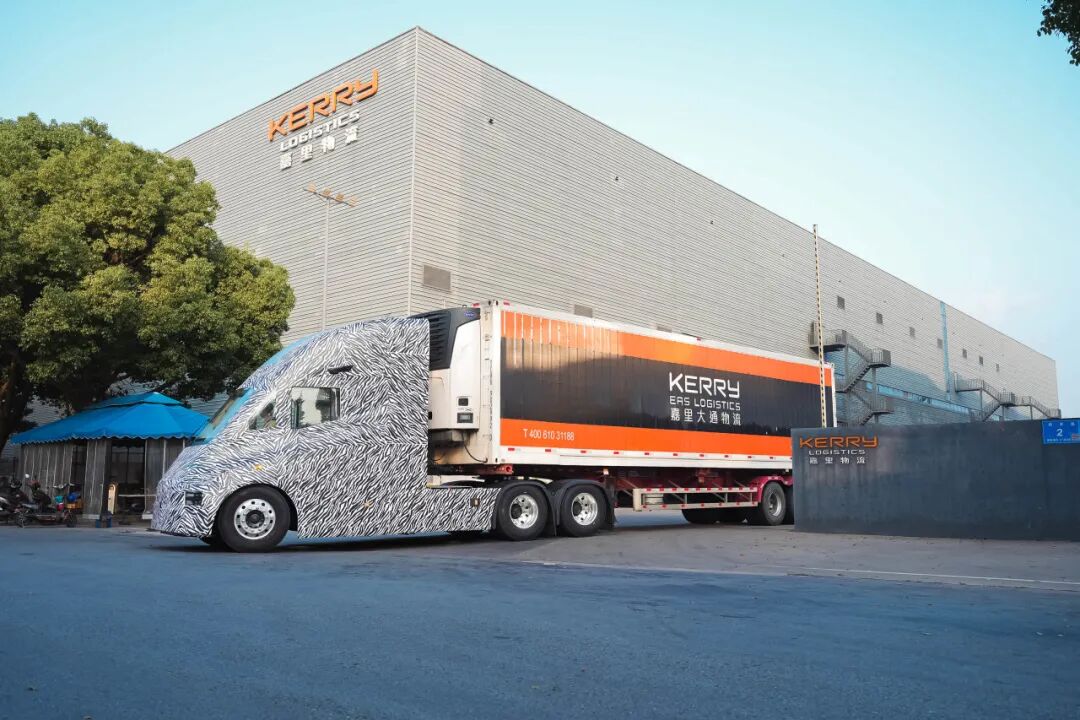
Better driving experience, lower total operating costs, and superior cost control give the Camel extremely strong competitive advantages when facing the two major heavy-duty truck markets of Europe and America.
"Europe and America have stronger willingness to pay for new energy products. Currently, an electric heavy-duty truck in the US sells for over $300,000. Our heavy-duty truck is lower than American products in both purchase price and total lifecycle cost — we're going to 'outcompete' abroad."
Previously, Windrose also partnered with TÜV SÜD, which will provide compliance services for US FMVSS, FMCSR, California regulations, EPA & CARB applicable regulations for Windrose's new energy heavy-duty trucks, facilitating their entry into international markets.
"There are opportunities for heavy-duty trucks to go global. Right now, perhaps only a small number of people can seize them. Windrose hopes to be among that small number, to blaze the trail and get this path working for everyone."