Vision Pro Not Enough? Check Out These Black-Tech AI + New Hardware! | Yunqi FutureScope X MWC2024

Unexpected "Stunt" Black Tech
From February 26 to 29, the 2024 Mobile World Congress (MWC 2024) — the world's largest and most authoritative gathering in the global communications industry — took place in Barcelona, Spain. Under the theme "Future First," more than 300 Chinese companies participated in the exhibition.
Among the many showcases this year, AI + hardware was undoubtedly the most closely watched focus. How can AI connect with the real world? This has also been a key area of our attention.
In this issue of "FutureScope," we take you to see those imaginative hardware products at this year's MWC. How will the wildly creative ideas behind these products bring new changes to our mobile electronic devices?

This article is excerpted and translated from Wired.
1. Wearable AI Hardware
AI Pin and Its Budget Alternative, PhoneCam
Three months after pre-sales began, the AI Pin still hasn't let users get their hands on the product. Instead, company employees demonstrated its applications to the public. The AI Pin features four core interaction modes: voice, touch, gesture, and projection. Through its camera, the AI Pin can scan and describe its surrounding environment — for instance, at the MWC exhibition hall, it might characterize the scene as "an indoor event or exhibition where people are walking around." It can also identify specific details in the environment, such as Qualcomm signage at the venue.
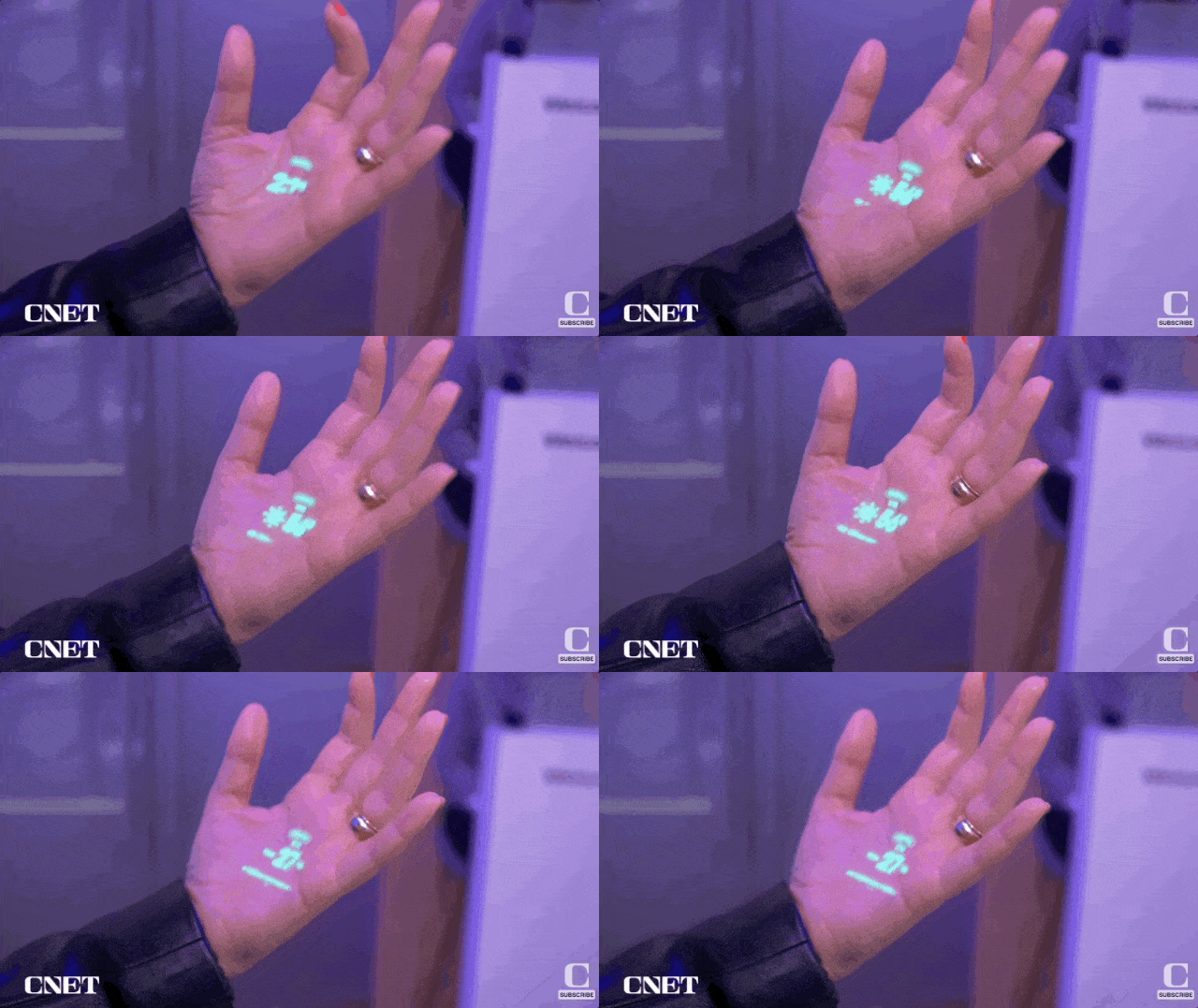
Additionally, there was another product on the floor with a similar form factor to the AI Pin but priced at just one-tenth the cost: PhoneCam. The AI Pin retails for $699. PhoneCam, meanwhile, costs only $69 and is expected to launch in Q3 2024. PhoneCam's core lies in its AI capabilities. Beyond object recognition through its camera, it can also train its own AI. For example, if your grandmother makes chocolate cake in a particular way, you can have her wear PhoneCam, and it will record her movements to create a recipe for you — no pen and paper required.
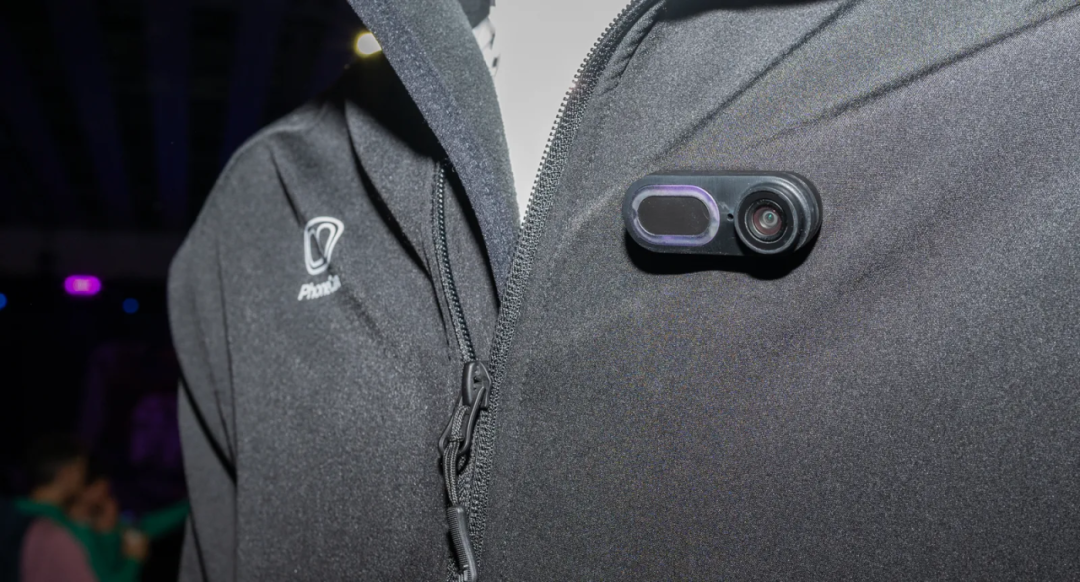
PhoneCam. Image source: Wired
According to the company, enterprise buyers have shown considerable interest. Japanese automakers have inquired about installing it on all their factory workers, using AI to identify and verify whether workers have accurately completed all required tasks, thereby making quality control more immediate. PhoneCam's basic functions are free, but full access requires a subscription plan — the lowest tier starts at $4 per month.
Clearly, these new devices aren't meant to replace smartphones. Rather, they seek broader application scenarios for AI hardware through more lightweight devices.
2. The "App-less" Smartphone
Deutsche Telekom, parent company of T-Mobile, partnered with a company called Brain.ai to create a smartphone without apps. From the prototype, it looks like any Android phone. However, its lock screen features a built-in AI assistant you can talk to. Unlike Siri or Google Assistant, once you start speaking, the phone builds an interface around your request.
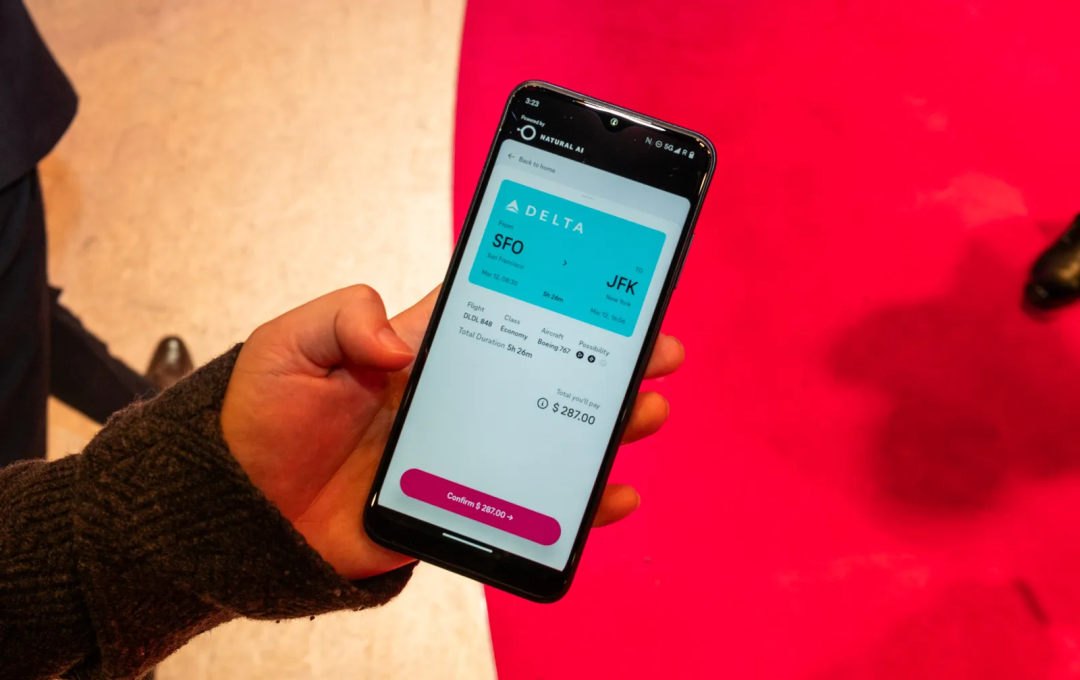
AI-generated interface. Image source: Wired
Jerry Yue, founder of Brain Technologies, had the AI look up flights from San Francisco to New York for two people, and the interface began forming, providing the visual elements needed to confirm and purchase tickets through Apple Pay or Google Pay. Compared to hunting for apps, simply speaking to your phone generates the interface you want.
"App-less" isn't entirely accurate, since apps still ultimately complete the tasks. But AI can spare you the tedious process of downloading a series of apps yourself.
3. 5G + AI = E-Bike?
It's not just four-wheeled vehicles competing over large screens and smart features. Orbic's new e-bike comes with oversized tires, a 7-inch touchscreen, and front and rear cameras. The 7-inch embedded tablet runs Android, with dual speakers for streaming Spotify or navigating with Google Maps. The front and rear cameras use AI body detection to help you avoid collisions. The motor reaches speeds of 45 km/h (28 mph), though this will be limited by local regulations in each market.
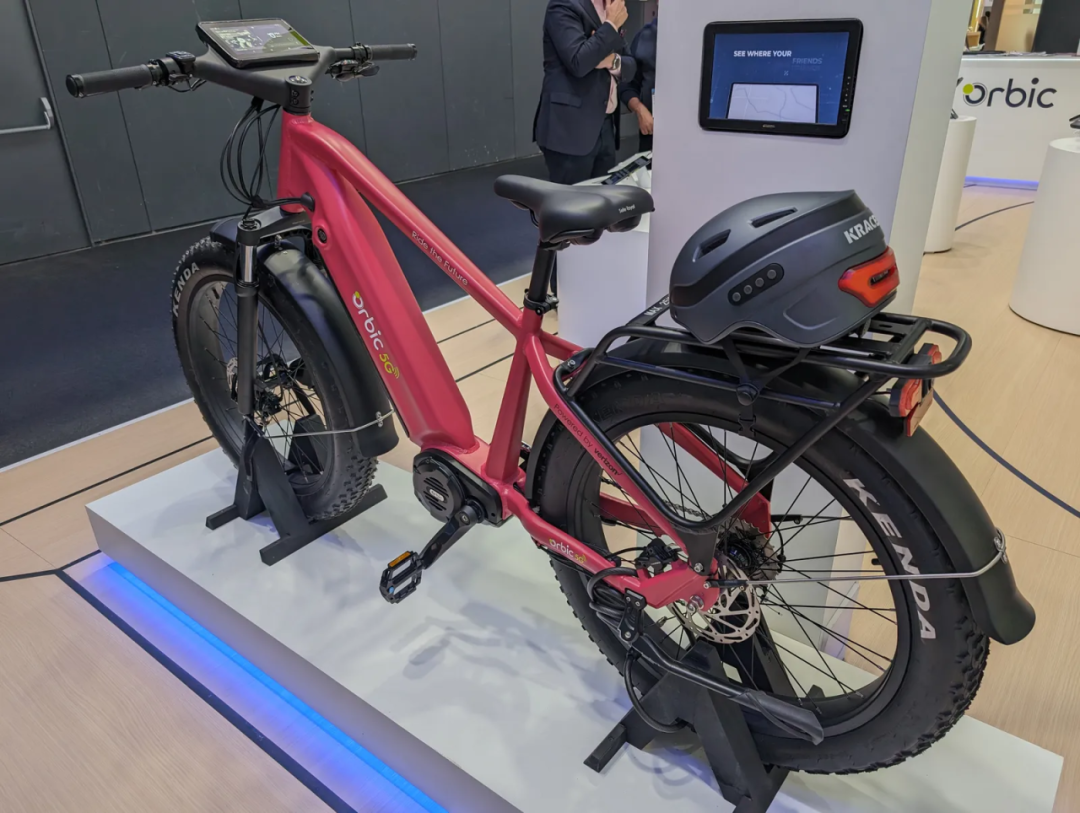
The AI-enabled bike. Image source: Wired
The company hopes to sell the product through carriers (partnering with Verizon in the US), allowing customers to purchase mobile service alongside the bike. No pricing has been announced yet, but it's safe to say it won't be cheap.
4. GPT on Care Duty: A Health Manager for the Elderly
Every year, MWC features some bizarre creations, and Hyodol was likely the strangest this year. It looks like a doll, but it's designed to serve as a "proxy caregiver" for seniors.
Powered by ChatGPT, the doll has various touch-sensitive patches and buttons you can press to elicit responses — prompting elderly users to take medication, reminding them of meal times, even suggesting exercise. It speaks in a child's voice, which may not carry the authority of a professional caregiver but seems to offer some emotional value.
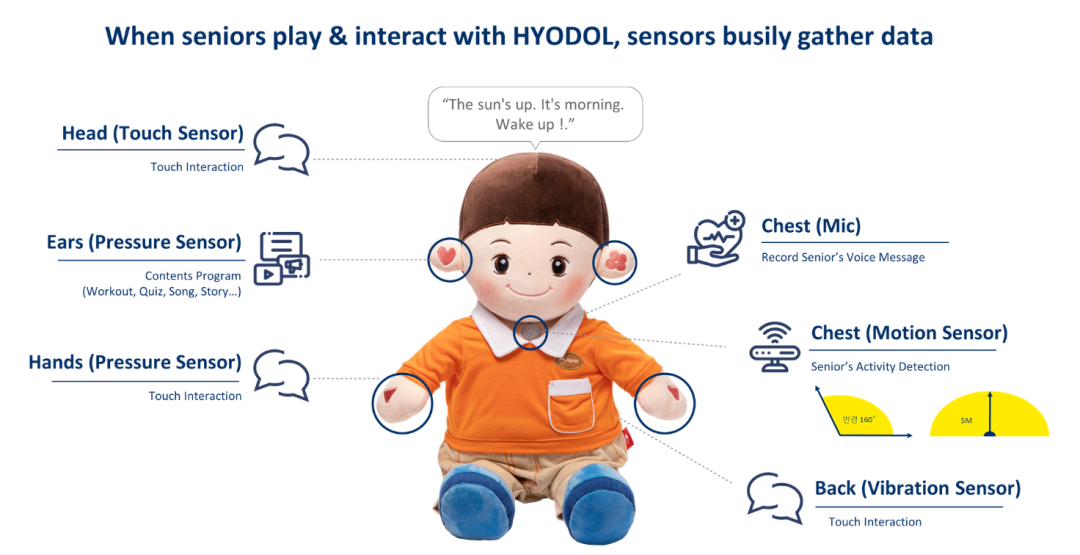
Image source: Hyodol official website
Through a backend app, users can set parameters and schedules, with connectivity via Wi-Fi or cellular networks. Battery life lasts two to three days. The Korean company behind Hyodol says they have already begun product testing in New York. The MWC version speaks English and is priced at approximately $1,800.
5. PureLiFi Light-Based Data Transmitter
Using light to transmit data is a secure, efficient solution — and a way to ensure internet connectivity in interference-heavy environments. PureLiFi has miniaturized its receiver to the point where it can fit inside a phone.
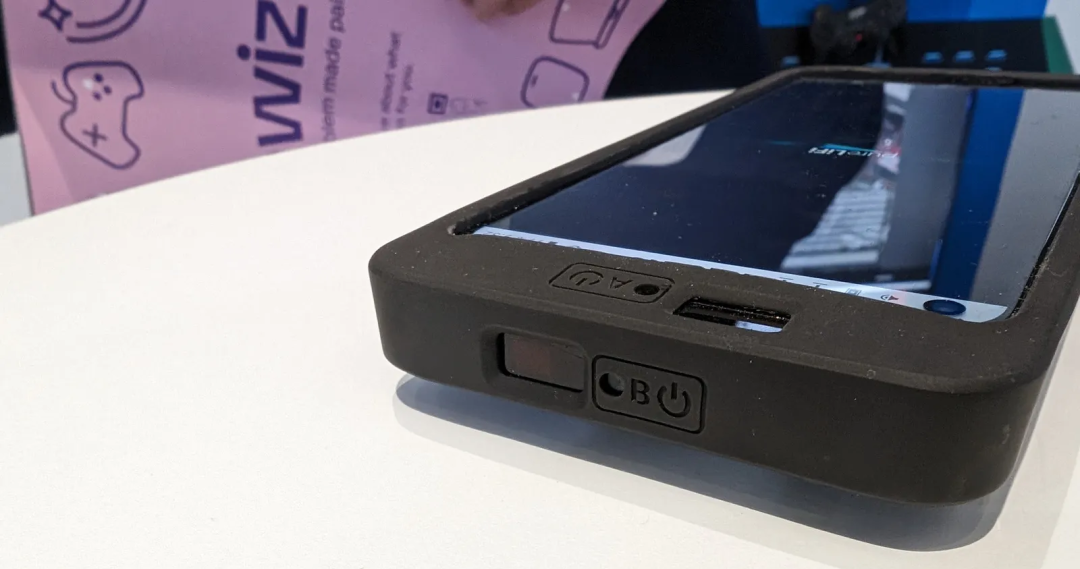
Receiver fitted into a phone case. Image source: Wired
At MWC, they demonstrated a phone case capable of streaming video using light transmitted from ceiling-mounted emitters. The kit can deliver speeds up to 1 Gbps over long distances (approximately 50 meters). They also showed a box-style emitter for desktop use, aimed at users requiring secure internet access. Additionally, PureLiFi introduced a new 5G connectivity solution that uses light to transmit signals from outdoors through windows into buildings, eliminating the need for invasive drilling and cabling. In partnership with Solace Power, the outdoor unit can also be wirelessly powered by the indoor unit through the window.
For now, light transmission use cases remain concentrated in high-security applications. But PureLiFi believes this transmission mode could eventually be applied to everyone's personal devices in the AI era.
6. VR Dog Petting! Cloud Dog Ownership Becomes Real?
The recently launched Vision Pro has ushered VR headsets into a new product generation. In Yunqi Capital's team review (click to read), we found that because native VR content remains limited, the sense of "immersion" in VR worlds always seems to fall slightly short.

VR virtual dog petting. Image source: web (the dog is a VR image)
Japanese mobile carrier NTT Docomo brought a new concept to MWC: Feel Tech Animal. Cloud dog petting — who can resist? Put on a Meta Quest 3 headset, slip attachments onto your index finger and thumb, strap vibration packs to both wrists, and you can experience tugging on toys, wrestling, and petting a dog's head.
According to on-site feedback, while the presence isn't fully "indistinguishable from reality," the wrist packs are enough to create the illusion of interacting with a real dog. Certain sensations, like shaking a ball containing smaller balls, can even fool the brain. Adding the dimension of "feel" to virtual reality genuinely enhances immersion. It's only a matter of time before this kind of thing becomes widespread.
Most of the products above remain at the demo stage, yet they show us the possibilities of various technological applications. Mobile electronics, as one of the industries closest to end consumers, has the potential to bring tangible changes to people's lives with each innovation. We'll continue tracking AI+ technology iterations and product innovations in "FutureScope." See you next time~