What Are the 5 Critical Questions for Making Open Source Commercialization Work? | Yunqi Capital × China Open Source Conference

AGI and Globalization Are Changing Open Source — Here's How

Recently, China's most influential annual open-source gathering — the commercialization forum at the 8th China Open Source Conference (COSCON '23) — took place in Chengdu. Yunqi Capital has long been an active participant in building and co-creating the open-source ecosystem, and this year we were deeply involved in the conference, serving for the second consecutive year as producer and host of the commercialization forum.
Since 2015, we have been deeply rooted in the open-source space, continuously walking alongside open-source entrepreneurs with an open, innovative, and global perspective, embracing technological change and uncovering industry value. At this "Open Source Commercialization Forum," we joined entrepreneurs, foundations, and technical experts to look ahead to the AGI+ new era and explore new trends and opportunities in global open-source commercialization.
During nearly five hours of face-to-face discussion, speakers and audience members co-created, shared, debated, and learned together, with sparks flying throughout. We've distilled the most frequently asked questions from the event and briefly organized the speakers' standout insights. The full picture — truly hearing, truly exchanging, truly feeling — only comes from being there in person. We will continue to host more knowledge-sharing events, so stay tuned.
Special announcement: At year-end, we will release our annual "2023 China Open Source Annual Report: Commercialization Edition" series, offering a more comprehensive and integrated perspective on global open-source commercialization along with our insights. Follow us for updates. (To access previous reports, reply "开源报告" in our backend.)
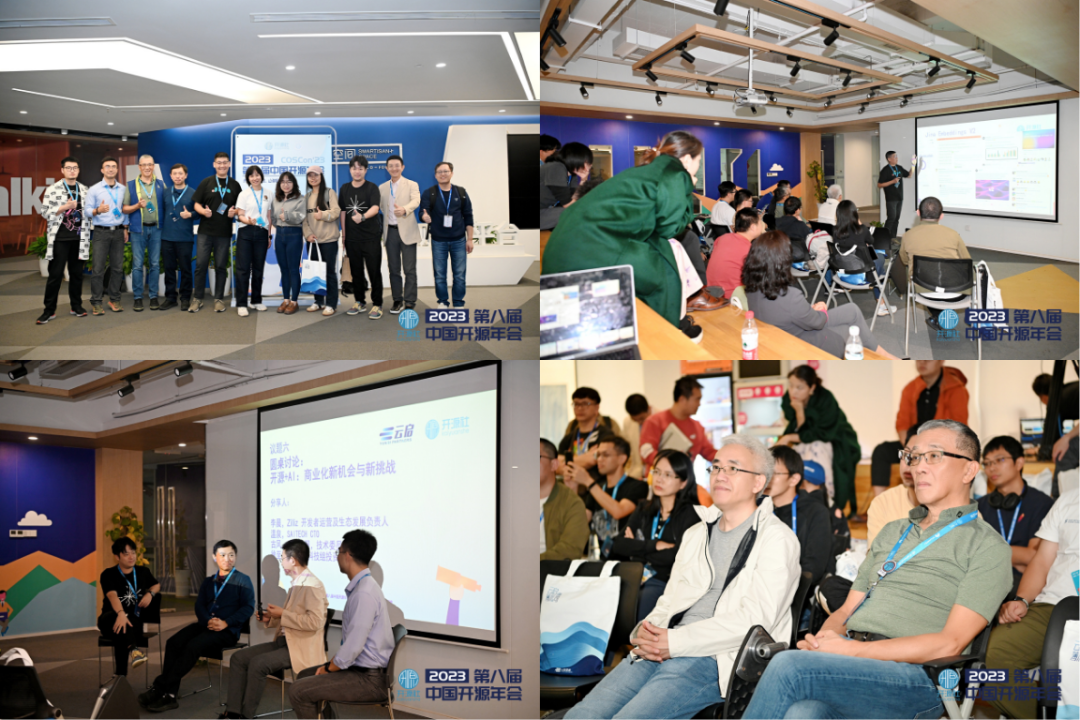
COSCON '23 Commercialization Forum
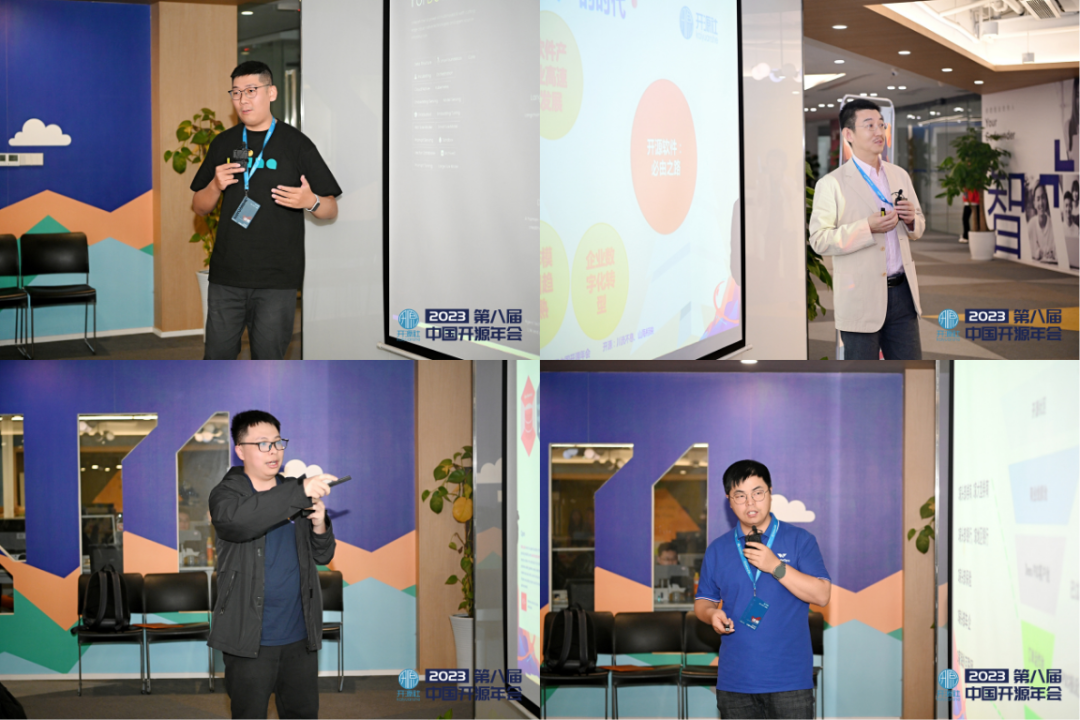
COSCON '23 Commercialization Forum — Keynote Session
01
How Do You Use Open-Source "Values"
to Manage a Commercialization Team?
In one overseas case, technical founders voluntarily stepped back when their product was ready for commercialization, bringing in a professional CEO to drive the company's business success. Developers need to collaborate with commercialization efforts to find the best PMF for their software.
The open-source world doesn't have much hierarchy — a valuable bug report is a valuable bug report, and even the most respected "rockstar" is happy to engage with whoever found it. For the open-source industry, solving problems at the source and communicating directly with authors is best practice.
Marketing, sales, and engineering teams all need continuous learning and constant calibration. Different departments must acknowledge their conceptual gaps, keep each other updated on new features, fully understand the company's commercialization strategy, and learn from one another.
For commercialization-focused companies, each stage — fundraising, finding product-market fit, customer acquisition and iteration — presents distinct challenges. You need to find the right teammates, align with strategic trends, extract core value at each stage, and help the company build out the necessary touchpoints.
02
How Do You "Compete" on Product?
Changes in the AGI Context
Four things need to be clear in open-source commercialization strategy: First, the open-source project's positioning must be clear and the pain points for commercial features well-defined; second, open-source commercial software must take industry attributes seriously, examining user pain points by vertical; third, continuously upgrading the open-source version creates more market opportunities for the commercial version; fourth, boldly explore new technologies and embrace the trend of integrating large models into software.
ChatGPT has been a major shock to open source overall. To keep expanding in the market, the product itself must simultaneously "compete outward" and "compete inward": constantly look outward at user needs, acquiring new users by adding features; but also look inward, improving the existing user experience to boost retention — with both spiraling upward together.
03
Commercial Globalization:
Where to Start?
Currently, there are many favorable opportunities for open source domestically, but challenges are also imminent. We believe China's technical capabilities are beyond question; what's also needed is steady, step-by-step improvement in product operations and marketization capabilities.
Four key questions need to be considered upfront for globalizing open-source software commercialization: How do you build a highly active global open-source community? How do you fully leverage the power of international open-source organizations like foundations? How do you lay groundwork for global sales early? How do you develop global after-sales support services?
04
"Continuous Innovation":
Where to Find the Source?
Community governance is the cornerstone of a growing open-source ecosystem. AI technical talent remains relatively scarce, and community operations are one pathway to attract excellent technical people.
Open-source community building can become a foundational moat for commercialization — stimulating the community's internal drive and autonomy, distilling more common needs, and letting more users share in the results. Build distinctive product competitiveness as a commercialization strategy: accumulate a large base of heavy users, identify true enterprise-grade needs, and establish technical moats at the infrastructure layer. Lean governance for cost reduction and efficiency is a basic strategy for long-term survival.
05
How to Strike a Balance:
Community Operations vs. Commercial Operations
There's a massive gap between running a good open-source project and turning a profit, and how difficult this is for a company depends heavily on the industry ecosystem. Even when taking contracts, you need to constantly think about the sustainability of the transaction — this matters enormously for long-term development. Some demands may bring quick money but can damage the team's formation and direction.
Companies calling themselves "open-source commercial businesses" that invest enormous human resources into developing only a free open-source version, without offering a paid commercial tier from the start, may be acting immaturely. Commercial competitors could free-ride, using the readily available code to build new solutions while hiding their source code. Using a capitalized approach to achieve project-community fit may be a gamble; considering commercialization only after the open-source community has flourished is the safer choice.
At the event, multiple open-source practitioners shared their firsthand experiences with commercialization —
(Listed in order of appearance)
Gufeng, Business Specialist, CSKeFu Technical Committee
While iterating its own product, CSKeFu established a customer service community, creating an ethics committee and technical committee with divided responsibilities for maintaining daily community operations. We hope to stimulate the community's internal drive and autonomy, distill more common needs, let more users share in the results, and help customers reduce costs and improve efficiency.
Tison, Apache Member & Incubator Mentor
Community operations and open-source product commercialization need to both support each other and be treated separately. Using commercialization methods to do community operations — the fit there may be a gamble. Currently, domestic teams are somewhat lacking in coordination between deep scenario cultivation and ecosystem integration, and can further leverage the productivity and influence of upstream communities to find more efficient and lasting collaboration models.
Han Xiao, CEO & Founder, Jina AI
Truly good technology isn't just for collecting GitHub stars — it's something you can actually sell. People only give you money when they trust your technology.
Lidong Dai, Co-founder, WhaleOps & Apache Incubator Mentor
For China's open-source commercialization, opportunities currently outweigh challenges. Reduced cutthroat competition, continued growth in cloud adoption, improving acceptance among internet companies, faster subscription model adoption, and gradual overseas market growth are all major tailwinds on the path to large-scale open-source commercialization.
Zhixing Xu, Investor, Yunqi Capital Technology Team
Currently, open-source sector valuations keep rising, exit cycles are shortening, and business models are maturing. From a globalization perspective, open-source business models need the ability to adapt to local conditions, finding the best fit for different markets. Open-source community operations are equally important — they not only serve branding purposes but also generate user feedback and sales leads on community platforms, attracting more technical talent to join the team.
Chen Li, Head of Developer Relations & Ecosystem Development, Zilliz
We believe China's technical capabilities are beyond question, and what's also needed is steady, step-by-step improvement in product operations and marketization capabilities. We hope everyone works together to prove that China can also develop world-class foundational software.
Wen Quan, CTO, SAITECH
Open source is a belief, a set of values. At critical stages of commercialization, these values will also point the company toward new directions.