The Lobster Farmers Have Already Started Rebuilding the World | Yunqi Capital X MiniMax OpenClaw Meetup Recap

What Is Agent Actually Changing?
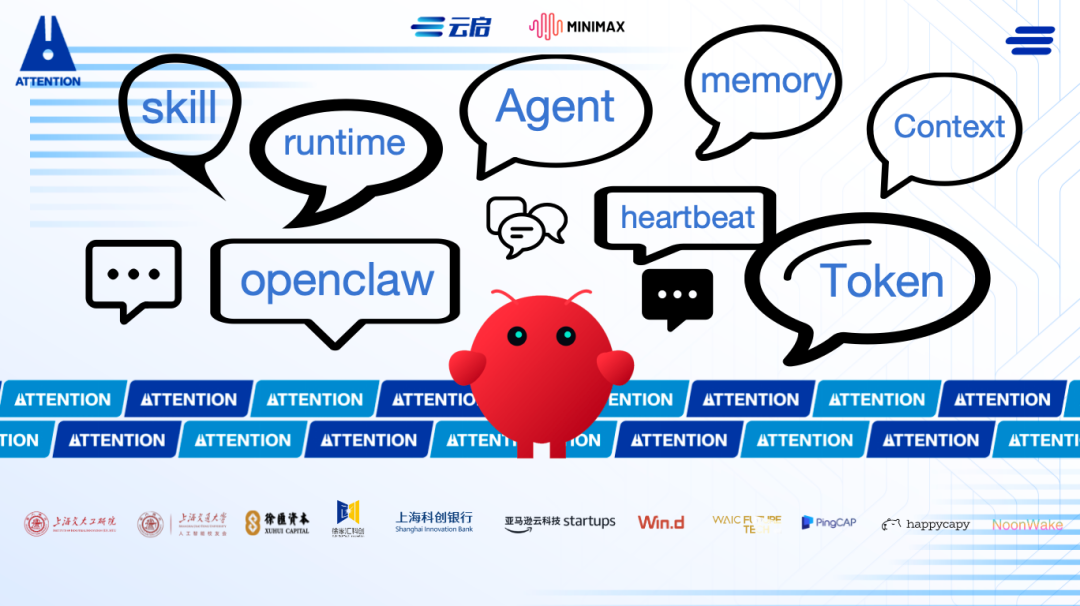
Over the past few months, OpenClaw has become one of the hottest public topics in the Agent world.
On one hand, it has brought Agents from developer circles to a much broader audience. On the other, it has thrust long-standing issues — security, permissions, memory, cost, and workflow — squarely into the spotlight.
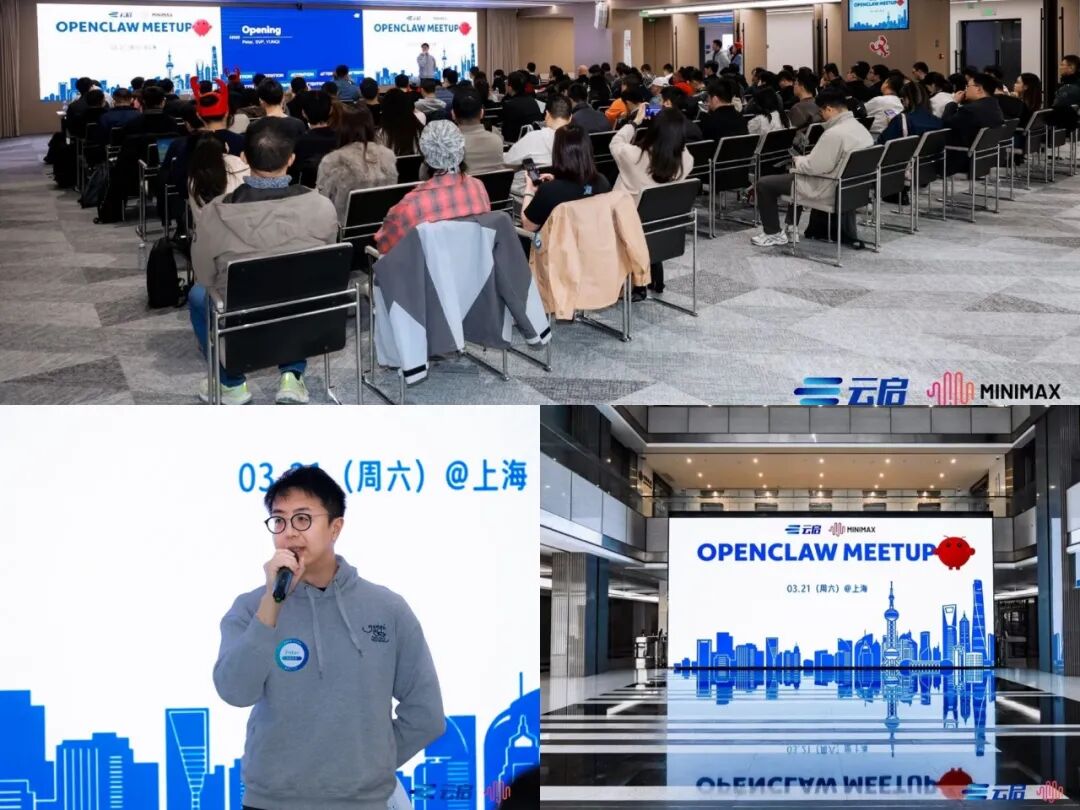
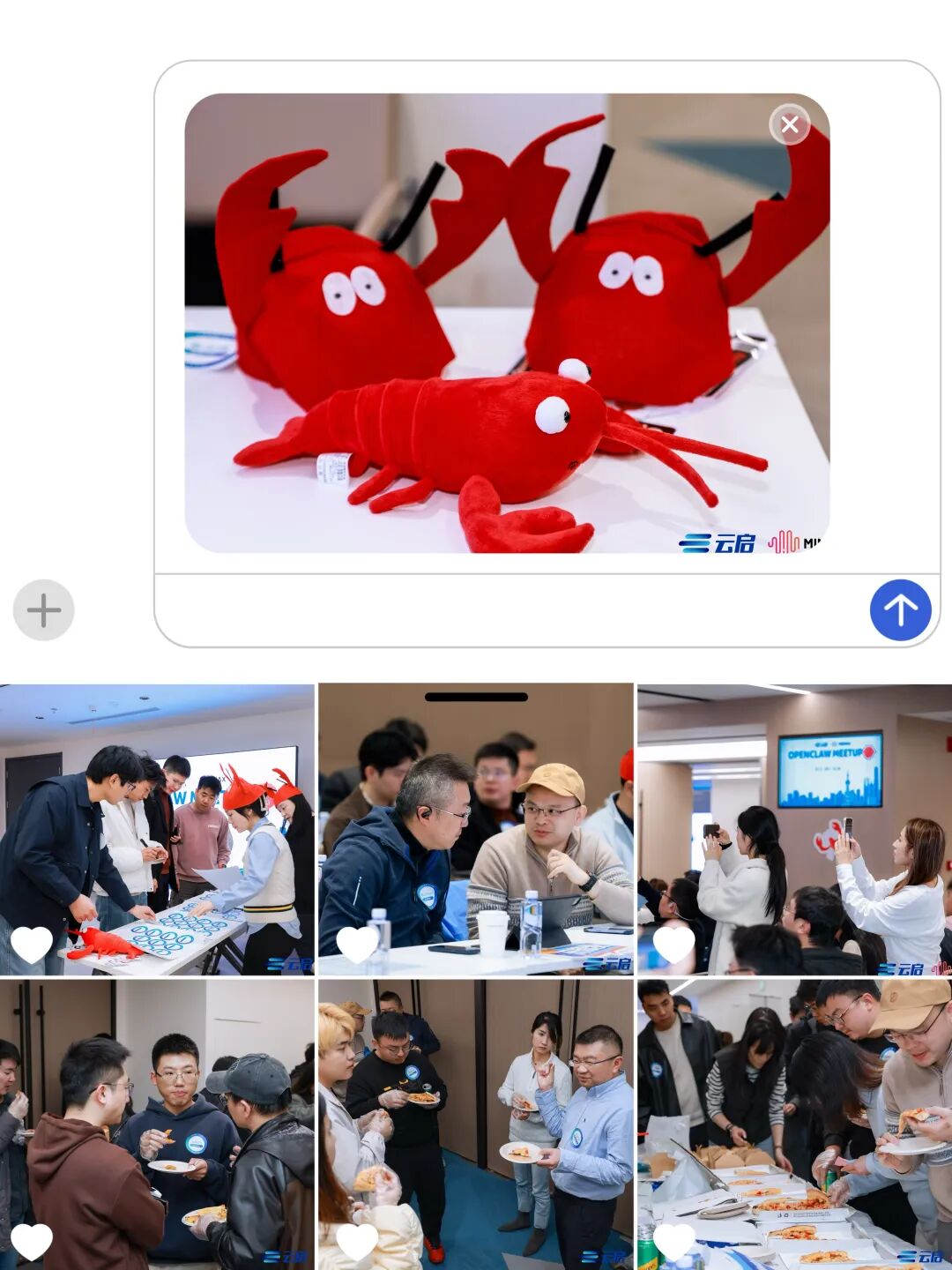
Last Saturday, we joined forces with our angel-round portfolio company MiniMax, along with ecosystem partners including Shanghai Jiao Tong University's Industrial Technology Research Institute, Shanghai Jiao Tong University AI Alumni Association, Xuhui Capital, Xujiahui Sci-Tech Incubator, Shanghai Science and Technology Innovation Bank, and Amazon Web Services, to co-host the OpenClaw Meetup in Shanghai. Together with over a hundred frontline "lobster keepers," we returned to more fundamental questions: What exactly is Agent changing? And where is this wave headed?
OpenClaw: A Hot Topic, and an Inflection Point
In his opening remarks, Liang Hao, SVP at Yunqi Capital, offered this assessment: the explosion of OpenClaw is not merely a product-level viral moment, but a moment when "Software 2.0" became visible — moving from static code to dynamic orchestration and feedback loops, with Agents truly beginning to enter work and life scenarios.
At the same time, issues of permissions, security, cost, and organizational adaptation are surfacing rapidly. Finding paths amid this uncertainty is precisely what this Meetup aimed to do: not teaching you "how to raise a lobster," but collectively seeing where the real opportunities in this wave will land.
Models, Verticals, and Infrastructure
Three Ways to Understand Agents
MiniMax
Agent Is Becoming a R&D Methodology
The global "little lobster" craze stems from underlying model evolution. And as Agent capabilities leap forward, these "lobsters" are starting to feed back into model development, helping produce the next generation of models.
According to Yuan Li, Head of Developer Relations at MiniMax, the company is already using Agent-ified approaches to accelerate its own model iteration internally. Specifically, it has encapsulated algorithm engineers' "train — analyze — construct data — retrain — re-evaluate" loop into a continuously running system, allowing models to participate in their own self-optimization. This means Agent is not just a product form, but is becoming a R&D methodology.
On OpenClaw's path to viral success, Yuan Li offered a clear technical breakdown:
One aspect is interaction innovation — plugging Agents into familiar IM entry points, making "talking to AI" more natural. The other is that it has pushed automation from a passive tool to a system with heartbeat, memory, and initiative — especially through cron job and heartbeat mechanisms, transforming Agents from "waiting for your command" to actively checking, pushing, and executing.
But a harsh reality follows: "When everyone's lobsters start beating their hearts together, what burns isn't just tokens, but underlying GPU and cost curves."
Thus, the popularization of OpenClaw itself is forcing model vendors, platforms, and infrastructure providers to rethink: what kinds of models, orchestration methods, skills, and memory mechanisms are actually sustainable.
As a globally watched AI Native innovator, how does MiniMax itself use AI for efficiency gains internally?
"From HR recruiting, email replies, and public sentiment monitoring, to SQL queries, ops troubleshooting, and daily report generation — for many roles, the discussion is no longer 'whether to use AI' but how to encapsulate specific job responsibilities, permissions, context, and SOPs into skills."
According to Yuan Li, MiniMax has already accumulated 200+ skills internally. What's more interesting is that most were not pre-built by the AI team, but actively generated by different departments and even individuals after understanding their own workflows.
This may be the most important signal of an AI Native organization: not everyone learning a new tool, but more and more teams beginning to assetize, modularize, and make reusable their own working methods.
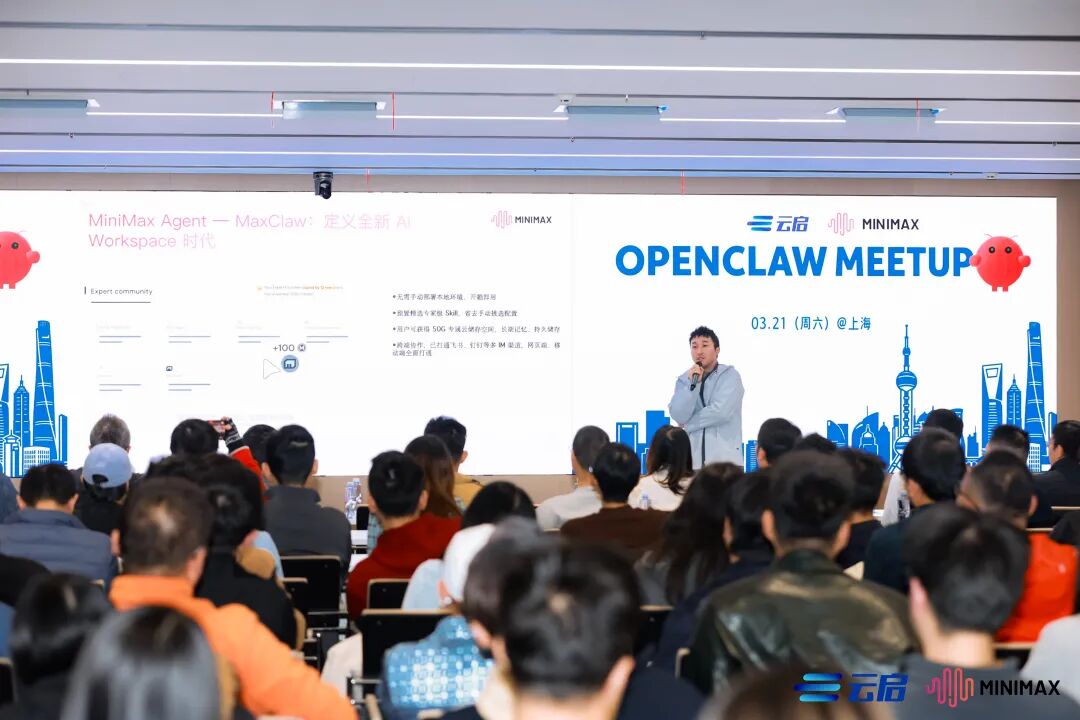
Yuan Li, Head of Developer Relations, MiniMax
Wind
In the Financial World, Agent Is
Not "Can Chat," But "Can Invest"
Beyond general-purpose domains, how do Agents transform vertical scenarios that are highly specialized and have low fault tolerance?
Sun Jun, Vice President of renowned financial services platform Wind Group, brought a more vertical and grounded question: what happens when OpenClaw enters the financial investment field?
**Not long ago, Wind released WindClaw, the first OpenClaw-like product in the financial investment scenario. At the meetup, Sun Jun made a decisive call: individual stock trading will undergo revolution.
"In the past, individual investing meant scrolling apps, reading stock commentary, listening to tips, and digging around for information. What's more likely next is — training one, or a set, of investment lobsters exclusively your own."
Why didn't this happen when large models first emerged? Sun Jun believes the finance industry had long fantasized about "training a stock-savvy large model," but the problems with this direction were obvious: too much investment, unstable output, quickly flattened by general model iterations. More critically, large models are more like black boxes — giving conclusions without traceability of underlying information, methodology, or implicit assumptions.
Investment Agents are fundamentally different. They are essentially decomposable systems: model, memory, skill, and methodology can all be traced, reused, and evolved. They need to call full financial data, absorb research methods, accumulate investment experience, execute tracking processes, and potentially form multi-Agent organizations for different stocks, sectors, and market conditions.
For asset management institutions, this means research processes may be naturally suited for Agent-ification, with future competition centering more on skill sourcing and evolution, and how organizational structures reconstruct around Agents. For individual investors, a third path emerges beyond self-taught research and fund managers — training a personal investment Agent system.
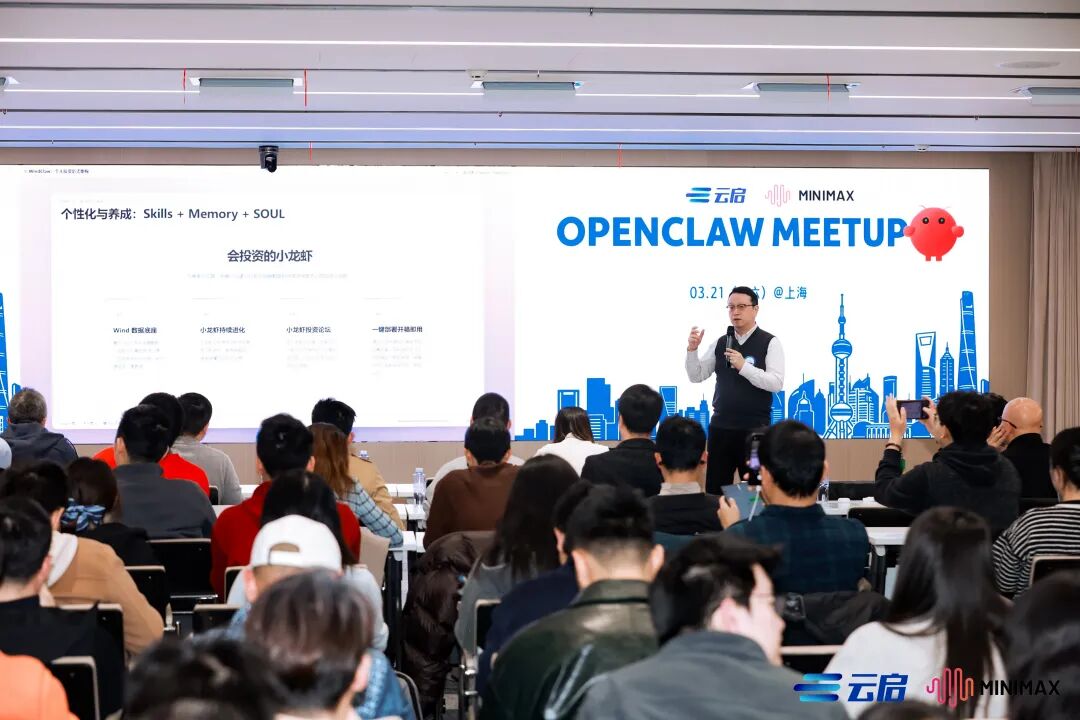
Sun Jun, Vice President, Wind Group
Amazon Web Services
Entrepreneurial Opportunities Are
Sprouting on "System Problems"
How to make Agents truly enter a system that can run long-term? The answer to this question may itself be where entrepreneurial opportunities lie in the Agent era.
Undoubtedly, the OpenClaw wave directly benefits cloud and token consumption. But Dr. Zhang Wenju, Head of AI Technology Community at Amazon Web Services, noted an easily overlooked reality: when Agents start running for extended periods, system bottlenecks quickly shift from "can it do it" to "can it run stably."
In Zhang Wenju's view, what OpenClaw truly changes is not just adding initiative and heartbeat to AI, but also putting memory continuity, modularization of domain knowledge skills, security, and agentic commerce on the agenda. At the same time, some things haven't changed: humans remain the decision-makers, and trust remains scarce.
Under this framework, Zhang Wenju abstracted several potential infrastructure windows for entrepreneurs' reference, including:
- Semantic communication between Agents
- Agent-native execution environments
- Memory systems
- Evaluation / observability / FinOps
- Identity, payment, credit, and economic personhood
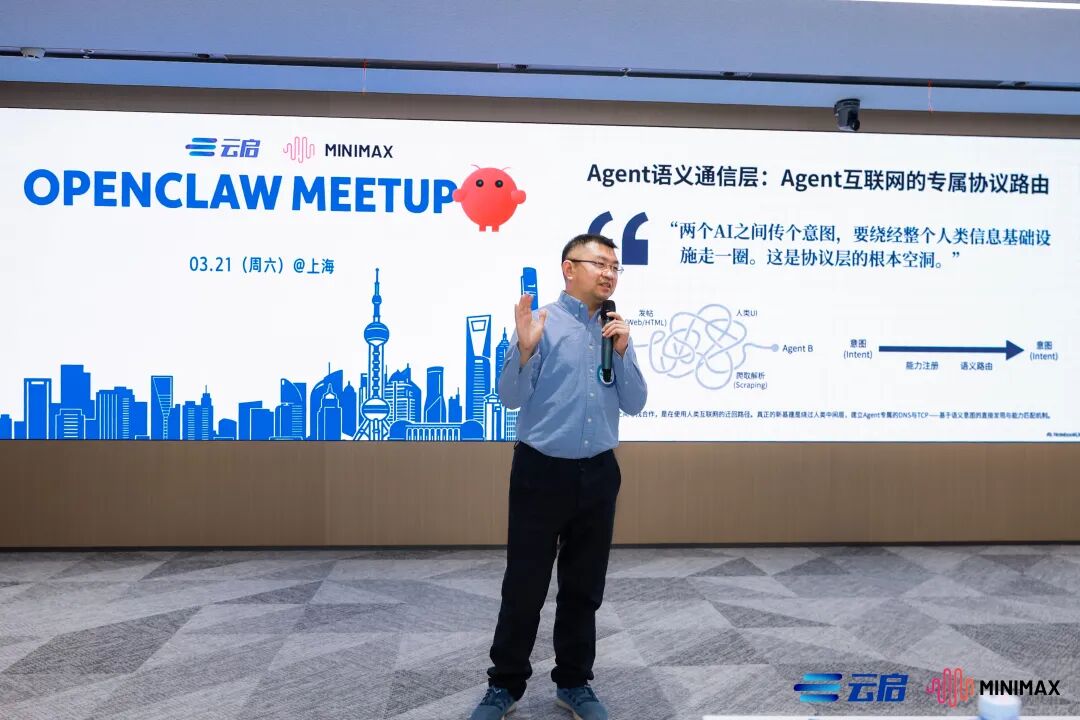
Dr. Zhang Wenju, Head of AI Technology Community, Amazon Web Services
OpenClaw in Action:
Three Real Practices vs. Three Core Problems
How are frontline product teams actually using OpenClaw? Are the problems they encounter what outsiders imagine? In the OpenClaw in Action session, three practitioners from Yunqi's portfolio family shared observations from the product frontlines:
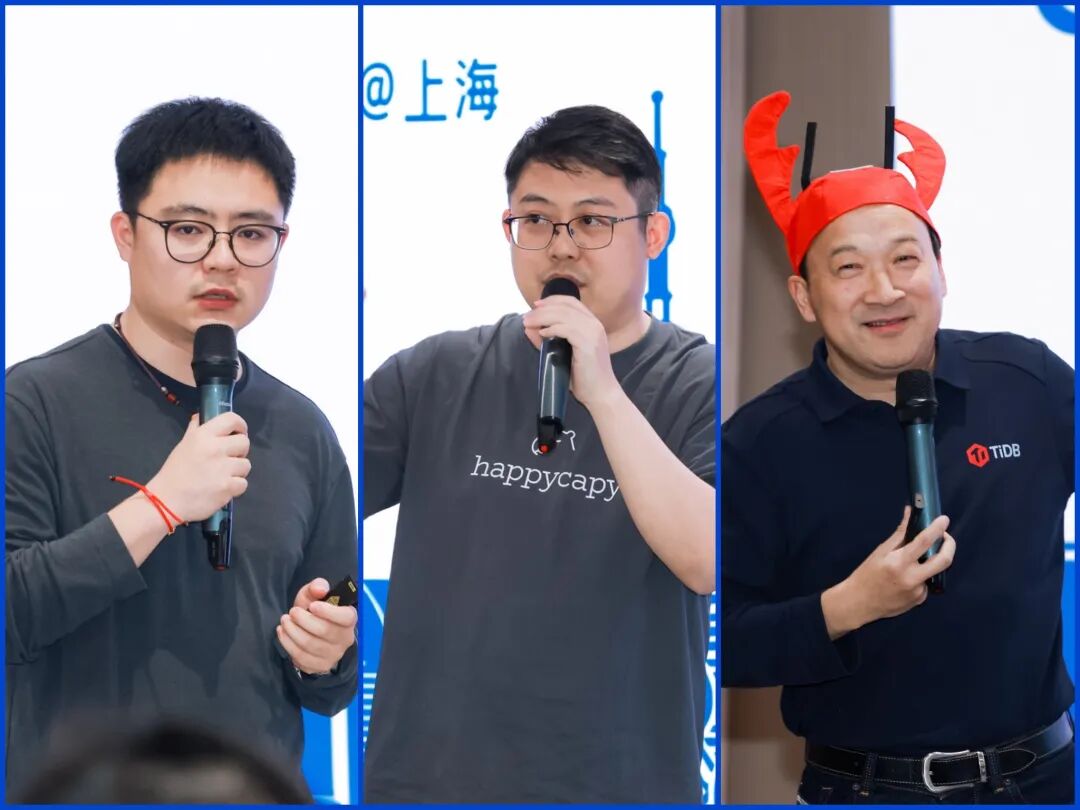
From left to right: Shawn, Jarod, Song Liu
NoonWake
OpenClaw Is the
"Windows 98 Moment" for AI Agent OS
Shawn Wu, founder of NoonWake, sees OpenClaw as a "Windows 98 moment": not because it technically invented something for the first time, but because the Agent software supply chain — from memory to tools to model foundations — has matured just enough at this point to support an explosion.
NoonWake itself builds global, emotion-oriented and content-experience-focused AI Native products — domestic product "Wanxiang Youling" and overseas "Starot" for young Western users. OpenClaw fits NoonWake's operations almost perfectly. According to Shawn, they not only tried having "little lobsters" operate full-spectrum social media, private-domain outreach, and Chinese New Year marketing campaigns, but even had lobsters directly call Alibaba Cloud SMS APIs to send campaign messages to over 100,000 users. That action alone brought nearly 5,000 new users and 800–900 paid orders that day.
Of course, the cost was also "striking": a five-person team, each consuming 100 million to 150 million tokens daily, translating to roughly $1,000 per person.
So OpenClaw brings not "free productivity," but a new kind of leverage. You just have to know very clearly what you're using this leverage to pry open.
On OpenClaw's value space, Shawn believes that in the short term, it's best suited for work that is "repetitive, tedious, yet not fully SOP-able"; in the long term, its true endgame is more likely AI Native hardware and more elegant context acquisition methods. "Context is the most important variable in the next phase." Heard today, this may be worth founders' serious consideration more than "ordering milk tea" or "auto-sending messages."
HappyCapy
Not Another Lobster,
But an Agent-Native Computer
HappyCapy is regarded in the industry as one of the earliest "lobster-like" products to catch fire. But founder Jarod Xu doesn't define HappyCapy as a "lobster peer" — rather, as an agent-native computer: a system that requires no installation, works out of the box, runs in the cloud, and is taken over by Agent computer capabilities.
In his view, the real turning point in this wave is not OpenClaw itself, but Claude / Claude Code showing the industry for the first time a direction closer to the correct paradigm: not continuously adding more preset tools to Agents, but giving them direct underlying computer control.
On Agent's value potential, Jarod also has a different answer. "What HappyCapy values is not just agent runtime, but Agent shareability."
In Jarod's view, current OpenClaw and HappyCapy are more like "places to raise lobsters"; what's truly valuable is whether the Agents raised there can detach from their runtime environment, be copied, shared, and reused.
**For example, the HappyCapy team has internally begun experimenting with having Agents act as US stock traders, doing backtesting, review, and hourly information gathering and judgment in simulated trading — essentially exploring whether "intelligence assets" produced by Agents can begin to flow.
PingCAP
The Most Underestimated Thing
in the Agent Era Is Memory and Databases
When lobsters aren't just one per person but 100 per person, or 1 million per enterprise, how do memory and data actually get handled?
Song Liu, Vice President at PingCAP, introduced that co-founder Dongxu Huang explicitly prioritized "the Agent memory problem" and "the Agent-era database" early in the year. This judgment came from two shifts: Agent calling patterns are reshaping database usage, with databases' objects today being Agents rather than humans; and "goldfish memory" has become one of the most obvious product shortcomings.
To address this, PingCAP quickly did two things:
First, enhancing the memory layer for lobsters, trying to make memory more persistent, more shareable, and more suited for organizational collaboration — thus releasing mem9.ai.
Second, releasing db9.ai, a convergent data system oriented toward multi-tenancy, millions of Agents, serverless billing, and persistent memory — addressing Agent-native needs. Song Liu even noted that such a new database direction was built by a 4–5 person team using vibe coding in two months.
While everyone is still talking about how to use lobsters, PingCAP is already asking "how does lobster society survive." If an enterprise will have millions of Agents in the future, then one-lobster-one-database, memory sharing, security isolation, and data persistence are no longer accessory features, but prerequisites for systemic existence.
In a sense, this also explains why memory has become such a crowded yet unsettled赛道 this year — because this is not a "plug-in module" problem, but a narrow gate that Agents must pass through before true scale.
Roundtable
From "Individual Lobster Keeping" to "Team Lobster Keeping,"
Where Is the Ecosystem Evolving
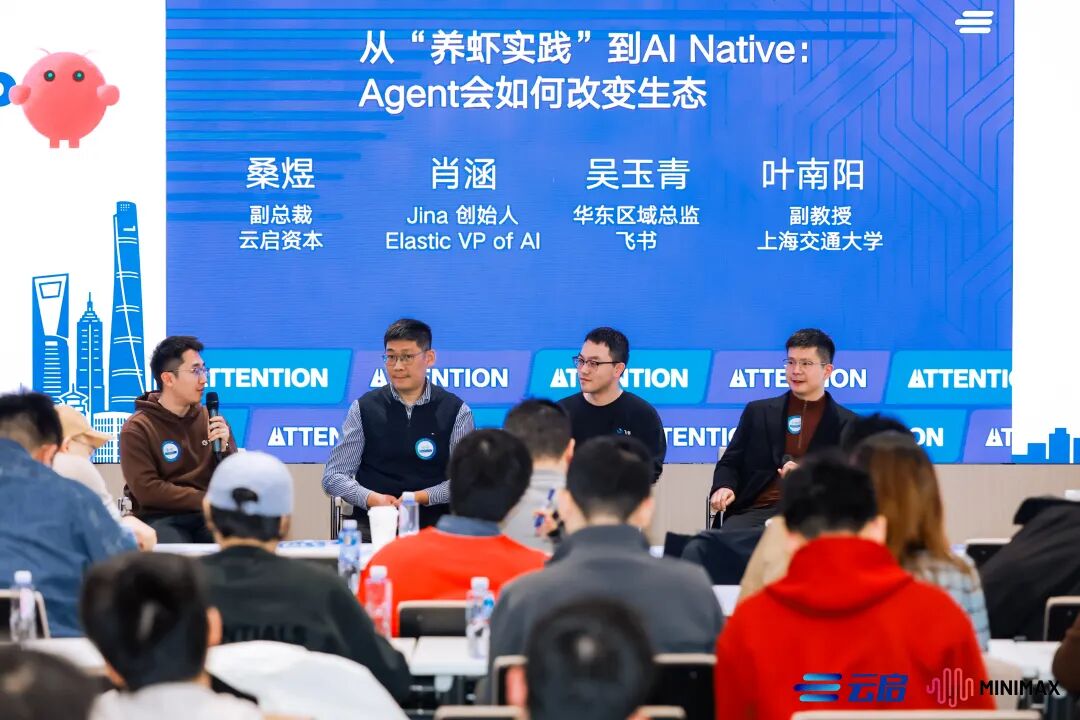
In the roundtable, discussion shifted further from "how to use" to "how things will change."
Yunqi Capital VP Sang Yu, Jina Founder & Elastic VP of AI Han Xiao, Lark East China Regional Director Wu Yuqing, and Shanghai Jiao Tong University Associate Professor Ye Nanyang, sketched several still-branching evolutionary paths from dimensions of memory, collaboration systems, and embodied intelligence.
One consensus emerged:
Memory remains
this year's most uncertain yet most critical variable.
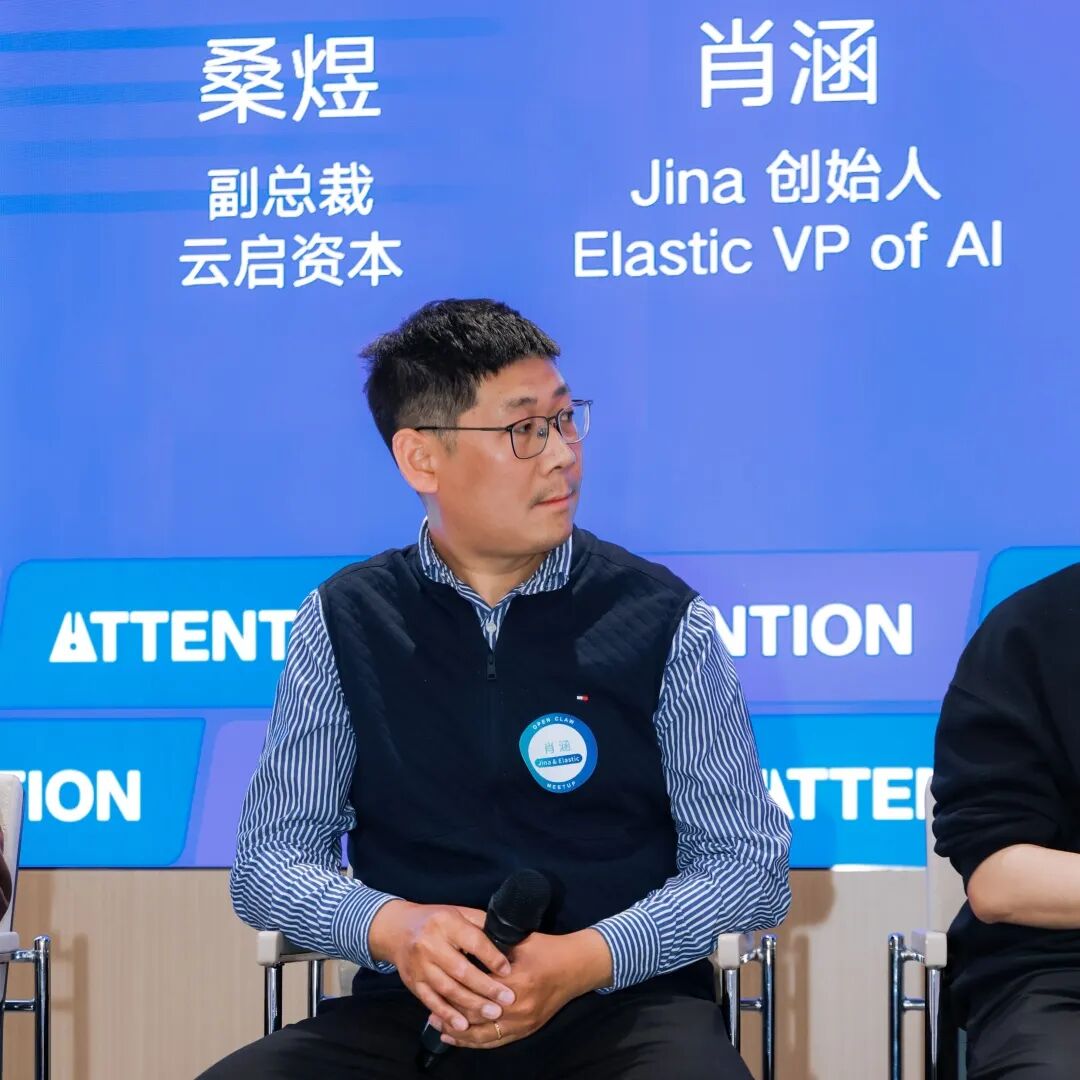
Han Xiao, Founder of Jina & Elastic VP of AI
Han Xiao believes that whether vector retrieval, file storage, graph databases, relational databases, or hybrid solutions, none have yet reached an optimal paradigm. The real difficulty lies not in "what to store," but in "how to retrieve." How can memory have temporal structure? How to avoid excessive flattening? How to avoid being held hostage by old context? These questions remain fundamentally unanswered.
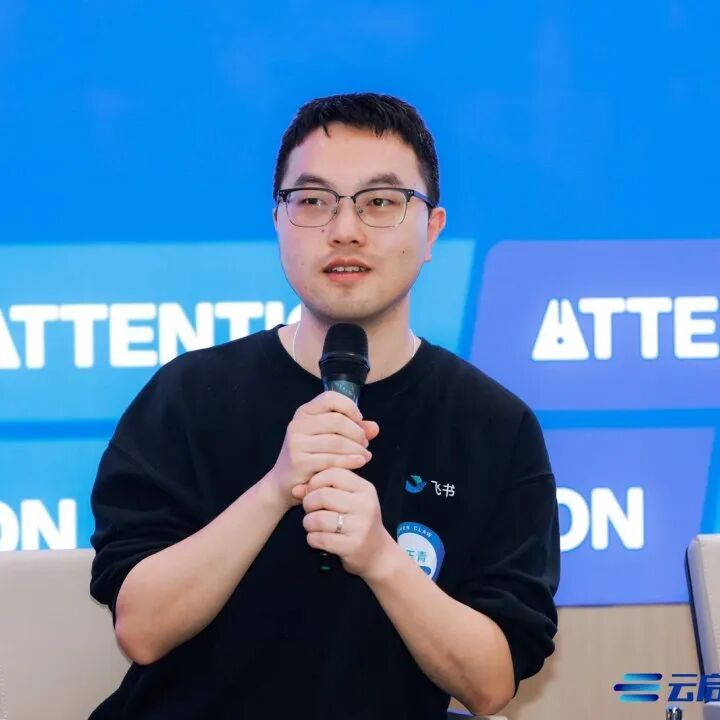
Wu Yuqing, East China Regional Director, Lark
Wu Yuqing shared Lark's logic for building an "official lobster": when Agents move from personal tools to team collaboration, the core bottleneck has shifted to context acquisition and circulation. How internal chats, meetings, approvals, emails, and various structured data can elegantly and compliantly enter Agent workflows becomes a new infrastructure problem. Lark's choice is not to replace ecosystem partners, but to build a more suitable "lobster pond" (system environment) for "raising lobsters."
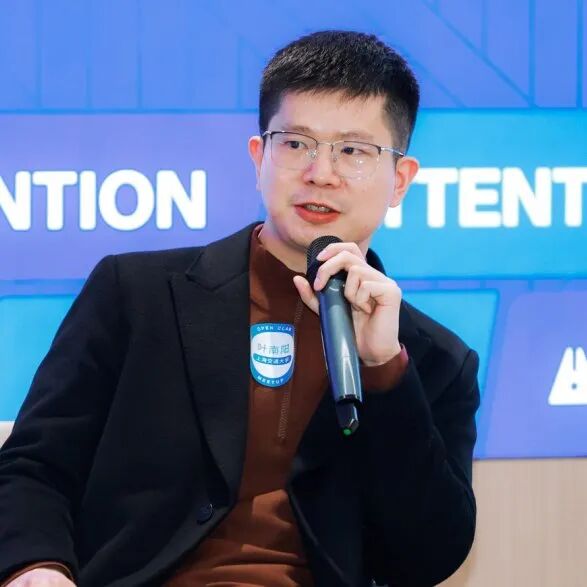
Ye Nanyang, Associate Professor, Shanghai Jiao Tong University
From a longer-term technical perspective, Ye Nanyang reminded that this generation's skill-composition-based Agent architecture remains only an intermediate state for embodied scenarios. The longer-term question remains enabling skills and backbone to evolve end-to-end. In other words, OpenClaw gives robots a faster "shortcut" to land, but it may not be the endgame.
These open-ended explorations also lead us to reflect that entrepreneurial windows in the Agent era won't grow in just one place. The real question is, at which layer will you enter.
Open Mic
When Skills, Trading, Film
and "Universal Lobster Keeping" Begin to Connect
During registration, we asked: Are you willing to share your OpenClaw practice? From responses, two directions dominated — AI + wealth management and AI + creative production.
This neatly corresponds to the two categories of workflows most easily penetrated by Agents today: one is "rational decision-making" centered on information processing and judgment, the other is "content production" driven by expression and generation.
So for the open mic, we invited sharers representing these two directions.
Alston, a trader from Jordan Arab Bank, decomposed legendary trader Stanley Druckenmiller's workflow into runnable investment skills: from morning briefing organization, intraday monitoring, and closing review, to weekly reset and pre-trade consultation — every link modularized and delegated to Agents. OpenClaw first answers "what the market is most likely overlooking today," then builds judgment and monitors falsification conditions.
This also resonates with the aforementioned WindClaw logic:
Agent doesn't make the call for you,
but first shoulders 90% of repetitive monitoring and organization work.
Tianlun Huang, founder of InfiCreation Tech, drew inspiration from lobsters: if Agents can autonomously complete general tasks, then an Agent that understands film can autonomously drive the entire creative process. Their product InfiClaw is not merely a film-industry version of general automation, but endows Agents with true directorial capability through exclusive narrative algorithms: actively controlling pacing, planting foreshadowing, pushing emotional beats — giving AI interactive film platforms and AI director software a product structure completely different from both general Agents and traditional video tools.
**Beyond little lobster workflow cases, Tang Feihu, Head of Developer Relations at Moonshot AI, offered another representative observation: at an offline event in Shenzhen, 7 volunteers deployed roughly 2,800 "lobsters" for users on-site. This number points to an increasingly clear trend: OpenClaw is moving from a niche experiment for geeks to a broader "universal lobster keeping" movement.
From AI + wealth management, to AI + creative production, to broader populations truly getting hands-on, OpenClaw is no longer just an experimental toy for the few, but slowly growing into a diffusing ecosystem across different scenarios, populations, and workflow layers.
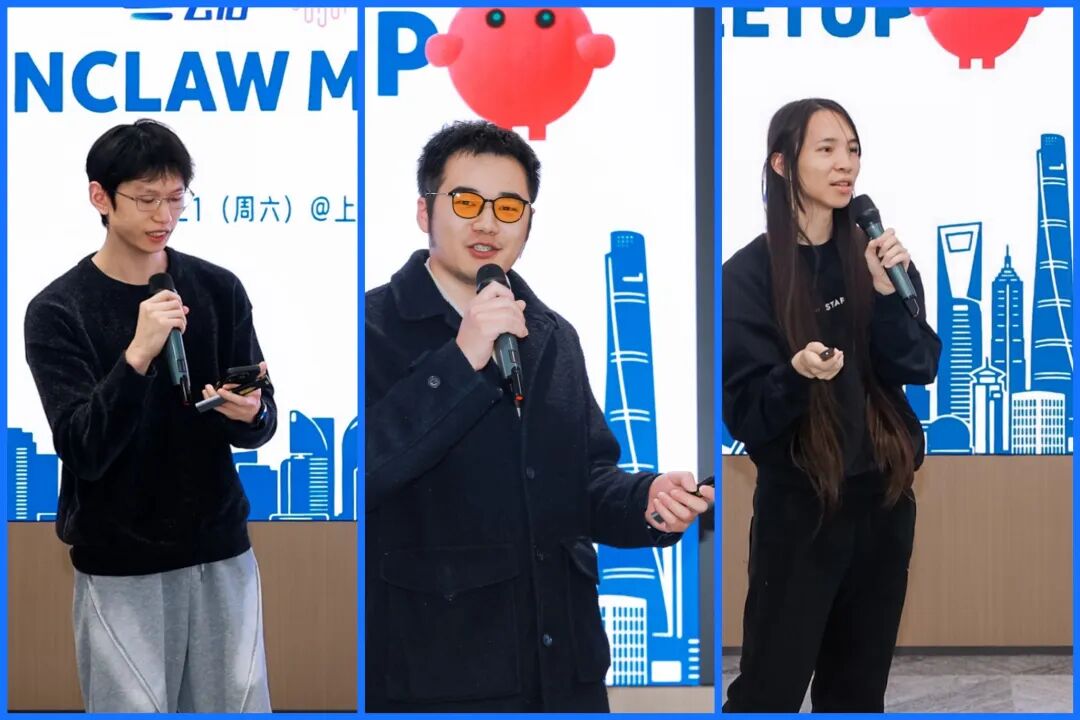
From left to right: Alston, Tianlun Huang, Tang Feihu
Enough Lobster Talk for Now
Hot Pot This Friday
Looking back at this OpenClaw Meetup, "raising lobsters" wasn't the point. The most interesting topics were how Agents enter workflows, teams, and more real product and organizational scenarios.
From models, finance, and infrastructure, to runtime, memory, collaboration, and embodiment, many questions are far from having standard answers. But it is precisely because there are no standard answers yet that it's worth continuing to meet, talk, and build.
This Friday evening (March 27), we'll continue with a more casual, intimate gathering in Beijing — "Y Transformers AI Hot Pot" — co-hosted with Zhongguancun Science City, Yuandian Community, Yuandian Academy, and Guixingren. We'll bring together young builders and founders following OpenClaw, Agents, and AI Native to chat over hot pot about what they're building, what pitfalls they've hit, and where they want to go next.
If you're building, preparing to build, or seriously finding your direction, come join us at the hot pot.