Y Transformers' First Gathering: The Real Questions and Real Ambitions on the Minds of Post-'98 AI Founders | Event Recap

Nobody's in a rush to leave.
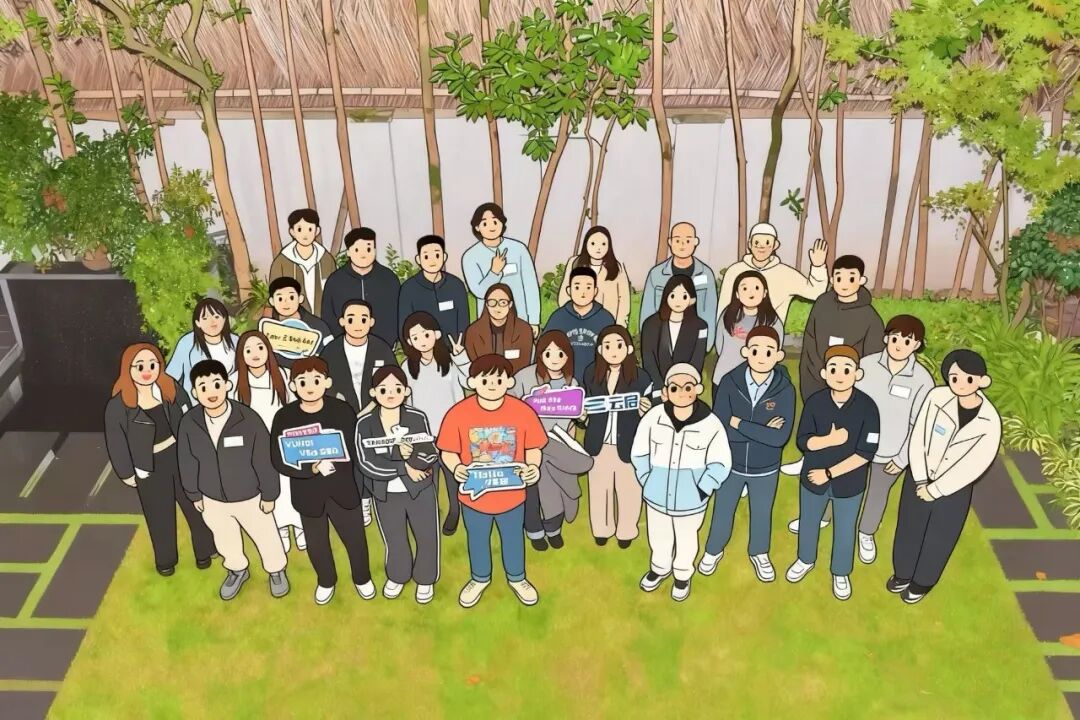
In the Gen AI era, how can young entrepreneurs' innovation and creativity resonate with the rhythm of technological evolution?
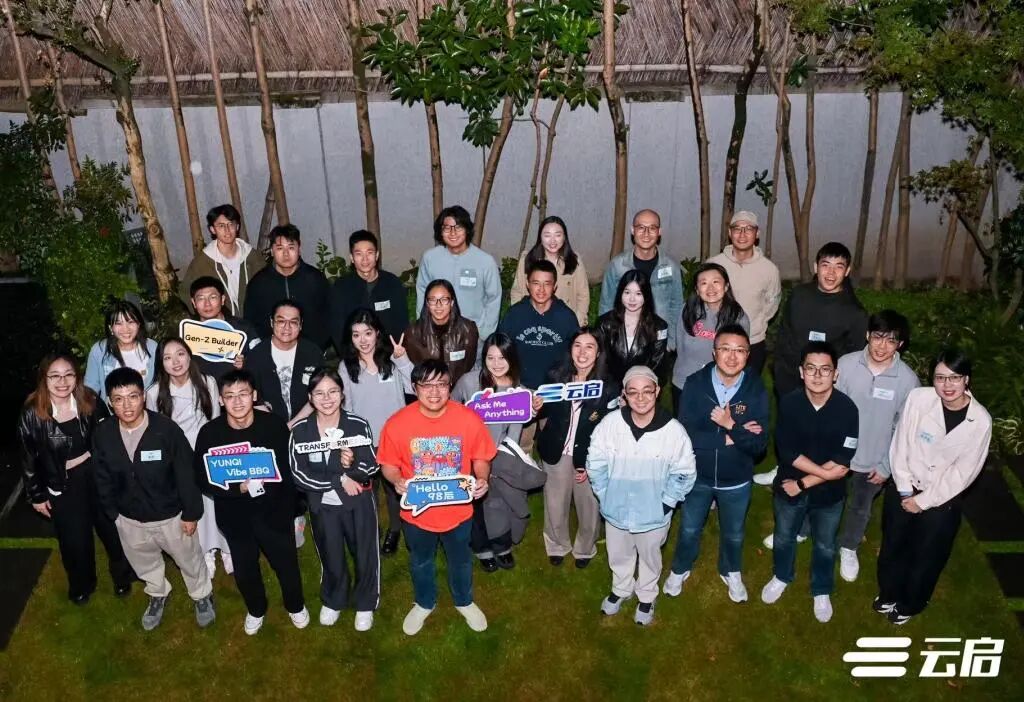
On November 6, over 30 active AI-native founders gathered at Yunqi Courtyard in Shanghai, and fragments of answers emerged through five hours of spirited conversation.
This was the first offline gathering of Yunqi Y Transformers. A month earlier, we had launched this initiative targeting post-98 AI entrepreneurs. Behind nearly 200 creative applications, we wondered: who are these people? And what kind of support do they need on the journey from zero to one?
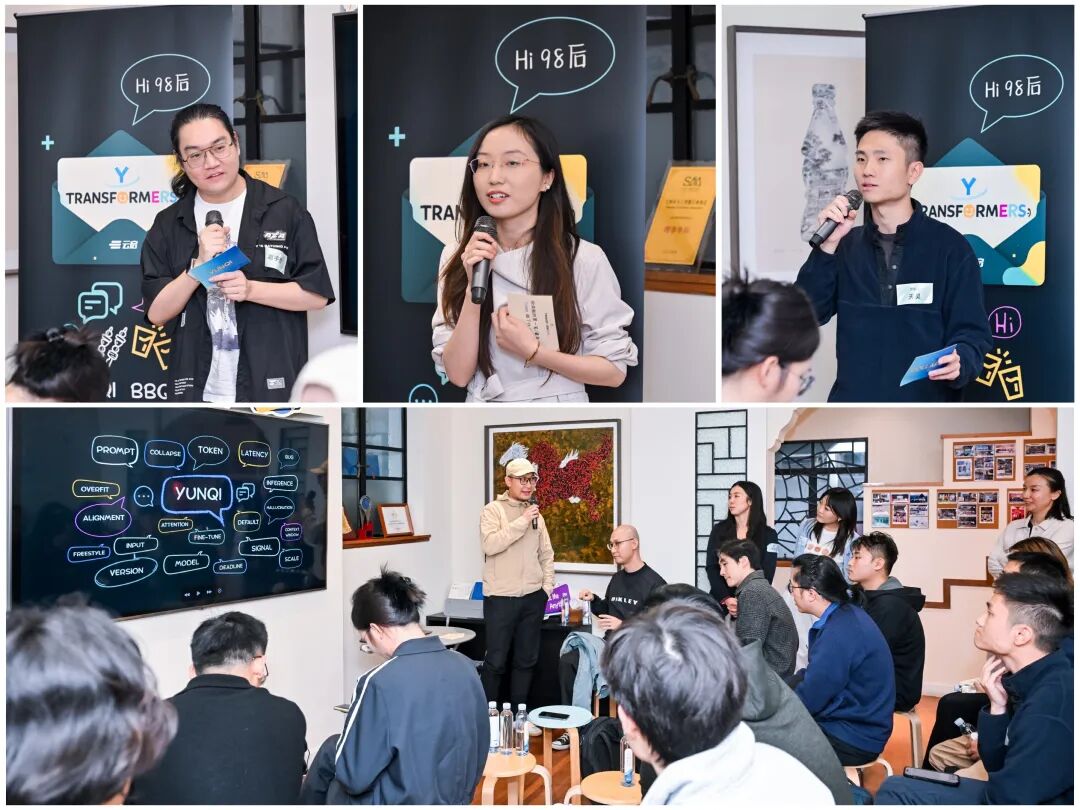
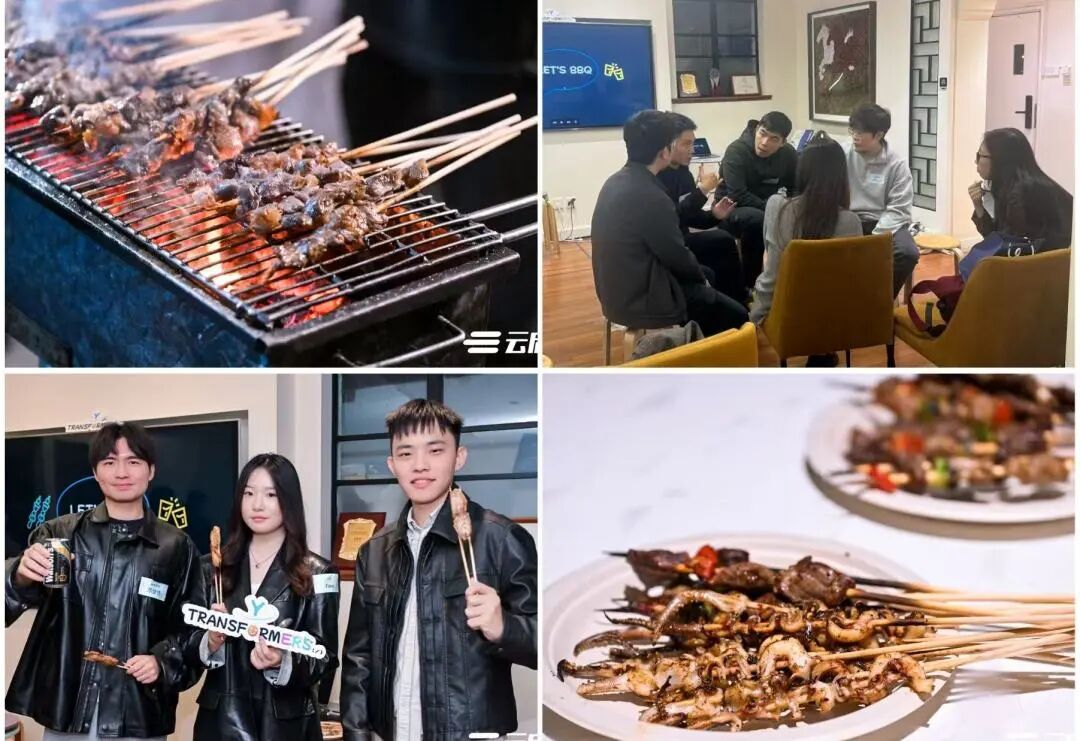
Hence this autumn rain-soaked reunion. Together with Y Transformers ecosystem partners Amazon Web Services, Shanghai Jiao Tong University Industrial Research Institute, Xiaosu Technology, and S-Create, we opened discussions with AI keywords like "Prompt / Token / Context Window..." And we warmed up the conversation with a Yunqi Courtyard tradition — BBQ.

Why Y Transformers?
"The environment in which each generation grows up shapes their patterns of thinking. And this generation of young entrepreneurs is natively AI Native."
In the opening session, Mao Chengyu, founding partner of Yunqi Capital, shared observations from over two decades in the primary market: every technology wave spawns a new cohort of entrepreneurs, each carrying different generational imprints and facing corresponding challenges, but creativity and execution are the common ingredients of success. The original intention behind launching Y Transformers, he said, is to identify among this generation of young AI entrepreneurs those with the most original thinking and long-term execution capability.
"Team management, product landing, overseas commercialization — none of these real-world challenges become easier just because you're young. Yunqi hopes to use its experience and resources to help make the entrepreneurial path a little smoother," Mao said.
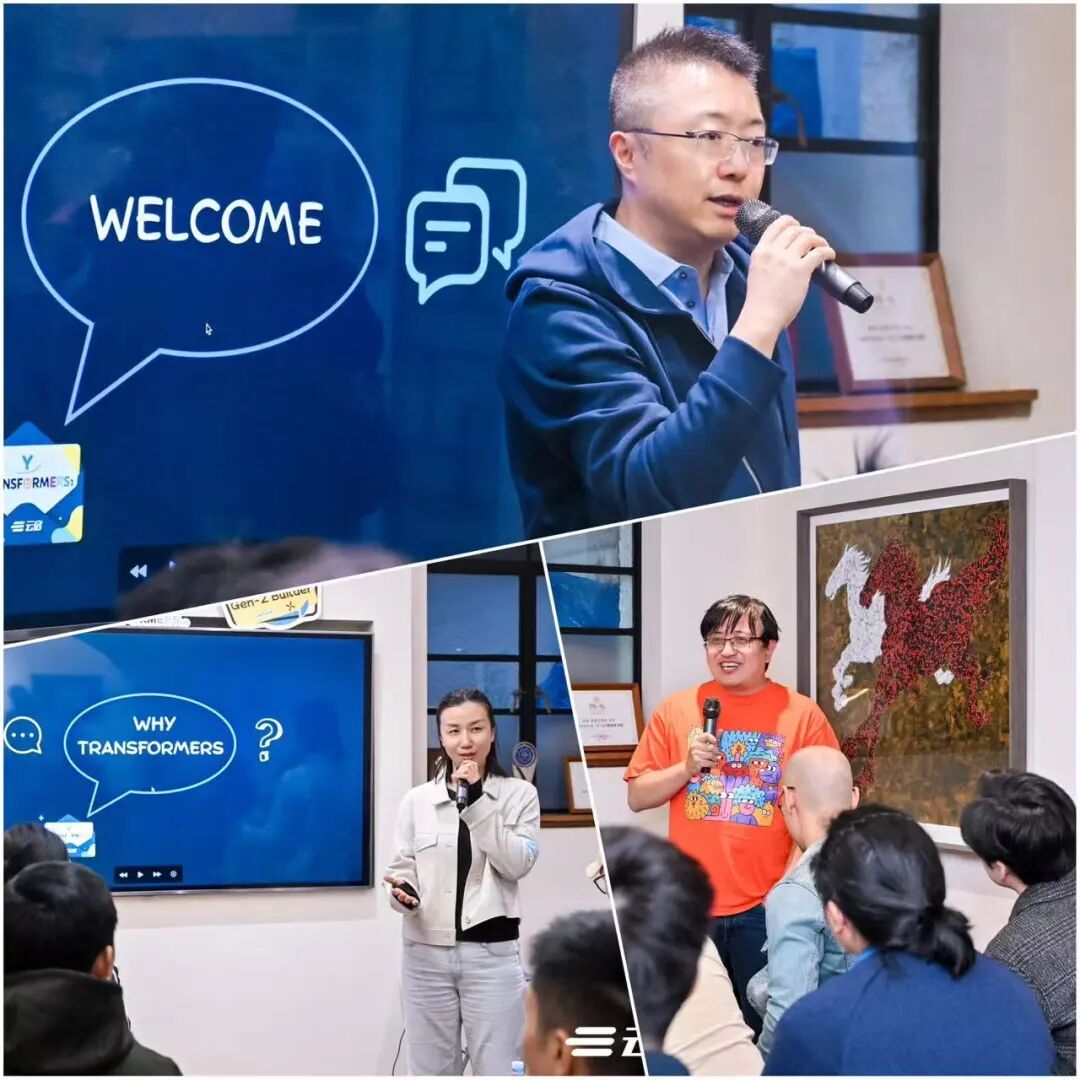
Yunqi Capital partner Chen Yu recalled a small story about writing open-source software in middle school. He joked that if he had had the fundraising awareness that young people have today, he might have incorporated and started talking commercialization long ago.
In Chen's view, a great company is most likely born during a founder's youngest years, because that's when one is more willing to experiment and more able to commit wholeheartedly. "Youth is when you're most creative — fearless, able to throw yourself fully into creating something that might change the world," he said, encouraging those present to create boldly in today's more tolerant environment and embrace infinite possibilities.
Additionally, Linda, managing director at Yunqi Capital, introduced the recruitment status of Y Transformers: nearly 200 applications in the first month, with 80% at pre-Series A funding rounds. The applicant pool proved remarkably diverse — from current students to serial entrepreneurs, from researchers building underlying inference frameworks to designers crafting consumer products and interactive interfaces.
Up Close: What Did We See?
What did you spend your first token on / your largest token expenditure on?
What's your most satisfying / most disastrous prompt?
What's the single input that has inspired your entrepreneurship most recently?
What's a key entrepreneurial judgment you've recently reasoned out?
......
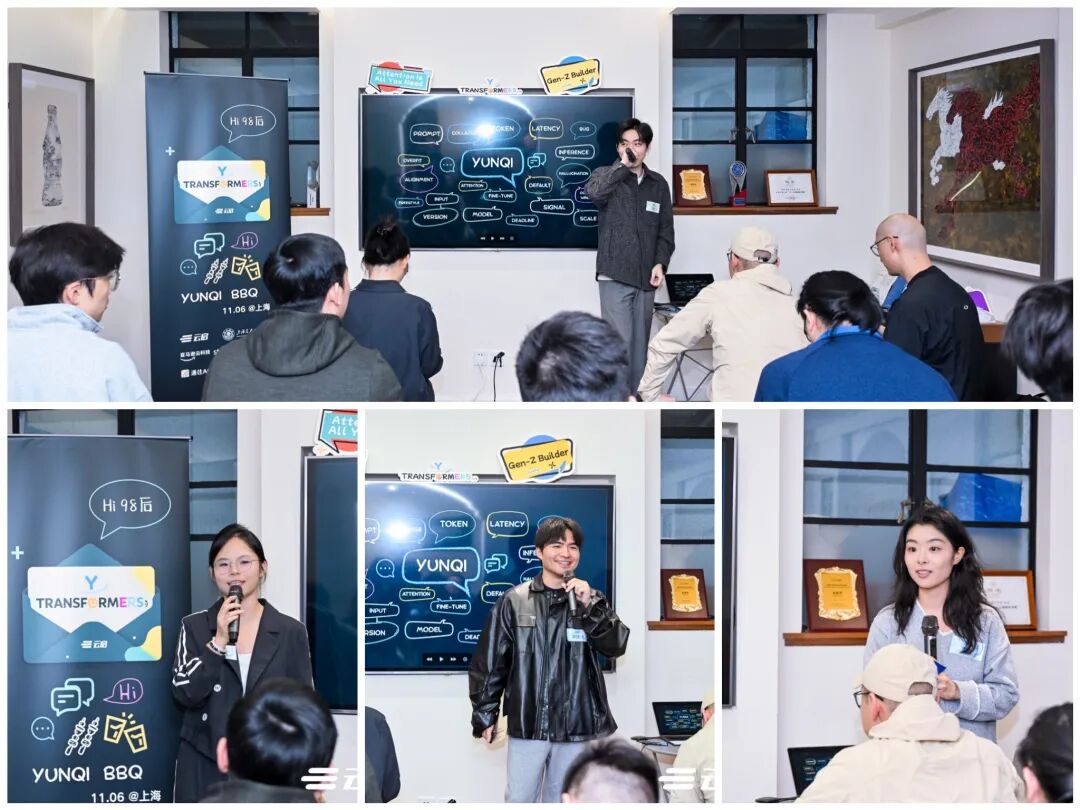
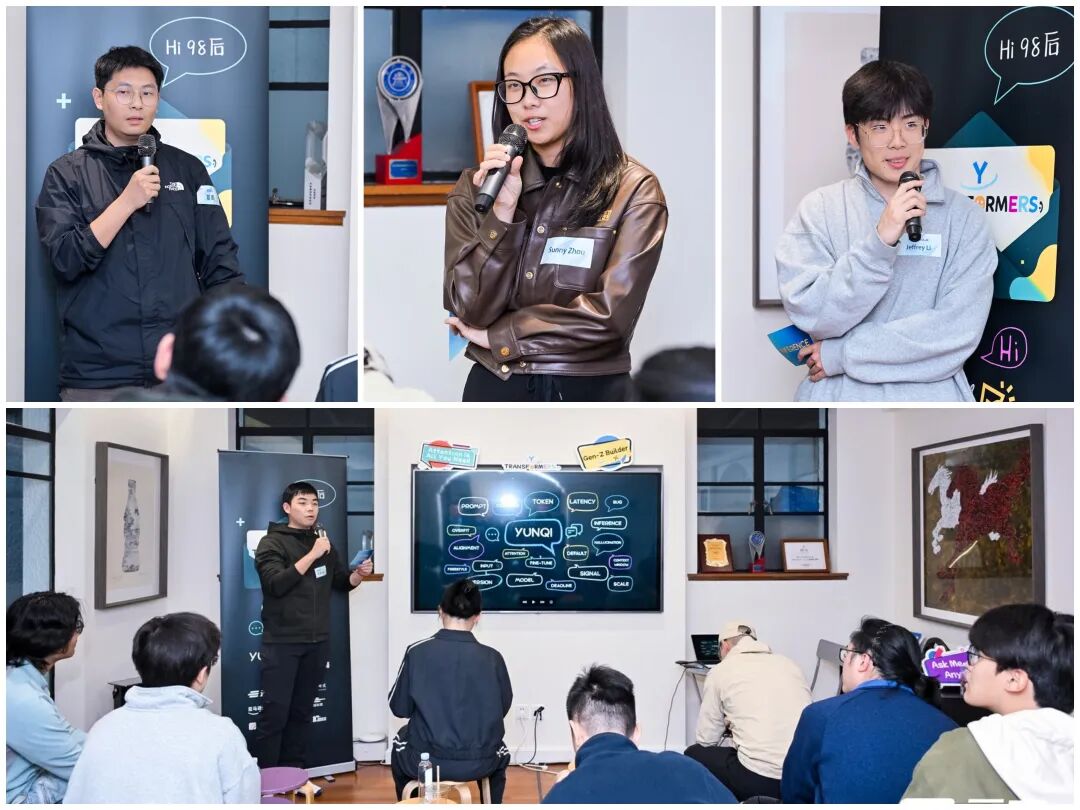
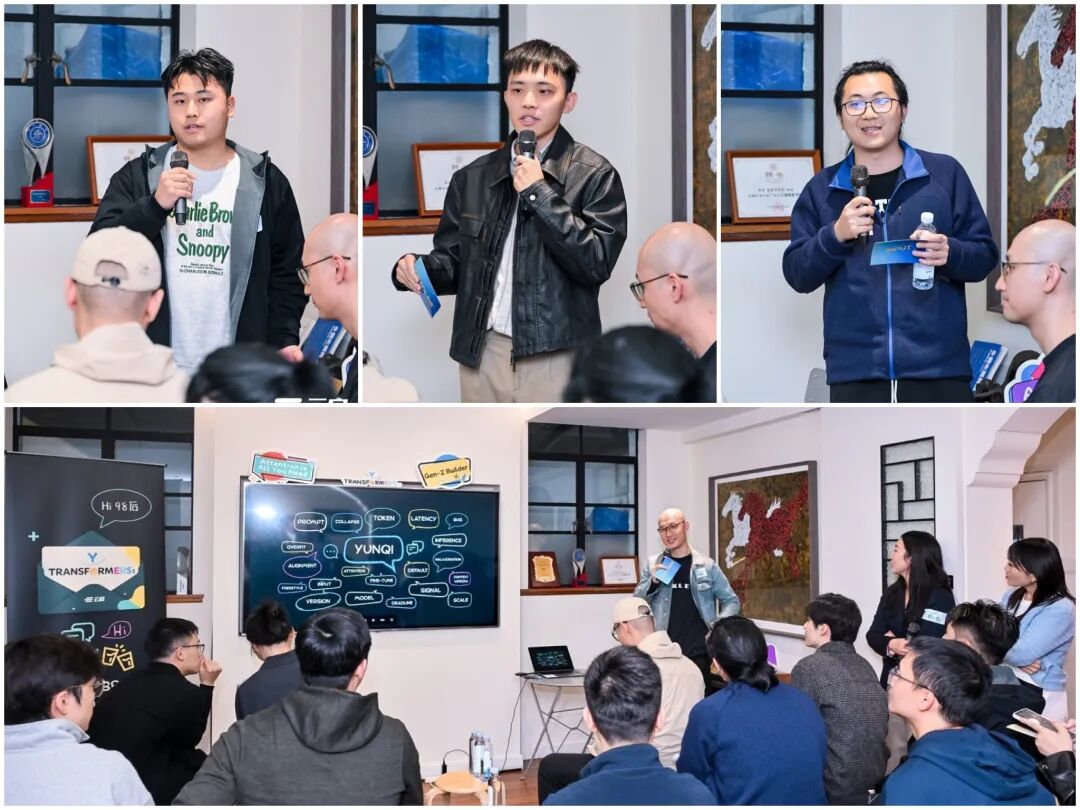
During the Y Transformers sharing session, AI-flavored draw-card Q&A revealed the ingenuity and dilemmas of entrepreneurs spanning content entertainment, travel and culture, marketing, gaming, and AI hardware.
Their creative and executional expressiveness also turned the venue into a remixed version of "I Am a Speaker + The Rap of China." Some launched into impromptu speeches; one recited an original modern poem; a participant who drew "freestyle" turned their entrepreneurial story into an on-the-spot rap.
But more than that, we saw the shared questions this generation of AI entrepreneurs is seeking answers to:
- How do you validate between "I think" and "users actually want"?
- How do you converge model capabilities into a product interface that can be used repeatedly?
- How do you find a balance between growth and narrative that doesn't feel forced?
- When to persist, and when to pivot?

<< Swipe to view next image >>

Amid the rich and varied sharing, participants also exchanged their stage-specific reflections on the entrepreneurial journey. Excerpts below.
AI Marketing Agent Entrepreneur
"Know yourself" is the most important context in my entrepreneurship and life. We're often drawn to newly emerging applications and products, so it's important to regularly recall what I actually want to do — stay true to the original vision, and avoid being dazzled by fancy features.
AI Gaming Entrepreneur
The ideal entrepreneurial model has three elements: a group of genuinely fun people doing something they're deeply interested in; using "unorthodox" methods to build the MVP; and from day one, building in monetization, payment, and engagement-driving mechanisms.
AI Travel & Culture Entrepreneur
Contemporary society faces a crisis of meaning, and the starting point of entrepreneurship is seeking a "renaissance of meaning."
Serial Entrepreneur
When conflicts arise between partners in a founding team, at the philosophical level it really comes down to one word: "yield." Some charging ahead, some yielding — that's how teams go further.
University Junior
Keep the right to make value judgments firmly in your own hands. Only I can price myself; only I can judge whether what I'm doing is good or bad.
AI Productivity Tool Entrepreneur
Being CEO of a startup is far harder than imagined. A particularly inspiring input was simulating the position of a CEO at a major internet company, reasoning out the key elements and strategies needed in entrepreneurship through specific "CEO exercises."
Post-98 Entrepreneur Who Graduated College at 19
To "scale" a project, you first scale your own cognition — clarify user needs and value, then determine what supply you can provide on top of those needs and values. Otherwise things will definitely go wrong.
Ask Me Anything: Yunqi Investors Respond
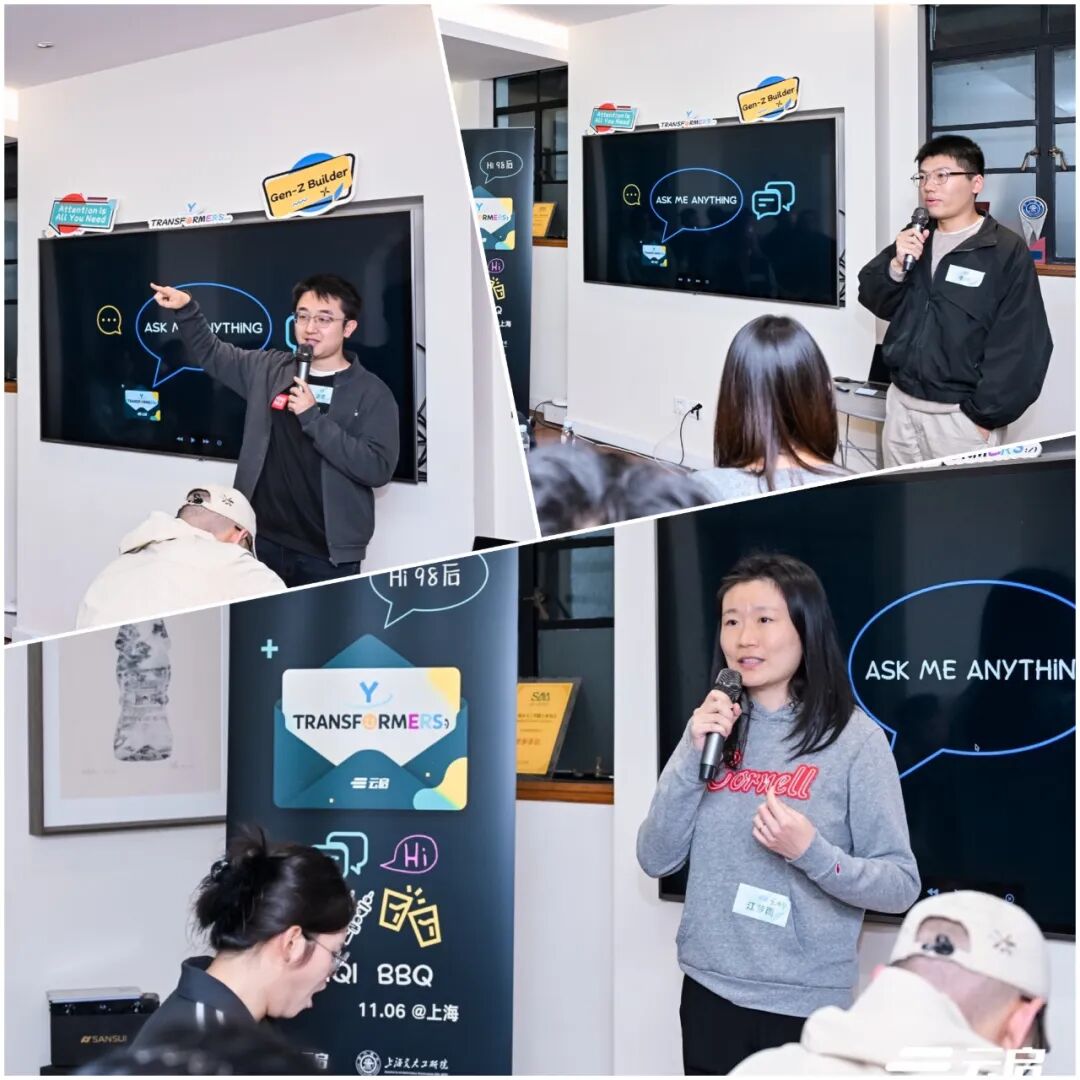
Sincere dialogue with changemakers is an important principle we uphold at Y Transformers. Beyond the entrepreneurs' sharing, we also handed the power of questioning to them, inviting select post-90s investors from Yunqi who participated in Y Transformers to face an "Ask Me Anything" grilling.
Selected excerpts:
Q1 What do you most value when investing in early-stage projects?
Personally, founder characteristics account for 70%. That includes how they understand business, their growth experiences, their convictions. The remaining 30% is direction and market space. Tolerance for trial and error in direction can be high, but the overarching business logic and direction need to be internally consistent.
Q2 Lessons learned from failed investments?
Two cases: one where the product lacked real-world research, and another where market selection wasn't focused enough.
Q3 Advice for small founding teams? Especially on securing overseas funding?
AI has lowered the cost of entrepreneurship while intensifying competition. For founders, strictly disciplining yourself to spend time understanding users and building unique cognition and insight that differs from others is essential for going the distance.
Regarding fundraising: in overseas cultures that "encourage everyone to be brave," drop your reservations and confidently reach out to investors through various means — cold calls, cold emails, Twitter, and so on.
Q4
How do you view AI's impact on entrepreneurship and investment paradigms,
and the new opportunities for young people?
AI has significantly lowered the barrier to entrepreneurship, giving small companies a shot at building big products — this provides entrepreneurs with more opportunities to experiment. Young entrepreneurs born with digital products inherently understand digital-native users better, which is their advantage.
But it's also a greater challenge for VCs, because good niche segments may be occupied by small companies. How to discover these small companies early becomes crucial.
Ecosystem Partners' Acceleration Energy
As ecosystem partners who co-launched Y Transformers and are building tangible "startup resource packages" — Amazon Web Services, Shanghai Jiao Tong University Industrial Research Institute, Xiaosu Technology, and S-Create — they brought their observations and support recommendations. From compute power and incubation resources to community connections, they are providing real momentum for this cohort of young changemakers.
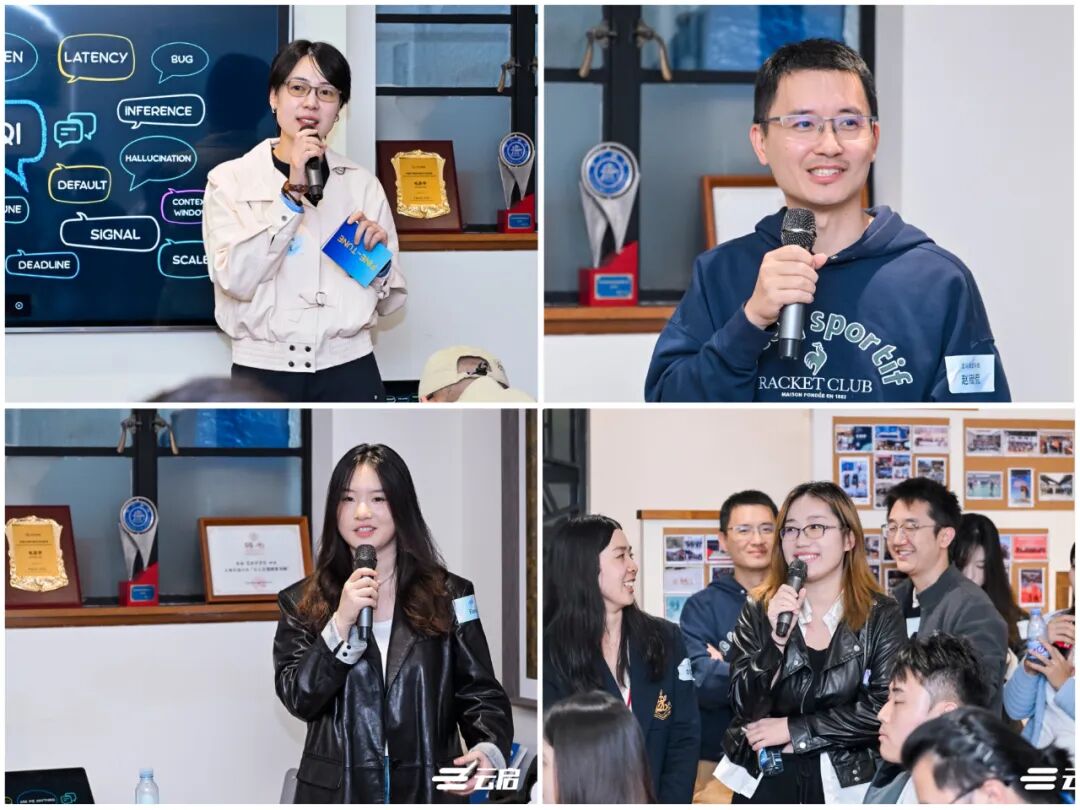
Model efficiency, product iteration, market validation... sparks from the grill rose with the night as discussions about AI entrepreneurship heated up alongside freshly cooked skewers.
<< Swipe to view next image >>

That night at Yunqi Courtyard, no one seemed in a hurry to leave. Perhaps because every conversation, every question, was a step toward some new beginning.
Y Transformers Recruitment Continues
We look forward to meeting more of you who dare to imagine, dare to build, dare to redefine the boundaries of the world.