"Yizao Technology" Creates 3D-Printed Art Installation "Light of Enlightenment Gate" for Xujiahui Library | Yunqi Tech π

Check In at Shanghai's 2023 New Landmarks

"Yunqi Tech π" shares updates from Yunqi Capital's portfolio companies, exploring how cutting-edge technology expands the boundaries of real-world applications and tracking the present and future of tech commercialization. In this edition, "Yunqi Tech π" brings you the latest from Fab-Union Technology.
➤➤➤ Recently, Yunqi Capital — which led Fab-Union Technology's angel round — unveiled the 3D-printed art installation Gate of Light at Xujiahui Library (formerly Xuhui District Library in Shanghai).
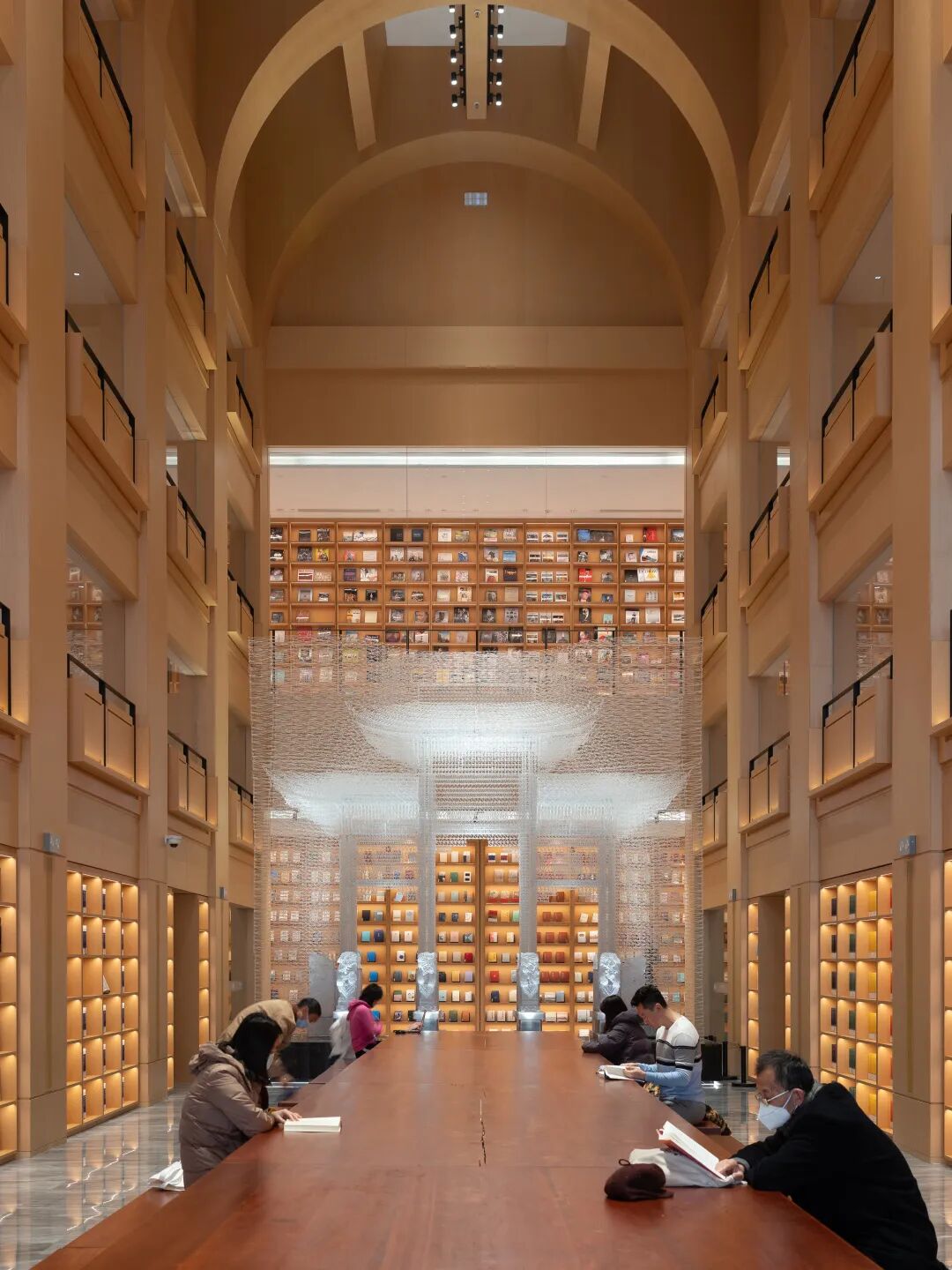
Xujiahui Library © Wang Ke
On New Year's Day 2023, after three years of closure, the Xuhui District Library reopened on the 66th anniversary of its founding under a new name: Xujiahui Library. The relaunch revived memories of Shanghai's distinctive haipai culture.
Xujiahui Library sits at the heart of Xujiahui Source — Shanghai's first open 4A-rated urban tourist district, widely known as the "cradle of haipai culture." The library is envisioned as an open, innovative, and integrative hybrid institution for the all-media era, combining literature access, exhibitions, lectures, art appreciation, and creative retail.
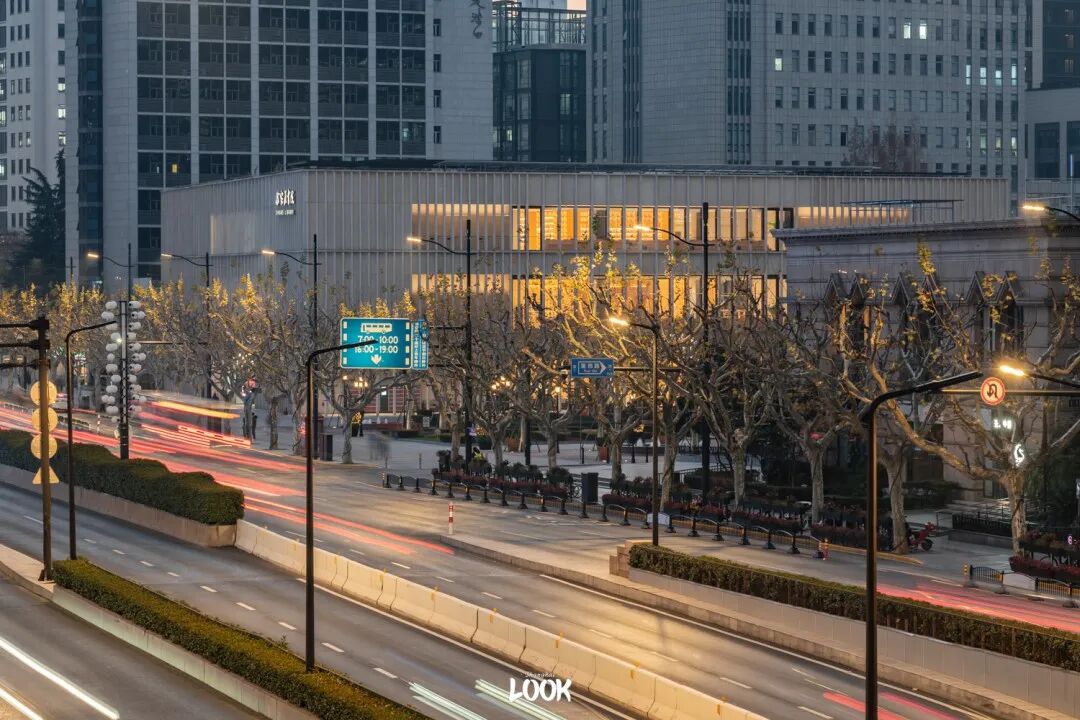
Xujiahui Library © ShanghaiLOOK
Approaching the library, the barriers that once separated people seem to dissolve. Communication between people, between people and space, and between people and the art installation flows more freely — as if a beam of light has warmed everything.
The building was designed by David Chipperfield, the renowned British architect behind the West Bund Museum, while the interior was completed by the team of acclaimed Chinese architect Yu Ting.
Spanning 18,650 square meters across two underground floors and three above-ground levels, the library offers nearly 800 reading seats. The entire facade is wrapped in slender fins; at night, light glows from within, transforming the building into a giant "luminous treasure box."
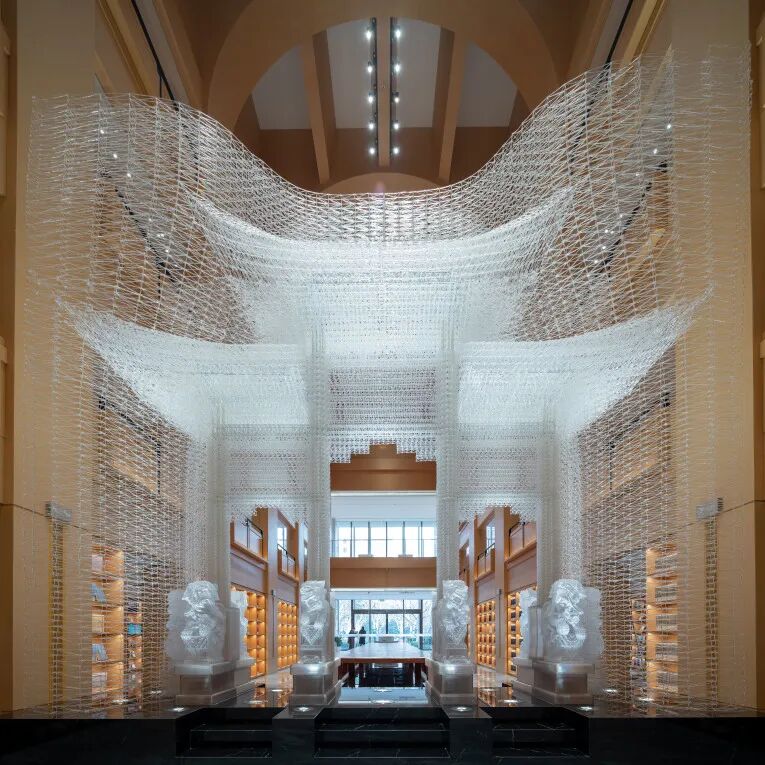
Xujiahui Library © Wang Ke
The atrium adopts a basilica-style design. The ground floor opens directly to the vaulted roof, evoking the grandeur of a classical book repository. The golden "Light Box Spaces" flanking both sides house eight themed collections from floor to ceiling — "Architecture to Read" on one side and "Xuhui Cultural Heritage" on the other.
Standing quietly at the far end of the atrium is Gate of Light, a 3D-printed art installation completed by Fab-Union Technology over fifty days.

Born of Light
The dialogue between tradition and future, the fusion of technology and culture — this is the core theme Gate of Light seeks to express. "Guangqi" (Light's Inception) honors the Ming dynasty scientist Xu Guangqi, while also invoking the literal meaning of the words.
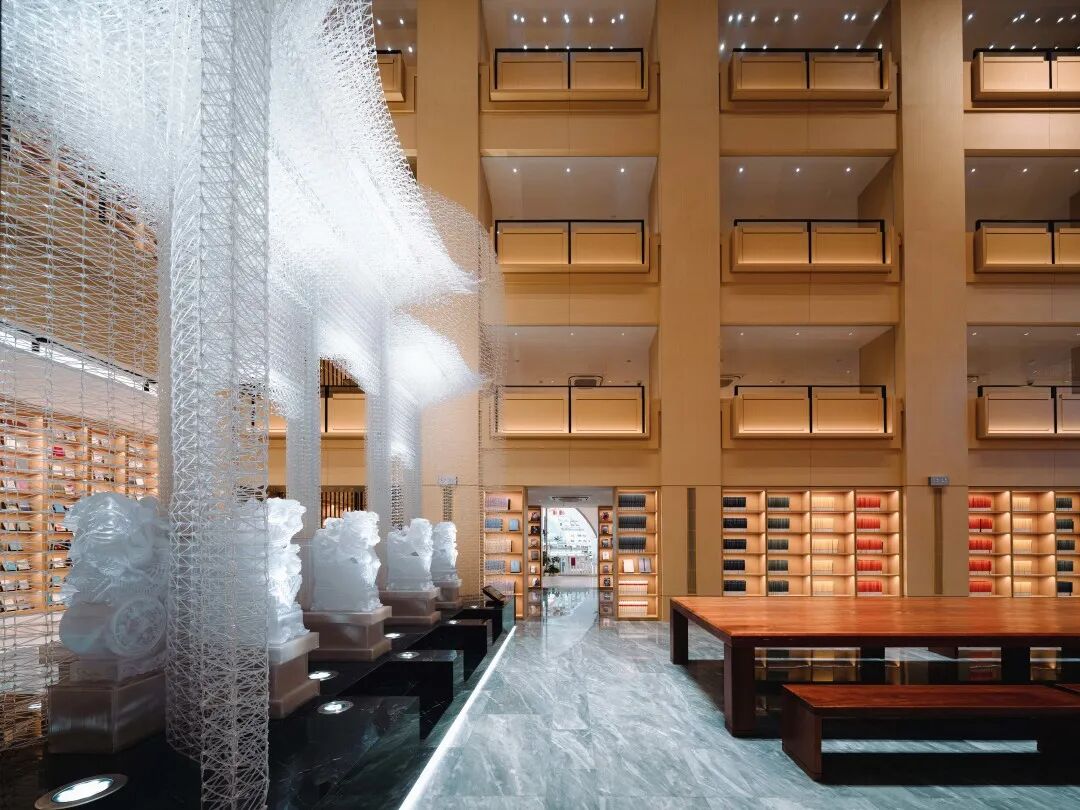
Xujiahui Library © Wang Ke
Gate of Light strives to reinterpret tradition through modern advanced design and construction techniques. Based on the image of the Tushanwan Chinese Archway, the installation offers a contemporary artistic transformation and presents a different kind of modern influence.
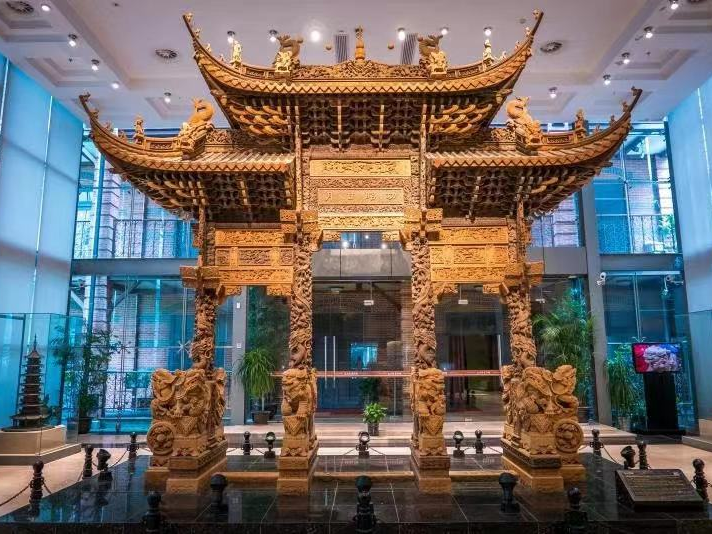
Tushanwan Archway
The design translates the traditional Tushanwan Archway through grid-based abstraction, digitally processing its components through prototype disassembly and cultural parsing — then recreating the archway using new technological methods.
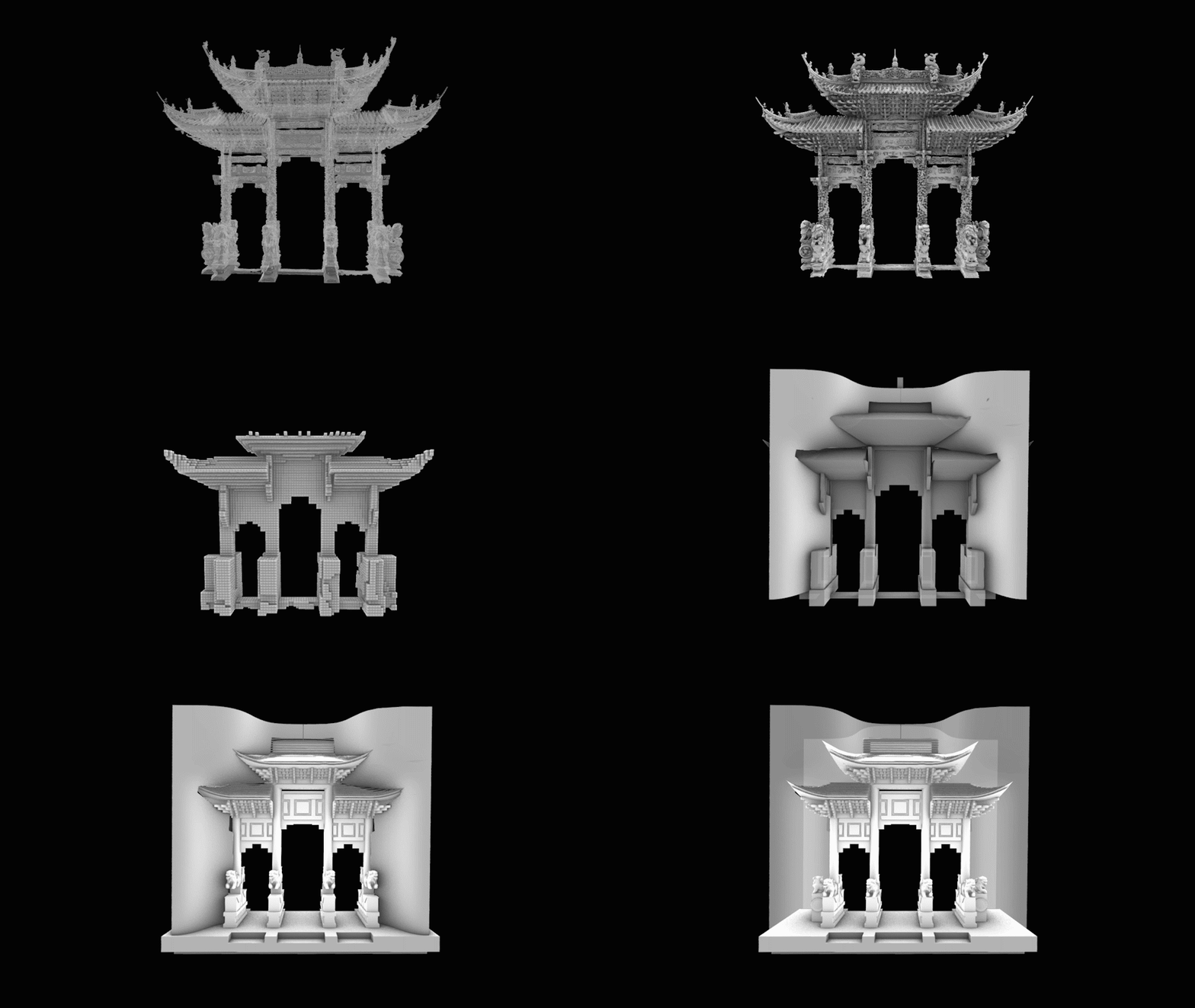
"Gate of Light" Generation Diagram © Fab-Union Technology
On one hand, new digital design tools deconstruct, abstract, and regenerate the archway's form, creating a new grid-based, openwork image. The addition of "cloud wings" lends the overall form a lighter, more translucent quality — a striking contrast to the original Tushanwan Archway's solemn heaviness.
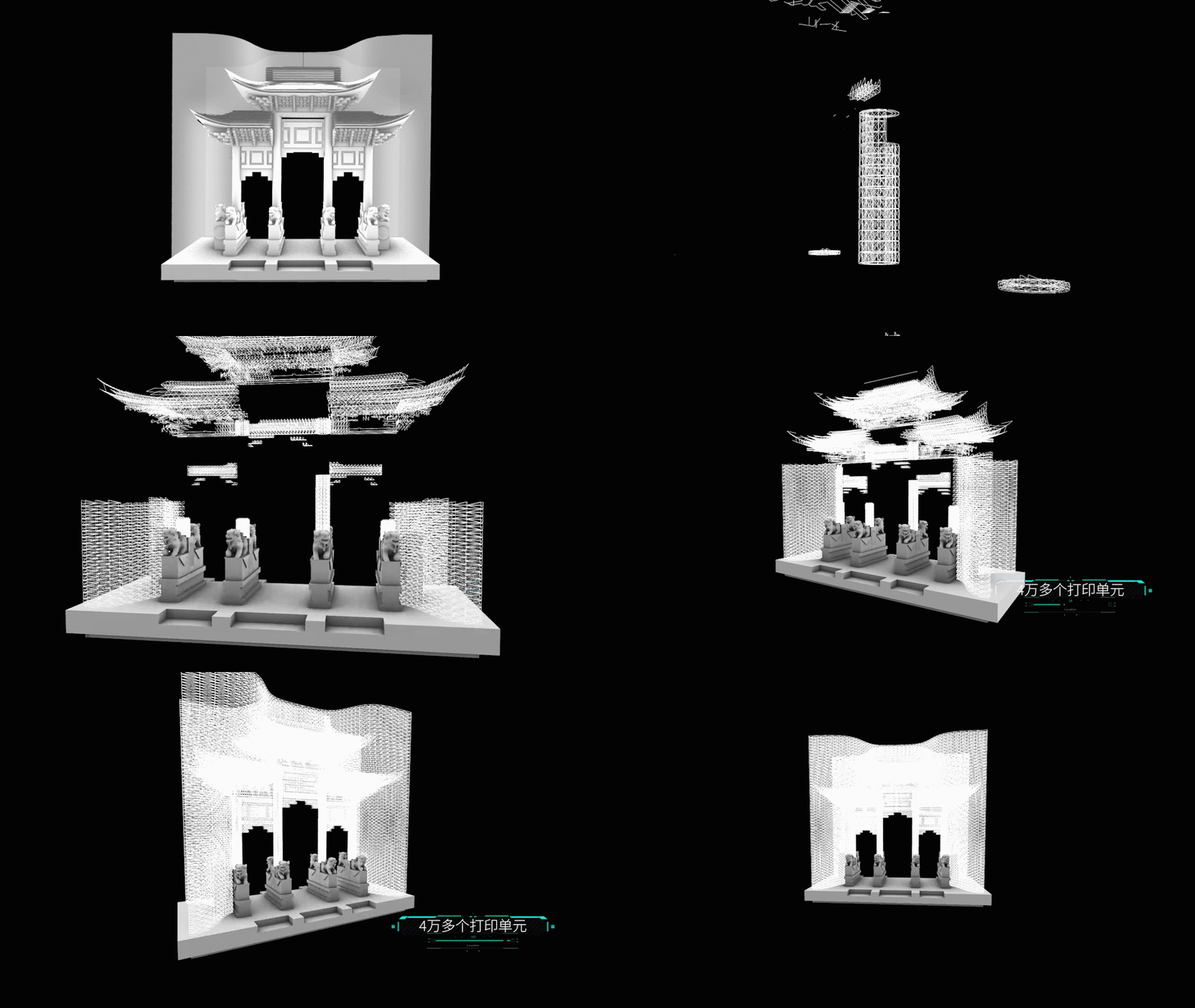
"Gate of Light" Generation Diagram © Fab-Union Technology
On the other hand, the integration of construction robotics and modified-plastic 3D printing gives Gate of Light a new dimension: modern technology channeling traditional craft. Spatial printing technology achieves a faithful reproduction of the grid-based archway, ultimately producing a crystal-clear effect that fills the entire atrium with light.
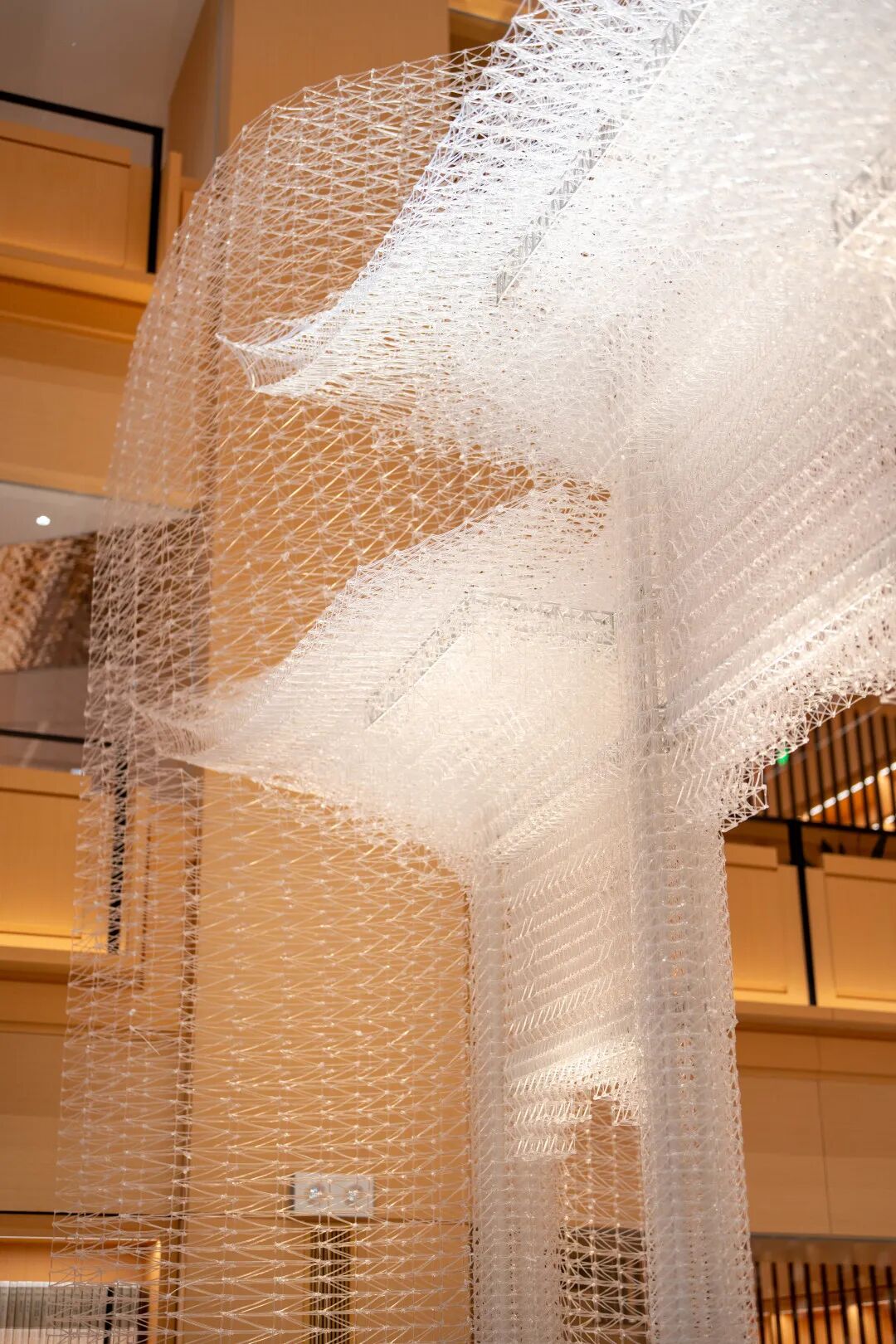
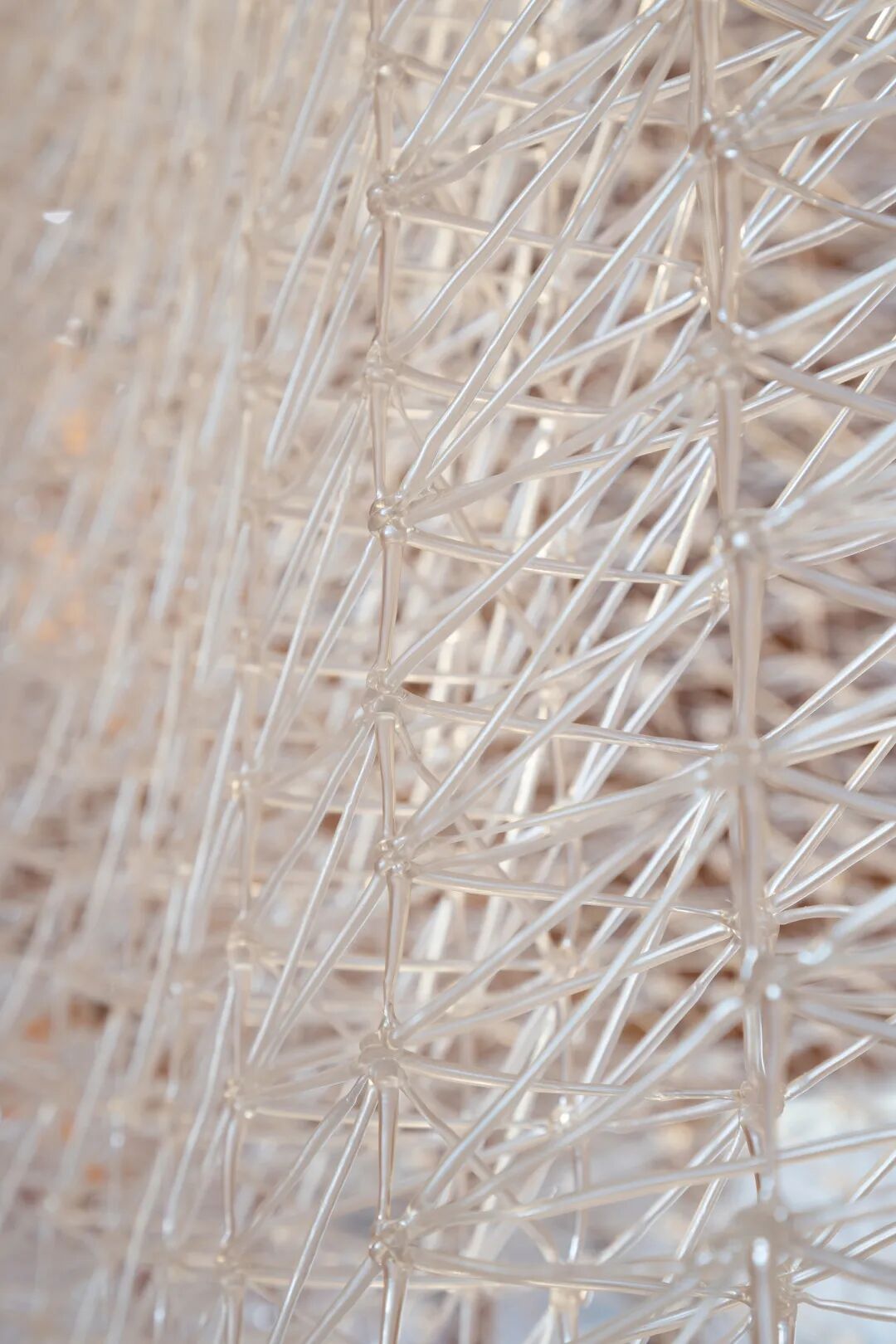
Modified-Plastic 3D Spatial Printing Process Details © Zhang Liming

Walking Toward Light
The progress of an era depends on the parallel advancement of design art and technical science, each reinforcing the other. The Gate of Light installation looks back at history to interpret the spirit of our present moment.
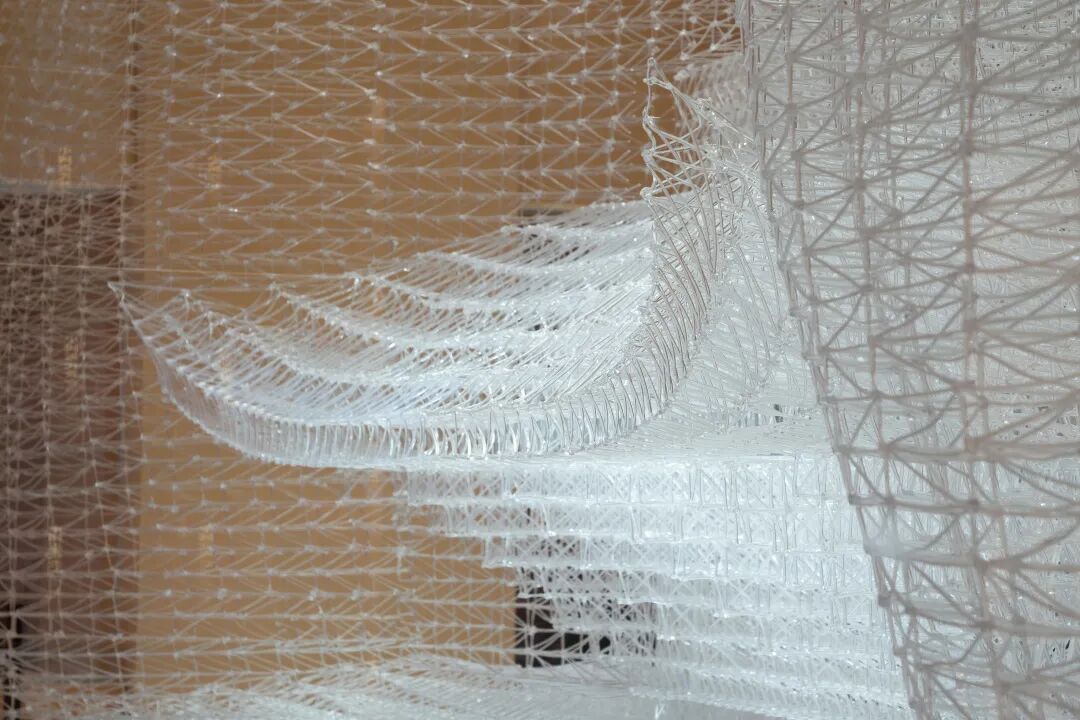
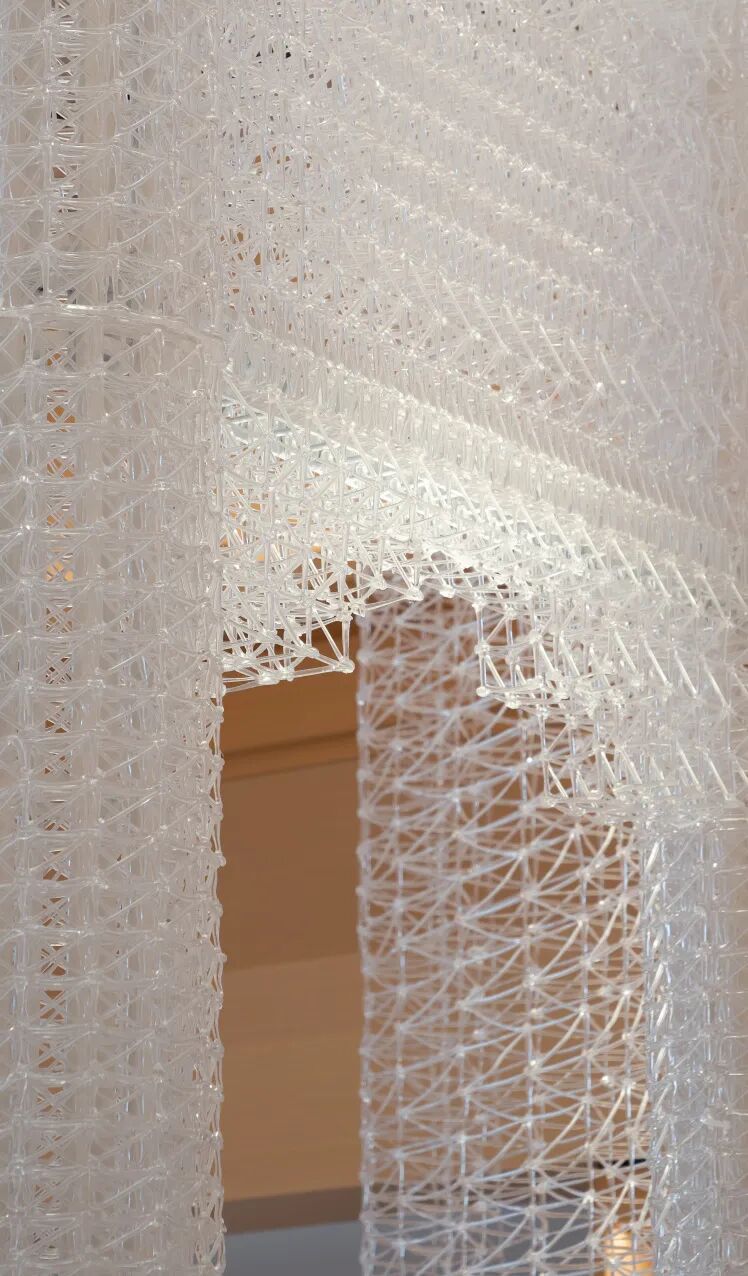
Modified-Plastic 3D Spatial Printing Process Details © Wang Ke
At human scale, the design uses 3D layered printing to showcase reconstructed details of characteristic components. At the top, variations in grid density express the original archway's distinctive spatial form and proportions.
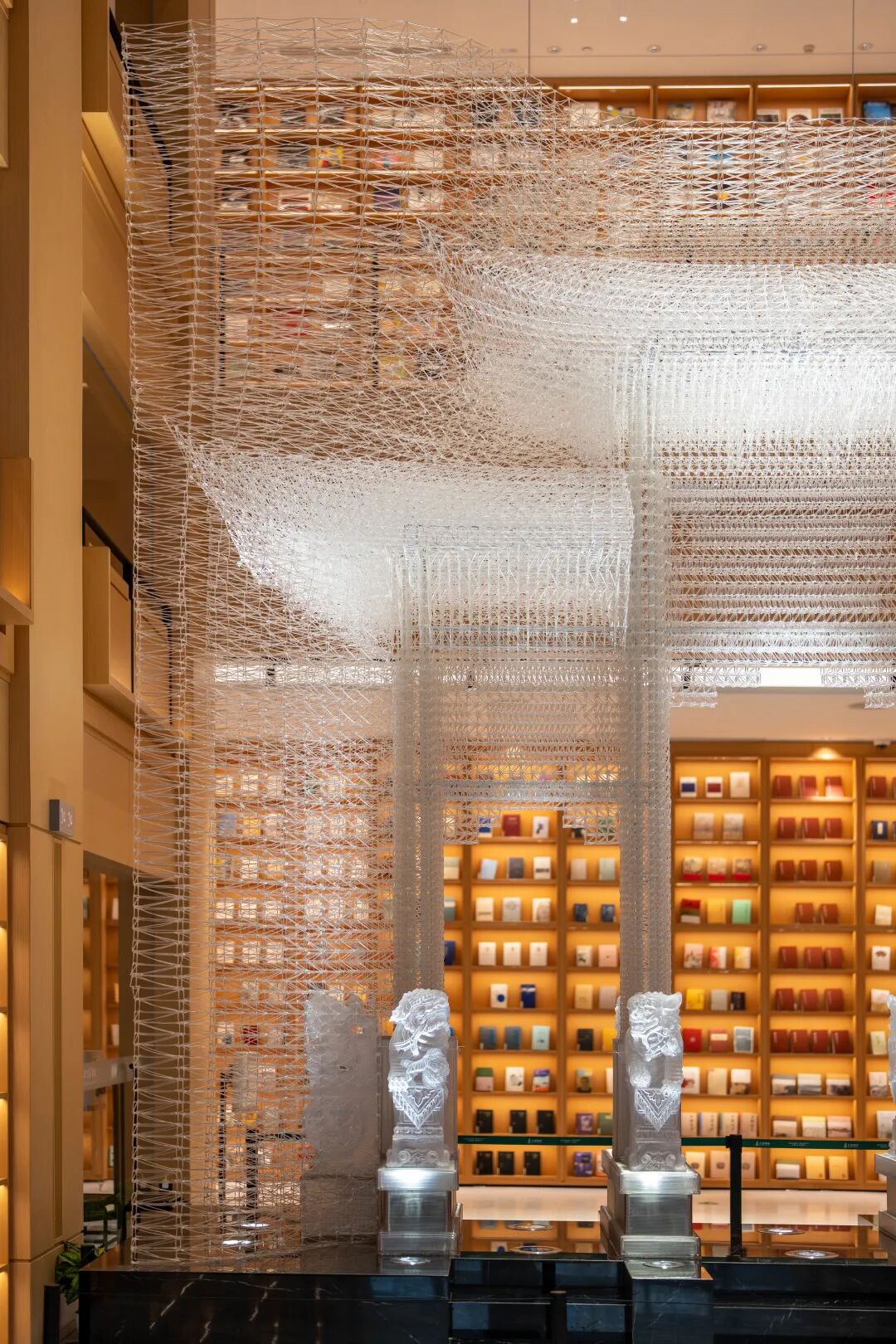
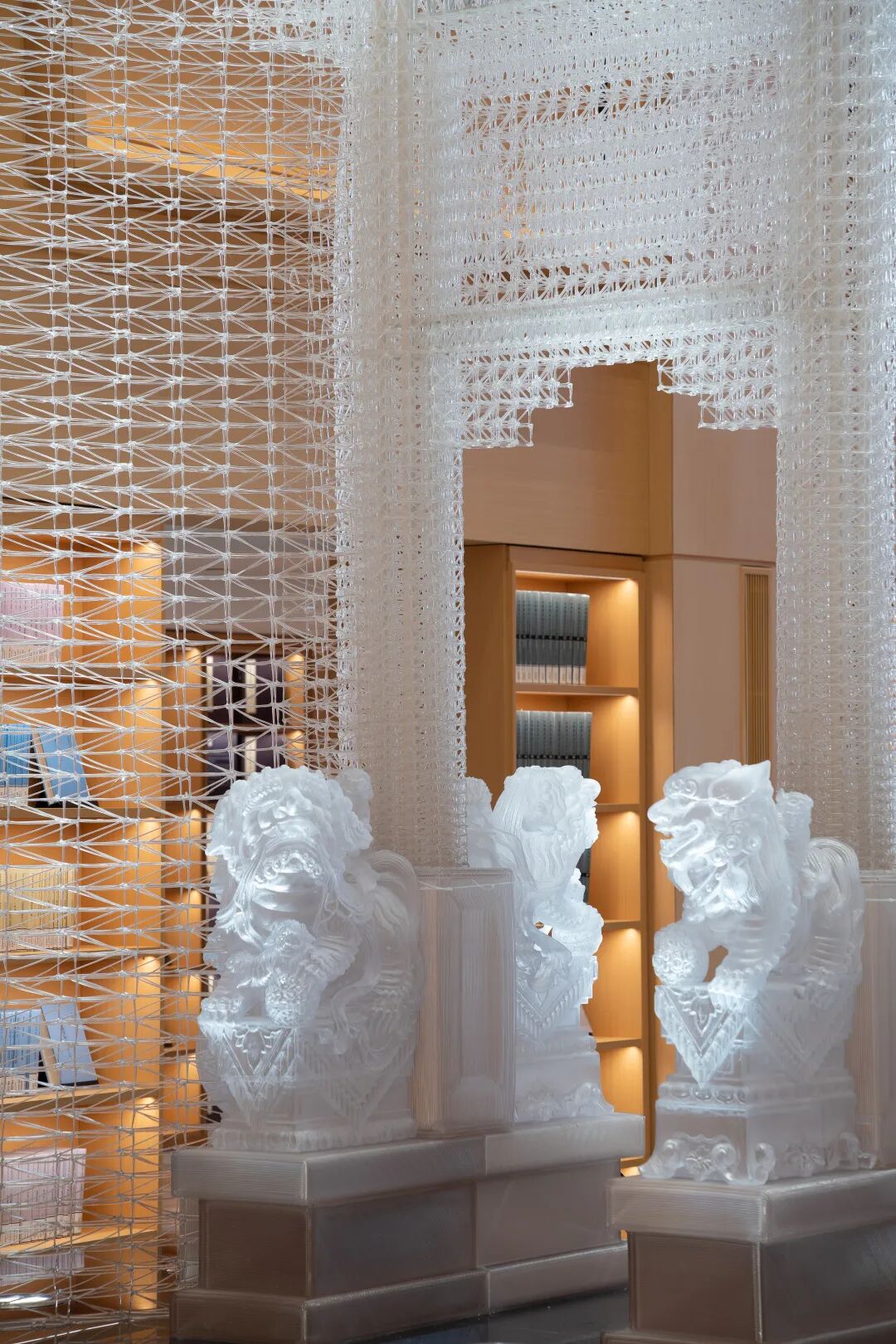
Xujiahui Library "Gate of Light" © Zhang Liming
The "Wings of Light" arc surface emerging from the main body of Gate of Light extends from the ridgeline of the heavy palace roof, making the whole resemble an ethereal celestial palace floating on clouds — blurring the boundaries of the atrium space.

Chasing Light and Shadow
Through spatial printing technology, Fab-Union Technology traps light within the Gate of Light in the atrium, creating an entirely new reading experience.
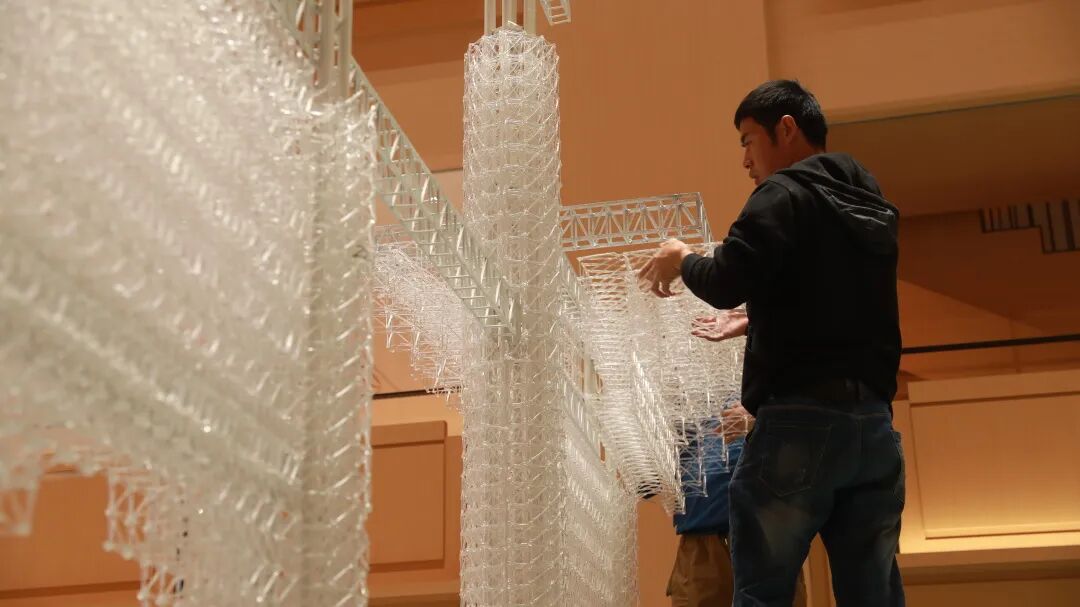
Installation Process © Xujiahui Library
The entire Gate of Light was printed by Fab-Union Technology using two large-scale construction spatial printing robots over 50 days, with a total print path of 17,000 meters and 1.8 tons of material consumed — a demonstration of the most advanced printing technology available today.
The spatial printing comprised over 40,000 printing units, each requiring 12 procedural steps. The spatial printing process is so complex in its movements that it exceeds what traditional manual labor could achieve in both difficulty and precision.

"Gate of Light" Printing Unit Disassembly Diagram © Fab-Union Technology
Each printing unit of Gate of Light is unique, requiring massive programming volume. The total robotic printing motion programming for the entire installation exceeded 500,000 lines, all completed through batch programming with Fab-Union Technology's self-developed FURobot construction robot control software — achieving efficient and precise printing.
Fab-Union Technology is deeply rooted in the construction technology sector, participating in the historical transformation of the building industry from digital to intelligent construction. With artistic and creative design thinking as its entry point, the company is building an integrated paradigm of intelligent design and construction through reverse integration.
As an integrated hardware-software platform for construction robotics with independent intellectual property rights, Fab-Union Technology has developed multiple deployable innovations in intelligent construction, demonstrated dozens of industry-leading intelligent design + construction practice cases, and redefined the digital economy platform for intelligent building production.
Notable completed projects at home and abroad include: Wuzhen Internet Light Expo Center, Nanjing Happy Valley, Shuixidong Cultural Tourism Project in Sichuan, Radisson Collection Hotel at Jiangsu Garden Expo Park, Shanghai Huangpu Grassroots Party Building Project, Starbucks Reserve Roasteries in Tokyo/Seoul/Shanghai, and the China Pavilion at the Venice Architecture Biennale.
Yunqi Capital remains focused on "technology innovation, industry empowerment." Intelligent construction is one of Yunqi's sustained areas of focus. Yunqi aims to work with its portfolio companies to advance intelligent construction represented by construction robotics and unlock the vast potential of robotics transforming the building industry. Beyond Fab-Union Technology, Yunqi has also invested in a series of outstanding projects in robotics and core components, including Keenon Robotics, Neolix, RealMan Intelligent, Dafang Intelligent, Chaowei Technology, Quanyu Industrial, and Botnics Robotics.