What New Trends Did We See After Meeting the Robots? | World Robot Conference × Y·Robot

Why Are There So Many Humanoid Robots?

The recently concluded "2023 World Robot Conference" confirmed that humanity has taken another major step toward the robots we once only dreamed about.
At the conference, we saw robotic arms growing ever more delicate and agile, industrial robots making leaps in practicality, service robots interacting more fluidly, and biomimetic robots achieving uncannily lifelike movement... Robots are integrating into our daily lives in smarter, more creative ways — seamlessly.
Through these robots of diverse forms and specialized capabilities, what industry trends do we see? How are robots improving efficiency and experience across sectors? And what new models of human-machine collaboration lie ahead?
1
Humanoid Robots:
The Ultimate Form of "General-Purpose Robots"
Dressed in white robes, "Li Bai" recited Song of Everlasting Sorrow with vivid emotion, while "Du Fu" beside him exclaimed: "What a poem! Brother Taibai!"
Not far away, a cyberpunk-style half-body robot flexibly rotated its eyes and activated its facial muscles — even the flutter of its eyelashes during blinking was startlingly lifelike.
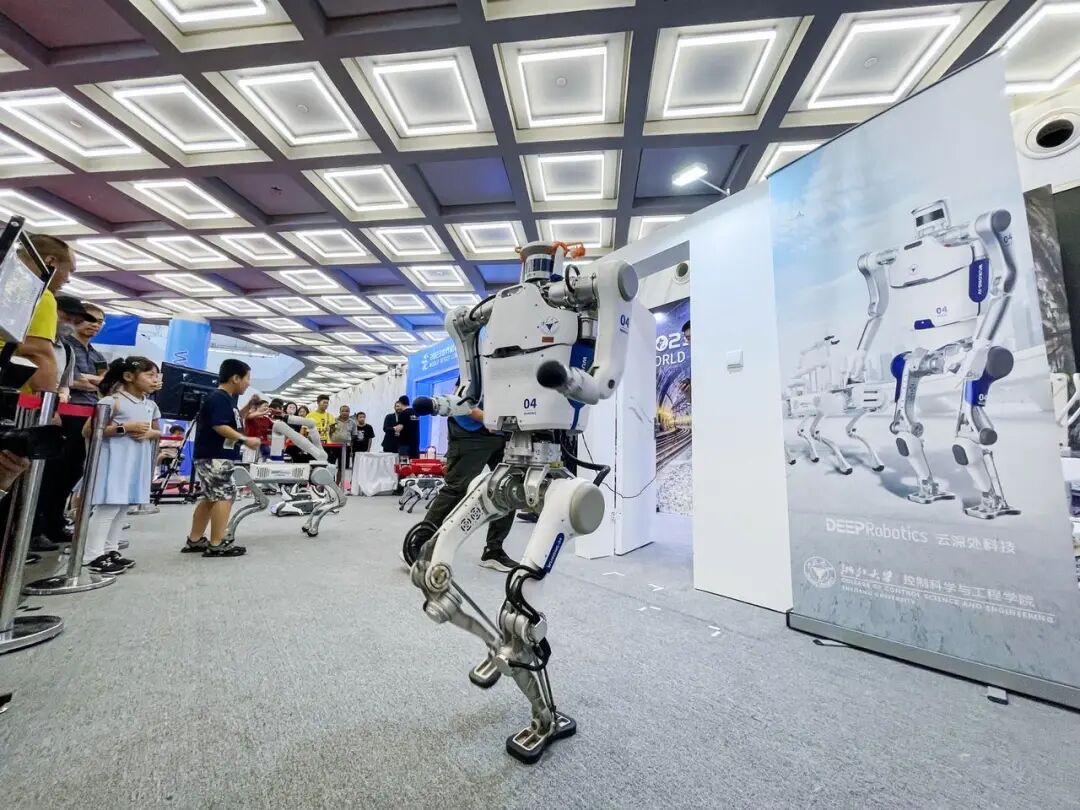
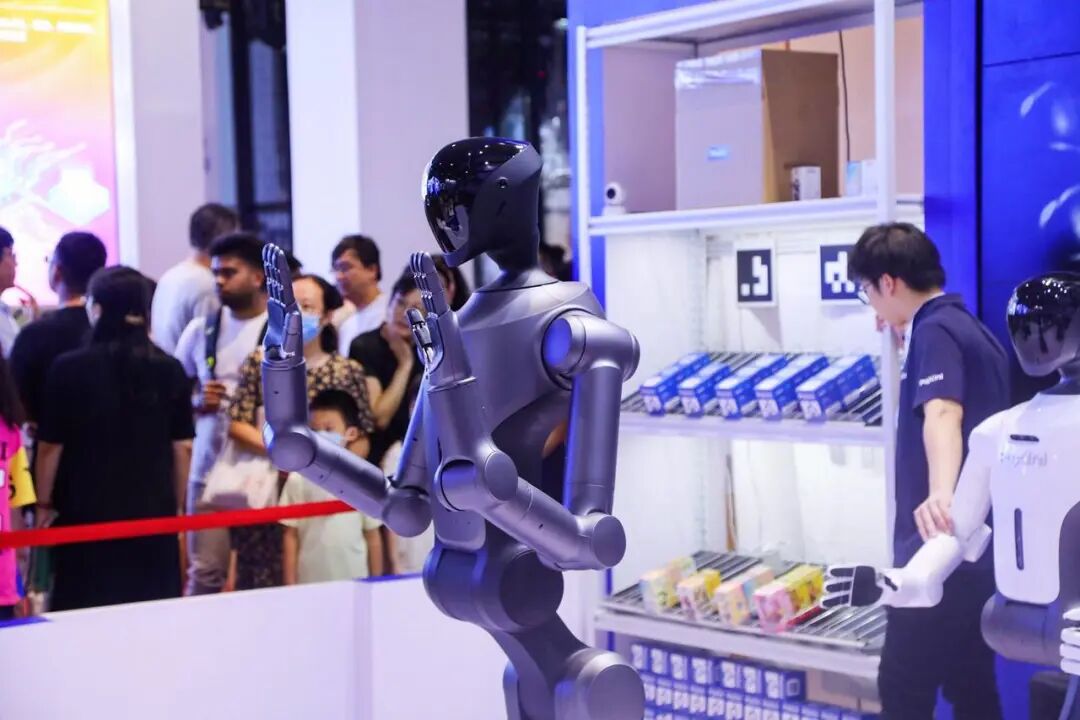
Humanoid robots once again claimed center stage. These humanoid robots feature over 140 degrees of freedom throughout their bodies, with dexterous hands and biomimetic skin much like our own, capable of reproducing nearly the full range of human micro-expressions.


Swipe left or right to see more
Bipedal humanoid robots are regarded as the ultimate form of general-purpose robots. Only when robots resemble humans, with comparable body structures and capabilities, can they better integrate into human living and working environments — enabling human-robot interaction, emotional companionship, and even direct substitution for humans in dangerous environments.
The AGI boom has led more people to see the feasibility of general-purpose robots. At the conference's "AGI + Robotics" roundtable, Chen Yu of Yunqi Capital proposed that robotics and embodied intelligence represent the best vehicle for large models to reach the physical world. Creating embodied intelligence requires breakthrough innovations combining hardware and software, as well as close collaboration between industry and academia over the long term. (Click the hyperlink for highlights from the session.)
While practical humanoid robots remain some distance away, the "humanoid pandas" and "humanoid service robots" on display could already engage in fluid conversation with humans, perform simple daily actions, and serve in greeting, reception, and guided tour scenarios.
2
Biomimetic Robots:
Diverse Forms, Multiple Practical Applications
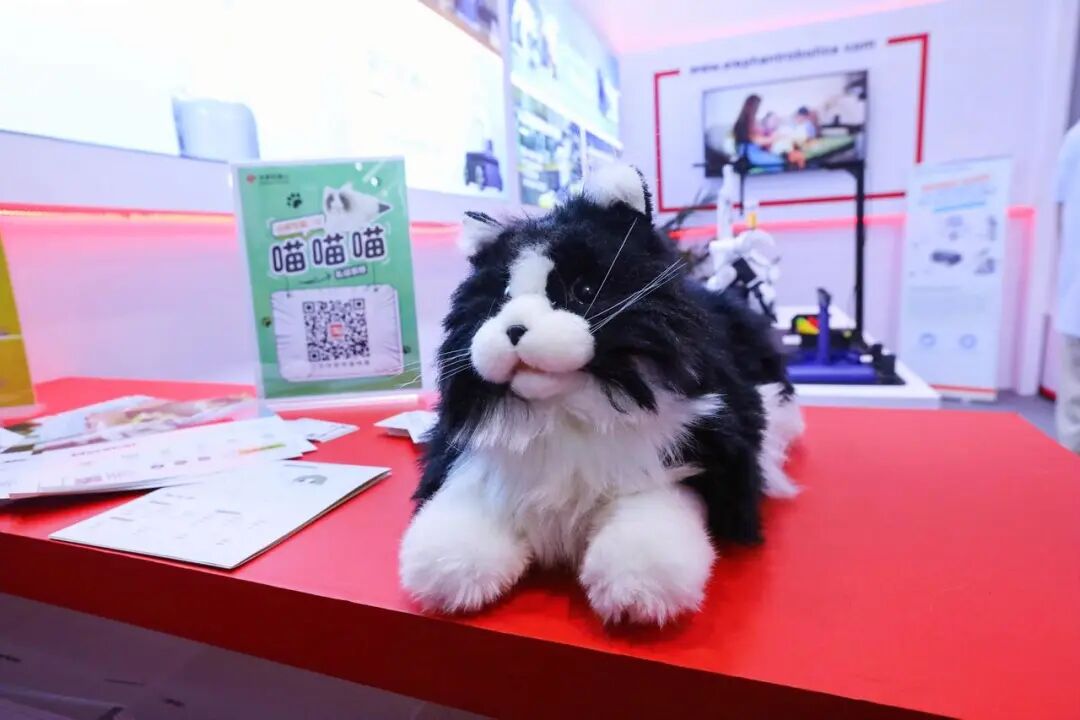
Quadruped robots also emerged as a highlight of this year's conference: robotic dogs and cats made their collective debut. Xiaomi unveiled its biomimetic quadruped robot CyberDog 2, which uses AI-powered dynamic balance algorithms and a multimodal fusion perception and decision-making system to deliver powerful locomotion and fine control over subtle movements — demonstrating dancing, somersaults, stair climbing, and swaying motions on site.
Beyond their impressive mobility, quadruped robots can actively adjust body height and manipulate objects with their legs, with static stability and motion fault tolerance. These advantages let them reach places wheeled robots cannot, and enter application areas such as emergency rescue and campus patrol, replacing human labor in hazardous environments. As "robotic dogs" and "robotic cats" grow increasingly pet-like in appearance, they will also find roles in home companionship and guide assistance.
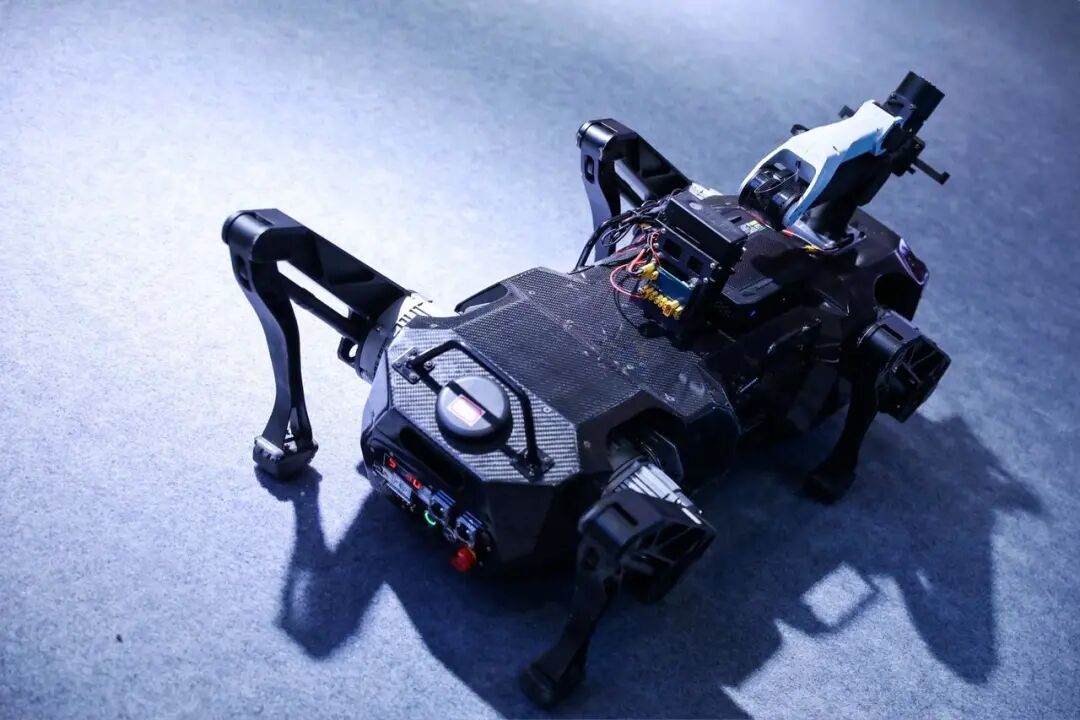
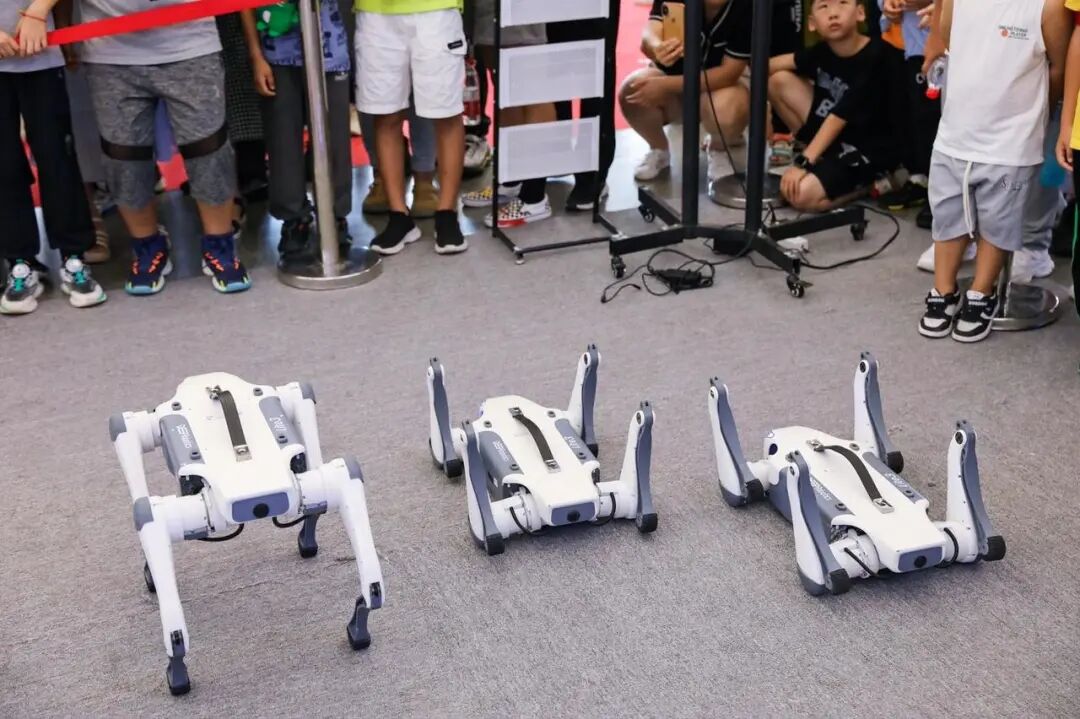
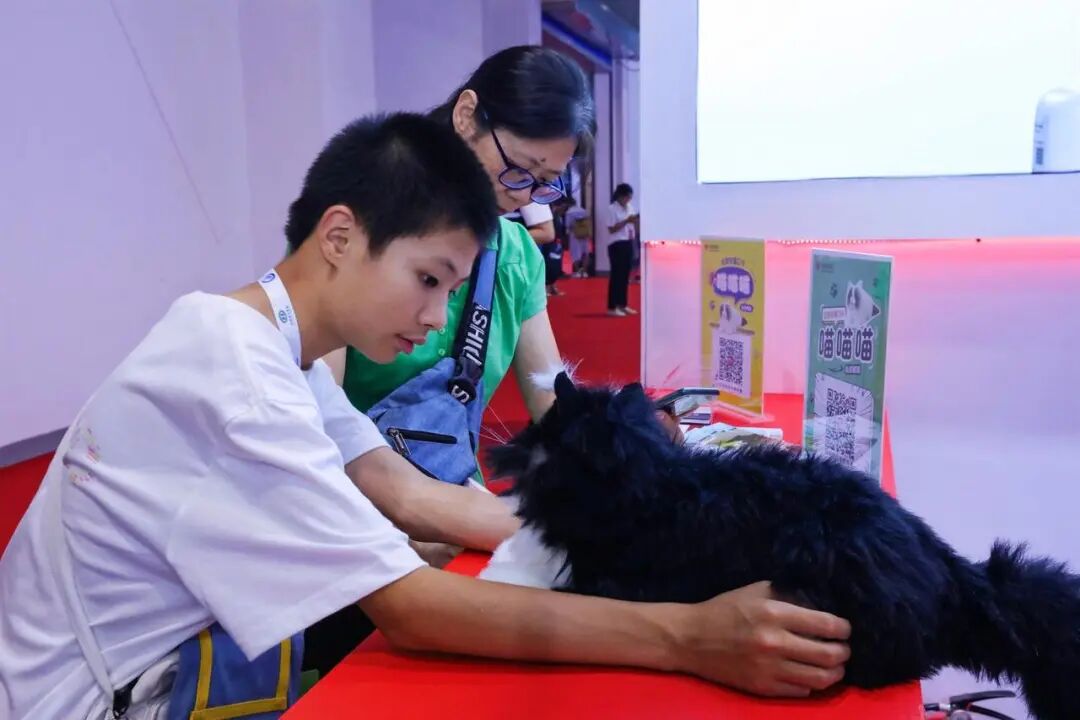
Swipe left or right to see more
The graceful agility of animals in nature also inspires biomimetic robot design. At the conference, biomimetic bird robots used highly integrated flight control systems to precisely control their biomimetic wings, achieving agile flight. Advanced obstacle avoidance systems enabled them to nimbly dodge barriers, detect spatial conditions in real time, and update flight paths. These biomimetic robots weighing only tens of grams closely mimic biological structures and functions in every respect, and will serve as valuable human assistants.
3
Service Robots:
More Mature Architecture, More Segmented Scenarios
Most exhibits at this year's conference were presented not as standalone robots but as integrated solutions combining various vision and sensor systems. New directions in vision, force sensing, and integrated actuators also demonstrate that robot architecture is stabilizing and gradually penetrating application scenarios.
As AGI matures, robots' capabilities in multi-turn open-ended dialogue, multimodal interaction, machine vision, and intent guidance have improved markedly.
On site, we saw commercial robots of all types delivering rapidly improving service quality, with increasingly granular segmentation: cleaning, delivery, massage, intelligent tea service, disinfection, patrol...
With continuous iteration in perception, cognition, and human-robot interaction, the era of "human-machine mutual prosperity" draws nearer, and robots' application scenarios and domains keep expanding.
At this year's conference, several Yunqi portfolio companies also unveiled highly practical new robots — take a look:
Y
Robot
New Product Launches
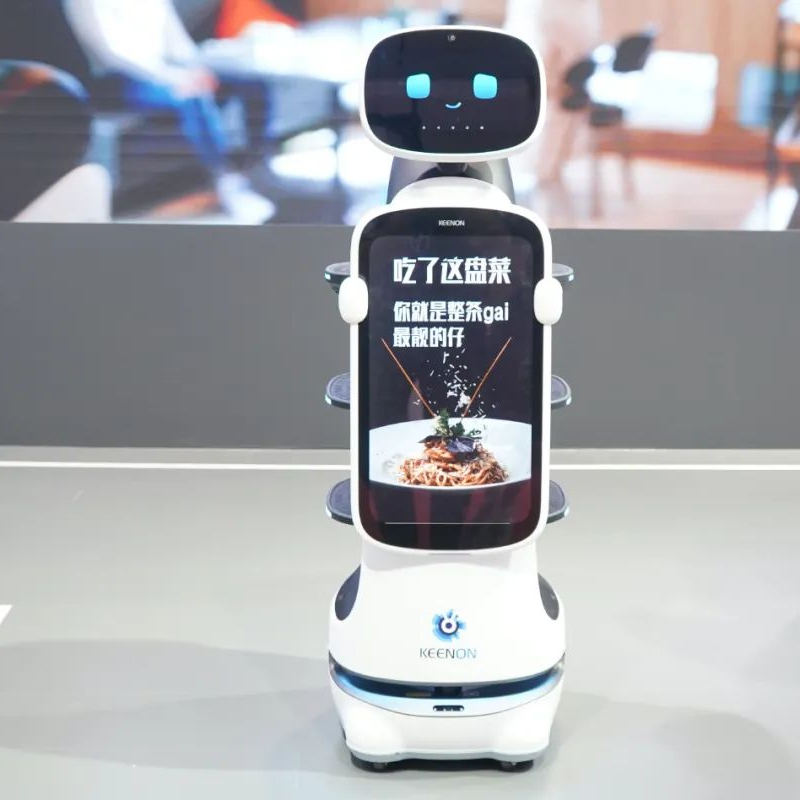
Keenon Robotics
"Cross-Generation" Multi-Functional Delivery Robot T10
Keenon Robotics unveiled its "cross-generation" multi-functional delivery robot T10 and new cleaning service robot C30 through a robot fashion show.
The "cross-generation" multi-functional delivery robot T10 represents the concentrated release of innovation and product ingenuity accumulated over years of careful development by Keenon's R&D team. Combining "delivery excellence," "panoramic perception," "multimodal interaction," and "advertising and marketing" in one, it is a "brand-new species" in the delivery robot space.
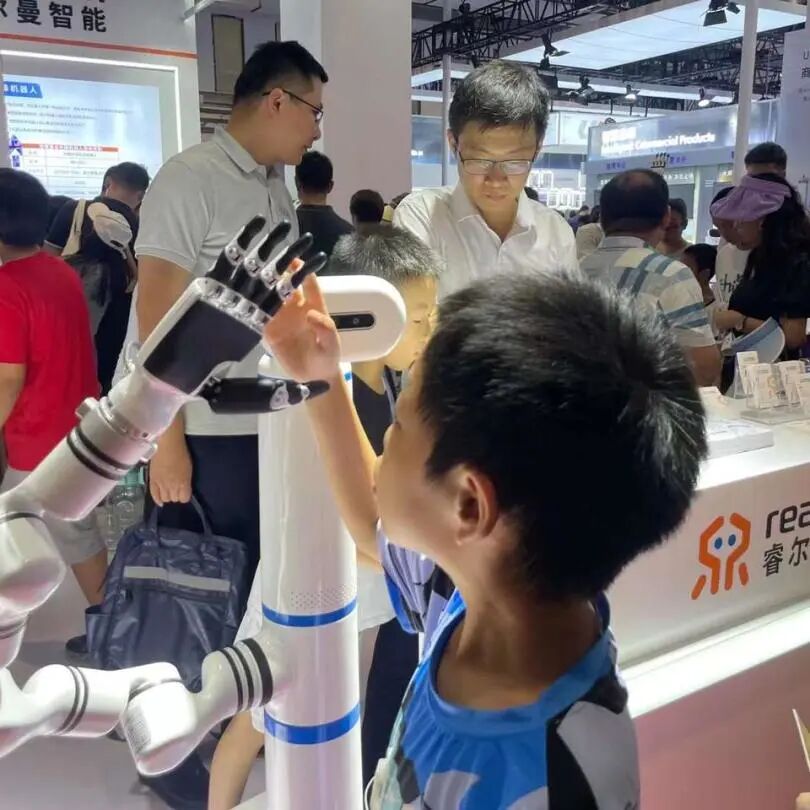
RealMan Intelligent
Eco Edition Robotic Arm
RealMan Intelligent, dedicated to making robotic arms a general-purpose intelligent tool, released its Eco Edition robotic arm. Continuing RealMan's signature integrated controller-and-arm design, it achieves strong coupling at key components, with ultra-high payload-to-weight ratio and rapid deployment capabilities, applicable across retail, food service, education, industry, warehousing, healthcare, and other scenarios.
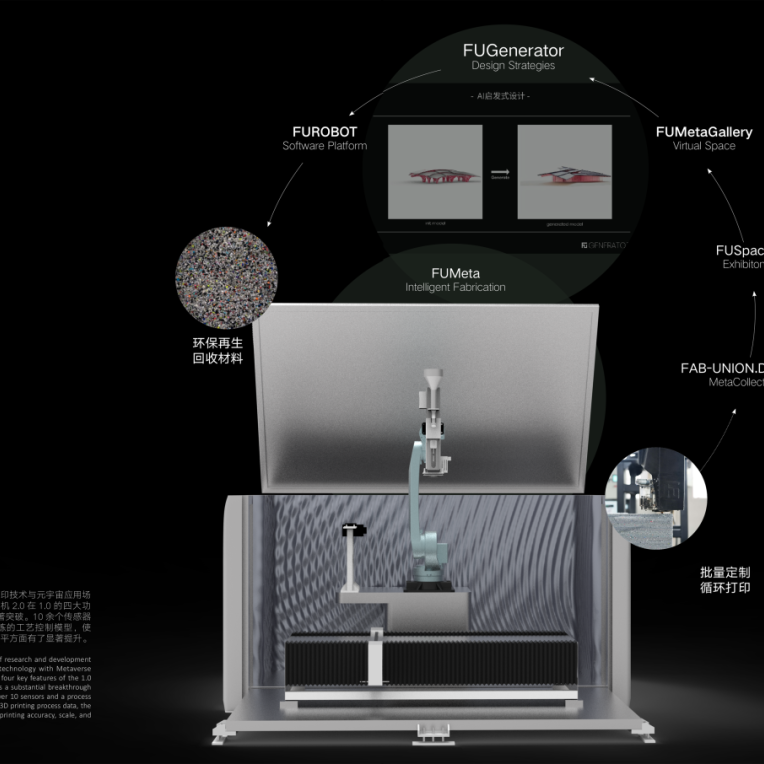
Yizao Technology
MetaPrinter Metaverse 3D Printing Robot 2.0
After a year of refinement, Yizao Technology built upon the world's first metaverse 3D printer unveiled at last year's conference to launch the lightweight upgraded "MetaPrinter Metaverse 3D Printing Robot 2.0," designed to meet application needs across urban infrastructure, R&D institutions, construction sites, production facilities, exhibitions, and events.
As a mobile construction robot printer independently developed by Yizao Technology for customized production of architectural art, MetaPrinter 2.0 leverages large-scale 3D printing technology, material recycling technology, and flexible multi-process combinations, with blockchain data storage and low-carbon intelligent construction as core technologies. It features integrated production and construction, real-time online-offline interaction, and multi-site coordinated printing — achieving optimal efficiency-cost combinations and introducing entirely new standards of intelligence and automation to the construction field.