Yunqi Capital | "Neolix" Closes 600 Million Yuan Series C, Low-Cost Autonomous Vehicles Secure Nearly 10,000-Unit Orders from Multiple Leading Logistics Customers

Low cost, high efficiency, and road access.

➤➤➤ At the recently concluded China EV100 Forum, Enyuan Yu, founder and CEO of Neolix, a Yunqi Capital portfolio company, announced that the company has secured open-road operating permits across more than 30 provinces and municipalities in China, covering a cumulative area of over 100,000 square kilometers. Neolix has also completed technical and commercial efficiency validations with multiple leading logistics and delivery companies, achieving batch deliveries in more than ten cities. Since 2024, Neolix has secured orders totaling nearly 10,000 units from several major clients.
From 2018 to the present, Neolix has completed five product iterations. With each iteration, product performance has improved by 2-3x, while costs have dropped by 30%. The company has now successfully evolved from a distributed architecture to a domain-controlled architecture, and finally to a centralized computing architecture. Leveraging the advantages of standardized modules and a modular vehicle platform, Neolix has achieved low-cost, high-efficiency production of a multi-size product matrix.
Meanwhile, Neolix recently announced the completion of a RMB 600 million Series C funding round. Following this round, the company will continue advancing product R&D and nationwide delivery deployment.

The Core of Autonomous Delivery Vehicles: Low Cost, High Efficiency, and Road Rights
"Autonomous vehicles will fully usher in the intelligent era of commercial vehicles. As L4 autonomous driving technology continues to mature, autonomous vehicles have passed the inflection point for large-scale deployment efficiency and can now meet the timeliness and capacity demands of various urban logistics scenarios."
Neolix obtained its first open-road operating permit in Yizhuang, Beijing in 2021, and has since secured permits in more than 30 cities and regions. Over the past decade, the express delivery sector has been the fastest-growing segment. In 2023, China's express delivery volume reached 132 billion parcels, averaging about 400 million parcels per day. The "last five kilometers" — the short-haul transport from distribution centers or outlets to residential communities — accounts for the highest proportion of logistics costs, roughly 50-60% of total delivery expenses. This is precisely where autonomous vehicles can deliver the greatest value.
The market demand is enormous, but earning a ticket to the autonomous delivery race is no easy feat. In the first half, players were still in an exploratory phase, focusing on validating technical feasibility. In the second half, as commercialization shifts to genuine volume competition, more attention must be paid to product costs and adaptability. Yu has deep insights on this: in recent years, Neolix has consistently targeted "low cost, high efficiency, and road rights" to deeply cultivate the autonomous delivery赛道. Especially on the eve of truly large-scale autonomous vehicle deployment, we believe that achieving cost reduction through continuous technological iteration is currently the most effective and direct approach.
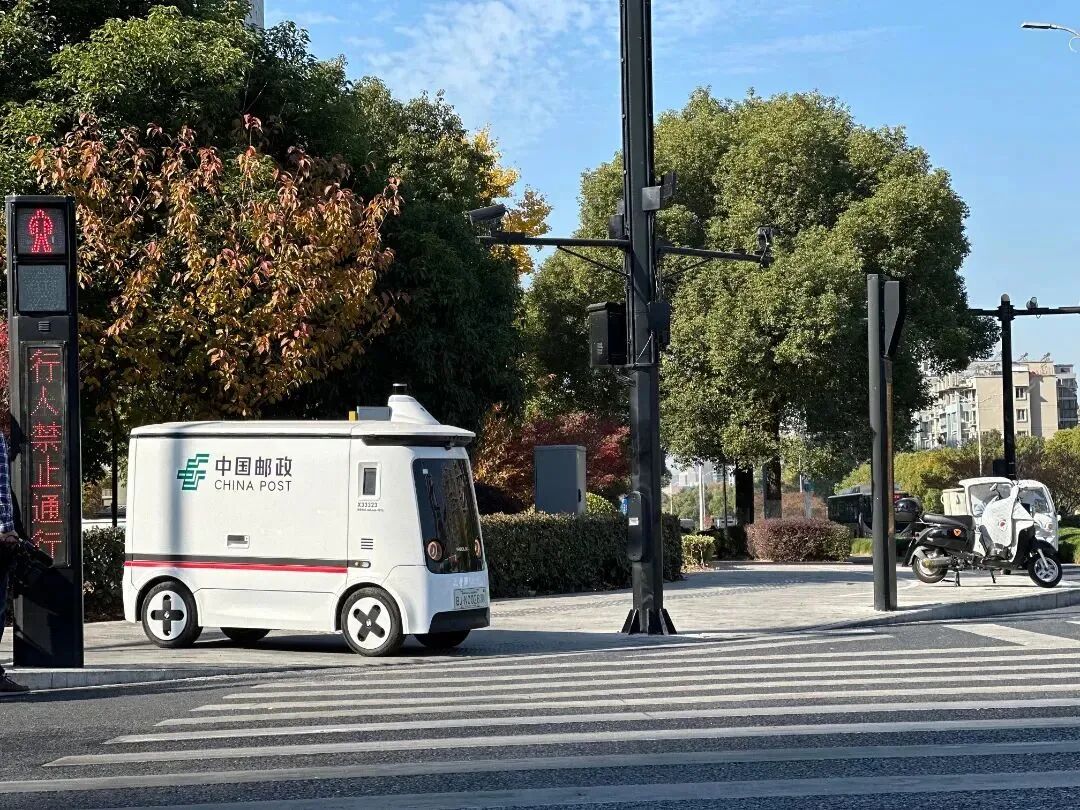
Neolix × China Post
The fifth-generation Neolix X3 now in deployment features autonomous driving capabilities at 40 km/h in urban open-road scenarios. It adopts an industry-first centralized integrated architecture that combines the autonomous driving domain controller, communication domain controller, and chassis controller into one unit, dramatically simplifying the structure and greatly improving vehicle reliability. According to Yu, it also employs industry-leading multimodal BEV spatial 4D temporal fusion perception technology, equipped with two LiDARs enabling 360-degree environmental perception with no blind spots, fully ensuring autonomous driving safety.
"We chose this approach for two reasons. First, sensor costs are relatively low, which reduces overall hardware manufacturing costs. Second, Neolix has developed automated high-definition map generation capabilities at one-tenth the cost of traditional map providers. The company has also built an L4 autonomous driving simulation platform capable of 100% replication of vehicle-side scenarios."
Yu has always believed that manufacturing is an extension of R&D. Just as Tesla endured production hell, this entirely new product category of autonomous vehicles similarly faces numerous manufacturing process challenges. In his view, only by owning one's own factory can a company have the confidence for mass production and delivery.
Thus, in 2019, Neolix became the first to build China's first L4 autonomous vehicle smart manufacturing factory, independently developing automated calibration processes that reduced sensor calibration time from two hours to four minutes. And to ensure production capacity can meet customer demand, every vehicle undergoes comprehensive testing across eighteen operating conditions before delivery to ensure reliable quality.
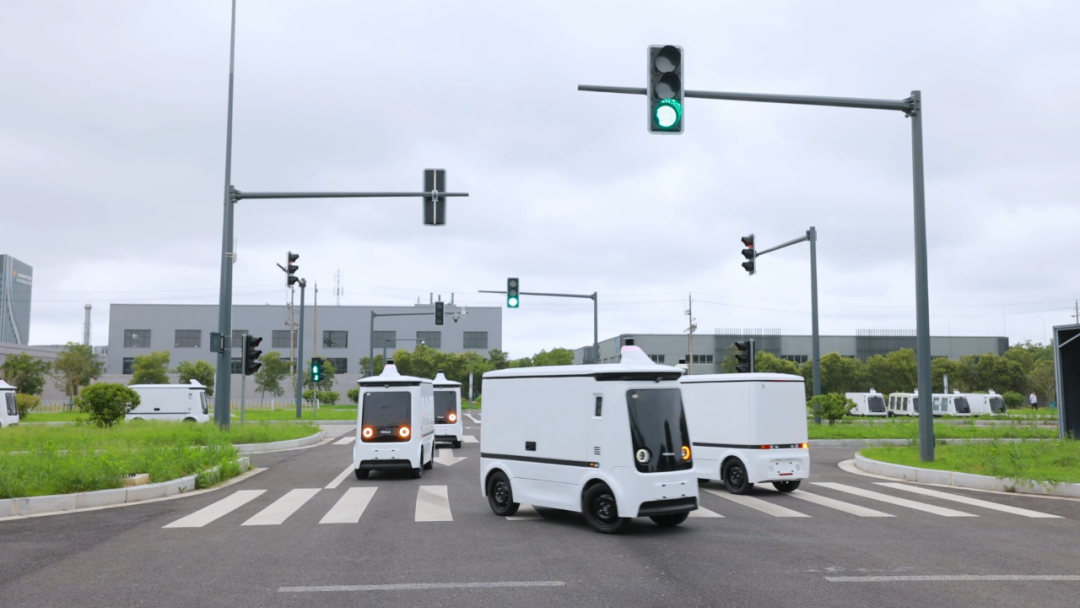

Urban Short-Haul Transport Costs Reduced by Over 40%
"62 autonomous delivery vehicles, 229,561.2 kilometers total driving distance, 49 days — completing the delivery of 2 million parcels, with peak single-vehicle daily efficiency reaching 1,087 parcels." This is the record Yu and his operations team achieved in Suzhou, and also Neolix's opening 2024 report card to its partners.
"After 2-3 years of exploration and scenario validation with clients, we were pleasantly surprised to discover that when autonomous delivery vehicles serve the express logistics industry, clients' operating models also changed significantly. One is high-frequency iteration — autonomous delivery vehicles can operate 24/7 uninterrupted, effectively boosting capacity. The other is standardized cargo box design, which meets logistics distribution needs and substantially improves transport efficiency. Today, Neolix autonomous vehicles can reduce urban short-haul transport costs for logistics companies by over 40%."
"If we can eventually build a nationwide autonomous delivery network of one million vehicles, it could potentially save the logistics and express delivery industry tens of billions of RMB annually," Yu predicts.
Driven by massive market demand, Neolix quickly targeted leading logistics and express delivery enterprises, becoming one of the first to partner with major players including China Post, SF Express, ZTO, YTO, and Yunda. When asked why, Yu responded: "These companies have different process models and demanding requirements for order service efficiency. Products that can withstand their tests are truly proven."
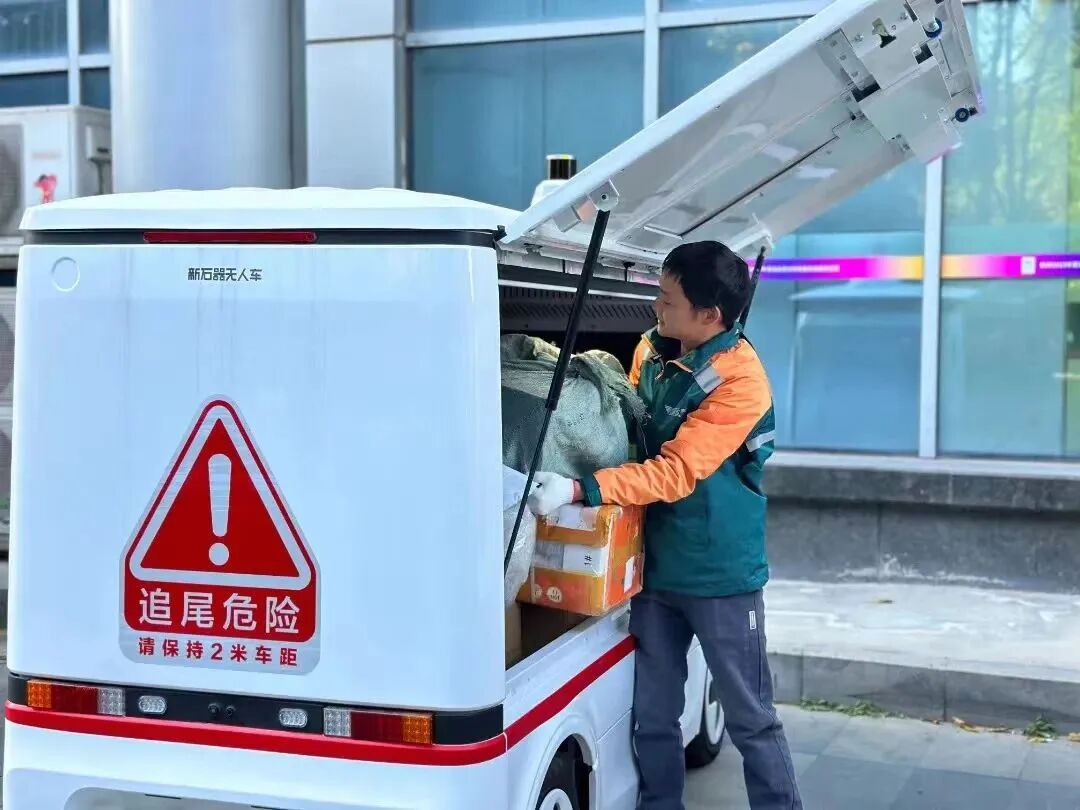
A logistics industry insider revealed that to ensure delivery timeliness, vehicles often have to depart from transit hubs/distribution centers before they are fully loaded. When vehicles arrive at branch offices, unloaded packages require secondary sorting, and site accumulation is common. Throughout this process, labor costs, transport costs, and time costs are all high. With autonomous delivery vehicles, they can assume the shuttle work between warehouses and outlets, giving delivery couriers more time for door-to-door delivery.
Wang Ning, a courier at a Suzhou Wujiang outlet, told reporters, "Now it's like I have an extra 'assistant.' I used to make three or four round trips a day, spending two or three hours just on the road. Now I load the large packages into the autonomous vehicle, which automatically delivers them to points near my delivery area. I just take the light, small packages out with me, and after finishing my deliveries, instead of returning to the station, I go directly to meet up with the autonomous delivery vehicle."
"Autonomous delivery vehicles can achieve daily loading volumes equivalent to a van or even a box truck through high-frequency dispatch. A single vehicle can transport over 1,000 parcels daily. Around the Spring Festival period, parcel volumes at outlets doubled, and with its help, the entire outlet's delivery efficiency improved by 2-3x, without compromising timeliness," added Zhang Heng, the outlet manager.

Most Autonomous Delivery Permits in China
The Central Financial and Economic Affairs Commission meeting held at the beginning of the year explicitly called for removing bottlenecks and obstacles, improving the modern commercial distribution system, and encouraging the development of new logistics models integrated with platform economy, low-altitude economy, autonomous driving, and more... This significant policy boost once again injected strong confidence into the large-scale application of autonomous delivery vehicles.
Since 2023, we have been pleased to see multiple cities successively release Road Testing Implementation Rules, exhibiting characteristics of fast decision-making, streamlined processes, large open areas, and mutual recognition across jurisdictions — top-down forces powerfully advancing the commercialization of autonomous delivery vehicles.
"At the very beginning, basically 99.9% of society didn't believe autonomous vehicles could obtain road rights. Now, virtually everyone believes they should have road rights — this involved an extremely arduous six-year struggle," Yu recalled. "One very milestone event was in May 2021, when the Beijing High-Level Autonomous Driving Demonstration Zone issued us the first permit allowing road operation. Now, we see road rights being actively opened up almost everywhere across the country. This is absolutely tremendous news for the entire industry."
Autonomous vehicles must operate legally and compliantly on public roads — road rights work must be taken extremely seriously. With this attitude, Yu has been fighting on the front lines all these years, personally leading teams to "conquer new territories" in East China, South China, and other regions. Today, Neolix has successfully secured road rights in dozens of provinces and cities including Beijing, Hainan, Shenzhen, Hangzhou, Suzhou, Wuxi, Hefei, and Changzhou, holding the most autonomous delivery vehicle permits in the industry.
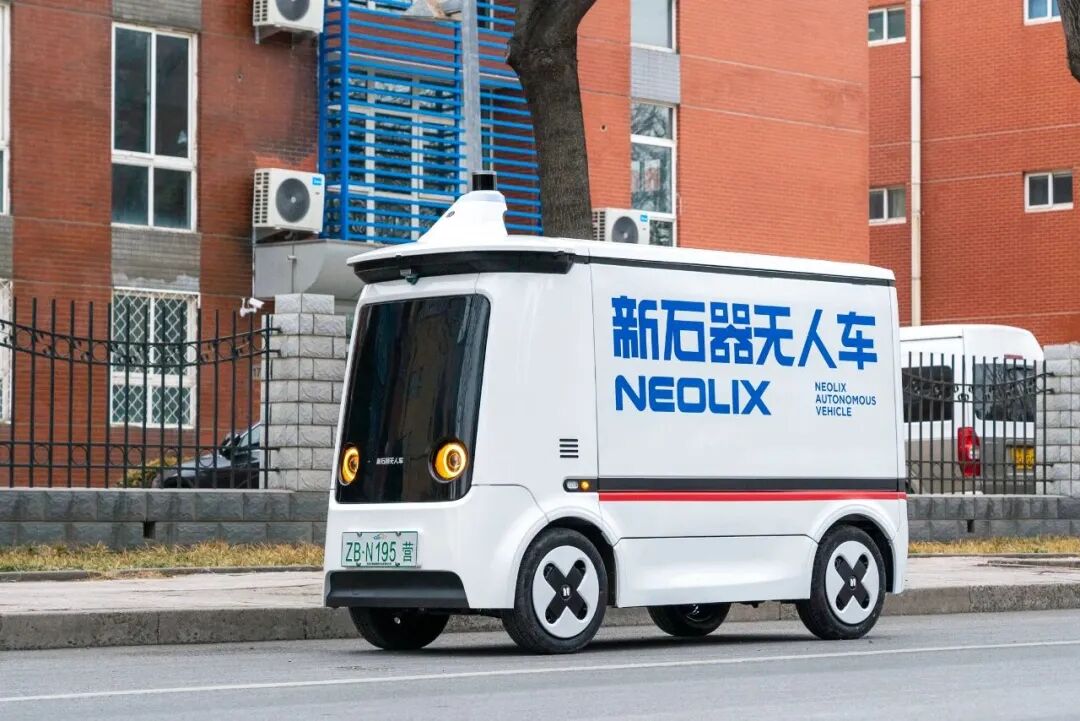
With target customers in one hand and road rights permits in the other, plus innovative technology as the core driver, Neolix has gained more confidence to compete in the market.
After years of accumulation, Neolix's latest mass-produced autonomous vehicles have become the "seed players" for autonomous delivery in the logistics industry. Yet in Yu's view, this is merely a starting point. Regarding future plans, Yu revealed that his "next battle" is to achieve the "Dual Hundred Plan" — reaching over 100 cities with hundred-unit-scale autonomous vehicle deployments, helping more logistics and express delivery companies remove bottlenecks and obstacles, and building a more efficient, intelligent, and secure technological moat for the entire industry.